.png)


Pain is a challenging and deeply personal part of the breast cancer journey, but it’s one you should never have to accept as inevitable. Managing breast cancer pain is a critical part of your care, designed to improve your quality of life, help you stick with your treatment plan, and support your overall well-being.
Why Managing Breast Cancer Pain Matters
Going through a breast cancer diagnosis is tough enough. The pain that can come with it—whether from the tumor itself, the treatments, or the aftermath—adds a heavy physical and emotional weight. Tackling this pain isn't just about comfort; it's a fundamental piece of successful cancer care.
When pain is under control, you can rest better, keep your strength up, and participate in the daily activities that bring you joy and a sense of normalcy.
This proactive approach to pain has a direct impact on your ability to complete your treatment. Unmanaged pain can spiral into fatigue, anxiety, and depression, making it incredibly difficult to tolerate therapies like chemotherapy or radiation. By making symptom relief a priority, you and your care team can ensure you stay on track with the very treatments designed to fight the cancer. For more on this, see our guide on improving quality of life for cancer patients through side effect management.
The Overlooked Impact of Chronic Pain
For many survivors, the struggle with pain doesn't stop when active treatment ends. It can linger, becoming a chronic issue that quietly disrupts work, relationships, and mental health.
For many, the fight doesn't end with the final treatment. Chronic pain can become a new, unwelcome companion, fundamentally altering a survivor's quality of life and sense of recovery.
Research really drives home the scale of this problem. One significant study on breast cancer survivors revealed that a staggering 59% experience chronic pain, a rate far higher than what we see in the general population. And this isn't just a minor ache; it’s often pain that interferes with daily function and can include neuropathic pain, which feels like burning or shooting sensations. You can explore the detailed findings of this study on chronic pain in breast cancer survivors to understand its widespread impact.
At Hirschfeld Oncology, we believe that true survivorship means living well, not just living longer. By addressing breast cancer pain head-on, we empower you to reclaim control over your life, enhance your well-being, and truly focus on healing.
Decoding the Different Sources of Pain
Pain is one of the most personal and challenging parts of a breast cancer diagnosis. It's not a single entity; it's more like a collection of signals your body is sending, and learning to interpret them is key. Understanding where your pain is coming from helps you and your care team find the most effective ways to manage it.
The discomfort you feel can come directly from the cancer, be a side effect of the treatments saving your life, or arise from related conditions that develop along the way. Let's break down the most common culprits.
Pain Directly from the Tumor
Sometimes, the simplest explanation is the right one: the tumor itself is causing the pain. As a primary tumor grows in the breast, it can press on nerves, muscles, and other sensitive tissue. This pressure might feel like a localized ache, a sharp twinge, or a constant tenderness in one spot in the breast or armpit.
Pain can also be a red flag that cancer has spread, or metastasized. Bone metastases, in particular, are a frequent source of significant discomfort. When cancer cells take up residence in bone, they can weaken its structure, causing a deep, nagging ache that often feels worse at night or when you're resting. Reporting this kind of persistent bone pain is crucial, as it gives your oncologist vital information about the cancer's progression.
This diagram shows how pain management is the foundation for everything else—quality of life and even the effectiveness of treatment depend on it.
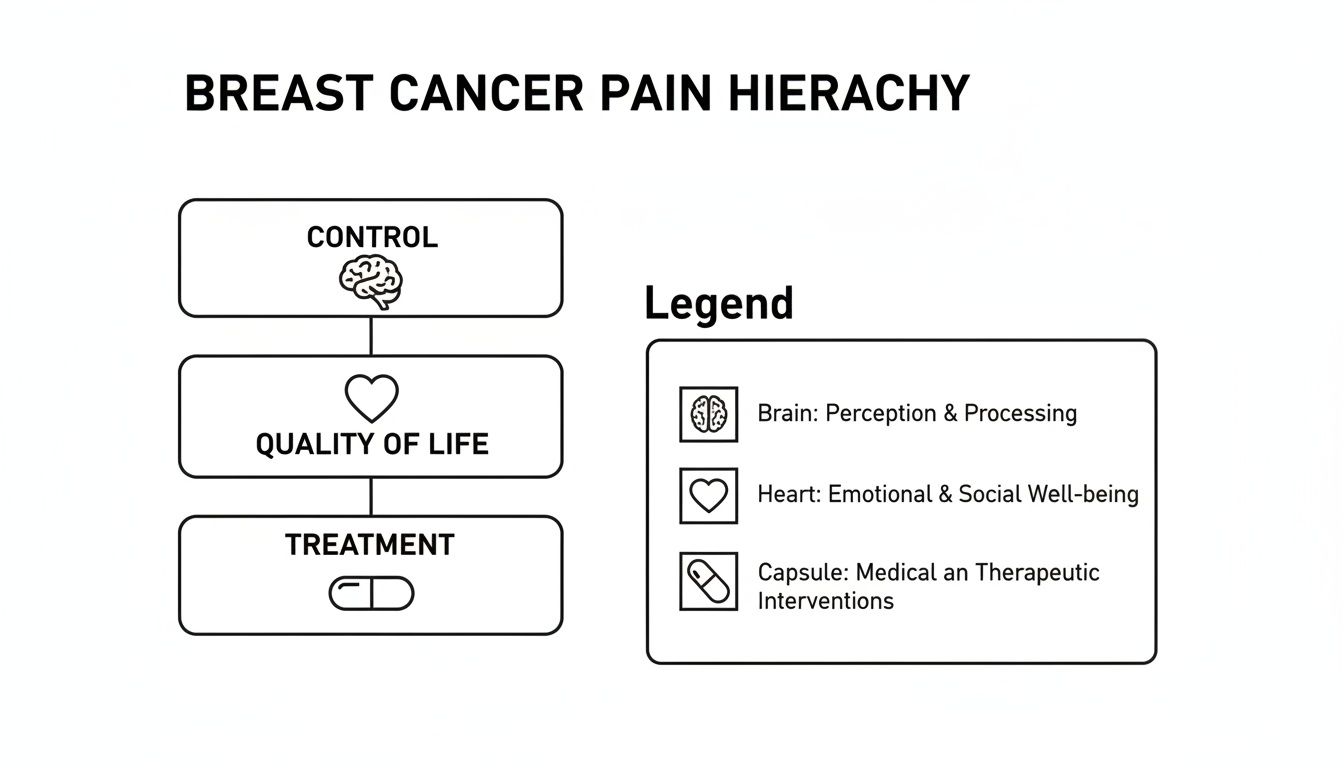
As you can see, getting pain under control isn't just about comfort; it's a fundamental part of a successful treatment journey.
When Treatment Becomes the Source of Pain
It’s a tough irony that the treatments designed to heal you can also cause pain. This is often a normal, expected part of the process, but it’s still important to understand where it's coming from.
Post-Surgical Pain: This is the most immediate and common type of treatment pain. After a lumpectomy, mastectomy, or reconstruction, your body kicks into healing mode, which involves inflammation. This can feel sharp near the incision, achy deep in the chest muscles, or even like a strange pulling as the tissues mend.
Chemotherapy-Induced Neuropathy: Some chemo drugs can damage the delicate nerves in your hands and feet, a condition known as peripheral neuropathy. Imagine your nerves as the body’s electrical wiring—chemo can fray them. This leads to bizarre sensations like burning, tingling, numbness, or shooting “pins and needles” pain.
Radiation-Related Discomfort: Radiation can cause a reaction on the skin that looks and feels a lot like a bad sunburn. The treated area might become red, tender, and swollen. Longer-term, radiation can cause tissues to become stiff and less flexible (a condition called fibrosis), which can lead to a chronic feeling of tightness or aching.
The numbers are sobering: acute post-operative pain affects 61% to 67% of women after breast cancer surgery. For too many, this is just the start. Persistent, long-term pain is a real challenge that requires a proactive and personalized approach from day one.
In fact, one major review found that a median of 37.5% of women still deal with persistent pain two years after their surgery. These statistics highlight why we can’t afford to be reactive. You can learn more about the research on post-treatment pain prevalence and its impact.
Understanding Lymphedema and Its Unique Pain
Another major source of pain after breast cancer treatment is lymphedema. Think of your lymphatic system as the body’s drainage plumbing, quietly clearing out excess fluid. When lymph nodes are removed during surgery or damaged by radiation, that plumbing can get clogged.
The result is a backup of fluid, usually in the arm, hand, or chest on the same side as your surgery. This swelling creates a distinct feeling of heaviness, tightness, and a dull, constant ache. It’s a mechanical problem—too much fluid stuck in one place—and it requires very specific therapies to relieve the pressure.
To help you put all these pieces together, here is a quick guide to the different types of pain you might experience.
Common Types of Breast Cancer Pain and Their Characteristics
This table can help you start identifying the potential source of your pain based on how it feels and where it's located.
Remember, this is just a guide. Your pain is unique, and accurately describing it to your medical team is the first and most important step toward finding relief.
How to Talk to Your Doctor About Pain

Walking into your doctor's office and saying "I'm in pain" is the first step, but it's only the beginning of the conversation. The classic 0-10 pain scale is a helpful tool, but it can’t tell the whole story. To get to the bottom of your breast cancer pain, your care team needs a richer, more detailed picture of what you're experiencing day to day.
Think of yourself as the world's leading expert on your body. Your job is to translate what you're feeling into words your doctor can act on. Instead of just landing on a number like a "6," try to explain what that "6" actually feels like. This specific information is what allows us to move beyond guesswork and create a truly effective pain management strategy for you.
Painting a Clear Picture of Your Pain
When we have a better handle on the specific nature of your pain, we can make much more informed decisions about your care. Before your next appointment, take some time to think through these questions. It will make your conversation far more productive.
- What is the pain's character? Use descriptive words. Is it a sharp, stabbing sensation, or more of a dull, constant ache? Does it burn, tingle, or feel like an electrical jolt?
- Where exactly is the pain? Be as specific as you can. Is it centered in the breast, or does it feel deeper, in the chest wall? Is it in your arm, back, or somewhere else? Does the feeling stay put, or does it seem to travel (radiate) to other areas?
- What is the pain's timing? Does it have a schedule? Is it always there, or does it come and go? Is it noticeably worse in the morning, or does it ramp up at night?
- What are its triggers and relievers? What makes it better or worse? Does moving a certain way, applying pressure, or even just lying down increase the pain? Does resting, using a heating pad, or taking a specific medication bring relief?
Jotting down these details in a simple notebook or a note on your phone can be a game-changer. It helps you give a clear, consistent report, which moves the conversation from "I hurt" to "Here's exactly what's happening, let's solve this." If you're looking for more ways to prepare, reviewing some key questions to ask your oncologist can help you feel more confident and in control.
Knowing the Red Flags
While most aches and pains can wait for your next scheduled visit, some symptoms are more urgent and need to be addressed right away. These "red flags" can signal a more serious problem that shouldn't be ignored.
Think of your care team as your emergency support. Knowing when to make that call is not a sign of weakness but a sign of being an engaged and informed partner in your own health.
Don't hesitate to contact your doctor or nurse immediately if you experience any of the following:
- Sudden and severe pain that feels new or is a dramatic shift from your typical discomfort.
- Pain that comes with a fever (usually over 100.4°F or 38°C), as this could point to an infection.
- New weakness, numbness, or a loss of control in your arms or legs, which might indicate pressure on your spinal cord.
- Chest pain that's accompanied by shortness of breath, which always requires immediate medical attention.
Learning to distinguish between everyday pain and a true warning sign gives you a powerful sense of control. It empowers you to manage your symptoms with confidence, knowing when it's safe to wait and when you need to act.
Exploring Medical Pain Management Strategies
When you’re up against breast cancer pain, your medical team has a whole toolkit of options to bring you relief. The real art is in building a pain management plan that’s uniquely yours, often by layering different strategies to attack the pain from multiple angles. This way, we can achieve the best possible relief with the fewest side effects.
Think of it like building a custom support system. You start with a solid foundation and then add more specialized supports exactly where you need them most. Pain is complex, and this layered approach is incredibly effective because what works for one person might not be the right fit for another.
Your plan isn’t set in stone—it’s a living document. Your care team will continually adjust and fine-tune it as your needs shift throughout your cancer journey. Let’s walk through the key medical options that form the building blocks of this personalized care.
The Foundation: Analgesics and Adjuvants
The first line of defense is often where we start: with non-opioid pain relievers. This includes medications like acetaminophen (Tylenol) and nonsteroidal anti-inflammatory drugs (NSAIDs) like ibuprofen. They are fantastic for tackling mild to moderate pain, especially the kind that comes from inflammation or post-surgical discomfort. They form the base of the pain management pyramid.
But some types of breast cancer pain, particularly the neuropathic (nerve) pain that can result from chemotherapy, just don't respond to standard analgesics. This is where adjuvant medications become so important. These are drugs that were originally developed for other conditions but have proven to be powerhouses against nerve pain.
- Antidepressants: Don’t let the name fool you. Certain types of antidepressants are excellent at calming the overactive nerve signals that cause that frustrating burning or tingling.
- Anti-seizure Medications: Similarly, drugs typically used for epilepsy can be incredibly effective at stabilizing irritated nerves and dialing down those sharp, shooting pains.
These adjuvants work by getting to the root of the problem—targeting the specific "faulty wiring" of nerve pain to provide a kind of relief other medications can't touch.
The Role of Opioids in Severe Pain
For more intense, severe pain—especially pain from bone metastases or during recovery from major surgery—opioids can be an absolutely essential tool. While there's understandable public concern about them, modern oncology is built around safe and responsible prescribing.
When used under the close watch of your oncology team, opioids are highly effective at getting significant pain under control. This allows you to rest, heal, and hold onto your quality of life during the most challenging phases of treatment.
Pain is a personal and multifaceted experience, and its management must be just as individualized. The goal is not just to reduce a number on a scale but to restore function, peace, and control to the person experiencing it.
It's also crucial to understand that pain isn't just a physical sensation; it can have cultural and ethnic dimensions. For instance, one study revealed that persistent breast pain affects up to 60% of patients after surgery. In a diverse group, Japanese, Filipino, and Native Hawaiian participants reported significantly more pain than their White counterparts. This highlights just how widely individual experiences can vary. Factors like radiation and chemotherapy also drove pain levels higher, reinforcing the need for culturally sensitive and treatment-aware pain strategies. You can explore more about these important findings on pain disparities and treatment links.
Advanced Interventions for Targeted Relief
When pain is severe or stubbornly concentrated in one area, your doctor might suggest more advanced techniques. These interventions are designed to directly interrupt pain signals right at their source, offering powerful and highly targeted relief.
One common option is a nerve block. Imagine it as flipping a circuit breaker to turn off a faulty electrical line. A specialist injects a local anesthetic (sometimes with a steroid) near the specific nerve or bundle of nerves causing the pain. This "blocks" the pain signals from ever reaching your brain, often providing immediate and sometimes long-lasting relief.
Another vital intervention is palliative radiation. This isn't about curing the cancer but about shrinking tumors that are pressing on nerves or bones and causing pain. It’s particularly effective for bone metastases. By reducing the tumor's size, radiation relieves that intense pressure, often leading to a dramatic drop in pain and a big improvement in your ability to move comfortably. It can be a true game-changer for managing that deep, aching bone pain.
At Hirschfeld Oncology, we specialize in creating these multi-layered pain management plans. We combine foundational medications with advanced techniques to address the unique sources of your pain, ensuring your comfort is always a top priority.
Integrating Supportive Therapies for Holistic Relief

Truly effective breast cancer pain management rarely comes from a prescription bottle alone. The best approach is layered, supporting your whole self—both body and mind. Think of these supportive therapies not as alternatives, but as essential partners to your medical treatments that can boost comfort, restore function, and genuinely improve your quality of life.
Your medical treatments are the front-line force fighting the cancer. Supportive therapies are the crucial reinforcements that help your body and mind endure the fight, addressing the side effects and emotional toll that medications simply can't.
Rebuilding Strength with Physical and Occupational Therapy
Surgery and treatment put your body through an incredible amount of stress. Physical and occupational therapy aren't just about generic exercises; they are about intelligently rebuilding your strength, reclaiming your mobility, and tackling specific problems like lymphedema head-on.
A physical therapist will create a plan with targeted exercises to help you regain your range of motion in the arm and shoulder, which often becomes tight and limited after a mastectomy or lymph node removal. Most surgeons refer their patients to start physical therapy about 4 weeks post-op to manage scar tissue and muscle tightness before they become bigger issues.
Occupational therapists, on the other hand, focus on helping you adapt your daily activities to your new physical reality. They are masters of practical problem-solving, offering strategies to make everyday tasks like dressing, cooking, or working less painful and more manageable, helping you hold onto your independence.
Calming the Nervous System with Mind-Body Practices
Pain is never just a physical signal. It's deeply intertwined with our mental and emotional state. When we're stressed or anxious, our nervous system goes into high alert, which can literally turn up the volume on pain perception. Mind-body practices work to dial that response back down.
"The connection between mind and body is powerful. By calming the mind's reaction to pain, we can often reduce the body's experience of it. It’s about changing the conversation between your brain and your body."
These techniques can fundamentally shift your relationship with discomfort:
- Acupuncture: In this ancient practice, a trained professional places ultra-thin needles at specific points on the body. It’s been shown to prompt the release of endorphins—the body's own natural pain relievers—and is frequently used for post-surgical pain and chemotherapy-induced neuropathy.
- Meditation and Gentle Yoga: These practices aren't about making the pain vanish, but about learning to focus your attention and breathe through the discomfort. This can lower stress hormones and restore a sense of control over your body's sensations.
- Massage Therapy: A gentle massage from a therapist trained in oncology care can do wonders for easing muscle tension, reducing anxiety, and improving circulation, offering a real sense of comfort and relief.
For those interested in non-invasive options, therapies like red light therapy for pain relief use specific light wavelengths to help reduce discomfort and encourage healing.
The Critical Role of Psychological Support
The emotional weight of a cancer diagnosis is enormous, and the anxiety and stress that come with it can make any physical pain feel ten times worse. Tending to your emotional well-being isn't just a nice "add-on"; it's a core part of any effective pain management plan.
Working with a counselor, joining a support group, or talking with a therapist gives you a safe outlet to process these incredibly complex feelings. Learning concrete coping strategies to manage stress can have a direct, positive impact on your pain levels. When your mind is more at ease, your body has a much better chance of following suit.
To explore this topic further, discover other integrative therapies to manage side effects in cancer patients in our detailed guide.
Answering Your Questions About Breast Cancer Pain
It’s completely normal to have a lot of questions about the aches and pains that come with a breast cancer diagnosis. Understanding what you're feeling—and why—is a huge part of feeling more in control of your health. Let's walk through some of the most common concerns we hear from patients.
Having the right information can make all the difference in how you navigate your symptoms and talk with your doctors.
Will I Have to Take Strong Opioid Painkillers Forever?
This is a big worry for many, but the short answer is usually no. The whole point of pain management is to find the most effective approach with the fewest side effects. For most people, pain eases up significantly after surgery and treatment wind down, which means we can start tapering those medications or even stop them completely.
If pain does stick around, your team will build what we call a multimodal plan. Think of it like building a team of specialists to tackle a problem from different angles. It combines various tools—non-opioid medications, targeted nerve blocks, physical therapy, and other supportive therapies—to reduce your reliance on any single medication. This plan isn't set in stone; it's a living document that we adjust as your needs change.
Is It Normal for Pain to Flare Up Years After Treatment?
Yes, it absolutely can be. Many survivors experience long-term effects like post-mastectomy pain syndrome or nerve irritation from chemotherapy, which can cause pain that comes and goes. Sometimes a change in the weather, a new exercise routine, or even a period of high stress can make old pains reappear.
The most important thing is to keep an open line of communication with your care team. Letting them know about these flare-ups helps them give you the right strategies to manage them, so you don't have to live in a state of constant worry.
For a survivor, any new or returning pain can spark an immediate fear: "Is the cancer back?" While you should always report these changes, it’s reassuring to know that many of these long-term pains are just a normal part of the body's healing journey and can be managed.
Keeping that conversation going ensures your long-term comfort and quality of life are always a priority.
How Can I Tell the Difference Between "Normal" Pain and a Sign of Recurrence?
This is one of the most important questions we hear, and it's a completely valid concern. After treatment, it’s natural to be hyper-aware of every twinge. While some lingering discomfort is part of the package, a few things should prompt an immediate call to your oncologist.
Pay attention to these red flags:
- Pain that’s persistent and getting worse: This is pain that just doesn't let up with your usual management tricks and seems to be intensifying over days or weeks.
- Pain that’s brand new and unexplained: You feel a new type of pain in a new location, especially if it’s a deep, dull ache in a bone like your hip, spine, or ribs.
- Pain that comes with other symptoms: The discomfort is paired with other concerning signs, like losing weight without trying, overwhelming fatigue that doesn't get better with rest, or a persistent fever.
Your doctor can run the right tests to figure out what's going on, which is the fastest way to get answers and peace of mind.
Can Better Pain Control Actually Help My Cancer Treatment?
In a very real way, yes. While pain medicine doesn't kill cancer cells, getting pain under control creates the best possible environment for your body to fight the disease and heal.
Think about it: when your pain is managed, you can sleep better, maintain a healthy appetite, and stay physically active. All of these things are crucial for keeping your body strong. It also lowers stress and anxiety, which can have a surprisingly positive impact on your immune system. Most importantly, feeling well enough to show up for and complete your scheduled cancer treatments is one of the biggest keys to a successful outcome.
At Hirschfeld Oncology, we believe managing symptoms like pain is just as important as treating the cancer itself. If you're struggling with pain related to breast cancer, our team is here to create a personalized plan to help you feel better and live fully. Learn more and request a consultation by visiting us at https://honcology.com/blog.
.png)
.png)