.png)


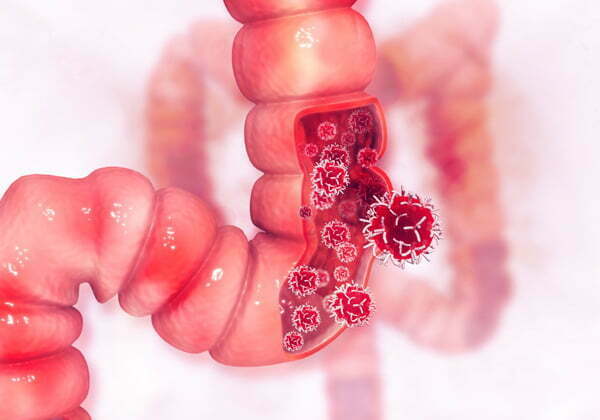
Yes, it’s true—some viruses can cause cancer. It's a startling thought, isn't it? We usually associate viruses with the flu or a common cold, not something as serious as cancer. But a specific group of viruses, called oncogenic viruses, can hijack a healthy cell and force it to grow and divide out of control.
Let's break down exactly how this happens, explain the science in a straightforward way, and give you the knowledge you need about prevention and treatment.
Understanding the Viral Link to Cancer
When you hear "virus," your mind probably goes to seasonal sickness. So, connecting these tiny invaders to a complex disease like cancer can feel like a huge leap. But the link is very real and represents a major piece of the global cancer puzzle.
In fact, viruses are a factor in an estimated 15% to 20% of all human cancers worldwide. That adds up to millions of new cases every year that can be traced back to a viral infection. And our understanding of this connection is always growing. For example, a 2024 study from the National Cancer Institute uncovered links between several previously unknown viruses and rare cancers, showing just how much we're still learning.
A great way to think about it is to picture an oncogenic virus as a piece of malicious code. When it infects one of your body's cells—which acts like a tiny biological computer—it can actually rewrite the cell's fundamental programming. Instead of doing its job and dying off when it's supposed to, the infected cell gets a new, dangerous command: multiply, multiply, multiply. This endless multiplication is what can eventually form a tumor.
This takeover isn't an overnight event. It typically happens after a long-term, chronic infection that sets the stage for cancer to develop. Over the course of years, or even decades, the virus can do a few key things:
- Change a cell's DNA. Some viruses literally cut and paste their own genetic code into your cell’s DNA. This can disrupt the very genes that are meant to put the brakes on cell growth.
- Disable your body's safeguards. Viruses can produce proteins that act like bodyguards, neutralizing your cell's natural tumor-suppressing ability. It's like they disarm the security system before robbing the place.
- Trigger chronic inflammation. A persistent viral infection puts your immune system on high alert, creating constant inflammation. This stressful environment damages cells and makes it easier for cancerous mutations to occur.
This powerful relationship between viruses and cancer is a huge focus in oncology because it opens up unique opportunities. It gives us pathways for prevention, like vaccines, and for creating highly specific treatments. Some research is even exploring how to flip the script on viruses, as seen in studies on repurposed antiviral agents showing efficacy against certain tumors. Grasping this connection is the first step toward using it to protect your health.
How a Virus Can Turn a Healthy Cell Cancerous
It’s often surprising to learn that something as common as a virus can lead to cancer. The connection isn't always direct or immediate, but it involves a slow, deliberate takeover at the cellular level. Think of your healthy cells as disciplined workers, each with a specific job, a clear set of instructions (your DNA), and a built-in retirement plan to self-destruct when their time is up.
An oncogenic, or cancer-causing, virus is like a corporate spy who doesn't just steal secrets—it rewrites the company’s entire operating manual. This process, which we call viral oncogenesis, isn't a single event. It's a hostile takeover that can take years, or even decades, to fully unfold, usually starting with an infection that the body just can't shake.
This transformation really comes down to three main strategies the virus uses to turn a cell against you.
Disrupting the Cellular Blueprint
The most straightforward approach is pure genetic sabotage. Some viruses, most notably the Human Papillomavirus (HPV), have the ability to slice into your cell's DNA and insert their own genetic code. It’s like a hacker inserting a malicious line of code into a critical software program.
This viral DNA often targets your tumor suppressor genes—the very genes that act as the emergency brakes, telling a cell when to stop growing. By embedding its own instructions, the virus effectively cuts the brake lines. The cell loses its off-switch and begins to divide endlessly, which is the very definition of cancer.
When a virus hijacks a cell in this way, it leaves a distinct fingerprint. Analyzing a cell's gene expression profile is one of the key ways we can see exactly how the virus has rewired its host.
Disarming the Cell's Security Team
Another insidious tactic is to neutralize the cell’s internal security system. Every one of your cells has proteins that act as guardians. The most famous of these is a protein called p53, which is so important we often call it the "guardian of the genome." Its job is to spot DNA damage, pause everything for repairs, or, if the damage is too great, order the cell to self-destruct (a process called apoptosis).
Oncogenic viruses have evolved to fight back. They produce their own proteins that seek out and deactivate crucial protectors like p53.
It's like the spy from our earlier analogy finding the head of security and firing them on the spot. With no one left to perform quality control, damaged cells are allowed to keep multiplying, passing on their defects and accumulating even more errors down the line.
Without these internal checks and balances, a single faulty cell can spiral out of control, eventually growing into a tumor.
This diagram gives a simplified overview of how this dangerous pathway unfolds, from the initial infection to the development of cancer.

As you can see, the virus hijacks the cell's own machinery, forcing it down a path toward malignancy.
Creating a State of Chronic Chaos
The third strategy is less about a direct genetic attack and more about creating a dangerously unstable environment through chronic inflammation. Viruses like Hepatitis B (HBV) and Hepatitis C (HCV) are perfect examples. When they establish a long-term infection in the liver, your immune system is locked in a never-ending battle.
This constant state of warfare creates significant collateral damage. As immune cells flood the area to fight the virus, they also damage healthy liver cells. This environment of perpetual injury and repair is a perfect storm for cancer development for two key reasons:
- Rapid Cell Division: To keep up with the damage, liver cells are forced to divide much more frequently than normal. Every time a cell divides, there's a small chance of a random error, or mutation, in its DNA. More division simply means more opportunities for a cancer-causing mutation to occur.
- DNA-Damaging Byproducts: The inflammation itself releases a flood of unstable molecules (reactive oxygen species) that can directly damage the DNA of nearby cells.
Over years of this inflammatory chaos, the odds steadily increase that one cell will accumulate just the right set of mutations to break free from its normal controls and become cancerous. In this case, the virus causes cancer by creating a battlefield where the body's own defenses inadvertently fuel the fire.
Common Cancer-Causing Viruses You Should Know
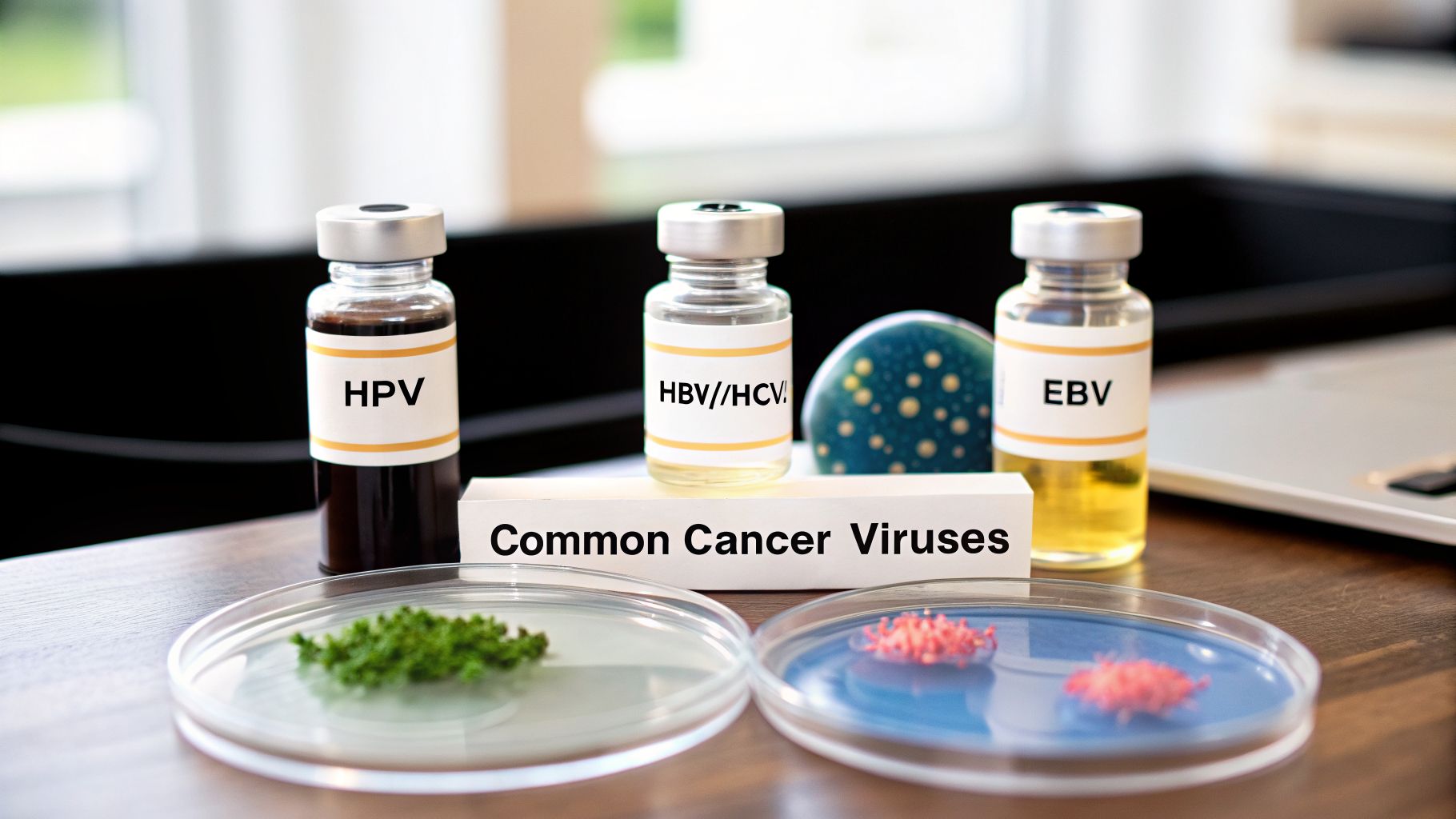
While the link between viruses and cancer can sound alarming, this knowledge is actually one of our greatest assets in modern oncology. Knowing exactly which viruses are involved gives us a clear target. We can develop vaccines to prevent infection, create screening programs to catch problems early, and even design treatments that specifically address the virus’s role in a tumor.
Only a handful of viruses are responsible for the majority of these cancers worldwide. Let's walk through the main ones you should be aware of.
Human Papillomavirus (HPV)
If you've heard of one cancer-causing virus, it's probably HPV. Human papillomavirus is incredibly common—in fact, most sexually active adults will encounter it at some point in their lives. In the vast majority of cases, the body’s immune system simply clears the infection on its own, and that's the end of it.
The issue arises when certain high-risk strains of the virus manage to stick around for years, or even decades. This persistent infection is what can eventually lead to cancer.
HPV is the definitive cause of nearly all cervical cancers. But its impact doesn't stop there; it's also a primary driver of cancers in the back of the throat (oropharynx), anus, penis, vagina, and vulva. Because it spreads through direct skin-to-skin contact, it’s easily transmitted.
In the U.S. alone, HPV is behind an estimated 39,300 cancers every year. While cervical cancer is the most frequent HPV-related cancer in women, oropharyngeal cancers have now become the most common for men.
Hepatitis B (HBV) and Hepatitis C (HCV)
When it comes to liver cancer, Hepatitis B and Hepatitis C are the main viral culprits. These viruses specifically target the liver, and if they establish a chronic infection, they can cause a state of constant inflammation. Over many years, this relentless cycle of damage and repair can pave the way for hepatocellular carcinoma, the most common type of liver cancer.
HBV is transmitted through contact with infected blood, semen, or other bodily fluids and can even be passed from a mother to her child during birth. HCV, on the other hand, spreads mainly through blood-to-blood contact, with the sharing of needles for intravenous drug use being a major risk factor.
Both HBV and HCV are notorious for being "silent" infections. A person can live for decades without a single symptom while the virus quietly causes progressive liver damage. This is precisely why screening for at-risk individuals is so vital—it’s the only way to catch the damage before it has a chance to turn into cancer.
Epstein-Barr Virus (EBV)
Epstein-Barr virus is another one of those viruses that most of us will be exposed to in our lifetime. It's the germ behind infectious mononucleosis, better known as "mono." For almost everyone, the infection is a one-time event, and the virus then lies dormant in our cells for life without causing any harm.
But in a small fraction of people, something goes wrong. EBV is linked to several types of cancer, including specific lymphomas like Burkitt lymphoma and Hodgkin lymphoma. It's also associated with cancers of the nasopharynx (the upper part of the throat behind the nose) and some stomach cancers. Researchers are still working to understand why EBV becomes cancerous in some people but not others, but it likely involves a complex interplay between the virus, a person's genetics, and their unique immune system.
To see how these viruses lead to changes at a cellular level, it helps to look at specific examples, such as Understanding Abnormal Cells HPV and Your Cervical Health.
To help you keep track, here is a simple breakdown of these key viruses and the cancers they are most commonly associated with.
Key Oncogenic Viruses and Associated Cancers
| Virus | Primary Cancers Caused | Mode of Transmission / Risk Factor |
|---|---|---|
| HPV | Cervical, Oropharyngeal (Throat), Anal, Penile, Vaginal, Vulvar | Transmitted through direct skin-to-skin and sexual contact. |
| HBV | Liver Cancer (Hepatocellular Carcinoma) | Spread via infected blood, semen, and other body fluids; mother-to-child transmission. |
| HCV | Liver Cancer (Hepatocellular Carcinoma) | Primarily spread through blood-to-blood contact, such as sharing needles. |
| EBV | Burkitt Lymphoma, Hodgkin Lymphoma, Nasopharyngeal Cancer, Stomach Cancer | Spread through saliva; most people are infected but few develop associated cancers. |
This table serves as a quick reference, but remember that the connection between a virus and cancer is often complex, involving many years and multiple biological steps.
How Viral Hepatitis Can Lead to Liver Cancer
When oncologists talk about viruses causing cancer, Hepatitis B (HBV) and Hepatitis C (HCV) are often the first examples that come to mind. These viruses are particularly dangerous because they're "silent." They can take up residence in the liver and cause damage for years—sometimes decades—without a single clear symptom. This long, quiet infection period is exactly what makes them such a serious threat.
The road from hepatitis to liver cancer isn't a direct attack. Instead, it’s a story of collateral damage from a battle the body can’t seem to win. Once the virus establishes itself in the liver cells, the immune system launches a powerful and relentless counterattack.
This constant fighting creates a state of chronic inflammation. Think of it like a city under constant siege. Over time, buildings get damaged, patched up, and then damaged again. The entire environment becomes chaotic and unstable. That’s a good picture of what’s happening inside the liver during a chronic hepatitis infection.
The Cycle of Damage and Repair
In its ongoing effort to eliminate the virus, the immune system is constantly attacking infected liver cells. This causes persistent injury. To keep up, the liver is forced into a never-ending cycle of regeneration, churning out new cells to replace the ones being destroyed.
Now, every time a cell divides, there's a tiny chance of a mistake—a mutation—creeping into its DNA. Normally, this risk is incredibly low. But in a chronically inflamed liver where cells are dividing over and over, the odds of a dangerous mistake happening increase dramatically.
It's a bit like a factory assembly line being forced to run at triple speed with no maintenance breaks. The quality control systems get overwhelmed, and defective products start slipping through. In the liver, these "defective products" are cells with genetic errors that can lead to uncontrolled growth.
Eventually, one of these cells might accumulate just the right combination of mutations to start ignoring the body's stop signals. This is the critical moment a healthy cell turns cancerous, ultimately leading to hepatocellular carcinoma, the most common type of liver cancer.
The Global Impact of Viral Hepatitis
The link between these viruses and liver cancer is undeniable. Globally, viral hepatitis is behind a staggering 80 percent of all liver cancer cases. This makes chronic HBV and HCV infections the fastest-growing cause of cancer-related death in the world.
Even here in the United States, the toll is significant. Hepatitis C-related liver cancer alone is responsible for about 4,000 to 5,000 deaths each year. You can learn more about how these quiet infections contribute to cancer statistics by reading about the threat of cancer-causing viruses at Meridian Bioscience.
Key Differences Between HBV and HCV
While both viruses cause cancer primarily through chronic inflammation, they don't operate in exactly the same way.
Hepatitis B Virus (HBV): This virus can actually splice its own DNA directly into the genome of the liver cells it infects. This act of genetic sabotage can directly switch off crucial genes that control cell growth, giving it a second, more direct path to causing cancer. It's mainly transmitted through infected bodily fluids, such as blood and semen, and can also be passed from mother to child during birth.
Hepatitis C Virus (HCV): Unlike HBV, this virus doesn't integrate its genetic code into our DNA. Its ability to cause cancer relies almost entirely on sparking that relentless, long-term inflammation we talked about. HCV is spread mostly through blood-to-blood contact, with sharing needles for drug use being a major risk factor.
For both viruses, the long delay between the initial infection and a cancer diagnosis can be a complete shock, often coming decades after an infection someone might not even remember. This is why screening for at-risk populations and, crucially, vaccination for HBV are so vital. They are our best tools for stopping this dangerous chain of events before it can even begin.
How We Prevent and Treat Virus-Related Cancers

Realizing that certain viruses can trigger cancer has given us an incredible advantage in the oncology clinic. It's more than just a fascinating piece of biology; this knowledge allows us to get ahead of the disease in ways that were once unimaginable.
Instead of only reacting to a cancer diagnosis, we can now be proactive. When we know a virus is the underlying cause, we have a clear target. This lets us either stop the cancer before it can ever develop or, if it does appear, use the virus’s presence as a roadmap for highly specific treatments.
Stopping Cancer Before It Starts With Vaccines
By far, our most powerful tool against virus-driven cancers is vaccination. It’s a simple concept with a profound impact: prevent the viral infection, and you prevent the cancer it could one day cause. We’ve seen remarkable success with vaccines for two of the most common cancer-causing viruses.
The Hepatitis B (HBV) vaccine is a true public health triumph. Since it became a standard part of infant care in 1991, it has practically wiped out new childhood infections in the United States, preventing countless future cases of liver cancer.
Likewise, the Human Papillomavirus (HPV) vaccine is a cornerstone of modern cancer prevention. It shields against the specific HPV strains that cause over 90% of cervical cancers, not to mention a growing number of cancers in the throat, anus, and other areas. It is, quite literally, a cancer-prevention shot.
By vaccinating against HPV and HBV, we are not just preventing an infection. We are preventing the chronic inflammation and genetic damage that these viruses can cause over many years, effectively dismantling the pathway that leads directly to cancer.
This is why these vaccines are recommended for children and adolescents, long before there's any immediate cancer risk. It's all about building a strong, lifelong defense.
The Power of Early Detection Through Screening
For viruses we can't yet vaccinate against, or for people who haven't been vaccinated, our next-best strategy is diligent screening. The goal here is to spot the trouble a virus might be causing at the earliest possible moment—ideally, when the cellular changes are still precancerous and easy to manage.
Our most important screening tools look for the specific footprints these viruses leave behind:
- Pap and HPV Tests: These are the foundation of cervical cancer prevention. By detecting abnormal cells on the cervix caused by HPV, we can intervene and remove them long before they have a chance to become invasive cancer.
- Hepatitis Blood Tests: A simple blood draw can identify a chronic infection with Hepatitis B or C. Finding these infections early allows us to use antiviral drugs that can control or even clear the virus, drastically cutting the long-term risk of liver cancer.
These tests are so effective because they are designed to find specific viral markers or the cellular damage they cause, giving us a crucial window to act.
Treating Cancers With a Viral Signature
Even when a virus-related cancer does develop, that viral connection can surprisingly work in our favor during treatment. A tumor that grew from a virus contains viral proteins—markers that the body recognizes as "foreign." This makes the cancer cells stick out to the immune system.
This unique characteristic makes these cancers especially responsive to immunotherapy.
Treatments like checkpoint inhibitors work by "releasing the brakes" on the body's own immune cells (T-cells), empowering them to find and destroy cancer cells. This process is often much more effective when viral antigens are present, as they give the immune system a clear, non-human target to lock onto. To learn more about this, you can read our guide on what immunotherapy for cancer is and how it works.
Ultimately, this strategy turns the virus's own biology against the cancer it helped create. Knowing a tumor’s viral status helps an oncologist choose therapies that have a much higher probability of success, moving far beyond a one-size-fits-all approach.
Next Steps for Personalized Cancer Care
Learning that a virus can lead to cancer might sound unsettling at first. But from an oncologist’s perspective, this knowledge is actually a source of tremendous hope. It shifts our entire approach from simply reacting to a diagnosis to being able to prevent cancer and create incredibly precise treatment plans. This is where science truly becomes a lifeline for patients and their families.
The connection between viruses and cancer is solid, but it comes with a powerful silver lining. When we know what causes a tumor—down to the specific virus—we can design smarter ways to fight it. This is why we have game-changing vaccines that stop these viruses in their tracks and advanced therapies that use a tumor’s viral history as a weakness to exploit. It’s one of the most promising frontiers in modern cancer care.
Charting Your Path Forward in NYC
If you or a loved one is facing a diagnosis, particularly for a cancer linked to a virus like HPV, HBV, or EBV, getting specialized guidance is the most important next step. Sitting down with an oncologist who understands this specific area helps cut through the confusion and lays out a clear, personalized roadmap. It's all about moving forward with a plan you can feel confident in.
Here at Hirschfeld Oncology in NYC, we build that plan with you, focusing on precision and partnership. Your first conversation will center on making sure your care is not only comprehensive but also right for you.
The goal is not just to treat cancer, but to understand its specific biology. When a virus is involved, it gives us a distinct biological signature to target, which can unlock more effective and less toxic treatment pathways.
What to Expect From a Specialized Consultation
A focused consultation is your opportunity to make sense of everything, ask all your questions, and feel secure in the path ahead. It’s a dedicated time to translate complex science into a practical, actionable plan.
Your initial meeting will likely cover a few key things:
- Understanding Your Diagnosis: We'll dive into whether a virus is part of your cancer's story. If it is, we’ll talk about what that specifically means for your prognosis and the kinds of treatments that might work best.
- Personalized Screening and Prevention: For those with risk factors for a virus-related cancer, we can develop a custom screening schedule and other preventive strategies to safeguard your health for the long run.
- Exploring Advanced Therapies: We'll discuss if your cancer has the right molecular fingerprint for cutting-edge treatments. This includes immunotherapies or other targeted drugs designed to work with your body’s immune system. You can learn more about how we uncover these details by reading our guide on how molecular testing for cancer shapes personalized treatment.
This is about turning scientific knowledge into a hopeful and empowered plan. To see how these principles could apply to your own care, we invite you to schedule a consultation with our team at Hirschfeld Oncology. Let's work together to figure out your next steps.
Answering Your Lingering Questions
It's natural to have questions after learning about a complex topic like the link between viruses and cancer. Let's tackle some of the most common ones that come up.
If I Have HPV or EBV, Does That Mean I’ll Get Cancer?
No, absolutely not. For the vast majority of people who get common viruses like HPV or EBV, their immune system clears the infection or keeps it dormant without any trouble.
Cancer is a rare outcome that can happen when a chronic, long-term infection manages to cause specific damage to your cells over many years. This happens in only a very small fraction of cases. For most people, the story ends with a healthy immune response.
Think of a viral infection as just one ingredient in a very complex recipe. Cancer needs many different things to go wrong to develop, and a persistent virus is just the first potential step.
Are There Vaccines for All Cancer-Causing Viruses?
Unfortunately, not yet. But the good news is we have incredibly effective vaccines for two of the biggest offenders: Hepatitis B (HBV) and Human Papillomavirus (HPV).
- The HPV vaccine is a true game-changer, preventing over 90% of cancers caused by the virus, including most cervical and a growing number of head and neck cancers.
- The HBV vaccine has been a massive public health success, dramatically reducing rates of liver cancer across the globe since it was introduced.
While researchers are hard at work developing vaccines for viruses like EBV and HCV, they aren't available just yet. This is why vaccination remains our single best strategy for stopping these cancers before they even have a chance to start.
My Cancer Isn't One of the Common Types. Could a Virus Still Be the Cause?
It's certainly a possibility, and this is a fascinating and active area of oncology research. We know the strong connections between viruses and cancers of the cervix, liver, and head and neck. But scientists are always uncovering more subtle links.
New discoveries are starting to show how viruses might play a role in other cancers, including some rare types. This is an excellent conversation to have with your oncologist. They'll be up-to-date on the latest research and can help you understand if it might apply to your specific diagnosis and treatment plan.
At Hirschfeld Oncology, we dig deep into the unique biology of your cancer to find the most precise and effective path forward. To see if a viral connection is relevant to your diagnosis and to discuss all your options, we invite you to schedule a consultation with our experienced NYC-based team. You can get in touch by visiting our website.
.png)
.png)