.png)


When you type "cancer infusion center near me" into a search bar, you're taking the first step on an incredibly important journey. But let's be honest, a search engine can't tell you where you'll feel most comfortable and cared for. The best starting point is almost always a conversation with your oncologist.
Starting Your Search for the Right Infusion Center
Finding the right place for your infusions is about so much more than just location. It's about trust, comfort, and clinical excellence.
Your oncologist is your single most valuable guide. They know your specific diagnosis, understand the nuances of your treatment plan, and have firsthand experience with local facilities. Think of their referral as an insider's recommendation—they know which centers have the most skilled nurses, the best track record with your type of cancer, and a philosophy of care that aligns with your needs.
Beyond your doctor's direct referral, you can broaden your search by tapping into patient advocacy groups or reputable online healthcare directories. The goal at this stage isn't to make a final choice. It's simply to gather a solid list of potential centers that you can then vet more thoroughly.
Hospital vs. Independent Community Clinics
You'll quickly notice that infusion centers generally fall into two categories: those affiliated with a large hospital and those that are independent, community-based clinics. Each has its own distinct feel and advantages.
Hospital-based centers offer the peace of mind that comes with having comprehensive services all in one place. If you need a lab test, an imaging scan, or have an unexpected issue, every resource is right there. This can be a huge comfort, especially for patients with complex medical histories.
On the other hand, an independent clinic often provides a more personal, less institutional atmosphere. Many patients find them easier to get to, with simpler parking and a quieter, more relaxed environment. The choice really comes down to what feels right for you and what your medical needs demand.
A smaller, community-focused center might feel less overwhelming, while a large hospital system provides the security of comprehensive, on-site medical support. There is no single "best" option—only what is best for you.
This decision-making process can feel like a lot to manage, but it can be broken down into a few key phases.
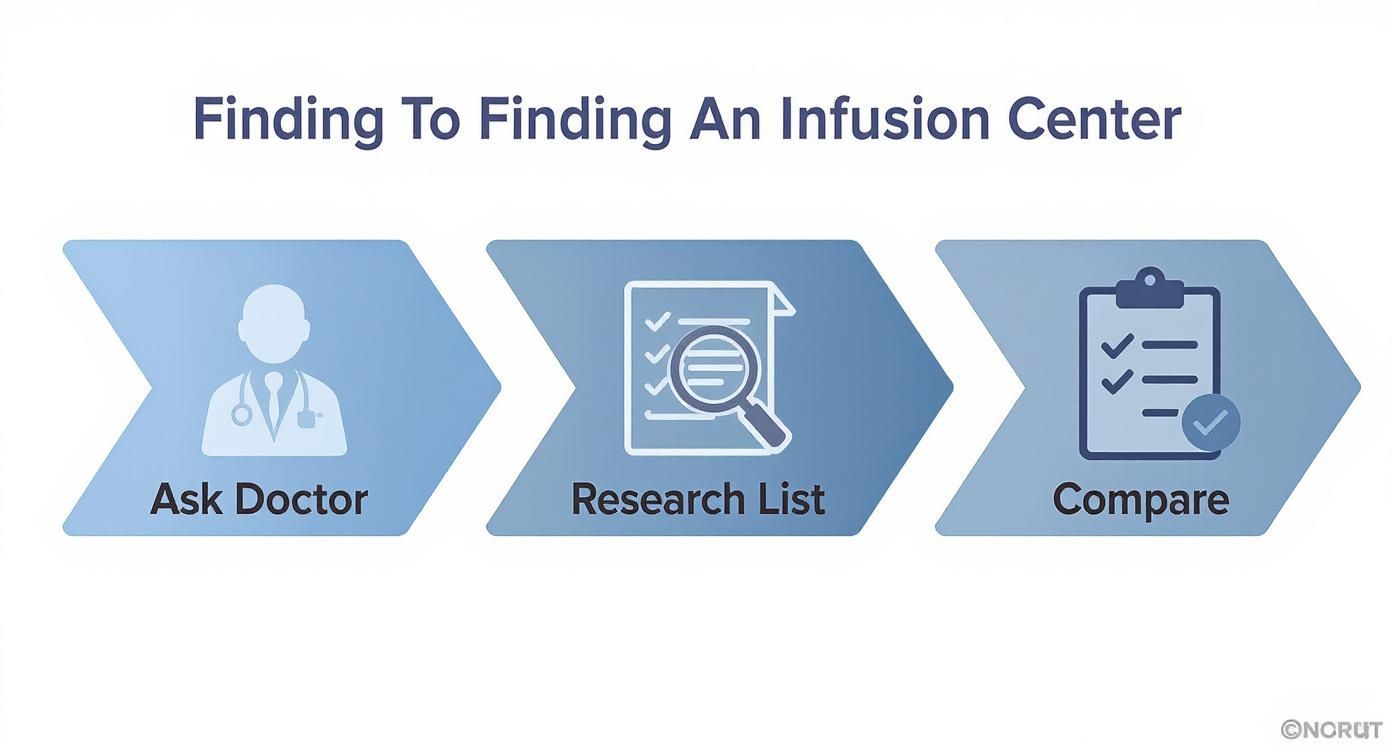
As this chart shows, the path forward involves getting expert advice, doing your own due diligence, and then carefully comparing your top options.
The need for high-quality, accessible treatment facilities has never been greater. There were an estimated 20 million new cancer cases worldwide in 2022, and that number is projected to climb significantly by 2050. This staggering reality highlights just how vital it is to find a center that puts your needs first. You can read more about the growing global cancer burden on who.int.
When you have a few potential centers on your list, it's time to start asking questions. To help you organize your research, use the checklist below.
Key Information to Gather for Each Potential Center
Use this checklist to organize your initial research and compare infusion centers at a glance.
Keeping track of these details will make your final decision much clearer and more informed.
Ultimately, this whole process is about finding a place where you feel safe, supported, and confident in the care you're receiving. Once you have a shortlist, the next step is to pick up the phone.
If you're looking for options in the New York City area, our team at Hirschfeld Oncology is here to guide you. Please don't hesitate to get in touch with us to schedule a consultation and see if our center is the right fit for you.
You've narrowed down your list of nearby infusion centers. Now comes the most important part: vetting their clinical quality. This is where you move past the convenient location and glossy brochures to really understand what they can do for you.
Every center looks good on paper, but the differences in care can be significant. Knowing the right questions to ask and what to look for will help you find a place that doesn't just administer treatment, but truly partners with you.
Look for Signs of Quality and Commitment
A great first step is checking for accreditation. Think of it as a seal of approval from a national authority. When you see credentials from groups like the Commission on Cancer (CoC) or the Quality Oncology Practice Initiative (QOPI), it’s a strong signal. It means the center has voluntarily opened its doors to intense scrutiny and meets high standards for patient safety and care quality. It’s not just a plaque on the wall; it’s a commitment to excellence.
Does Their Expertise Match Your Needs?
Next, you need to look at the actual treatments they offer. Most places can handle standard chemotherapy, but what if your situation calls for something more? This is especially true if you're dealing with a complex or advanced cancer.
Here are a few things to ask about directly:
- Immunotherapy: How much experience do they have with checkpoint inhibitors or other immune-based therapies? These are powerful but require a knowledgeable team to manage side effects.
- Targeted Therapy: Are they up-to-speed on the latest molecularly targeted drugs for your specific type of cancer?
- Low-Dose Chemotherapy: Some patients benefit from metronomic or low-dose protocols. Is this something they offer to help manage toxicity while still fighting the cancer?

Just as important as the therapies is the team's direct experience. Don't hesitate to ask, "How many patients with my diagnosis do you treat each year?" You want a team that has seen it all before. They’ll be better at anticipating side effects, managing complications, and fine-tuning your treatment. At Hirschfeld Oncology, we believe in transparency, which is why our credentials reflect a deep focus on complex cancers.
More Than Just an Infusion Chair: The Importance of Support
The best cancer care is about more than just what happens in the infusion suite. A truly patient-focused center understands that cancer treatment affects every part of your life. They build a support system right into their facility.
The presence of on-site support services is often a clear indicator of a patient-centered philosophy. It shows the facility understands that effective cancer care involves treating the whole person, not just the disease.
When you're evaluating a center, check if they offer these crucial resources:
- On-site Pharmacy: This is a game-changer. It makes getting medications easier and ensures your pharmacist and oncologist are literally on the same page.
- Nutrition Counseling: A dietitian who specializes in oncology can be your best friend, helping you manage nausea, stay strong, and eat well during treatment.
- Social Work and Financial Navigation: These professionals are your advocates, connecting you to support groups and helping you cut through the red tape of insurance and financial aid.
Making the right choice here is critical. In 2025, it's projected that 2,041,910 new cancer cases will be diagnosed in the U.S. alone. With over 80% of patients receiving infusion therapy, the center you choose becomes a home base for your care. Taking the time to dig into these details ensures you find a true partner for your journey.
Getting a Feel for the Center's Environment and Logistics
Let's be real: you're going to be spending a lot of time at this infusion center. While top-notch medical care is non-negotiable, the day-to-day practicalities can make or break your entire treatment experience. These aren't just minor details; they are the things that will either add to your stress or ease your burden.
Think about the infusion suite itself. You'll be sitting for hours, so that chair becomes your home base. Are they comfortable recliners designed for the long haul, maybe even with heat or massage? A good chair can make a world of difference.
And what about the vibe of the place? Some centers feel sterile and cold, while others are designed to be warm and calming. Do they offer private or semi-private bays? Having your own space can be a huge comfort when you’re feeling vulnerable.
It's the Little Things That Count
Beyond the big stuff, it’s often the small, thoughtful touches that show a center truly cares about its patients. These amenities can turn a draining treatment day into something far more manageable.
When you're checking out a center, ask about these practical supports:
- Creature Comforts: Do they offer warm blankets, pillows, snacks, or drinks? It's amazing how much a warm blanket and a cup of tea can help.
- Staying Connected: Is there free, reliable Wi-Fi? Being able to stream a movie, catch up on emails, or video chat with family can make the time pass much more easily.
- Space for Your Support Person: Is there a comfortable place for your friend or family member to sit with you? They're on this journey, too.
These details add up, helping you save your energy for what really matters—healing.
Don't Underestimate the Commute and Schedule
Finally, consider the journey. The last thing you want to deal with after a long infusion is a stressful parking situation or a long, exhausting walk to your car. Is parking close, easy, and accessible?
The ease of getting to your appointment—from scheduling flexibility to parking—is a critical, often underestimated, factor in your long-term treatment plan. It directly impacts your physical and emotional energy reserves.
Take a look at how they handle scheduling. Can they offer appointment times that fit with your work and life? A center that respects your time and makes the practical side of care as painless as possible is a true partner. All these logistical pieces ensure your focus can stay right where it needs to be: on your health and recovery.
Navigating Insurance and Financial Realities

The medical side of a cancer diagnosis is overwhelming enough. Then comes the financial side, which can feel like trying to decipher a completely different language of deductibles, copays, and out-of-pocket maximums.
Before you lock in your choice for an infusion center, it's absolutely critical to get a clear, honest picture of your financial responsibility. This isn't just about budgeting; it's about preventing a mountain of stress and surprise bills when you should be focused on your health.
Your first step? Pick up the phone. Call the centers on your shortlist and ask to speak with their financial navigator or benefits coordinator. These folks are the experts who live and breathe insurance complexities every day. They can verify if your specific plan is in-network and give you a real sense of what to expect.
A word of caution: never assume the infusion center is in-network just because your oncologist is. These are often separate entities with different insurance contracts. A quick call to both the center and your insurance provider can save you from a massive, unexpected bill later on.
Get Crystal Clear on the Costs
When you get that financial counselor on the phone, you need to be direct. Vague answers won't cut it. Your mission is to understand every potential cost so you can plan, prepare, and put your mind at ease.
I've found it's best to have a list of questions ready to go. The table below covers the most important ground, helping you uncover the details that matter most.
Key Questions for the Center’s Financial Counselor
Getting straight answers to these questions is incredibly empowering. It allows you to anticipate expenses and direct your energy where it belongs: on getting better.
A proactive conversation about finances is not just about avoiding debt; it's about reducing stress. Knowing what to expect financially clears a major hurdle, allowing you to engage more fully in your treatment and recovery.
Don't hesitate to ask about other forms of support. Many infusion centers have deep knowledge of patient assistance programs, grants from charitable foundations, and manufacturer copay assistance. Their financial navigators can often connect you with resources that can dramatically lighten the load. Having these frank conversations is one of the most powerful steps you can take.
What to Expect During Your First Infusion Visit
Walking into a new infusion center for the first time can be a nerve-wracking experience. It’s completely normal to feel a mix of anxiety and uncertainty. Knowing what the day will look like, step by step, can help calm those nerves and make you feel more in control.
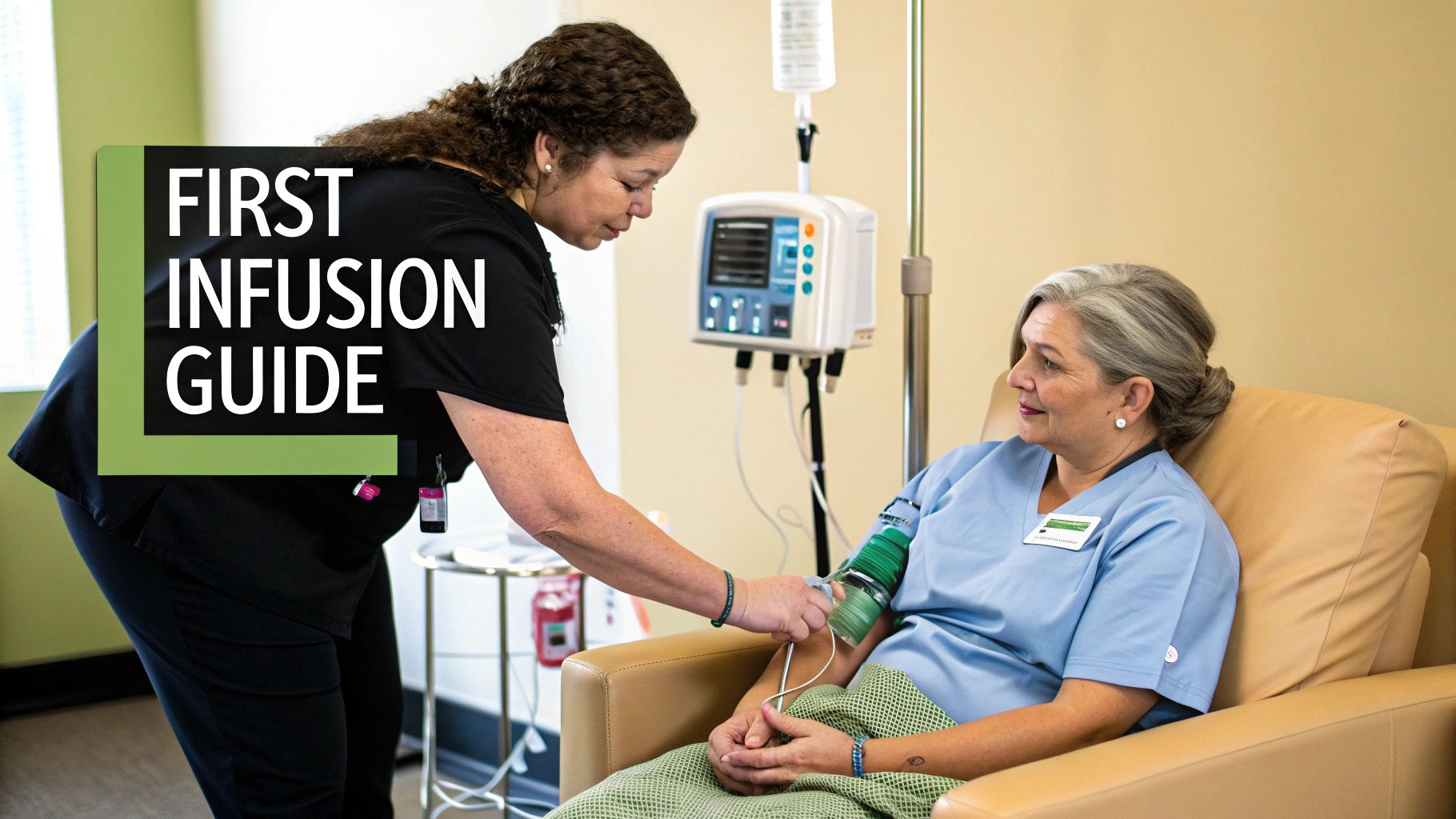
Your first visit is really an orientation. After checking in, you’ll meet your oncology nurse. This person is so much more than just a medical professional; they're your guide, your advocate, and your primary point of contact for the day. Their job is to make sure you're safe and comfortable, administer your treatment, and answer any questions that pop into your head.
The Pre-Infusion Routine
Before any treatment begins, your nurse will walk you through a few routine but critical steps. They'll start by taking your vital signs—like your blood pressure, pulse, and temperature—to establish a baseline for how you're doing that day.
Next comes the IV. Your nurse will either access your port (if you have one) or start a new IV line. I know this is a source of anxiety for many, but please know that oncology nurses are true experts at this. They do this all day, every day, and are incredibly skilled at making it as quick and painless as possible. A quick blood draw might also be needed to check your blood counts before the pharmacy mixes your specific dose.
Your oncology nurse is your partner in this. Never, ever feel shy about speaking up. If you're uncomfortable, have a question, or just feel a little off, tell them. Clear, open communication is the single most important part of a good infusion experience.
Making Your Time More Comfortable
Infusion appointments can last anywhere from 30 minutes to several hours. Planning ahead can make a world of difference in how you feel during that time. I always recommend patients put together a small "comfort kit."
Think about packing a bag with a few essentials to make the time pass more easily:
- A warm blanket or sweater: It's common for infusion suites to feel a bit chilly.
- Your favorite entertainment: A good book, a tablet loaded with movies, or headphones and a great playlist can make the hours disappear.
- Snacks and a water bottle: Most centers have crackers and juice, but having your own go-to snacks is always better.
- A small notebook: This is perfect for jotting down questions for your doctor or notes on how you're feeling during the infusion.
A little preparation goes a long way. For a more comprehensive checklist, we've put together a guide on how to prepare for chemotherapy that has tons of practical tips for any type of infusion.
Throughout the infusion, your nurse will be checking on you frequently. Once your treatment is finished, they’ll disconnect everything and give you any important instructions for when you get home. Knowing this flow helps turn a daunting day into just another manageable part of your treatment plan.
How We Can Support Your Journey at Hirschfeld Oncology
Searching for the right "cancer infusion center near me" is more than just a logistical task; it’s about finding a place where you feel safe, supported, and confident in your care. It's a place where advanced science and genuine compassion have to work hand-in-hand.
At Hirschfeld Oncology, we built our Brooklyn center on that very idea. We've created a calm, comfortable environment where your needs truly guide everything we do.
Our team knows that treatment is not a one-size-fits-all formula. We focus on creating personalized plans, offering therapies like immunotherapy and low-dose chemotherapy, that are carefully matched to your specific diagnosis and health goals.
A True Partnership in Your Care
We have deep experience working with patients who have complex and advanced-stage cancers, often providing new avenues when standard treatments haven't worked as hoped. Our entire philosophy is built on collaboration—we see you as an active partner in every decision we make together.
We believe that exceptional cancer care means treating the whole person, not just the diagnosis. Our commitment is to provide a space where you feel heard, respected, and hopeful about the path forward.
If you’re looking for a team that will stand by you and prioritize your well-being at every turn, we invite you to learn more about our approach. Contact Hirschfeld Oncology to schedule a visit and see how we can become a part of your care team.
Your Questions Answered: Making the Right Choice
When you start looking for an infusion center, a lot of practical questions will inevitably pop up. Finding clear, straightforward answers is key to feeling confident and in control of your care.
Let's walk through some of the most common questions we hear from patients.
What if I Want to Switch Infusion Centers?
Yes, you can absolutely switch. You are always in the driver's seat when it comes to your healthcare. If you've found another center that feels like a better fit for your needs, you have every right to make a change.
The process is pretty simple. You'll need a new referral from your oncologist, who will then help arrange the transfer of your medical records. While it's sometimes worth voicing your concerns to your current team first, never feel like you're stuck. Your doctor’s office should help make the transition seamless, ensuring there are no gaps in your treatment schedule.
Hospital-Based vs. Standalone Centers: What’s the Difference?
This is a big one. An infusion center located within a hospital gives you immediate access to a full spectrum of medical services. For complex cases or if there's a risk of complications, having everything under one roof provides an undeniable sense of security.
On the other hand, standalone community clinics are often smaller and feel less... well, clinical. Many patients tell us they prefer the quieter, more intimate atmosphere. These centers can also be easier to get to, with more convenient parking right outside the door. There’s no single "right" answer here; it truly comes down to your specific medical situation and what feels most comfortable for you.
The choice between a hospital-based center and a standalone clinic is deeply personal. One offers the security of comprehensive services, while the other provides a more intimate, accessible setting. Trust your gut on what feels right.
Can My Family Come With Me During Treatment?
Having a loved one by your side can make all the difference. Most centers welcome and encourage a support person, but their specific policies can vary. Some might have limits on the number of visitors to ensure the infusion suite remains a calm, safe space for everyone receiving treatment.
The best thing to do? Just call ahead and ask. A quick phone call will clear up any questions about their guest policy so you can plan accordingly.
At Hirschfeld Oncology, we know these questions are just the start of a much bigger conversation. We believe in a patient-centered approach that puts your needs and comfort first.
To get more insights and see how we can support you on your journey, we invite you to explore our blog. Learn more at https://honcology.com/blog.
.png)
.png)