.png)


When you ask, "how long does immunotherapy take to work," the answer is almost always a lesson in patience. If you're used to the rapid action of chemotherapy, this is a whole different ballgame. Generally, you can expect to wait several weeks to a few months before seeing a measurable response.
This isn't because the treatment isn't working. It's because immunotherapy doesn't attack cancer cells directly. Instead, it’s designed to methodically train your own immune system for a sustained fight.
The Waiting Game: How Long Immunotherapy Takes to Work

Understanding the immunotherapy timeline requires a real shift in perspective. Think of it less like a demolition crew (chemotherapy) and more like training an elite special forces unit (your immune system).
This is a biological process that unfolds gradually. First, your immune cells have to be activated. Then, they need to multiply into a large enough army to mount an effective, targeted assault on the tumor. It all takes time.
Why Patience Is a Key Part of the Process
The first phase of immunotherapy is all about waking up and "training" your T-cells to finally recognize cancer as the enemy it is. That just doesn't happen overnight.
Your body needs time to build a robust and specific immune response, which is why those early scans might not show any immediate changes. Rushing to judgment after just a few weeks can be completely misleading and, frankly, unnecessarily stressful.
The goal of immunotherapy isn't just a rapid response; it's a durable one. The gradual activation of your immune system is what allows for the possibility of long-term control, where your own body continues to police and destroy cancer cells long after treatment ends.
To help set some realistic expectations, it’s helpful to look at the general timelines for different types of immunotherapy. The table below gives a good ballpark for when you might first see signs of a response.
Of course, these are just estimates. As we'll get into, your individual timeline depends on many personal factors.
Typical Onset of Response for Common Immunotherapies
This table provides estimated timeframes for when patients might first see a measurable response from different types of immunotherapy.
These windows give us a starting point for discussion. In the next sections, we'll dive into the specific factors that can make your experience shorter or longer than these averages.
Unlocking Your Immune System's Power
To really get a feel for how long immunotherapy takes to work, we first need to pull back the curtain on what's actually happening inside your body. It's a completely different approach from chemotherapy. Chemo is a direct assault, poisoning fast-growing cancer cells. Immunotherapy, on the other hand, has a more elegant mission: it's about waking up your body’s own built-in defense force.
Think of your immune system's T-cells as highly trained guard dogs. These T-cells have natural "brakes"—what we call checkpoints—that stop them from attacking your own healthy tissue. It's an essential safety mechanism to prevent autoimmune chaos.
The problem is, cancer is smart. It learns how to exploit this safety feature, effectively pressing down on those T-cell brakes and putting the guard dogs to sleep. This lets the cancer grow completely under the radar, hiding in plain sight from the very system designed to destroy it.
Releasing the Brakes on Your T-Cells
This is where drugs like Pembrolizumab (Keytruda) or Nivolumab (Opdivo) step in. These "checkpoint inhibitors" don't attack the cancer directly. Instead, they essentially cut the brake lines on your T-cells.
By blocking the "off" signals that cancer sends, these drugs release the brakes. This is the wake-up call your T-cells have been waiting for, allowing them to finally recognize the cancer as a foreign invader and mount a full-scale attack. For a deeper dive, you can explore more about what is immunotherapy for cancer in our detailed guide.
This reawakening process is the key reason immunotherapy isn’t a quick fix. Your immune system has to marshal its forces and launch a multi-step counter-offensive.
The core principle is activation, not annihilation. Immunotherapy gives your T-cells the green light, but those T-cells must still build an army, travel to the tumor site, and systematically dismantle the cancer. This biological mobilization takes weeks, not days.
Building an Army From Within
Once those T-cells are finally "unleashed," the real work begins. It’s not an instant event; it's a strategic sequence, and every step takes time.
- Recognition: First, the newly activated T-cells have to properly identify the unique markers, or antigens, sitting on the surface of the cancer cells.
- Proliferation: Once they have their target, the immune system rapidly clones the exact T-cells needed for the job, building a specialized fighting force from scratch.
- Infiltration: This new army of T-cells then has to travel through your bloodstream and work its way deep into the tumor itself.
- Attack: Finally, once in position, the T-cells can carry out their mission and begin destroying cancer cells one by one.
This entire biological ramp-up is why the timeline for immunotherapy is often measured in months, not days. It's a gradual but powerful buildup of your body's own natural strength, all aimed at creating a deep and lasting response to the cancer.
Charting the Timelines for Specific Cancers
While it’s helpful to know the general principles of how immunotherapy works, the real-world answer to "how long will this take?" comes down to the specific cancer we're fighting. The unique biology of each tumor type dictates how quickly and effectively the immune system can be rallied to recognize and attack it.
For instance, melanoma has long been one of the cancers that responds most readily to checkpoint inhibitors. It's not uncommon for patients with advanced melanoma to see the first signs of a positive response within 8 to 12 weeks of starting therapy. Bladder cancer often follows a similar path, frequently showing tangible changes within that same two-to-three-month window.
The process isn't instantaneous because it's a biological chain reaction. We're essentially waking up the immune system and teaching it to see the cancer. This diagram breaks down the fundamental steps, from releasing the natural "brakes" on your T-cells to giving them the green light to attack.

As you can see, it takes time for this immune response to build enough momentum to start overwhelming the cancer cells.
Lung Cancer: A Story of Combination Therapy
Non-small cell lung cancer (NSCLC) often presents a slightly different timeline, particularly when we use a combination strategy. While immunotherapy on its own can take a few months to show a clear impact, we frequently pair it with chemotherapy to get a faster, more powerful one-two punch.
Think of it this way: the chemotherapy delivers an immediate blow to the cancer cells, shrinking the tumor quickly. At the same time, the immunotherapy is working in the background, methodically building a long-term, durable immune defense. This dual approach often produces measurable results much faster than immunotherapy could alone.
Response times can still vary, but we often see significant improvements after several months of combined treatment. A great example is the CheckMate 77T trial for NSCLC. It found that adding neoadjuvant nivolumab to chemotherapy led to a pathological complete response rate of 25.3%—a massive leap from the 4.7% seen in patients who only received chemotherapy.
Gastrointestinal Cancers: A More Complex Picture
Other cancers, like certain types of gastrointestinal tumors, can be a tougher nut for the immune system to crack. This is where a truly personalized strategy becomes absolutely essential.
For these more stubborn cancers, the time to response can be longer and far more variable. It really underscores the need for close, careful monitoring and a healthy dose of patience. The good news is that the field is constantly evolving, with new approaches emerging all the time. We dive deeper into this topic in our article on immunotherapy advances for difficult-to-treat gastrointestinal cancers.
It's crucial to remember that every patient's journey is unique. Timelines from clinical trials provide valuable benchmarks, but your individual response will depend on your specific diagnosis, overall health, and the treatment regimen selected by your oncology team.
Ultimately, knowing these cancer-specific timelines helps set realistic expectations. The waiting period can be incredibly difficult, I know. But understanding that your treatment is tailored to the specific characteristics of your cancer can provide a sense of confidence while your immune system gears up for its mission.
Understanding Unique Immunotherapy Response Patterns
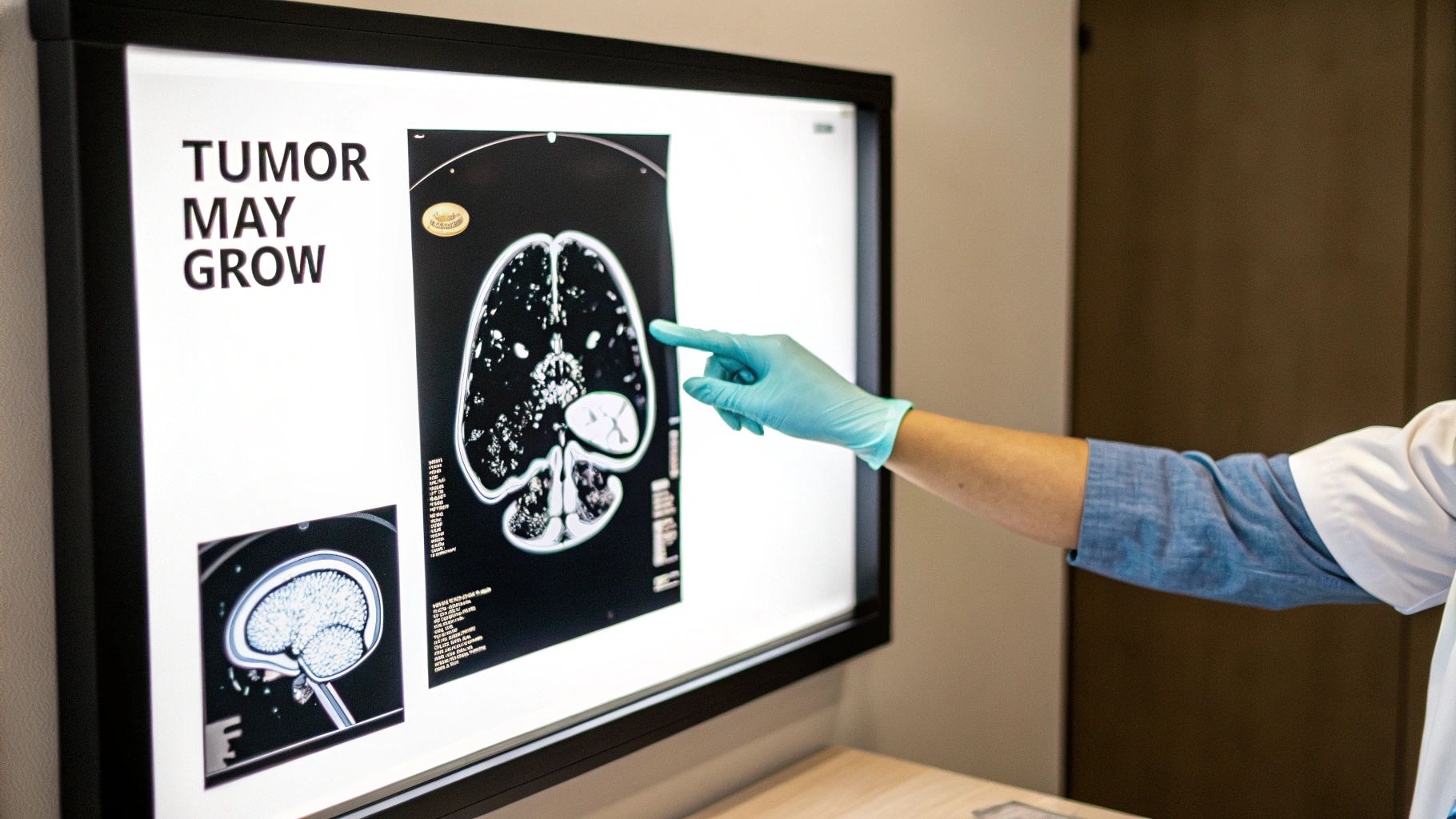
When we talk about "how long does immunotherapy take to work," we're not just watching a calendar. The way cancer responds to immunotherapy is fundamentally different from what we see with chemotherapy, and this can lead to some confusing—or even initially discouraging—scan results.
Think of it this way: instead of a direct chemical assault on a tumor, immunotherapy is more like rallying your body’s own troops to go on the attack. This process can create some unusual patterns on early scans that demand an expert eye to figure out what’s really going on.
When Growth Is a Good Sign: Pseudoprogression
One of the most critical concepts for patients to grasp is pseudoprogression. This is a situation where an early scan might show a tumor has actually gotten bigger or that new, tiny lesions have popped up. With traditional treatments, that would be bad news. With immunotherapy, it can actually be a fantastic sign.
So what's happening? This apparent "growth" is often the result of a massive army of your T-cells successfully infiltrating the tumor. The area becomes inflamed and swollen with immune cells doing exactly what we want them to do, which makes the tumor look larger on a CT or PET scan. It’s not more cancer—it's the cavalry arriving.
Pseudoprogression is the classic example of why patience is so important. An initial scan that looks "worse" might be the first visual proof that your immune system has launched a powerful, effective attack against the cancer.
Because this can happen, experienced oncologists are very hesitant to stop treatment based on a single early scan. The standard approach is to continue with the immunotherapy and schedule another scan a few weeks later. This helps confirm if we're seeing a promising immune flare or true tumor progression.
Hyperprogression: A Rare but Serious Outcome
On the other end of the spectrum, we have a rare phenomenon called hyperprogression. This is when a tumor grows at an unexpectedly rapid pace right after starting immunotherapy. While it’s an uncommon outcome, it's something your oncology team watches for very carefully.
The exact reasons for hyperprogression are still being researched, but it drives home the importance of vigilant monitoring. Some studies have shown that in clinical trials, a small fraction of patients may experience this accelerated tumor growth within the first two months, which demands a quick pivot to a different treatment strategy.
This is precisely why oncologists have developed new ways to interpret scans for patients on immunotherapy. We no longer rely solely on traditional imaging criteria; we now use specialized, immune-related response criteria to get the full story. You can get a deeper sense of how clinicians evaluate these complex responses by exploring the research on immune-related response criteria.
Knowing about these unique patterns is crucial for managing the emotional and clinical journey of immunotherapy. By understanding that a tumor might look worse before it gets better, you and your doctor can make clear-headed decisions without jumping to conclusions, focusing instead on the true trajectory of your response over time.
How We Measure if Your Treatment Is Working

Once your immunotherapy infusions begin, my team and I start a careful, ongoing process of monitoring to see how your body is responding. This isn't a simple "it's working" or "it's not" situation. Instead, it's a comprehensive assessment that weaves together what we see on advanced imaging with what you're telling us about how you feel.
Evaluating immunotherapy is a bit different from other cancer treatments; it demands patience and a specific rhythm. We typically schedule your first imaging scans, like a CT or PET scan, about 8 to 12 weeks after you start. This timeframe is crucial because it gives your immune system the time it needs to wake up, get organized, and start making a measurable impact on the cancer.
Looking Beyond Simple Tumor Shrinkage
Imaging is our primary tool for tracking progress, but what we're looking for isn't always as simple as a tumor getting smaller. Oncologists use very specific guidelines, or "response criteria," to interpret these scans. While older methods focused almost exclusively on a tumor’s size, today’s immune-related criteria are designed to account for the unique ways immunotherapy works—including unusual patterns like pseudoprogression.
When we analyze your scans, we're looking at a few key things:
- Tumor Size: Are the known tumors getting smaller, staying the same, or growing? We measure the diameter over time to track this.
- New Lesions: We're on the lookout for any new spots of cancer that may have appeared since your last scan.
- Overall Tumor Burden: This is the big picture—the total amount of cancer in your body and how it's changing.
This structured framework helps us tell the difference between a true response and the kind of temporary inflammation that can happen when immune cells rush into a tumor. It gives us a much more accurate picture.
Your personal experience is just as important as any scan. How you feel—your energy levels, pain, and overall well-being—provides crucial context. A scan might show "stable disease," but if you're telling me you have more energy and less pain, that's a powerful and meaningful sign of a positive response.
The Role of Biomarkers and Blood Tests
Alongside imaging, we run regular blood tests. These labs are vital for monitoring your organ function and blood counts, but we're also watching for specific tumor markers if they are relevant to your cancer type. These are substances in the blood that can signal cancer activity.
Seeing these markers trend downward can be one of the very first signs that the treatment is starting to work, sometimes even before we see changes on a scan.
Ultimately, figuring out if immunotherapy is effective is a partnership between you and your oncology team. We combine the objective data from scans and blood work with your subjective feedback on symptoms and quality of life. This holistic view ensures our decisions are based on the complete picture, not just a single snapshot in time. Understanding how we integrate genomic profiling and immunotherapy can give you even more insight into how this personalized monitoring is tailored specifically for you.
The Real Prize: Durable Response and Long-Term Immunity
When we talk about immunotherapy, we're not just aiming to shrink tumors for a few months. The true goal, the prize we're all after, is what we call a durable response. This means controlling the cancer for the long haul—months, years, and sometimes even long after the last infusion. It’s this lasting benefit that truly sets immunotherapy apart.
The magic behind this is "immune memory." We're essentially training your T-cells to do more than just fight the cancer they see today. We're teaching them to remember the enemy's face so they can stay on guard, ready to pounce on any new cancer cells that dare to show up down the road.
How Long Does This Lasting Effect Hold Up?
This naturally leads to a question I hear all the time: "If I stop treatment, will the cancer come back?" It's a fair question, and the answer is one of the most hopeful aspects of this therapy: for many, the benefit continues. We've found that a fixed course of treatment—often about two years—is frequently enough to lock in that immune memory.
Think of it like getting a vaccine. The initial shots are the "training," but once that's done, your immune system is armed and ready to protect you on its own, without needing constant boosters. Stopping treatment doesn't mean the fight is over; it means your own body is now fully equipped to lead the charge.
Stopping active treatment is a profound step. It marks a shift from continuous therapy to vigilant monitoring, based on the confidence that we've successfully awakened your body's natural defenses to keep the cancer in check for the long term.
Fixed-Duration vs. Never-Ending Treatment
The thought of stopping infusions can be scary, but the decision is backed by solid research. For a long time, there was a big debate in oncology: should we keep patients on immunotherapy indefinitely, or is there a point where we can safely stop? Landmark studies have given us some clear answers.
One major study compared patients who stopped immunotherapy after two years with those who continued it indefinitely. The results were striking—there was no significant difference in their overall survival. For example, four years after starting treatment, the survival rate was 79% for those who stopped at two years, compared to 81% for those who kept going.
Other pivotal trials have shown that around 82–83% of patients were still alive three years after finishing a two-year course of pembrolizumab. You can dig into the specifics yourself by reviewing the findings on fixed-duration immunotherapy.
This data is incredibly powerful. It tells us that for many people, the benefit gained in those first two years is strong and lasting, opening the door to a future that isn't defined by constant trips to the infusion center.
Your Immunotherapy Timeline Questions, Answered
When you're starting a new treatment like immunotherapy, it’s completely normal to have a lot of questions about what to expect and when. Let's walk through some of the most common concerns we hear from patients.
Can I Actually Feel Immunotherapy Working?
This is a great question. While some patients say they start to feel a bit better as their body responds, there isn't a specific physical feeling that tells you the immunotherapy is kicking in.
Sometimes, side effects like a skin rash or fatigue can be a sign that your immune system is revved up and getting to work. However, the only way to truly know if the treatment is effective is through medical imaging and your oncologist's evaluation.
What if My First Scan Shows the Tumor Got Bigger?
Seeing tumor growth on an initial scan can be alarming, but it's not always a sign of trouble. This could be something called pseudoprogression.
Imagine your immune system sending a flood of T-cells to attack the tumor. This influx of warrior cells can make the tumor appear larger on a scan, even though it's actually a positive sign of an immune assault. Your oncologist knows to look for this and will almost always recommend staying the course and getting another scan in a few weeks to see the real trend.
The key is to avoid jumping to conclusions based on a single, early snapshot. Consistent monitoring over time reveals the true trajectory of your body’s response to the treatment.
How Long Will I Be on Immunotherapy?
The duration of immunotherapy really depends on the individual. For some cancers, a standard course might be a fixed period of one to two years. In other cases, treatment continues as long as it's working and the side effects are manageable.
The exciting part is that for many people, the effects of immunotherapy can be incredibly durable. Thanks to "immune memory," your body can learn to keep the cancer under control long after you've stopped the infusions.
At Hirschfeld Oncology, we know that understanding your treatment path is just as important as the treatment itself. We focus on clear, open communication and personalized monitoring every step of the way. To learn more about a tailored approach to your cancer care, request a consultation with our team.
.png)
.png)