.png)


Why Rehabilitation Matters in Modern Oncology
Modern oncology recognizes that cancer and its therapies profoundly diminish functional capacity, leading to fatigue, weakness, balance loss, and reduced independence. Early, supervised rehabilitation—initiated before surgery or soon after diagnosis—counteracts these declines. Randomized trials show that structured aerobic and resistance programs preserve muscle mass, improve cardiovascular health, and lower treatment‑related fatigue, while supervised settings produce larger gains than unsupervised home regimens. Integrating physical therapists, physiatrists, occupational therapists, nutritionists, and psychosocial counselors creates a multidisciplinary team that tailors interventions to each patient’s treatment phase, comorbidities, and personal goals. This collaboration enables precise pain management, lymphedema control, and safe progression of exercise intensity, ensuring safety and maximizing quality‑of‑life improvements. Consequently, early, team‑based rehabilitation is now a cornerstone of comprehensive cancer care, supporting faster recovery, functional independence, and better long‑term outcomes. Patients who engage in these evidence‑based programs report higher satisfaction, reduced hospital readmissions, and greater confidence in resuming work and social activities and independence.
Nutrition, Activity, and Evidence‑Based Exercise Guidelines

Nutrition and physical activity guidelines for cancer survivors Cancer survivors should maintain a healthy weight by balancing calories with regular activity. A diet rich in whole grains, fruits, vegetables, legumes, and lean protein—while limiting red/processed meats, added sugars, saturated fats, and sodium—supports recovery and lowers recurrence risk. The American Cancer Society recommends at least 150 minutes of moderate‑intensity aerobic exercise weekly (e.g., brisk walking) plus strength‑training for all major muscle groups on two or more days. Limit alcohol (≤1 drink/day for women, ≤2 for men) and avoid tobacco; nutrition screening and dietitian referral are advised.
ACSM cancer exercise guidelines The ACSM advises adults living with cancer to perform ≥150 minutes of moderate‑intensity aerobic activity per week (or 75 minutes vigorous) across 3‑5 days, combined with 2‑3 weekly resistance sessions targeting all major muscle groups. Programs should start low‑volume, low‑intensity and progress as tolerance improves, incorporating flexibility and balance work, especially for older survivors.
Exercise guidelines for cancer survivors: consensus statement International consensus recommends 150‑300 minutes/week of moderate aerobic activity (or 75‑150 minutes vigorous) plus 2‑3 weekly resistance sessions (1‑3 sets of 8‑12 reps). Flexibility and balance exercises 2‑3 times weekly are also advised. Prescriptions must be individualized to cancer type, treatment phase, comorbidities, and baseline fitness, with gradual progression and monitoring for lymphedema, bone fragility, or cardiopulmonary limits.
Benefits of exercise during chemotherapy Exercise lessens treatment‑related fatigue, anxiety, and depression while preserving functional independence. It improves sleep, mood, cardiovascular health, and may enhance drug delivery via better blood flow and immune surveillance.
Best exercise for cancer patients An effective program blends moderate‑intensity aerobic activity (walking, cycling, swimming, dancing) with regular strength training (resistance bands, body‑weight or light free‑weight exercises). Aim for ≥150 minutes aerobic activity spread over the week plus two resistance sessions targeting major muscle groups, individualized to cancer type, treatment stage, and side‑effects; consult oncology or certified exercise specialists for safety.
Safety, Scheduling Rules, and Clinical Contraindications

The oncology "7‑day rule" requires that a missed chemotherapy dose be given or the regimen adjusted within seven days, preserving therapeutic intensity and minimizing disease‑progression risk. The UK "28‑day rule" (Faster Diagnosis Standard) mandates a definitive cancer diagnosis—or a ruled‑out decision—within 28 days of an urgent referral, shortening wait times and improving early‑treatment outcomes. Physical‑therapy safety thresholds prioritize cardiovascular stability; absolute contraindications include unstable angina, uncontrolled hypertension, acute embolus, infection with fever, dissecting aneurysm, and myocarditis. Relative contraindications such as thrombocytopenia < 20 ×10⁹/L, anemia < 80 g/L, neutropenia < 1.5 ×10⁹/L, severe leukopenia, hypoglycemia < 5.5 mmol/L, hypertension > 200/110 mmHg, tachycardia > 120 bpm, or resting O₂ ≤ 88 % require physician clearance and program modification. Exercise implementation guidelines call for oncology clearance, then at least 150 minutes/week of moderate‑intensity aerobic activity (or 75 minutes/week vigorous) plus 2‑3 weekly resistance sessions, supplemented with flexibility, balance, and pelvic‑floor work as appropriate. Initiate slowly, progress gradually, and monitor for pain, fatigue, or symptom exacerbation, adjusting intensity or duration promptly.
Comprehensive Cancer Rehabilitation: Types, Stages, and Inpatient Care

Cancer rehabilitation encompasses several specialized services. Physical therapy restores strength, endurance, and mobility through exercise and manual techniques; occupational therapy restores independence in daily activities such as dressing, cooking, and self‑care; speech‑language pathology addresses swallowing, speech, and communication difficulties. Additional modalities include lymphedema therapy, psychosocial counseling, and vocational rehabilitation, all coordinated by a multidisciplinary team. Rehabilitation is organized into five progressive stages that align with a patient’s treatment journey: (1) pre‑rehabilitation (prehab) prepares the body before surgery or therapy with exercise, nutrition, and stress‑management; (2) restorative care during treatment maintains strength and manages side‑effects; (3) post‑treatment recovery rebuilds stamina and independence after the acute phase; (4) long‑term supportive maintenance offers ongoing therapy, pain control, and lifestyle counseling; and (5) survivorship wellness emphasizes lifelong health and quality‑of‑life initiatives. Inpatient rehabilitation provides around‑the‑clock multidisciplinary care, with oncology‑trained physical, occupational, and speech therapists, nurses, dietitians, and psychosocial specialists creating individualized programs to improve strength, balance, pain control, and functional independence. For local inpatient options, the Mayo Clinic’s 36‑bed Comprehensive Rehabilitation Unit in Rochester, Minnesota offers a dedicated, CARF‑accredited cancer rehab program staffed by physicians, nurses, therapists, and psychologists.
Professional Pathways, Certification, and Compensation for Oncology Physical Therapists

Oncology Physical Therapy Certification
The primary credential is the Board‑Certified Oncology Clinical Specialist (OCS) offered by the American Board of Physical Therapy Specialties (ABPTS). Candidates must hold a current PT license, have ≥2 years of direct oncology patient care, submit case reports and CE documentation, and pass a comprehensive written exam covering musculoskeletal, cardiopulmonary, and lymphedema management in cancer care.
How to Become an Oncology Physical Therapist
Earn a Doctor of Physical Therapy (DPT), obtain state licensure, and acquire musculoskeletal or neuromuscular experience. Pursue oncology‑focused rotations or a post‑professional residency (e.g., Memorial Sloan Kettering’s 18‑month program). After ≥2 years in oncology, apply to ABPTS for OCS certification.
Oncology Physical Therapy Salary
U.S. salaries range from $70,000–$120,000, median≈$90,000. High‑cost regions (California, Washington, Northeast) can exceed $130,000, while lower‑cost areas hover $70,000–$80,000. Advanced certification and leadership roles add $10,000–$20,000+.
Is Physical Therapy Good for Cancer Patients?
Yes. PT provides individualized programs that mitigate fatigue, pain, neuropathy, lymphedema, and balance deficits, restoring functional independence and improving quality of life throughout treatment and survivorship.
Role within Multidisciplinary Teams
Oncology PTs collaborate with oncologists, physiatrists, occupational therapists, nutritionists, and psychosocial counselors, ensuring coordinated, patient‑centered rehabilitation across the cancer care continuum.
Patient Resources, PDFs, and Community Access to Rehabilitation
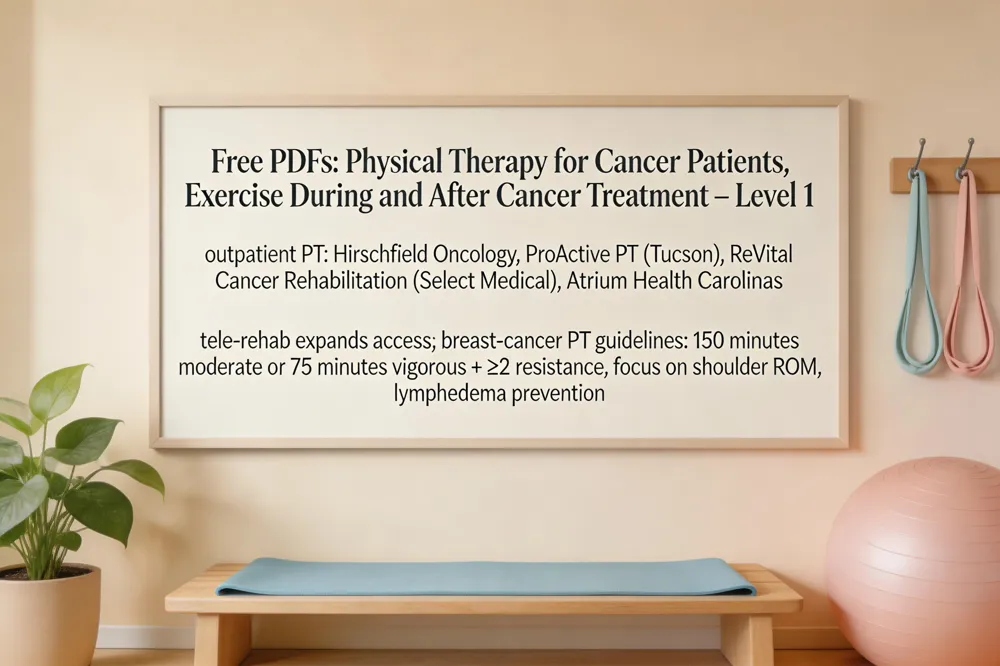
Free downloadable guides are widely available. The "Physical Therapy for Cancer Patients" PDF provides evidence‑based exercise and rehabilitation strategies, while the Clinician‑approved "Exercise During and After Cancer Treatment – Level 1" PDF from Memorial Sloan Kettering outlines safe aerobic and strength activities. A comprehensive cancer rehabilitation PDF describes multidisciplinary survivorship services, including PT, OT, speech, nutrition, pain‑management, and psychosocial support.
Local outpatient PT locations include Hirschfeld Oncology’s referral network and ProActive Physical Therapy’s Marana clinic (7575 W. Twin Peaks Rd., Suite #155) in Tucson. For broader coverage, ReVital Cancer Rehabilitation (Select Medical) offers outpatient PT, OT, and speech therapy at many U.S. sites; Atrium Health Carolinas Rehabilitation provides inpatient and outpatient cancer rehab in the Southeast.
Tele‑rehab options expand access, allowing remote monitoring and guided exercise sessions.
Specific cancer resources: breast‑cancer survivors follow ASCO and 2018 Physical Activity Guidelines—150 min moderate aerobic or 75 min vigorous weekly plus ≥2 resistance sessions. Early PT after breast surgery targets shoulder range of motion, strength, posture, and lymphedema risk, using personalized stretching, strengthening, and nerve‑gliding exercises.
Yes—cancer patients can and should be referred to tailored rehabilitation programs overseen by multidisciplinary teams.
A Future of Integrated, Personalized Cancer Care
Coordinated cancer rehabilitation unites oncologists, physiatrists, physical and occupational therapists, nutritionists, and psychosocial counselors to address the full spectrum of treatment‑related impairments. When these experts collaborate, patients experience faster recovery of mobility, reduced fatigue, better pain control, and higher quality of life, as demonstrated in multiple randomized trials and programs at leading centers. Prompt referral—ideally before surgery or at the start of chemotherapy—allows pre‑habilitation to build strength and reserve, which translates into shorter hospital stays, fewer complications, and quicker return to work or daily activities. Empowering patients through shared decision‑making, SMART goal‑setting, and self‑monitoring tools transforms them into active partners in their care, improving adherence and sustaining healthy habits. Hirschfeld Oncology has embedded this philosophy into every stage of its cancer care pathway, offering on‑site oncology physical therapists, individualized exercise prescriptions, and integration with oncology, nutrition, and mental‑health services. The result is an evidence‑based roadmap that maximizes functional independence and survivorship outcomes.
.png)
.png)