.png)


Immunotherapy helps only a small subset of pancreatic cancer patients today, principally those with MSI-H or dMMR tumors. For most patients, realistic gains are more likely to come from combination and perioperative strategies that remain under investigation.
You may be hearing about immunotherapy after standard treatment has stopped working, and the word can sound like a lifeline. It can be one, but only when the tumor has the biology that allows an immune drug to work. For most pancreatic ductal adenocarcinomas, checkpoint inhibitors used alone have produced limited, short-lived benefit, while combinations and personalized approaches are being tested to overcome the disease's immune resistance.
This pancreatic cancer immunotherapy review separates established treatment from investigational treatment. The practical question isn't whether immunotherapy is exciting. It's whether your tumor has a biomarker that supports treatment now, or whether a clinical trial offers a rational opportunity to test a combination.
When Standard Options Run Out
A 64-year-old patient with metastatic pancreatic ductal adenocarcinoma has progressed after FOLFIRINOX and then gemcitabine plus nab-paclitaxel. The oncologist discusses another chemotherapy option, symptom control, and clinical trials. The patient asks the question many families ask at this point: “Could immunotherapy work for me?”
The candid answer is usually no, unless testing reveals a specific feature such as MSI-H or dMMR disease. Pancreatic cancer remains one of the most lethal solid tumors globally. Across all stages, the historical benchmark is a 27% one-year relative survival rate and a 9% five-year relative survival rate, as summarized by the Cancer Research Institute's pancreatic cancer immunotherapy overview.
That poor outlook explains why researchers keep pursuing immune-based treatment despite disappointing early trials. Immunotherapy is now regarded as the fourth major treatment modality in pancreatic cancer, alongside surgery, chemotherapy, and radiotherapy, but that status reflects an established research field, not a broadly effective replacement for chemotherapy.
The decision after progression
Checkpoint drugs such as pembrolizumab, nivolumab, and related agents work differently from cytotoxic chemotherapy. Chemotherapy directly damages or stresses rapidly dividing cancer cells. Immunotherapy tries to help the patient's immune system recognize and attack malignant cells, potentially producing control that lasts longer than the treatment itself.
The problem is that most pancreatic tumors suppress that immune response. Reviews consistently find limited and non-durable benefit from anti-PD-1, anti-PD-L1, anti-CTLA-4, and CD40 agonist monotherapy in unselected patients, which is why current development has shifted toward combinations.
Practical rule: Don't accept “immunotherapy” as a sufficient treatment explanation. Ask which drug, which biomarker, which evidence, and whether the treatment is approved or trial-only.
For a patient whose cancer has progressed, the immediate priorities are molecular testing, review by a pancreatic cancer specialist, and a serious search for an appropriate clinical trial. Off-label checkpoint treatment without a supporting biomarker is usually a weak bet, not a clever shortcut.
How Immunotherapy Attacks Cancer and Why the Pancreas Is Different
Checkpoint inhibitors remove immune brakes. T cells can recognize abnormal proteins on cancer cells, but tumors may activate signals that suppress this response. Anti-PD-1 and anti-PD-L1 drugs interrupt one of those signals. Anti-CTLA-4 drugs act earlier, helping activate T cells.
The strategy works best when a tumor carries many recognizable mutations or already contains an active immune response. Pancreatic adenocarcinoma usually creates problems before checkpoint blockade can help. Too few T cells enter the tumor, and those that arrive may be impaired by the surrounding tissue and immune cells.

Why pancreatic tumors stay “cold”
The pancreatic tumor microenvironment contains dense fibrotic tissue, often called desmoplastic stroma. It forms a barrier around cancer cells, restricts immune-cell movement, and may interfere with drug delivery. Poor T-cell infiltration, suppressive myeloid populations, and weak antitumor signaling help explain why checkpoint blockade performs poorly in unselected PDAC.
Several barriers reinforce one another:
- Dense stroma: Fibrotic tissue limits access to tumor cells and can interfere with drug delivery.
- Suppressive myeloid cells: Myeloid-derived suppressor cells and tumor-associated macrophages can restrain T-cell function.
- Low immune visibility: Many pancreatic tumors present too few recognizable targets to generate a strong immune attack.
- Functional exhaustion: T cells inside the tumor may be present but unable to sustain effective killing.
Removing a checkpoint brake therefore may not be enough. The immune cells still need a way into the tumor, a recognizable target, and the ability to keep attacking.
The combination rationale
Combination therapy addresses several barriers at once. Chemotherapy may cause immunogenic cancer-cell death, releasing tumor material that helps prime an immune response. Stromal-remodeling drugs may improve T-cell trafficking. Myeloid-targeted agents may reduce suppressive immune populations, while vaccines or dendritic-cell strategies may provide a clearer target.
The central strategy is to turn a cold tumor into an inflamed tumor before asking a checkpoint inhibitor to maintain the attack. This approach is scientifically persuasive, but it remains investigational for most patients. The clear exception is biomarker-selected disease, particularly MSI-H or dMMR tumors, where checkpoint treatment can benefit a small group today. For the much larger group with ordinary pancreatic cancer, combination and perioperative strategies remain areas of clinical research, not established substitutes for standard treatment.
What Recent Clinical Trials Show
Clinical evidence separates a small biomarker-defined group from the much larger population with unselected PDAC. In MSI-H or dMMR pancreatic cancer, pembrolizumab has produced meaningful responses and durable disease control in tumor-agnostic evidence supporting its regulatory use. For ordinary microsatellite-stable disease, checkpoint therapy has been far less convincing.
A 2025 systematic review in the International Journal of Molecular Sciences examined 21 studies. Across the included PDAC populations, median overall survival was 8.65 months, median progression-free survival was 2.55 months, the objective response rate was 16.2%, and the disease control rate was 50.3%. Grade 3 or higher treatment-related adverse events occurred in 22% of patients. The authors found no survival improvement from ICIs in unselected populations, whether given alone or with chemotherapy or experimental agents.
A separate population-based pancreatic cancer study associated immunotherapy added to chemotherapy and chemoradiation with longer survival among patients who did not undergo definitive surgery. Median overall survival increased from 4.27 months to 10.60 months, a difference of 6.33 months, with an adjusted hazard ratio of 0.866 and a p-value below 0.001. This was not a randomized comparison, so differences in patient selection may explain part of the result.
| Trial or evidence set | Population | Regimen | ORR | Median OS | Grade 3+ AEs |
|---|---|---|---|---|---|
| 2025 systematic review | Unselected or mixed PDAC studies | ICIs alone or in combinations | 16.2% | 8.65 months | 22% |
| 2025 metastatic-disease meta-analysis | 834 patients across 17 studies | ICI-based regimens | 16% | 7.9 months | Not consistently reported |
| 2025 metastatic-disease meta-analysis | Same population | ICI-based regimens | Stable disease, 28% | PFS, 4.6 months | Progressive disease, 36% |
| MSI-H/dMMR evidence | Biomarker-selected pancreatic cancer | Pembrolizumab-based treatment | Durable responses reported | Not reached in key response evidence | Regimen-specific |
The headline response rate is not the same as a meaningful survival benefit. Some patients achieve tumor shrinkage, others only temporary stability, and many progress quickly. Ask whether a result came from a randomized study, how long responses lasted, and whether the enrolled tumors resembled yours.
For current research on combinations that target the tumor microenvironment, review emerging clinical trials targeting the tumor microenvironment in pancreatic cancer. Active trials show where treatment is being tested, not what has become standard care.
Monotherapy Versus Combination Strategies
Single-agent checkpoint blockade is not a dependable general treatment for pancreatic cancer. In unselected PDAC, objective responses are generally below 10%, and the systematic review cited earlier found no survival benefit across unselected populations. The rare biomarker-positive patient is different. For everyone else, the practical choices are standard systemic treatment or a clinical trial designed to address the tumor microenvironment.
Combination strategies have a stronger biological rationale because they target several barriers at once. Chemotherapy can reduce tumor burden and release antigens. Stromal approaches aim to improve immune-cell access. Myeloid-directed drugs attempt to reduce immune suppression, while vaccines may help the immune system recognize the tumor.
What the combinations are trying to fix
| Strategy | Barrier addressed | Clinical position |
|---|---|---|
| Checkpoint inhibitor plus chemotherapy | Low antigen release and limited immune activation | Investigational or regimen-specific |
| Stromal remodeling | Physical exclusion of immune cells | Early clinical development |
| Myeloid targeting | Suppressive macrophages and myeloid-derived cells | Clinical trials |
| CXCR4-directed combinations | Poor T-cell trafficking | Early clinical development |
| CD40 agonist combinations | Weak antigen presentation | Experimental |
| Personalized vaccines | Lack of tumor-specific immune priming | Investigational |
Early studies have reported partial responses or stable disease with combinations such as durvalumab plus tremelimumab, a CXCR4 antagonist paired with immune therapy, and the CD40 agonist sotigalimab. These signals justify further testing, not routine use. Early-phase trials often enroll carefully selected patients and may lack a chemotherapy control group, so their results cannot establish that a combination extends survival.
How to interpret a combination offer
A combination may produce more radiologic responses while also causing more toxicity. Tumor shrinkage on a scan does not prove that treatment extends life, especially when randomized overall-survival data are unavailable.
The 2025 metastatic-disease synthesis reported an overall response rate of 16%, median overall survival of 7.9 months, median progression-free survival of 4.6 months, stable disease in 28%, and progressive disease in 36% across 834 patients and 17 studies, according to the published evidence synthesis. The appropriate conclusion is measured: combinations can help selected patients, but benefit remains limited and uneven.
A promising response signal is a reason to improve a trial, not a reason to skip the consent discussion.
Before accepting a combination, ask whether it is FDA-approved for your exact situation, supported by randomized survival evidence, or available only through a clinical study. That distinction should guide the decision more than the word “immunotherapy.”
Who Benefits and How Biomarkers Guide Selection
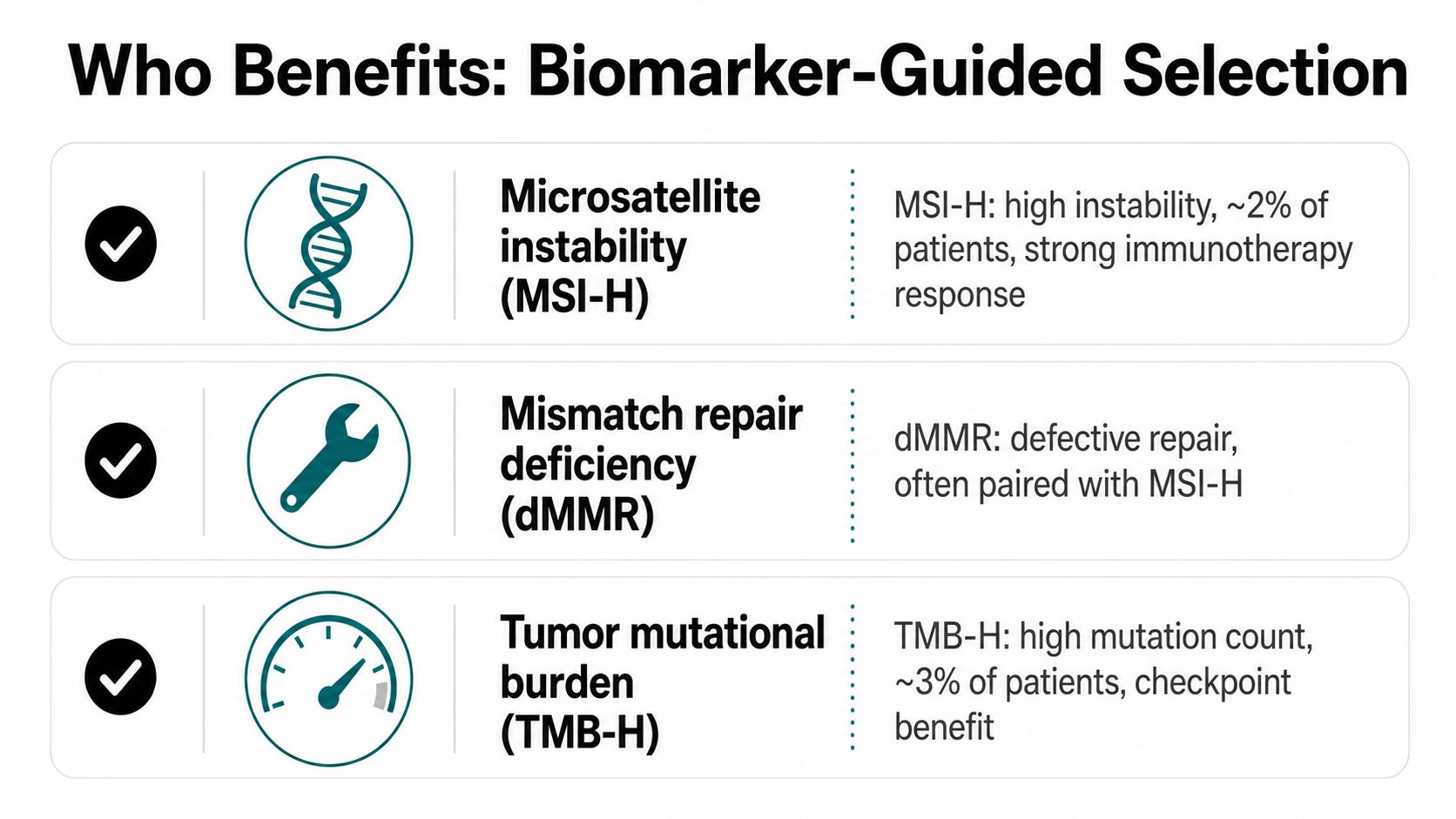
A patient with metastatic pancreatic cancer and limited standard options should ask for biomarker results before treating immunotherapy as a general solution. MSI-H or dMMR is the clearest actionable finding. It signals defective DNA repair and a higher chance that the tumor carries abnormalities immune cells can recognize.
A positive MSI-H or dMMR result can support pembrolizumab under its tissue-agnostic indication for eligible advanced solid tumors. It does not guarantee a response. It does identify the rare subgroup in pancreatic ductal adenocarcinoma most likely to benefit from checkpoint therapy today. For the broader biomarker-selection context, see this review of biomarker-driven immunotherapy development in pancreatic cancer.
The three results to request
MSI testing: The laboratory checks repetitive DNA sequences for instability. MSI-H status can identify a tumor more likely to respond to checkpoint blockade.
MMR immunohistochemistry: This test checks mismatch-repair proteins. dMMR often overlaps with MSI-H, but the tests examine different features and may be ordered together.
Tumor mutational burden: TMB estimates the number of mutations in tumor tissue. A high result may support checkpoint therapy under tissue-agnostic criteria, but interpretation depends on the assay, cancer type, previous treatment, and the patient's overall condition.
Request the full pathology and molecular report, not only a PD-L1 result.
BRCA1, BRCA2, and other homologous recombination repair alterations do not prove that immunotherapy will work. They can influence platinum selection, inherited-risk evaluation, and eligibility for trials combining immune treatment with PARP inhibitors or other targeted agents.
How testing works in practice
The team may test tissue from a biopsy or surgery. Broad next-generation sequencing can examine multiple genomic alterations, while pathology testing assesses MMR proteins. If the sample is inadequate, ask whether a repeat biopsy or blood-based testing is appropriate. Blood testing can miss findings when little tumor DNA circulates.
PD-L1 expression alone should not determine immunotherapy use in PDAC. Ask whether the report includes MSI, MMR, TMB, germline findings when appropriate, and alterations that could match targeted or combination trials. The practical distinction is clear: MSI-H or dMMR can support an established treatment discussion, while many other immune strategies remain investigational.
Vaccines and Perioperative Immunotherapy
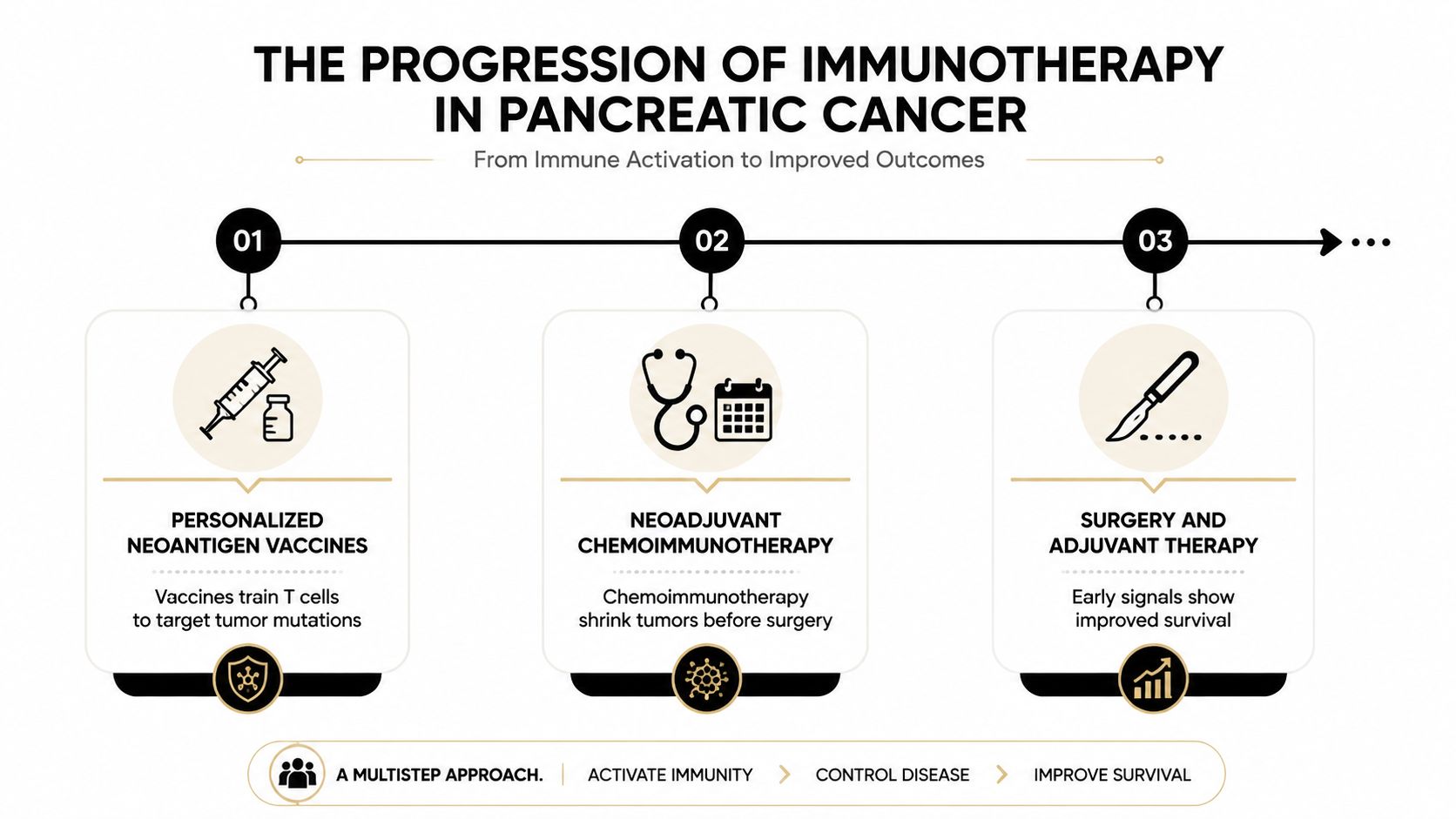
For a patient whose tumor can still be removed, the timing of immunotherapy matters. A personalized vaccine given after surgery can target mutations identified in that person's cancer. Perioperative combinations may expose the immune system to tumor material before surgery, then continue treatment afterward to address microscopic disease.
These approaches are not routine substitutes for surgery or chemotherapy. They remain primarily clinical-trial treatments, especially at centers with experience in pancreatic surgery, molecular profiling, and research protocols. The practical recommendation is direct: ask whether a trial has a defined clinical goal, not merely an immune-response measurement.
What the early vaccine signal means
The National Cancer Institute summarized a 2025 personalized mRNA neoantigen vaccine trial in which 8 of 16 patients generated a strong immune response, while 6 remained cancer-free, with some cancer-free for more than 3 years after surgery. Those findings are encouraging, but they come from an early study and do not establish routine vaccination for pancreatic cancer.
A laboratory immune response is not the same as preventing recurrence. Remaining cancer-free is clinically meaningful, yet a small early trial cannot show which patients will benefit across the broader pancreatic cancer population. Larger studies must confirm durability, identify predictors, and compare personalized vaccination with established perioperative treatment. For background on the field, see advances in personalized vaccine development for pancreatic cancer.
Where perioperative trials fit
A 2026 systematic review of six randomized trials found that three reported significant overall-survival improvements with perioperative immunotherapy. The results varied across studies, and the authors called for larger biomarker-driven trials, as reported in the PubMed-indexed systematic review.
Trial eligibility depends on anatomy, resectability, previous treatment, organ function, and the protocol itself. Patients with resectable or borderline-resectable disease may be considered for neoadjuvant chemoimmunotherapy or vaccination studies. Patients with metastatic disease may also qualify for vaccine trials, but these treatments remain experimental rather than standard care.
Ask: Will this treatment improve my chance of reaching surgery, reduce recurrence, or only measure immune activity? The answer shows whether the trial is designed around a patient benefit or mainly tests a biological theory.
Toxicity and Quality of Life Considerations
Immunotherapy is not an easy treatment by default. Checkpoint inhibitors can trigger immune-related inflammation in the colon, liver, lungs, skin, thyroid, pituitary gland, pancreas, and other organs. Combining an inhibitor with chemotherapy or another investigational drug adds the partner treatment's toxicities to the immune risks.
The 2025 review discussed earlier found serious treatment-related adverse events in part of the PDAC study population. That review-level finding does not predict one patient's risk. Your risk depends on the drug combination, prior treatment, organ function, other medical conditions, and how quickly symptoms are evaluated.
Symptoms that need quick attention
- Diarrhea or abdominal cramping: Colitis can become serious. Report persistent diarrhea, blood, fever, or worsening pain promptly.
- Yellow skin or eyes: Hepatitis may cause jaundice or abnormal liver tests before you feel very ill.
- New cough or breathlessness: Pneumonitis can resemble infection or cancer progression and needs prompt assessment.
- Severe fatigue, dizziness, or confusion: Inflammation of the thyroid or pituitary gland can disrupt hormone function.
- Rash, blistering, or painful skin changes: Skin toxicity may worsen without early treatment.
- New changes in blood sugar: Immune-mediated diabetes is uncommon but can require insulin and urgent management.
Call the treatment team early rather than waiting for the next appointment. The team may pause immunotherapy and prescribe corticosteroids or another immune-suppressing treatment. Steroids can complicate diabetes, infection risk, appetite, sleep, and chemotherapy scheduling. Do not stop steroids abruptly or restart a checkpoint inhibitor without explicit medical guidance.
| Regimen | Colitis | Hepatitis | Pneumonitis | Endocrinopathy | Serious immune-related adverse events |
|---|---|---|---|---|---|
| Checkpoint inhibitor monotherapy | Not consistently reported | Not consistently reported | Not consistently reported | Not consistently reported | Reported in a minority of patients in the 2025 ICI review population |
| Checkpoint inhibitor plus chemotherapy | Regimen-specific | Regimen-specific | Regimen-specific | Regimen-specific | Combination-specific |
| Checkpoint inhibitor plus experimental immune agent | Regimen-specific | Regimen-specific | Regimen-specific | Regimen-specific | Combination-specific |
The evidence does not provide a dependable organ-by-organ rate for every regimen. Treating unlike trial populations as one dataset would mislead patients. Durable responders may tolerate long-term PD-1 treatment well, while combinations can increase treatment burden even when they improve the chance of response. For most patients with pancreatic cancer, combination immunotherapy remains investigational, not a free pass from chemotherapy or its side effects.
Practical Questions to Ask Your Care Team
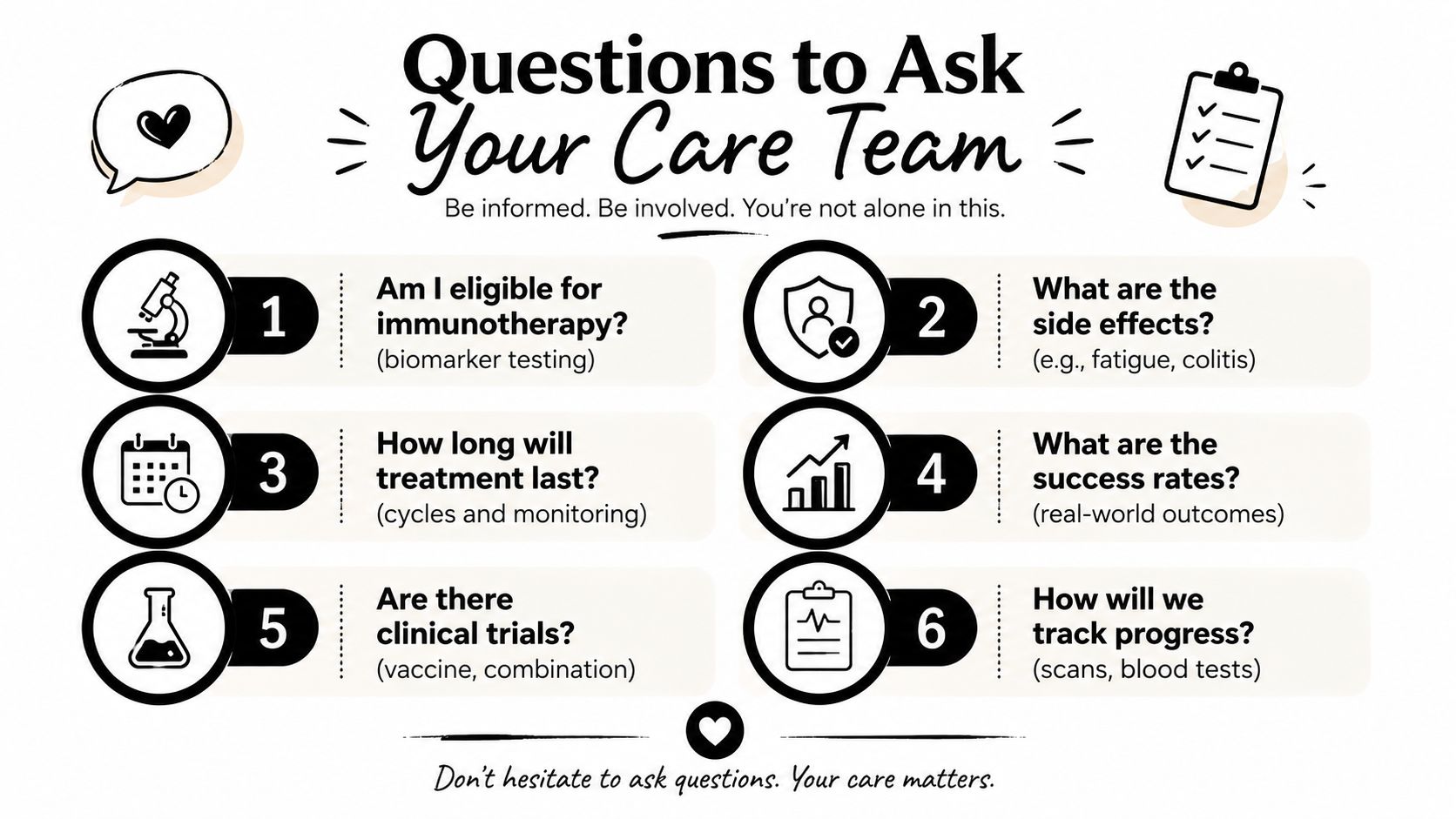
Bring your pathology and molecular reports, treatment history, medication list, and written symptoms to the next appointment. Ask your oncologist to explain why immunotherapy fits your case, rather than accepting that it is just “an option.” The right questions should separate a biomarker-supported treatment from an experimental strategy.
- Am I MSI-H or dMMR? Ask which test was used, whether the tissue sample was adequate, and whether the finding was confirmed. These results can identify the uncommon patients most likely to benefit from an approved immunotherapy approach.
- What is my TMB result? Request the actual value and the laboratory's interpretation, not only “high” or “low.”
- Was broad genomic and germline testing completed? Review BRCA1, BRCA2, homologous recombination repair findings, and other alterations that could affect chemotherapy choices or trial eligibility.
- What evidence supports this regimen? Ask whether it is approved standard care, off-label treatment, or a clinical trial. Do not treat those categories as interchangeable.
- What outcome are we trying to achieve? Clarify whether the goal is tumor shrinkage, making surgery possible, disease control, symptom relief, or longer survival.
- How will we know whether it is working? Confirm the schedule for scans, laboratory tests, symptom review, and the point at which treatment would change.
- Which side effects require a same-day call? Get written instructions for diarrhea, fever, breathing problems, rash, jaundice, severe fatigue, and blood-sugar changes.
- Is there a trial that fits my stage and biomarkers? Ask about vaccine, perioperative, stromal, myeloid-targeted, and checkpoint-combination studies. For pancreatic cancer, these approaches remain investigational for many patients.
- What will participation require? Discuss biopsies, travel, infusion schedules, caregiver time, costs, lodging, and the plan if the trial treatment fails.
- Would you recommend this for a family member in my situation? This often produces a clearer assessment of likely benefit, treatment burden, and alternatives.
A second opinion at a high-volume pancreatic cancer center can help after progression or when a trial is under consideration. Hirschfeld Oncology offers consultations and outpatient infusion care for complex cancers, including individualized treatment planning, immunotherapy assessment, symptom monitoring, and review of emerging options.
If you are handling these questions and want a second opinion from a specialist familiar with emerging treatments, a consultation can clarify your choices. The bottom line is direct: test first, distinguish approved treatment from research, and judge combinations by survival evidence rather than headlines. If you are in Brooklyn, Williamsburg, Bushwick, or elsewhere in New York City, visit Hirschfeld Oncology to explore a consultation focused on your biomarkers, goals, and tolerance for treatment.
.png)
.png)