.png)


Introduction
Patient education in oncology is a cornerstone of modern cancer care, providing clear, evidence‑based information about disease, treatment options, and expected side‑effects. Empowering patients to self‑manage symptoms—such as nausea, fatigue, pain, and infection risk—enhances adherence, reduces emergency visits, and improves quality of life. Structured programs that combine printed handouts, videos, digital apps, and teach‑back techniques enable patients to monitor symptoms, take medications correctly, and engage in lifestyle adjustments. Multidisciplinary teams—oncologists, nurses, pharmacists, dietitians, social workers, and health coaches—collaborate to tailor education to each patient’s literacy, cultural background, and treatment regimen, ensuring consistent messaging and ongoing support throughout the cancer journey.
Impact of Patient Education on Outcomes

Patient education is a cornerstone of modern oncology care. When patients receive clear, personalized information about their disease, treatment options, and self‑care strategies, they become active participants in decision‑making. This empowerment leads to higher adherence to complex regimens, earlier reporting of side‑effects, and reduced anxiety and depression, all of which translate into improved clinical outcomes and a better quality of life. Structured education programs—delivered by nurse educators, multidisciplinary teams, or digital platforms—have been shown to lower emergency department visits and hospital readmissions, thereby decreasing overall health‑system costs. In cancer care, education helps patients recognize early signs of complications such as neutropenia, diarrhea, or neuropathy, allowing timely interventions that prevent treatment interruptions. Multimodal approaches that combine face‑to‑face counseling, teach‑back techniques, and technology‑assisted tools (apps, telemonitoring, video tutorials) enhance knowledge retention and self‑efficacy. Caregiver involvement further supports medication adherence and symptom monitoring. Overall, comprehensive patient education not only improves patient‑centered outcomes but also delivers cost‑effective care by reducing unnecessary utilization and aligning treatment with patients’ values and goals.
Building Self‑Management Skills

Effective self‑management education for cancer patients relies on a multimodal, patient‑centered approach that blends face‑to‑face counseling with digital tools, teach‑back techniques, and motivational interviewing.
Promoting self‑management begins with structured education that covers medication timing, dietary modifications, activity pacing, and early symptom recognition, as demonstrated by ACS handouts and NCI guidelines. Nurse‑led interventions, home visits, and telephone follow‑ups further boost confidence and adherence, while technology‑assisted platforms (mobile apps, telemonitoring, WeChat) sustain engagement over time.
Goal‑setting techniques follow the 5 A’s framework—Assess, Advise, Agree, Assist, Arrange. Clinicians assess current behaviors and barriers, advise with evidence‑based recommendations, agree on realistic weekly or monthly goals, assist with resources (symptom‑tracking worksheets, video tutorials), and arrange regular check‑ins to monitor progress. This shared‑agenda model aligns with findings that individualized goal‑setting improves self‑care behaviors and treatment adherence.
Motivational interviewing and teach‑back reinforce self‑efficacy. Using the “ask‑tell‑ask” cycle, providers explore patients’ existing knowledge, deliver tailored information, and confirm understanding through teach‑back. Motivational interviewing addresses ambivalence, builds confidence, and links personal values to health actions, leading to higher satisfaction and reduced anxiety. Together, these strategies create a sustainable support system that empowers patients to manage side effects, maintain quality of life, and reduce unplanned hospital visits.
Medication Safety and Risks

Risks of self‑administration: Patients who self‑administer medication without professional oversight may misdiagnose symptoms, use incorrect doses, or choose inappropriate routes, leading to toxic side effects, severe allergic reactions, or sub‑therapeutic exposure. Unsupervised use can mask disease progression, delay needed care, and create dangerous drug‑drug interactions—particularly when over‑the‑counter products are combined with chemotherapy agents. In cancer care even small dosing errors can reduce treatment efficacy and worsen toxicities.
Benefits of teaching clients about medication and treatment programs: Structured education improves adherence by clarifying why each dose matters and what consequences missed doses entail. Knowledge empowers patients to ask informed questions, recognize early warning signs, and seek timely help, which lowers anxiety and fosters shared decision‑making. When patients understand medication timing, dietary modifications, and symptom‑tracking techniques, emergency visits and hospital readmissions decline, and overall treatment tolerance increases.
Multimodal approaches that blend face‑to‑face counseling, printed handouts, teach‑back techniques and digital tools such as symptom‑tracking apps or video tutorials further reinforce learning. Involving caregivers in education sessions ensures additional monitoring at home, improves medication timing, and facilitates early reporting of side‑effects. Regular follow‑up calls or telehealth check‑ins provide ongoing support, address emerging concerns, and sustain adherence over the treatment course. Tailoring content to health‑literacy level, cultural background, and language preferences maximizes comprehension and self‑efficacy, ultimately reducing anxiety, emergency visits, and treatment interruptions, and improves overall quality of life for patients and families.
Scheduling Principles for Chemotherapy

The 28‑day Faster Diagnosis Standard targets a diagnosis or exclusion of cancer within 28 days of an urgent referral for 75 % of patients, enabling timely initiation of therapy.
Treatment‑cycle planning incorporates these rules, multimodal education, and continuous monitoring. Nurse‑led interventions, digital symptom‑tracking apps, and teach‑back techniques reinforce adherence, reduce emergency visits, and sustain self‑care throughout each cycle. Including caregivers in education and tailoring materials to health‑literacy levels further improves comprehension and long‑term adherence.
Self‑Management Outcomes

Effects of self‑management
Evidence from multiple oncology studies shows that structured self‑management education improves medication adherence (up to 20‑30 % higher), reduces the severity of chemotherapy‑induced nausea, fatigue, and neuropathy, and lowers emergency‑department visits by 15‑30 %. Patients who receive tailored education report higher quality‑of‑life scores, less anxiety and depression, and fewer hospital readmissions, especially when side‑effect monitoring tools (e.g., mobile apps, symptom‑tracking worksheets) are used.
Patient activation and health literacy
When education is patient‑centered, culturally appropriate, and delivered at an accessible literacy level, health literacy rises, leading to greater patient activation. Higher activation predicts better self‑efficacy, more accurate symptom reporting, and stronger adherence to supportive‑care regimens. Involving caregivers further amplifies these benefits.
Long‑term sustainability
Sustained benefits depend on continuous support: periodic nurse‑led phone calls, digital reminders, and teach‑back techniques reinforce learning. Multimodal programs that combine face‑to‑face sessions with digital resources maintain engagement over months, ensuring that self‑care practices persist beyond the active treatment phase.
Integrating Multimodal Education at Hirschfeld Oncology
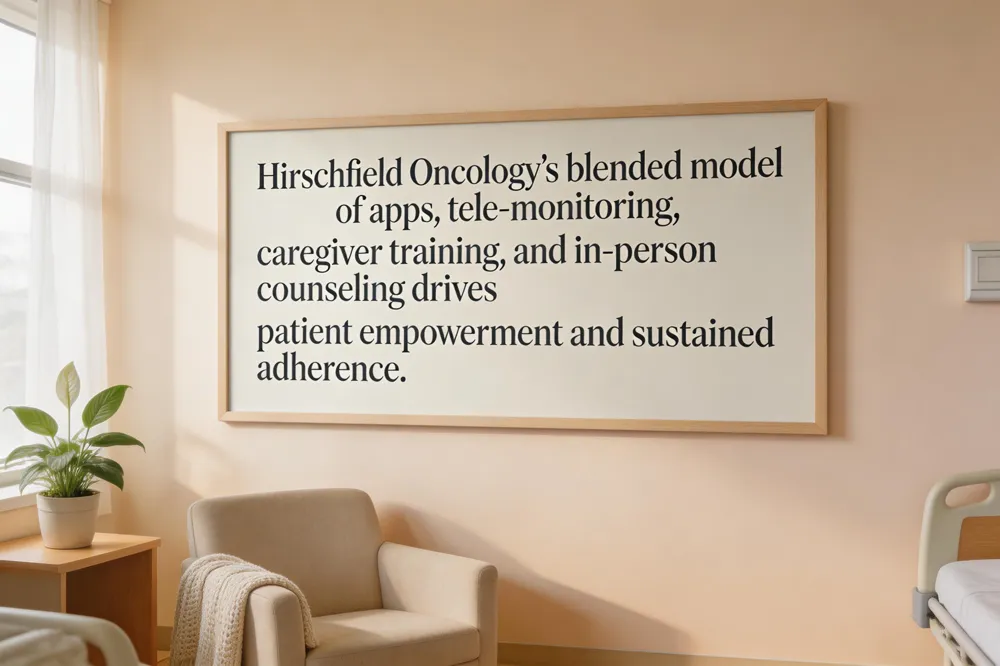
Hirschfeld Oncology’s supportive‑care model blends technology‑assisted education, caregiver involvement, and face‑to‑face sessions to boost patient empowerment and self‑efficacy. Mobile apps, tele‑monitoring, and video‑conferencing deliver real‑time symptom tracking and reminders, reinforcing learning beyond clinic walls (NCI, ASCO). Caregivers receive parallel materials and training, which improves home support and medication adherence (ACS, Patient Empowerment Alliance). The program combines in‑person counseling, printed handouts, and digital modules—such as e‑learning videos and interactive symptom‑tracking tools—creating a multimodal curriculum that improves knowledge retention and confidence (AHRQ, CancerPEP). By personalizing content to cultural, literacy, and socioeconomic contexts, patients report higher satisfaction, lower anxiety, and better adherence to oral anticancer agents like capecitabine (Study on Capecitabine adherence). Together, these elements form a cohesive education framework that empowers patients to manage side effects, maintain treatment schedules, and achieve higher quality‑of‑life outcomes.
Conclusion
Key takeaways from patient‑focused education highlight that structured, multimodal programs—combining nurse‑led counseling, digital tools, and caregiver involvement—significantly improve self‑efficacy, medication adherence, and quality of life while reducing emergency visits for cancer‑related side effects. Future directions for self‑management support should expand technology‑assisted monitoring (mobile apps, telehealth, AI‑driven symptom alerts), personalize content to cultural and literacy needs, and embed continuous motivational interviewing and goal‑setting into routine care. Hirschfeld Oncology remains committed to patient empowerment by integrating evidence‑based education into every treatment pathway, maintaining a dedicated patient‑education navigator, and continuously evaluating outcomes to refine our supportive‑care strategies for all cancer patients.
.png)
.png)