.png)


Transforming Cancer Care Through Drug Repurposing
Understanding Drug Repurposing in Oncology
Drug repurposing is the strategy of using existing FDA-approved drugs for new cancer treatments. This approach benefits from pre-established safety and pharmacokinetic profiles, which help speed up drug development and reduce risks and costs usually associated with creating new drugs from scratch.
Notable Examples of Repurposed Drugs
Several widely used medications have shown promising anticancer effects:
Metformin: Originally an anti-diabetic drug, it is linked to reduced risks and improved outcomes in multiple cancers such as breast, colorectal, and pancreatic cancers by modulating metabolic pathways.
Statins: Commonly used to lower cholesterol, statins have demonstrated potential to kill cancer cells and boost immune responses, notably improving survival in head and neck cancers.
Beta blockers: These heart medications may increase cancer cell sensitivity to therapies, offering improved survival in multiple myeloma.
Thalidomide: Once notorious for other health effects, today it is an approved treatment for multiple myeloma due to its immunomodulatory and antiangiogenic properties.
Why Repurposing Accelerates Cancer Drug Development
By utilizing drugs with existing safety data, repurposing reduces the lengthy phases of testing required for new drugs. This fast-tracks clinical trials, allowing earlier access to therapies for patients. Furthermore, repurposed drugs are often more affordable, making cancer treatments more accessible globally.
Overall, repurposing established medications opens new avenues for effective and economical cancer care, backed by scientific research and ongoing clinical trials.
Foundations and Promise of Drug Repurposing in Cancer Therapy

What is drug repurposing and why is it important in cancer treatment?
Drug repurposing is the strategy of applying FDA-approved drugs for new cancer therapies, originally designed for other diseases, to treat cancer. This approach is valuable because repurposed drugs come with established safety profiles, allowing for faster clinical development and regulatory approvals. As a result, they offer a cost-effective alternative to traditional drug discovery, which can take over a decade and involve high financial risk.
Repurposed drugs have the potential to provide more affordable cancer treatments using old drugs while fulfilling unmet medical needs. They also enable researchers to leverage existing pharmacological and safety data, accelerating the translation into clinical use.
Clinical and regulatory advantages
Using drugs already approved by regulatory agencies reduces the time and resources required for early-stage safety testing. Many repurposed medicines can advance quickly into Phase II or III clinical trials, focusing on efficacy in cancer patients. The FDA's 505(b)(2) pathway and orphan drug designations further support repurposing efforts by facilitating streamlined approvals (Drug repurposing in oncology).
Notable examples of repurposed drugs in oncology
- Metformin: Initially used to treat type 2 diabetes, metformin has demonstrated cancer-preventive properties in colorectal, breast, and pancreatic cancers by modifying metabolic pathways (Drug repurposing in cancer therapy).
- Statins: Common cholesterol-lowering agents such as statins show promise in enhancing survival rates in head and neck cancers, possibly through immune system modulation and growth suppression (Statins for head and neck cancer survival).
- Beta blockers: Drugs like propranolol, used for cardiovascular diseases, are being explored to increase tumor sensitivity to chemotherapy, particularly in multiple myeloma (Drug repurposing in cancer treatment, Beta blockers in multiple myeloma therapy.
- Thalidomide: Despite its history as a sedative, thalidomide has been successfully repurposed for multiple myeloma due to its anti-angiogenic and immunomodulatory effects (Drug repurposing in oncology).
Economic and safety considerations
Repurposed drugs tend to be low-cost, often generic medications, making them accessible and affordable for patients worldwide. Their established toxicology profiles reduce the uncertainty and financial burden linked to developing entirely new drugs. This affordability is particularly important for global healthcare systems and regions with limited resources (Drug repurposing in cancer treatment, Drug repurposing in oncology.
Overall, drug repurposing presents a promising path to expand the cancer treatment arsenal more efficiently, safely, and economically.
Repurposed Drugs Targeting Cancer Hallmarks and Tumor Microenvironment

How do repurposed drugs target cancer progression mechanisms?
Repurposed drugs interfere with cancer progression by targeting several fundamental mechanisms underlying tumor growth and survival. They inhibit proliferative signaling pathways such as PI3K/AKT, which cancers exploit to sustain unchecked growth. Some drugs induce programmed cell death modalities, including apoptosis and pyroptosis, effectively eliminating malignant cells. Others disrupt metabolic pathways critical for cancer cell energy and biosynthesis, thereby starving tumors. Additionally, they modulate the tumor microenvironment (TME), which includes immune cells, stromal elements, and metabolic conditions, to suppress tumor-promoting signals and enhance anti-tumor immune responses.
Examples of repurposed drugs and their roles
- Statins: These cholesterol-lowering agents reactivate tumor suppressor pathways, such as P53, reducing cancer cell proliferation and improving survival outcomes (Statins reactivating tumor suppressors.
- Triptolide: Derived from the Thunder God Vine, it induces cancer cell death via pyroptosis and necroptosis, two inflammatory forms of cell death (Triptolide effects on tumor cells.
- Disulfiram: Traditionally used to treat alcoholism, it inhibits glycolysis and oxidative metabolism in tumor cells, disrupting their energy supply (Disulfiram anticancer activity.
- Celecoxib: A non-steroidal anti-inflammatory drug (NSAID), it inhibits COX-2 and reduces tumor-promoting inflammation within the microenvironment (Celecoxib COX-2 inhibition.
- Oleanolic Acid: Extracted from medicinal plants, this compound boosts antitumor immunity by modulating immune checkpoint molecules like PD-L1 (Oleanolic acid and antitumor immunity.
Enhancing delivery with nanotechnology
Nanoparticle delivery systems—such as liposomes, polymeric nanoparticles, and metallic nanoparticles—are being integrated with repurposed drugs to improve targeting accuracy and reduce systemic side effects. These nanocarriers enhance drug stability and facilitate controlled release within the tumor milieu, amplifying therapeutic effectiveness.
Tumor microenvironment modulation
Repurposed drugs aim to remodel the complex tumor microenvironment (TME) by targeting immune cells' suppressive functions, tumor metabolism, hypoxia, acidity, and the microbiome. Modulating these factors reverses immune evasion and creates inhospitable conditions for tumor growth, making cancer cells more vulnerable to treatment.
Repurposed Chronically Used Drugs Showing Impact in Cancer Care

Which commonly used drugs are being repurposed in cancer therapy and what is their evidence?
Several widely prescribed chronic medications are being repurposed for cancer therapy, supported by growing clinical and preclinical evidence. Anti-diabetic drugs, notably metformin and thiazolidinediones like pioglitazone, have demonstrated promising anti-cancer effects. Metformin, for example, is associated with reduced incidence and improved outcomes in colorectal, breast, pancreatic, prostate, and lung cancers. It appears to modulate cancer metabolism and activate AMPK signaling pathways, restraining tumor growth.
Anti-hypertensive drugs are also under active investigation. Beta blockers such as propranolol show potential in reducing tumor angiogenesis and enhancing chemosensitivity, particularly in breast, ovarian, and multiple myeloma cancers. Similarly, ACE inhibitors and angiotensin receptor blockers like losartan have been linked to tumor growth inhibition, improved immune responses, and better survival rates in various malignancies including pancreatic and head and neck cancers.
What does the clinical trial landscape look like?
There are over 130 clinical trials globally evaluating anti-diabetic and anti-hypertensive drugs for cancer therapy, spanning more than 15 cancer types. Metformin and propranolol stand out, with metformin having advanced to Phase III trials in some settings and propranolol reaching Phase IV evaluations. These studies investigate their roles both as monotherapies and in combination with standard cancer treatments such as chemotherapy, immunotherapy, and radiation (Drug repurposing in cancer therapy.
How does metformin impact pancreatic and other cancers?
Metformin not only lowers systemic factors like hyperglycemia and insulin resistance but also exerts direct anti-tumor effects. In pancreatic cancer, metformin is extensively studied for its potential to improve progression-free and overall survival, making it one of the most promising repurposed agents. Moreover, metformin’s ability to modulate inflammatory and metabolic pathways contributes to its broad anticancer properties across different tumor types (Drug repurposing in cancer therapy.
Overall, the repurposing of these chronically used drugs is appealing due to their established safety profiles, affordability, and extensive clinical evaluation, presenting a promising avenue to enhance cancer care outcomes without the lengthy development timelines of new drugs (Drug repurposing in cancer therapy.
Innovative Repurposed Therapies in Hematologic and Solid Tumors
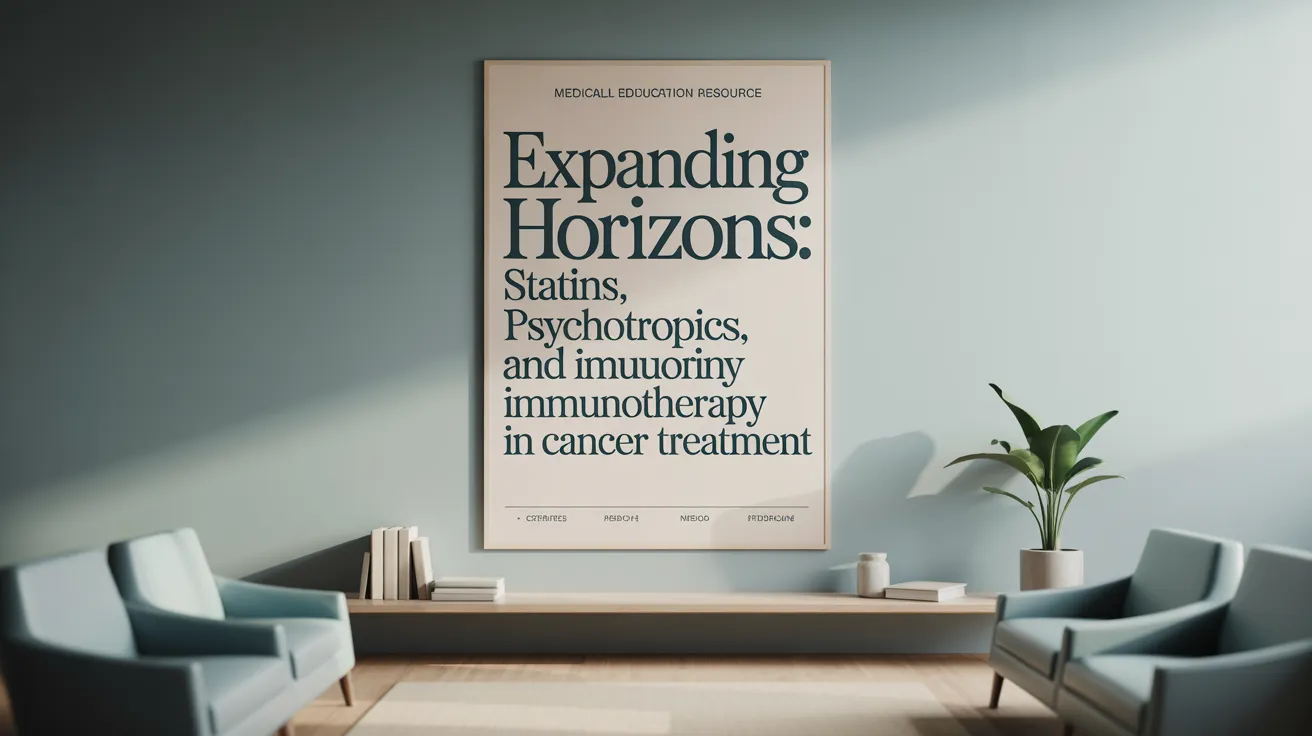
Beta Blockers in Multiple Myeloma
Beta blockers, traditionally used to manage cardiovascular conditions, have shown promise in drug repurposing in cancer treatment, particularly multiple myeloma. Research indicates that these drugs may increase the sensitivity of myeloma cells to existing treatments, potentially enhancing patient survival. For example, propranolol is under investigation for its ability to inhibit β-adrenergic signaling pathways that promote tumor growth, leading to better treatment outcomes.
Statins Improving Survival in Head and Neck Cancer
Statins, commonly prescribed to lower cholesterol, are being repurposed in head and neck cancers. Studies have found that statins might kill cancer cells directly while also boosting the immune system's response to tumors. Clinical observations suggest improved survival rates in patients using these drugs, making statins valuable candidates in combination therapies.
Psychotropic Drugs in Acute Myeloid Leukemia
Certain psychotropic medications, used for neurological conditions like Tourette’s Syndrome, are under early preclinical evaluation for treating acute myeloid leukemia (AML). These drugs target cancer cell mechanisms in laboratory models, with clinical trial data in humans still pending. The research in this area is emerging and could offer novel treatment paths for AML.
Clinical Trials Enhancing Immunotherapy Outcomes
Multiple clinical trials are actively exploring repurposed drugs in combination with immunotherapy to treat different cancers. These trials aim to improve the efficacy of immune checkpoint inhibitors, prevent cancer recurrence, and tackle metastatic disease. The integration of these repurposed agents could make immunotherapy more effective and accessible.
| Drug Type | Cancer Focus | Proposed Mechanism |
|---|---|---|
| Beta blockers | Multiple myeloma | Increase therapy sensitivity |
| Statins | Head and neck cancer | Cancer cell killing, immune boost |
| Psychotropics | Acute myeloid leukemia | Early preclinical effectiveness |
| Repurposed drugs | Various cancers | Immunotherapy enhancement in trials |
Hirschfeld Oncology’s Multidisciplinary Approach to Pancreatic Cancer Treatment

Who leads the Hirschfeld Oncology team specializing in pancreatic cancer treatment?
Dr. Azriel Hirschfeld heads the specialized pancreatic cancer team at Hirschfeld Oncology. With over 15 years of experience, Dr. Hirschfeld expertly combines standard cancer treatments with innovative options. His leadership includes personalized molecular tumor profiling, immunotherapy, and metronomic chemotherapy to create cutting-edge treatment approaches.
How does the medical team at Hirschfeld Oncology collaborate to treat pancreatic cancer?
The team at Hirschfeld Oncology functions with a strong multidisciplinary collaboration. Physicians, nurses, and support staff work closely to design individualized treatment plans. These plans integrate conventional therapies with newer approaches such as low-dose chemotherapy and immunotherapy. This coordinated effort ensures treatments remain scientifically rigorous while addressing the unique needs of each patient.
What role does patient advocacy play in Hirschfeld Oncology's approach to cancer care?
Patient advocacy is fundamental at Hirschfeld Oncology. The team prioritizes listening to patient concerns and provides thorough education and emotional support. They assist patients in navigating the healthcare system's complexities, which helps empower patients and instills hope throughout their cancer journey. This compassionate philosophy is central to the care model.
Emerging Strategies Combining Repurposed Drugs with Advanced Therapies for Pancreatic Cancer

How are autophagy inhibitors like hydroxychloroquine being used in pancreatic cancer treatment?
Autophagy inhibitors such as hydroxychloroquine, originally repurposed from treatments for malaria, are increasingly investigated in pancreatic cancer therapy to enhance the effectiveness of conventional treatments. Hydroxychloroquine disrupts cancer cell survival mechanisms by blocking autophagy, a process tumor cells use to resist chemotherapy and survive under stress. Early clinical trials in breast cancer suggest hydroxychloroquine can reduce cancer recurrence by limiting survival pathways, and similar strategies are being adapted for pancreatic tumors to overcome resistance and improve long-term outcomes.
How is immunotherapy, including vaccines, integrated into pancreatic cancer management?
Immunotherapy for pancreatic cancer includes checkpoint inhibitors, immune-modulating drugs, and increasingly, personalized cancer vaccines. These vaccines, engineered using mRNA technology tailored to the patient's tumor mutations, stimulate the immune system to recognize and attack cancer cells more effectively. Currently, pancreatic vaccines are in phase II clinical trials showing promising results in boosting immune responses despite the typically immunosuppressive tumor microenvironment of pancreatic cancers. Researchers are also exploring combining immunotherapy with other modalities such as chemotherapy and radiation to enhance response rates.
Why target KRAS mutations and modulate the tumor microenvironment?
KRAS mutations, present in approximately 90% of pancreatic cancers, are critical drivers of tumor growth and historically considered undruggable. New targeted treatments aiming at specific KRAS mutations like G12D are in advanced preclinical stages and moving toward clinical trials (K-Ras G12D mutation drug candidate). Besides targeting KRAS directly, therapies aim to modify the dense tumor microenvironment — including stromal barriers and immune suppression — to improve drug delivery and immunotherapy effectiveness. Compounds targeting senescent cells or using stromal modifiers are part of these innovative approaches (Targeting senescent cells in pancreatic cancer).
What clinical trials explore combination therapies with repurposed drugs?
Clinical trials are actively evaluating the use of repurposed drugs, such as hydroxychloroquine combined with chemotherapy or immunotherapy, to combat pancreatic cancer resistance and recurrence (Drug repurposing in cancer therapy. Additionally, trials involving beta blockers and statins assess their role in modulating cancer progression and immune activation. Integration of targeted KRAS inhibitors with immunotherapies and repurposed agents forms a growing area of research aimed at comprehensive multi-targeted therapy (Drug repurposing in cancer therapy.
What innovative strategies does Hirschfeld Oncology use in pancreatic cancer treatment?
Hirschfeld Oncology pioneers combining targeted inhibitors against PRMT5 and KRAS pathways with personalized pancreatic cancer vaccines and CAR-T or reprogrammed immune cells. They leverage liquid biopsies and AI-driven early detection to tailor interventions. Notably, they explore synergistic regimens combining autophagy inhibitors like hydroxychloroquine with chemotherapy to overcome drug resistance, highlighting a multidimensional approach to improving patient outcomes (Personalized cancer vaccines using mRNA technology).
Challenges and Future Directions in Drug Repurposing for Cancer

What challenges does drug repurposing face in cancer therapy and how are they addressed?
Drug repurposing in cancer therapy confronts several challenges that span pharmacological, regulatory, and commercial domains. First, determining the effective dose for new cancer indications can differ from the original use, raising safety and efficacy concerns. Off-target effects and potential toxicities need careful evaluation despite the drugs' established safety profiles.
Regulatory hurdles also exist, including the need for rigorous clinical trials to obtain approvals for new indications. Although drugs are already approved, cancer uses require demonstration of benefit through randomized studies, which can be expensive and time-consuming.
Intellectual property and commercial incentive issues pose significant barriers. Many repurposed drugs are off-patent, reducing pharmaceutical companies' motivation to invest in costly cancer trials. This leads to funding gaps and fewer trials advancing to late stages.
To address these hurdles, pathways such as the FDA's 505(b)(2) regulatory mechanism facilitate faster approvals by allowing reliance on existing data with supplemental new evidence. Advocacy for dedicated funding and policy adjustments aim to support repurposing research, especially for off-patent drugs.
Nanotechnology-based delivery systems like liposomes and polymeric nanoparticles are being developed to improve drug targeting and reduce side effects, enhancing the clinical utility of repurposed drugs. Furthermore, combination therapies using repurposed agents with immunotherapy or chemotherapy may overcome resistance and boost antitumor activity.
Ultimately, well-designed randomized clinical trials are essential to validate efficacy and safety, establishing repurposed drugs as reliable options in cancer treatment. Collaborative approaches between academia, regulatory bodies, and funding agencies are critical to overcoming these challenges and unlocking the full potential of drug repurposing in cancer therapy.
Clinical Trials and Real-World Impact of Repurposed Drugs in Oncology

Ongoing Clinical Trials at Institutions Like Winship Cancer Institute's cancer drug research
Several leading cancer research centers, including the Winship Cancer Institute's cancer drug research, are actively conducting clinical trials to evaluate the effectiveness of repurposed drugs in oncology. These trials focus on a variety of cancer types and frequently explore how repurposed drugs can complement existing therapies such as chemotherapy and immunotherapy.
Examples of Trial Endpoints and Combination Strategies
Trials often measure outcomes such as improved survival rates, enhanced immune response, and tumor shrinkage to evaluate efficacy. Combination strategies are a major focus, for instance, pairing statins for head and neck cancer survival with immunotherapy in head and neck cancers or combining beta blockers in multiple myeloma therapy with standard treatment regimens in multiple myeloma to increase cancer cell sensitivity.
Potential to Enhance Immunotherapy, Prevent Recurrence, Treat Metastasis
Repurposed drugs have shown promise in enhancing immunotherapy with repurposed drugs by modulating immune pathways, which may improve treatment responses. Moreover, some drugs are being investigated for their ability in preventing cancer recurrence with existing drugs and effectively treating metastatic cancer with repurposed drugs, addressing critical unmet needs in oncology.
Importance of Patient Participation and Future Research Directions
Patient involvement in clinical trials is essential to validate the safety and efficacy of repurposed cancer therapies. Future research is directed towards optimizing drug combinations and treatment sequences, expanding the range of cancers explored, and integrating repurposed drugs into personalized treatment plans to maximize benefit.
Repurposed Drugs: A Cornerstone of Future Cancer Therapies
Benefits and Transformative Potential
Drug repurposing leverages FDA-approved medications to unlock new cancer treatments, offering faster development timelines and reduced costs. These therapies benefit from established safety profiles, accelerating clinical application. Repurposed drugs often bring affordable and effective options, addressing unmet medical needs across cancer types—from head and neck to pancreatic cancer. This strategy transforms cancer care by utilizing drugs like statins, beta blockers, and anti-diabetics in innovative ways to inhibit tumor growth, enhance immune response, and improve survival.
Multidisciplinary Research and Patient Advocacy
The progress in repurposed cancer therapies relies heavily on collaboration among clinicians, researchers, and patient advocates. Multidisciplinary teams integrate laboratory discoveries with clinical practice to translate findings effectively. Patient involvement and advocacy drive awareness, support funding, and encourage enrollment in clinical trials essential for validating these new treatments. Such teamwork ensures scientific rigor and patient-centered approaches in developing safer, more accessible cancer therapies.
Clinical Trials: Advancing Cancer Care
Ongoing and future clinical trials serve as the backbone for expanding repurposed drug applications in oncology. Trials across institutions explore combinations with immunotherapy, prevention of recurrence, and management of metastatic disease. Early findings demonstrate promising safety and efficacy, underscoring the potential to establish new standards of care. These studies are pivotal in confirming benefit, optimizing dosages, and identifying therapeutic synergies, driving repurposed drugs from research to routine oncology practice.
.png)
.png)