.png)


When you hear the term "anti-inflammatory diet," it's easy to picture a rigid set of rules and restrictions. But it's much more helpful to think of it as a style of eating—a sustainable pattern that focuses on whole, nutrient-rich foods. The goal isn't just to lose weight or follow a trend; it's to actively calm chronic inflammation within your body. This becomes especially important when navigating cancer care.
Understanding Inflammation's Role in Cancer
To really get why this matters, we need to talk about inflammation. Your body has a brilliant, built-in emergency response team: your immune system. When you get a paper cut, your immune system rushes to the site, creating a bit of redness and swelling. This is acute inflammation, and it's a good thing. It's targeted, temporary, and essential for healing.
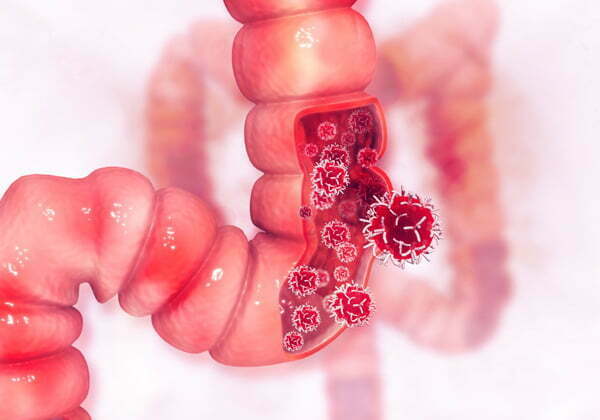
The trouble starts when that emergency signal gets stuck in the "on" position. This leads to chronic inflammation, a completely different beast. It's not a visible, roaring fire but a low-grade, smoldering one that spreads quietly throughout your body, day after day. Instead of healing, this persistent inflammation slowly damages healthy tissues and creates an environment where diseases, including cancer, can more easily take hold.
Think of chronic inflammation as a slow, smoldering fire within your body. While short-term inflammation is a healthy response to injury, this persistent, low-grade fire creates an environment where cancer cells can more easily grow, spread, and even resist treatment.
This constant state of alert wears down your body's natural defenses. Over time, it's been linked to the development and progression of many serious conditions like heart disease, diabetes, and, crucially, several types of cancer.
The Fuel Behind the Fire
So, what's stoking these flames? While stress and environmental factors play a part, one of the biggest culprits is what we eat. Certain foods literally act like kindling for that inflammatory fire.
These pro-inflammatory foods often include:
- Refined Carbohydrates: Think white bread, pastries, and most packaged snack foods. They can cause sharp blood sugar spikes, which promotes an inflammatory reaction.
- Fried Foods: Anything deep-fried, especially in certain vegetable oils, is loaded with compounds that can trigger inflammation.
- Sugar-Sweetened Beverages: Sodas, sweetened teas, and fruit juices with added sugar are major drivers of inflammation.
- Processed and Red Meats: Things like sausages, hot dogs, and a diet high in red meat have been consistently tied to higher levels of inflammatory markers in the body.
When these are a regular part of your diet, you're constantly adding fuel to that smoldering fire, creating the very conditions that can help cancer cells flourish.
How Anti-Inflammatory Diets Act as a Fire Extinguisher
This is where the power of an anti-inflammatory diet comes in. If some foods are the fuel, others are the fire extinguisher. These foods are packed with compounds like antioxidants and polyphenols that don't just stop adding fuel to the fire—they actively help put it out.
By choosing foods that fight inflammation, you're making a conscious choice to support your body. We're talking about colorful fruits and vegetables, fatty fish rich in omega-3s, nuts, seeds, and whole grains. For someone with cancer, this is especially meaningful. Reducing systemic inflammation can bolster your overall health during treatment and may even help make your medical therapies more effective. In fact, oncology is increasingly focused on controlling inflammation, leading to research into strategies like repurposing anti-inflammatory drugs for pancreatic cancer therapy.
Understanding this connection is the first step. It shows that your dietary choices aren't trivial—they are a valuable part of your overall care plan, working right alongside your medical treatments to support your body's fight.
What Defines an Anti Inflammatory Diet
When you hear the term “anti-inflammatory diet,” it’s easy to picture a complex set of rules and a long list of forbidden foods. But that’s not really what it’s about. It’s better to think of it as a style of eating—one that focuses on loading your plate with foods that naturally calm inflammation while being mindful of the ones that tend to stir it up.
This isn't about restriction; it's about empowerment. Every meal is an opportunity to choose ingredients that actively fight inflammation. Think of chronic inflammation as a small, smoldering fire inside your body. Pro-inflammatory foods act like kindling, feeding the flames. Anti-inflammatory foods, on the other hand, are like water, helping to put that fire out.
This concept map shows just how directly our food choices can influence inflammation and, in turn, cancer risk.
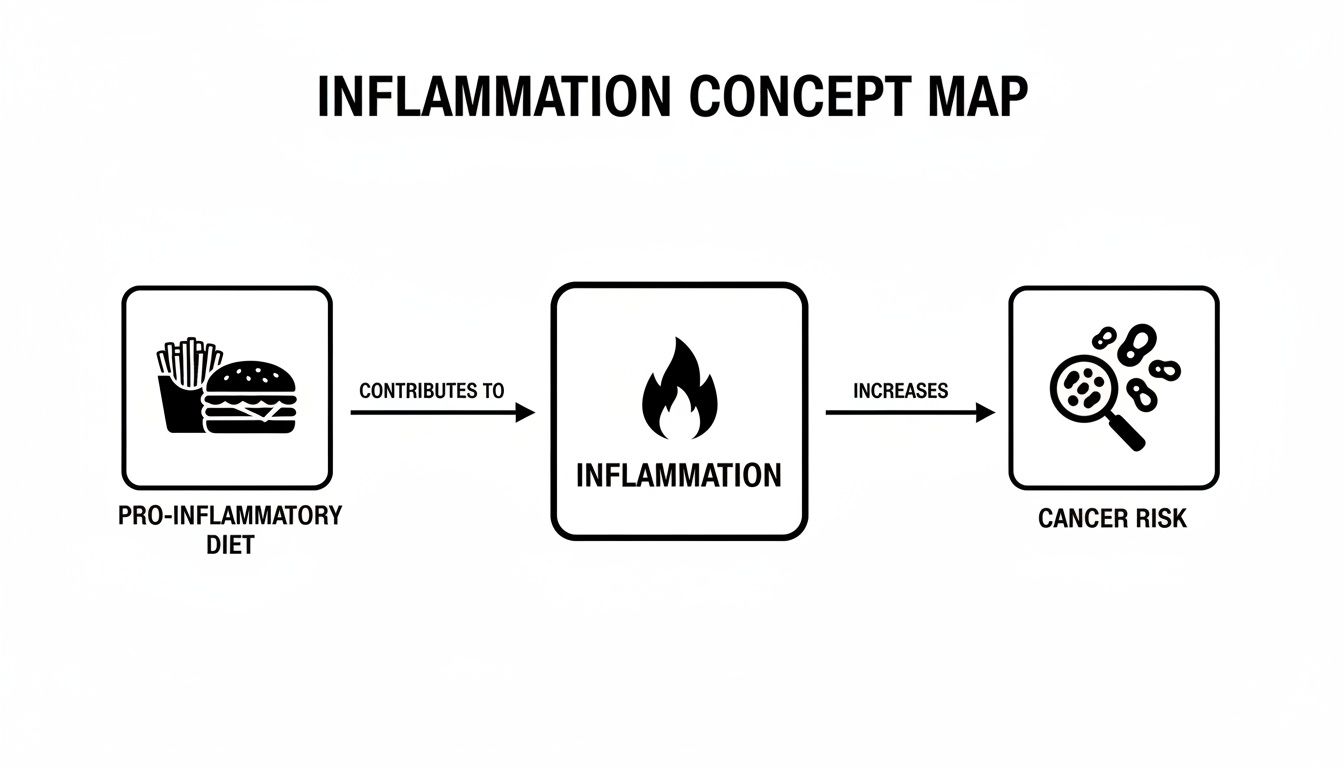
As you can see, a pattern of eating pro-inflammatory foods can create the exact environment where cancer is more likely to develop and thrive.
Gauging Your Diet's Inflammatory Impact
But how can you tell if your diet is fanning the flames or putting out the fire? To get a more objective look, researchers created a tool called the Dietary Inflammatory Index (DII). It’s a scoring system that scientifically evaluates your diet to measure its inflammatory potential.
The DII assigns a score based on what you eat, typically ranging from around -9 (highly anti-inflammatory) to +8 (highly pro-inflammatory), with zero being neutral. Foods packed with antioxidants, fiber, and healthy fats will pull your score down, while foods full of sugar, refined carbs, and unhealthy fats will push it up. This gives us a real, tangible way to see the impact of our food choices.
The DII isn't just an academic exercise. It's a practical way to measure whether your diet is contributing to or combating that smoldering fire of chronic inflammation. A lower score means your food is actively working to protect your body.
Unfortunately, most people's diets are headed in the wrong direction. A revealing study found that 57% of U.S. adults regularly consume a pro-inflammatory diet. Only 34% follow a pattern that could be considered anti-inflammatory. These numbers show a widespread trend that could be silently fueling chronic disease. You can read more about these dietary patterns and their implications.
Simple Swaps for a Powerful Change
Shifting toward an anti-inflammatory way of eating doesn’t have to be overwhelming. It’s all about making small, deliberate swaps that add up over time. This table offers a quick guide to help you trade common inflammatory foods for their powerful, health-promoting alternatives.
Inflammatory vs Anti Inflammatory Food Choices
Looking at this chart, you can see these changes are quite manageable. This isn't about completely overhauling your diet overnight. It's about choosing whole-grain toast instead of white, reaching for a handful of walnuts instead of chips, or adding fatty fish to your meals a couple of times a week.
Each small swap is a meaningful step toward creating a less inflammatory environment in your body—a truly empowering way to support your health through your cancer journey.
The Science Linking Diet, Inflammation, and Cancer
The connection between our food and our health, especially concerning cancer, is stronger than we ever thought. Think of chronic inflammation as the "soil" in which cancer can take root and grow. A constant state of inflammation creates an environment in the body that not only encourages cancer to develop but can also fuel its growth and help it resist treatment.
This is where an anti inflammatory diet comes in. It’s a powerful, proactive strategy to change that internal environment.
By choosing foods that help calm this inflammation, you're not just "eating healthy." You are actively making your body a less welcoming place for cancer. This approach can work right alongside medical treatments, supporting your body's fight at a deep, cellular level.
How Diet Reduces Inflammatory Markers
So, how do we actually know if a diet is working? Scientists can measure inflammation by looking for specific "markers" in your blood, and one of the most well-known is C-reactive protein (CRP).
When CRP levels are high, it’s a clear sign of significant inflammation somewhere in the body. Countless studies have shown that elevated CRP is often linked to a poorer outlook for people with many types of cancer.
This is where your plate makes a direct impact. Well-researched eating plans like the Mediterranean diet and the DASH diet have been proven to lower these inflammatory markers. They work by delivering a steady stream of powerful compounds from plants, healthy fats, and fiber.
These diets are built on:
- Polyphenols: You'll find these in colorful fruits and vegetables, green tea, and even coffee. They act as antioxidants, disarming the unstable molecules (free radicals) that cause inflammatory damage.
- Omega-3 Fatty Acids: Fatty fish like salmon, along with walnuts and flaxseeds, are packed with these fats. They play an active role in resolving inflammation right at the source.
- Fiber: Found in whole grains, beans, and vegetables, fiber is food for the good bacteria in your gut. A healthy gut community, in turn, produces its own anti-inflammatory compounds.
Making these foods a regular part of your routine can measurably lower your systemic inflammation, which shows up as a drop in your CRP levels. It's like turning down the heat on the environment that cancer needs to thrive.
Reducing Cancer Risk and Improving Outcomes
The evidence linking these diets to better cancer outcomes is stacking up. Large studies that follow people over many years have found that those who eat a more anti-inflammatory diet have a lower risk of developing certain cancers in the first place.
An anti-inflammatory diet works by lowering key inflammatory markers in the body, such as C-reactive protein (CRP), creating a less hospitable environment for tumors. This reduction in systemic inflammation can make the body more responsive to therapies and help manage side effects.
For instance, landmark data from the Nurses' Health Studies showed that women who ate the most anti-inflammatory foods—like leafy greens, whole grains, fruits, and tea—had a 53% lower risk of developing colorectal cancer. The research also highlights that whole grains seem particularly good at bringing down CRP levels, especially for those who are unwell or overweight. You can explore a detailed summary of this evidence on cancer mortality and frailty.
Supporting Your Cancer Treatment
It's important to be clear: for those already diagnosed with cancer, this diet is not a replacement for medical care. Think of it as a way to make your body as strong and ready as possible to get the most out of your treatments.
Chronic inflammation can sometimes get in the way of how well therapies work. For example, high levels of inflammation might weaken the effects of immunotherapy, which needs your immune system to be sharp and effective. By quieting that inflammatory "background noise," you may help your immune system do its job of finding and fighting cancer cells more effectively.
On top of that, managing treatment side effects is a huge part of your quality of life. An anti-inflammatory diet can help with issues like fatigue, joint pain, and digestive upset, many of which are rooted in inflammation. By giving your body calming, nutrient-rich foods, you’re supplying it with the tools it needs to better handle treatment and bounce back.
Exploring the Mediterranean Diet for Cancer Patients
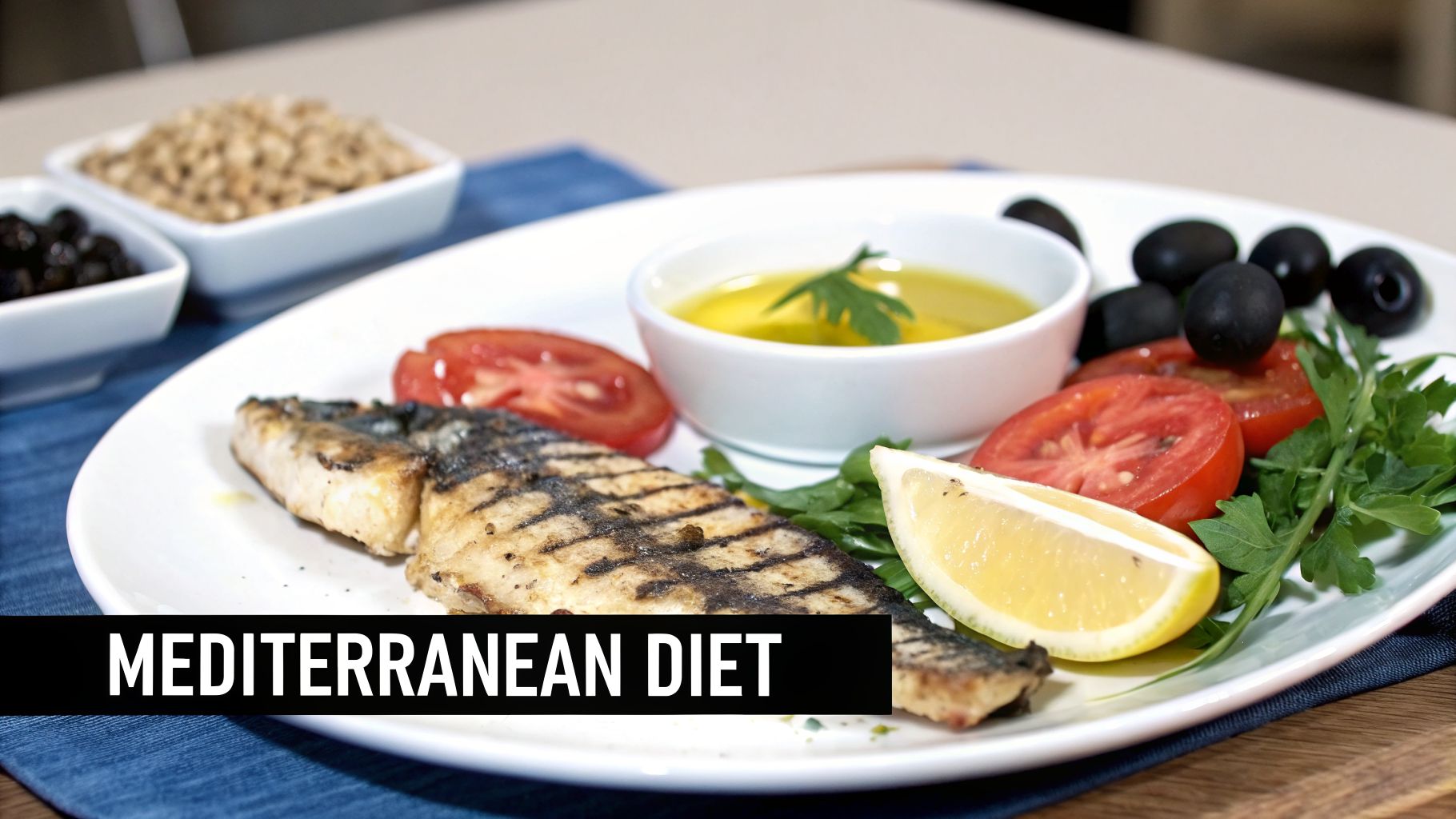
When people ask for a real-world example of an effective anti inflammatory diet, the Mediterranean diet almost always comes up first. It’s not some trendy, restrictive plan but a way of eating that has been practiced for centuries in countries like Greece, Italy, and Spain. It’s celebrated for its incredible health benefits, but just as importantly, for its delicious, satisfying foods.
Think of it less as a "diet" and more as a lifestyle built on a foundation of whole, plant-based foods. It’s a colorful plate full of fruits, vegetables, whole grains, nuts, and legumes. Healthy fats are front and center, with extra virgin olive oil being the undisputed star of the show.
Core Principles of the Mediterranean Diet
The beauty of this approach is its flexibility. It’s about embracing a philosophy of eating that prioritizes abundance and flavor, which makes it a much more sustainable and enjoyable path for many people, especially those managing a cancer diagnosis.
Here’s what it looks like in practice:
- A Plant-Forward Plate: Meals are built around a rich variety of vegetables, fruits, whole grains (like oats and quinoa), and legumes (like beans and lentils).
- Healthy Fats as the Focus: Extra virgin olive oil is the go-to fat for cooking and dressings. You'll also see plenty of nuts, seeds, and avocados.
- Lean Protein Choices: Fish is a staple, particularly fatty fish like salmon and sardines. Poultry, eggs, and dairy are enjoyed in smaller amounts.
- Limiting Unhelpful Foods: Red meat and highly processed foods are saved for rare occasions. This naturally cuts down on saturated fats and other pro-inflammatory ingredients.
This isn't just a list of "good" and "bad" foods. It’s a complete system that directly works to counter the chronic inflammation we’ve been talking about.
Cardiovascular Benefits a Key Advantage
One of the most compelling reasons for someone with cancer to adopt this eating style is its powerful effect on heart health. This is a crucial point, as some cancer treatments can put a serious strain on the cardiovascular system.
The research here is incredibly solid. One landmark study found that following a Mediterranean diet resulted in a 30% reduction in major cardiovascular events.
For people who already had coronary heart disease, the results were even more impressive, showing an astounding 73% relative risk reduction. On the flip side, diets with high inflammatory scores are linked to a 24% higher risk of cardiovascular mortality. The protective power of this anti-inflammatory approach is hard to overstate. You can learn more about these significant cardiovascular findings and what they mean in a clinical setting.
The Mediterranean diet isn’t just "healthy"; it’s a clinically validated strategy for reducing inflammation. The bioactive compounds in its foods, like omega-3 fatty acids and polyphenols, directly help lower inflammatory markers that can fuel cancer progression.
Following this dietary pattern gives you a tangible, science-backed model for improving your health. If you need some help getting started, exploring dedicated Mediterranean meal plans can provide the structure and guidance to make it happen. It’s a clear roadmap for embracing one of the most effective anti inflammatory diets we know of.
Practical Steps to Start an Anti Inflammatory Diet
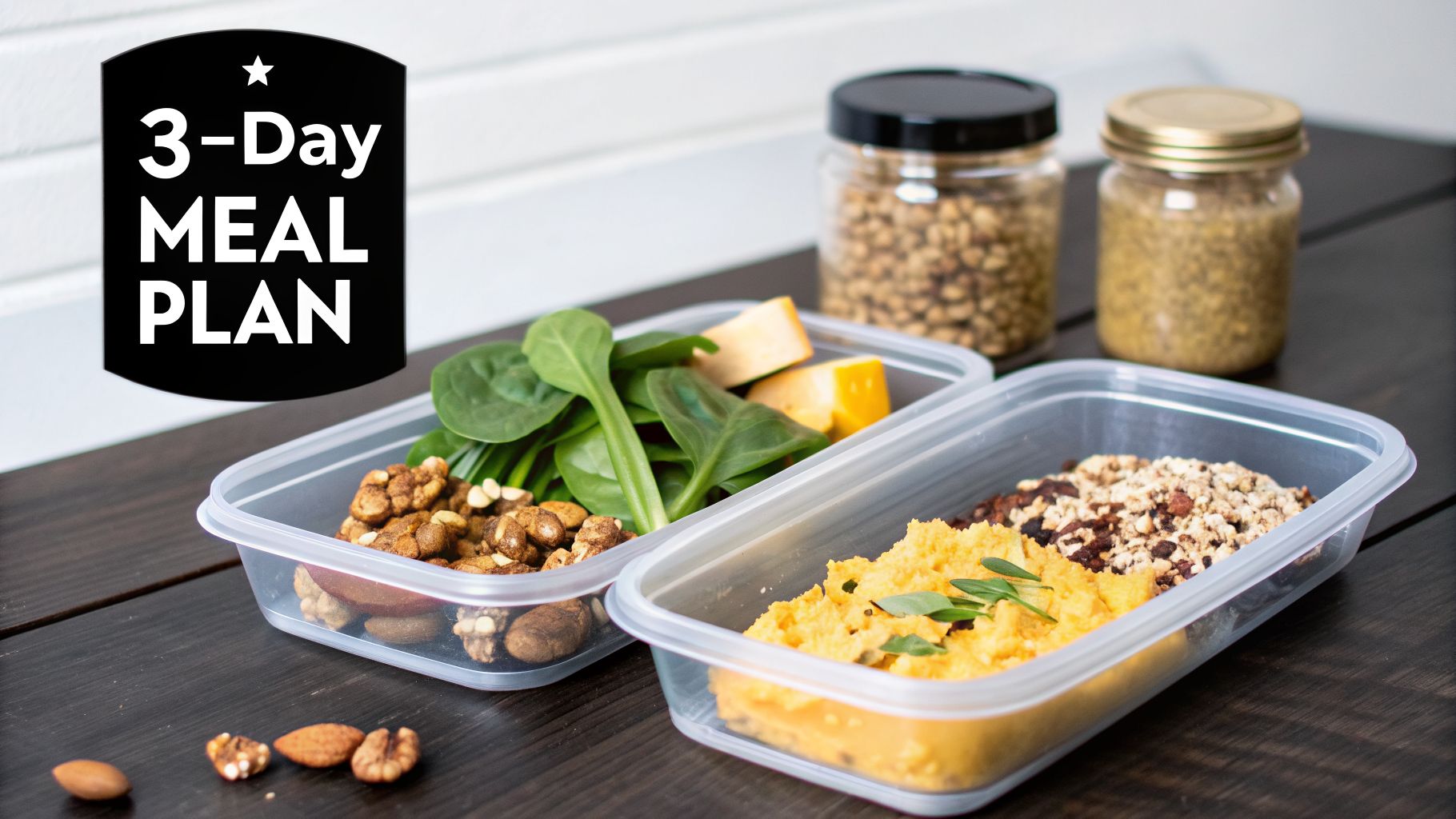
Alright, let's translate the science into what really matters: what you put on your plate. Moving from theory to practice is often the hardest part, but it's also the most empowering.
The key here is progress, not perfection. This isn't about overhauling your entire life overnight. It’s about making small, manageable swaps that add powerful, nourishing foods to your meals, especially when you're dealing with the fatigue or appetite changes that often come with cancer treatment.
Instead of thinking of this as a diet of restriction, try to see it as one of abundance. You're adding vibrant, delicious foods that actively help your body build resilience. Every small change is a step toward creating a less inflammatory environment inside your body.
Top 10 Anti-Inflammatory Foods to Add Today
Getting started can be as simple as focusing on one new food at a time. Here are 10 powerhouse foods and some incredibly easy ways to start incorporating them into your day.
- Fatty Fish: Think salmon, mackerel, and sardines, which are brimming with omega-3 fatty acids. Try baking a piece of salmon for dinner once or twice a week.
- Leafy Greens: Spinach, kale, and collards are loaded with antioxidants. It's as easy as tossing a handful of spinach into a smoothie or your morning eggs.
- Berries: Blueberries, strawberries, and raspberries are full of protective compounds. A cup of mixed berries on top of yogurt or oatmeal is a fantastic start to the day.
- Nuts: Walnuts and almonds are a great source of healthy fats and fiber. A small handful makes a perfect, energy-boosting snack to get you through the afternoon.
- Olive Oil: Extra virgin olive oil is a cornerstone of this eating style. Make it your go-to for cooking or whisking up a simple salad dressing.
- Tomatoes: Rich in an antioxidant called lycopene, tomatoes are incredibly versatile. Add them to salads, soups, or sauces.
- Turmeric: This golden spice contains curcumin, a compound famous for its anti-inflammatory effects. Sprinkle a teaspoon into soups, stews, or even your morning oatmeal.
- Ginger: Well-known for its soothing qualities, fresh ginger can be steeped into a comforting tea or grated into stir-fries and marinades for a little kick.
- Whole Grains: Foods like oats, quinoa, and brown rice provide fiber that's crucial for gut health. Start your day with a warm bowl of oatmeal or swap white rice for quinoa at dinner.
- Green Tea: This simple beverage is packed with polyphenols that help fight inflammation. Try making a warm cup in the afternoon a part of your daily ritual.
When you're ready to hit the grocery store, having a plan makes all the difference. A helpful guide like this whole food plant based shopping list can make it much easier to stock your pantry with the right things.
A Sample 3-Day Anti-Inflammatory Meal Plan
To give you a better sense of how these foods come together in a day, here's a sample meal plan. The ideas are designed to be gentle, delicious, and manageable, especially if your appetite isn't at its best.
This is just a starting point. For more detailed guidance, especially on managing eating during treatment, you can find more tips in our article, What to Eat During Chemotherapy.
Sample 3-Day Anti-Inflammatory Meal Plan
Think of this meal plan as a template for inspiration, not a set of rigid rules. The goal is simply to build your plates around colorful vegetables, lean proteins, healthy fats, and high-fiber carbs. You can do this one meal at a time.
How to Talk to Your Oncologist About Nutrition
So, you're exploring the idea of an anti-inflammatory diet. That’s a fantastic, proactive step. But before you overhaul your kitchen, one of the most important moves you can make is looping in your oncologist and care team.
Think of it this way: your diet and your medical treatments should be working together, not in opposition. Bringing your oncology team into the conversation ensures your nutritional choices safely support your treatment plan, rather than accidentally working against it. This isn't about asking for permission; it's about building a stronger, more integrated strategy for your health.
Preparing for the Conversation
Walking into your appointment with a clear plan will make this conversation so much more effective. When you have specific questions ready, it shows you're taking this seriously and helps your doctor give you the best possible advice. Vague statements can lead to vague answers, but targeted questions open the door for a real dialogue.
Here are a few ideas to get the ball rolling:
- How might an anti-inflammatory diet complement the treatment I'm currently on?
- Are there any foods or even supplements I should absolutely avoid because they could interfere with my medications?
- Could you recommend a registered dietitian who specializes in oncology nutrition? They're the real experts in this field.
- Looking at my recent lab work, are there any nutritional weak spots you think I should focus on?
The goal is to make food a powerful, positive part of your treatment plan. Your diet should never be at odds with your medical care—it should be a key player on the same team, helping your body heal and stay strong.
Asking the right questions helps you and your doctor make informed decisions together. For an even more comprehensive list, check out our guide on essential questions to ask your oncologist. A little preparation can turn a quick chat into a genuinely collaborative planning session for your well-being.
Your Questions About Anti-Inflammatory Eating, Answered
As you start looking into an anti-inflammatory diet, it’s completely normal for questions to pop up. This is a journey, after all, and the goal is to make smart, lasting choices that truly support your health. Let's walk through some of the most common questions I hear, so you can move forward with clarity and confidence.
Can an Anti-Inflammatory Diet Cure Cancer?
Let's be very clear on this one: no, an anti-inflammatory diet is not a cure for cancer. It's best to think of it as a powerful supporting player that works right alongside conventional medical treatments like chemotherapy or immunotherapy.
The main idea is to help dial down the chronic inflammation that can give cancer cells a more welcoming environment to thrive in. By eating this way, you’re supporting your overall health, which can potentially improve how your body responds to treatment and help you manage the side effects. It’s an essential tool, but it doesn't replace your medical care.
How Quickly Will I See Benefits From This Diet?
The changes you'll feel from an anti-inflammatory diet tend to be gradual. Some people tell me they feel more energetic or have fewer aches and pains within just a few weeks. That’s fantastic, but the deeper clinical benefits, like a measurable drop in inflammatory markers, build up over several months of consistent effort.
The real magic is in consistency. Try to focus on making sustainable, long-term shifts rather than looking for a quick fix. Every meal is a chance to nourish your body and support its natural healing process.
Is an Anti-Inflammatory Diet Expensive to Follow?
That’s a common concern, but it definitely doesn't have to be. While you'll see plenty of expensive "superfoods" marketed online, the true foundation of this diet is built on incredibly affordable and easy-to-find staples.
You can build a powerful, anti-inflammatory grocery list with budget-friendly items like:
- Legumes: Beans, lentils, and chickpeas are fantastic, low-cost sources of protein and fiber.
- Whole Grains: Things like oats and brown rice are cheap, filling, and packed with nutrients.
- In-Season Produce: Buying fruits and vegetables when they're in season is almost always the cheapest option.
- Frozen Options: Don't overlook the freezer aisle! Frozen fruits and veggies are just as nutritious as fresh ones and are often much more affordable, especially for items that aren't in season.
You might even find that by cutting back on highly processed foods, sugary sodas, and frequent takeout, your budget naturally frees up for more whole, nourishing ingredients.
Do I Need to Avoid All Inflammatory Foods Completely?
Not at all. For most people, the goal is progress, not perfection. In fact, obsessing over every single ingredient can create stress, and stress itself is inflammatory!
A much more realistic and sustainable way to approach it is the 80/20 rule. Focus on filling your plate with anti-inflammatory foods about 80% of the time. This gives you the flexibility to enjoy other foods the remaining 20% of the time. The focus should be on limiting pro-inflammatory foods, not banning them forever. This makes the diet more enjoyable and something you can stick with for good. As with any change, it's always best to discuss your specific dietary plan with your oncology team.
At Hirschfeld Oncology, we believe in an integrated approach to cancer care, where evidence-based nutrition supports your treatment plan. To learn how we can help you create a comprehensive strategy, request a consultation at https://honcology.com/blog.
.png)
.png)