.png)


When diarrhea hits, the last thing you want is a complicated plan. Your focus should be on gentle, immediate relief, and for that, a simple, time-tested approach is often best.
The go-to starting point for the first 24 to 48 hours is what's known as the BRAT diet: Bananas, Rice, Applesauce, and Toast.
Your First Steps for Calming Digestive Distress
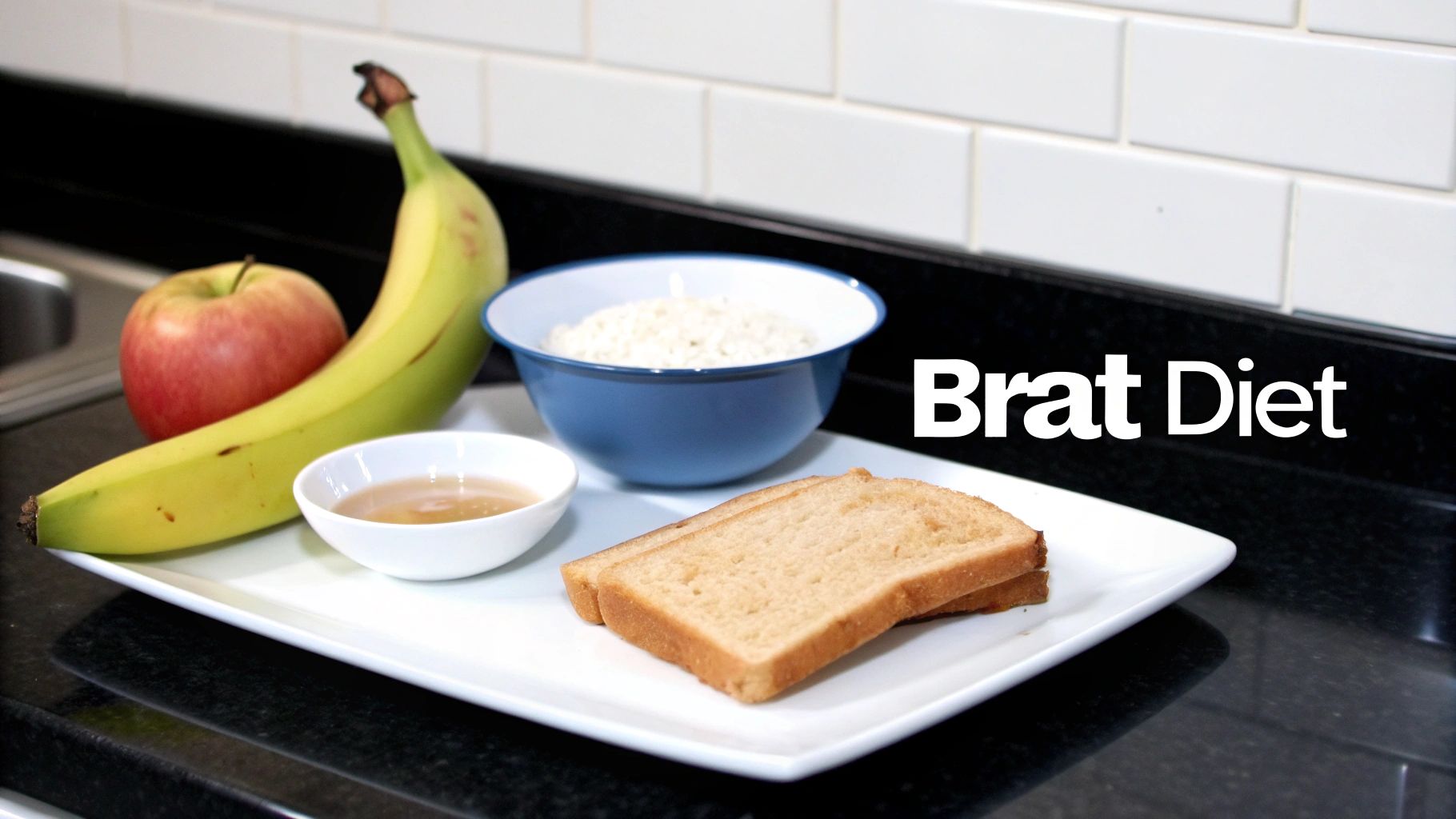
When you're going through cancer treatment, getting a handle on side effects fast is crucial for keeping your strength up. Think of the BRAT diet as a "reset button" for your gut. It’s a foundational strategy built to give your digestive tract a much-needed break without adding any more stress to your system.
The magic of this diet is in its simplicity. Each food is intentionally bland and has binding properties, which helps to firm up your stool and soothe an irritated bowel. These foods are low in fiber, fat, and spices—all things that can rev up your intestines and make diarrhea worse.
Why The BRAT Diet Works
It helps to know why these specific foods are so effective for getting symptoms under control right away.
- Bananas: They're packed with potassium, a key electrolyte you lose quickly with diarrhea. Bananas also contain pectin, a type of soluble fiber that acts like a sponge, absorbing excess fluid in your gut.
- White Rice: This is just a simple, easy-to-digest carbohydrate. It gives you a bit of energy while also helping to bind your stool and make it less watery.
- Applesauce: Just like bananas, applesauce is a great source of pectin. It's gentle on the stomach and provides a little sugar for energy when your appetite is low.
- White Toast: Another bland, easy carbohydrate. Just be sure to stick with plain white bread for now—the higher fiber in whole-wheat bread can be too rough on your system at this stage.
The BRAT diet isn't a new fad; it's been recommended since the 1940s to help firm up stools. In an oncology setting, where up to 80% of certain cancer patients struggle with treatment-induced diarrhea, sticking to a diet like this can make a real difference in shortening how long an episode lasts.
If you're looking for more immediate strategies, this guide on how to stop constant diarrhea offers some excellent insights.
Your Initial 24-Hour Diarrhea Diet Plan
This table is your quick-start guide for the very first day. The goal here is pure simplicity—stick to these foods to give your digestive system the rest it needs to recover.
Remember, this super-simple plan is a short-term tool, not a long-term nutritional strategy. It’s designed to get you through the worst of it. After 24 to 48 hours, as you start to feel better, you can slowly begin adding other bland, low-residue foods back into your diet.
Why Does Cancer Treatment Upset Your System?
To get a handle on managing diarrhea during cancer care, it really helps to first understand why it's happening. Once you see the cause, the dietary solutions start to make a lot more sense. This isn't about something you did wrong—it's often an expected side effect of powerful, life-saving treatments doing their job.
Think of the lining of your digestive tract as a delicate, fast-growing lawn. The cells there are constantly turning over, creating a healthy barrier that soaks up nutrients and water while keeping everything else moving along as it should. This rapid growth is completely normal.
The Unintended Target
Cancer treatments like chemotherapy and radiation are designed to be tough. Their primary goal is to find and destroy cancer cells, which are known for dividing and growing very quickly. The problem is, these therapies aren't always great at telling the difference between a rapidly growing cancer cell and a rapidly growing healthy cell.
That delicate "lawn" lining your gut, unfortunately, becomes a prime target for this friendly fire.
- Chemotherapy: These powerful drugs travel through your entire bloodstream, which means they can affect the intestinal lining from the inside.
- Radiation Therapy: When radiation is aimed at tumors in your belly or pelvic area, it can directly damage the healthy intestinal cells that are in the line of fire.
This is a major reason why figuring out the right diet for diarrhea is so crucial for patients. When that intestinal lining gets damaged, it becomes inflamed and irritated—almost like a bad sunburn on your skin, but on the inside.
From Disruption to Diarrhea
This internal "sunburn" sets off a chain reaction that leads straight to diarrhea. A healthy gut wall is an expert at managing water; it absorbs just the right amount to keep you hydrated and form a solid stool. But a damaged, irritated lining can't do that job properly.
Instead of absorbing water, the inflamed gut does the opposite. It can actually leak extra fluid into the bowel. At the same time, the muscles that push waste along can go into overdrive, moving everything through way too fast. This one-two punch of too much water and not enough time means your body can't form a normal stool, resulting in diarrhea.
The link is pretty direct: the treatments target fast-growing cells. Your gut is lined with some of the fastest-growing cells in your body. This collateral damage messes with water absorption, and the result is diarrhea.
Getting these symptoms under control isn't just about comfort—it's a critical part of supporting your overall treatment. We cover more strategies in our guide to managing gastrointestinal cancer symptoms during treatment.
Why This Knowledge Is Your Superpower
Understanding this process can completely shift your mindset. Diarrhea isn't a random complication or a sign that you're doing something wrong. It’s a very common, and often predictable, side effect of a treatment that's working hard to fight cancer. In fact, up to 80% of patients on certain types of chemotherapy will experience it.
With this knowledge, you can switch from feeling distressed and reactive to being proactive and in control. You can start to see dietary changes not as frustrating restrictions, but as smart tools to soothe an irritated system and give it the gentle care it needs to heal. By choosing calming, easy-to-digest foods, you are actively helping your body manage the treatment's side effects, which helps you stay stronger and better nourished through it all.
Expanding Your Diet Beyond The Basics
After a day or two of sticking to the simple, soothing foods of the BRAT diet, your system is likely ready for the next step. The goal now is to carefully bring back a wider variety of foods to fuel your recovery without overwhelming your digestive tract.
Think of it like slowly reopening a quiet road after a major storm. You want to let traffic back on gradually to ensure everything remains stable and doesn't get backed up again.
This next phase is all about a low-residue diet. The term "residue" simply refers to the undigested parts of food, mostly fiber, that hang around in your intestines. A low-residue plan minimizes this material, giving your bowel less work to do and allowing it to heal properly.
This is especially critical during cancer treatment, which can be incredibly tough on the gut.
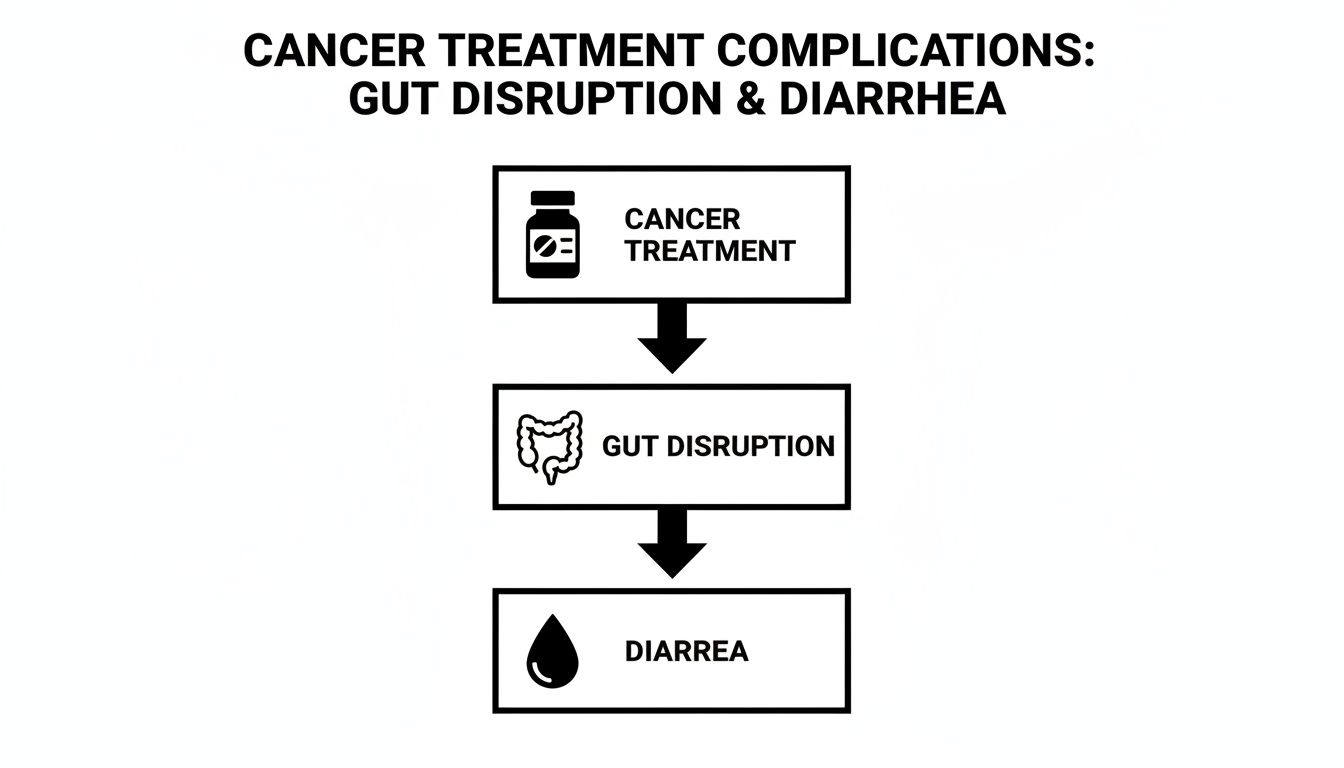
As you can see, powerful treatments, while fighting cancer, can unintentionally harm the gut lining. This damage directly impacts its ability to manage fluids, often leading to diarrhea.
Introducing Gentle Proteins And Carbs
Your body needs protein and energy to repair itself, but choosing the right sources is key. Focus on lean, tender proteins that are easy on your system.
- Baked or boiled chicken or turkey (skinless) is a fantastic choice.
- White fish like cod or tilapia, steamed or baked, is another gentle option.
- Scrambled or hard-boiled eggs are packed with protein and usually very well-tolerated.
- Plain pasta or noodles made from white flour provide simple carbohydrates for energy without causing irritation.
- Cream of wheat or cream of rice are soothing, warm cereals that can be very comforting.
It’s important to avoid fatty meats, anything fried, and heavy sauces, as fat can stimulate the gut and make symptoms worse. Also, stay away from whole grains for now—their high fiber content can be too abrasive for a sensitive digestive tract.
To make things clearer, here is a table that outlines what to choose and what to avoid as you expand your diet.
Foods to Eat vs Foods to Avoid When Managing Diarrhea
This table serves as a general guide. Remember, everyone's tolerance is different, so it's all about listening to your body.
Adding Well-Cooked Vegetables And Fruits
While raw fruits and veggies are definitely off the table for now because of their high fiber, you can start reintroducing certain kinds if they are cooked until very tender. You’ll also want to remove any skins and seeds.
Cooking breaks down the tough fibers, making them much easier for your body to process.
Good starting options include:
- Carrots: Boiled or steamed until you can easily pierce them with a fork.
- Green beans: Well-cooked and soft.
- Spinach: Cooked until wilted.
- Asparagus tips: Steamed until very soft.
- Peeled potatoes: Boiled or baked, but without the skin.
For fruits, keep bananas and applesauce in the rotation. You can also try canned fruits packed in water or their own juice, like peaches or pears, since the canning process softens them significantly. Avoid anything with tough skin or tiny seeds, like berries or a raw apple.
A Tiered System For Reintroducing Foods
To make this process feel less overwhelming, it helps to think of it in tiers. You've already mastered Tier 1 (the BRAT diet). Now, you're ready to move into Tiers 2 and 3.
Tier 2: Expanding the Basics
- Proteins: Baked chicken, white fish, scrambled eggs.
- Carbs: White pasta, cream of wheat, saltine crackers.
- Produce: Well-cooked, peeled carrots and potatoes.
Tier 3: Adding More Variety
- Proteins: Ground turkey, smooth peanut butter (in small amounts).
- Carbs: White bread rolls, pretzels.
- Produce: Canned peaches, steamed green beans, cooked spinach.
The most important rule? Listen closely to your body. Introduce only one new food at a time and wait a few hours to see how you feel. If a food brings on cramping, bloating, or more diarrhea, take it off the menu for now and try again in a few days.
This mindful, step-by-step plan helps you regain control over your diet with confidence. For more ideas on what to eat, check out our guide on the best foods for chemotherapy patients.
The Critical Role of Hydration and Electrolytes
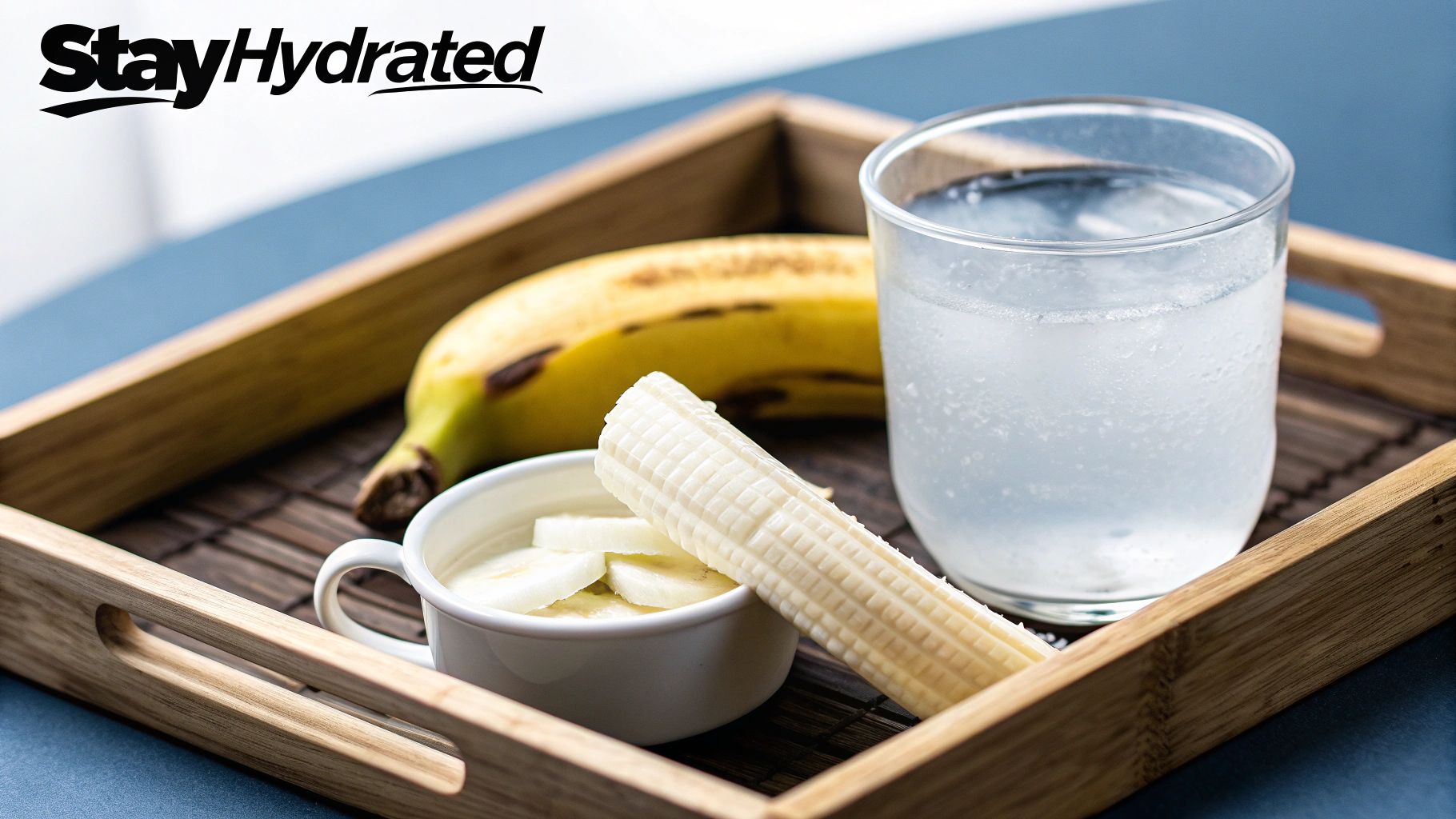
While sorting out what to eat is important, your absolute first priority when dealing with diarrhea is staying hydrated. The biggest danger isn't the discomfort itself—it’s the rapid loss of fluids and essential minerals, which can spiral into dehydration very quickly. This is especially true if you're undergoing cancer treatment, as your body is already working overtime.
Think of your body as a finely tuned electrical system. To keep everything running smoothly—from muscle movements to brain signals—it needs a precise balance of water and charged minerals called electrolytes. When you have diarrhea, your body is flushing out both water and these vital minerals faster than they can be absorbed.
This rapid loss throws your body’s delicate balance out of whack, leading to things like fatigue, dizziness, muscle cramps, and even confusion. Staying hydrated isn't just about feeling better; it's a non-negotiable part of helping your body heal and handle treatment.
Understanding Electrolytes: It’s More Than Just Salt
When we talk about electrolytes, we’re referring to minerals like sodium, potassium, chloride, and magnesium that are absolutely essential for your body to function. They’re the unsung heroes of hydration, helping to manage fluid balance, blood pressure, and nerve signals. Simply chugging plain water often isn't enough to restore this balance during a bad bout of diarrhea.
Key Takeaway: With diarrhea, you lose much more than just water. You're also losing critical electrolytes like sodium and potassium. To avoid the serious risks of dehydration, you have to replace both.
Getting a handle on why these minerals matter is key for anyone managing diarrhea. You can learn more about what electrolytes are good for and how they support your overall health. That knowledge empowers you to take an active role in your recovery.
Practical Ways To Rehydrate Effectively
Your game plan for rehydrating should focus on replacing both fluids and lost minerals. Plain water is a good starting point, but drinks that also contain electrolytes are going to be far more effective. The trick is to take small, frequent sips all day long. Gulping down large amounts can actually overstimulate your gut and make things worse.
Here are some of the best choices for getting the job done:
- Oral Rehydration Solutions (ORS): Products like Pedialyte are the gold standard for a reason. They're specifically formulated with the right balance of sugar, salt, and potassium to help your body absorb fluids quickly and efficiently.
- Clear Broths: Chicken, beef, or vegetable broth is a fantastic option. It provides fluid, crucial sodium, and other minerals in a warm, soothing form that’s gentle on your stomach.
- Diluted Juices: Full-strength juice can be too sugary and aggravate diarrhea. But diluting a juice like apple or white grape with an equal amount of water often makes it much easier to tolerate.
- Decaffeinated Tea: A weak herbal tea, like chamomile or peppermint, can be very calming for the digestive system while also contributing to your fluid intake.
Creating a Simple Homemade Rehydration Drink
If you don't have commercial products on hand, you can easily whip up your own oral rehydration solution at home. This simple recipe provides the right balance of fluids, sugar, and salt to help your body reabsorb what it’s lost.
Simple Oral Rehydration Solution Recipe
- Start with a clean base: Mix 4 cups (1 liter) of clean water.
- Add a touch of salt: Stir in ½ teaspoon of table salt.
- Incorporate some sugar: Add 6 level teaspoons of sugar.
Just mix everything together until the salt and sugar have completely dissolved. Sip this solution slowly throughout the day. It’s a powerful and cost-effective tool for fighting dehydration from your own kitchen. Remember, consistency is your best friend here—even a few sips every 15 minutes can make a world of difference.
A Sample Meal Plan for Digestive Recovery
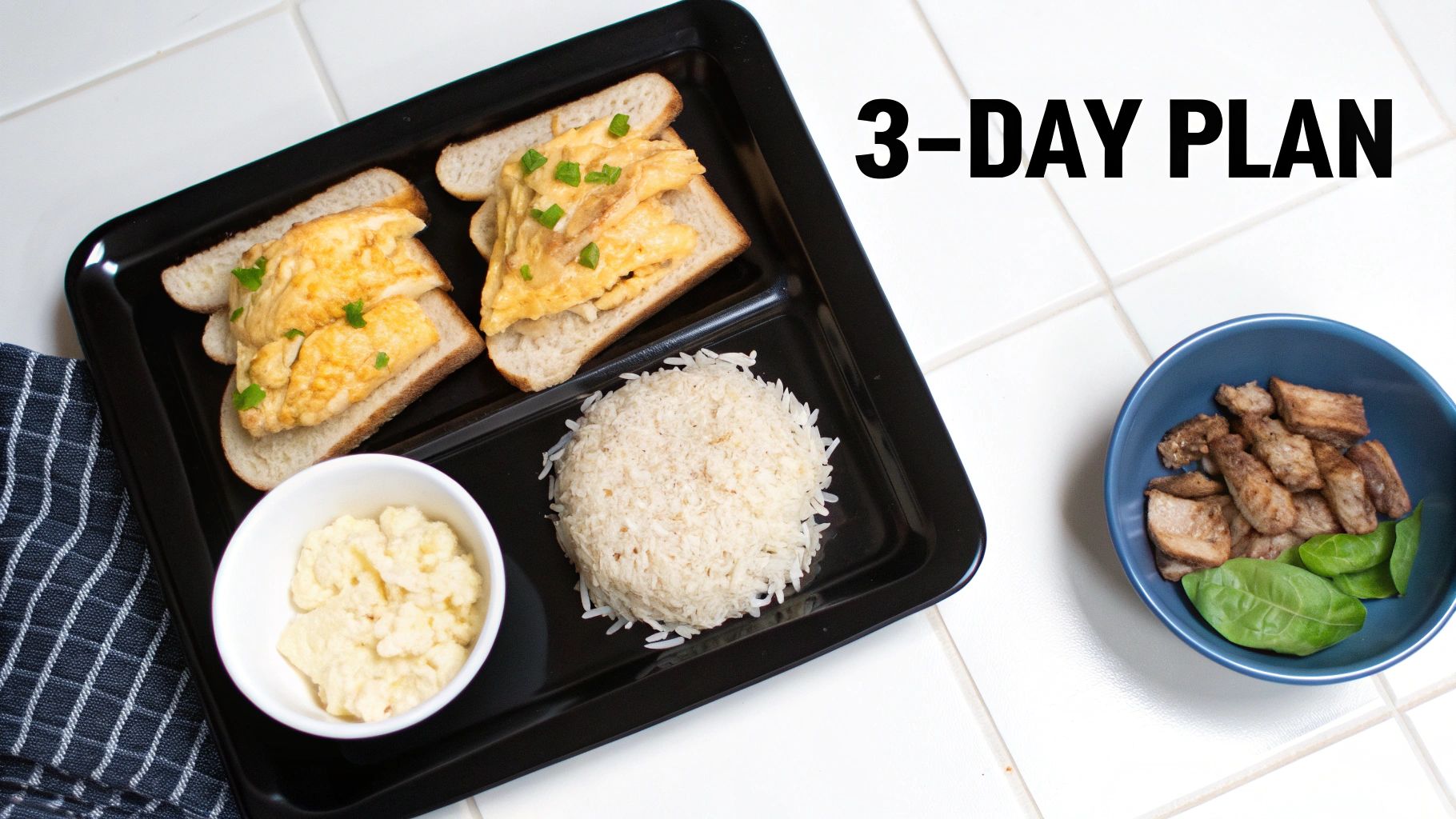
It’s one thing to know which foods are gut-friendly, but figuring out how to combine them into actual meals can feel overwhelming, especially when you’re not feeling your best. To help you put this all into practice, we’ve mapped out a sample 3-day meal plan.
Think of this as a gentle reset. There are no complicated recipes here. The entire point is to give your gut a predictable, calm environment by sticking to simple, easy-to-digest foods. This approach takes the guesswork out of mealtime and lets your digestive system heal.
Day 1: Back to Basics
Day 1 is all about giving your gut maximum rest. We're leaning heavily on the core BRAT diet principles with foods that are intentionally bland but still provide some much-needed energy.
- Breakfast: A ripe banana with a slice of plain white toast.
- Lunch: A small bowl of plain white rice and a cup of warm, clear chicken or vegetable broth.
- Dinner: A small serving of plain applesauce alongside a few saltine crackers.
- Snacks & Fluids: The key is consistent hydration. Sip on water, weak decaffeinated tea, or an electrolyte drink throughout the day instead of gulping.
Day 2: Gently Reintroducing Protein
If your symptoms are starting to ease up by day 2, it's a good time to bring in some simple, lean protein. This gives your body the essential building blocks it needs for repair without overburdening your digestive tract.
- Breakfast: One or two scrambled eggs (cooked with minimal oil or butter) and a slice of white toast.
- Lunch: A small portion of boiled or baked skinless chicken breast with a side of plain white rice.
- Dinner: A bowl of plain white pasta with just a touch of olive oil and salt.
- Snacks & Fluids: Keep the fluids coming. If you’re feeling ready, you could try adding a few well-cooked, peeled carrots as a soft side dish.
A Quick Reminder: This plan is just a template, not a set of rigid rules. The most important thing you can do is listen to your body. If a food causes any discomfort, bloating, or a return of symptoms, simply back off and try again in another day or two.
Day 3: Expanding with Cooked Vegetables
By day 3, if things are still moving in the right direction, you can begin adding more variety. The focus is on well-cooked, easy-to-digest vegetables. Just remember to introduce only one new food at a time to see how your body tolerates it.
- Breakfast: A warm bowl of cream of rice or cream of wheat cereal.
- Lunch: A small piece of baked white fish, like cod or tilapia, served with boiled and peeled potatoes.
- Dinner: Plain pasta with some simply cooked ground turkey—no heavy spices or sauces just yet.
- Snacks & Fluids: Canned fruit like peaches or pears (packed in their own juice or water, not heavy syrup) can be a great gentle snack.
This step-by-step approach offers a clear path to help you feel more in control of your nutrition during a difficult time. For more tips on eating well during treatment, our guide on what to eat during chemotherapy is another great resource. The goal is always to keep your body nourished and as strong as possible.
Knowing When to Call Your Oncology Team
Dietary changes are an excellent first line of defense for managing diarrhea, but they aren't a substitute for professional medical care. It’s crucial to know when an issue has moved beyond simple self-management and requires a call to your doctor or nurse.
Think of it as knowing when to call for backup. While mild, short-lived diarrhea is a common side effect, some symptoms are red flags that your body needs immediate medical support. Alerting your team ensures a small problem doesn’t escalate into a bigger one.
Non-Negotiable Reasons to Call Your Doctor
Don't wait to see if these symptoms get better on their own. You need to contact your care team right away if you experience any of the following:
- Diarrhea that won't quit: If you’ve been following a bland diet and your symptoms still haven't improved after 48 hours.
- Signs of dehydration: Feeling dizzy or weak, having a very dry mouth, and noticing you aren't urinating much (or your urine is dark yellow) are all serious warning signs. Dehydration can set in fast and derail your treatment.
- A high fever: A temperature of 100.4°F (38°C) or higher could signal an infection, which your body might struggle to fight off during cancer treatment.
- Severe pain: Intense cramping, bloating, or abdominal pain that just doesn’t let up.
- Blood in your stool: This can look like bright red blood, or it might make your stool look dark and tarry.
Being an active partner in your care means recognizing when your body is sending up a flare. Calling your team isn't a sign of failure—it's a smart, proactive step to keep you safe and your treatment plan on track.
A Word of Caution on Medications
When you're feeling miserable, it’s tempting to grab an over-the-counter (OTC) anti-diarrhea medication for quick relief. But this is one of those times you absolutely must consult your oncologist first.
Some common OTC remedies can actually interfere with your chemotherapy or mask the symptoms of a more serious underlying problem. Your doctor knows your complete medical picture and can recommend something that is both safe and effective for your specific situation. This simple check-in ensures all the pieces of your care plan are working together as they should.
Got Questions About Diarrhea and Your Diet? We’ve Got Answers.
When you’re dealing with diarrhea, it’s natural to have a million questions about what you should or shouldn’t be eating. Should you take a probiotic? Is coffee off the table? How long do you have to stick to this bland diet? Let’s walk through some of the most common questions we hear.
Are Probiotics a Good Idea for Chemo-Related Diarrhea?
Probiotics are often touted as a way to get "good" bacteria back into your gut, which sounds great in theory. The reality, though, is a bit more complicated for someone undergoing cancer treatment. Because chemotherapy can weaken your immune system, introducing live bacteria—even the "good" kind—could potentially pose an infection risk.
This is not a one-size-fits-all situation. It is absolutely crucial to talk to your oncologist before even thinking about starting a probiotic. They’ll know your specific treatment, your immune status, and whether this is a safe option for you.
How Long Should I Stick With a Low-Residue Diet?
Think of the BRAT diet as a very short-term solution—something you only do for 24 to 48 hours to give your gut an immediate break. A broader low-residue diet can be helpful for a bit longer, but the end goal is always to get back to eating a wider variety of foods.
This isn't meant to be a permanent lifestyle change. It's a temporary healing phase. The real aim is to listen to your body and work with your healthcare team to gradually reintroduce fiber as your system gets back on track.
Can I Still Have My Morning Coffee or Tea?
Probably best to skip it for now. Caffeine found in coffee, black tea, and many sodas can act as a stimulant for your intestines, which is the last thing you want when they’re already overactive. It can rev up your digestive system and make diarrhea worse.
Instead, try reaching for caffeine-free herbal teas. Gentle options like chamomile or peppermint can be quite soothing. Your safest bets, however, will always be water, clear broths, and electrolyte drinks to keep you hydrated without causing any extra irritation.
What if I’m Lactose Intolerant?
Even if you don’t normally have trouble with dairy, a bad bout of diarrhea can temporarily make you much more sensitive to lactose. Your gut is irritated, and it just can't produce enough of the enzyme needed to break down the sugar in milk.
During a flare-up, it’s a smart move to steer clear of dairy products like milk, ice cream, and soft cheeses. Some people find they can handle a small amount of plain yogurt with live cultures, but it’s often easiest to just cut out dairy until you’re feeling better. When you're ready, you can try reintroducing it slowly to see how your body handles it.
At Hirschfeld Oncology, we know that managing the side effects of treatment is a huge part of your cancer journey. If you're struggling with questions about your diet or other symptoms, our team is here to give you personalized, practical advice. You can explore our other resources or request a consultation to learn more at https://honcology.com/blog.
.png)
.png)