.png)


When does your journey as a breast cancer survivor actually begin? It’s a question many people ask, and the clinical answer might surprise you. From a medical standpoint, survivorship starts the day you're diagnosed—not after you ring the bell or finish your last treatment. It’s the entire experience, from that first appointment through treatment and into the next chapter of your life.
Defining Your Journey as a Breast Cancer Survivor

While finishing active treatment is an enormous milestone worth celebrating, remission isn't an automatic reset button. Many survivors find themselves grappling with a confusing mix of emotions. There's incredible relief, of course, but it's often paired with a new kind of anxiety or a quiet sense of uncertainty. This guide is meant to be a roadmap for navigating that new terrain.
Think of active treatment as a highly structured, intense climb up a mountain with a team of guides. Now, you’ve reached a new summit. The path forward isn't as clearly marked, and you’re the one in charge of the map. This next phase is all about learning to navigate this landscape with confidence, armed with the right knowledge and support.
Validating Your New Reality
The identity of a "breast cancer survivor" is deeply personal, and how you relate to it can change over time. It’s completely normal if you feel a gap between how others think you should feel—triumphant and "all better"—and your own internal reality.
Survivorship often means learning to hold two things at once: gratitude for making it through, and the profound fatigue that comes with the ordeal. It's about reconciling the world’s expectation that you’re “cured” with your body and mind’s real need for continued healing.
This is a time for giving yourself grace. Your body and mind have been through a tremendous amount of stress, both physically and emotionally. Your recovery won't look like anyone else's, and it happens on its own schedule.
Empowerment Through Knowledge and Support
The key to truly thriving after treatment is empowerment. That comes from understanding your ongoing health needs, building a solid support system, and becoming an active partner in your long-term care. This guide will help you get there by breaking down:
- Your Long-Term Health: What follow-up care, screenings, and surveillance you can expect.
- Managing Lingering Effects: How to address common physical and emotional challenges that can persist after treatment.
- Building a Wellness Plan: How to work with your team to create a personalized survivorship care plan.
For many, this is also a time to better understand personal risk factors. If breast cancer runs in your family, for instance, learning more about your genetic predisposition to breast cancer can empower you and your relatives with crucial information. It’s one more piece of the puzzle that helps you take control.
Ultimately, being a breast cancer survivor is an active, ongoing process. It's about much more than just being cancer-free; it's about purposefully reclaiming your health, wellness, and quality of life. A new chapter is beginning, and you have the power to chart its course.
Navigating Your Long-Term Follow-Up Care
When active treatment ends, it can feel like the world suddenly goes quiet. The constant rhythm of appointments, scans, and check-ins gives way to a new, less-defined chapter. It's completely normal for this shift to feel a bit jarring, like you’ve been handed the keys back but aren't quite sure where the road leads next.
This next phase, however, isn't about being left on your own. It's about shifting from an intensive treatment schedule to a thoughtful, long-term surveillance plan—a partnership between you and your oncology team to protect your future health. Think of it less like waiting for a problem and more like proactive, dedicated maintenance, the same way you’d care for a classic car to ensure it runs beautifully for decades.
The Rhythm of Your Follow-Up
Your follow-up schedule is carefully designed to be most frequent right after treatment, which is when the risk of recurrence is generally highest. Over time, as you move further out, these visits will become less frequent. While your plan will be tailored specifically to you, most follow-up care includes a few key components:
- Regular Physical Exams: For the first few years, you'll likely see your oncologist every 3-6 months. These visits are the perfect time to discuss how you're feeling, manage any lingering side effects, and have a thorough physical check-up.
- Annual Mammograms: A yearly mammogram on any remaining breast tissue (or both breasts) is essential. Depending on factors like breast density or family history, your doctor might also recommend an annual MRI.
- Blood Tests: Simple blood work may be done to monitor your overall health, especially if you're taking long-term medications like Tamoxifen or an aromatase inhibitor.
Sticking with this plan is one of the most powerful things you can do for your long-term health. And the results speak for themselves—thanks to better treatments and diligent follow-up, the outlook for survivors has improved dramatically. In the U.S., death rates from breast cancer fell by an incredible 44% between 1989 and 2023. Today, the overall 5-year relative survival rate for cancers diagnosed between 2015-2021 is now 70%.
Creating Your Personal Health Blueprint
Your follow-up appointments are about so much more than just looking for signs of cancer. They are your opportunity to build a comprehensive picture of your health for the years to come, addressing everything from bone density to heart health, both of which can be impacted by treatment.
This ongoing care is your a tool for empowerment. It transforms the anxiety of the unknown into the confidence of being prepared, making you an active and informed guardian of your own well-being.
Part of being informed means understanding all the tools available for assessing your health. For some, this may include conversations about resources like genetic testing services to better understand any inherited risk for yourself or your family.
Ideally, all of this—your treatment summary, follow-up schedule, and management strategies—should be organized into a Survivorship Care Plan (SCP). This document is your personal health blueprint. We'll get into the details of building one later, but for now, just know it’s the key to keeping your long-term care organized and clear for both you and your entire medical team.
Of course, even with the best plan, the fear of recurrence can be a heavy weight. This is a very real and valid part of the survivorship journey. If you're struggling with these feelings, you may find some comfort in our compassionate guide to breast cancer recurrence.
Managing The Physical Effects Of Treatment
Finishing active breast cancer treatment is a massive milestone. But even after the last appointment, your body's journey isn't quite over. It has been through an incredible ordeal, and it’s perfectly normal for some of the physical effects to stick around or even show up months or years down the road.
Think of it as the body's echo of what it has endured. As a breast cancer survivor, knowing about these potential long-term and late effects isn't about looking for trouble—it's about being empowered. Having the right information helps you know what to watch for, so you can take action with confidence if something comes up. Let's walk through some of the most common physical challenges and talk about real-world ways to manage them.
Lymphedema Awareness And Prevention
One of the most talked-about concerns is lymphedema, which is a type of swelling that can occur in the arm, hand, or chest on the side where lymph nodes were removed or radiated. This happens when the lymphatic system—your body’s intricate fluid-filtering network—is damaged, causing lymph fluid to get backed up.
It helps to picture your lymphatic system like a city's storm drain network. If a few drains get clogged or removed, water can start pooling in the streets. In the same way, when lymph nodes are compromised, fluid can build up in the nearby tissues.
The risk is lifelong, but that doesn't mean it's inevitable. For many, it never becomes an issue. The key is awareness. Early signs are often subtle: a feeling of heaviness, your rings or sleeves feeling a bit snug, or a slight puffiness. Being proactive is your best defense.
- Protect your skin: Try to avoid cuts, scrapes, and even insect bites on the at-risk arm. Keeping your skin well-moisturized helps prevent cracks that could let in infection.
- Avoid constriction: Opt for loose jewelry and clothing. When you get your blood pressure taken, ask the technician to use your unaffected arm.
- Maintain a healthy weight: Carrying extra weight can place more demand on your lymphatic system.
If you ever notice swelling, don't wait. Getting in touch with your care team right away is crucial. Early intervention with a certified lymphedema therapist can make a world of difference.
Monitoring For Cardiotoxicity
Some cancer treatments, particularly certain chemotherapies (like anthracyclines) and targeted therapies (like Herceptin), can be tough on the heart. This is called cardiotoxicity, and its effects can range from minor, temporary changes to more serious, long-term issues.
Your heart has been working hard, like a car's engine after a very long and demanding road trip. Even if it seems to be running just fine, it’s smart to get it checked out to ensure it stays healthy for the long haul. Your oncology team was likely monitoring your heart function during treatment, and it’s important that this surveillance continues.
This follow-up care is a structured part of your survivorship, focused on maintaining your long-term health and well-being.
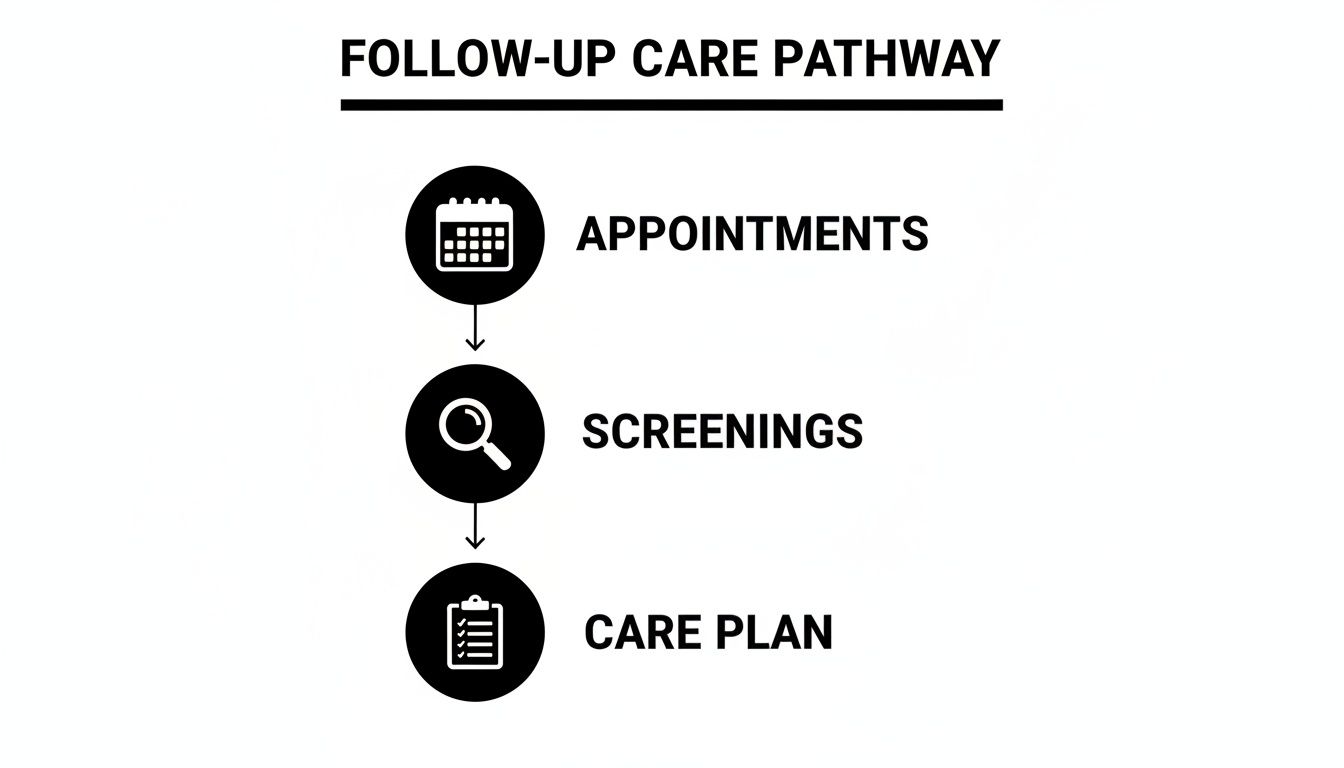
As you can see, the journey forward is built on a foundation of regular appointments, proactive screenings, and a personalized care plan that evolves with you.
A Closer Look At Common Late Effects
To help you feel more prepared, let's break down some of the common late effects in more detail. This isn’t a checklist of things that will happen, but rather a guide to what could happen, so you can be an informed partner in your own long-term health.
The table below summarizes some common physical issues, what they might feel like, and how they are typically managed. It's a great starting point for conversations with your doctor.
| Late Effect | Common Symptoms | Management & Monitoring Strategies |
|---|---|---|
| Lymphedema | Swelling, heaviness, or tightness in the arm, hand, or chest; decreased flexibility. | Skin protection, avoiding constriction, certified lymphedema therapy, compression garments. |
| Cardiotoxicity | Shortness of breath, fatigue, swelling in the legs, rapid or irregular heartbeat. | Regular heart function tests (echocardiograms, MUGA scans), blood pressure monitoring, lifestyle changes. |
| Neuropathy (CIPN) | Numbness, tingling ("pins and needles"), burning, or weakness, usually in hands and feet. | Safety precautions (e.g., fall prevention), physical/occupational therapy, certain medications. |
| Persistent Fatigue | Profound, whole-body exhaustion not relieved by rest; "brain fog." | Energy conservation ("spoon theory"), gentle exercise (walking, yoga), nutrition, sleep hygiene. |
Remember, you know your body best. If something feels off, it’s always worth bringing it up. Early and open communication with your healthcare team is your strongest tool.
Coping With Neuropathy And Fatigue
Two of the most persistent and frustrating effects that can linger long after treatment are Chemotherapy-Induced Peripheral Neuropathy (CIPN) and a deep, overwhelming fatigue.
CIPN is nerve damage that can cause that frustrating tingling, numbness, or even burning pain, most often in the hands and feet. For some, it feels like wearing invisible gloves and socks, making it hard to do things like button a shirt or feel the ground properly. While there’s no magic bullet, many people find relief through:
- Simple safety changes: Keeping your home free of trip hazards and being careful with hot water are small but important steps.
- Gentle movement: Activities like yoga and tai chi are wonderful for improving balance and reconnecting with your body.
- Medical support: Your doctor might suggest medications that can help manage the nerve-related symptoms.
Post-cancer fatigue is in a league of its own. It's not the kind of tired that a good night's sleep can fix. It's a bone-deep exhaustion that can feel debilitating. A helpful concept for managing it is the "spoon theory." Imagine you start each day with a set number of spoons, where each spoon represents a unit of energy. Every single activity—showering, making breakfast, answering an email—costs a spoon. When they're gone, they're gone for the day. This simple analogy can be a powerful tool for learning to prioritize your energy.
Navigating physical changes also means dealing with things like hair regrowth; understanding natural hair growth after chemo can be an empowering part of this process. Similarly, knowing what to expect after breast cancer surgery helps set realistic expectations for recovery. Your team is your best resource and can connect you with physical or occupational therapists who specialize in helping survivors regain strength and find new strategies for daily life.
Healing the Unseen Wounds After Cancer

We spend so much time focusing on the physical side of breast cancer, but once active treatment ends, the emotional journey is often just beginning. The wounds you can't see—the anxiety, the fear, the questions about your future—are just as real and demand just as much care as any surgical scar.
Think about it: for months, maybe years, your mind and body have been in survival mode, a constant state of high alert. Now that the immediate threat is gone, you have to gently teach yourself what it feels like to be safe again. That transition isn't always a smooth one, and it's completely normal for a flood of complex emotions to surface.
Confronting Fear and Survivor's Guilt
Two of the heaviest emotional burdens I see in my practice are the fear that cancer will return and a complicated feeling called "survivor's guilt." The fear of recurrence can be paralyzing, turning every new ache or pain into a potential catastrophe. This is a learned response; your brain was trained to expect the worst to get you through treatment, and it takes time to unlearn that.
Survivor's guilt is a bit trickier. You might feel a strange sense of guilt for making it through when you know others who didn't. Or maybe you feel guilty because your cancer was "easier" or your treatment less grueling than someone else's. These feelings can be incredibly isolating, but please know they are also incredibly common.
Simply naming these emotions is the first step. When you can say, "I am feeling afraid," or "I am struggling with guilt," you start to take back control. It’s not about erasing the feeling, but about giving yourself permission to feel it without judgment.
When you feel your thoughts starting to spiral, try a grounding exercise. Stop and name five things you can see, four sounds you can hear, and three things you can feel with your hands. This simple act pulls you out of the "what ifs" and plants you firmly in the present moment, where you are safe.
Rebuilding Intimacy and Sexual Health
It’s no surprise that the aftermath of breast cancer can throw a wrench into your sex life and feelings of intimacy. Surgical changes, side effects from hormone therapy like vaginal dryness, and a completely new relationship with your own body can all create distance—both from yourself and your partner.
The key to finding your way back is open, honest communication. This is a path you and your partner get to walk together.
- Start by talking, not doing. Set aside time to discuss your fears and insecurities without any pressure for it to lead to sex. What feels different now? What do you need to feel safe and desired?
- Widen your definition of intimacy. Intimacy is so much more than intercourse. It’s holding hands, a long hug, a quiet massage, or just being vulnerable with each other. Focus on rebuilding that sense of closeness first.
- Ask for help! Talk to your oncology team. They have practical solutions and can recommend everything from lubricants and moisturizers to specialists in pelvic floor therapy or sexual health for cancer survivors.
Learning to honor your new boundaries is a powerful act of self-care. Saying "no" to what doesn't feel right for you anymore is what clears the way for a genuine "yes" to new forms of connection and sensuality.
Navigating Fertility and Family Planning
For younger survivors, the impact of treatment on fertility can be a profound and sudden loss. Chemotherapy and hormonal therapies can affect ovarian function, sometimes triggering early menopause and changing your family-planning timeline overnight. This can feel like one more thing cancer has taken from you.
If having children is something you’ve thought about, it's so important to discuss it with your oncology team. The ideal time is before treatment starts, but it’s never too late to understand your options. Knowing about things like fertility preservation can restore a sense of agency.
And for those who find that biological children are no longer an option, it can open a door to exploring other ways to build a family, like adoption or surrogacy, when and if the time feels right. This is a deeply personal part of the journey, one that requires incredible compassion from your support system and your medical team. You don’t have to figure it all out alone.
Building Your Personal Wellness Blueprint
Once active treatment ends, many people expect to feel nothing but relief. But the reality is that this next phase can feel a bit like being handed the keys to a car you've never driven before, with no map. This is where your Survivorship Care Plan (SCP) comes in. It’s not just another medical document; it's your personalized roadmap for the road ahead.
Think of it as the ultimate handover document. It gathers every critical detail of your cancer journey into one place. This ensures that everyone on your care team, from your oncologist to your family doctor, has the same information. It’s the tool that helps you shift from being a patient focused on treatment to the person in charge of your long-term health.
Creating this plan isn't something that just happens to you. It's a conversation and a partnership between you and your oncology team. By working on it together, you make sure it captures not just the medical facts, but your own priorities for wellness, giving you a clear, actionable guide for the future.
What Goes Into Your Blueprint
So, what does a good Survivorship Care Plan actually look like? It’s essentially a living document that connects your treatment past to your healthy future. While every plan is tailored to the individual, they all share a few essential parts.
An effective SCP will almost always include:
- A Detailed Treatment Summary: This is the complete story of your diagnosis and treatment. It will clearly state the cancer's type and stage, and list every treatment you had—surgeries, specific chemotherapy drugs and doses, radiation fields, and any targeted or hormonal therapies.
- A Schedule for Ongoing Care: This lays out a clear timeline for all your follow-up needs. It will specify when to schedule mammograms, blood work, bone density scans, and other crucial surveillance tests.
- A Guide to Potential Late Effects: Your plan will identify possible long-term side effects based on the treatments you received. More importantly, it will outline strategies for prevention and what kind of screening is recommended.
This kind of forward-looking plan is essential for every breast cancer survivor. And that community is larger and stronger than ever. It's truly incredible to think that today, over 4 million women and men in the U.S. are breast cancer survivors. That number reflects decades of research and sheer human resilience. With the 5-year relative survival rate now at an inspiring 92%, the focus has rightly shifted to ensuring a high quality of life for years to come. You can explore more of these encouraging breast cancer survivor statistics.
Becoming the Expert on You
With your Survivorship Care Plan in hand, you’re no longer just reacting to your health—you're proactively managing it. This isn't a file to be tucked away in a drawer. It's a working tool you should bring to every single doctor's appointment. Whether you’re seeing a new cardiologist, your primary care physician, or even visiting an urgent care clinic, this plan gives them an accurate, at-a-glance summary of your medical history.
A Survivorship Care Plan transforms uncertainty into action. It’s the framework that allows you to advocate for yourself, ask informed questions, and make collaborative decisions about your health with confidence.
When you understand what follow-up is necessary and what symptoms to watch for, you are in the driver's seat. The plan provides the structure you need to coordinate your own screenings, voice concerns about late effects, and feel confident in conversations with any provider. It’s the key to turning the page from intensive treatment to a new chapter of lifelong wellness—one where you are fully informed, supported, and in control.
Your Questions About Life After Breast Cancer Answered
Once active treatment is in the rearview mirror, you'd think the hard part is over. But a whole new chapter begins, and with it comes a flood of new questions. Navigating the practical and emotional landscape of being a breast cancer survivor can feel just as challenging as treatment itself. Let's walk through some of the most common concerns we hear from patients every day.
How Can I Cope with the Fear of My Cancer Returning?
The fear that your cancer might come back is completely normal—and it’s often the toughest part of survivorship. For months, you were trained to be hyper-aware of your body. You can't just flip a switch and turn that off. Every new ache or twinge can send your mind racing.
The key is learning to manage this fear so it doesn't manage you. First, lean on your surveillance plan. Having a set schedule for follow-ups and screenings provides structure and a sense of control. It turns anxious waiting into proactive checking.
When your mind starts spiraling into "what ifs," try to pull yourself back to the present moment. A simple grounding exercise can work wonders: name five things you can see, four sounds you can hear, and three sensations you can feel. This small act yanks you out of future worries and reminds you that right now, in this moment, you are okay.
It's so important to know the difference between normal worry and anxiety that's taking over your life. If this fear is constantly stealing your sleep, straining your relationships, or just making you miserable, it's time to ask for help. A therapist who specializes in oncology can give you specific tools to handle these exact feelings.
Which Lifestyle Changes Truly Make a Difference?
The internet is a minefield of conflicting advice about what to eat and how to live after cancer. Instead of getting bogged down, focus on the handful of changes that research consistently shows can improve your long-term health. Think balance and sustainability, not extreme restrictions.
- Diet: Try to build your meals around plants. This doesn't mean you have to go vegan overnight, but making fruits, vegetables, whole grains, and lean proteins the stars of your plate helps with weight management and floods your body with protective antioxidants.
- Exercise: You don't need to run a marathon. Just aim for about 150 minutes of moderate-intensity activity a week. A brisk walk is perfect. It’s one of the best tools we have for fighting fatigue, boosting your mood, and maintaining a healthy weight—a major factor in lowering recurrence risk.
- Alcohol: This is a big one. The evidence linking alcohol to an increased risk of breast cancer recurrence is very clear. Limiting your intake is one of the most powerful and direct changes you can make for your future health.
When Should I Call My Oncologist vs. My Primary Doctor?
This can be really confusing. Here’s a simple way to think about it: your oncology team is your specialist for anything related to the cancer or its treatment. Call them if you find a new lump, have persistent and unexplained pain (especially in a bone, like your back or ribs), or are struggling with side effects from ongoing medications like hormone blockers.
Your primary care physician (PCP) is your go-to for everything else. They're your partner in general health—colds, flu shots, managing blood pressure or cholesterol, and handling routine screenings for other conditions. The best thing you can do is give both doctors a copy of your Survivorship Care Plan to make sure everyone is on the same page.
How Do I Handle Work, Insurance, and Finances?
The logistics of life after cancer can create a whole new layer of stress. If you're heading back to work, remember that you have rights. The Americans with Disabilities Act (ADA) may entitle you to reasonable accommodations, like a flexible schedule or changes to your workspace.
Take a close look at your health insurance policy to understand exactly what's covered for long-term surveillance and medications. And if you're facing financial strains, please know you are not alone. Many wonderful organizations have programs specifically to help cancer survivors with these costs.
At Hirschfeld Oncology, we know that survivorship isn't an event; it's a lifelong journey. You need a dedicated partner who understands the road ahead. If you're in the NYC area and have questions about your long-term care or want to explore your options, our team is here for you. You can learn more about our approach on our blog.
.png)
.png)