.png)


It’s a question many of us have asked: can exercise actually prevent cancer? The answer, backed by a massive body of scientific research, is a resounding yes. While it's not an ironclad guarantee, regular physical activity is one of the most powerful tools you have to lower your cancer risk.
Think of it as actively building a more robust defense system for your body, one workout at a time.
The Overwhelming Evidence for Exercise in Cancer Prevention
For years, researchers have been piecing together the connection between movement and cancer. Today, the picture is incredibly clear. Major health organizations across the globe, drawing from thousands of studies involving millions of people, all point to the same conclusion: staying active is fundamental to cancer prevention.
The link is so well-established that we can even put numbers on it. One major analysis found that if inactive American adults met the modest guideline of five hours of activity a week, we could prevent an estimated 46,000 cancer cases annually.
To put that into perspective, the study linked a lack of activity to 9.3% of all colon cancers and 6.5% of all female breast cancers. That's a huge impact. You can dig into more of this data and get a deeper understanding of the research from the American Institute for Cancer Research.
Stacking the Odds in Your Favor
So, how exactly does moving your body create an environment where cancer struggles to thrive? It's not just one thing, but a combination of powerful biological changes.
- Balancing Hormones: Exercise is fantastic at regulating hormones. It helps keep levels of insulin and estrogen in check, which is critical since high levels of these hormones can fuel the growth of certain tumors.
- Strengthening Your Immune System: Regular activity acts like a training camp for your immune cells. It makes them more effective at patrolling your body, identifying pre-cancerous cells, and eliminating them before they can become a problem.
- Taming Inflammation: Chronic, low-grade inflammation is a known troublemaker that can damage DNA and encourage cancer growth. Exercise is one of the best natural anti-inflammatories we have.
The goal isn't to run a marathon tomorrow. It's about making movement a consistent, non-negotiable part of your life. Every walk, every stretch, and every active choice makes your body a less welcoming place for cancer.
This solid foundation of evidence is incredibly empowering. It shows us that we have a direct hand in shaping our long-term health at a cellular level. This same science is also transforming patient care, influencing both treatment and recovery plans. To see how this research translates into practice, you can explore our overview of the latest oncology clinical trials and research.
How Movement Strengthens Your Body's Defenses
So, how exactly does moving your body help ward off cancer? It’s not one single thing. Instead, think of regular physical activity as a powerful, multi-pronged strategy that reinforces your body's natural defense systems.
When you're active, you're creating a cascade of positive changes inside your body. These changes work together to build an internal environment that is far less welcoming to cancer. Let’s walk through the three most important ways exercise bolsters your defenses.
Dousing the Flames of Chronic Inflammation
Imagine a campfire that never quite goes out—it just keeps smoldering, day after day. That’s a good way to picture chronic inflammation. Unlike the short-term, helpful inflammation you get with a cut or sprain, this low-level, persistent inflammation can damage your DNA over time and create the perfect conditions for cancer cells to grow.
Regular exercise is one of the best ways to put out those embers. Each workout releases a flood of anti-inflammatory substances into your system. This helps calm that chronic, smoldering state, protecting your cells from damage and making it much harder for cancer to get a foothold.
Balancing Your Body's Hormonal Blueprint
Hormones are powerful messengers that direct countless processes in your body, especially cell growth. The problem is, when certain hormones like insulin and estrogen are consistently high, they can send the wrong signals—essentially telling cells to divide too often. This puts you at a higher risk for certain cancers, particularly breast and endometrial cancers.
This is where physical activity really shines.
- Insulin Regulation: Exercise makes your body much more sensitive to insulin. That means you don't need to produce as much of it to keep your blood sugar stable, which helps keep your overall insulin levels in a healthier range.
- Estrogen Management: For postmenopausal women, a significant amount of estrogen comes from body fat. By helping you maintain a healthy weight, exercise directly lowers the amount of estrogen circulating in your blood, cutting off a key fuel source for some cancer cells.
Keeping these powerful hormones in check is a direct and crucial benefit of an active lifestyle.
Activating Your Immune Surveillance Team
Your immune system has its own elite security force called Natural Killer (NK) cells. Their job is to patrol your body, constantly on the lookout for threats—including cells that have started to turn cancerous—and eliminate them.
When you lead a sedentary life, these NK cells can become less effective, almost like they've fallen asleep on the job. But exercise wakes them up.
During and right after a workout, the number of NK cells circulating in your bloodstream skyrockets. This surge puts more guards on patrol, dramatically boosting your body's ability to spot and destroy abnormal cells before they have a chance to multiply and form a tumor.
This immune-boosting effect is one of the most direct ways exercise defends you against cancer. It’s not just about feeling better or managing weight; it's about actively energizing the very cells designed to protect you. By reducing inflammation, balancing hormones, and supercharging your immune system, exercise builds a formidable defense against cancer.
Which Cancers Are Most Affected by Exercise?
While getting active is great for your overall health, the scientific evidence is crystal clear: its cancer-fighting punch is much stronger for certain types of cancer. Think of it as a specialized defense force. It guards your entire body, but it stations its most elite troops at the most vulnerable points.
Knowing where exercise delivers the biggest payoff can be a powerful motivator. For some cancers, the connection is so well-established that physical activity is now a cornerstone of any smart risk-reduction plan.
Breast Cancer
The link between exercise and breast cancer is one of the most thoroughly researched and solid connections we have. Regular physical activity fights back on several fronts, but its main weapon is hormonal balance. It helps lower levels of circulating estrogen, a hormone that can act like fuel for certain breast tumors, especially after menopause.
On top of that, exercise helps you maintain a healthy weight, which is crucial because fat tissue is a major source of estrogen production. This one-two punch against excess hormones makes movement a formidable ally in lowering breast cancer risk.
Colorectal Cancer
When it comes to colon cancer, the evidence is overwhelming. Exercise slashes risk in a few key ways. First, it makes your body more sensitive to insulin, so you don't need to produce as much of this growth-promoting hormone. High insulin levels have been directly tied to colon cancer development.
Second, staying active keeps your digestive system moving, which cuts down on the time potential carcinogens in waste are in contact with your colon lining. And finally, exercise is one of nature's best anti-inflammatories—a vital benefit for protecting the entire digestive tract.
As you can see below, exercise mounts a multi-pronged defense by keeping inflammation in check, balancing hormones, and strengthening your immune response.
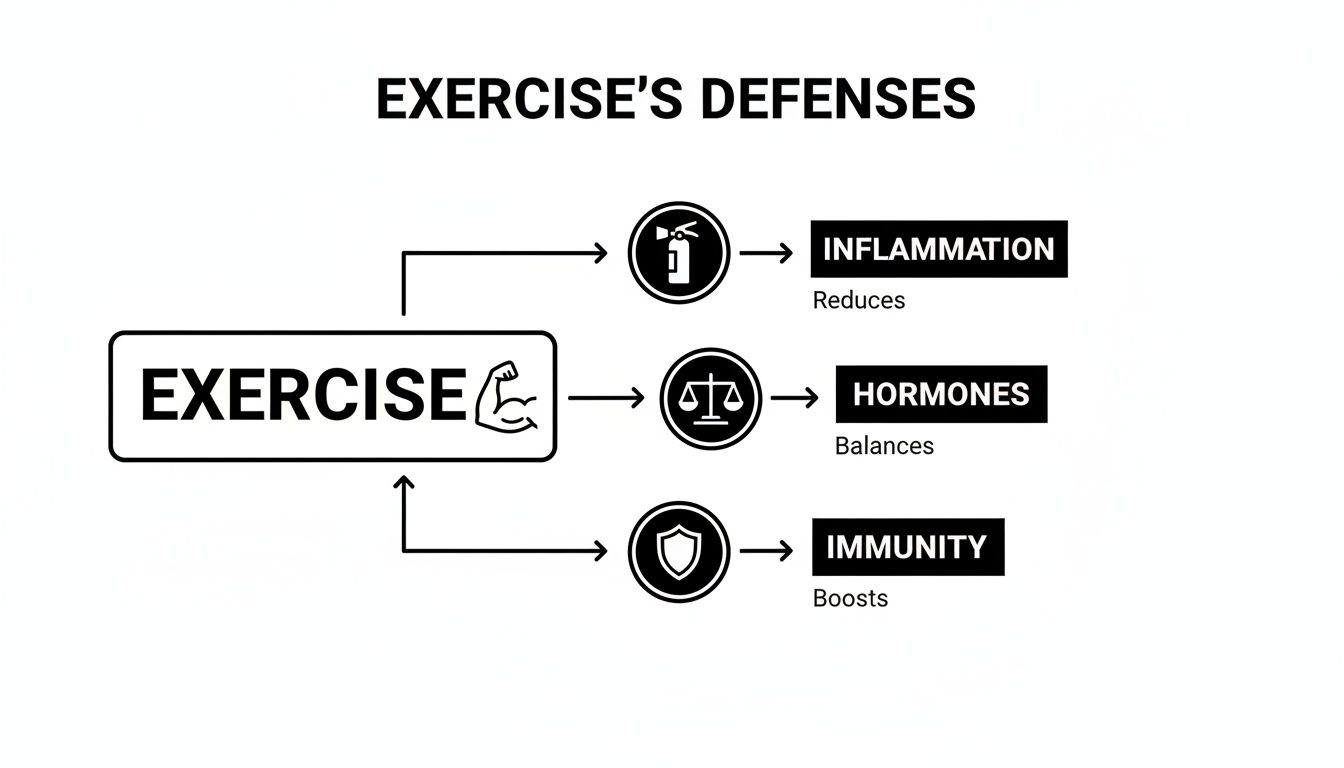
Each of these actions helps create an internal environment where it’s simply harder for cancer cells to get a foothold and grow.
Other Cancers with Strong Links
Beyond breast and colorectal cancer, the research highlights significant risk reductions for several other malignancies. Each one showcases a different facet of how exercise protects us.
This table gives you a clear snapshot of which cancers are most impacted and why.
Exercise Impact Across Different Cancer Types
The common thread here is that physical activity doesn't just target one isolated problem. Instead, it triggers a cascade of positive changes—hormonal, metabolic, and immune—that work together to lower your overall risk profile. It’s a holistic approach to building a more cancer-resistant body.
Putting a Practical Exercise Plan into Action

Knowing the science is one thing, but the real magic happens when you turn that knowledge into a routine that fits your life. Forget the idea that you need to become an elite athlete overnight. The most effective plan is one you can actually stick with, week after week.
Thankfully, the official guidelines from groups like the American Cancer Society aren't about punishment. They're about finding a sweet spot of activity that encourages all those positive biological changes we've been talking about.
Finding Your Pace: Moderate vs. Vigorous
Before building a plan, it helps to understand the "language" of exercise intensity. The easiest way to think about it is with the "talk test":
- Moderate-Intensity Activity: This is your sweet spot for a lot of activities. You’re breathing noticeably harder and your heart rate is up, but you can still carry on a conversation. You can talk, but you probably can't sing. Think of a brisk walk, a casual bike ride, or heavy gardening.
- Vigorous-Intensity Activity: Now you're pushing it. At this level, you can only get a few words out before you need to catch your breath. Your heart is beating fast and you’re breathing deep. This is what jogging, swimming laps, or a spin class feels like.
The big takeaway here? You don't have to go all-out to see massive benefits. Consistent, moderate exercise is far more powerful for reducing cancer risk over the long haul than occasional, burn-out-level workouts.
Knowing the difference allows you to mix and match, keeping things interesting and effective, which is key to making this a sustainable part of your life.
The Weekly Goal: What to Aim For
So, what's the magic number? Experts have landed on a clear, achievable target. The goal is to get 150-300 minutes of moderate-intensity activity or 75-150 minutes of vigorous-intensity activity each week.
Don't let those numbers intimidate you. Let's break down what that actually looks like:
- Moderate: A brisk 30-minute walk, 5 days a week.
- Vigorous: A 25-minute run, 3 days a week.
- A Mix: Two 30-minute bike rides (moderate) plus two 20-minute sessions of high-intensity interval training (vigorous).
Remember, the best plan is the one you’ll actually do. A simple daily walk is incredibly effective if you do it consistently.
Every Little Bit Counts: The Power of "Exercise Snacks"
It’s a common myth that you have to block off a full hour at the gym for movement to "count." That couldn't be further from the truth. Your body benefits from every single bit of activity, which is where the idea of "exercise snacks" comes in.
Think of these as short, 5- to 10-minute bursts of activity scattered throughout your day. They break up long periods of sitting, nudge your metabolism, and they all add up to help you hit your weekly goal.
Here are a few simple ways to snack on exercise:
- Always choose the stairs over the elevator.
- Park at the far end of the parking lot.
- Do a set of squats or calf raises while you wait for the microwave.
- Pace around the room during phone calls.
- Take a quick 10-minute walk after lunch.
Each small choice chips away at a sedentary lifestyle. It proves that you don't need fancy equipment or a gym membership to build a healthier, more cancer-resistant body. By weaving movement into the fabric of your day, it becomes a natural habit—not a chore.
Using Exercise During and After Cancer Treatment
Getting a cancer diagnosis can make you feel like your world has been turned upside down. But physical activity doesn’t just help with prevention—it becomes an even more crucial partner during treatment and throughout survivorship. Far from being something you need to avoid, finding ways to move safely can give you a real sense of control and actively improve how you feel.
For a long time, the standard advice was simple: rest. We now know that for most people, the exact opposite is true. Movement is medicine. It can help push back against some of the toughest parts of treatment and recovery, letting you reclaim your strength, both physically and mentally, on your own terms.
A Powerful Tool for Managing Side Effects
Cancer treatments, while saving lives, are incredibly demanding on the body. They often bring a wave of difficult side effects, from crippling fatigue to nausea and anxiety. This is where exercise really shines, stepping in to make the journey more bearable.
Regular, gentle activity can make a huge difference in how severe these issues feel. Think of it this way: treatment can feel like it's draining your body's battery, but light exercise acts like a trickle charger, helping you hold onto your energy and fight off the deep exhaustion that so often comes with chemotherapy and radiation.
Study after study shows that patients who stay active report:
- Less Cancer-Related Fatigue: It sounds backward, but moving your body is one of the best things you can do to combat treatment-induced fatigue.
- Improved Mood and Reduced Anxiety: Getting active releases endorphins, our body's natural mood-lifters, which can help you cope with the emotional weight of a diagnosis.
- Better Physical Functioning: Exercise helps you hold onto muscle mass and strength, which can be chipped away by both the cancer and its treatments.
This is a fundamental shift in thinking. Exercise isn't just another task on your to-do list; it's a supportive tool to help you get through treatment feeling stronger and more resilient.
Lowering Recurrence and Improving Survival Rates
Beyond just managing side effects, the evidence for exercise in survivorship is truly compelling. Staying active after a diagnosis has been shown to significantly lower the risk of cancer returning and improve long-term survival, especially for certain types of cancer.
The numbers are pretty staggering. For example, the CHALLENGE trial, a major international study, found that colon cancer patients who followed a three-year exercise program saw a 37% drop in overall mortality compared to those who didn't. Other large-scale studies have shown that staying active after a diagnosis can slash the risk of recurrence, new cancers, or death by up to 28%.
This is incredibly empowering. It means that the proactive steps you take today—even something as simple as a daily walk—can directly shape your long-term health and create an internal environment that is less welcoming to cancer.
This isn't to say exercise is a cure-all, but it's one of the most effective strategies you have to stack the odds in your favor for a healthier future. For survivors, especially those healing from procedures like breast cancer surgery, movement is a vital part of the recovery process. Our guide on life after breast cancer surgery dives deeper into this topic.
Getting Started Safely
Of course, your safety is the top priority. Your body is going through an immense challenge, and any exercise plan needs to be built around your specific diagnosis, treatment, and energy levels from day to day. The absolute first step is to talk to your oncology team.
They can give you personalized advice based on your overall health, blood counts, and any physical limitations you might have. They might also suggest working with a physical therapist or a certified cancer exercise specialist who knows how to design a program that is both safe and effective for you.
Remember, the goal is progress, not perfection. Listening to your body is always rule number one.
Your Questions About Exercise and Cancer Answered
Knowing the big picture of how exercise helps prevent cancer is a great start. But when you’re facing a diagnosis, navigating treatment, or just trying to get moving, it’s the practical, real-world questions that matter most.
Let's dig into some of the most common concerns to give you the clarity and confidence you need to move forward.
Is It Safe to Exercise During Chemotherapy or Radiation?
For most people, the answer is a clear and confident yes. In fact, it's not just safe—it's strongly encouraged by oncologists everywhere. The old advice to just rest up has been completely overturned by a mountain of evidence showing just how powerful movement can be in managing treatment.
The trick is to tune in and listen to your body, adapting what you do to how you feel on any given day. On a good day, a brisk walk or some light cycling might feel incredible. On days when fatigue hits you like a ton of bricks, even a few minutes of gentle stretching or seated exercises can make a world of difference.
It turns out that regular, gentle exercise is one of the best tools for fighting back against some of treatment's toughest side effects, including:
- Crushing Fatigue: It seems backward, I know, but moving your body is one of the most effective ways to combat cancer-related fatigue.
- Anxiety and Mood Swings: Physical activity is a natural mood-booster, releasing endorphins that help you cope with the emotional rollercoaster of treatment.
- Loss of Muscle Mass: Staying active is key to preserving your strength and physical function, both of which can take a hit during treatment.
The most important thing to do first is always talk with your oncology team. They know your specific treatment, your blood counts, and your overall health. They can give you personalized advice and clear you for activity, making sure what you’re doing is both safe and genuinely helpful.
What Can I Do with Advanced Cancer or Mobility Issues?
Even when you're dealing with significant physical limitations, you can absolutely tap into the benefits of an active lifestyle. The focus just shifts away from intensity and toward gentle, consistent movement. It's not about hitting a certain heart rate anymore; it’s about preserving your strength, maintaining your independence, and improving your day-to-day quality of life.
Chair-based exercises are a fantastic way to do this. They let you build strength and improve circulation without putting any stress on your joints or needing you to stand for long periods.
Here are a few excellent options to explore if you have mobility challenges:
- Chair Yoga: This adapted form of yoga is wonderful for improving flexibility, breathing, and mindfulness, all from the safety of a chair.
- Seated Strength Training: Using light resistance bands or small hand weights, you can get a great workout for your upper body, core, and legs.
- Gentle Stretching: Simple, mindful stretches can help ease stiffness, improve your range of motion, and reduce discomfort.
The goal is not to run a marathon but to maintain function and dignity. Every intentional movement is a victory that contributes to your well-being.
Getting help from a physical therapist who specializes in oncology can be a game-changer. They can design a program built specifically for your abilities and limitations, ensuring every movement is safe, effective, and helps you reach your personal goals.
Where Do I Start If I Have Never Exercised Before?
I get it—the thought of starting an exercise routine from scratch can feel overwhelming. But the secret is to start small. Really small. You don't need a gym membership, a bunch of fancy equipment, or a complicated plan. You just need to take that first step.
A simple 10-minute walk around your block is a perfect beginning. That’s it. Do that for a week, just until it feels normal and easy. The next week, maybe you push it to 12 or 15 minutes. This slow, gradual approach builds not only your physical stamina but also your mental confidence.
The single most important factor for sticking with it long-term is picking something you actually enjoy. If you despise running, please don't force yourself to run. You'll quit within a week. Instead, play around with different options.
Maybe you could try:
- Gardening or pottering around in the yard
- Dancing in your living room to your favorite tunes
- Walking with a friend or listening to a good podcast
- Trying a beginner's online class for yoga or tai chi
When you find an activity that feels more like play than a chore, it stops being something you have to do and becomes something you want to do. And that’s when it becomes a sustainable habit. Just remember to listen to your body, rest when you need it, and always check with your doctor before starting something new.
Can Exercise Really Stop My Cancer From Coming Back?
While nothing in life comes with a 100% guarantee, the scientific evidence on this is incredibly strong and overwhelmingly positive: regular physical activity is one of the most powerful strategies you can use to lower your risk of cancer recurrence.
This isn't just wishful thinking; it's backed by major clinical trials. For survivors of certain cancers, especially breast and colon cancer, the data is undeniable. Study after study has shown that patients who stay physically active after treatment have significantly lower rates of recurrence and better long-term survival than those who don't.
So, how does it work? Exercise fundamentally changes your body's internal environment, creating a biological landscape that is far less welcoming to cancer cells. It achieves this by:
- Reducing Chronic Inflammation: It cools down the systemic inflammation that can fuel cell growth.
- Balancing Hormones: It helps keep growth-promoting hormones like insulin and estrogen in check.
- Boosting Immune Function: It supercharges your immune cells, making them better at patrolling for and eliminating any stray cancer cells.
By making exercise a non-negotiable part of your life after treatment, you are taking a powerful and proactive role in your future. You are stacking the odds for a vibrant, cancer-free life firmly in your favor.
At Hirschfeld Oncology, we believe in empowering our patients with knowledge and advanced treatment options that align with their personal health goals. If you have questions about managing your diagnosis or exploring innovative care plans, we invite you to learn more on our blog. Discover patient stories, research updates, and practical guidance by visiting us at https://honcology.com/blog.
.png)
.png)