.png)


A cancer diagnosis brings immediate medical concerns, but the financial impact can be just as overwhelming. The cost of advanced treatments, co-pays, and even daily living expenses can quickly accumulate, creating a significant burden for patients and their families. This is a common challenge, and you are not alone in facing it.
At Hirschfeld Oncology, we believe that focusing on your health should be your primary concern. That’s why we have created this detailed guide to cancer financial assistance. This resource is designed to help you, our patient, manage the landscape of financial support. We cover national foundations that help with medication costs, local New York City programs that assist with rent, and much more.
This is your roadmap to easing the financial strain. We will walk you through eligibility, application strategies, and the specific use cases for each program to empower you to secure the support you need. Each resource listed includes direct links and practical tips to simplify the process. When broader financial challenges arise, understanding how medical debt in debt relief programs can be managed offers an additional layer of security.
Our goal is to provide a clear, actionable list so you can find the right help quickly. This guide will help you access funds for everything from co-payments and prescriptions through organizations like the PAN Foundation and HealthWell, to non-medical expenses like housing and transportation via Family Reach and New York's Medicaid Cancer Treatment Program (MCTP). Use this list to concentrate on what matters most: your treatment and well-being.
1. CancerCare + CancerCare Co-Payment Assistance Foundation (CCAF)
CancerCare offers a unique, two-part approach to patient support by combining direct financial aid with extensive free psychosocial services. This structure makes it a vital first stop for patients and caregivers needing both practical help with expenses and emotional support from oncology social workers. It’s an established nonprofit well-known to clinical teams, which can simplify the verification process for financial aid.
The platform is split between the main CancerCare organization, which provides small, diagnosis-specific grants for treatment-related costs like transportation or child care, and its affiliate, the CancerCare Co-Payment Assistance Foundation (CCAF). CCAF focuses specifically on helping insured patients afford copayments and premiums for specific medications.
Use Cases and Limitations
A key strength is this integration; you can apply for a travel grant while also accessing a support group led by a professional social worker. This holistic model is particularly useful for newly diagnosed patients who feel overwhelmed. However, a significant limitation is fund availability. Grants for specific diagnoses or drugs open and close rapidly based on funding levels, so checking the website frequently is essential. These grants are not designed for long-term, non-medical living expenses like rent or utilities. Integrating these resources into your financial strategy should be part of the comprehensive planning discussed in your personalized care plans.
Website: https://www.cancercare.org
2. PAN Foundation (Patient Access Network Foundation)
The PAN Foundation focuses on providing substantial grants to help insured patients cover out-of-pocket medication costs. It is a critical resource for those facing high prescription drug copayments, coinsurance, or deductibles. By offering diagnosis-specific financial aid, PAN directly addresses one of the most significant cost drivers in modern cancer treatment, making expensive therapies more accessible.

The platform is known for its large grant amounts and a straightforward online application process. It maintains dozens of separate disease funds, each with its own eligibility criteria and funding status. This structure allows patients to find targeted help, but it also means that support for a specific cancer type depends entirely on whether that particular fund has money available.
Use Cases and Limitations
PAN's primary strength is the size of its grants, which can often cover a patient’s medication cost-sharing for an entire year. This makes it an essential tool for managing the long-term expenses of oral chemotherapies or targeted biologic drugs. The online portal is user-friendly, providing real-time updates on fund availability. The major limitation is the volatility of these funds; they can open and close within hours. This requires patients and their care teams to act quickly. Assistance is strictly for medication and sometimes premium costs; it does not cover non-medical expenses like rent or transportation.
Website: https://www.panfoundation.org
3. Patient Advocate Foundation (PAF) – Copay Relief & Case Management
Patient Advocate Foundation (PAF) provides a distinct dual-pronged approach, offering both direct copay relief and professional case management services. This combination makes it an essential resource for patients who need immediate financial aid for treatment costs and expert assistance in overcoming systemic healthcare barriers like insurance denials or billing errors.

PAF’s Copay Relief (CPR) program provides direct financial assistance for copayments, coinsurance, and deductibles for insured patients. Separately, their professional case managers act as personal advocates, working to negotiate medical debt, appeal claim denials, and help patients navigate complex insurance issues at no cost. The organization also offers small, targeted grants for needs like caregiver support.
Use Cases and Limitations
The key benefit of PAF is its ability to fight on two fronts: providing cash while also resolving the administrative problems that often create financial distress. This is invaluable for a patient facing a denied claim for a critical scan or medication. However, CPR funds are diagnosis-specific and subject to availability, opening and closing frequently. The case management service, while free, requires detailed documentation and a willingness to work closely with your assigned advocate. It is an excellent source of cancer financial assistance but requires active patient participation.
Website: https://copays.org
4. HealthWell Foundation
The HealthWell Foundation is a highly regarded resource for insured patients struggling with out-of-pocket medication costs. Its key distinction is its operational transparency; the foundation clearly publishes its income eligibility threshold, which is often up to 500% of the Federal Poverty Level (FPL). This allows patients and their financial navigators to quickly determine if applying is a viable option, saving valuable time and energy.
HealthWell primarily provides direct financial assistance for copayments, coinsurance, and premiums associated with specific diagnoses and medications. Certain funds may also cover deductibles or treatment-related travel, expanding its utility beyond just drug costs. This makes it an essential tool for patients who have good insurance but still face significant cost-sharing burdens that threaten their ability to adhere to prescribed therapies.
Use Cases and Limitations
HealthWell is best suited for patients with active insurance who need help managing high prescription costs for a condition with an open fund. Its transparent FPL calculator is a major strength, preventing families from wasting time on applications they don’t qualify for. The user-friendly online portal and alert system for fund openings also simplify the process of securing cancer financial assistance. However, like many foundations, its oncology-specific funds are entirely dependent on donations and can open and close with little warning. The assistance is strictly tied to a specific diagnosis covered by an active fund and cannot be used for general living expenses like rent or groceries.
Website: https://www.healthwellfoundation.org
5. The Assistance Fund (TAF)
The Assistance Fund (TAF) is a large, established national nonprofit offering direct financial help for out-of-pocket medical costs. With over 100 disease-specific programs, including several for different types of cancer, TAF is a go-to resource for patients with insurance who still face significant copay, coinsurance, or deductible expenses for their treatments and medications. Its mature infrastructure and dedicated portals for patients and providers make the application and reimbursement process clear and manageable.
This platform stands out for its well-defined programs and operational clarity. It provides direct support for both medication cost-sharing and, in some cases, health insurance premiums. This dual focus makes it an effective tool for maintaining access to care by helping patients afford not only their specific treatments but also the insurance plan that covers them, offering a key piece of the cancer financial assistance puzzle.
Use Cases and Limitations
TAF is ideal for patients who have a confirmed diagnosis and insurance but need help closing the gap on cost-sharing obligations. Its dedicated provider portal allows oncology teams to assist with applications and manage claims, which can reduce the administrative burden on patients. The main limitation is fund availability; like many similar organizations, its popular oncology funds can open and close quickly based on donation levels. Eligibility is also strictly tied to specific income thresholds and insurance requirements.
Website: https://tafcares.org
6. Good Days
Good Days focuses primarily on helping insured patients manage the high costs of medications, making it an essential resource for those with substantial copay or premium expenses. The organization provides direct financial assistance for FDA-approved therapies, insurance premiums, and even some travel costs. This direct-to-patient approach simplifies the process, allowing individuals to quickly check their eligibility and apply online.

What makes Good Days a strong partner in cancer financial assistance is its commitment to transparency and patient navigation. If a specific disease fund is temporarily closed, the platform actively provides referrals to other foundations that may have available aid. This practical feature saves patients valuable time and energy, guiding them toward alternative resources instead of leaving them at a dead end.
Use Cases and Limitations
The platform's strength is its dual support for both drug copays and insurance premiums, which can significantly reduce a patient's monthly out-of-pocket burden. It is most effective for individuals with established insurance coverage who need targeted help with specific, recurring costs. A limitation, common to many such programs, is that funding for specific conditions is finite and can be paused when fully subscribed. Furthermore, eligibility can be complex, with specific requirements tied to Medicare status and other coverage details. Therefore, it is important to review the criteria carefully.
Website: https://mygooddays.org
7. Leukemia & Lymphoma Society (LLS) – Financial Support Portfolio
The Leukemia & Lymphoma Society (LLS) provides a specialized portfolio of financial support programs exclusively for patients with blood cancers. Its targeted approach makes it an essential resource for those with hematologic malignancies, offering a mix of aid that addresses both direct medical costs and the secondary expenses that accumulate during treatment. The organization's reputation and focused mission mean its programs are well-integrated with hematology-oncology care teams.
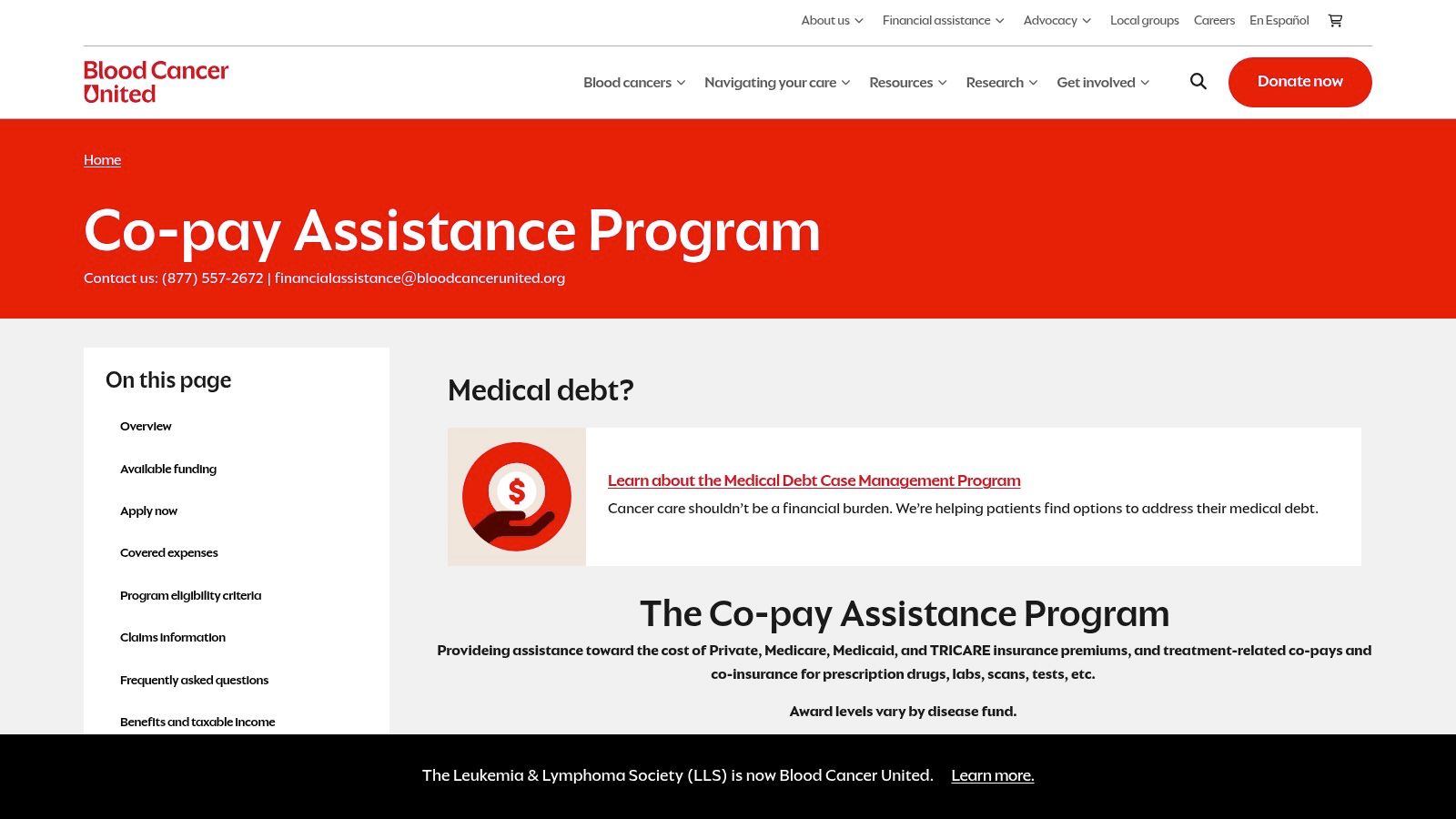
LLS offers several distinct aid types, including a Co-Pay Assistance Program that helps insured patients cover copayments, coinsurance, and premiums. It also provides regional travel support for specific therapies and Local Financial Assistance (LFA) grants for non-medical needs. This combination of medical and practical support is a key differentiator, providing specific solutions for the unique financial burdens faced by blood cancer patients.
Use Cases and Limitations
The primary strength of LLS is its specialization. If you have a blood cancer diagnosis, this should be one of your first stops for cancer financial assistance. The ability to apply for help with insurance premiums while also seeking a local grant for groceries or utilities from the same organization simplifies the process. However, its major limitation is fund availability, which is a common issue with disease-specific foundations. Co-pay funds for certain diagnoses open and close very quickly, sometimes within hours, and the LFA grants are highly dependent on your local chapter's funding levels and can become fully subscribed early in their cycle.
Website: https://www.lls.org/copay
8. American Cancer Society (ACS) – Hope Lodge & Road To Recovery
The American Cancer Society provides critical in-kind support rather than direct cash grants, focusing on two of the most significant logistical and financial burdens during treatment: lodging and transportation. This makes ACS a cornerstone resource for patients who must travel for specialized care, particularly those coming to major medical hubs like New York City. Its programs, Hope Lodge and Road To Recovery, are well-established and widely recognized by healthcare providers.
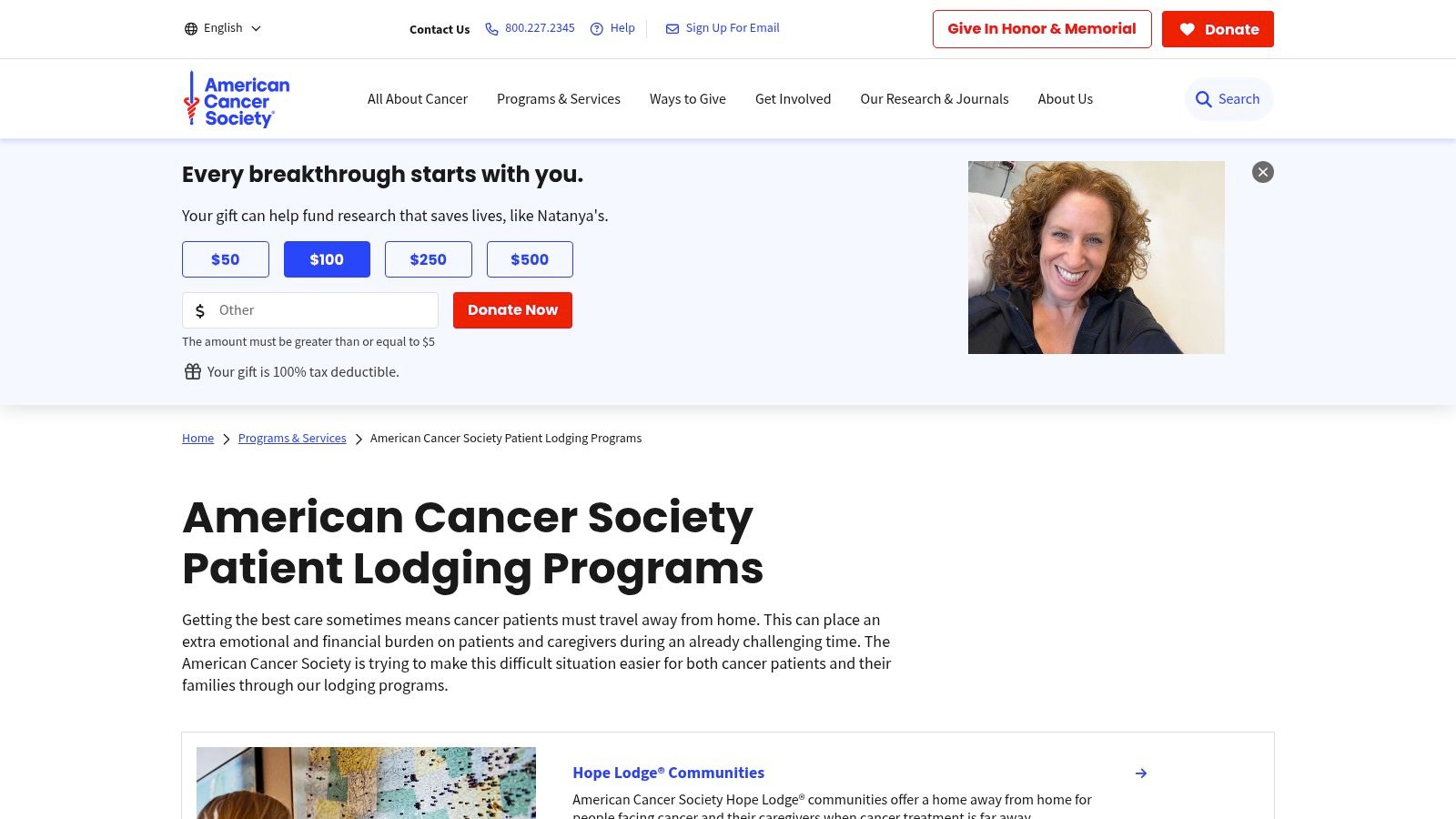
Hope Lodge offers free, temporary housing in over 30 locations for patients and a caregiver, alleviating the immense cost of hotels during extended treatment. Complementing this is the Road To Recovery program, which organizes free rides to and from appointments with volunteer drivers. While not direct cancer financial assistance for bills, these services free up significant personal funds that would otherwise be spent on travel and accommodation.
Use Cases and Limitations
The primary strength of ACS programs is their direct impact on reducing out-of-pocket travel costs. A stay at a Hope Lodge can save a family thousands of dollars, making sustained treatment possible. However, availability is a major limitation. Hope Lodge locations have eligibility requirements and often operate at full capacity with waiting lists. Similarly, Road To Recovery depends on local volunteer availability, which can be inconsistent. These services are designed for logistical support during active treatment and do not cover other living expenses. For a deeper look at getting to and from your appointments, you can find more options in our guide to transportation assistance for cancer patients.
Website: https://www.cancer.org/support-programs-and-services/patient-lodging.html
9. Susan G. Komen – Financial Assistance Program (breast cancer)
Susan G. Komen offers highly specific, short-term cancer financial assistance through its dedicated program for breast cancer patients. It provides a one-time $500 grant designed to bridge immediate financial gaps for those in active treatment or living with metastatic disease. The program stands out for its clear eligibility criteria and direct application to essential living costs, making it a straightforward option for those who qualify.

This grant is intended for non-medical expenses that can become burdensome during treatment, such as rent, utilities, food, or childcare. Applications are managed through the MyKomen Health portal, which can be initiated by either the patient or their healthcare provider. This process is supplemented by Komen’s well-regarded patient navigation services, available in both English and Spanish.
Use Cases and Limitations
The program’s strength lies in its transparency; income thresholds (at or below 300% of the Federal Poverty Level) and diagnosis requirements are clearly stated, so patients know immediately if they are likely to qualify. This grant is best used for an urgent, one-time need, like preventing a utility shut-off or covering a month’s groceries. A key limitation is the modest grant size and processing time, which can take several weeks. It is not a source of long-term financial support but rather a temporary stopgap measure to alleviate acute financial stress during a critical point in treatment.
Website: https://www.komen.org/financial-assistance-program/
10. Family Reach
Family Reach targets a critical, often-overlooked area of need: the non-medical household expenses that can derail a patient's ability to continue treatment. By providing direct financial aid for costs like rent, utilities, and groceries, it addresses the financial toxicity that accompanies a cancer diagnosis. Its unique model works directly through hospital social workers, which simplifies the application and verification process for patients already managing immense stress.

The organization goes beyond a one-time grant by offering the Financial Treatment Program. This service provides free financial planning, coaching, and resource navigation to help families achieve long-term stability. This two-pronged approach of immediate relief and strategic planning makes it a powerful source of cancer financial assistance.
Use Cases and Limitations
Family Reach is ideal for patients whose primary financial burden comes from everyday living costs rather than medical bills. The provider-led application ensures that requests are vetted and legitimate, speeding up the process. This is particularly helpful for families who need support but lack the energy to navigate complex paperwork. A friend or family member can learn how to best provide support by reviewing strategies for helping a loved one through their cancer journey.
However, a key limitation is that patients cannot apply directly; your hospital social worker or a member of your care team must initiate the process. Additionally, like many nonprofits, grant availability is subject to funding cycles, and they may temporarily pause new applications. This resource is not for covering copayments or medical deductibles.
Website: https://familyreach.org/financialassistance/
11. New York Cancer Foundation (NYCF)
For patients undergoing treatment in New York State, the New York Cancer Foundation (NYCF) provides direct, short-term relief for non-medical expenses. Its hyper-local focus makes it a particularly relevant resource for our patients, as it offers a one-time grant of up to $2,500 to help cover a single month of essential household costs like rent, mortgage, or utilities. This type of cancer financial assistance is critical for bridging income gaps caused by treatment.
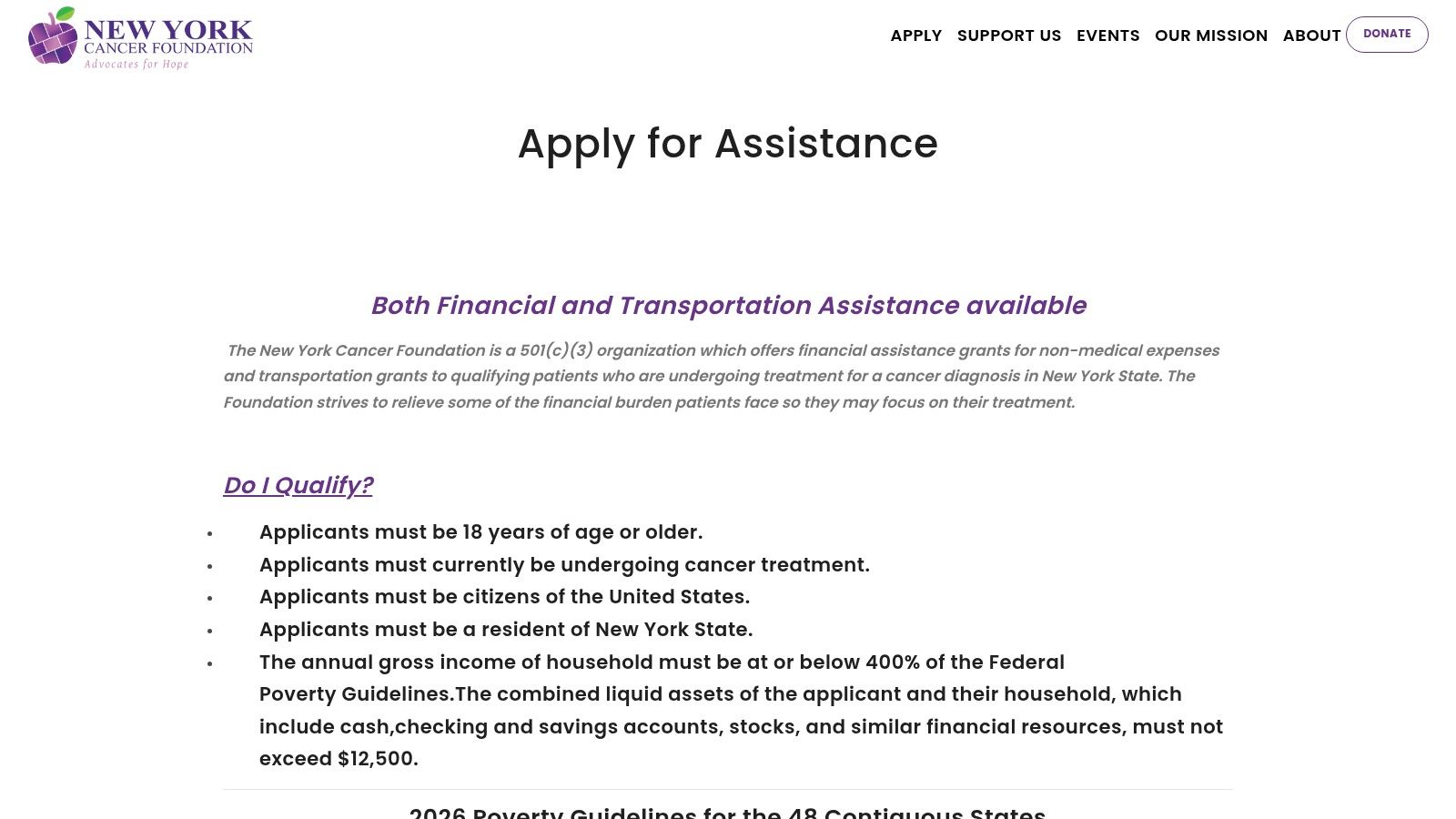
Unlike national programs with broad but often smaller grants, NYCF’s higher cap is designed to make a meaningful impact on a New York household budget for one month. The foundation has a clear online application process, and payments are made directly to landlords or utility companies, simplifying the logistics for the patient.
Use Cases and Limitations
The primary use case is for a patient facing an acute financial crisis, such as an eviction notice or utility shut-off threat, directly related to their inability to work during treatment. The $2,500 grant can be a powerful stop-gap measure to maintain housing stability. However, this is strictly a one-time grant and cannot be relied upon for ongoing support. A significant limitation is the asset test; applicants with more than $5,000 in household liquid assets are generally not eligible, which can exclude some middle-income families who may still be struggling with the high cost of living in NYC.
Website: https://nycancerfoundation.org/apply/
12. New York State Medicaid Cancer Treatment Program (MCTP)
The New York State Medicaid Cancer Treatment Program (MCTP) is a critical government resource providing full Medicaid coverage specifically for cancer treatment to eligible New Yorkers. This program acts as a vital safety net for uninsured or underinsured individuals who have been diagnosed with certain cancers but might not otherwise qualify for traditional Medicaid. Its primary function is to remove financial barriers to immediate, life-saving care.
This state-run pathway is initiated through a referral, often from the NYS Cancer Services Program (CSP), which provides free cancer screenings. If a screening detects breast, cervical, colorectal, or prostate cancer, the MCTP can provide rapid, temporary coverage for treatment while a full Medicaid application is processed. This ensures that a patient’s care is not delayed due to income or insurance status, making it an essential piece of the cancer financial assistance puzzle for New York residents.
Use Cases and Limitations
MCTP’s greatest strength is its ability to grant immediate, comprehensive treatment coverage for specific, high-incidence cancers. For a newly diagnosed, uninsured patient, this program can mean the difference between starting treatment promptly or facing dangerous delays. It covers services directly related to treating the diagnosed cancer, offering immense relief from the high costs of oncology care.
However, the program is strictly defined. It is limited to residents of New York State and covers only treatment for breast, cervical, colorectal, prostate cancer, and some precancerous conditions. It does not cover other cancer types or general living expenses. Enrollment requires clinical confirmation and documentation, and the coverage may be time-limited pending a full Medicaid eligibility determination.
Website: https://www.health.ny.gov/diseases/cancer/treatment/mctp/
12 Cancer Financial Assistance Programs Compared
Putting It All Together: Your Next Steps with Hirschfeld Oncology
The journey through cancer treatment involves more than just medical appointments and procedures; it includes managing the significant financial pressures that often accompany a diagnosis. Throughout this guide, we have explored a detailed list of national and local resources specifically chosen to provide meaningful cancer financial assistance. From the broad-based support of organizations like the Patient Advocate Foundation (PAF) and CancerCare to the diagnosis-specific aid offered by the Leukemia & Lymphoma Society (LLS) and Susan G. Komen, a network of support exists to help soften the economic impact of your care.
We've detailed how foundations like the PAN Foundation and HealthWell can directly address the high cost of co-payments for critical medications, while programs such as Family Reach focus on the non-medical expenses that can quickly accumulate. For our patients in New York, we highlighted the critical roles of the New York Cancer Foundation (NYCF) and the state's Medicaid Cancer Treatment Program (MCTP), which provide localized, essential safety nets. The goal was to provide you with more than just a list, but a strategic map to help you find the support you need.
From Information to Action: A Practical Strategy
Confronting this list can feel overwhelming, but the key is to approach it strategically. You do not have to apply to every organization at once. The most effective approach is to prioritize based on your most immediate needs.
Start by creating a simple "needs inventory." Ask yourself these questions:
- What is my most pressing financial challenge right now? Is it the co-pay for a specific oral chemotherapy? Is it the cost of transportation to our infusion center? Is it a mortgage payment you are struggling to make?
- Is my need diagnosis-specific? If you have breast cancer, the Susan G. Komen program is a logical first stop. For blood cancers, LLS should be at the top of your list.
- Is my need related to my insurance? Organizations like the Patient Advocate Foundation and CancerCare's case managers excel at helping patients navigate insurance denials and understand their benefits, which can be the root cause of financial strain.
- Is my need general and related to the overall cost of living? This is where organizations like Family Reach shine, as they address the "financial toxicity" that affects your entire household budget.
Once you identify your primary need, you can target the one or two organizations best suited to help. For instance, if your main concern is the co-pay for a specific drug, start with the PAN Foundation, HealthWell Foundation, or Good Days, as they are laser-focused on co-payment assistance. If you are feeling lost in a sea of bills and paperwork, beginning with a case manager from PAF is an excellent move.
Your Partnership with Hirschfeld Oncology
Remember, this resource guide is a starting point, not a solitary task you must complete alone. The single most important takeaway is that our team at Hirschfeld Oncology is your partner in this process. We see managing financial distress as a fundamental part of your comprehensive care plan. The stress caused by financial worries can directly affect your well-being, and we are committed to helping you alleviate that burden.
Your next step is a simple but crucial one: talk to us. Speak openly with Dr. Hirschfeld, our nurses, or our front-desk staff about your financial concerns. We are here to listen without judgment and to help you act. Our team can:
- Identify the most suitable programs for your specific cancer type, treatment regimen, and financial situation.
- Provide the necessary medical documentation and letters of medical necessity required for applications.
- Assist you in understanding and completing application forms, which can often be complex.
- Connect you directly with our network of social workers and dedicated patient navigators who specialize in securing cancer financial assistance.
Asking for help is not a sign of weakness; it is an act of strength and a vital step in managing your overall health. By working together and using these powerful resources, you can shift your focus away from financial worries and toward what truly matters: your health, your recovery, and your quality of life.
At Hirschfeld Oncology, we are committed to providing advanced, research-informed cancer care while supporting you as a whole person. This includes helping you navigate the financial challenges of treatment, and our team is ready to connect you with the resources you need. Visit Hirschfeld Oncology to learn more about our patient-centered approach to cancer care.
.png)
.png)