.png)


When you’re facing a cancer diagnosis, getting a handle on pain and discomfort is one of the most important parts of your journey. Cancer pain medication isn't just one type of pill. It’s a whole toolkit of different options—from familiar non-opioids to stronger opioids and specialized "helper" drugs—that your oncology team can use to build a relief plan just for you. The entire point is to control pain so you can live your life as fully as possible.
Understanding Your Pain Relief Options

Think of this guide as your roadmap for understanding how we, as your care team, work to keep you comfortable. Pain is a deeply personal experience, which is why a one-size-fits-all approach never works. Your pain management plan is tailored specifically to you—your type of pain, your treatment goals, and your life.
At its core, this all comes down to the principles of compassionate pain and symptom management. Our goal here is to pull back the curtain on these treatments and show you that good pain control isn't just a "nice-to-have." It’s something you should expect.
Why Effective Pain Control Is More Important Than Ever
The medical community has made huge strides in recognizing just how critical it is to manage cancer-related pain. With over 20 million new cancer cases diagnosed in 2022 alone, a significant number of people will deal with moderate to severe pain. This isn't a small problem; it's a massive, global need.
The numbers back this up. The global market for cancer pain medication was valued at USD 6.85 billion in 2023 and is expected to climb to USD 10.16 billion by 2030. This isn't just about business—it reflects a deep, worldwide commitment to improving the quality of life for people living with cancer. When your pain is well-managed, you can do more, tolerate your treatments better, and protect your emotional health.
What You Will Learn
We built this guide to give you knowledge, because knowledge is power. When you understand your options, you can have more productive conversations with your doctor and become an active partner in your own care.
Here’s what we’ll walk through together:
- The Main Medication Classes: We'll break down the big three—non-opioids, opioids, and adjuvant therapies—and explain how each one fits into the puzzle.
- Matching Drugs to Pain: You’ll see why different kinds of pain, like the deep ache from bone metastases versus nerve-related pain, call for different strategies.
- Safety and Side Effects: We'll tackle the common worries head-on and give you real-world tips for managing side effects, so you can feel confident and secure with your plan.
Understanding the 'why' behind your prescriptions changes everything. You go from being a passenger to being a co-pilot in your own care. This knowledge is the first and most important step toward getting back in control.
The Primary Types of Cancer Pain Medication
When we talk about managing cancer pain, it's never about finding one "magic bullet" medication. Instead, your oncology team builds a personalized strategy using a toolkit of different medicines, each with a specific job to do.
Think of it as assembling a team of specialists for your pain. We have three main families of drugs we work with: Non-Opioid Analgesics, Opioids, and Adjuvant Analgesics. Often, the best relief comes from combining them, allowing us to attack the pain from multiple angles. Let's break down what each of these do.
The Foundation: Non-Opioid Analgesics
For pain that’s mild to moderate, we almost always start here. This group includes many familiar over-the-counter drugs, but we use them in a very structured way as part of a larger cancer pain plan.
Acetaminophen (Tylenol): A reliable workhorse for mild pain. It's thought to work centrally in the brain to block pain signals before they're fully registered. It's also gentle on the stomach, making it a great foundational choice.
Nonsteroidal Anti-Inflammatory Drugs (NSAIDs): This group includes ibuprofen (Advil, Motrin) and naproxen (Aleve). Their superpower is reducing inflammation right at the source of the pain, like a tumor pressing on tissue or bone. This makes them especially good for what we call somatic pain—pain coming from the body's tissues.
These medications can be used on their own, but more often, we use them alongside stronger drugs. This approach can boost overall pain relief, sometimes allowing us to use lower doses of other, more powerful medications.
The Heavy Lifters: Opioids for Moderate to Severe Pain
When pain ramps up and becomes more severe, opioids are our most powerful and effective tools. These medications work by binding to specific "docking stations" on nerve cells called opioid receptors, which are located in your brain, spinal cord, and gut.
Imagine your pain pathways are a series of gates that open to let pain signals through to your brain. Opioids act like a master key, locking those gates shut and preventing the pain message from ever being delivered. This is why they are so effective for the intense pain that can come with advanced cancer.
Opioids are the cornerstone of care for a reason. Sadly, up to 70% of cancer patients in treatment experience significant pain, and for those with advanced disease, that number can climb as high as 90%. The central role these medications play is reflected in the healthcare market; the cancer pain medication sector, led by opioids, is projected to grow from USD 5.4 billion in 2024 to USD 6.6 billion by 2030. You can see a detailed breakdown in this strategic analysis of the global cancer pain management market.
Common opioids we use include:
- Morphine
- Oxycodone
- Hydromorphone
- Fentanyl
- Methadone
The choice depends entirely on you—your specific pain, your overall health, and how well your kidneys and liver are functioning.
The Specialists: Adjuvant Analgesics
Finally, we have the adjuvant analgesics. This is a fascinating group of medications originally designed for other conditions—like seizures or depression—that we discovered are also fantastic at relieving certain types of pain. They are the true specialists of the pain management world.
Think of adjuvant analgesics as targeting the "electrical system" of your nerves. While opioids block general pain signals, these drugs are designed to calm the misfiring nerves that cause burning, tingling, or shooting pain.
These "helpers" are our go-to for neuropathic pain, a particularly difficult type of pain caused by nerve damage from a tumor, chemotherapy, or surgery. They work by stabilizing irritated nerve cells and stopping them from sending out those erratic, painful signals.
Key examples include:
- Anticonvulsants: Drugs like gabapentin and pregabalin, first made for seizures, are brilliant at quieting down angry, overactive nerves.
- Antidepressants: Certain antidepressants, such as duloxetine and amitriptyline, can modify nerve signaling pathways to dial down chronic pain.
- Steroids: Medications like dexamethasone can powerfully reduce swelling around tumors, which in turn relieves pressure on nerves and eases pain.
Putting It All Together: A Multi-Modal Approach
Each class of medication has its own strengths, which is why we rarely rely on just one. The table below offers a quick look at how these different classes compare and where they fit into a comprehensive pain plan.
Comparing Major Cancer Pain Medication Classes
This table provides a side-by-side comparison of the primary types of medications used to manage cancer pain, their common uses, and key considerations.
| Medication Class | Best For Pain Type | Common Examples | Key Considerations |
|---|---|---|---|
| Non-Opioid Analgesics | Mild to moderate pain, inflammation, bone pain | Acetaminophen, Ibuprofen, Naproxen | Foundation of many plans. Can have dose limits (especially acetaminophen) and potential stomach or kidney side effects (NSAIDs). |
| Opioids | Moderate to severe pain | Morphine, Oxycodone, Fentanyl, Hydromorphone | Most powerful pain relievers. Require careful dosing and monitoring for side effects like constipation and sedation. |
| Adjuvant Analgesics | Neuropathic (nerve) pain: burning, tingling, shooting | Gabapentin, Pregabalin, Duloxetine, Steroids | Specialized for nerve pain. Originally developed for other conditions. Can take time to find the right drug and dose. |
By combining these different specialists—the foundational non-opioids, the powerful opioids, and the targeted adjuvants—your oncology team can create a multi-pronged attack on your pain. This ensures we are addressing it from every possible angle to give you the best possible relief and quality of life.
How Doctors Match Medication to Your Pain
Not all cancer pain is the same, and the key to getting on top of it starts with understanding precisely where it's coming from. Your oncology team’s first job is to become a bit of a pain detective, carefully piecing together the clues your body is giving them to find the root cause of your discomfort.
Think of it like an expert mechanic trying to figure out what's wrong with a car. They don't just start swapping out parts at random. They listen to the engine, check the electronics, and figure out if it’s a mechanical issue (like a deep, grinding ache) or a problem with the wiring (like a short circuit causing sparks). In the same way, we have to identify your pain's origin to choose the right cancer pain medication for the job.
Decoding Your Pain Signals
When your doctor asks you to describe your pain—what it feels like, where it is, what makes it better or worse—they're gathering critical intelligence. The words you choose are the most important clues. Describing your pain as "aching," "throbbing," "burning," or "shooting" tells us a story about what’s happening inside your body.
This helps us sort the pain into two main categories:
- Nociceptive Pain: This is the body’s natural alarm system, triggered by actual tissue damage. It’s a direct signal that something is wrong.
- Neuropathic Pain: This type of pain comes from the nerves themselves. The alarm system is malfunctioning and sending out false, painful signals.
Telling these two apart is absolutely essential, because they respond to completely different kinds of medication.
The chart below shows the main classes of medications—Non-Opioids, Opioids, and Adjuvants—that we use to target these different types of pain.

As you can see, we often build a pain management plan step-by-step, layering foundational treatments with more specialized options as needed.
Matching the Tool to the Job
Once we’ve identified the type of pain you're experiencing, we can select the right tool from our medical toolkit. Each class of cancer pain medication is designed to work on a specific part of the pain pathway.
Treating Nociceptive Pain (The "Mechanical Problem")
This type of pain, caused by tissue damage, is broken down even further.
Somatic Pain: This is pain you feel in your skin, muscles, or bones. A tumor growing in a bone, for example, often causes a sharp, well-defined ache. This type of pain often responds well to non-steroidal anti-inflammatory drugs (NSAIDs) that target inflammation right at the source.
Visceral Pain: This is the deep, squeezing, or cramping pain that comes from internal organs, like the pancreas or liver. It can be vague and hard to pinpoint. For this kind of intense, widespread pain, opioids are often most effective. They work in the central nervous system to block these powerful signals from reaching the brain.
It’s a bit like trying to stop a city-wide power surge. You wouldn’t run to every single house to flip the circuit breaker. Instead, you'd go straight to the central power station. Opioids work at that "central station"—the brain and spinal cord—to turn down the volume on pain across the board.
Treating Neuropathic Pain (The "Electrical Problem")
Neuropathic pain feels entirely different. Patients often describe it as burning, tingling, shooting, or like an electric shock. This happens when nerves are damaged or irritated by chemotherapy, radiation, or a tumor pressing on them.
For this kind of nerve pain, standard painkillers like opioids are often not the answer. This is where we bring in the specialists: adjuvant analgesics. These medications are designed to work directly on the "wiring" of the nervous system.
- Anticonvulsants (like Gabapentin): These drugs help quiet down overactive, misfiring nerves. Think of it like putting electrical tape on a frayed wire to keep it from sparking.
- Antidepressants (like Duloxetine): Certain antidepressants work by changing the chemistry in the brain that processes pain signals, which can dial down the entire system’s sensitivity.
By understanding this logic, you become an even better partner in your own care. Telling your team, "I have a sharp, stabbing shock that runs down my leg" gives us a much clearer target than just saying "my leg hurts." It allows us to pick the right medication to calm that specific, irritated nerve.
Navigating Opioid Use and Managing Side Effects
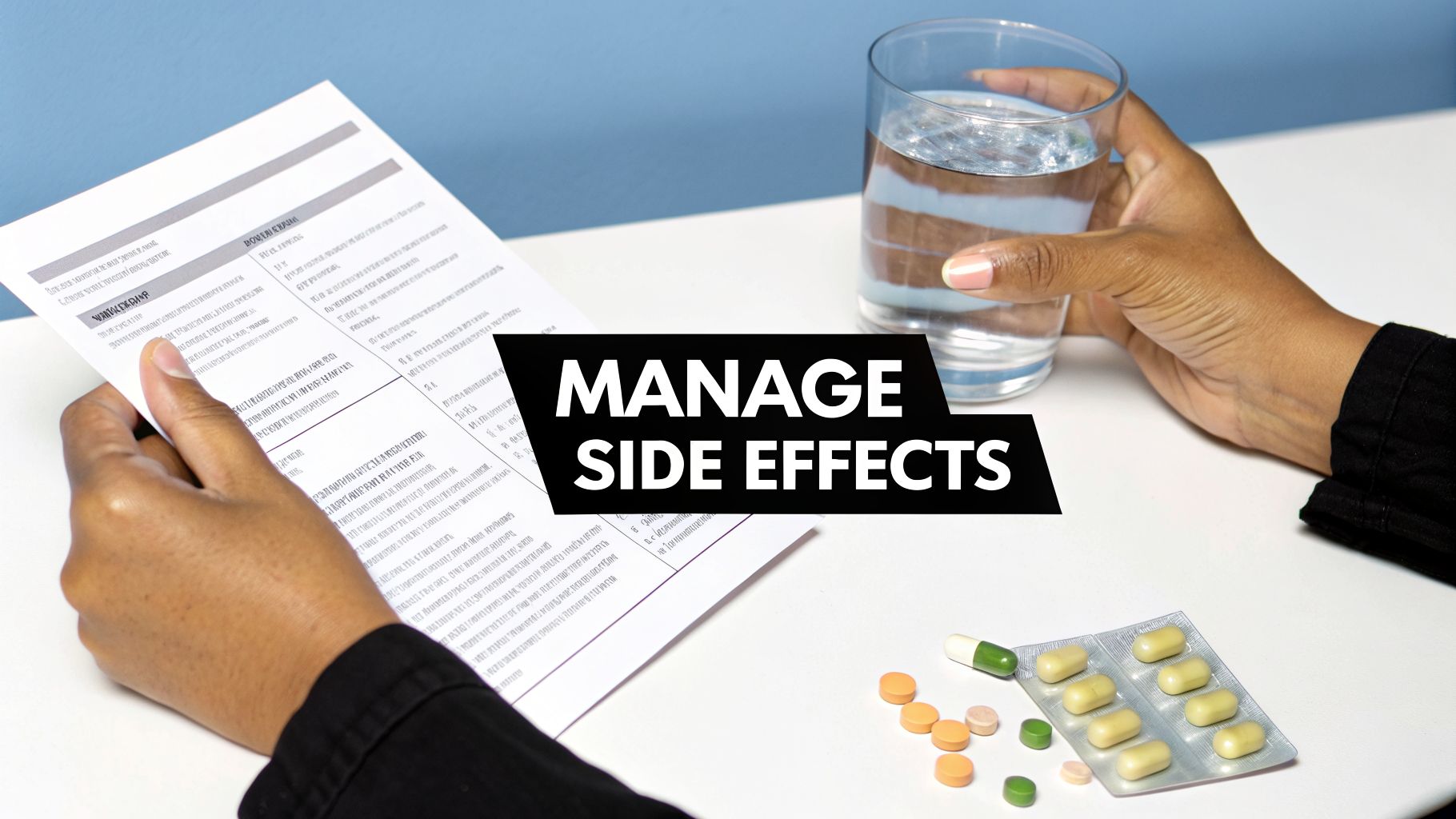
Opioids are one of the most effective tools we have for controlling moderate to severe cancer pain. But for many people, just hearing the word “opioid” brings up a lot of valid concerns about safety, side effects, and the risk of addiction.
Let's walk through those concerns together. My goal here is to give you the confidence that comes from understanding how these powerful medications work, how they can be used safely, and how we can keep you comfortable and in control of your treatment.
A Proactive Approach to Managing Side Effects
When it comes to cancer pain medication, especially opioids, most side effects are completely predictable. And because they're predictable, they are also manageable. The trick is to get ahead of them.
Your oncology team won’t wait for problems to arise. We'll anticipate the most common issues and build a plan to manage them right from the start. The big three we always plan for are constipation, drowsiness, and nausea.
- Constipation: This is, without a doubt, the most common and stubborn side effect. While other side effects often fade as your body adjusts, constipation will likely stick around as long as you’re on the medication. The only real solution is to start a bowel regimen the very same day you start the opioid.
- Drowsiness (Sedation): Feeling sleepy or a bit foggy is very common when you first start an opioid or increase your dose. Don’t worry—this usually goes away on its own within a few days.
- Nausea and Vomiting: Some people feel queasy at first, but like drowsiness, this tends to improve quickly. We can also prescribe anti-nausea medications to help you get through that initial adjustment period smoothly.
So, how do we put this into practice?
Practical Tips for Side Effect Control
You shouldn't have to choose between pain relief and feeling well. With a few simple, consistent strategies, we can keep side effects from disrupting your daily life.
For Constipation:
- Start a Laxative Immediately: We will almost certainly prescribe a stimulant laxative (like senna) alongside a stool softener. It’s crucial to take these as directed from day one, not after you're already uncomfortable.
- Stay Hydrated: Water is your friend. Drinking plenty of fluids makes a huge difference.
- Increase Fiber: As long as your care team gives the okay, adding more fruits, vegetables, and whole grains to your diet can help.
- Stay Active: Even gentle movement, like a short walk, can work wonders for keeping your system regular.
For Drowsiness:
- Give It Time: Be patient and allow your body a few days to get used to the medication.
- Time Your Doses: We can often work with your dosing schedule, perhaps having you take a larger dose at bedtime to minimize daytime sleepiness.
- Avoid Driving: This is non-negotiable. Do not drive or use heavy machinery until you are certain how the medication affects you and any initial drowsiness has passed.
Key Insight: Think of managing side effects as part of the treatment itself. It's not an afterthought. Just as you take your pain medication on a strict schedule, your side effect plan deserves the same dedication to ensure you maintain the best possible quality of life.
Understanding Dependence, Tolerance, and Addiction
The fear of addiction is perhaps the biggest reason people hesitate to use opioids for legitimate pain, and it's vital we clear this up. There are crucial differences between addiction and the normal physical responses your body has to long-term opioid use.
- Physical Dependence: This is an expected physiological adaptation. When your body gets used to the regular presence of an opioid, it will react with withdrawal symptoms if the medication is stopped abruptly. This is not addiction. It’s a predictable biological process.
- Tolerance: This is another normal response. Over time, your body may require a higher dose to achieve the same level of pain relief. This is a common and manageable part of long-term therapy, handled by carefully adjusting the dose with your doctor.
- Addiction (Substance Use Disorder): This is something entirely different. Addiction is a complex psychological and behavioral condition marked by compulsive drug-seeking and use for non-medical reasons, despite harmful consequences. When opioids are prescribed for cancer pain and taken as directed, addiction is rare.
The good news is that the field of pain management is constantly evolving. The cancer pain market is projected to hit $6.321 billion by 2033, driven in large part by research into new non-opioid therapies that bypass these concerns. You can read more about these market trends in cancer pain treatment if you're interested.
Your role is simple: take your medication exactly as your doctor prescribes and keep an open line of communication with us. Never change a dose or stop a medication without talking to your team first. For a closer look at how pain management fits into the bigger picture of comfort care, you might find our guide on the differences between palliative and hospice care helpful.
A Holistic Approach to Controlling Pain

When it comes to managing cancer pain, we have to look beyond just the prescription bottle. While cancer pain medication is absolutely the foundation of good pain control, a truly effective plan brings other strategies into the mix. These complementary approaches work alongside your medications, boosting your comfort and improving your overall quality of life.
Think of it this way: your medications are the star players on a team, but even the best players need a strong support crew. That’s what these other therapies are. By combining them, we can often get better pain relief, sometimes even with lower doses of medication and fewer side effects.
Expanding Your Pain Management Toolkit
Adopting this integrated mindset is incredibly empowering. It means you’re caring for your whole self, not just chasing a symptom. Many people find that adding these non-drug therapies gives them a welcome sense of control over their own health and well-being.
Here are some of the most trusted and well-researched therapies we often recommend:
- Physical Therapy: A therapist who specializes in oncology can create a gentle program to help you move better, regain strength, and ease stiffness. It's a game-changer for pain that comes from surgery or being less active.
- Massage Therapy: Gentle touch from an oncology-trained massage therapist can do wonders for tense muscles and anxiety. For more stubborn muscular pain, options like deep tissue massage therapy can provide deeper relief when incorporated into your overall plan.
- Acupuncture: This ancient practice uses ultra-thin needles placed at specific points on the body. We've seen great results, and research backs it up—acupuncture can be very effective for musculoskeletal pain by stimulating nerves and encouraging your body to release its own natural pain-relieving chemicals.
“For general cancer or musculoskeletal pain, therapies like acupuncture, reflexology or acupressure, and massage have evidence showing benefits outweigh harms. These approaches can be safely integrated with conventional medications or physical therapy.”
— Jun J. Mao, MD, MSCE, Chief, Integrative Medicine & Wellness Service, Memorial Sloan Kettering Cancer Center
Mind-Body Connection in Pain Relief
Never underestimate the power of the mind in how we experience pain. Techniques that help calm your nervous system can make a tangible difference in your day-to-day comfort. They are practical tools for coping with the mental and emotional weight that chronic pain carries.
This isn’t about “thinking the pain away.” It’s about learning to manage your body’s reaction to the pain signals. If you're interested in diving deeper into the powerful link between mental state and physical symptoms, we have a helpful guide on enhancing quality of life through mind-body interventions in oncology.
A few powerful examples include:
- Mindfulness and Meditation: These practices help you anchor yourself in the present moment, which can short-circuit the exhausting cycle of pain, stress, and anxiety.
- Guided Imagery: By visualizing a peaceful place or a positive outcome, you can create a powerful mental distraction that promotes deep relaxation.
- Gentle Yoga: Yoga adapted for cancer patients focuses on slow movements, light stretching, and deep breathing to dial down stress and improve your connection to your body.
Interventional Pain Management Options
Sometimes, despite our best efforts with medication and complementary care, pain can be severe, complex, or just plain stubborn. When that happens, your team may discuss more advanced interventional procedures that target the specific nerves sending those pain signals.
These advanced options include:
- Nerve Blocks: This involves a physician injecting a numbing medicine (a local anesthetic) around a nerve or a bundle of nerves. This works by temporarily "blocking" the pain signals from reaching your brain.
- Implantable Pain Pumps: For severe, long-term pain, a small pump can be surgically placed under your skin. It delivers a continuous, very low dose of pain medicine directly to the spinal cord, offering powerful relief with remarkably few side effects.
An integrated, holistic approach means we leave no stone unturned. By layering cancer pain medication with these complementary, mind-body, and interventional therapies, your oncology team can build a truly robust and personalized plan that attacks pain from every angle.
Creating Your Personalized Pain Management Plan
A pain management plan isn't a one-size-fits-all solution picked off a shelf. It's a strategy designed specifically for you, weaving together everything we know about your health, your goals, and the unique nature of your pain. This is where we bring all the pieces together—the different types of cancer pain medication, the nature of your pain, and side effect management—into a clear, actionable approach.
Here at Hirschfeld Oncology, developing this plan is a true partnership. It's a conversation, not a lecture. Our goal is to work with you to find what gives you the most relief and helps you get back to living your life.
The Comprehensive Assessment
It all begins with a deep dive into your experience. We need to understand your pain from every possible angle, because it’s so much more than just a number on a scale. It’s about how it affects your sleep, your ability to enjoy your hobbies, and your time with family.
We'll talk through things like:
- Your Pain's Story: What does it actually feel like—is it a dull ache, a sharp stab, or a burning sensation? Where do you feel it, and what makes it better or worse?
- Your Treatment History: What have you already tried? We want to know what worked, what didn't, and why.
- Your Goals: What does "feeling better" really mean to you? Is your main goal to sleep through the night without pain, or to be able to take a walk around the block?
Building Your Medication Regimen
Armed with this information, we start designing your medication plan. This is a careful and thoughtful process where we combine therapies to get the best possible pain control with the fewest side effects. It’s all about finding the right drug at the right dose at the right time.
A personalized pain plan isn't static. It's a living document that evolves with you. As your needs change, so does the strategy. Continuous monitoring and open communication are the keys to its success.
This often means layering different medications for a more powerful effect. For example, we might use a long-acting opioid to provide a steady baseline of relief, paired with a short-acting one for sudden flare-ups of breakthrough pain. At the same time, we could add an adjuvant medication like gabapentin to specifically address any nerve-related pain.
Sometimes, the most effective pain relief comes directly from the cancer treatment itself. For certain people, approaches like low-dose chemotherapy or targeted therapy can actually shrink tumors, relieving the pressure that's causing the pain. Throughout it all, we're constantly monitoring your progress, making adjustments, and working together to restore function and hope.
Common Questions and Concerns About Pain Medication
When we talk about using medication to manage cancer pain, a lot of questions and very valid concerns often come up. It's completely normal. Let's walk through some of the most common worries we hear from patients and their families, so you can feel more confident and informed about your care plan.
"I'm Scared of Becoming Addicted."
This is one of the first things patients often tell us, and it’s a fear we take very seriously. The key here is understanding the important difference between addiction and the normal, expected ways your body responds to certain medications.
- Physical Dependence and Tolerance: Think of these as predictable biological adjustments. Over time, your body gets used to the medication. This means you might need a different dose to get the same relief (tolerance), and you would feel unwell with withdrawal symptoms if the medication were stopped abruptly (dependence). These are not signs of addiction.
- Addiction: This is something else entirely. Addiction is a behavioral condition where someone compulsively uses a substance despite it causing harm. When opioids are taken exactly as your doctor prescribes for legitimate cancer pain, the risk of developing a true addiction is very low.
Your oncology team is constantly monitoring your care. We know how to distinguish between these normal physical responses and signs of a problem, ensuring you're using your medication safely and effectively.
"What If My Pain Isn't Getting Better?"
We can't stress this enough: never suffer in silence. If your pain plan isn't working, or if your pain suddenly changes, you need to let your care team know right away. Pain isn't always constant—it can change for many reasons, and your treatment needs to adapt with it.
Don't ever feel like you have to wait for your next scheduled appointment if you're in pain now. Your comfort is a top priority, and your team is ready to help adjust your plan as soon as a problem comes up.
There are always other options. We might adjust your dose, try a completely different medication, or add another type of therapy to hit the pain from a new angle. Honest, open communication is the single most important part of keeping you comfortable.
"Is It Okay to Take Tylenol or Advil with My Prescriptions?"
Please, always ask your oncology team before taking anything else—this includes over-the-counter (OTC) drugs, vitamins, and even herbal supplements. What seems harmless can sometimes cause serious issues.
For instance, common anti-inflammatories like ibuprofen (Advil) or naproxen (Aleve) can interfere with chemotherapy or pose a risk if you have kidney issues or are prone to bleeding. Even a seemingly safe drug like acetaminophen (Tylenol) has strict daily limits to protect your liver. To keep you safe, your doctor needs a complete picture of everything you're taking.
At Hirschfeld Oncology, our philosophy is simple: no patient should have to live with uncontrolled pain. We create pain management plans that are built around you as an individual, and we're always here to answer your questions and refine your care. Learn more about our patient-first approach and see our other resources at https://honcology.com/blog.
.png)
.png)