.png)


When most people think about cancer treatment, they picture an IV drip in a hospital. For a long time, that was the reality. But oncology has come a long way, and today, a powerful new option exists: a cancer pill treatment that you can take from the comfort of your own home.
These aren't just simple pills; they represent a smarter, more targeted way to fight cancer. Many are designed to zero in on the specific weaknesses of cancer cells, offering a more precise attack than ever before.
The Evolution of Cancer Pill Treatment
For decades, intravenous (IV) chemotherapy was the cornerstone of cancer care. While it saved countless lives, the approach came with a heavy price—grueling side effects and constant trips to an infusion center. The shift toward oral cancer therapies is about more than just convenience; it’s about giving patients a powerful treatment that also prioritizes their quality of life.
It’s a common mistake to think of these as just "chemo in a pill." While some oral chemotherapies do exist, the world of cancer pills is much broader and more sophisticated. Many of these medications are what we call "smart drugs," and they work with incredible precision.
Precision Targeting: A New Strategy
Think of traditional chemotherapy like a broad-spectrum antibiotic—it's powerful, but it can hit healthy cells just as hard as cancerous ones, especially those that divide rapidly. This is why it often causes side effects like hair loss and nausea.
In contrast, many modern cancer pills are more like a specialized key cut for a single, unique lock found only on cancer cells. This "lock" might be a specific protein, a faulty gene, or a growth signal that the tumor hijacked to fuel its expansion.
By targeting these precise molecular weak points, a cancer pill treatment can effectively shut down the cancer's ability to grow, spread, or even repair itself. The best part? It often does so with far less collateral damage to the rest of the body. This strategy has been a game-changer for patients with advanced cancers or tumors that have become resistant to other treatments.
This move toward smarter, more patient-friendly options is reshaping oncology. The global market for biological therapies, which includes many of these advanced pills, was valued at $147.2 billion in 2024 and is expected to hit $225 billion by 2030. You can read more about the growth of biological cancer therapies to see just how quickly this field is advancing.
This isn't just about swapping an IV for a pill. It's a fundamental change in our strategy. We've moved from widespread attacks to highly specific, intelligence-driven therapies that exploit the tumor's own biology against it.
This personalized approach means your oncologist can now analyze your tumor's genetic makeup to find its unique vulnerabilities and match it with the right oral therapy. This has led to several exciting categories of cancer pills, including:
- Targeted Therapies: These drugs directly block the specific proteins or pathways that cancer cells depend on to survive and multiply.
- Hormonal Therapies: These pills work by cutting off the supply of hormones that fuel certain types of cancer, particularly in breast and prostate cancers.
- Advanced Inhibitors (e.g., PARP, Kinase): These are highly specialized medications that jam the internal machinery of cancer cells, preventing them from repairing their own DNA or sending growth signals.
In this guide, we'll walk through these different types of cancer pill treatments. We'll explore how they work, who they're for, and what you can expect if this path is right for you.
How Different Cancer Pills Attack Cancer
Not all cancer pills are created equal. When we talk about "oral cancer therapy," we're not talking about a single type of medicine. Instead, it’s a whole toolbox of different drugs, and each one has a unique way of fighting cancer. Understanding how your specific cancer pill treatment works is one of the best ways to become an active partner in your own care.
Think of it like this: if cancer is a runaway car, different pills have different ways of stopping it. Some cut the fuel line, others jam the engine, and some even disable the driver. Let’s break down these distinct approaches.
This diagram gives a great overview of why oral therapies have become such a powerful option in modern cancer care.
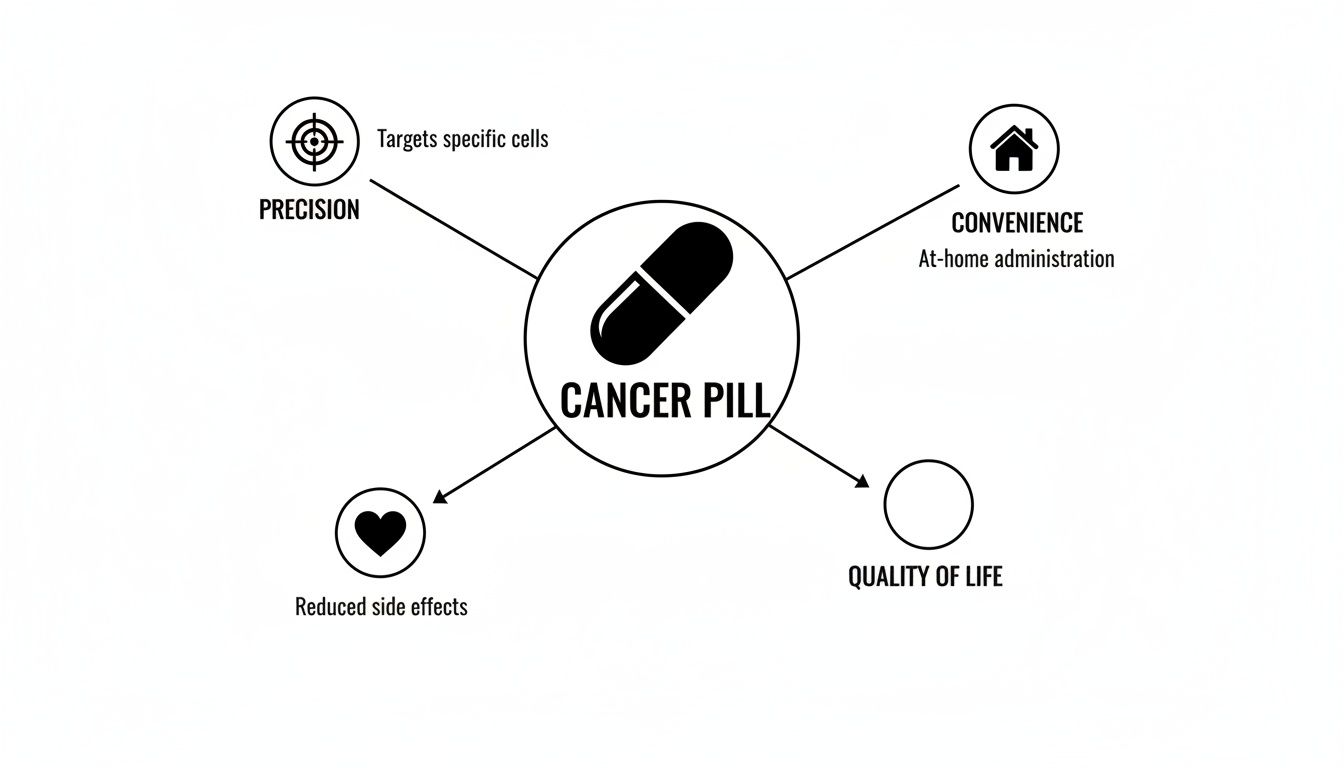
As you can see, it's about combining precision, convenience, and a better quality of life into a single, effective treatment strategy.
Targeted Therapies: The Smart Keys
Targeted therapy pills are the "smart keys" of cancer treatment. This is a world away from the "sledgehammer" of traditional IV chemo, which tends to damage any cell that divides quickly. These drugs are engineered to fit a specific molecular "lock"—a faulty protein or genetic mutation—that the cancer absolutely depends on to grow and spread.
When the pill fits into this lock, it blocks a critical signal, which can stop the cancer cell from growing or even cause it to self-destruct. This precision is their biggest advantage; it generally spares healthy cells, which often means fewer of the side effects we typically associate with chemotherapy. Of course, to see if these treatments are working, we rely on tools for accurate tumor volume calculation to monitor progress.
Because these drugs are so specific, they only work if a tumor has the right lock for the key. This is why we perform biomarker testing—it's how we find out which keys might work for your cancer. You can get a more detailed look at how these drugs work in our guide on https://honcology.com/targeted-therapy.
Oral Chemotherapy: The Convenient Sledgehammer
Don’t be surprised to learn that some cancer pills are, in fact, chemotherapy. These oral chemo agents function much like their IV cousins, attacking all fast-growing cells in the body. They get in the way of the cell division process, which is why they work against cancer but can also lead to side effects like hair loss, nausea, or low blood cell counts.
So, what's the benefit? Convenience. Taking a pill at home is far simpler than spending hours at an infusion center. This flexibility helps patients hold on to a greater sense of normalcy and control over their daily lives, even while undergoing a powerful treatment.
Hormonal Therapies: The Message Interceptors
Some cancers, especially certain types of breast and prostate cancer, are fueled by the body's own hormones, like estrogen or testosterone. You can think of these hormones as messages that constantly tell the cancer cells, "Grow! Multiply!" Hormonal therapy pills are designed to act as "message interceptors."
They can do this in a couple of ways:
- Blocking Production: Some pills prevent the body from making the hormones that the cancer is feeding on.
- Blocking Receptors: Others work by sitting on the cancer cell's "docking stations" (receptors), so the real hormone messages can't get through.
By cutting off this vital communication line, hormonal therapies can effectively starve the cancer or slow its growth to a crawl.
These advanced oral therapies are not just about finding a new way to deliver old medicines. They represent a deeper understanding of cancer's fundamental biology, allowing us to dismantle the very machinery that cancer cells use to survive and thrive.
Advanced Inhibitors: Jamming the System
Beyond these main categories, we have an even more specialized class of pills that target the intricate inner workings of cancer cells. It's truly fascinating science.
Kinase Inhibitors: Cancer cells depend on a complex network of proteins called kinases to send internal signals for growth and survival. Kinase inhibitors are designed to jam these signals, disrupting the communication network and causing the cell's entire operation to grind to a halt.
PARP Inhibitors: Every cell, healthy or cancerous, has a "repair crew" to fix damage to its DNA. PARP inhibitors are clever drugs that sabotage this repair crew. In cancers that already have a faulty DNA repair system (like those with BRCA mutations), taking out the backup crew is a catastrophic one-two punch that leads to cell death.
Each of these strategies is a different tool in our toolbox. By understanding the method behind your medication, you can better appreciate the personalized plan your oncologist has designed just for you.
Determining if Oral Therapy Is the Right Approach
Choosing a treatment path is one of the most personal and critical decisions you'll make on your cancer journey. With more oral therapies becoming available, a natural question comes up: is a cancer pill treatment the right choice for me?
There's no simple yes or no answer. The truth is, it's a deeply personal decision that we make together, based on hard science, your specific diagnosis, and what matters most to you.
These treatments aren't a universal fix. They're a highly precise strategy, reserved for specific situations where we know they can make the biggest difference.
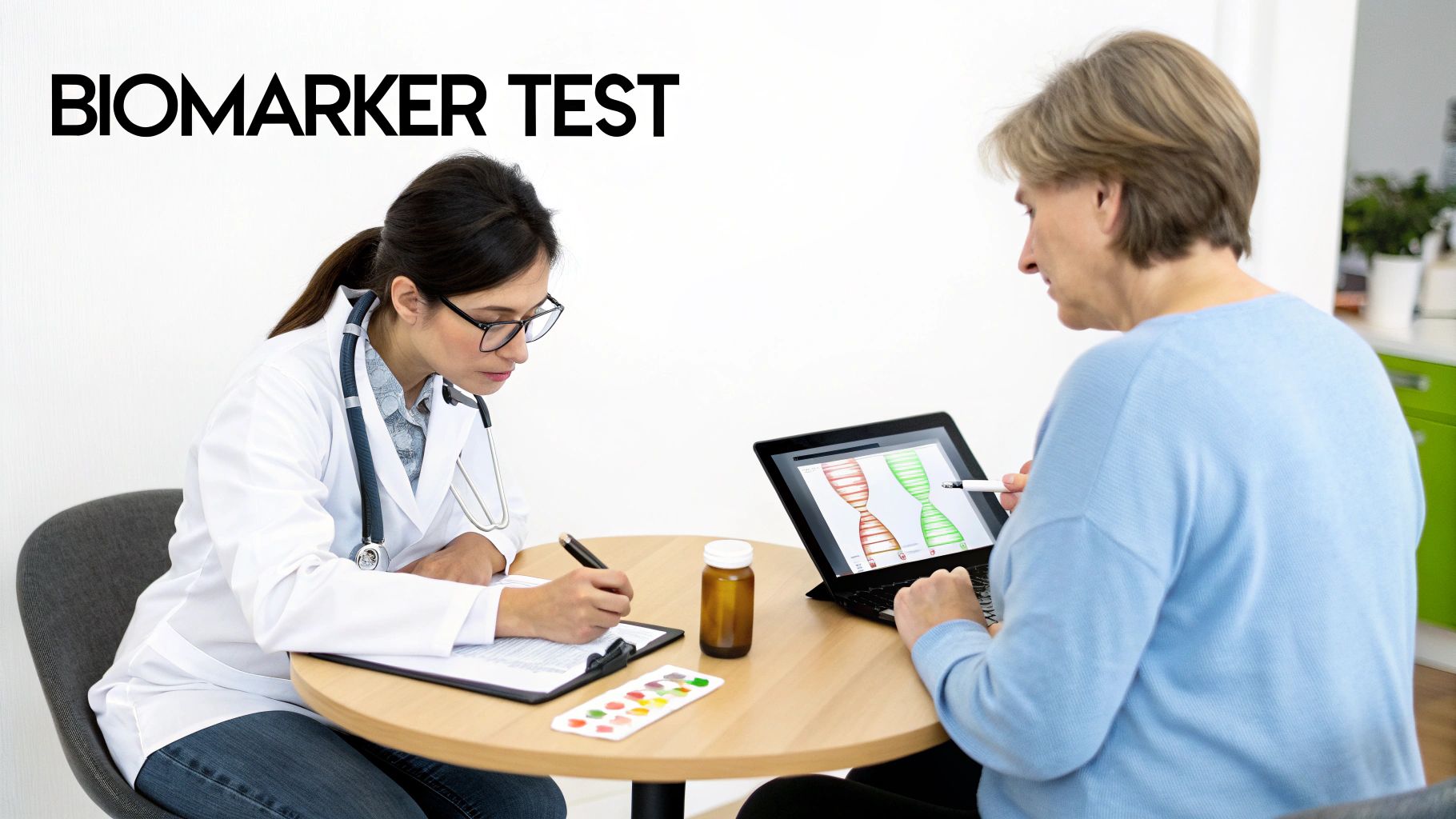
Think of it as a collaboration. You and your oncology team will look at all the evidence to find the most effective and manageable option for you.
Unlocking Potential with Biomarker Testing
The secret to knowing if a targeted oral therapy will work is hidden in the tumor's own genetic instructions. I often tell my patients to imagine their tumor is a complex lock. To open it, you need the right key.
That's where biomarker testing (also called molecular or genomic profiling) comes in. We analyze a small piece of the tumor or a blood sample to map out its unique genetic landscape. We’re looking for specific biomarkers—things like genetic mutations or unusual proteins that act as signals, telling us exactly what is driving the cancer's growth.
When we find a specific biomarker, like a KRAS mutation in colon cancer or a BRCA mutation in ovarian cancer, we can match it to a cancer pill designed to target that exact vulnerability. This is the heart of precision medicine. Without the test, we're just guessing. With it, we have the combination to the lock.
If you’re interested in the details, our guide on what molecular testing for cancer involves offers a much deeper look into how this process informs our treatment choices.
Common Scenarios for Oral Cancer Treatment
So, when might we consider an oral therapy? It's often an option for patients with advanced or treatment-resistant cancers. Here are a few common situations where your oncologist might bring it up:
- For Advanced or Metastatic Cancers: When cancer has spread, oral therapies can be an excellent way to control its growth throughout the body. We see this often in lung, colorectal, pancreatic, and breast cancers.
- When Standard Treatments Stop Working: Cancers are smart, and they can learn to resist initial treatments like IV chemotherapy. When that happens, biomarker testing can uncover a new weakness that a targeted pill can go after, giving us a vital second or third line of defense.
- As a Maintenance Strategy: After intensive treatment has shrunk the tumors, we might use an oral therapy as a long-term "maintenance" drug. Its job is to keep the cancer in check and prevent it from coming back, usually with fewer side effects than traditional chemo.
- For Cancers with Known Genetic Drivers: For some cancers, we know from day one that they're fueled by a specific, targetable mutation. In these cases, a cancer pill might be the very first and best treatment we recommend.
The decision to use an oral therapy is driven by data. It's about understanding the tumor's biology so we can select a treatment that is not only convenient but also scientifically poised for the greatest chance of success.
Creating a Personalized Treatment Strategy
Ultimately, figuring out if a cancer pill is right for you is a process with many moving parts. It’s not just about what type of cancer you have, but about its unique molecular fingerprint, your overall health, and your personal goals.
Your oncology team pulls all this information together to map out the best path forward. That could mean an oral therapy on its own, a combination with IV treatments, or even a clinical trial for a new medicine. This careful, thoughtful planning is what makes modern cancer care so powerful.
Navigating Daily Life on Oral Cancer Therapy
Starting a new cancer pill treatment can bring a real sense of relief. Taking your medication at home is undoubtedly more convenient than coming in for an IV infusion, but it’s a mistake to think that convenience equals simplicity. Taking a pill might be physically easy, but making it work safely and effectively requires a new level of personal commitment.
The biggest misconception I hear from patients is that a pill must have milder side effects than traditional chemo. The truth is, the side effects are just different. While you might sidestep issues like hair loss, these powerful drugs can introduce their own unique challenges that we need to manage together as a team.

Proactive Side Effect Management
Common side effects from oral cancer therapies can run the gamut from mild annoyances to serious issues. Patients often report fatigue, skin rashes, diarrhea, nausea, or changes in blood pressure. The most important thing to remember is to never ignore a new symptom, no matter how small it seems.
Honest, open communication with your care team is your best defense. When you report issues early, we can step in with supportive medications or adjust your treatment before a minor problem spirals into a major one. We've put together a comprehensive guide with more details on navigating the side effects of targeted cancer therapy.
Here’s a look at some of the more common side effects and the practical strategies we can use to manage them.
Common Side Effects and Proactive Management Tips
Remember, these are just starting points. Your experience will be unique, and we'll tailor our approach to what’s happening with you.
The Critical Role of Treatment Adherence
With oral therapy, the success of your entire treatment often boils down to one word: adherence. This simply means taking your medication exactly as prescribed—the right dose, at the right time, every single time, and under the right conditions (like with or without food).
It’s not an exaggeration to say that missing doses or taking your pill incorrectly can dramatically reduce how well it works. Unlike an IV infusion where the dose is guaranteed in the clinic, a pill regimen puts you in the driver's seat. Building a routine with daily alarms, a pill organizer, or a medication log isn't just helpful; it's essential. For more ideas, here are some expert tips to prevent medication errors at home that can help you create a safe and effective system.
Ongoing Monitoring for Safety and Success
Just because you’re taking your treatment at home doesn’t mean you’re going it alone. Far from it. Close, consistent monitoring is a non-negotiable part of any oral cancer therapy plan.
We’ll work together to establish a regular schedule of appointments and tests to make sure the treatment is doing its job without causing harm. This almost always includes:
- Regular Blood Tests: We’ll keep a close eye on your blood counts, kidney function, and liver enzymes to catch any internal red flags long before you’d ever feel them.
- Clinic Check-Ins: These appointments, whether in person or over telehealth, are our dedicated time to talk through side effects, answer your questions, and review your progress together.
- Imaging Scans: From time to time, we'll use scans like a CT or PET to get a clear picture of how the tumor is responding, confirming the treatment is on track.
This ongoing conversation and data-gathering creates a feedback loop. It allows us to make smart, real-time adjustments to your plan, keeping you safe while giving the medication the very best chance to succeed.
Your Partner in Personalized Cancer Care
Understanding the science behind a cancer pill treatment is one thing. Putting it into practice in a way that truly works for you is something else entirely. At Hirschfeld Oncology, that’s where we come in. We don't just prescribe a pill; we build a complete, personalized strategy around your life, ensuring your treatment is as unique as your diagnosis.
This isn’t a one-size-fits-all process. Crafting the right plan is an act of deep collaboration, where we combine advanced medical knowledge with your personal story, your health, and your goals.
Building Your Unique Treatment Blueprint
Choosing the right oral therapy is like assembling a complex puzzle. To see the full picture, we have to start by gathering all the essential pieces.
This involves a careful review of several key factors:
- Your Cancer's Biology: We look at the specific type of cancer, its stage, and most importantly, the unique genetic markers we find through biomarker testing.
- Your Health History: We take into account your overall health, any other medical conditions you have, and how you’ve responded to past treatments.
- Your Quality of Life Goals: We have honest conversations about what matters most to you. Is your priority managing symptoms? Being able to travel? Maintaining a certain level of daily activity? Your priorities guide our recommendations.
Only by weaving these threads together can we identify the most promising cancer pill, select the right starting dose, and anticipate the support you’ll need to thrive.
True personalized care goes beyond matching a drug to a mutation. It means designing a treatment plan that respects your body, your lifestyle, and your definition of a good day, every step of the way.
This detailed approach is especially crucial for patients with advanced or treatment-resistant cancers. When standard protocols are no longer an option, our experience in navigating these complex cases allows us to explore every available avenue, from newly approved oral therapies to promising clinical trials that might offer new hope.
Your Local Team for At-Home Treatment
One of the greatest benefits of oral therapy is being able to take your medication at home, but that independence should never feel like isolation. Think of us as your local, accessible safety net. Even though your treatment happens at home, your care happens with us.
This partnership is built on close monitoring and open communication. We are your home base for managing every single aspect of your treatment.
This hands-on support means:
- Immediate Access to Expertise: If a side effect pops up or you have a question, you have a direct line to our team. You won't be navigating these challenges alone.
- Proactive Monitoring: We’ll set up a regular schedule of check-ins and lab work right here in our NYC office to track your progress and catch any potential issues before they become serious.
- Real-Time Adjustments: Based on what we see, we can make quick, informed decisions to adjust your dose or add supportive medications, keeping your treatment on track while protecting your quality of life.
The Hirschfeld Oncology Difference
In a city as big as New York, having a dedicated local practice in your neighborhood brings a sense of stability and reassurance. We know our patients by name, not by a chart number. Our team in Brooklyn is committed to being your steadfast partner, providing the expert guidance and compassionate support you need to feel confident and in control.
From your very first consultation to every follow-up visit, our goal is to demystify the process, answer your questions, and make sure you feel empowered. Your cancer pill treatment is a powerful tool, and our job is to ensure you have the expert support system needed to use it safely and effectively, helping you achieve the best possible outcome.
Common Questions About Cancer Pill Treatments
Starting a new treatment, especially something as personal as a cancer pill, is bound to bring up questions. That’s a good thing—it shows you’re an active partner in your own care. Our job is to give you clear, straightforward answers to the things we hear most often from patients and their families, so you can move forward feeling confident and prepared.
Let's walk through some of the key questions together. Tackling these concerns head-on helps clear up the confusion and strengthens the partnership between you and your oncology team.
Are Cancer Pills Less Effective Than IV Chemotherapy?
This is probably the most common question we get, and it’s completely understandable. The simple answer is no—the way a drug is given doesn't determine its power. A treatment’s strength comes from how it works against the cancer, not whether it’s delivered through a vein or in a pill.
In fact, for the right patient, a targeted cancer pill can be significantly more effective than traditional IV chemotherapy.
Why is that? Think of it like a lock and key. Targeted pills are designed to fit a specific genetic "lock" inside the cancer cells. When biomarker testing shows us your tumor has that exact lock, the pill can work with incredible precision to shut down the cancer's growth signals. It's a much smarter, more direct attack than the broader approach of standard chemo.
Plus, some of these pills are used as "maintenance" therapy after a course of IV chemo is finished. In those cases, studies have shown they can be extremely good at preventing the cancer from coming back and helping people live longer, proving just how valuable they are.
Do I Still Need to Visit the Clinic if I Take Pills at Home?
Yes, absolutely. Taking your medication at home is a huge convenience, but it doesn't replace the need for close medical supervision. We see it as a partnership: you handle the daily dose at home, and we manage the big-picture strategy and ensure your safety along the way.
We’ll set up a firm monitoring schedule that includes:
- Regular Clinic Visits: These are non-negotiable for physical exams and to have a real conversation about how you’re feeling.
- Frequent Blood Tests: We’ll use these to keep a close eye on your organ function and blood counts, which helps us spot potential issues long before they become serious.
- Telehealth Check-ins: These are great for touching base between your main appointments to handle any immediate questions or concerns you might have.
This close oversight is our safety net. It’s how we make sure the treatment is doing its job without causing unnecessary harm, and it allows us to adjust your plan in real-time if needed.
Are the Side Effects of Cancer Pills Milder Than Chemo?
It’s more accurate to say the side effects are different, not necessarily milder. While you often get to skip some of the classic chemo side effects like hair loss or intense nausea, these oral therapies come with their own unique set of challenges.
For example, patients taking these pills might run into:
- Serious fatigue that can really get in the way of daily life.
- Skin issues, like rashes or very dry, cracked skin.
- Digestive problems, especially diarrhea.
- Changes in blood pressure.
The big difference here is that the side effects from oral therapies are often predictable and, most importantly, manageable. With proactive care, good communication, and the right supportive medications, we can keep most of these issues under control and protect your quality of life.
The key is to never stay silent. Don't just assume a new symptom is "normal" or not worth mentioning. Telling your care team right away lets us step in and find a solution before it turns into a bigger problem. Your well-being is always the priority.
How Do I Know if a Cancer Pill Is an Option for Me?
Figuring out if a cancer pill is the right fit for you is a very precise, scientific process. This is what personalized medicine is all about, and it involves a few critical steps.
First, your oncologist will do a deep dive into your diagnosis—the type of cancer, its stage, and every treatment you’ve had so far. This lays the groundwork for figuring out the best path forward.
The next step, and the most important one for targeted therapies, is biomarker testing. This means we analyze a piece of your tumor tissue or a blood sample to map out its genetic code. We’re searching for specific mutations or proteins that we know are driving the cancer's growth. These are the "locks" we need to find a "key" for.
If we find a match—a specific biomarker in your tumor that has an approved oral drug designed to target it—then it becomes a very strong option for you. From there, your oncologist will walk you through all the potential benefits and risks, helping you make a decision that feels right for you and your goals. It’s a careful, methodical process aimed at giving you the best possible shot at success.
At Hirschfeld Oncology, we believe that clear communication is the foundation of great cancer care. If you have more questions or want to explore if a personalized cancer pill treatment is right for you, we invite you to start a conversation with our compassionate team in Brooklyn, NYC. Visit our blog to learn more.
.png)
.png)