.png)


Starting a new treatment is a big step, and it's completely normal to wonder about side effects. These effects happen because the powerful therapies designed to fight cancer can sometimes affect healthy cells in the process. Understanding why this happens is the first real step toward managing them well.
Understanding Why Cancer Side Effects Happen
Think of your treatment plan as a highly specialized mission. Systemic therapies, like chemotherapy, are designed to search for and destroy cells that divide and grow very quickly—a key characteristic of cancer. This is an incredibly effective way to attack the disease.
But here's the catch: our bodies have plenty of healthy, normal cells that also divide rapidly.
The Impact on Healthy Cells
Because these treatments are often working throughout your whole body, they can’t always tell the difference between a cancer cell and a healthy, fast-growing one. This collateral damage is what we call cancer side effects.
Some of the most commonly affected areas include:
- Hair follicles: The cells here grow fast, which is why some treatments can cause hair to thin or fall out.
- The lining of your mouth and digestive tract: When these cells are affected, you might experience mouth sores, nausea, or diarrhea.
- Bone marrow: This is the factory for your blood cells. Disruption here can lead to fatigue (from low red blood cells), a higher risk of infection (from low white blood cells), and bruising (from low platelets).
To get a deeper look at this mechanism, you can read our detailed guide on how chemotherapy works.
It's so important to remember that every person and every treatment is different. Today’s therapies are more targeted than ever, and managing side effects is a central part of your care plan from day one.
A Modern Approach to Management
At Hirschfeld Oncology, we see side effects not as a given, but as a challenge we can meet together. When you understand why a side effect might happen, you can work with your care team to get ahead of it. This knowledge turns uncertainty into a concrete plan for keeping you strong.
For instance, if we know a particular treatment often causes nausea, we'll give you anti-sickness medication before you even feel a hint of it. If fatigue is a likely hurdle, we can map out strategies for conserving energy and recommend gentle exercises right from the start.
This proactive and collaborative approach is the cornerstone of modern cancer care. By anticipating and managing these challenges directly, our goal is to minimize interruptions to your treatment and, most importantly, to your life.
The Timeline of Treatment Effects: What to Expect and When
When you begin cancer treatment, one of the biggest questions is often about side effects: when will they start, and what will they feel like? It’s helpful to know that they don’t all show up at once. Instead, they tend to emerge across a general timeline.
Understanding this progression can help turn a lot of that uncertainty into a sense of preparedness. It lets you know what to watch for and gives you a framework for talking with your oncology team about managing symptoms before they start.
This timeline shows how treatment prompts a response in the body, which can then lead to side effects over different periods.
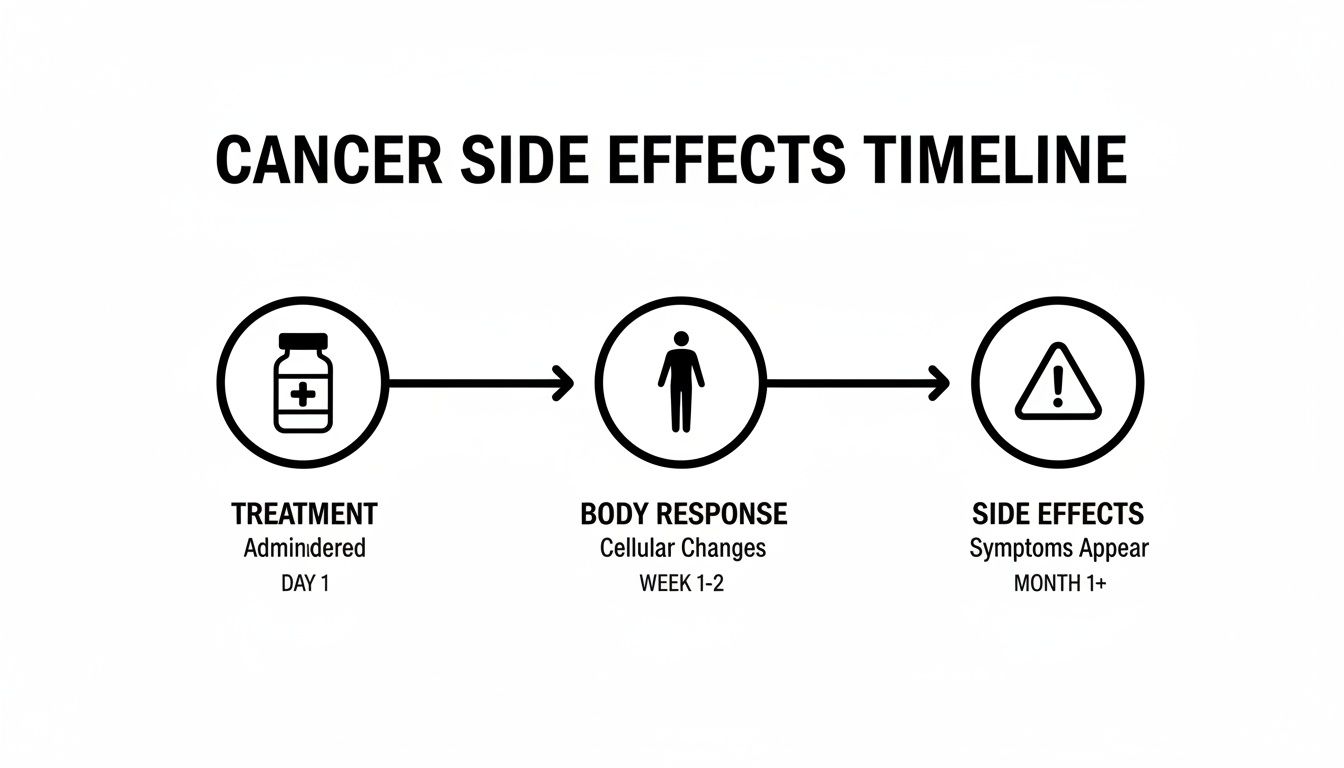
Think of it as a cause-and-effect relationship. The powerful medicines do their job, and your body responds. Our goal is to anticipate those responses and keep you as comfortable as possible.
Acute Side Effects
The first responses you might feel are called acute side effects. These pop up quickly, usually within hours or days of a treatment session, especially with chemotherapy or immunotherapy. They happen during the most active phase of your therapy and are often what people think of first when they imagine treatment.
Common acute side effects include:
- Nausea and vomiting: Though many people worry about this, modern anti-sickness medications are extremely effective. We often give them to you before your infusion even begins to prevent nausea from starting.
- Immediate fatigue: It’s not uncommon to feel a deep, heavy tiredness shortly after a treatment. This is your body getting to work processing the medicine.
- Allergic or infusion reactions: Some people may have a reaction like a fever, chills, or a rash while the medicine is being administered. Your care team watches for this closely.
These effects are your body's initial, powerful reaction to a new therapy. We’re laser-focused on managing them in the moment to keep you comfortable and your treatment on track.
Delayed Side Effects
As you get further into your treatment plan, you might start noticing a different set of issues. Delayed side effects are the ones that take a few weeks or even months to appear. They aren't there on day one but can develop as the effects of the treatment build up in your body over time.
These symptoms can be subtle at first, but they have a tendency to become more persistent if left unaddressed. It's so important to report them early, because a simple adjustment to your supportive care can often stop them from getting worse.
Examples of delayed effects include:
- Peripheral neuropathy: This is a type of nerve damage that can feel like tingling, numbness, or even pain in your hands and feet. It's a known side effect of certain chemotherapy drugs.
- Skin changes: If you're undergoing radiation, you might notice skin redness and sensitivity that develops gradually over several weeks. Some targeted therapies are also known to cause a specific kind of rash.
- Hair loss: For therapies that cause it, hair typically starts to fall out about 2-4 weeks after the first treatment.
Long-Term and Late Effects
Finally, we look at the bigger picture. Some side effects can stick around for months or years after treatment finishes (long-term effects), while others might not show up until years later (late effects).
Monitoring for these effects is a core part of survivorship care. We keep an eye on things like your heart function, bone health, or any risk of secondary cancers. Understanding this complete timeline—from the immediate acute reactions to potential late effects—is the key to true, long-term wellness. It allows us to build a plan that not only fights cancer now but also protects your health for all the years to come.
Common Side Effects from Modern Cancer Therapies
Since there are many different ways to treat cancer, there are just as many different side effect profiles. Every therapy has a unique job to do, and the way it affects your body comes down to how it works. Understanding the "how" behind your specific treatment is the first step toward anticipating and managing its effects.
Think of it as different tools for the same tough job. A sledgehammer, a wrench, and a precision screwdriver all leave different marks. In the same way, chemotherapy, immunotherapy, and targeted therapy each interact with your body in their own distinct ways, leading to their own common sets of side effects.
Chemotherapy: A Broad-Spectrum Approach
Chemotherapy has long been a cornerstone of cancer care. Its job is to attack any cell in the body that divides rapidly—a key characteristic of cancer. While this is a powerful way to shrink tumors, the medicine can’t always tell the difference between a cancer cell and a healthy cell that also happens to grow quickly.
This is what we often call "collateral damage." Because the cells in your hair follicles, digestive tract, and bone marrow are always renewing themselves, they are often caught in the crossfire.
This broad-based attack is why chemo is linked to a familiar list of side effects:
- Fatigue: This isn't just feeling tired; it's a profound sense of weariness that rest doesn't always fix.
- Nausea and vomiting: While it can affect over 70% of patients, modern anti-nausea medications have made this far more preventable and manageable.
- Hair loss (alopecia): A common and understandable concern, but it only happens with certain chemo drugs, not all of them.
- Mouth sores: Caused by damage to the sensitive lining of the mouth and throat.
- Increased risk of infection: Your bone marrow produces white blood cells that fight infection. When chemo affects the marrow, your white blood cell count can drop, leaving you more vulnerable.
This is exactly why managing these symptoms from day one is a critical part of the care plan we build at Hirschfeld Oncology.
Immunotherapy: Activating Your Body's Defenses
Immunotherapy operates on a completely different principle. Instead of the treatment attacking the cancer directly, it empowers your own immune system to do the job. You can think of it as taking the brakes off your body’s natural security force, allowing it to recognize and destroy cancer cells much more effectively.
But what happens when that security force becomes a little too enthusiastic? A supercharged immune system can sometimes become overactive and mistakenly target healthy tissues, causing what we call immune-related adverse events. These are essentially autoimmune-like reactions.
Think of it this way: your immune system is now on high alert. While it’s busy hunting for cancer, it can sometimes misidentify healthy organs—like your skin, colon, or lungs—as threats. This is a sign the treatment is working, but it requires very careful monitoring from your care team.
Common immunotherapy side effects often involve inflammation ("-itis") in different parts of the body:
- Skin reactions: Rashes, intense itching, and dryness are very common as the immune system interacts with skin cells.
- Colitis (inflammation of the colon): This can lead to diarrhea, abdominal pain, and cramping.
- Pneumonitis (inflammation of the lungs): You might experience a new cough or shortness of breath.
- Hepatitis (inflammation of the liver): Often detected through routine blood tests before you'd ever feel a symptom.
These effects can range from very mild to quite serious, so your oncology team will be watching for them closely throughout your treatment.
Targeted Therapy: A Precision-Guided Tool
If chemotherapy is the broad-spectrum approach, targeted therapy is more like a sniper. These modern drugs are designed to interfere with specific molecules, or "targets," that are vital for a cancer cell's growth and survival.
Because these drugs are so specific, their side effects are often very different from chemotherapy's. Instead of affecting all fast-growing cells, they tend to cause issues related to the specific cellular pathway the drug is blocking.
This precision leads to a unique side effect profile:
| Side Effect Type | Common Examples | Why It Happens |
|---|---|---|
| Skin Issues | An acne-like rash, very dry skin, hand-foot syndrome. | Many targeted drugs affect growth factor receptors that are also essential for healthy skin cell turnover. |
| Digestive Problems | Diarrhea is an especially common side effect. | The drug can disrupt the normal function and fluid balance of cells lining the intestines. |
| Blood Pressure | Some drugs can cause high blood pressure. | The therapy may interfere with molecules involved in keeping blood vessels relaxed and regulated. |
Across all of these treatments, one of the most pervasive side effects is a profound, debilitating fatigue. It can impact up to 90% of patients undergoing chemotherapy and 60-80% of those receiving radiation. In the United States, where over 2 million new cancer cases are expected in 2026, this isn't just tiredness—it's a deep exhaustion that can linger for months or even years. At practices like Hirschfeld Oncology, we use strategies like low-dose chemotherapy and targeted therapies to dramatically reduce these effects, especially for patients with stage 4 pancreatic or esophageal cancers, to preserve energy and quality of life. You can learn more about the projections for cancer in the coming years.
Practical Strategies to Manage Side Effects at Home
When you're going through cancer treatment, it’s easy to feel like everything is out of your hands. But you have more power than you might realize, especially when it comes to managing how you feel day-to-day. While your oncology team is always your first call, there are so many effective things you can do right at home to find relief and improve your quality of life.
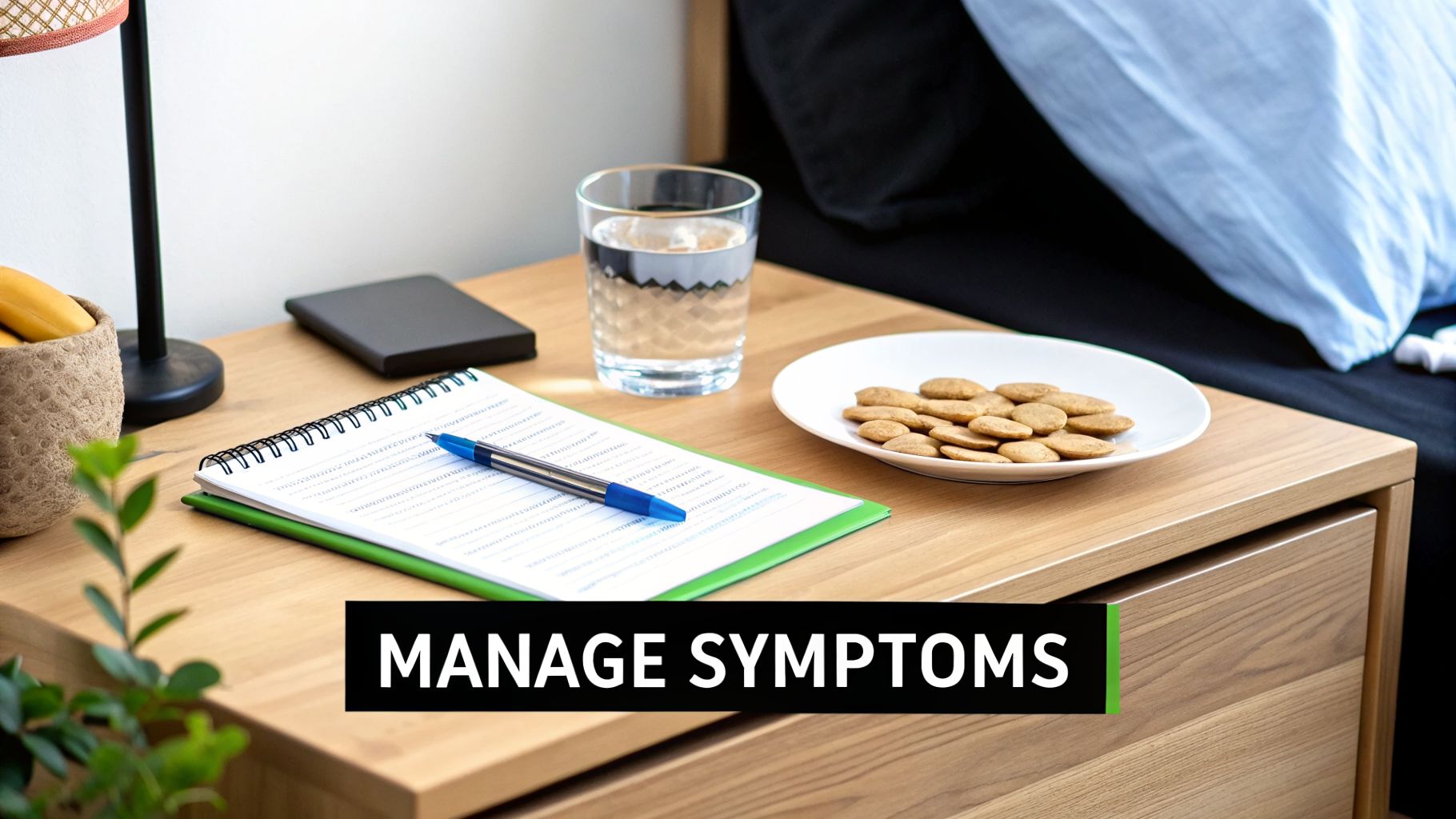
Think of this as building your personal symptom-management plan. When you start to understand what helps and what doesn't, you can shift from simply reacting to symptoms to proactively managing them. This also gives you clearer, more specific information to share with your doctors and nurses.
Combating Treatment-Related Fatigue
Fatigue from cancer treatment isn't your average tiredness; it's a deep, persistent exhaustion that rest doesn't always fix. It can feel completely overwhelming, but even small adjustments to your routine can make a world of difference.
- Conserve Your Energy: Think of your daily energy like a bank account. You only have so much to spend, so use it for what truly matters to you. Simple things like sitting down to chop vegetables or fold laundry can save a surprising amount of energy. Don't be afraid to ask for help with bigger tasks.
- Plan for Rest: Instead of waiting until you hit a wall, schedule short naps or quiet periods into your day. A 20-30 minute rest can be incredibly restorative, while a longer nap might leave you feeling groggy.
- Embrace Gentle Movement: This might sound strange, but light activity is one of the best ways to fight fatigue. A slow walk around the block or some gentle stretching gets your blood flowing and can lift your mood, giving you an actual energy boost.
Managing Nausea and Supporting Nutrition
Nausea can completely throw off your appetite, making it tough to get the nutrition your body desperately needs to heal and stay strong. The goal here is to be kind to your digestive system.
Instead of facing three large meals, try eating five or six small snacks or "mini-meals" throughout the day. An empty stomach often makes nausea worse, so keeping a little food in your system can help keep that queasy feeling from taking hold.
The right food choices can also be a game-changer:
- Bland and Easy: Stick with simple, easy-to-digest foods like plain crackers, toast, rice, or applesauce. It's best to avoid anything too greasy, spicy, or with a strong smell that might trigger nausea.
- Stay Hydrated: Dehydration is a major culprit behind both fatigue and nausea. Sip on clear liquids like water, light broth, or ginger tea all day long to stay ahead of it.
- Listen to Your Body: If a certain food suddenly sounds good, go for it! Your body often knows what it can handle, so it pays to listen to those cravings.
For those interested in exploring all their options, our guide on integrative therapies to manage side effects delves into complementary approaches that can work alongside your medical care.
Navigating Peripheral Neuropathy
This is a tough one. Peripheral neuropathy is nerve damage that causes tingling, numbness, burning, or weakness, most often in the hands and feet. It affects a significant 30-40% of patients receiving certain types of chemotherapy and can really interfere with balance, safety, and everyday tasks.
It's a major concern with drugs like taxanes and platinums, which are used in 60-70% of colorectal and ovarian cancer treatments. Projections show hundreds of thousands of new digestive system cancer cases in the U.S. in the near future, which means neuropathy's impact is only growing. It's known to double the risk of falls and can even contribute to increased opioid use for pain. At Hirschfeld Oncology, we tackle this head-on with dose adjustments and specific therapies to reduce its severity for our NYC patients.
Protecting yourself at home is absolutely critical:
- Safety First: Keep your floors and walkways clear of clutter. Use non-slip mats in the shower and wear sturdy, comfortable shoes—even indoors—to help prevent falls.
- Protect Your Skin: Because you may not feel cuts or sores, check your hands and feet daily. Always test water with your elbow before washing, as you might not be able to accurately sense hot temperatures.
- Gentle Comfort: Many people find that gently massaging their hands and feet with lotion helps improve circulation and feels soothing. Loose-fitting socks and gloves can also offer a layer of comfortable protection.
For some patients in NYC looking into home-based options for pain or nausea, understanding the effects of 10mg cannabis edibles is a topic that comes up. As with any complementary therapy, it's essential to discuss it with your oncologist first to make sure it's a safe choice for you.
Knowing When to Call Your Doctor
While many side effects can be managed at home with the strategies we’ve talked about, some symptoms are your body’s way of sending up a flare. They're red flags that signal you need immediate medical attention.
Knowing how to spot these signs isn’t about being fearful; it’s about being prepared. Think of it as having a clear, confident action plan in your back pocket. Your oncology team is your partner in this, and we absolutely want to hear from you. The worst thing you can do is "wait and see" if a serious symptom gets better on its own. Calling us promptly lets our team jump in early, often stopping a small issue from becoming a major problem.
Emergency Red Flag Symptoms
Please, think of your care team as an open line. We expect and need your calls to give you the best and safest care. You should call your doctor or nurse immediately—day or night—if you experience any of the following.
These symptoms can point to a serious complication that needs an urgent medical evaluation:
- A fever of 100.4°F (38°C) or higher: This is the big one. A fever might be the very first—and sometimes only—sign of a serious infection, especially if your treatment has lowered your white blood cell count (a condition called neutropenia).
- Shaking chills: Uncontrollable shaking or chills, even without a fever, can also be a sign that your body is fighting hard against an infection.
- Sudden or severe shortness of breath: If you’re suddenly struggling to breathe, can't catch your breath, or feel new chest pain, it could mean a lung issue like inflammation (pneumonitis) or even a blood clot.
- Signs of an allergic reaction: Look out for a new rash, hives, swelling in your face, lips, or tongue, or any trouble swallowing or breathing.
- Persistent nausea and vomiting: If you can't keep any food or even liquids down for more than 24 hours, you’re at a high risk for dehydration and need our help.
- Confusion, dizziness, or a severe headache: Any sudden change in your mental state or a new, unusually intense headache needs to be reported right away.
Your care team would much rather get a call about something that turns out to be nothing than have you wait too long with a problem that turns out to be serious. There is no such thing as "bothering" us with these concerns.
Why These Symptoms Are So Urgent
It helps to understand why these specific symptoms are so critical. For instance, a fever during chemo isn’t like the flu you might have had last year. With a suppressed immune system, your body’s ability to fight off bacteria is drastically lowered. A simple infection can become life-threatening in a hurry without antibiotics.
In the same way, severe diarrhea or vomiting is more than just uncomfortable. It can quickly lead to dangerous levels of dehydration and throw your electrolytes out of balance, which can strain your heart and kidneys. When you call us, we can get you started on treatments like IV fluids or medications right away to get you back on track.
When to Call During Office Hours
Other symptoms might not be a middle-of-the-night emergency, but they still deserve a prompt call to your care team during business hours. These are issues that impact your quality of life and often mean we need to adjust your supportive care plan.
Be sure to get in touch if you notice:
- New or worsening pain that isn’t controlled by the medication we prescribed.
- Mouth sores that make it painful to eat or drink.
- Signs of dehydration, like dark-colored urine, dry mouth, or feeling lightheaded.
- Any unusual bleeding or new bruising that you can’t explain.
Keeping a simple log of your side effects in a notebook can be incredibly helpful here. It gives your team specific, concrete information to work with, allowing us to fine-tune your medications and strategies to keep you feeling as good as possible through treatment.
Our Approach to Supportive Care in NYC
Truly great cancer care is about more than just medicine; it's about treating the whole person. Here at Hirschfeld Oncology, we don't see managing side effects as a separate task—it's woven directly into your treatment strategy from the very beginning. We build symptom management into your plan before your first infusion.
Our entire approach is built on preserving your quality of life, especially for our patients in NYC navigating the challenges of pancreatic, bile duct, or colorectal cancer. We know from experience that when you feel stronger and more comfortable, you're better able to stick with your treatment schedule, which is absolutely essential for achieving the best results.
Proactive Symptom Management
Our philosophy is simple: stay proactive, not reactive. We are constantly on the lookout for emerging cancer side effects so we can get them under control before they turn into a bigger issue. It’s like having a dedicated spotter, always watching for the first hint of a problem so we can step in with support right away.
This means we aren't just waiting for you to tell us something is wrong. At every single appointment and check-in, our team is actively asking how you’re feeling—about your energy, your appetite, and your overall comfort. This ongoing conversation allows us to make small, real-time adjustments that can make a world of difference.
By getting ahead of symptoms, we can often prevent them from escalating. A small adjustment to an anti-nausea medication or a new skin care routine can make a huge difference in your daily comfort and ability to tolerate treatment.
This hands-on process is especially crucial for our patients with advanced cancers. When you're in a tough fight, protecting your strength is our top priority.
Strategies to Reduce Treatment Toxicity
One of our most important goals is to deliver the most powerful treatment with the least possible toxicity. We do this by using smarter, more refined strategies designed to minimize harsh side effects.
This might involve:
- Low-Dose Chemotherapy: Instead of hitting the body with high-dose cycles that can leave you feeling drained, we often use lower, more frequent doses. This method, sometimes called metronomic chemotherapy, keeps a steady pressure on the cancer while significantly reducing side effects like severe nausea and fatigue.
- Advanced Targeted Therapies: By using drugs designed to attack a cancer cell's specific molecular weak points, we can often avoid the collateral damage that comes with traditional chemotherapy.
- Next-Generation Immunotherapies: These treatments work by unleashing your own immune system to recognize and fight cancer. While they come with their own unique set of side effects, we have deep experience in managing them. To learn more, you can read our guide on immunotherapy for cancer available near you in NYC.
Our commitment is to find a path forward that not only attacks the cancer aggressively but also respects your need for comfort, strength, and hope. By pairing close, personal monitoring with less toxic treatment plans, we deliver care that is both powerful and humane.
A Few Common Questions We Hear About Side Effects
When you're facing cancer treatment, your mind is often flooded with questions—not just about the big picture, but about the day-to-day realities. Getting clear answers to these practical concerns is a huge part of feeling prepared and more in control of your journey. Here are some of the questions my patients and their families ask most often.
Will I Lose My Hair?
This is one of the first questions I often hear, and the answer is: not always. Hair loss is a well-known side effect, but it’s really only associated with specific types of chemotherapy. Many modern treatments, including most targeted therapies, immunotherapies, and even some of the newer chemo drugs, don't cause significant hair loss at all.
Your oncologist will be able to tell you exactly what to expect based on the specific drugs you'll be receiving. That way, you can prepare for what's ahead, whether that means looking into head coverings or simply getting the peace of mind that it might not be an issue for you.
How Do I Handle the Emotional Side of This?
The emotional weight of a cancer diagnosis—the stress, anxiety, and sadness—is just as real as any physical side effect. It's so important to give yourself permission to feel these emotions and to seek out support. You don't have to carry that burden alone.
Acknowledging what you’re feeling is the first step. Your emotional and mental health are a crucial part of your overall well-being during treatment.
Many people find that a combination of strategies helps them cope. Some of those include:
- Talking with a therapist or a counselor who specializes in oncology.
- Joining a support group, either for patients or for caregivers.
- Practicing mindfulness, gentle yoga, or meditation to quiet the mind.
- Making time for hobbies and staying connected with friends and family.
Never hesitate to tell your care team how you're feeling emotionally. We can connect you with excellent mental health resources right here in our community.
Can I Do Anything to Prevent Side Effects?
While you can't prevent every side effect, you can absolutely take proactive steps to lessen their impact. Think of it as getting ahead of the problem. For example, we almost always give patients anti-nausea medication to take before an infusion even starts, which is far more effective than trying to chase down nausea after it begins.
Similarly, if you're scheduled for radiation, your team might recommend a specific moisturizing routine from day one to protect your skin. Simple things like staying hydrated, eating well, and getting some gentle exercise can also make a huge difference in how your body tolerates treatment. Families also bring up unique concerns about long-term effects; for instance, some have asked about whether cremains can emit radiation after cancer treatment.
Are Side Effects from Low-Dose Chemo Different?
Yes, they are typically much milder. With high-dose chemotherapy, the goal is to hit the cancer hard and fast, which unfortunately brings more intense side effects. The philosophy behind low-dose chemotherapy is different—it aims to deliver a steady, continuous dose that keeps the cancer in check while minimizing the toll on your body.
Patients on a low-dose protocol usually experience less fatigue, nausea, and fewer disruptions to their blood counts. This approach really prioritizes quality of life and allows for more consistent treatment with fewer breaks, which can be essential for managing certain types of advanced cancer.
At Hirschfeld Oncology, we believe that managing side effects is a partnership. It starts with open conversation and a proactive plan tailored to you. To learn more about our patient-first approach, feel free to explore our resources at https://honcology.com/blog.
.png)
.png)