.png)


When someone you care about starts chemo, the first thing you want to know is, “How can I really help?” Putting together thoughtful care packages for chemo patients is one of the most practical and meaningful ways to show your support. It’s a way to give them items that directly tackle the side effects of treatment, offering real comfort when they need it most.
This guide will walk you through creating a package that truly says, “I’m with you.”
Why a Chemo Care Package Matters So Much
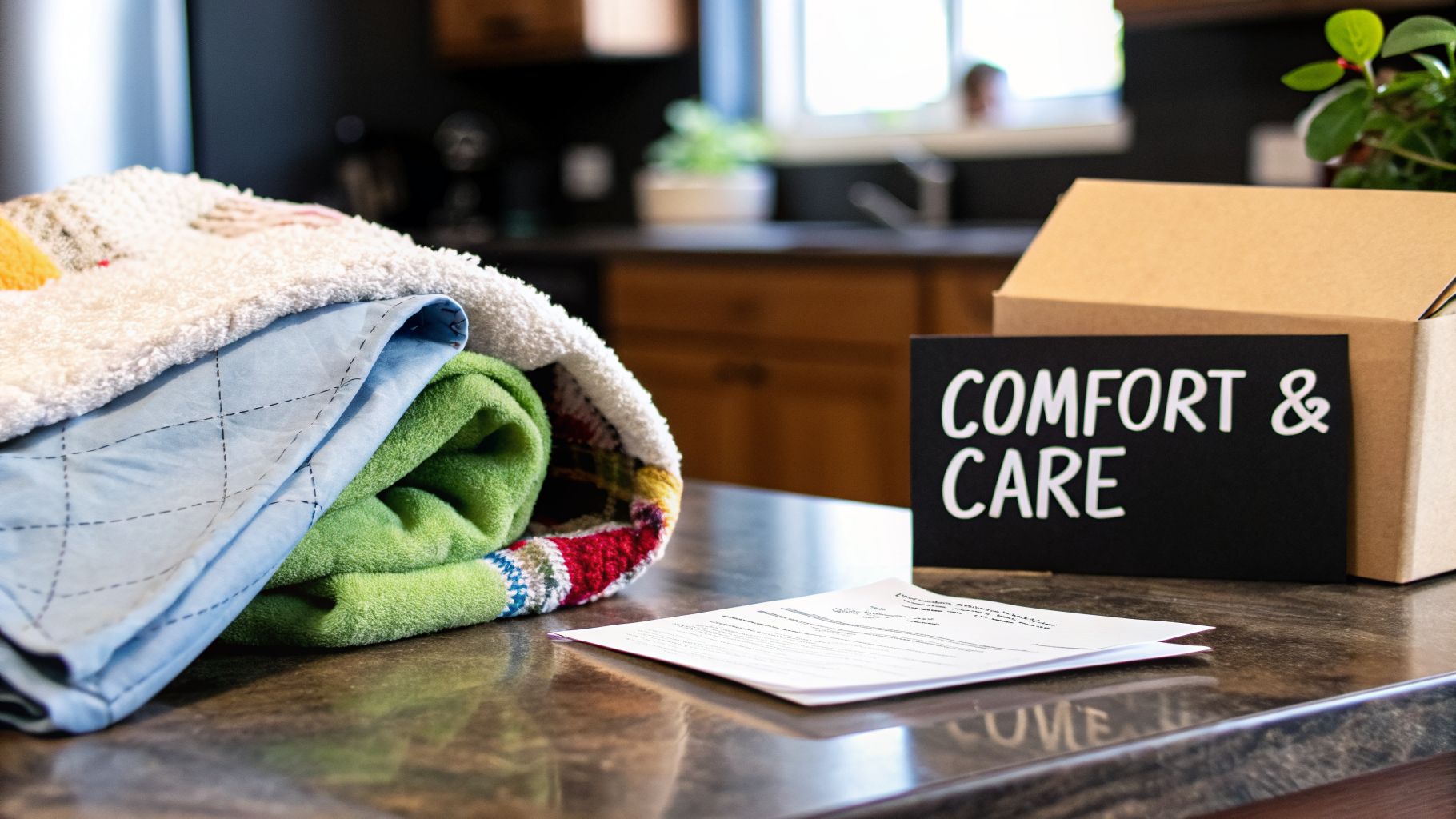
Cancer treatment is physically and emotionally draining. The days are often long, filled with hours at an infusion center, constant fatigue, and a whole host of uncomfortable side effects. A well-thought-out care package isn't just a collection of nice things; it's a lifeline. It’s a practical toolkit that can make a genuine difference in their day-to-day battle.
Think about it from their perspective. For someone sitting through a four-hour infusion, a soft blanket, a good lip balm for dry lips, or an engaging puzzle book can make the whole experience more tolerable. It shows you’ve thought about what they’re actually going through.
More Than Just a Gift
That support doesn't end at the clinic door. Back home, where the real work of recovery begins, those same items provide ongoing relief. Chemotherapy can bring on waves of nausea, bone-deep exhaustion, and incredibly sensitive skin. Having small comforts within arm's reach can be a game-changer on the toughest days.
If you're looking for ideas or a pre-made option, exploring specialized Get Well Gift Baskets can provide some great inspiration for supporting a loved one on their treatment journey.
A care package is a practical hug in a box. It communicates empathy and foresight, providing items that anticipate a patient’s needs before they even have to ask. It tells them they are seen and cared for during an incredibly isolating time.
Ultimately, these packages are a profound way to show up. They're a quiet acknowledgment of the immense challenges they're facing. If you’re searching for other ways to be there for them, our guide on how to help someone with cancer has more ideas.
Understanding What a Patient Truly Needs
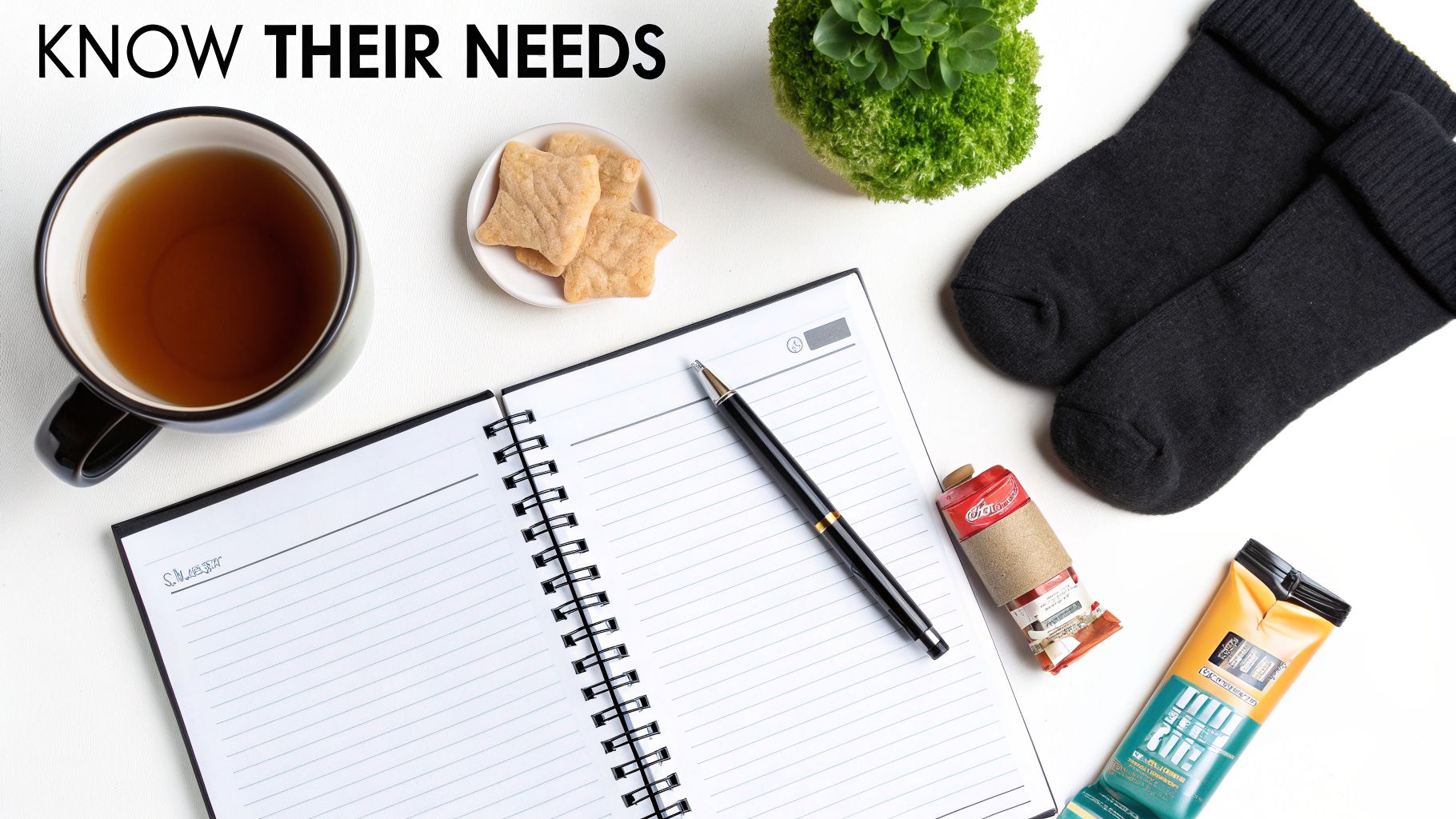
Before you even think about what to buy, the most important thing you can do is pause. The best care packages for chemo patients aren’t built from a generic shopping list; they start with empathy and a real understanding of what your loved one is going through.
Each person's journey with chemotherapy is different, but the side effects often create a similar set of daily challenges. Your goal is to give them something genuinely helpful and comforting, not just another item that adds to the clutter. Think practical relief.
Think Like an Expert: Match Items to Side Effects
Chemotherapy is tough on the body, and the side effects are more than just minor inconveniences. Knowing what to expect is the key to choosing items that will actually make a difference.
A great way to get started is by connecting common side effects to specific, helpful items. I’ve put together this quick-reference table based on years of seeing what works and what doesn’t for patients.
| Common Side Effect | Helpful Item Idea | Why It Helps |
|---|---|---|
| Fatigue | A subscription to an audiobook or streaming service | Offers low-effort entertainment for days when even holding a book feels like too much work. |
| Nausea & "Metal Mouth" | Ginger chews, peppermint tea, plastic utensils | Ginger and peppermint are natural nausea soothers. Plastic utensils help avoid the metallic taste that can make food unappealing. |
| Dry, Sensitive Skin | Fragrance-free, hypoallergenic lotion or balm | Chemo can make skin incredibly sensitive and dry. Up to 80% of patients experience some skin irritation, so gentle moisturizers are a must. |
| Feeling Cold | A plush, machine-washable blanket or fuzzy socks | Infusion centers are notoriously chilly, and feeling cold is a common side effect. A soft blanket provides warmth and a sense of security. |
| Mouth Sores | An extra-soft bristle toothbrush and mild toothpaste | Gums and the lining of the mouth can become very tender. A gentle toothbrush prevents further irritation during oral care. |
Think of this table as your starting point. It helps you move from "What should I get?" to "How can I help with this specific problem?"
How to Ask What They Need (Without Being a Bother)
The last thing you want to do is give a person going through chemo another task. A big, open-ended question like, "What do you need?" can be overwhelming.
Be specific and gentle. A simple text can work wonders: "Thinking of you as you get ready for your next treatment. I'm putting a little bag together—are there any snacks you can actually stand right now? Or are you getting really cold during infusions?" This gives them a concrete, low-pressure question to answer.
My Go-To Tip: If you can, check in with their primary caregiver or a close family member first. They’re on the front lines and often know exactly what’s needed. They can give you priceless intel like, "His lips have been super chapped," or "The only thing she can keep down is ginger ale and crackers." This gets you the information you need without bothering the patient.
Infusion Center Comfort vs. At-Home Recovery
It's smart to think about where your gift will be used. Needs are very different during a long day at the infusion center versus recovering at home.
For the Infusion Center (The Long Haul)
Think distraction and physical comfort. Those chairs get hard after a few hours.
- Entertainment is Key: A loaded tablet, a great book, or some puzzle books (crosswords are a classic for a reason).
- Creature Comforts: A soft, lightweight blanket is non-negotiable—infusion centers are always cold. A neck pillow and some warm, fuzzy socks are also fantastic.
- Easy-to-Handle Snacks: Think single-serving, sealed items. Crackers, pretzels, and a good reusable water bottle are perfect.
For At-Home Recovery (The Aftermath)
Here, the focus shifts to managing symptoms and promoting rest.
- Symptom Relief: This is where things like ginger tea for nausea, super-hydrating unscented lotion, and a high-quality lip balm shine.
- Rest & Relaxation: A weighted eye mask, gentle herbal teas like chamomile, or a ridiculously soft robe can make a rough day a little more bearable.
- Gentle Care: A soft-bristle toothbrush is a small thing that makes a huge difference when dealing with mouth sores, a very common side effect.
Knowing this distinction helps you build a package that’s useful from day one. Getting a handle on a patient's needs is also a huge part of helping them get ready for treatment, which you can learn more about in our guide on how to prepare for chemotherapy.
Choosing Safe and Genuinely Soothing Items
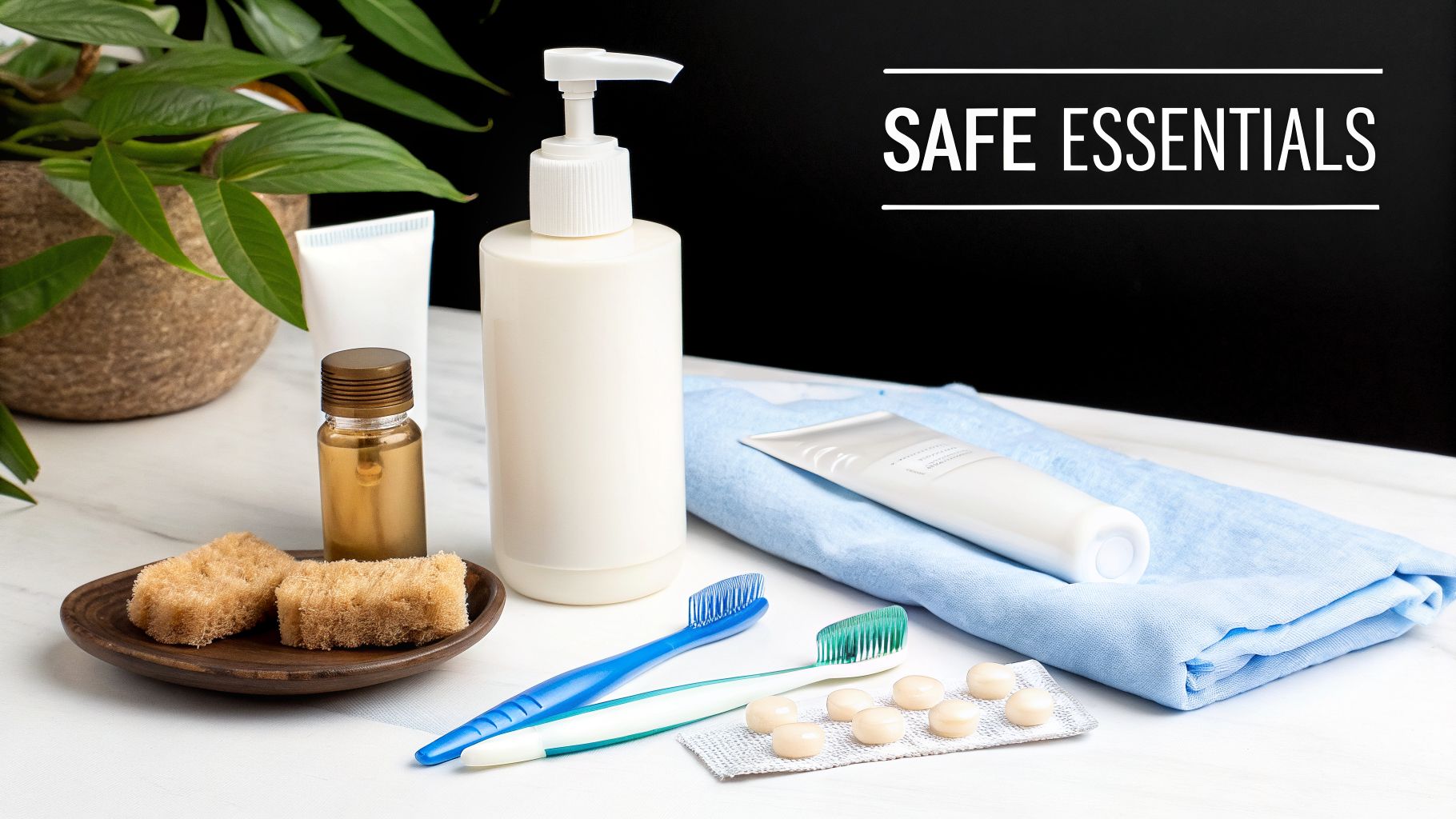
Once you have an idea of what they’re going through, you can start picking out items that are truly helpful and, above all, safe. The best care packages for chemo patients are filled with things that provide real relief without accidentally causing more problems. This means paying close attention to ingredients, scents, and even textures.
The whole point is to offer comfort, not complications. Chemotherapy puts the body on high alert, making it react to things it never used to. A favorite scented lotion can suddenly become a trigger for nausea, and a simple snack might be impossible to stomach because of taste changes.
Personal Care and Comfort First
Skin and mouth care become a huge deal during chemotherapy. The treatments can lead to severe dryness, new sensitivities, and painful mouth sores that make everyday habits feel like a chore. Picking the right products isn't just about feeling good; it’s about preventing infections and further irritation.
A good rule of thumb is to go with fragrance-free skincare for sensitive skin. During treatment, a person's senses are often heightened, and strong smells from perfumes or lotions can easily bring on a headache or a wave of nausea.
Here are a few items I’ve found to be absolute essentials:
- Ultra-Gentle Lip Balm: Chemo can wreck your lips, leaving them painfully cracked. Look for a heavy-duty, unscented balm with natural moisturizers like lanolin or shea butter.
- Rich, Unscented Moisturizer: A thick, creamy lotion for hands and feet is a lifesaver. Skin can become incredibly dry and fragile, so a good moisturizer provides much-needed relief and protection.
- Extra-Soft Bristle Toothbrush: Gums often become sore and inflamed, a condition called mucositis. A toothbrush with bristles soft enough for a baby is crucial for maintaining oral health without causing pain or bleeding.
These little things make a world of difference in someone's day-to-day comfort. They’re practical tools that directly tackle some of the most frustrating side effects of treatment.
Soothing and Safe Foods
Nausea, a metallic taste (often called "chemo mouth"), and a complete loss of appetite are massive hurdles. The right kinds of snacks can help someone get much-needed calories while managing these symptoms. Think bland, gentle, and easy on the stomach.
Steer clear of anything too spicy, acidic, or sugary, as these can aggravate mouth sores or an already sensitive gut. The goal is to find things that are comforting and don't require much effort to eat.
A few reliable choices always include:
- Ginger Chews or Tea: Ginger is famous for a reason—it’s a natural and effective way to fight nausea. Ginger chews are easy to carry and can quickly settle an uneasy stomach during an infusion.
- Plain Crackers or Pretzels: Sometimes, a simple, salty cracker is the only thing that sounds appealing. It can be just enough to get through a wave of nausea.
- Peppermint Tea: Much like ginger, peppermint is great for soothing an upset stomach. It’s also hydrating and gentle, making it a perfect, comforting drink.
A critical safety rule: Never include fresh fruit, flowers, or unpasteurized foods like some cheeses. A patient’s immune system is often compromised (neutropenia), making them extremely vulnerable to bacteria and fungi found on these items. Stick to commercially sealed, single-serving foods to be safe.
By choosing these items carefully, you’re not just giving food—you're offering a way to manage side effects and maintain nutrition. For a deeper dive, our guide on what to eat during chemotherapy has even more ideas.
Entertainment for the Long Hours
Infusion appointments can drag on for hours, and the quiet days at home can feel even longer, especially with crushing fatigue. This is where low-effort entertainment becomes an incredible gift. You want things that are easy to pick up and put down without a lot of mental heavy lifting.
Think about these ideas for distraction and a mental break:
- Puzzle Books: Crosswords, Sudoku, or word searches are fantastic for passing time. They offer a light mental distraction that isn't too taxing.
- An Audiobook or Podcast Subscription: When someone is too exhausted to hold a book or focus on a screen, listening to a great story or an engaging podcast is the perfect solution.
- A High-Quality Adult Coloring Book and Pencils: There's something incredibly meditative about coloring. The simple, repetitive motion can really help dial down the anxiety of a long wait at the clinic.
Many organizations have seen how much these items help. The National Breast Cancer Foundation's HOPE Kit Program, for example, delivers comfort items to thousands of patients. Other services like Balm Box focus on pillows, creams, and coloring books. Simple, practical gifts like heating pads and sleep masks are also frequently recommended by experts to combat the profound fatigue that affects up to 80% of patients. These thoughtful touches can make a real difference in someone’s ability to stick with their treatment plan.
Assembling and Delivering Your Care Package
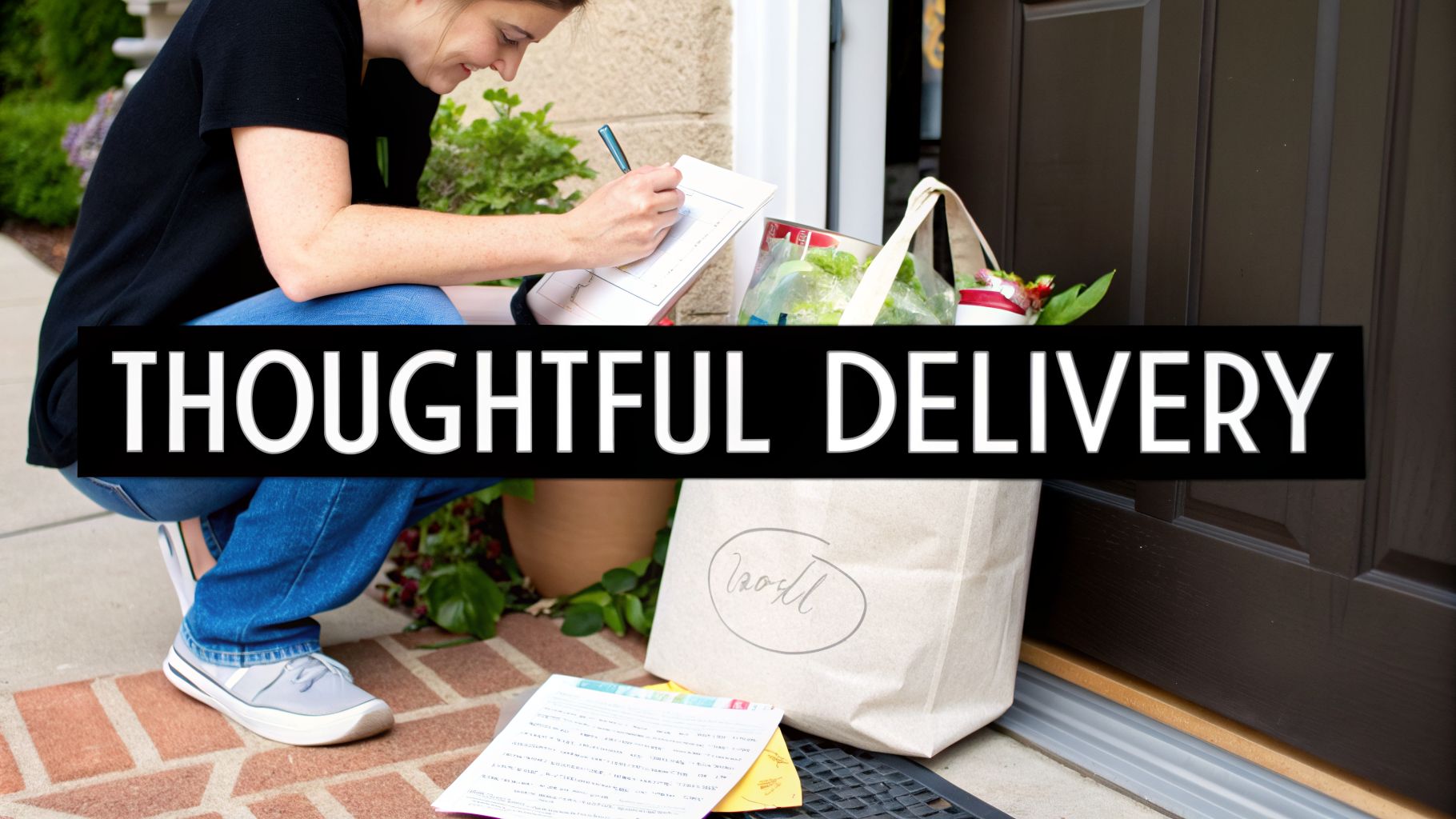
You’ve done the thoughtful work of gathering safe and soothing items. Now it’s time for the final touch—putting it all together and getting it to them. The way you present and deliver your gift is just as meaningful as what’s inside, turning a collection of helpful things into a true gesture of love and support.
How you package everything might seem like a small detail, but it really matters. A heavy, clunky box or a flimsy bag can be a hassle for someone already dealing with fatigue. From my experience, the best container is often a lightweight, open-top tote bag.
A good tote is easy to carry, doesn't require much strength to lift, and can be placed right on the floor next to an infusion chair. Even better, it’s reusable and can become their go-to "chemo bag" for future appointments.
Getting the Timing Right
When you give the gift can make a world of difference. It's natural to want to rush over with something right after a diagnosis, but that period is often a whirlwind of new information, fear, and endless appointments. A little patience goes a long way.
The most impactful time to deliver a care package is often after the first treatment session. By then, your friend or loved one has firsthand experience of the side effects and what an infusion day is actually like. Your package will feel incredibly insightful and perfectly timed.
Dropping it off just before their second session shows you're thinking about the long road ahead. It transforms your gift from a simple "thinking of you" sentiment into a practical toolkit for the journey.
Logistics: Local Drop-Offs vs. Long-Distance Shipping
Getting the package to them will, of course, depend on where you live. If you’re local, a personal drop-off is wonderful, but you have to be mindful of their energy and heightened risk of infection.
For Local Deliveries (like here in Brooklyn):
- Coordinate first. Always text the patient or their caregiver before you head over. A simple, "Thinking of you! I have a little something I can leave on your doorstep this afternoon if that's okay?" is perfect.
- Embrace the "porch drop." Never assume you'll be invited inside. A no-contact delivery is often the most considerate approach, protecting their compromised immune system and respecting their need to rest.
- Offer a specific errand. When you text, tack on a concrete offer of help. "I'll be near the grocery store when I drop the bag off—can I grab you some milk or anything else?" is much more helpful than a vague "Let me know if you need anything!"
If you live farther away, shipping is a fantastic way to send your love. Just be sure to seal any liquids in separate plastic bags to prevent spills and avoid sending anything perishable.
To help you keep track of everything, here's a sample checklist you can use as you gather your items.
Your Chemo Care Package Checklist
This template can help you plan and organize the perfect package. Remember to always check for patient-specific needs like allergies or dietary restrictions before making your final selections.
| Item Category | Suggested Items | Safety Note (e.g., Unscented, New) |
|---|---|---|
| Comfort | Soft blanket, fuzzy socks, warm beanie, comfortable slippers | New, machine-washable |
| Hydration | Insulated water bottle, herbal tea bags (peppermint, ginger), electrolyte powders | Check for medication interactions |
| Snacks | Bland crackers, hard candies, crystallized ginger, bland protein bars | Unopened, non-perishable |
| Skin & Lip Care | Unscented lotion, rich lip balm, gentle hand sanitizer | Unscented, hypoallergenic |
| Entertainment | Puzzle book (crossword, sudoku), journal & nice pen, light novel, tablet stand | New or thoroughly sanitized |
| Personal Touch | Handwritten note of encouragement | Heartfelt and genuine |
This checklist is just a starting point. The best packages are always personalized, showing you've been paying attention to what would bring them the most comfort.
The Most Important Item Isn't for Sale
Among all the cozy socks and soothing teas, the most vital part of any care package is something you can't buy: a handwritten note. In a world of fleeting texts and emails, taking a moment to write a personal message is an incredibly powerful way to connect.
Don't stress about finding the "perfect" words. Just be you. A few simple, heartfelt sentences can offer more comfort than you can imagine.
Try one of these if you're stuck:
- "Thinking of you and sending you so much strength for the days ahead."
- "I hope these little things bring you some comfort during treatment. We’re all cheering you on."
- "No need to reply, just wanted you to know I’m in your corner."
This personal touch is the emotional heart of your gift. It's a tangible reminder that they aren't alone, offering a dose of love and encouragement that will last long after the last snack is gone.
Of course. Here is the rewritten section, designed to sound completely human-written and natural.
Providing Meaningful Ongoing Support
That first care package you put together? It’s an incredible gesture, a real beacon of love and support. But cancer treatment isn't a single event; it's a marathon. As anyone who has gone through it will tell you, the journey is long and unpredictable. Real, lasting support comes from being there for the whole race, not just the starting line.
It's about recognizing that needs can change from one week to the next, sometimes even hour by hour. Ongoing support means checking in, listening, and adjusting what you offer to what's genuinely helpful right now. This is how a one-time gift becomes a true lifeline.
Moving Beyond the Initial Package
Once the first care package has been delivered and opened, the real work—and the real opportunity—begins. Your focus can shift from that one big gesture to smaller, more consistent acts of care that make a difference over the long haul. Think of it less like a gift and more like a subscription service for comfort.
For instance, they might mention offhand that a specific brand of ginger chews is the only thing touching their nausea, or that one particular unscented lotion doesn't irritate their skin. That's your cue. A small, surprise restock of these items shows you’re paying attention to the tiny details that make up their day-to-day comfort. It can be more meaningful than an entirely new, elaborate package.
Here are a few practical ways to keep the support flowing:
- Restock the Hits: Every so often, send a small top-up of the items they’ve been using most. This could be their go-to lip balm, a fresh box of their favorite herbal tea, or another puzzle book to pass the time.
- Give the Gift of a Hot Meal: Gift cards for services like DoorDash or Uber Eats are lifesavers. On days when the fatigue is just too much, being able to order food without cooking or asking for help is a massive relief.
- Offer to Run Practical Errands: A simple text—"Hey, I'm running to the store, need anything?" or "I'll be near the pharmacy later, can I grab your prescriptions?"—is a concrete offer that’s easy for them to accept.
Your presence, even from a distance, is often the most valuable gift. A simple text saying, "No need to reply, just thinking of you," can cut through the profound isolation that so often settles in during long-term treatment.
Helping with the Hidden Costs of Care
Beyond the obvious physical and emotional toll, cancer treatment brings a staggering financial weight. It's a constant, background hum of stress that friends and family may not even see. The costs for all those little comfort items—special lotions, organic broths, over-the-counter remedies—add up fast.
This is where your ongoing, practical support becomes even more powerful. When you restock their anti-nausea tea or send a grocery gift card, you’re directly covering an expense they would have faced. The financial burden of cancer care is no small thing; out-of-pocket costs can range from $180 to $2,600 a month in the U.S. To see just how deep this goes, you can read the full research about patient costs. Your thoughtful gestures help ease their side effects without adding to their financial worries.
Evolving Your Support as Their Needs Change
As treatment goes on, the challenges shift. The intense nausea of early chemo might fade, replaced by debilitating fatigue or painful skin sensitivity. Staying connected allows you to adapt what you’re offering to their current reality.
A great way to stay informed without overwhelming the patient is to check in with their primary caregiver. A quick, low-pressure message to their spouse, partner, or a close family member—something like, "Thinking of you both. Is there anything new that might bring some comfort these days?"—can give you the insight you need. It helps you ensure your support is exactly what’s needed, right when it’s needed most.
Common Questions About Chemo Care Packages
When you decide to put together a care package for someone going through chemo, a lot of questions can pop up. You want to give something that’s not just thoughtful, but genuinely helpful and, most importantly, safe. Getting those questions answered can give you the confidence to create a gift that truly makes a difference.
Let's walk through some of the most common things people ask, so you can assemble your package with care and certainty.
What Should You Not Put in a Chemo Care Package?
Knowing what to leave out is just as critical as knowing what to include. Even with the best intentions, some items can unfortunately cause more harm than good for someone with a compromised immune system.
The absolute number one thing to avoid? Anything with a strong scent. Chemotherapy can throw a person’s sense of smell into overdrive, making a normally pleasant fragrance a one-way ticket to nausea or a migraine. That means no scented lotions, perfumes, body sprays, or aromatic candles. Always, always go with unscented.
You also have to be very careful about infection risks. Avoid these items:
- Fresh flowers or live plants: They look beautiful, but the soil and water can harbor bacteria and mold. This is a serious risk for anyone who is neutropenic (has a very low white blood cell count).
- Homemade food (with caution): This one is tricky. Unless you've spoken directly with the patient or their primary caregiver and gotten an enthusiastic "yes," it's safer to stick to commercially sealed, single-serving snacks.
- High-effort gifts: Someone battling extreme fatigue doesn't have the energy for a complex gadget or a 1,000-piece puzzle. Simplicity is an act of kindness here.
Is a Gift Card Better Than a Physical Package?
This is a great question, and the honest answer is: it depends. Both are wonderful options, they just fulfill different needs.
A hand-picked care package is an incredibly personal, tangible expression of your love. It’s like sending a hug in a box, filled with things you personally chose to bring them comfort. It shows you’ve been thinking deeply about them.
On the other hand, a gift card provides flexibility and a sense of control, which can be just as powerful. A gift card for a food delivery service, an audiobook subscription, or even a local pharmacy lets them get exactly what they need, right when they need it. It's a perfect solution if you're worried about their specific sensitivities or ever-changing needs.
A fantastic compromise is to do both. Put together a small package with a few sure-fire essentials—like a ridiculously soft blanket and some unscented lip balm—and tuck in a gift card for them to use as they see fit. This offers the immediate comfort of a physical gift and the long-term flexibility of choice.
When Is the Best Time to Give a Care Package?
Your first instinct might be to rush a gift over right after the diagnosis. While well-intentioned, this period is often a whirlwind of appointments, information overload, and intense emotions.
From my experience, a much more impactful time is just after their first chemo session. By then, the reality of treatment has set in. They know what infusion day feels like and what side effects are starting to appear. A care package arriving at this moment feels less like a generic "get well" gift and more like a perfectly timed set of tools for the journey ahead.
Dropping it off a week or two into their treatment cycle is also a great strategy. This gives you the chance to tailor it to what they’re actually experiencing. If they’ve mentioned nausea, you can include ginger chews. If they've talked about the long, boring hours at the clinic, a new puzzle book or magazine subscription will be deeply appreciated.
Are There Good Pre-Made Care Packages to Buy?
Absolutely. If you’re short on time, live far away, or just want the peace of mind that comes from an expert-curated box, buying a pre-made package is a fantastic option.
Several thoughtful companies specialize in creating care packages for chemo patients. They've done all the research for you, ensuring every item is safe, soothing, and genuinely useful for someone in treatment. Brands like Rock the Treatment, Spoonful of Comfort, and Balm Box are known for their high-quality, patient-focused boxes that take the guesswork out of giving.
At Hirschfeld Oncology, we believe compassionate, well-rounded care is the cornerstone of any treatment plan. Dr. Hirschfeld and our entire team are committed to supporting patients through every step, combining advanced medical treatments with the practical guidance they need. If you or a loved one are looking for cancer care options in the New York City area, we invite you to learn more about our patient-centered approach and schedule a consultation by visiting our blog at https://honcology.com/blog.
.png)
.png)