


.png)


A 62-year-old patient has just learned that colorectal cancer has spread beyond the bowel. At the next appointment, the oncologist reviews the original pathology, a RAS report, a mismatch repair result, and a newer panel showing a possible receptor alteration. The patient wants treatment that controls the cancer without making daily life harder, but the right choice isn't found by matching one mutation to one drug.
Colorectal cancer targeted therapy is a decision framework. Tumor location, biomarker results, previous treatment, overall health, side-effect concerns, and personal goals all influence whether a targeted option makes sense. Molecular testing supplies the map, but clinical context determines the route.
Understanding the Targeted Therapy Decision
A patient with metastatic colorectal cancer may bring a biomarker report to the next appointment expecting one clear drug choice. The referring clinician must connect that result with other questions: Is the primary tumor on the left or right side of the colon? Has the patient already received oxaliplatin-, irinotecan-, anti-EGFR-, or anti-VEGF-based treatment? Could hypertension, heart disease, neuropathy, bowel symptoms, or another condition limit tolerance? Is the priority the strongest possible disease control, or preserving energy and independence?
These details change how a result is used. A RAS wild-type finding can support consideration of an EGFR inhibitor, while tumor sidedness and the planned treatment line still influence whether it is a good fit. A HER2 alteration can create a later-line option. A mismatch repair result may instead direct attention toward immunotherapy, not a small-molecule targeted drug.
Targeted therapy is a matching process
Colorectal cancer targeted therapy includes several treatment families. Some antibodies block receptors on cancer cells. Others disrupt signals that help tumors form blood vessels. Small-molecule inhibitors enter cells and suppress an abnormal pathway driver. Depending on the situation, treatment may be given alone or combined with chemotherapy, another targeted agent, or immunotherapy.
The field reached a formal milestone in 2004, when the U.S. FDA approved bevacizumab for colorectal cancer treatment. A review describes that period as one in which bevacizumab was the only FDA-approved first- and second-line VEGF-targeted agent for colorectal cancer, showing how recently this approach developed alongside standard chemotherapy (review of targeted therapy development).
Practical rule: A biomarker report answers what the tumor is sensitive to. It does not determine whether the treatment is safe, timely, affordable, or aligned with the patient's goals.
The same treatment history helps explain why care is no longer planned as though every colorectal tumor were identical. Population-level progress does not predict one person's response, so clinicians still weigh the biomarker against prior therapy, toxicity concerns, access, and the patient's treatment goals.
How Colorectal Cancer Targeted Therapy Works
A tumor may look like it is growing for one reason, yet its behavior can be driven by several molecular signals. Cancer cells use these systems to divide, survive, move, and recruit support from nearby tissue. Targeted drugs interrupt selected signals. The treatment question is whether this tumor relies on the pathway being blocked, and whether that option fits the patient's prior therapy, health, toxicity concerns, and goals.
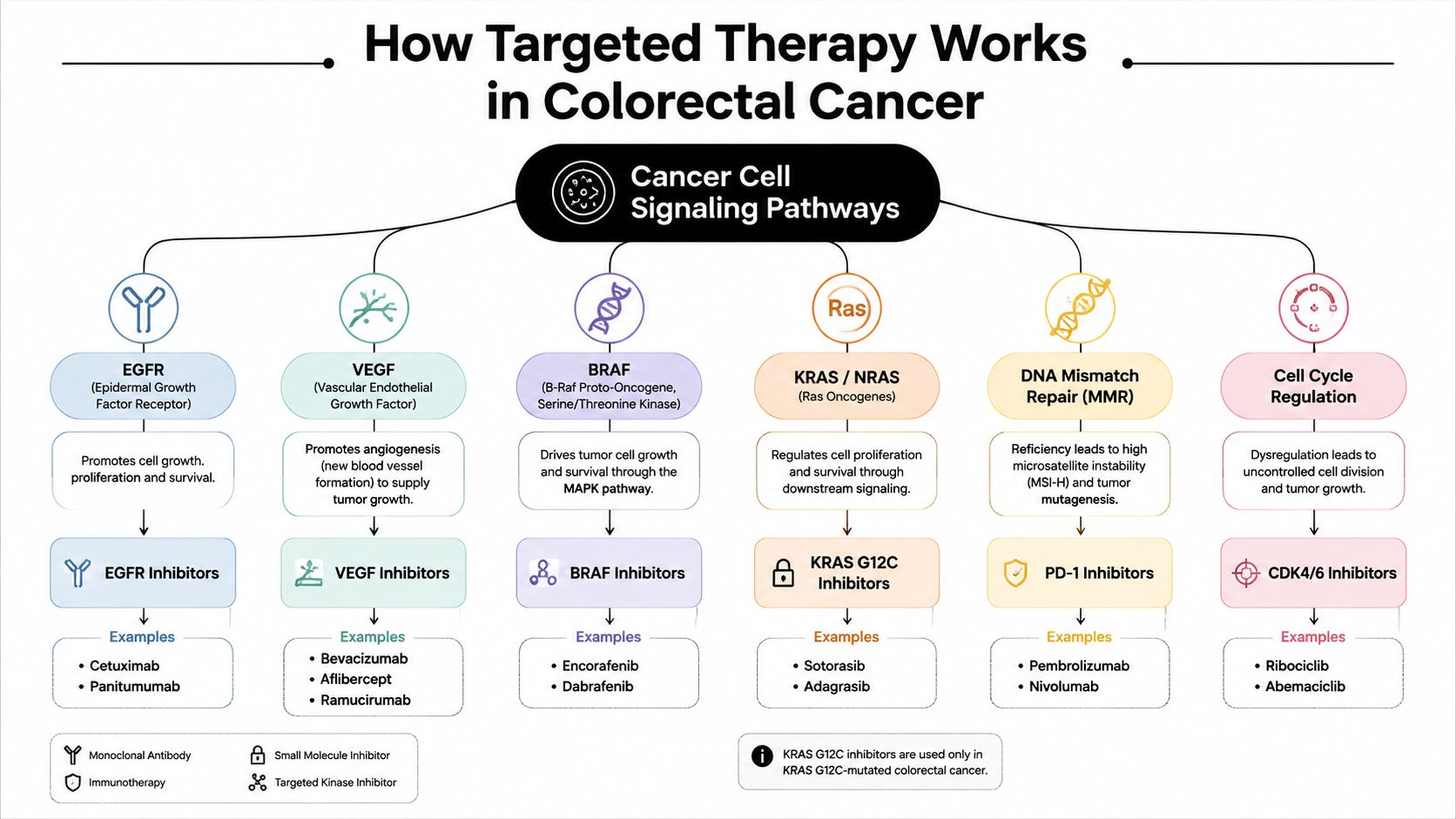
Receptors and growth signals
EGFR inhibitors, including cetuximab and panitumumab, attach to the epidermal growth factor receptor on the tumor-cell surface. Blocking the receptor can reduce growth signaling, much like closing an input valve. The result still depends on the pathway farther downstream. An activating RAS mutation may keep that pathway switched on after EGFR is blocked, limiting the expected benefit.
VEGF-directed drugs use a different approach. Bevacizumab, ramucirumab, and aflibercept interfere with signals that support new blood-vessel formation. Reducing that vascular support can make it harder for a tumor to sustain growth. These medicines do not target a tumor mutation in the same way as an EGFR or BRAF inhibitor, so treatment selection and monitoring follow different considerations, including bleeding, blood pressure, and other patient-specific risks.
Internal pathway drivers and amplified receptors
BRAF inhibitors, such as encorafenib, act on an abnormal internal signaling driver. In colorectal cancer with a BRAF V600E alteration, BRAF inhibition alone generally is not enough because the tumor can reactivate related signals. Combination treatment is used to suppress the pathway more completely, when the clinical setting and treatment history support it.
HER2-directed therapies, including trastuzumab-based regimens, focus on tumors with excess HER2 signaling. Tucatinib plus trastuzumab received accelerated FDA approval in January 2023 for HER2-positive advanced colorectal cancer. In the MOUNTAINEER trial, 38% of patients had tumors shrink or disappear, while 33% had stable disease for some time, according to the National Cancer Institute's report on the FDA approval. Since then, additional targeted agents have been approved, expanding options for metastatic colorectal cancer.
Rare NTRK gene fusions can make tumors responsive to TRK inhibitors such as larotrectinib or entrectinib. Basic colorectal cancer testing may not identify these fusions, so broader profiling can matter when common markers do not explain the disease's behavior.
Traditional chemotherapy affects many dividing cells, including cancer cells and some healthy cells that divide quickly. Immunotherapy helps immune cells recognize and attack cancer. Targeted therapy acts on a defined receptor, protein, or pathway, but it can still cause substantial side effects and does not guarantee selectivity in every tissue.
Biomarkers That Guide Treatment
A useful report doesn't merely list mutations. It should help the oncology team decide whether a drug is biologically plausible, which treatment line fits, and what other clinical features could strengthen or weaken the case.
| Biomarker | Frequency/Setting | Treatment Implication |
|---|---|---|
| KRAS or NRAS | Metastatic disease assessment, including relevant activating variants | RAS-mutant tumors generally don't benefit from EGFR blockade because downstream MAPK signaling remains active. |
| BRAF V600E | A defined molecular subgroup of metastatic colorectal cancer | Supports a BRAF-directed combination strategy rather than single-agent EGFR treatment. |
| HER2 amplification or overexpression | Often considered in advanced, treatment-exposed disease | May support HER2-directed therapy, including tucatinib plus trastuzumab in the appropriate setting. |
| MSI-high or dMMR | A tumor biology finding identified through mismatch repair testing | Opens the door to checkpoint immunotherapy, rather than automatically indicating a targeted small molecule. |
| NTRK fusion | Rare, potentially tumor-agnostic alteration | May support a TRK inhibitor when the result is confirmed and clinically appropriate. |
| RET alteration | Rare or emerging biomarker subgroup | Can create a clinical-trial or biomarker-specific treatment question, depending on the alteration and approval context. |
| KRAS G12C | A specific KRAS-mutant subgroup | May support a KRAS G12C-directed regimen, such as adagrasib plus cetuximab in the appropriate setting. |
| Tumor sidedness | Left-sided versus right-sided primary tumor | A non-molecular factor that strongly influences how clinicians evaluate anti-EGFR combinations. |
RAS and BRAF shape EGFR decisions
Cetuximab and panitumumab are most effective in metastatic tumors that are RAS wild-type and BRAF wild-type, particularly when the cancer is microsatellite stable and began on the left side of the colon. RAS-mutant tumors generally don't benefit from EGFR blockade because the downstream MAPK pathway remains active regardless of receptor inhibition, as summarized in this review of anti-EGFR treatment selection.
BRAF V600E is a different problem. It identifies a pathway driver that calls for a combination approach, not solely an EGFR antibody by itself. The oncologist must also consider prior treatment, disease tempo, symptoms, and whether the patient can tolerate the proposed combination.
Rare alterations need careful interpretation
HER2 amplification has become increasingly relevant in advanced disease, especially when standard options have been used. The laboratory method, amplification level, and clinical context can influence whether a result is considered actionable.
MSI-high and dMMR findings are often confused with conventional targeted markers. They indicate a vulnerability to immune checkpoint treatment, so the result changes the treatment category rather than pointing to a receptor inhibitor. Rare findings such as NTRK fusions, RET alterations, and KRAS G12C require confirmation, review of the exact variant, and attention to the treatment setting.
Patients and families may find it useful to review how inherited and tumor testing differ in this guide to the advantages of genetic testing. Tumor profiling guides treatment for the cancer, while germline testing can address inherited risk and family implications.
Testing and Treatment Eligibility
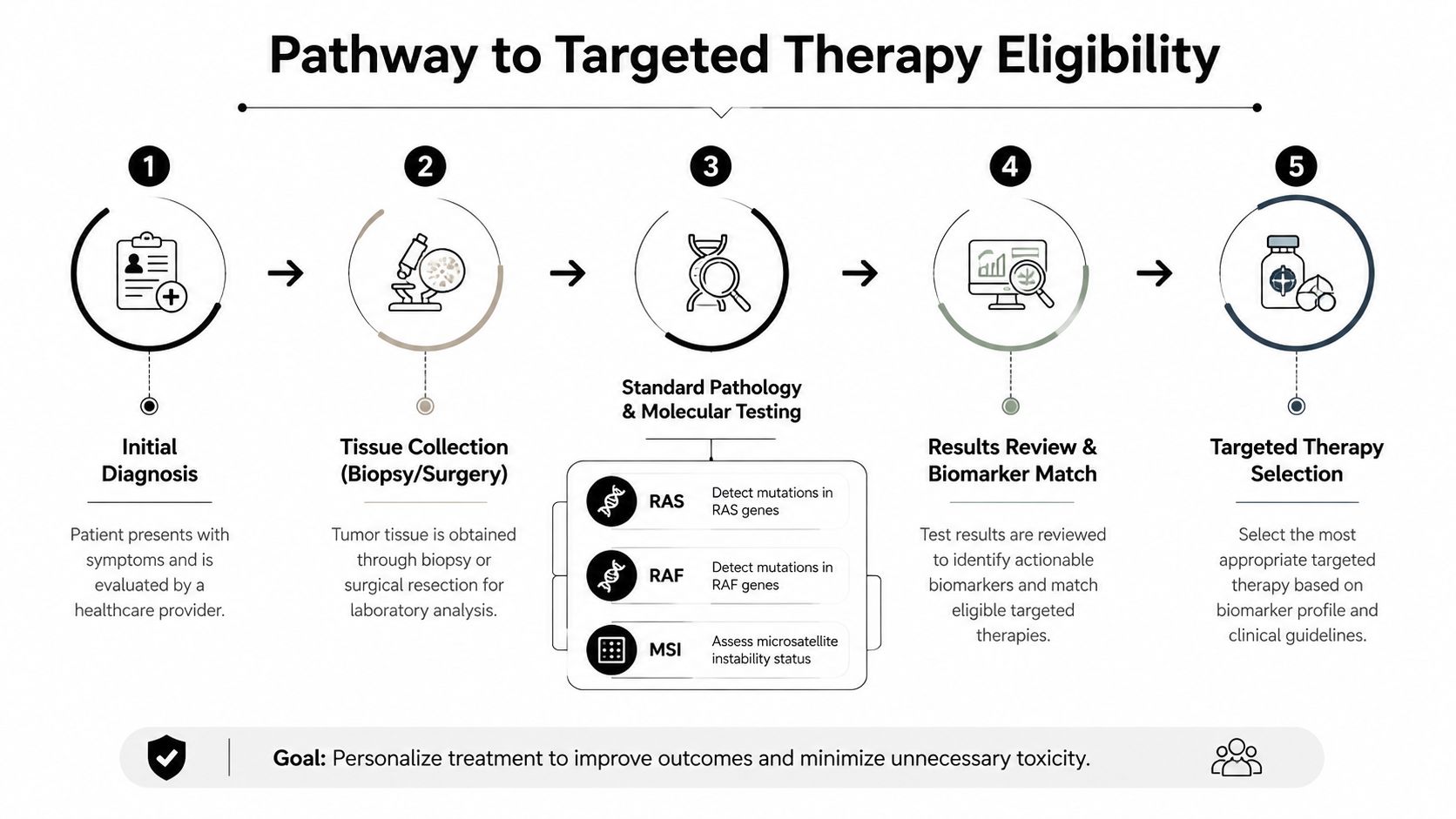
Testing begins with the available cancer tissue, usually from a biopsy or surgical specimen. The pathology team confirms the diagnosis, while molecular laboratories examine features that may influence treatment. Testing isn't a single event. It's a sequence of assessments that should produce information in time for clinical decisions.
The initial testing pathway
Mismatch repair status is commonly assessed with immunohistochemistry, which looks for the presence or loss of key repair proteins. Microsatellite testing may provide a complementary view. A next-generation sequencing panel can evaluate RAS and BRAF alterations and may include HER2, NTRK, RET, and other genes, depending on the panel's scope.
Liquid biopsy can help when tissue is limited or when the team wants a current view of circulating tumor DNA. It doesn't replace tissue testing in every situation, and a negative liquid result may reflect low tumor shedding rather than the absence of an alteration.
Results require clinical interpretation
A molecular tumor board can be valuable when a report identifies a rare fusion, multiple co-mutations, or a finding with limited evidence in colorectal cancer. The group may include medical oncology, pathology, surgery, radiology, and genomics specialists. Their role is not just to find a drug name. They weigh evidence, approvals, trial options, interactions, and the patient's condition.
Testing should generally be ordered before first-line treatment decisions whenever possible. Retesting at progression can also be reasonable because metastatic tumors may evolve under treatment pressure. A new biopsy or liquid biopsy may reveal an acquired resistance alteration or a target that wasn't detectable earlier.
Eligibility also depends on factors outside the report:
- Tumor location: Left-sided and right-sided cancers may lead to different anti-EGFR considerations.
- Previous treatment: Prior exposure can affect whether a drug remains useful or whether resistance is likely.
- Performance status: Daily function and recovery capacity help determine treatment intensity.
- Comorbidities: Blood pressure, heart function, kidney issues, neuropathy, and other conditions affect monitoring and safety.
- Logistics: Turnaround time, insurance preauthorization, laboratory capability, and travel can determine whether a theoretically suitable regimen is practical.
When a local panel is incomplete, the oncology team may send stored tissue or a blood sample to a reference laboratory. The most useful test is the one that answers the treatment question before the next decision is due.
Benefits, Side Effects, and Sequencing
A targeted treatment is useful only when its expected benefit fits the tumor's biology and the patient's situation. Clinicians weigh the biomarker result alongside tumor location, prior therapy, treatment goals, likely toxicity, and access to monitoring. The same alteration can therefore lead to different choices for two patients.
For example, a regimen intended to shrink a symptomatic tumor may be favored over a slower disease-control approach when rapid relief matters. If a patient already has troublesome neuropathy, diarrhea, high blood pressure, or heart disease, those risks can influence which treatment is practical. A response can be meaningful, but it may not last, and resistance can emerge as cancer cells adapt.
| Drug Class | Typical Benefit | Key Side Effects | Monitoring Needs |
|---|---|---|---|
| EGFR inhibitors | Can provide tumor control or shrinkage in appropriately selected RAS wild-type disease | Acne-like rash, skin sensitivity, diarrhea, infusion reactions | Skin care, electrolyte review, diarrhea assessment, infusion monitoring |
| VEGF-directed therapy | Supports disease control through anti-angiogenic activity | Hypertension, proteinuria, bleeding or clotting concerns, wound-healing issues | Blood pressure, urine protein, bleeding risk, surgical timing |
| BRAF combinations | Addresses BRAF V600E pathway dependence through combination treatment | Fever, fatigue, arthralgias, skin and gastrointestinal effects | Temperature, liver tests, drug interactions, symptom review |
| HER2-directed regimens | Can produce responses in HER2-positive advanced disease | Infusion effects, diarrhea or fatigue, possible cardiac concerns | Cardiac function, infusion tolerance, gastrointestinal symptoms |
| KRAS G12C-directed regimens | Offers a treatment route for a specific KRAS alteration | Gastrointestinal, liver, skin, and treatment-specific effects | Liver tests, medication review, symptom monitoring |
Sequencing is a clinical judgment
A patient with left-sided, RAS wild-type disease may be considered for an anti-EGFR combination when tumor shrinkage is a priority and skin toxicity is manageable. Another patient with poorly controlled blood pressure may need a cautious discussion about VEGF-directed treatment. A person with MSI-high or dMMR disease may have immunotherapy as a central option, rather than following the same sequence used for microsatellite-stable disease.
The treatment sequence can change after progression. Resistance may reflect several tumor populations, bypass signaling, co-dominant drivers, lineage plasticity, or epithelial-to-mesenchymal transition. A review of recent colorectal cancer targeted-therapy research describes the balance between combination strategies, added toxicity, cost, and access.
Treatment holidays, maintenance therapy, or rechallenge may be discussed when a previous drug controlled the cancer but was stopped because of toxicity or progression. The decision depends on the duration of control, suspected resistance mechanisms, current symptoms, and available alternatives. A treatment holiday may reduce treatment burden, yet it also requires a plan for surveillance and restarting therapy if the disease changes.
Chemotherapy may remain part of the plan, either before a targeted agent, with it, or after resistance develops. Patients can review this guide to chemotherapy drugs for colon cancer for a plain-language explanation of how chemotherapy medicines may fit alongside targeted treatment.
Common Misconceptions and Clinical Trials
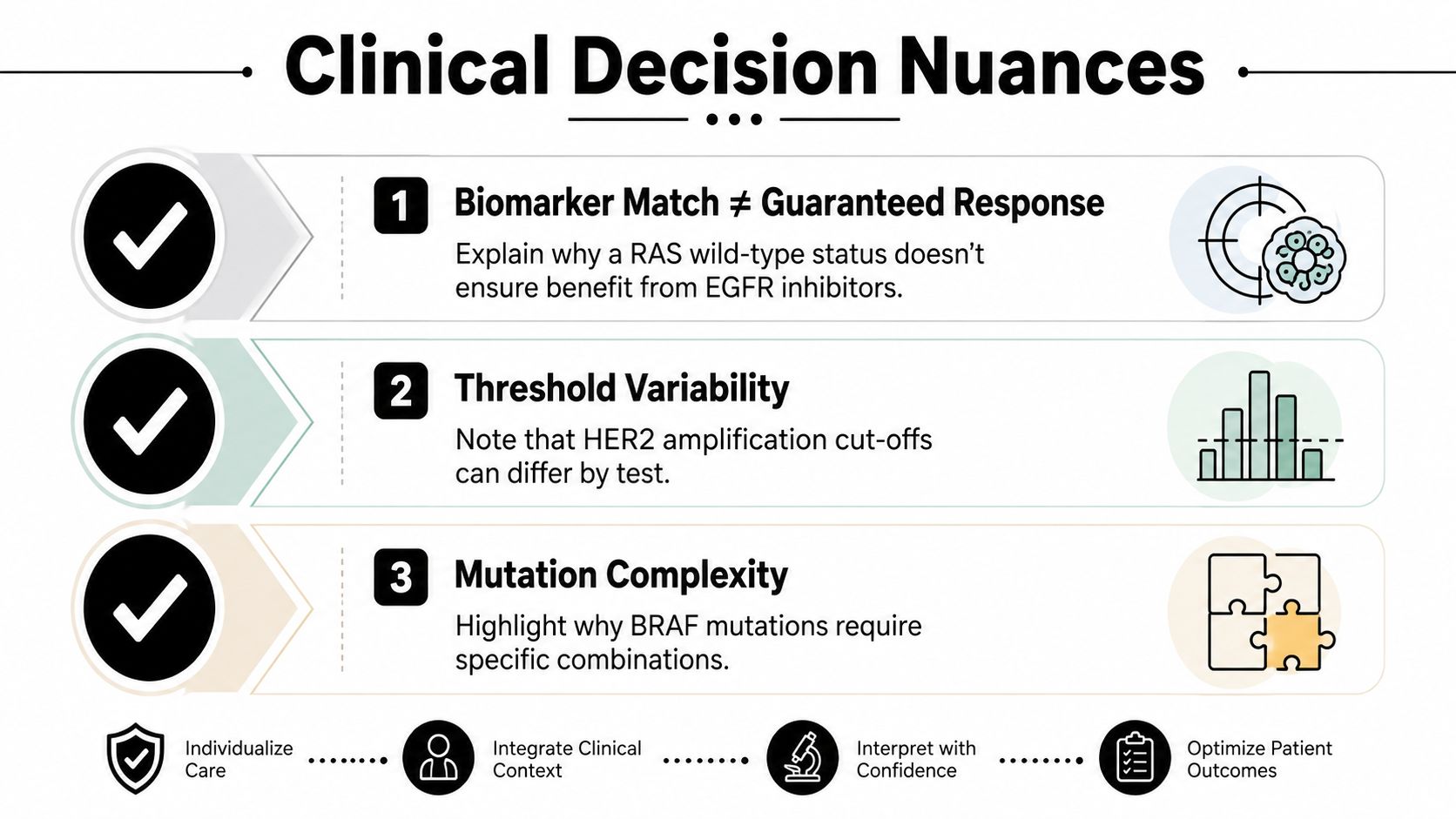
A biomarker match is a starting point, not a promise. RAS wild-type status supports an EGFR discussion, but it doesn't ensure benefit. Tumor sidedness, BRAF status, pathway activity, prior treatment, and the presence of other tumor clones can all affect the result.
HER2 testing creates another source of confusion. Amplification or overexpression thresholds can vary by assay and interpretation rules, so a borderline report may need pathology review rather than an immediate treatment decision. BRAF V600E disease also shouldn't be approached as though BRAF monotherapy were sufficient. The pathway often requires a combination strategy because the cancer can reactivate signaling through related routes.
Immunotherapy isn't interchangeable with targeted therapy
MSI-high or dMMR tumors may respond to checkpoint inhibitors because their repair-deficient biology can make them more visible to the immune system. That doesn't mean immunotherapy will work for every colorectal cancer. Microsatellite-stable disease generally requires a different treatment discussion, often involving chemotherapy, targeted agents, or a clinical trial rather than assuming that a checkpoint inhibitor will help.
Acquired resistance can also change the picture. A previously sensitive tumor may develop secondary alterations or expand a resistant KRAS-containing clone. When the disease progresses, repeat molecular testing can sometimes clarify whether the original target remains present or whether a new treatment question has emerged.
Trials belong in the treatment conversation
Clinical trials aren't only a last resort. They may provide access to a new inhibitor, a combination intended to overcome resistance, or a strategy for a rare alteration that lacks an established standard. Eligibility may depend on prior treatment lines, measurable disease, organ function, performance status, biomarker confirmation, and other protocol requirements.
A trial can still be unsuitable if travel is difficult, appointments conflict with work or caregiving, insurance coverage is unclear, or the monitoring burden doesn't match the patient's priorities. Referral networks and molecular tumor boards can help identify studies, but the final decision should weigh scientific rationale against the patient's daily reality. Patients can explore questions to ask in this colorectal cancer clinical trials guide.
Planning Care With Hirschfeld Oncology
Targeted therapy discussions work best when they begin with two clear questions: What does the tumor testing need to answer, and what treatment decision is coming next? Hirschfeld Oncology coordinates tissue and liquid biopsy ordering, panel selection for RAS and BRAF, MSI or dMMR, HER2, NTRK, and related findings, along with expectations for result timing.
A multidisciplinary review can bring medical oncology, surgical oncology, pathology, and genomics together to consider resectability, tumor sidedness, previous treatment, comorbidities, and patient goals. The resulting plan may combine targeted therapy with chemotherapy, immunotherapy, surgery, or a clinical trial.
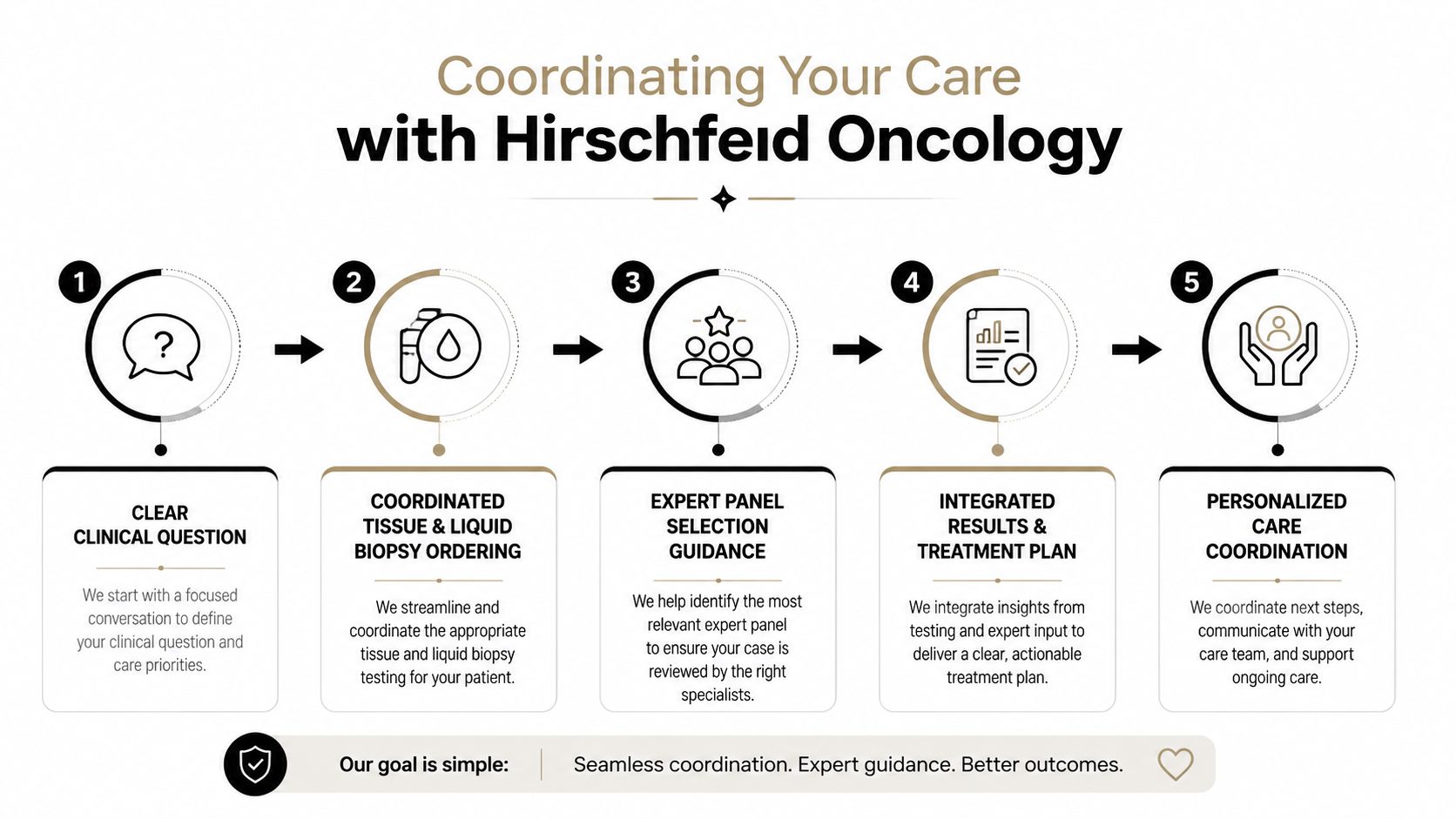
The team also reviews trial eligibility, supports second opinions, and helps patients understand coverage, prior authorization, and financial-navigation issues. Referring clinicians can receive structured molecular summaries and treatment updates, which helps keep pathology, genomics, and oncology decisions aligned.
Key Takeaways for Patients and Referrers
Colorectal cancer targeted therapy is matched to tumor biology, not the cancer name alone. RAS, BRAF, MSI or dMMR, HER2, NTRK, and emerging alterations can redirect treatment, while tumor sidedness, previous therapy, health status, toxicity concerns, and goals determine practical eligibility. Responses can be meaningful but may not last, so treatment planning should anticipate resistance and include chemotherapy, immunotherapy, surgery, or clinical trials when appropriate. Coordinated testing and multidisciplinary review keep molecular results actionable.
Hirschfeld Oncology helps coordinate biomarker testing, treatment review, clinical-trial evaluation, and individualized care planning for complex colorectal cancer. Visit Hirschfeld Oncology to review available cancer-care resources and request a consultation about your next treatment decision.
.png)
.png)






