


.png)


You've just finished a first-line cancer treatment, and the scan shows a mixed result. One area has shrunk, but another remains active. Your oncologist pauses, reviews the imaging, and explains that the next plan may involve two or more medicines. That conversation can feel like a setback, even when the goal is to preserve the response you've already achieved.
Combination therapy cancer treatment isn't merely “more medicine.” It's a deliberate attempt to address the ways cancer survives, adapts, and spreads. The right combination may attack separate weaknesses, make a tumor more visible to the immune system, or block a resistance pathway that allowed the disease to continue growing. The wrong combination can add side effects without adding enough benefit.
The key questions are practical: Why these drugs? Why now? What evidence supports them? How will benefit and toxicity be measured? Those questions matter especially for people with advanced or treatment-resistant cancer receiving care in an outpatient infusion center.
When One Drug Is Not Enough
After a single-agent treatment, a scan may show partial response. The tumor has become smaller, but it hasn't disappeared, and some cancer cells remain active. Your oncologist may explain that continuing the same drug could allow those surviving cells to recover, so the discussion shifts toward a multi-drug plan.
That pivot can bring conflicting emotions. You may feel relieved that another option exists, while also wondering whether adding treatment means the cancer is worsening or whether your body can tolerate the next step. Both concerns are reasonable. The purpose of combination therapy is to make the treatment more difficult for cancer cells to escape, not to intensify treatment automatically.
Why resistance changes the plan
Cancer isn't a single, uniform mass. Different cells within the same tumor can carry different biological features. A drug may eliminate cells that depend on one pathway while leaving cells that use another route to grow. Over time, those surviving cells can become the dominant population.
A single drug is like blocking one exit from a building. If the cancer can use another exit, the disease may continue. A combination may close several routes at once, or use one treatment to expose the tumor before a second treatment delivers a different attack.
A treatment change isn't always a sign that the first treatment was a mistake. Sometimes it reflects what the tumor's response has taught the oncology team.
Combination treatment has been a foundation of cancer care for decades. In an NCI-funded trial involving a molecularly defined subgroup of anaplastic oligodendroglioma, patients with favorable 1p/19q chromosomal deletions who received PCV chemotherapy plus radiation had a median survival of 14.7 years, compared with 7.3 years for radiation alone, according to the long-term neuro-oncology trial report. The tumors represented less than 10% of brain and central nervous system cancers, yet the combined approach produced one of the clearest long-term survival differences in that setting.
That history also teaches an important lesson. Combination therapy works best when clinicians understand which treatments complement each other, which patients are likely to benefit, and how much toxicity the person can accept.
What Combination Therapy Actually Means
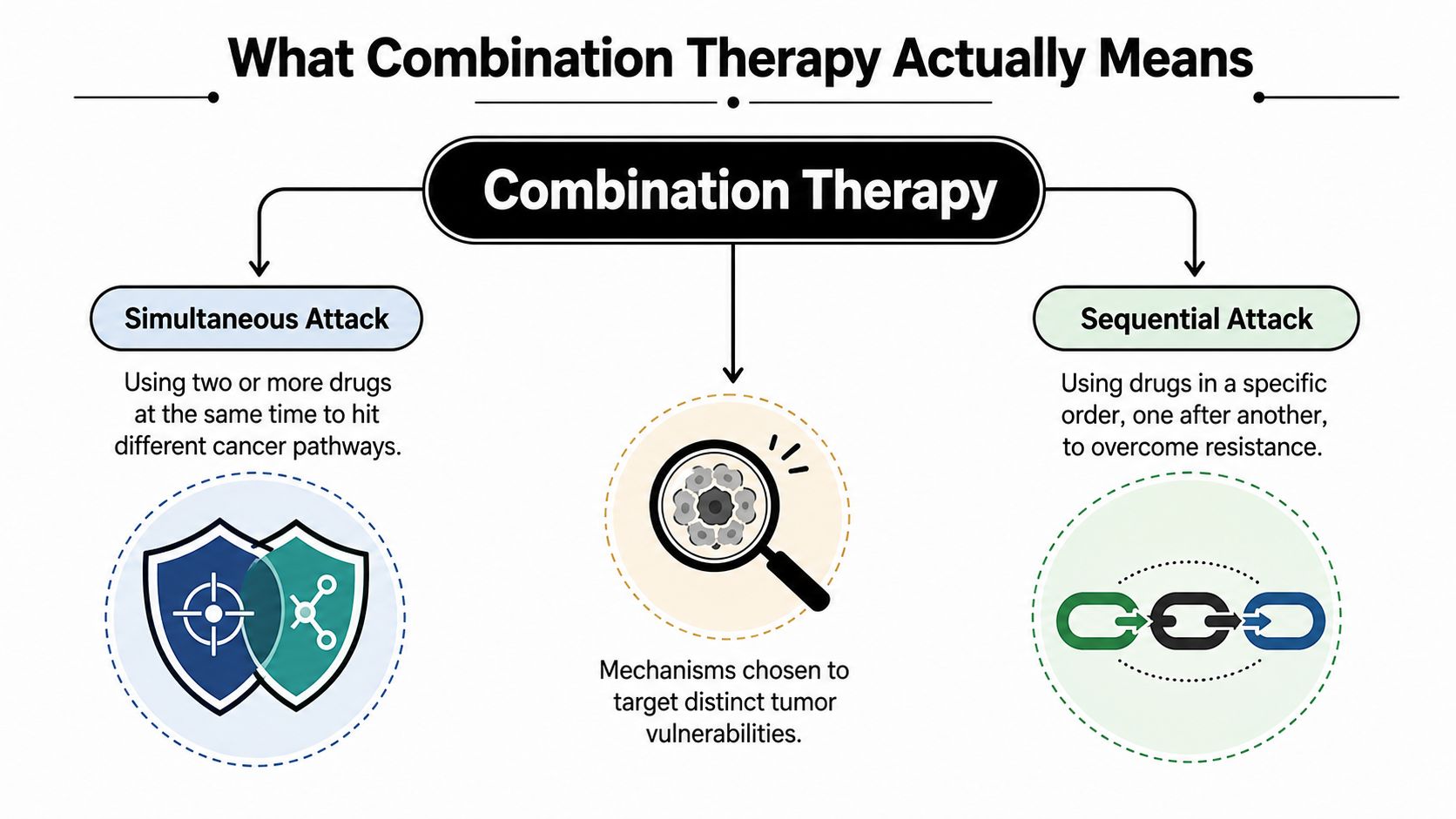
Combination therapy means using two or more anticancer treatments in a planned way. The drugs may work at the same time, or the oncology team may give them in a specific sequence. The choice should reflect tumor biology, treatment goals, previous response, and the safety profile of each medicine.
Think of a house fire. Water from above may reduce the flames, while another team cuts off the fuel feeding the fire below. Using both approaches can be more effective than repeatedly spraying water at one part of the blaze. In cancer care, one drug may damage tumor cells, while another blocks a growth signal, activates immune recognition, or prevents repair.
The main patterns
Chemotherapy plus immunotherapy: Chemotherapy can damage cancer cells and release tumor material that helps the immune system recognize the disease. An immune checkpoint inhibitor can then remove inhibitory signals that restrain T cells.
Targeted therapy plus chemotherapy: A targeted medicine interferes with a specific molecular driver or delivers treatment directly to cells carrying a relevant feature, while chemotherapy attacks through a broader mechanism.
Dual immunotherapy: Two immune medicines may block complementary immune “brakes.” This can strengthen immune activity, but it can also increase immune-related toxicity.
Low-dose or metronomic strategies: Instead of using the highest possible dose at widely spaced intervals, clinicians may use chemotherapy continuously or frequently at lower doses. The intent may include affecting tumor blood vessels and the surrounding immune environment, not only directly killing rapidly dividing cells.
Rational versus merely additive
A rational combination has a biological reason behind it. The first drug may make the second more effective, or each drug may address a different resistance mechanism without creating unnecessary overlap. A merely additive regimen puts medicines together because each has some activity, without strong evidence that the pairing improves the overall balance of benefit and harm.
That distinction affects everything from molecular testing to infusion scheduling. The following strategies show how the reasoning works in practice.
Common Combinations and How They Work
Combination regimens differ by cancer type because tumors use different growth signals and interact with the immune system in different ways. A pairing that makes sense in lung cancer may have little value in another tumor, even if the same drug classes are available.
Chemotherapy with immunotherapy
Some chemotherapy drugs can increase the release and presentation of tumor antigens, meaning fragments of cancer that immune cells can recognize. They may also alter an immunosuppressive tumor environment. An immune checkpoint inhibitor can take advantage of that change by helping T cells respond more effectively.
Pembrolizumab plus platinum-doublet chemotherapy in KEYNOTE-189 provides a major example in non-small cell lung cancer. The combination produced an overall survival hazard ratio of 0.49, with a 95% confidence interval of 0.38 to 0.64, compared with chemotherapy alone, as described in the review of immunotherapy and chemotherapy combinations.
Targeted treatment with chemotherapy
Targeted therapy may block a driver mutation, interfere with a receptor, or deliver a toxic payload to a cell carrying a particular marker. In urothelial cancer, enfortumab vedotin is an antibody-drug conjugate, a treatment that uses an antibody to guide a drug payload toward cancer cells. Its combination with pembrolizumab is an example of pairing targeted delivery with immune activation.
Dual immunotherapy
Two checkpoint inhibitors can affect different immune regulatory pathways. Nivolumab and ipilimumab are widely recognized examples of this strategy in settings such as melanoma and renal cell carcinoma. The potential advantage is a broader immune response. The trade-off is that immune activation can affect normal organs, so monitoring and early symptom reporting are essential.
Low-dose metronomic treatment
Metronomic therapy uses a lower-dose, ongoing or frequent schedule rather than relying only on intermittent high-dose treatment. The approach may influence tumor blood-vessel formation and immune regulation. It requires careful planning because the best schedule depends on the drugs, cancer type, prior treatment, blood counts, organ function, and the patient's daily life.
| Strategy | Core mechanism | Typical tumor types | Example regimen |
|---|---|---|---|
| Chemotherapy plus immunotherapy | Tumor injury and antigen release paired with checkpoint blockade | Lung and other advanced solid tumors | Pembrolizumab plus platinum-doublet chemotherapy |
| Targeted therapy plus immunotherapy | Direct molecular or antibody-drug-conjugate activity paired with immune activation | Urothelial and biomarker-defined cancers | Enfortumab vedotin plus pembrolizumab |
| Dual immunotherapy | Complementary immune checkpoint inhibition | Melanoma and renal cell carcinoma | Nivolumab plus ipilimumab |
| Metronomic combination therapy | Ongoing lower-dose exposure affecting tumor cells, vessels, and immunity | Selected advanced cancers | Low-dose chemotherapy combinations |
For a patient-friendly explanation of how immune and molecular treatments differ, review this guide to immunotherapy and targeted therapy.
What the Evidence Actually Shows
The evidence supports combination therapy in selected situations, but the results aren't uniform across every cancer or every patient. Clinical trials compare a defined regimen with a control treatment, then measure outcomes such as overall survival, progression-free survival, and objective response.
A systematic review and meta-analysis of 13 clinical trials involving 2,532 patients found that combination immune checkpoint inhibitor therapy performed better than ICI monotherapy. The combination had an overall survival hazard ratio of 0.86, a progression-free survival hazard ratio of 0.79, and an objective response rate relative risk of 1.91, according to the published meta-analysis. These measures describe relative differences across the analyzed trials, not a guarantee for an individual patient.
Three examples that shaped practice
KEYNOTE-189 demonstrated the value of combining pembrolizumab with platinum-based chemotherapy in metastatic non-small cell lung cancer. The regimen's overall survival advantage versus chemotherapy alone had a hazard ratio of 0.49, as reported in the earlier evidence discussion.
EV-302, also called KEYNOTE-A39, examined enfortumab vedotin plus pembrolizumab in advanced urothelial cancer. Median overall survival was 31.5 months with the combination versus 16.1 months with standard chemotherapy. Median progression-free survival was 12.5 months versus 6.3 months, respectively, in the trial evidence summarized in the oncology literature.
The older PCV and radiation experience in anaplastic oligodendroglioma adds a different perspective. Its importance lies in the long-term survival difference within a molecularly selected group, rather than in applying that exact regimen to every brain tumor.
| Trial or evidence set | Combination | Cancer type | Median OS versus control |
|---|---|---|---|
| NCI-funded long-term trial | PCV plus radiation | Favorable 1p/19q anaplastic oligodendroglioma | 14.7 years versus 7.3 years |
| EV-302/KEYNOTE-A39 | Enfortumab vedotin plus pembrolizumab | Advanced urothelial cancer | 31.5 months versus 16.1 months |
| Checkpoint inhibitor meta-analysis | Combination ICI therapy | Multiple cancer settings | Overall survival hazard ratio 0.86 versus ICI alone |
Oncologists also examine whether a treatment helps patients live longer without unacceptable loss of function. Progression-free survival can show how long disease remains controlled, while response rate describes how often tumors shrink. Quality of life and treatment burden belong in the decision even when a trial's primary endpoint is survival.
When More Drugs Do Not Mean More Survival
At an outpatient infusion center, a stage 4 patient may hear that two or three medicines could attack the cancer from different directions. That can sound like adding more tools to a toolbox. The tools help only when they address a specific weakness in the tumor and can be used safely together.
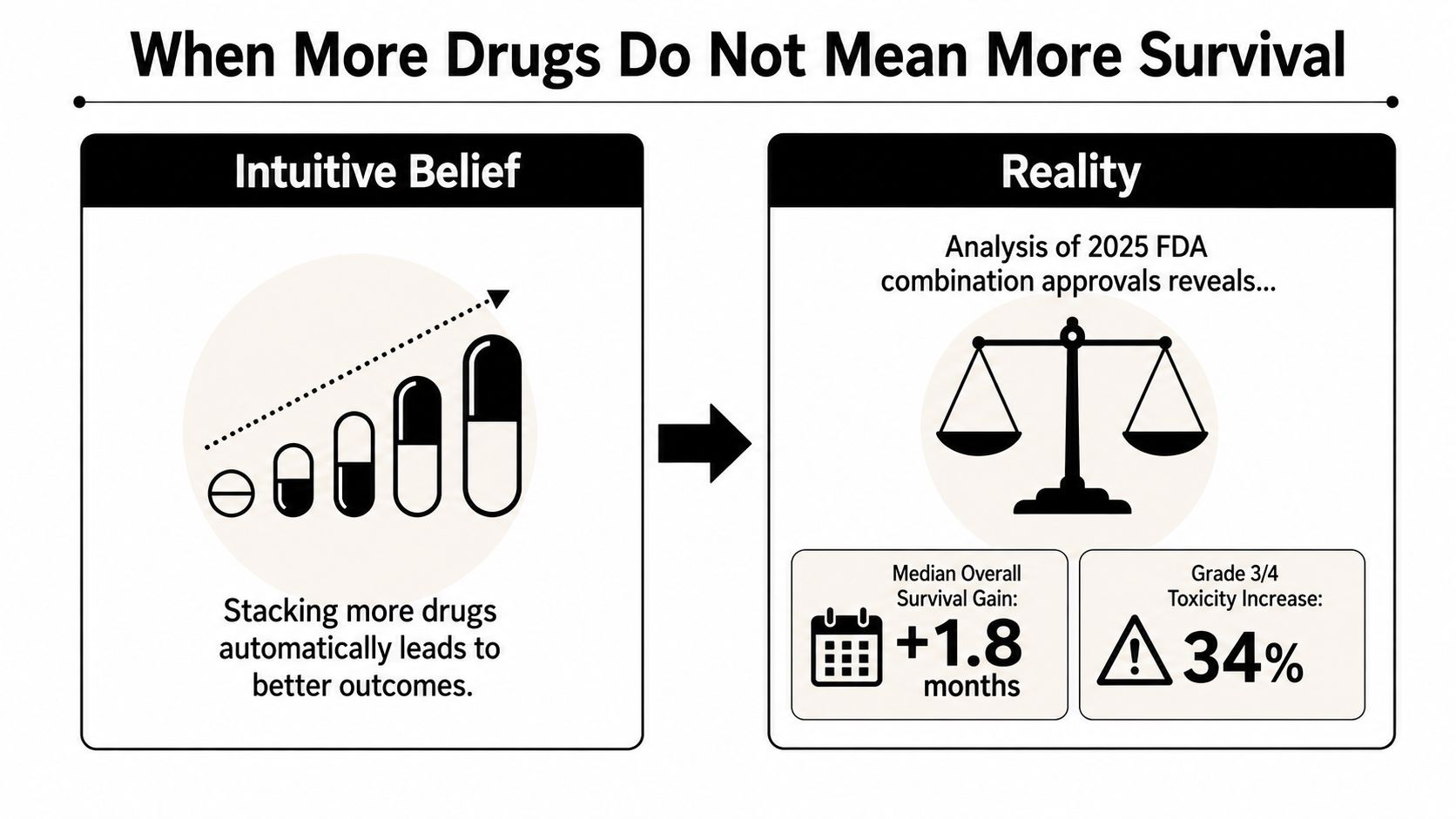
A 2025 analysis of oncology approvals found that combination regimens were more likely to use overall survival as the primary endpoint and more likely to receive regular approval. Across the trials examined, however, combinations did not collectively produce longer survival or higher ESMO-MCBS scores than single-agent treatment, according to the analysis of oncology approvals.
The finding challenges a common assumption: more drugs do not automatically produce more meaningful time or better quality of life. A regimen may appear powerful on paper but offer little additional benefit after dose interruptions, hospital visits, fatigue, organ complications, and loss of independence are counted.
What makes a pairing rational
An oncologist examines several questions before recommending a combination:
- Tumor biology: Does testing identify a pathway, receptor, or immune feature that gives both medicines a clear purpose?
- Previous treatment response: Did the cancer respond, remain stable, or progress with one of the proposed components?
- Safety overlap: Could both drugs affect the same organ, blood-cell line, nerve pathway, or immune function?
- Patient fitness: Can the person manage the schedule, monitoring, travel, and likely side effects?
- Personal priorities: Is the goal tumor shrinkage, symptom relief, preserved energy, delayed progression, or avoidance of a particular toxicity?
A pairing becomes less convincing when the medicines create overlapping harm, interact in unhelpful ways, or lack evidence that their effects cooperate. Frailty, reduced organ function, and other illnesses can turn a theoretically active regimen into an unsafe one.
The question isn't “How many drugs can we use?” It's “What extra benefit does each drug add, and what burden does it create?”
A useful consultation should define the expected benefit, the uncertainty, and the plan if toxicity limits treatment. Combination therapy is a precision decision, not a default escalation.
Managing Toxicity Without Losing Benefit
Combination treatment works only if the patient can receive it safely and consistently. Before the first infusion, ask the team to map side effects that may overlap or accumulate. Chemotherapy plus immunotherapy can produce fatigue, nausea, low blood counts, and immune-related inflammation. Platinum-taxane combinations can contribute to cumulative nerve symptoms, while other pairings may affect the liver, kidneys, heart, skin, or lungs.
Build the outpatient plan before treatment starts
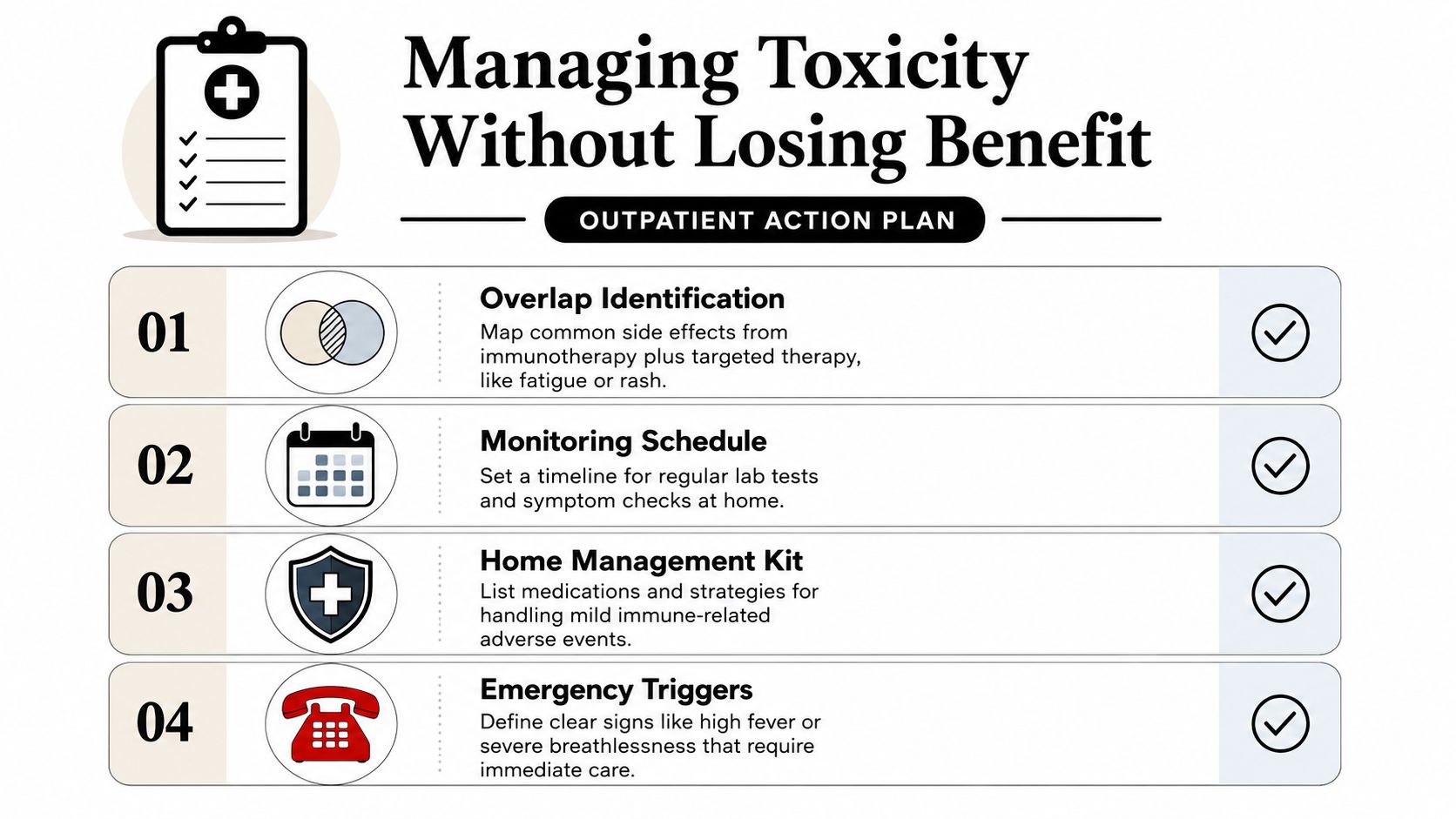
Identify overlap. Write down which symptoms could come from each medicine. That helps the team decide whether fatigue is expected, whether diarrhea could signal immune inflammation, or whether numbness suggests cumulative neuropathy.
Set monitoring points. Your team may use blood tests, vital signs, medication reviews, and symptom calls to determine whether treatment can continue. Ask which results delay treatment or trigger a dose change.
Prepare home support. Antiemetics can control nausea. Growth-factor support may be considered for selected chemotherapy regimens. Steroids are often used when clinicians diagnose certain immune-related adverse events, but you shouldn't start them without instructions.
Know urgent triggers. Severe breathlessness, confusion, chest pain, uncontrolled vomiting, significant bleeding, or a high fever require prompt contact with the oncology team or emergency services according to the instructions you receive.
Dose reductions and schedule changes aren't treatment failure. They're tools that can preserve the useful part of a regimen while reducing avoidable harm. Sequencing can also help, with agents separated or adjusted when simultaneous exposure would create excessive toxicity.
A written after-hours number matters. So does a clear answer to, “Should I call the clinic, go to urgent care, or call emergency services?” Patients who report symptoms early give clinicians more options than patients who wait until complications become severe.
For broader ideas about symptom planning, see approaches to minimizing side effects during cancer treatment. Some patients also ask about personalized lab testing for longevity, but any testing outside the oncology plan should be reviewed with the treating team so it doesn't replace or confuse cancer-treatment monitoring.
Choosing a Regimen That Fits the Person
The same diagnosis can lead to different combination plans because the tumor and the patient may differ substantially. Molecular testing can identify features such as PD-L1 expression, BRCA or MSI status, HER2, EGFR, or NTRK fusions. These findings can narrow the treatment menu and help the oncologist decide whether immune, targeted, chemotherapy, or multi-modality treatment has a sound rationale.
Disease burden matters too. Tumor location, symptoms, the pace of progression, and the organs affected can influence whether the priority is a rapid response or a gentler plan that preserves function. Prior treatments reveal what the cancer has already resisted and what toxicities the patient has already experienced.
Four questions shape the decision
Can the body handle it? Kidney and liver function, blood counts, heart health, neuropathy, other illnesses, and current medications can all affect safety. Age alone shouldn't determine treatment, but the person's functional status and ability to manage daily activities provide important context.
What does the tumor need? A checkpoint combination may fit a tumor with a relevant immune rationale. A targeted pairing may make more sense when testing identifies a specific driver. Chemotherapy combinations may be selected when the disease is heterogeneous or when no actionable marker provides a better route.
What outcome matters most? Some patients prioritize the strongest chance of shrinkage, even with more monitoring. Others place greater value on staying independent, attending family events, working, or avoiding particular side effects. Those priorities belong in the treatment conversation.
What is the backup plan? Ask what happens if the cancer progresses, if a drug must be stopped, or if the regimen becomes too difficult. A plan with contingencies is more useful than a plan that assumes everything will proceed smoothly.
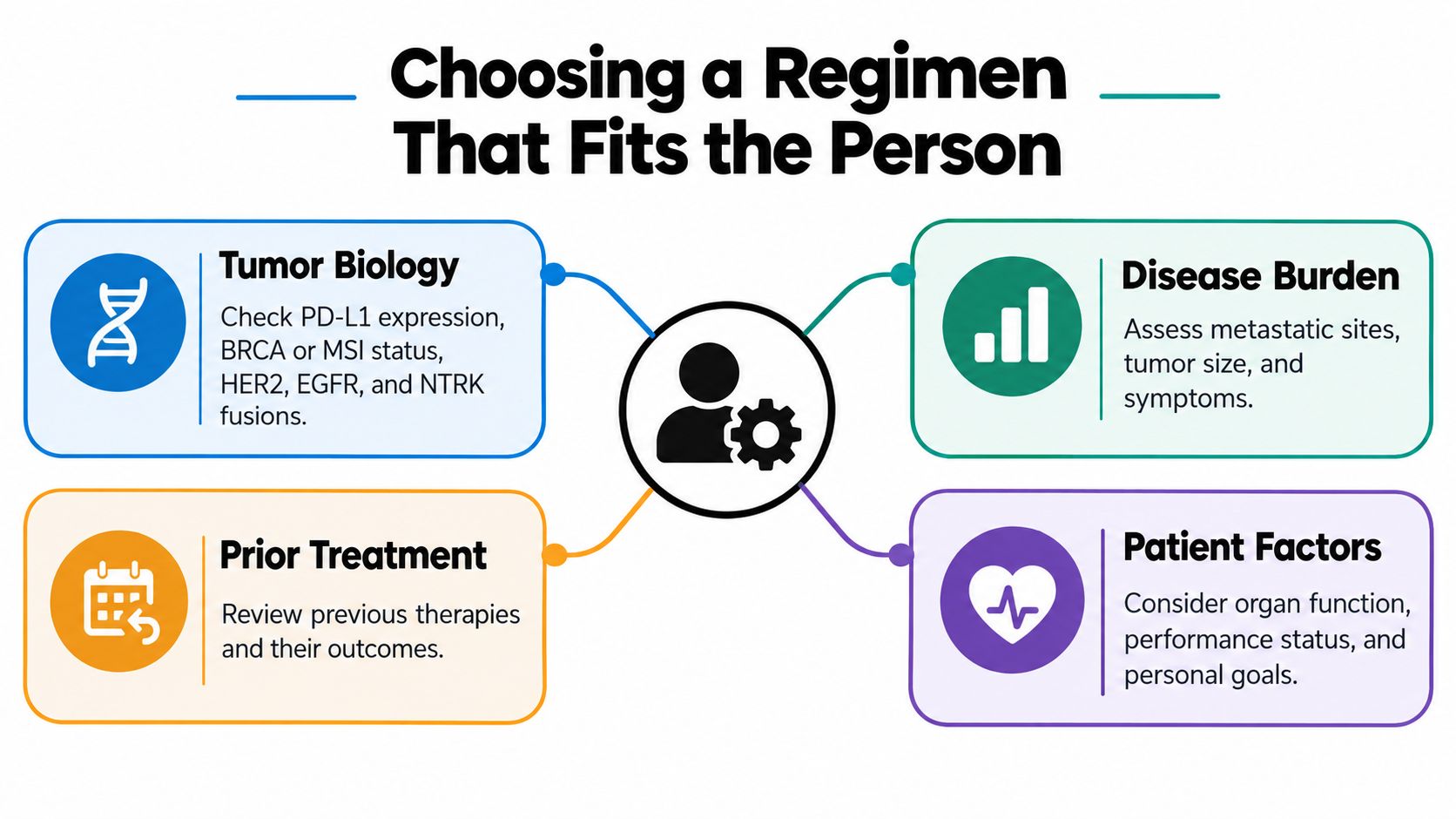
The right regimen matches the tumor, the body, and the person's goals. It may be more intensive, less intensive, sequential, or revised after early monitoring. The most appropriate choice isn't necessarily the most aggressive one.
Questions Worth Asking at Your First Consult
Bring a written list to the appointment, and consider asking a family member or caregiver to take notes. Shared decision-making works best when everyone understands what the regimen is intended to do and how the team will respond if circumstances change.
Diagnosis and biomarkers
- Confirm the tumor profile: What molecular testing has been completed, and are additional tests needed?
- Connect markers to treatment: Which mutation, receptor, immune marker, or other finding supports each proposed drug?
- Clarify uncertainty: Is this combination established for my cancer, supported by a clinical trial, or being considered because standard options are limited?
Regimen and logistics
- Name every component: What are the drug names, and what does each one contribute?
- Understand the sequence: Will the medicines be given together or in a specific order?
- Plan for visits: Where will infusions occur, how often will they happen, and how long might each visit take?
- Review home medicines: Which prescriptions should I take before or after treatment, and which medicines or supplements should I avoid?
Safety and monitoring
Ask which side effects are expected and manageable, which require a same-day call, and which require emergency care. Request the after-hours contact process in writing.
You can also ask:
- Track response: How will we know whether the treatment is working?
- Schedule assessments: When will labs, scans, and clinical examinations be used to evaluate benefit?
- Protect daily life: Which symptoms could affect eating, walking, sleep, work, or caregiving responsibilities?
- Handle changes: What happens if a dose must be delayed, reduced, or stopped?
For a broader appointment checklist, use these questions to ask your oncologist.
Finally, ask what the plan becomes if the combination fails or isn't tolerated. A thoughtful answer may include another regimen, a clinical trial, a different sequence, symptom-focused care, or a decision to prioritize quality of life. Asking these questions isn't adversarial. It's how you and your family become informed partners in care.
Hirschfeld Oncology offers individualized cancer treatment planning and outpatient infusion care, including combinations of chemotherapy, immunotherapy, targeted therapy, and lower-dose approaches when clinically appropriate. Visit Hirschfeld Oncology to learn more about consultation options and bring your treatment questions to an experienced oncology team.
.png)
.png)






