.png)


You've just heard the words no one wants to hear, and the next question lands fast. Is there anything beyond chemotherapy, anything that fits your cancer's biology better, anything that gives you a real chance without making you feel like you're trading one problem for another?
That's where immunotherapy and targeted therapy come in. They're not the same thing, and they don't fit every cancer, but they've changed what oncologists can offer when treatment needs to be more precise, more durable, or distinct from the usual path.
Understanding Your Treatment Options Beyond Chemotherapy
A patient sitting in an exam room might hear, “We should test for immunotherapy or targeted therapy,” and feel like the conversation suddenly switched languages. It helps to think of the two approaches in plain terms. Immunotherapy acts like a security upgrade for your body's own defenses, while targeted therapy works more like a precision strike against a tumor's weak point.
That difference matters because not all cancers behave the same way. Some tumors hide from the immune system, which is why checkpoint drugs can help the body notice them again. Other tumors depend on a specific mutation or protein, which gives a targeted drug something concrete to block. If you want a clear primer on the immune side of that idea, this patient guide on what immunotherapy is for cancer is a useful companion.
A person with advanced melanoma may hear about immunotherapy first, while someone with a tumor that carries an actionable mutation may be steered toward targeted treatment. Sometimes both approaches are discussed in sequence. Sometimes neither is right, and your oncologist has to look at tumor type, prior treatment, symptoms, and testing results before making a recommendation.
Practical rule: the right drug is rarely chosen by the cancer name alone. The tumor's biology, the test results, and your overall condition all shape the decision.
That's why these therapies are now part of mainstream oncology rather than experimental side notes. They're established tools, but they're only useful when the cancer profile matches the treatment's mechanism. In that sense, the big question isn't “Which one sounds stronger?” It's “Which one fits the tumor in front of us?”
How Immunotherapy and Targeted Therapy Work Differently
A patient may hear both treatments described as “personalized,” yet they are personalized in very different ways. Immunotherapy is designed to change how the immune system responds to cancer. Targeted therapy is selected to block a specific molecular weakness inside the tumor.
That distinction matters at the bedside. Some cancers are able to hide from the immune system, so checkpoint drugs help the body recognize them again. Other tumors depend on a mutation, fusion, or protein signal that can be blocked directly. For a plain-language overview of the molecular side of this approach, this targeted therapy resource is a helpful companion.
For immunotherapy, the main concept is immune checkpoint blockade. Drugs that inhibit PD-1, PD-L1, or CTLA-4 remove inhibitory brakes on T cells, so the immune system can recognize and attack cancer more effectively, and in some patients those responses can last after treatment ends. A major review describes checkpoint inhibitor monotherapy as producing durable responses in roughly 40 to 50% of patients in some settings, and a later review summarized 8 approved ICIs across 18 cancer types at that time, spanning the CTLA-4, PD-1, and PD-L1 pathways (Frontiers in Oncology review).
For targeted therapy, the logic is different. The drug is chosen because the tumor depends on a specific alteration, and modern treatment now includes classic TKIs and monoclonal antibodies, along with antibody-drug conjugates, bispecific antibodies, and tumor-agnostic agents such as larotrectinib and selpercatinib for NTRK and RET fusions. Selection is guided by molecular profiling / next-generation sequencing (targeted therapy review). The mechanism is often more direct, but it also means the treatment only fits if the right target is present.
| Feature | Immunotherapy | Targeted Therapy |
|---|---|---|
| Main goal | Help the immune system attack cancer | Block a specific molecular driver |
| What it depends on | Immune markers and tumor context | Actionable mutation, fusion, or protein target |
| Typical response pattern | Can take time, but may be durable | Often faster shrinkage, resistance can appear |
| Treatment logic | Removes immune “brakes” | Hits the tumor's weak spot |
| Best fit | Cancers that respond to immune activation | Cancers with a known target |
Which Cancers Respond Best to Each Approach
A person can have the “right” treatment on paper and still never reach it in time. That gap matters in advanced cancer, where the therapy itself is only part of the story. The other part is whether the tumor was tested, whether the result was clear, and whether a center could interpret the report quickly enough to act on it, as explained in this overview of molecular testing for cancer.
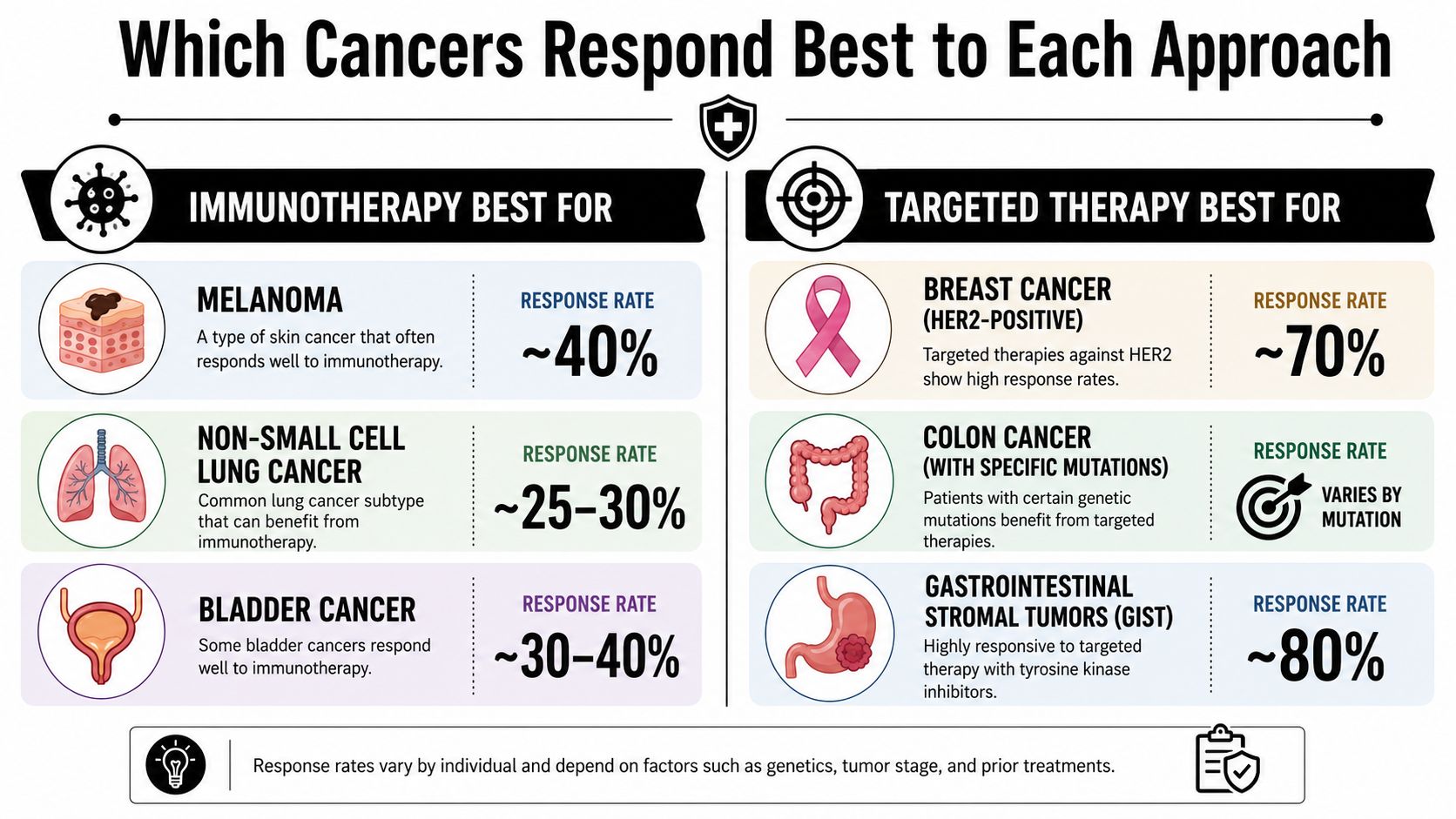
For immunotherapy, the strongest responses have been seen in melanoma, some lung cancers, and renal cell carcinoma. These are the cancers that most often come up in conversations about checkpoint blockade because the biology of the disease can make immune treatment more effective. In metastatic melanoma, a review linked ipilimumab approval in 2011 to a historical shift from 10% ten-year survival to 22% with CTLA-4 directed treatment, and pembrolizumab later showed a 34% five-year overall survival rate in advanced or metastatic melanoma, rising to 41% in treatment-naive patients (melanoma review).
Renal cell carcinoma shows the same pattern from a different angle. In a real-world propensity-matched cohort of 5,872 patients with metastatic clear cell renal cell carcinoma, first-line immunotherapy was associated with better overall survival than targeted therapy, with 12-month OS of 73% versus 59% and a hazard ratio of 0.60 for immunotherapy compared with targeted therapy (JAMA Network Open study). For patients and families, the practical takeaway is simple. Some cancers have a biology that makes immune treatment more likely to help, but access still depends on getting the right evaluation at the right time.
Targeted therapy has its own clearer strengths. HER2-positive breast cancer is a classic example, and mutation-driven colorectal cancer can also be treated this way when the molecular target is present. Modern targeted oncology also reaches across tissue types, which is why tumor-agnostic drugs matter for fusions such as NTRK and RET. A closer look at this approach is available in a targeted therapy review.
That distinction matters most at specialized centers that treat advanced and treatment-resistant disease, including cancers such as pancreatic, bile duct, colorectal, gastric, breast, ovarian, and esophageal cancer. In those settings, the question is not just whether a therapy exists. It is whether the tumor has been tested well enough to identify a match, whether the patient can wait for the result, and whether the care team can act on it without losing time to referral delays or fragmented records. For many families, that is where clinician review, fast coordination, and support around automated lab results disclosure can make the difference between a theory and an actual treatment plan.
Biomarker Testing and What Your Results Mean
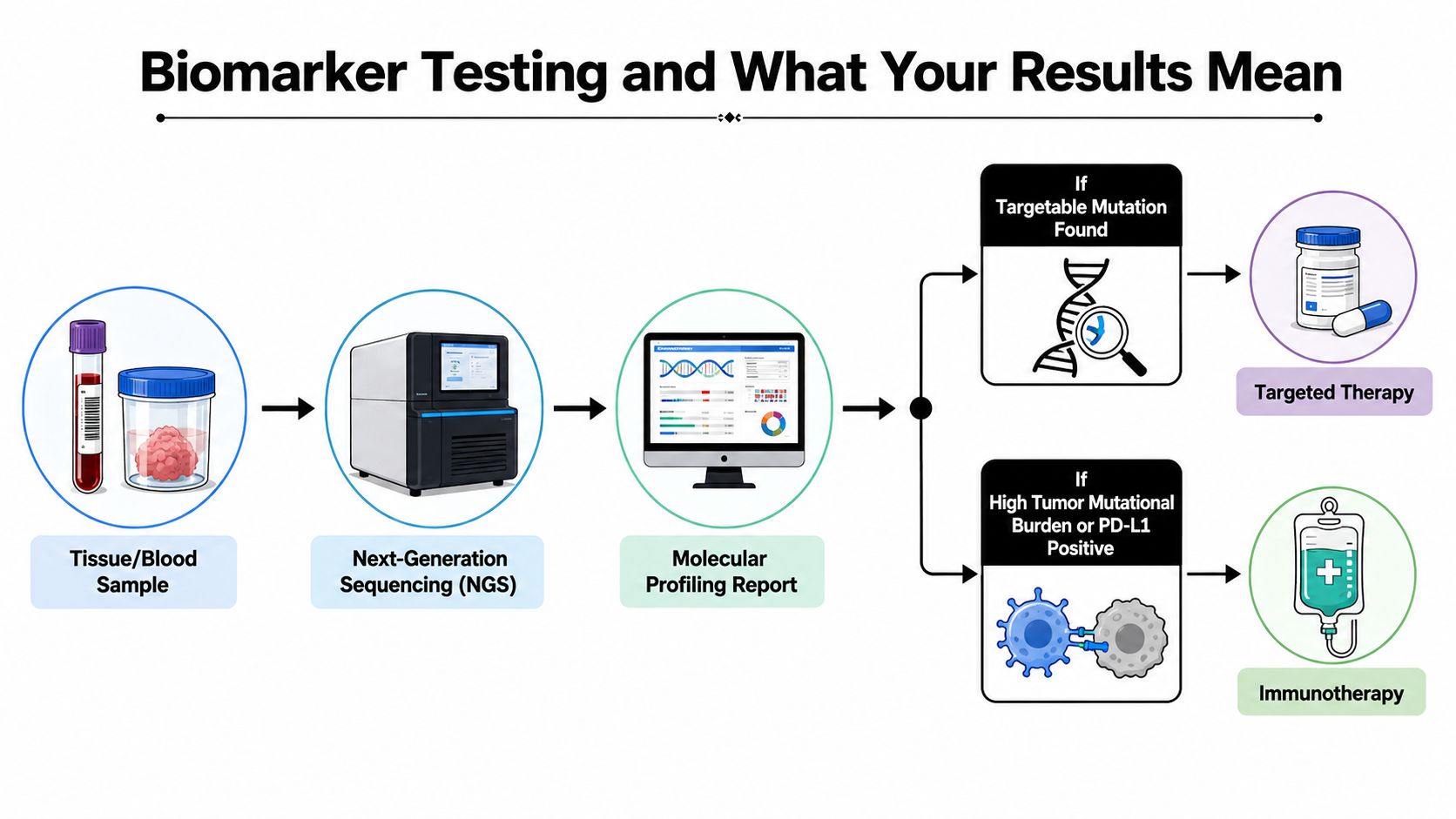
Biomarker testing is the step that turns broad treatment talk into an actual plan. If you've been told a therapy is “available if the tumor has the right marker,” that usually means your sample needs molecular profiling or next-generation sequencing before anyone can know whether the drug is appropriate. A blood draw or tissue biopsy may be the starting point, but the result is only useful if someone interprets it in the context of your cancer type and treatment history.
The most common terms patients hear are PD-L1, tumor mutational burden, and specific gene mutations or fusions. In practical terms, a PD-L1 result can help guide immunotherapy decisions, while a mutation or fusion can point toward a targeted drug. If your report lists an alteration you've never heard of, that does not automatically mean you're out of options. It may mean the right treatment depends on a specialist who knows how to read the report carefully.
One of the most frustrating realities is that eligibility on paper doesn't always become treatment in practice. A recent review found that as of 2016, immunotherapy use was only 8.7% in stage IV non-small cell lung cancer and 48% in stage IV melanoma, with lower use among uninsured or Medicaid patients, Black patients, older patients, and people treated in community settings (access review). The same review also notes that tumor genetic testing is suboptimal, especially in medically underserved communities, which creates a bottleneck before targeted therapy can even be considered.
Useful question to ask: “Has my tumor had comprehensive genomic testing, and if not, what sample do you need to order it?”
If your clinic uses automated result delivery, resources like automated lab results disclosure can help you understand how test communication works, but the key is still a live conversation with your oncology team. A detailed explainer on this topic is also available in this molecular testing guide. Bring your report, ask what was tested, and ask whether the panel included the markers that influence treatment choices for your cancer.
The Reality of Side Effects and Treatment Burden
A lot of people hear that immunotherapy and targeted therapy are “gentler” than chemotherapy and stop there. That's too simple. They often do cause less time toxicity than cytotoxic chemotherapy, but the burden of treatment can still be real, especially when you factor in appointments, labs, scans, and the possibility of serious complications.
Recent oncology literature notes that both approaches can still cause immune, heart, lung, neurologic, and gastrointestinal complications, which is why close monitoring matters. Frailty, poor performance status, and gastrointestinal malignancies are also linked with higher time toxicity overall, so the practical strain isn't just about how the drug feels on a bad day. It's also about how much of your life gets pulled into treatment logistics.
For immunotherapy, the immune system can become overactive and attack healthy tissue. For targeted therapy, side effects vary with the pathway being blocked, which means the drug can still affect organs outside the tumor. Neither category should be sold as “easy.” They're often easier than chemotherapy in some ways, but easier does not mean effortless.
Plain truth: fewer hair-loss or nausea stories doesn't mean fewer clinic visits, fewer labs, or fewer moments of uncertainty.
That's why families sometimes feel surprised when a treatment labeled “less toxic” still demands careful watching. The upside is real, but so is the follow-up. Patients do better when the team explains which symptoms should trigger a call, which ones can wait, and how often monitoring needs to happen.
Combination Strategies and Emerging Approaches
Modern oncology rarely thinks in single-drug terms anymore. Clinicians may sequence immunotherapy and targeted therapy, or combine them when the biology and prior treatment history make that approach reasonable. The reason is simple. Some tumors are driven by a clear molecular target, but they also have immune escape mechanisms that limit long-term control.
The long-term outcome data show why this matters. In a broader review of combined or sequenced immunotherapy with targeted therapy in 1,861 patients, the overall three-year OS rate was 22%, and the survival curve plateaued around three years, which suggests that some patients get durable benefit rather than only short-lived shrinkage (JAMA Network Open review). That plateau is clinically important because it hints at a subset of patients whose disease remains controlled for the long haul.
Combination thinking is also shaping drug design. Newer multi-target and dual-target strategies are being developed to improve efficacy while reducing tissue toxicity and dose requirements (targeted therapy review). That matters for people with aggressive disease, because the challenge is not only to get a response, but to keep that response going without making treatment unbearable.
The best way to think about combinations is not “more medicine is always better.” It's “different tools may solve different parts of the same problem.” One drug can loosen immune inhibition, another can block a driver mutation, and the overall plan can be customized to the tumor's behavior over time.
What to Expect at a Specialized Oncology Center
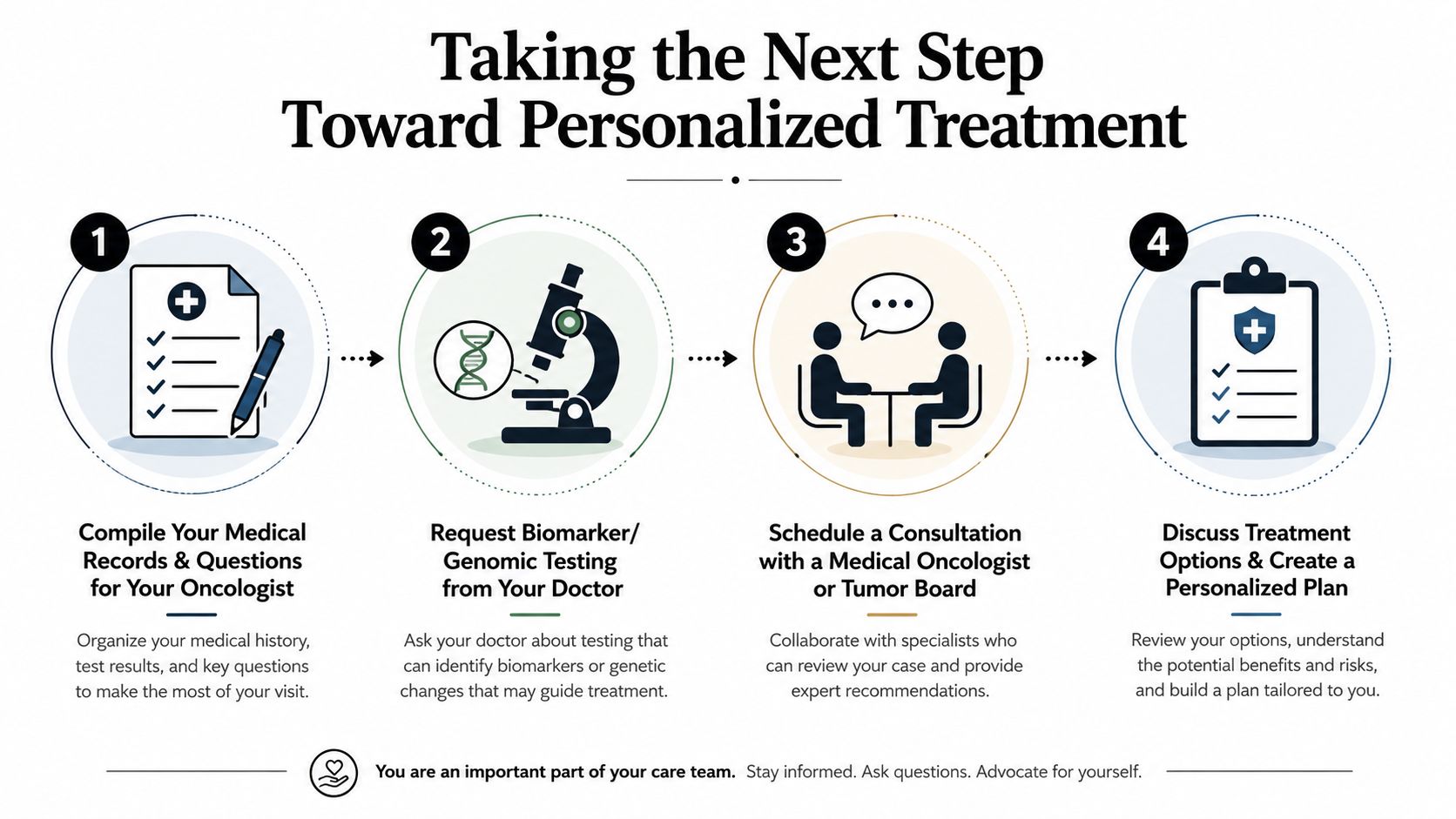
A specialized center should do more than sit you in an infusion chair. The first step is usually a detailed review of your pathology, prior treatment, symptoms, scans, and biomarker results. If your diagnosis is complex or treatment-resistant, the plan may be discussed with a medical oncologist, and sometimes with a tumor board, before a recommendation is made.
Bring a list of practical questions. Ask what marker was tested, whether there are additional targets to look for, what side effects are most likely, and how often you'll need labs or imaging. A good question list is especially helpful if you're trying to compare options, and this oncology appointment question guide can help you organize it before the visit.
Care at a center such as Hirschfeld Oncology is built around close monitoring and individualized regimens, including immunotherapy, targeted therapy, low-dose chemotherapy, and symptom management when needed. That doesn't mean every patient will receive every option. It means the team has to adjust treatment based on response, tolerability, and the realities of living with advanced cancer.
If you're starting treatment, ask these three things right away.
- Testing plan: What molecular or immune tests have already been done, and what still needs to be ordered?
- Monitoring plan: How will the team watch for side effects, and who should I call after hours?
- Decision plan: If the first option doesn't work, what is the next step?
Taking the Next Step Toward Personalized Treatment
If your cancer is advanced, recurrent, or not responding the way you hoped, the most important move is to ask whether your tumor has been fully profiled. Immunotherapy and targeted therapy only help when the biology lines up, and that means the testing conversation matters just as much as the treatment conversation. Not every patient is a candidate, but every patient deserves a clear answer about whether they've been evaluated properly.
Before your next appointment, bring your pathology report, a list of prior treatments, and three questions. What markers have been tested? Are there more options if the first result is negative? Should a specialist or tumor board review the case? If you're in the New York City area, especially Brooklyn, Williamsburg, or Bushwick, it's reasonable to seek a consultation where biomarker testing, treatment selection, and symptom support are handled together.
Personalized oncology starts with the right questions and the right team. It also starts with a clinic that understands advanced cancer care as a process, not a single prescription.
Hirschfeld Oncology provides individualized cancer care that includes immunotherapy, targeted therapy, and close monitoring for complex cases where standard protocols may no longer fit. If you're weighing next steps for advanced disease, visit Hirschfeld Oncology to learn more about consultation options, treatment planning, and supportive care that matches your goals and tolerability.
.png)
.png)