.png)


Yes, radiation therapy can cause hair loss, but it's not a given for every patient. The single most important thing to understand is that any hair loss from radiation is localized. It only happens in the specific spot where the radiation beam is aimed—a stark contrast to chemotherapy, which often affects hair all over your body.
Will Radiation Therapy Make My Hair Fall Out?

When you're first diagnosed with cancer, the thought of losing your hair can be incredibly distressing. It’s tied so closely to our identity, and the possibility brings up a wave of emotions and questions. The truth is, whether radiation will cause hair loss is a nuanced question, and getting a handle on the key factors can help you feel more in control and prepared.
Think of it like this: radiation therapy works like a highly focused spotlight. It shines a powerful beam of energy directly on cancer cells in a very precise area. Any hair follicles caught in that "spotlight" can be damaged, which may lead to hair loss. But anything outside that targeted beam is completely untouched.
Location Is The Biggest Factor
Your personal risk comes down almost entirely to one thing: the treatment area. If you're receiving radiation to your brain for a tumor or even as a preventive treatment, then yes, hair loss on your scalp is a very real possibility. Likewise, radiation targeting the head and neck might cause patchy loss in a beard or on the back of the neck.
But if your treatment is focused anywhere else on your body, you can breathe a little easier.
- Radiation for breast cancer will not make you lose the hair on your head.
- Treatment for prostate cancer carries zero risk of causing scalp hair loss.
- Therapy for lung or abdominal cancers also won't affect the hair on your head.
This targeted effect is one of the biggest differences between radiation and chemotherapy. While many chemo drugs travel through your entire system, affecting all fast-growing cells (including hair follicles everywhere), radiation stays put. You can dig deeper into the other common adverse effects of radiation therapy to get a fuller picture.
To help clarify this crucial distinction, let's compare the two treatments side-by-side.
Radiation Hair Loss vs. Chemotherapy Hair Loss at a Glance
Understanding this difference is key to setting realistic expectations. The hair loss experience with radiation is fundamentally different from what you might see portrayed in movies, which usually depicts the systemic effects of chemotherapy.
The best thing you can do is talk openly with your oncology team. They can give you a personalized assessment of your risk based on your exact treatment plan, making sure you know exactly what to expect.
This guide is here to walk you through all the details—not just if hair loss might happen, but how, when, and what you can do to care for your scalp and yourself during this journey.
How Radiation Affects Your Hair Follicles
To really get why radiation can cause hair loss, you have to think about what makes hair grow. Your hair follicles—those tiny pockets in your scalp that produce each strand—are powerhouses of activity. They’re packed with some of the fastest-dividing cells in your entire body, constantly working to create new hair.
Radiation therapy is a powerful tool precisely because it targets and destroys cells that grow and divide quickly. That’s the very definition of a cancer cell. The problem is, radiation can’t always distinguish between a fast-growing cancer cell and other rapidly dividing cells, like the ones in your hair follicles. It's an unfortunate case of collateral damage.
A Targeted Approach, An Unintended Consequence
Think of it like a gardener trying to root out aggressive weeds (the cancer) from a flower bed. The goal is to be precise, but in the process of pulling out the fast-growing weeds, it's almost impossible not to disturb some of the delicate, fast-growing flowers (the hair follicles) planted right next to them.
This is exactly what happens on a microscopic level during your treatment. The radiation beam is aimed directly at the tumor, but any hair follicles that happen to be in that treatment field get exposed to the same energy.
The radiation disrupts the hair's normal growth cycle. The energy damages the active cells inside the follicle, which weakens the base of the hair strand and makes it much more likely to fall out.
This is why hair loss from radiation is always localized. If the "gardener" is working on a completely different part of your body, like your chest or pelvis, the "flowers" on your head are left completely untouched.
The Science Behind the Sensitivity
In medical terms, your hair follicles are considered highly radiosensitive. This simply means they are especially vulnerable to the effects of radiation because of all that rapid cell division happening during the hair's active growth phase. The radiation mainly damages these busy cells, the ones responsible for actually building the hair shaft.
When these cells are hit with a high enough dose of radiation, it triggers a condition called anagen effluvium—a rapid shedding of hairs that are in their active growth phase. This is the biological reason why hair loss usually starts a few weeks after your treatment begins. If you're curious about the specifics, you can read the full research on radiation-induced alopecia.
The total amount of radiation, or the dose, is directly tied to the extent of the damage. A higher dose delivers more energy, which unfortunately increases the odds of significant hair loss. Lower doses might only lead to some temporary thinning, as the follicles are often able to recover and get back to work after treatment. Your oncology team painstakingly calculates this dose to be tough on the cancer while sparing as much healthy tissue as possible.
Understanding Your Personal Risk for Hair Loss
Now that we've covered how radiation can affect hair, let's get to the question that's likely top of mind: what does this mean for you? It's natural to worry, but your personal risk for hair loss isn't a random roll of the dice. It all comes down to two very specific factors in your treatment plan: the location of the treatment and the radiation dose.
I can't emphasize the importance of location enough. Hair loss from radiation is a strictly local event. This means if you're receiving radiation for prostate or breast cancer, the hair on your head is completely safe. The risk is zero. Hair loss only becomes a possibility if your scalp is directly in the path of the radiation beams, which is often the case for treatments like whole-brain radiation.
Dose and Likelihood: A Clear Connection
The second major piece of the puzzle is the radiation dose, which we measure in units called Grays (Gy). You can think of it like a volume knob—the higher the dose delivered to the hair follicles, the louder the effect, and the greater the chance of hair loss.
A low dose might only cause some thinning, while higher doses increase the risk of more significant, and sometimes permanent, hair loss. This dose-dependent relationship is a cornerstone of radiation therapy.
For instance, temporary hair loss can begin with doses as low as 3 Gy. The risk for permanent loss starts to climb when doses exceed 5-7 Gy. What's fascinating, though, is how much this can vary from person to person. Even among patients getting the exact same treatment, the outcomes can be different. A great example comes from a study of patients who received 30 Gy of whole-brain radiation: about 50% of them experienced mild hair loss, while the other half had no noticeable alopecia at all. You can read more about these clinical trial findings on hair loss susceptibility.
Precision Therapy: Minimizing Your Risk
This is where modern radiation planning makes all the difference. At Hirschfeld Oncology, we use incredibly focused techniques designed to deliver a powerful blow to cancer cells while meticulously protecting the healthy tissue around them—and that includes your hair follicles. By carefully shaping the radiation beams to match the tumor's exact contours, we can often lower the dose your scalp receives, which directly lowers your risk.
The chart below gives you a simple way to visualize whether hair loss is a potential factor for you.
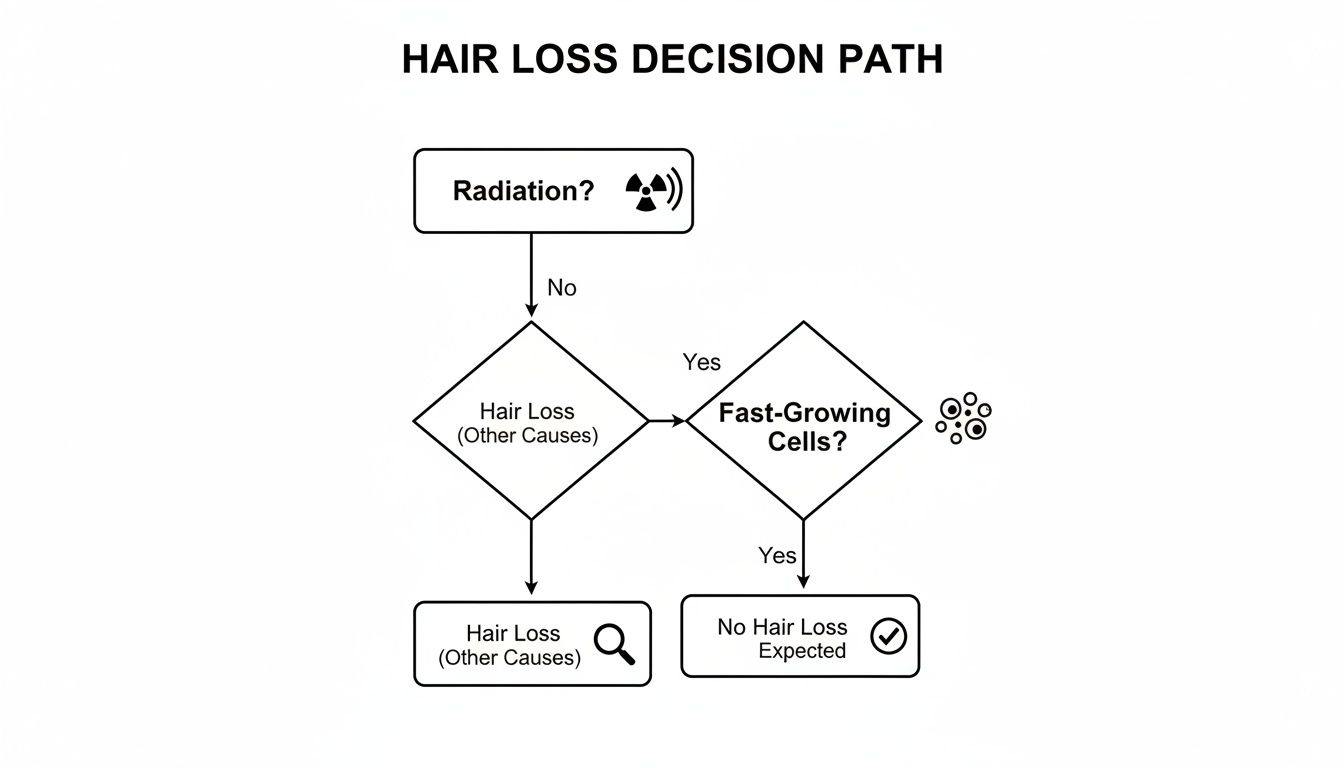
As the decision path shows, the key questions are whether you are receiving radiation and if that treatment targets the fast-growing cells in your scalp area. The single best way to prepare for what's ahead is to understand your individual plan. Your oncology team can give you a clear, personalized picture of your specific risk based on your unique treatment map.
The Timeline for Hair Loss and Regrowth
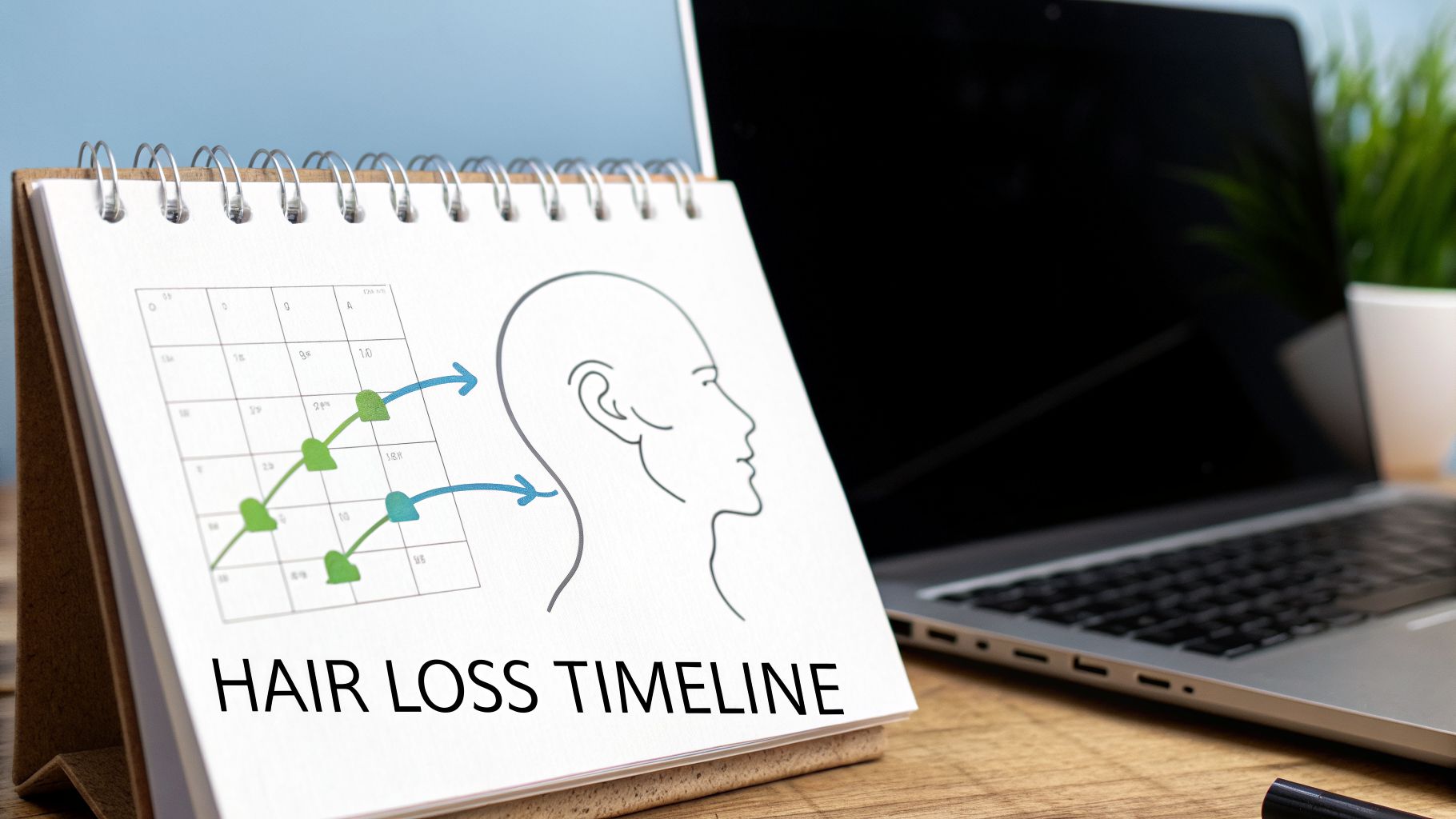
If you're preparing for radiation therapy to the head or neck, you're likely wrestling with two big questions: "When will my hair fall out?" and "Will it grow back?" Knowing what to expect can give you a roadmap, helping you feel more in control during a time that can feel anything but.
The hair loss, medically known as alopecia, isn't immediate. It usually starts about two to four weeks after your first treatment session. This happens because radiation targets rapidly dividing cells, including those in your hair follicles. It takes a couple of weeks for those affected hairs to complete their cycle and shed.
When Hair Loss Begins
You might notice a gradual thinning at first, or the hair could come out more quickly in clumps. Everyone's experience is a little different, and it often depends on the specific dose and schedule of your radiation. This can be one of the most difficult moments, as it’s a very visible sign of your treatment.
It’s completely normal to find this part of the journey upsetting. But try to remember that this shedding is a predictable side effect and a sign that the treatment is working on the fast-growing cells it’s meant to target.
The Hopeful Outlook on Hair Regrowth
Now for the question on everyone’s mind: will it come back? For most people receiving standard, lower doses of radiation, the answer is a reassuring yes. Hair typically starts to make a comeback about three to six months after you've finished your entire course of treatment.
This waiting period gives your hair follicles the time they need to recover from the radiation and get back into their normal growth rhythm. Patience is key here. As you wait for your hair to return, you might want to look into various treatments for thinning hair that can help support your scalp’s health during recovery.
When your hair does reappear, be prepared for a surprise. It’s very common for new hair to have a completely different texture—straight hair might grow back curly, or thick hair might return much finer. It can also come in a different color, sometimes lighter or with more gray than before.
Understanding the Risk of Permanent Loss
It's also important to have a frank discussion about the possibility of permanent hair loss. This risk is tied directly to the total dose of radiation you receive. Higher doses, which are sometimes needed to effectively treat more aggressive tumors, can cause lasting damage to the hair follicles, preventing them from producing hair again.
Your oncology team can give you a realistic idea of the likelihood of this happening based on your specific treatment plan. It’s a conversation they will have with you from the start. This is a key difference from chemotherapy, where hair loss is nearly always temporary. If you're curious about that, our article on how long side effects from chemo last offers more detail.
Caring for Your Scalp and Well-Being During Treatment

Navigating the physical changes of radiation treatment goes hand-in-hand with looking after your emotional health and daily comfort. Knowing that hair loss can be a side effect is one thing; figuring out how to manage it day-to-day is another. Taking proactive, practical steps can give you a much-needed sense of control during a challenging time.
During and after radiation, the skin on your scalp can become incredibly sensitive. Think of it like a bad sunburn—it's delicate and needs to be treated with extra care to prevent irritation and create a healthy environment for future regrowth.
Simple Steps for Gentle Scalp Care
The key is to treat your scalp with kindness. This means avoiding anything that could cause friction, irritation, or chemical stress.
- Wash Gently: Opt for a mild, sulfate-free shampoo, like a baby shampoo or one specifically recommended by your oncology team. Use lukewarm (not hot) water, and try to wash just once or twice a week to keep irritation to a minimum.
- Pat, Don’t Rub: After washing, use a very soft towel to gently pat the skin dry. Any aggressive rubbing can be uncomfortable and damage the already fragile skin.
- Avoid Heat and Chemicals: Now is the time to put away the hair dryers, curling irons, and straighteners. You’ll also want to steer clear of hair dyes, perms, and harsh styling products that can aggravate your scalp and harm recovering hair follicles.
- Protect from the Sun: The treated area is extremely vulnerable to sunburn. Whenever you're outside, make sure to wear a soft hat, a silk scarf, or a sunscreen with a high SPF that's designed for sensitive skin.
Incorporating these simple habits can make a world of difference in your comfort level. For more ideas on navigating treatment, our guide on living well during cancer treatment offers a broader look at managing side effects.
Nurturing Your Emotional Health
Of course, the physical side of hair loss is only half the story. It is completely normal to feel a mix of sadness, frustration, or even a loss of identity. These feelings are real and valid, and giving yourself space to process them is a vital part of your care.
Acknowledging the emotional impact is crucial. This experience is more than skin-deep, and giving yourself the space to process these feelings with a therapist, support group, or trusted loved ones can be incredibly healing.
Try to see cosmetic options as tools of empowerment. Wigs, scarves, and stylish hats aren't just for covering up; they are ways for you to express your personality and feel like yourself, on your own terms. Many people find it helps to pick out a wig or head covering before hair loss starts. This can make the transition feel more like a planned choice and less like a sudden shock.
As you move into the regrowth phase, that gentle care is still just as important. Some people find that a gentle scalp massage for hair growth helps stimulate circulation to the follicles, but you should always talk with your care team before trying anything new. Your journey is uniquely yours, and focusing on both your physical comfort and emotional well-being will help you navigate it with strength and confidence.
How Hirschfeld Oncology Puts Your Quality of Life First
Worrying about questions like "does radiation cause hair loss?" goes far beyond the clinical facts. It's about feeling secure that your care team is deeply invested in protecting your quality of life through every stage of treatment. At Hirschfeld Oncology, that principle is the very foundation of how Dr. Azriel Hirschfeld and our team approach your care.
We translate that commitment into action with highly advanced, precision-focused radiation strategies. By using meticulous dose planning and the most modern delivery techniques, we can target cancer with incredible accuracy while carefully shielding healthy tissues—including the hair follicles on your scalp whenever possible.
Your Comfort Is Our Priority
Your well-being truly guides every decision we make. We’ve seen firsthand how physical side effects like hair loss can take a heavy emotional toll, which is why we insist on having open and honest conversations with you from day one.
At Hirschfeld Oncology, we believe treating cancer means caring for your entire well-being. Your comfort, personal goals, and peace of mind are central to every plan we create together. We see you as a whole person, not just a diagnosis.
This approach means we talk through every potential risk, such as the possibility of permanent alopecia from higher radiation doses, and build a supportive care plan to manage them together. We don't wait for side effects to become a problem; we work proactively to ensure you have the resources to feel like yourself throughout your journey.
Advanced Care in New York City
For anyone in the New York City area looking for cancer treatment that is both compassionate and forward-thinking, our practice is here to listen. We are dedicated to making sure you feel seen, heard, and respected at every single appointment. Your concerns are our concerns.
Here at Hirschfeld Oncology, preserving your quality of life is never an afterthought. It's woven into the fabric of our treatment philosophy. We combine our clinical expertise with a genuine commitment to your personal comfort, helping you navigate this path with confidence and hope.
Answering Your Questions About Radiation and Hair Loss
A cancer diagnosis can feel overwhelming, and worries about treatment side effects, especially hair loss, are completely normal. We find that getting clear, straightforward answers helps people feel more in control. Let's walk through some of the most common questions our patients ask about radiation therapy and its impact on hair.
Will I Lose All My Hair From Radiation?
This is probably the biggest misconception out there, so let's clear it up right away: No, you won't.
Think of it this way: some chemotherapy drugs work systemically, affecting your whole body, which is why they can cause widespread hair loss. Radiation, on the other hand, is a local treatment. It's like a spotlight, aimed only at a very specific target area.
So, hair loss from radiation only happens in the precise path of the treatment beam. If radiation isn't directed at your head, you will not lose the hair on your head.
Is Radiation Hair Loss Permanent?
This is a big one, and the answer really comes down to the total dose of radiation you receive. For many people on lower-dose plans, the hair follicles are just "stunned" by the treatment, not destroyed. In these cases, hair loss is temporary, and you can often expect regrowth to begin 3 to 6 months after your sessions are complete.
However, higher doses of radiation, which are sometimes necessary to effectively treat certain tumors, can cause permanent damage to the hair follicles. Your oncology team will be able to give you a clear idea of what to expect based on your personal treatment plan.
Your hair loss experience is directly tied to your individual treatment plan. Open communication with your care team is the best way to understand your specific situation and manage expectations.
Can I Prevent Hair Loss From Radiation?
As of now, there isn't a proven method to completely stop radiation-induced hair loss from happening. But that doesn't mean nothing can be done.
Modern techniques like "scalp-sparing" radiation therapy are specifically designed to minimize the dose that healthy hair follicles receive, which can significantly lessen the impact. Simply being very gentle with your scalp during treatment can also help reduce irritation and create a healthier environment for eventual regrowth. It's always crucial to talk with your oncologist before trying any products or methods you hear about.
Does Insurance Cover a Wig?
In many cases, the answer is yes. If your oncologist writes a prescription for a “cranial prosthesis”—which is the medical term for a wig—most insurance providers will contribute to the cost.
The best first step is always to call your insurance company directly. They can walk you through the specifics of your coverage and what documentation you'll need.
At Hirschfeld Oncology, our commitment goes beyond just treating your cancer; we're here to support your well-being and quality of life through every step. To learn more about our patient-centered approach or to request a consultation, you can find more resources at https://honcology.com/blog.
.png)
.png)