.png)


When you hear about germ cell cancer, the first thing that often comes to mind is a painless lump in the testes. While that's a classic sign, the reality is much broader. Symptoms can be surprisingly subtle and varied, showing up as persistent abdominal bloating, pelvic pain, a nagging cough, or even unexplained back pain. Knowing what to look for is the first and most critical step toward getting an early diagnosis.
What Are Germ Cell Tumors And Why Do Symptoms Matter?

During early embryonic development, we all form special cells called germ cells. Think of them as fundamental building blocks destined to become either sperm in males or eggs in females. When these cells start growing uncontrollably, they form germ cell tumors.
While they most often develop in the reproductive organs—the testes and ovaries—these tumors can occasionally pop up in other parts of the body. Because they can grow almost anywhere, the symptoms they cause can be incredibly diverse and easy to mistake for something else. This is exactly why understanding the full spectrum of symptoms is so vital. A sign that seems like a minor digestive issue or a cough that won't quit could, in rare cases, be the only clue your body is giving you.
The Importance of Early Detection
With germ cell cancers, catching them early makes a world of difference. These cancers are known for being highly treatable, even when found at later stages, but an early diagnosis often leads to simpler treatment and better long-term health outcomes. This is especially important for the young adults and teenagers who are most commonly affected.
For example, testicular germ cell tumors are the most frequent cancer diagnosed in American men between the ages of 15 and 44. Troublingly, rates are on the rise. Projections show an estimated 23.88% increase in cases between 2013 and 2026. You can dive deeper into this data by reading this detailed study on testicular cancer incidence.
A vague but persistent change in your body should never be ignored. What feels like a minor annoyance could be an important signal that warrants a medical evaluation.
Symptoms Vary Greatly By Location
The specific signs of a germ cell tumor are dictated almost entirely by where it’s growing. A tumor in the chest won’t cause the same problems as one in the abdomen or an ovary. Knowing these different presentations is key to connecting the dots.
- Testes: The hallmark sign is a painless lump or swelling.
- Ovaries: This can cause persistent bloating, pelvic pain, or feeling full too quickly.
- Chest (Mediastinum): A stubborn cough, chest pain, or shortness of breath are common.
- Abdomen (Retroperitoneum): You might feel a noticeable mass or have deep, unexplained back pain.
To help you get a clearer picture, this table breaks down the most common symptoms based on where a tumor might develop.
Quick Guide To Common Germ Cell Cancer Symptoms By Location
This table provides a snapshot of the most common symptoms associated with germ cell tumors based on where they develop in the body.
| Tumor Location | Common Associated Symptoms |
|---|---|
| Testes | Painless lump, scrotal swelling, feeling of heaviness, dull ache in lower abdomen. |
| Ovaries | Abdominal bloating, pelvic pain or pressure, feeling full quickly, changes in bowel habits. |
| Chest (Mediastinum) | Shortness of breath, persistent cough, chest pain, difficulty swallowing. |
| Abdomen (Retroperitoneum) | Back pain that won't go away, an abdominal mass you can feel, constipation. |
| Brain | Headaches, vision problems, nausea, vomiting, issues with balance or coordination. |
As you can see, the symptoms are incredibly varied. Being aware of these different possibilities is the first step in advocating for your health if something feels off.
Recognizing Testicular Germ Cell Tumor Symptoms

While germ cell tumors can technically pop up in different spots, the testes are overwhelmingly the most common site. Knowing what germ cell cancer symptoms look like here is the key to catching things early, especially since the first signs are often quiet and easy to miss.
Think of a healthy testicle—it should feel smooth and consistently firm, kind of like a peeled, hard-boiled egg. A tumor, on the other hand, often feels like a hard, pea-sized lump that’s either on or part of the testicle itself.
This painless lump is, by far, the most common sign, showing up in about 90% of cases. Most men find it by accident in the shower or just going about their day. But here’s the critical part: because it doesn’t hurt, it’s all too easy to ignore. The absence of pain doesn't mean the absence of a problem, which is why regular self-checks are so vital.
Key Physical Symptoms To Watch For
Beyond that tell-tale lump, a few other physical changes can point to a problem. These symptoms might show up on their own or all together, so it's important to pay close attention to anything that feels new or different down there.
Here are the main symptoms to be aware of with testicular germ cell tumors:
- A Painless Lump or Nodule: As we covered, this is the classic sign. It’s usually hard and found on the front or side of the testicle.
- Scrotal Heaviness: Some men describe a persistent dragging or heavy feeling in the scrotum, almost like one side is being weighed down.
- Dull Ache or Pain: While not as common as a painless lump, you might feel a dull ache deep in your lower belly, groin, or scrotum. Sharp, sudden pain is pretty rare, but it can happen if the tumor causes bleeding or twisting.
- Swelling or Enlargement: Sometimes, one testicle or the whole scrotum might look or feel swollen, even if you can’t pinpoint a specific lump.
It's also worth noting that testicular cancer doesn't affect everyone equally. Although it’s most common in young men, we're seeing shifts in who gets it. For example, forecasts predict that between 2013 and 2026, incidence rates among Hispanic men are set to climb by 3.96% annually—the fastest increase of any ethnic group in the U.S. You can learn more by reading the research on future testicular cancer incidence.
Less Common Hormonal Symptoms
In some instances, these tumors can actually start producing hormones, triggering changes elsewhere in the body. These symptoms aren't as common, but they're major red flags because they are a direct result of the tumor's activity.
A testicular tumor can sometimes produce hormones like human chorionic gonadotropin (hCG), the same hormone detected in pregnancy tests. This hormonal disruption can lead to unusual and sometimes confusing symptoms.
One of the most surprising hormonal symptoms is gynecomastia—the swelling or tenderness of male breast tissue. This happens when the hormones from the tumor throw the body’s natural testosterone-estrogen balance out of whack. While gynecomastia can be caused by many things, if it appears suddenly along with any changes in your scrotum, it’s time to see a doctor right away.
In rarer cases, you might see other symptoms if the cancer has spread. These could include lower back pain (a sign it may have reached lymph nodes in the abdomen), shortness of breath, or a nagging cough. Still, the earliest and most important clues are almost always found right in the scrotum. The most powerful tool you have for catching these changes early is a simple monthly self-exam.
Identifying Ovarian And Extragonadal Tumor Symptoms
When people hear "germ cell tumor," most immediately think of testicular cancer. And while that's the most common type, it’s far from the whole story. These tumors can also show up in other parts of the body, often with symptoms that are much harder to pin down.
These “extragonadal” tumors—those found outside the testes or ovaries—can be incredibly deceptive, creating symptoms that look a lot like common, everyday ailments. Understanding their different disguises is the first step toward catching them early. Let's look at where else they appear, starting with the ovaries and then moving to other surprising locations.
Symptoms of Ovarian Germ Cell Tumors
Ovarian germ cell tumors are quite rare, accounting for only about 4% of all ovarian cancers. They typically affect adolescents and younger women, usually under the age of 40. Unlike the obvious lump associated with testicular cancer, the symptoms here are internal and often vague, making them incredibly easy to brush off.
Many of the signs can feel just like digestive trouble or the normal ups and downs of a menstrual cycle. This is where persistence becomes the most important clue. A single day of bloating is one thing; bloating that doesn't go away for weeks is a signal your body is sending.
Common symptoms include:
- Persistent Abdominal Bloating: This isn't the kind of bloating that comes and goes with a meal. It's a constant feeling of fullness or visible swelling in your belly that just won’t resolve.
- Pelvic Pain or Pressure: You might notice a new, dull ache or a persistent feeling of pressure in your lower abdomen that you can't explain.
- Feeling Full Too Quickly: Known as early satiety, this is when you find yourself unable to finish a normal-sized meal because you feel full after just a few bites.
- Changes in Bathroom Habits: This could mean needing to urinate more frequently or dealing with new, unexplained constipation.
Because these symptoms are so general, they're often blamed on something else entirely. If you're dealing with these kinds of issues on a regular basis, our guide on understanding the symptoms of ovarian cancer provides more detail. It's so important to see a doctor for any new symptom that sticks around for more than a few weeks.
Unmasking Extragonadal Tumor Symptoms
Sometimes during fetal development, germ cells don't quite make it to their final destination in the reproductive organs. When they settle elsewhere, they can develop into extragonadal tumors. The symptoms they cause depend entirely on where they've landed, acting like disruptive tenants in whatever part of the body they inhabit. The two most common locations are the chest and the deep abdomen.
Chest Tumors (Mediastinum)
The mediastinum is the central command center of your chest—the space between your lungs that contains your heart, esophagus, and major blood vessels. A germ cell tumor growing here can start pressing on these vital structures, causing symptoms you’d normally associate with heart or lung problems.
A mediastinal germ cell tumor can cause symptoms that mimic a stubborn respiratory infection or even heart trouble. The key difference is that these symptoms don't respond to typical treatments and linger for weeks or months.
Think of it like a piece of furniture being slowly pushed into a crowded hallway; eventually, it starts blocking the path. Signs of a tumor in the chest may include:
- A Nagging, Dry Cough: A persistent cough that produces little to no phlegm and isn't from a cold or allergies.
- Shortness of Breath: You might feel winded or have trouble catching your breath, even with light activity.
- Chest Pain or Pressure: This can feel like a dull, sharp, or aching pain right in the center of your chest that doesn't let up.
Deep Abdominal Tumors (Retroperitoneum)
Behind your main abdominal cavity lies a deep space called the retroperitoneum, which houses organs like your kidneys and pancreas. Because this area has more room, a germ cell tumor can grow quite large here before it causes any obvious symptoms.
The signs are often subtle and easily mistaken for a pulled muscle or a simple digestive issue.
- Mysterious Back Pain: You might feel a deep, persistent ache in your mid or lower back that has no clear cause from an injury.
- A Noticeable Abdominal Mass: Sometimes, a person might feel a firm, deep lump in their stomach area, especially when lying down.
- Constipation or Bowel Changes: As the tumor grows, it may start to press on the intestines, disrupting your normal bowel habits.
The varied symptoms of these extragonadal germ cell cancers show how one disease can wear many different faces. It’s a powerful reminder to always seek a medical evaluation for any unexplained and lasting changes in your body.
When To See A Doctor And The Diagnostic Journey
Recognizing the wide-ranging symptoms of germ cell cancer is one thing; acting on them is another. If you've noticed any new, persistent, or just plain weird changes—especially a painless lump on a testicle—it’s time to see a doctor. Don't put it off.
It’s completely normal to feel a wave of anxiety, but keep in mind that many of these signs point to something far less serious. The only way to know for sure is to get it checked out. A professional consultation gives you clarity and, if something is wrong, gets the ball rolling on diagnosis right away.
The conversation can even start in unexpected places. For instance, if you're having trouble conceiving, it's worth understanding when to see a fertility doctor. This evaluation of your reproductive health can sometimes bring an underlying issue to light that needs a closer look.
Starting The Investigation: The Physical Exam And Tumor Markers
The first stop is almost always a thorough physical exam. Your doctor will want to hear about your symptoms and health history while checking for any lumps, tenderness, or swelling. For men, this involves a careful examination of the scrotum and testicles.
If your doctor suspects a germ cell tumor, the next logical step is a series of blood tests. We’re looking for specific proteins called tumor markers—substances that certain cancer cells release into your bloodstream. Think of them as little breadcrumbs the tumor might be leaving behind, helping us track its presence and activity.
There are three main tumor markers we look for in germ cell cancers:
- Alpha-fetoprotein (AFP): This protein is normally high in a developing fetus. Finding elevated levels in an adult can be a strong indicator of specific germ cell tumors.
- Human chorionic gonadotropin (hCG): You might recognize this as the "pregnancy hormone." High levels in a man or a non-pregnant woman are a major red flag for a germ cell tumor.
- Lactate dehydrogenase (LDH): LDH is a bit less specific than AFP or hCG, but very high levels can suggest a large or fast-growing tumor.
It's important to remember that not every germ cell tumor produces these markers. But when they are present, they give us powerful clues for diagnosis. Later on, we use these same markers to see how well your treatment is working. For women who have symptoms that point to a possible ovarian germ cell cancer, a CA-125 test may also be ordered. We break down how that test works in our guide to the CA-125 blood test.
Creating A Clear Picture With Imaging Tests
After the physical exam and bloodwork, your doctor will want to see what's going on inside your body. That’s where imaging tests come in. They act as our eyes, giving us a detailed picture of the tumor's location, its size, and whether it has started to spread.
The image below shows the most common places where germ cell tumors pop up, which helps explain why the symptoms can be so different from person to person.
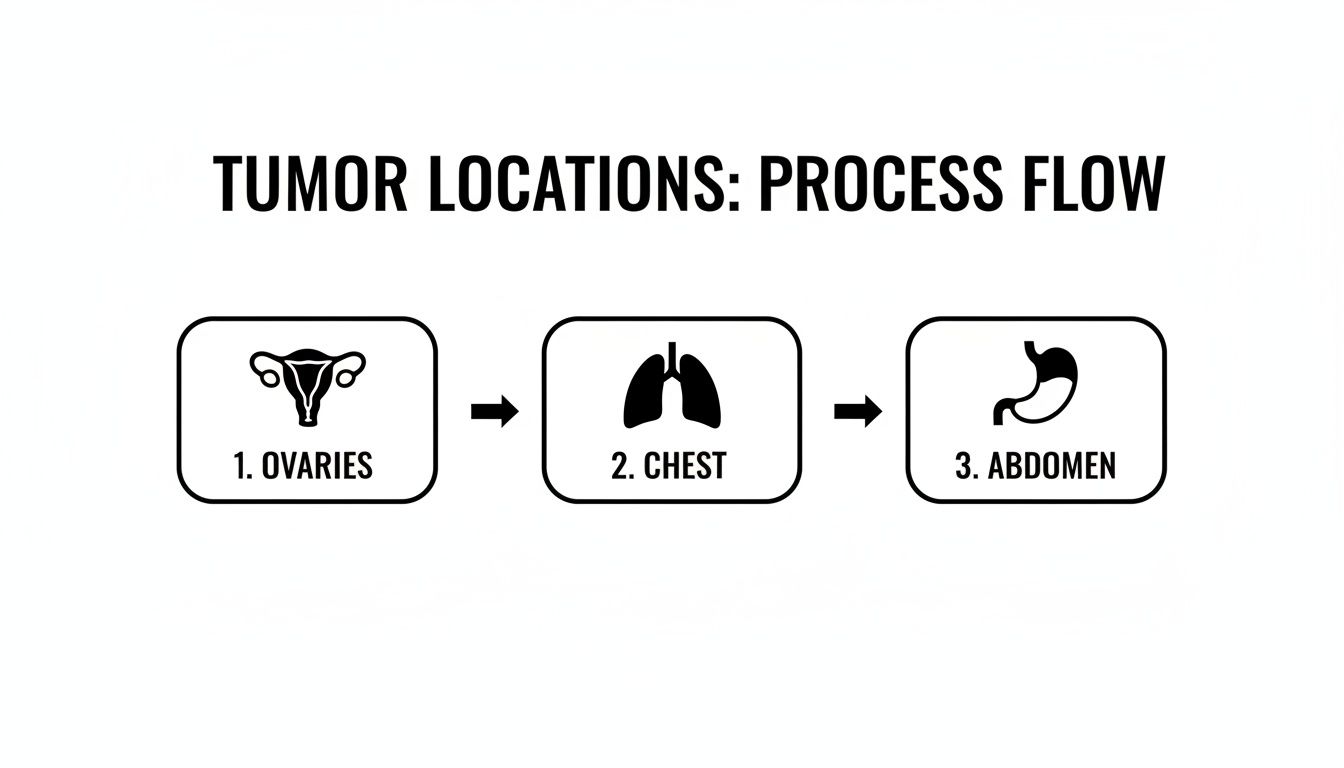
As you can see, these tumors can develop in the ovaries, chest, or abdomen, each requiring a specific imaging plan to get a clear look.
Here are the go-to imaging tests we use:
- Ultrasound: This is usually the very first test done for a suspected testicular tumor. It uses sound waves to create a live image of the scrotum and can easily tell the difference between a solid mass (which is more likely to be cancer) and a harmless, fluid-filled cyst.
- CT (Computed Tomography) Scan: A CT scan gives us detailed, cross-sectional images of your body. It’s absolutely essential for checking if cancer has spread to lymph nodes in the abdomen, your lungs, or other organs.
- MRI (Magnetic Resonance Imaging): We might use an MRI to get an even more detailed look at tumors in specific spots, like the brain or along the spine, where precision is key.
The Critical Role—And Risks—Of A Biopsy
With most cancers, a biopsy is the gold standard for diagnosis. It involves taking a tiny piece of tissue from the suspicious area to be examined under a microscope. But when we suspect testicular cancer, the rules change completely.
With a suspected testicular tumor, a standard needle biopsy is avoided at all costs. There's a high risk that puncturing the scrotum could cause cancer cells to spill and spread into nearby tissues or lymph nodes, making the cancer much more difficult to treat.
Instead, if the ultrasound and tumor markers point strongly toward testicular cancer, the standard of care is a surgery called a radical inguinal orchiectomy. In this procedure, a surgeon makes a small incision in the groin and removes the entire testicle. That tissue is then sent to a pathologist who confirms the diagnosis and identifies the exact type of germ cell cancer.
For extragonadal tumors—those in the chest, abdomen, or brain—a biopsy is usually necessary to confirm the diagnosis before treatment can begin. It provides that final, crucial piece of the puzzle, allowing your oncology team to build the most effective treatment plan just for you.
Navigating A Diagnosis With Personalized Cancer Care
Hearing the words "you have cancer" can feel like the world has stopped. A diagnosis, whether for a germ cell tumor or any other cancer, is overwhelming and marks the beginning of a new and uncertain journey. But you don't have to walk it alone.
The most important thing to know is that there is real hope. Modern oncology has come an incredibly long way, completely changing the outlook for patients—even those with advanced disease. We’ve moved far beyond the old one-size-fits-all protocols. Today, the entire focus is on you as a person, aiming not just to fight the cancer but to protect your quality of life along the way.
A New Era of Cancer Treatment
It's easy to get lost in scary projections, like the 2,114,850 new invasive cancer cases estimated for the United States in 2026. But the bigger picture tells a powerful story of progress. Since 1991, incredible advancements in treatment have helped prevent an estimated 4.8 million deaths.
We see these gains most clearly in advanced cancers. For instance, the five-year survival rate for metastatic melanoma has skyrocketed from 16% to 35%, a direct result of smarter therapies. You can explore more about these cancer statistics and survival gains. This isn't just about numbers; it's about giving people more time and better outcomes.
This progress comes from a much deeper understanding of how cancer works, which lets us use treatments that are both more effective and far gentler.
Think of a diagnosis not as a final verdict, but as the starting line. This is the moment you begin to assemble your team, understand your options, and take back control with a plan built just for you.
Finding a Plan That Fits You
Every person is unique, and so is every cancer. This is why a personalized treatment plan isn't just a nice-to-have; it's absolutely essential. An expert oncologist will analyze the specific type of germ cell tumor, its genetic makeup, where it is in your body, and your overall health to create a strategy tailored specifically to you.
The goal is to maximize effectiveness while keeping side effects to a minimum. Some of these modern, patient-focused options include:
- Low-Dose Chemotherapy: Instead of hitting the body with high-dose chemotherapy, this approach uses smaller, more frequent doses. It maintains a steady, cancer-fighting level of medicine in your system and can be just as effective but with far fewer debilitating side effects like severe fatigue, nausea, or hair loss.
- Immunotherapy: This is a brilliant way of training your own immune system to recognize and destroy cancer cells. It essentially turns your body’s natural defenses into a powerful, cancer-fighting force.
- Targeted Therapy: These are highly specialized drugs designed to find and block the specific molecules that cancer cells need to grow and spread. Because they're so precise, they tend to leave healthy cells alone.
A diagnosis is the beginning, not the end. By seeking a consultation with a specialist, you’re not just getting a doctor; you’re gaining a partner who can help you navigate every step. Together, you can explore all available options, weigh the benefits and risks, and forge a path forward that aligns with your life and your goals. To see what this looks like in practice, you can learn about personalized oncology care in our detailed guide.
Frequently Asked Questions About Germ Cell Cancer Symptoms
Even after learning about the signs, it's completely natural to have more questions. When it comes to your health, a little clarity can go a long way in calming anxiety and helping you figure out the right next steps. Let’s walk through some of the most common questions people have when trying to make sense of what their body might be telling them.
How Quickly Do Germ Cell Cancer Symptoms Appear?
This is a tough question to answer because there’s no set timeline. The speed at which germ cell cancer symptoms show up really depends on where the tumor is and how aggressive it is. Some tumors are slow-growing, or "indolent," and you might only notice subtle symptoms developing over several months. Others are far more aggressive, causing distinct changes in just a matter of weeks.
For instance, a man might feel a testicular lump one day that simply wasn't there a few weeks ago. Or, it could grow so slowly that it’s only found by chance during a routine check. On the other hand, a fast-growing tumor in the chest (the mediastinum) can trigger a cough or shortness of breath that gets noticeably worse in a very short time.
The most important thing isn't the speed, but the persistence. Any new symptom that sticks around—especially a painless lump in a testicle—is your cue to see a doctor, no matter how quickly it appeared.
Can These Symptoms Be Caused By Something Else?
Yes, and it's crucial to remember this. Almost every symptom associated with germ cell tumors can also be caused by much more common, non-cancerous conditions. That overlap is exactly why getting a proper medical evaluation is so important—it's the only way to know for sure.
Here are a few examples of how symptoms can overlap:
- Testicular Lump: A lump in the scrotum is far more likely to be a harmless issue. It could be a fluid-filled sac (hydrocele), a bundle of varicose veins (varicocele), or a simple cyst (spermatocele). Infections like epididymitis can also cause swelling and pain.
- Abdominal Bloating: For women, persistent bloating is often tied to digestive problems like Irritable Bowel Syndrome (IBS), food intolerances, or gynecological conditions like endometriosis.
- Nagging Cough: A cough that just won't quit is usually caused by something straightforward, like post-nasal drip from allergies, acid reflux (GERD), or the lingering effects of a cold.
- Back Pain: This is one of the most common reasons people see a doctor. It’s typically the result of a muscle strain, a herniated disc, or arthritis—not cancer.
While it’s natural for your mind to jump to the worst-case scenario, let a doctor do the detective work. They have the expertise to run the right exams and tests to figure out what’s really going on.
Should I Perform Self-Exams To Check For Symptoms?
Absolutely. Regular self-exams are a simple, powerful tool for catching problems early, particularly for testicular cancer. The single best way to know if something has changed is to first be familiar with what’s normal for your body.
For men, we highly recommend a monthly testicular self-exam (TSE). The ideal time is during or right after a warm shower when the scrotal skin is relaxed. Gently roll each testicle between your thumb and fingers. You're feeling for any hard lumps, smooth round bumps, or changes in the size, shape, or texture. A healthy testicle should feel firm but pliable and smooth, kind of like a peeled hard-boiled egg.
For women, there isn't a direct self-exam for ovarian germ cell tumors. Instead, the focus is on body awareness. This means paying close attention to your body and taking note of any new symptoms that don't go away, such as:
- Bloating that lasts for more than a couple of weeks.
- Pelvic pain or a feeling of pressure that is unusual for you.
- Feeling full very quickly when you eat.
- Changes in your bathroom habits that you can't explain.
For everyone, the principle is the same: Get in tune with your body. Recognizing what’s normal for you is the most effective way to spot a potential issue. If you notice a change that persists, don't just hope it goes away—bring it to a doctor’s attention. This proactive mindset is one of the best things you can do for your long-term health.
Navigating a potential diagnosis can be overwhelming, but you don't have to do it alone. The team at Hirschfeld Oncology provides compassionate, patient-first care, using advanced treatments to build a plan that fits your specific needs. If you have questions or want to explore your options, we invite you to learn more about our approach.
.png)
.png)