.png)


If you're reading this before radiation starts, you're probably trying to answer a simple question that turns into many smaller ones. What will this feel like? Which problems are temporary? What can you do now to make treatment easier later?
If you're already in treatment, the questions usually become more practical. Why does my mouth hurt? Why does food taste wrong? Why is swallowing harder than it was last week?
Head and neck radiation side effects can feel overwhelming because they affect the basic things that make daily life feel normal: eating, drinking, talking, sleeping, and being comfortable in your own body. The good news is that side effect care isn't an afterthought. It's part of treatment. When patients and families know what to watch for, report symptoms early, and use supportive care step by step, they often keep better control over nutrition, hydration, and quality of life.
This guide follows the timeline most patients live through. It starts with what radiation is doing, moves through the common problems that show up during treatment, and then looks at the months and years after therapy ends.
How Radiation Works and Why It Affects Your Head and Neck
The first week before treatment often feels strangely quiet. You may look the same, sound the same, and wonder how a machine that works from outside the body could change something as personal as eating, speaking, or swallowing. That question is a good place to start, because understanding the process makes the side effects feel less unpredictable.
Radiation therapy uses high-energy beams to injure the DNA inside cancer cells. Cancer cells are less able to repair that injury, so over time they stop dividing and die. Treatment is carefully mapped so the highest dose reaches the tumor while nearby normal tissues receive as little radiation as possible.
Radiation works a lot like pulling weeds from a tightly planted garden. The goal is to remove the harmful growth while protecting the healthy plants around it. In the head and neck, that job is harder because so many important structures are packed into a small space.

Why normal tissue gets affected
Your mouth, throat, salivary glands, skin, jaw, voice box, and swallowing muscles all sit close together and often close to the cancer itself. These tissues are important because they keep the mouth moist, help food move safely, protect the teeth, shape your voice, and make daily comfort possible.
Some of these tissues also renew themselves quickly. The lining inside the mouth and throat, for example, is always replacing old cells with new ones. Radiation can irritate that process. Salivary glands are different, but they are also sensitive, which is why dry mouth can appear during treatment and sometimes last afterward.
This helps explain a pattern many families notice. Side effects in head and neck radiation are usually not random. They tend to show up in the same group of functions that live in the treatment area: moisture, taste, skin comfort, voice, and swallowing.
Why side effect planning starts early
Good side effect care begins before the first symptom appears. I often tell patients to picture treatment as a long trip rather than a single appointment. You do better when the car is packed before the road gets rough.
Practical rule: Start supportive care when treatment starts, not when side effects become severe.
That early plan may include oral rinses, fluoride protection, skin care, swallowing exercises, nutrition support, and fast reporting of new pain or trouble eating. If tooth sensitivity is already part of daily life, the Mouthology guide on dentin hypersensitivity can help you understand one piece of why mouth care becomes more important during radiation.
This step-by-step approach is a big part of preserving quality of life. At Hirschfeld Oncology, side effect management is treated as part of the radiation plan itself, not as something added later. If you want a broader overview before treatment begins, Hirschfeld Oncology's patient guide to the effects of radiation therapy explains the basics in plain language.
Managing Acute Side Effects During Your Treatment
By the second or third week of treatment, a common scene plays out at home. Dinner is on the table, but your mouth feels sore, your throat feels tight, and even foods you usually enjoy do not taste right. Nothing has gone terribly wrong. This is often how acute side effects begin. They build step by step, which means we can respond step by step too.
That timeline gives you an advantage. When families know what usually appears first, they can watch for small changes, report them early, and keep everyday problems from turning into bigger ones. At Hirschfeld Oncology, that is the goal during radiation. Protect eating, comfort, hydration, and daily function while treatment continues.
What tends to show up first
Mouth and throat soreness often appear early. You may hear this called mucositis. The lining of the mouth and throat renews itself quickly, and radiation can irritate that delicate surface. Patients often describe a raw, burning, or scraped feeling, especially with meals.
Skin irritation in the treated area often follows a steady pattern. It may start as mild pinkness and progress to redness, tenderness, dryness, or peeling. A sunburn is a useful comparison, but this reaction can be more sensitive because the skin is being exposed repeatedly over several weeks.
Taste changes can be surprisingly upsetting. Food may seem metallic, bitter, bland, or entirely incorrect. This is frustrating because it can make eating feel pointless, even when your body still needs steady calories and protein to heal.
Fatigue also builds over time. This is not just sleepiness. Many patients describe it as having less reserve, like your body's battery is not holding a full charge by the end of the day.
Quick Guide to Common Acute Side Effects
| Side Effect | Typical Onset | Key Management Tip |
|---|---|---|
| Mouth and throat soreness | Often begins in the first part of treatment and increases gradually | Use prescribed rinses consistently and report pain before eating starts to slip |
| Skin irritation | Usually develops slowly in the treated area | Clean gently, avoid friction, and check with your radiation team before using creams |
| Taste changes | Often become more noticeable as treatment continues | Focus on texture, moisture, and nutrition, not just flavor |
| Fatigue | Commonly builds week by week | Save energy for the parts of the day that matter most and accept practical help |
What helps at home
Start with a daily routine, even on days you feel fairly good. Side effect care during radiation works like brushing snow off a walkway before it turns to ice. Small, regular steps are easier than trying to recover after symptoms have piled up.
For mouth soreness, gentle care usually works better than aggressive cleaning. Use the rinses your team recommends, brush with a soft toothbrush, and avoid alcohol-based mouthwashes unless your clinician wants you to use one. If cold foods sting, or acidic foods like citrus burn, pay attention to that pattern. It helps us adjust your diet before pain starts limiting fluids or meals.
Skin care should stay simple. Wash with lukewarm water, pat the area dry, and avoid rubbing, tight collars, harsh shaving, or adhesive products on sensitive skin. If your team recommends a cream, use it exactly as directed and ask when to apply it in relation to treatment appointments.
Taste changes often improve when patients stop chasing flavor alone. Temperature and texture matter just as much. Cool smoothies, yogurt, eggs, oatmeal, soups, and moist pasta are often easier to tolerate than dry meats, toast, or crunchy foods.
Pay attention to your teeth too. Radiation, dry mouth, and changes in oral care can make sensitivity more noticeable. For people whose teeth are becoming more sensitive during treatment, practical dental comfort strategies can help alongside your oncology plan. This Mouthology guide on dentin hypersensitivity offers a patient-friendly explanation of what can worsen sensitivity and what products may feel gentler.
One rule matters throughout treatment. Report symptoms while they are still manageable. If swallowing becomes sharply painful, if you are drinking less, if your weight starts to drop, or if your skin reaction changes quickly, tell your team early. Early action gives us more room to keep you comfortable and on track.
If you want a practical home reference, Hirschfeld Oncology's guidelines for managing side effects during cancer treatment can help you organize daily symptom tracking and supportive care.
Strategies for Dry Mouth and Swallowing Problems
Dry mouth and swallowing trouble deserve special attention because they affect nearly every hour of the day. They can interfere with meals, sleep, conversation, dental health, and medication-taking. They also tend to feed into each other. When the mouth is dry, swallowing often feels harder. When swallowing hurts, people drink less, which can make dryness worse.

Dry mouth needs daily routine care
Radiation can reduce saliva production because the salivary glands are sensitive structures in the treatment field. Saliva does more than make the mouth feel comfortable. It protects teeth, helps with speaking, and starts the swallowing process.
What helps is usually a combination approach:
- Keep moisture close by: Sip water often, use ice chips if soothing, and carry fluids with you rather than waiting until you're thirsty.
- Choose moist foods: Add broth, gravy, olive oil, sauce, yogurt, or extra dressing to meals so the food moves more easily.
- Use saliva support products: Saliva substitutes, oral gels, and alcohol-free rinses can make the mouth more comfortable, especially overnight.
- Protect teeth: A dry mouth raises cavity risk, so fluoride use and close dental follow-up matter.
If you're comparing rinse options, this Biotene dry mouth guide on DentalHealth.com gives a practical overview of one commonly used product category and when patients often find it helpful.
Swallowing problems are mechanical, not just painful
Many people assume swallowing trouble is only about throat pain. Pain is part of it, but swallowing also depends on muscle coordination, moisture, and maintaining motion during treatment.
That is why speech-language pathologists are so important in head and neck care. They don't just help after a crisis. They can teach exercises and swallowing strategies meant to keep the system working as well as possible while tissues are inflamed and healing.
Helpful day-to-day steps often include:
- Take smaller bites and sips. This reduces the effort needed for each swallow.
- Use soft, slick foods. Puddings, soups, scrambled eggs, smoothies, mashed vegetables, and oatmeal are often easier than dry bread or dense meat.
- Alternate bites with sips. Liquid helps move food through.
- Stay consistent with prescribed swallowing exercises. These are part of treatment, not optional homework.
- Tell your team if pills stick or coughing increases. Those details help guide the next step.
For a broader nutrition-focused view, Hirschfeld Oncology's guide to optimizing nutritional support during treatment is a useful companion when eating becomes more difficult.
A short visual explanation can make these techniques easier to picture in real life:
Temporary versus lasting changes
Patients deserve honesty here. Some symptoms improve in the weeks after treatment, but not every change fully disappears.
Cancer Research UK notes that while some issues such as mouth sores improve weeks after treatment, others may persist, and osteoradionecrosis of the jaw occurs in about 5 to 7% of people who receive head and neck radiation in their head and neck radiotherapy side effects information. The practical takeaway is that dry mouth and swallowing changes need attention both during recovery and long after treatment ends.
Understanding Long-Term Side Effects After Radiation
Many patients feel a real sense of relief when the last radiation session is over. That relief is deserved. But it's also important to know that some head and neck radiation side effects follow a different timeline from the mouth sores and skin irritation that happen during treatment.
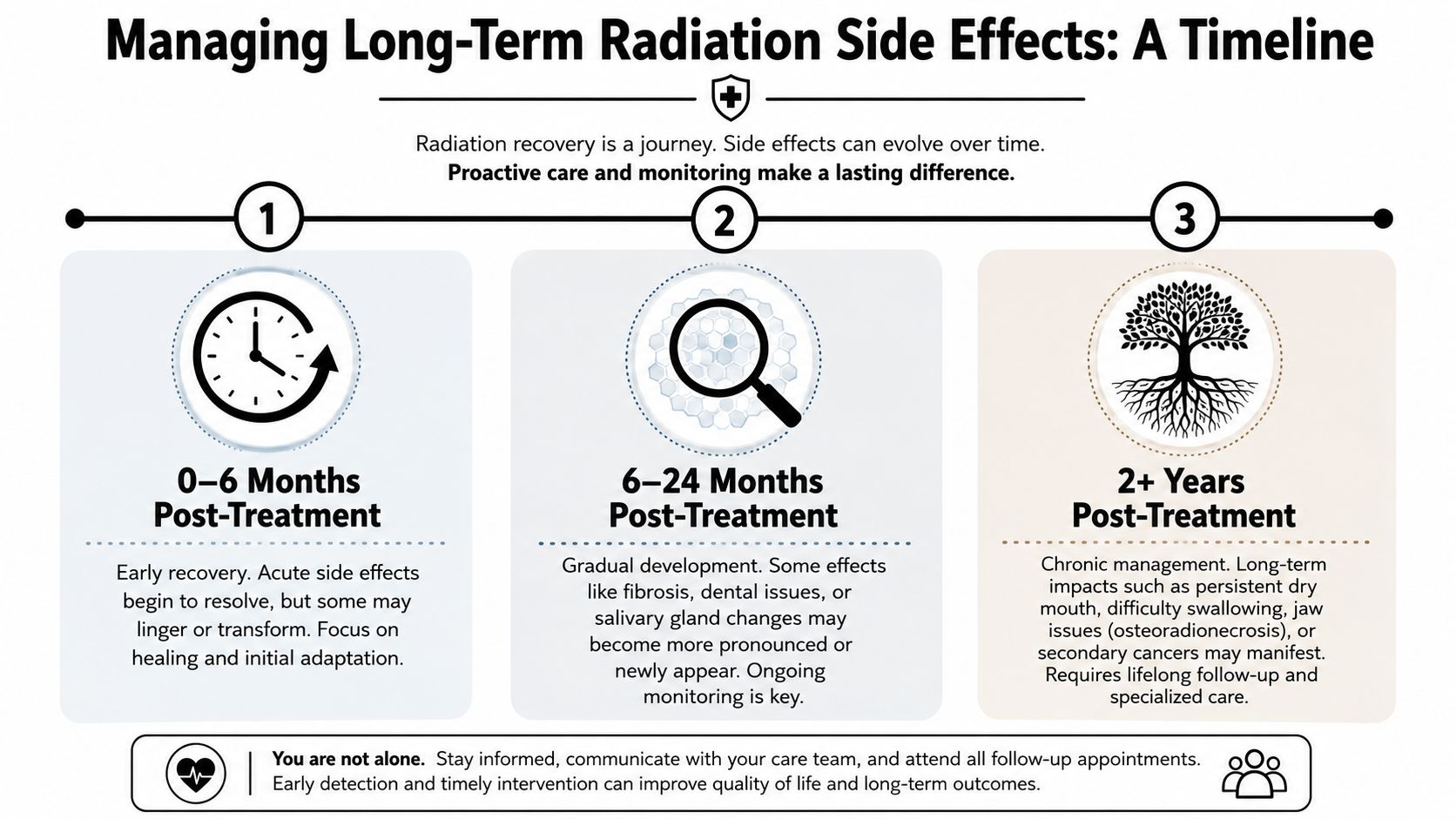
Late effects can begin months or years later. They happen because radiation can leave behind structural changes in tissue, including fibrosis, vascular injury, and reduced healing capacity. These are not acute side effects that took longer to settle down. They're a different category of injury.
When late effects can appear
The American Cancer Society notes that delayed radiation effects can begin anywhere from 6 months to years after treatment ends, and for head and neck treatment these may include permanent loss of saliva, osteoradionecrosis, and stenosis in their guide to radiation effects on different parts of the body. That same resource notes that some swallowing problems may begin 8 to 10 years after treatment.
That timeline surprises families. A patient may feel reasonably stable at one year and still develop meaningful swallowing or jaw problems much later. This is one reason follow-up care shouldn't just fade away once the acute recovery period passes.
The long-term issues patients should know about
Some of the most important late problems involve function rather than pain alone.
- Permanent salivary loss: This can affect comfort, speech, sleep, and cavity risk.
- Dental decay: A dry mouth changes the mouth's natural protection, so cavities can develop faster.
- Pharyngoesophageal stenosis: Scar-related narrowing can make food feel stuck.
- Fibrosis and stiffness: Tissues may tighten over time, affecting neck movement, jaw opening, and swallowing.
- Hypothyroidism: Radiation to the neck can reduce thyroid function, so lab monitoring matters.
- Lymphedema: Some patients develop persistent swelling in the neck or face.
- Osteoradionecrosis: This is damage to jawbone that heals poorly and can become serious.
Why dental and thyroid follow-up matter
Late effects often become visible first in ordinary life. A patient notices they're sipping water through the night. Food starts catching in the throat. Dental cleanings become more important. Neck tightness slowly increases.
What matters most: Don't judge your long-term risk only by how you feel right after treatment ends.
This is also why dental clearance before radiation and ongoing dental care afterward are such a central part of head and neck treatment planning. The same logic applies to thyroid monitoring. Reduced thyroid function can develop gradually and may show up as fatigue, cold intolerance, constipation, or mental slowing, all of which can be mistaken for general post-cancer exhaustion unless someone checks.
A practical surveillance mindset
You don't need to live in fear of every new sensation. You do need a system.
Keep a running list of swallowing changes, dental issues, neck stiffness, and voice changes. Bring that list to follow-up visits. If a problem is slowly evolving, details matter more than memory.
Recovery after radiation isn't a straight line. Some changes improve, some stabilize, and some need long-term management.
That realistic view often helps patients feel more in control, not less.
How Modern Radiation Techniques Minimize Side Effects
After hearing about dry mouth, swallowing trouble, and late effects, many patients ask the most important planning question. Can anything be done up front to lower these risks?
In many cases, yes. Modern radiation planning is built around the idea that where the dose goes matters just as much as the total intent of treatment. The more precisely a team can shape radiation around the tumor while avoiding nearby healthy structures, the better the chance of preserving function.
Why precision matters in the head and neck
The head and neck contains salivary glands, swallowing muscles, nerves, blood vessels, the jaw, and the thyroid in a compact space. A small difference in dose distribution can change how much stress those structures receive.
One source notes that conventional chemoradiation can cause significant dry mouth in 70 to 80% of patients, while precision approaches such as IMRT and proton therapy aim to reduce this by sparing salivary glands and swallowing muscles in this overview of side effect reduction with modern radiation approaches. That doesn't mean side effects disappear. It means planning choices can meaningfully influence which tissues are exposed and how intensely.
What to ask your radiation team
A useful consultation isn't only about the cancer target. Ask how the plan accounts for function.
Consider questions like these:
- Which structures are being protected if possible: Salivary glands, swallowing muscles, jaw, thyroid, and oral cavity.
- What side effects are most likely in my specific treatment field: Not every head and neck plan affects the same tissues.
- Whether adaptive planning may be needed: Changes in anatomy during treatment can sometimes justify plan adjustment.
- What supportive care starts before symptoms begin: Precision treatment and supportive care work best together.
Techniques such as IMRT don't replace daily symptom management. They complement it. A thoughtfully designed plan can reduce collateral damage, and early intervention helps patients make the most of that advantage.
For patients who are also weighing quality of life carefully because of advanced or treatment-resistant disease, this is often one of the most important discussions in the entire treatment process.
Building Your Symptom Management and Support Team
On week two or three of treatment, a common pattern shows up. A patient starts eating less because swallowing hurts. Then fluids drop, energy falls, medications become harder to take, and a manageable symptom turns into an urgent problem. The goal of your support team is to catch that chain reaction early and stop it before it gains momentum.
Head and neck radiation side effects rarely stay in one lane. Mouth pain can affect nutrition. Dry mouth can raise the risk of cavities and gum trouble. Neck stiffness can change posture, jaw opening, and day-to-day comfort. Good care works like a relay team, with each clinician taking the part of the course they know best while staying in communication with the others.

Who does what
Your radiation oncologist watches for patterns that fit the treated area, checks whether side effects are following the expected timeline, and decides when a symptom needs a change in the treatment plan, medications, or a referral.
A radiation oncology nurse is often the person families speak with most during treatment. Nurses help with mouth care routines, skin reactions, hydration concerns, pain control questions, and the practical details that can make each day easier.
A registered dietitian helps protect strength and healing. If food starts to feel like work, the dietitian can suggest higher-calorie options, texture changes, protein strategies, and ways to keep fluids up without making eating more uncomfortable.
A dentist familiar with head and neck radiation should stay involved before treatment, during recovery, and long after radiation ends. The reason is simple. Teeth, gums, saliva, and jawbone all affect one another. Small dental problems are much easier to handle than advanced ones, especially after radiation has changed healing in the treated area.
A speech-language pathologist looks at swallowing and, when needed, speech. They teach exercises, safer swallowing strategies, and food or liquid modifications that can lower frustration and reduce risk.
A physical therapist can help with neck tightness, jaw opening, posture, shoulder function, and lymphedema. These problems may sound separate from cancer treatment, but they often shape sleep, eating, driving, and daily comfort.
At the practice level, Hirschfeld Oncology provides patient education, treatment monitoring, and symptom-management guidance as part of outpatient oncology care. That kind of structure helps patients and families know who to call, what to track, and when to ask for help.
Red flags that deserve a same-day call
Call your treatment team the same day if any of these show up:
- You cannot drink enough to stay hydrated: Very dark urine, dizziness, dry mouth that suddenly worsens, or trouble keeping up with fluids should not wait.
- Pain breaks through your current plan: This matters most if swallowing becomes harder over a day or two.
- You stop eating because of mouth or throat symptoms: Early support can prevent weight loss, dehydration, and treatment interruptions.
- You develop fever or shaking chills: Infection needs prompt review.
- You cough or choke more often when swallowing: That can mean food or liquid is going down the wrong way.
- Your mouth bleeding, skin breakdown, or jaw pain gets worse quickly: A sharp change deserves evaluation.
Ask for help early.
That is not being alarmist. It is good symptom management. A small problem handled on Monday is often much easier to fix than dehydration, uncontrolled pain, or several missed meals by Thursday.
Family members are part of this team too. They often notice reduced eating, confusion, fatigue, or changes in speech before the patient does. If you are the caregiver, trust what you are seeing and report it.
Frequently Asked Questions About Life After Radiation
Can I still get dental work after head and neck radiation
Usually yes, but the type of dental work matters. Cleanings, cavity care, and preventive fluoride support are commonly part of long-term care. Extractions and other procedures that affect bone need more caution because healing may be impaired. Always tell your dentist exactly where you received radiation and ask them to coordinate with your oncology or head and neck team before major dental work.
Will my taste come back completely
Sometimes taste improves a lot. Sometimes it returns only partly, and some foods never taste exactly the same. Patients often do best when they stop waiting for food to taste "normal" and start experimenting with temperature, texture, moisture, and seasoning tolerance. Recovery can continue over time, but it isn't identical for everyone.
Is it normal to feel anxious about eating, intimacy, or social situations afterward
Yes. These concerns are common and understandable. Head and neck treatment can change speech, saliva, eating speed, appearance, breath comfort, and confidence. The best response is to treat those problems as medical and emotional issues at the same time. Speech therapy, dental care, symptom control, counseling, and honest conversations with a partner can all help. You don't need to minimize these changes to be strong.
If you or a loved one is dealing with treatment side effects, quality-of-life concerns, or questions about next-step cancer care, Hirschfeld Oncology offers educational resources and consultation information designed to help patients and families make informed decisions with a clear plan.
.png)
.png)