.png)


The first step in coping with a cancer diagnosis is giving yourself permission to feel the initial shock. There's no right or wrong way to react. It's about taking a moment to breathe, absorb what you can, and lean on one trusted person in those first few disorienting hours and days. The goal isn't to have all the answers right away—it's just to steady yourself for the road ahead.
Your World Just Changed: What to Do First

Hearing the words "you have cancer" is a moment that stops time. The world can feel like it's tilted on its axis, and your mind might either race with a million questions or go completely blank. Shock, fear, anger, numbness—all of these are completely normal reactions.
This initial period is about survival, not strategy. Your only job right now is to breathe and give yourself some grace. Don't feel pressured to put on a brave face or have an immediate plan. The most important thing you can do is simply acknowledge the weight of the news without letting it completely swallow you.
Anchor Yourself with Small Actions
When everything feels like it’s spinning out of control, tiny, tangible actions can be a lifeline. These tasks aren't about solving the whole puzzle at once. They're about grounding yourself in the here and now.
- Start a Notebook: Grab any notebook and pen. This will become your command center for questions, appointment times, doctor's names, and random thoughts. Getting it all down on paper helps clear the chaos from your head, making it feel more manageable.
- Designate a Support Person: Choose one reliable friend or family member to be your sidekick for the first few appointments. They can be a second set of ears to catch things you miss, take notes for you, and just be a supportive presence when you feel too overwhelmed to speak up.
- Practice Grounding Yourself: If you feel a wave of anxiety, try this simple trick. Name five things you can see, four things you can touch, three things you can hear, two you can smell, and one you can taste. This little mindfulness exercise pulls your focus out of the future and back into the present moment.
Gather Your Thoughts, Not Just Information
It’s so tempting to dive down an internet rabbit hole, but this often just leads to more fear and a lot of bad information. Instead, channel that energy into preparing for your first real follow-up appointment with your doctor.
Use that notebook to write down every single question that pops into your head, no matter how small or silly it might seem. Organizing your questions is a powerful way to cope because it shifts you from passively worrying to actively participating in your own care. If you need some help getting started, you can find a list of common questions at https://honcology.com/questions-answered-resources.
"Your first goal is not to become a cancer expert overnight. It is to find your footing. Give yourself permission to be a patient—to be cared for, to ask for help, and to process one piece of information at a time."
It’s also important to know you aren’t alone in this. Projections estimate that in 2025, there will be 2,041,910 new cancer cases in the U.S., and about 20 million new cases are diagnosed worldwide every year. These aren't just statistics; they represent a huge community of people and a massive global effort dedicated to fighting this disease.
Your Immediate Action Checklist After Diagnosis
That first day can be a blur. This simple checklist helps you focus on the absolute essentials to regain a small sense of control.
Think of these as your first few steps on a long path. You don't need to see the whole staircase; just focus on the step in front of you.
Sharing Your Diagnosis with Loved Ones

Figuring out who, when, and how to tell people about your cancer diagnosis is a deeply personal process. There's no script and definitely no right or wrong way to do it. You are in the driver's seat, and it's perfectly fine—often essential—to give yourself time to sit with the news before letting anyone else in.
Before opening up, take a quiet moment to consider what you hope to get from the conversation. Do you need a shoulder to cry on? Practical help with meals or rides? Or are you simply informing someone out of necessity? Clarifying your own needs first helps you guide the conversation and manage your expectations.
Who to Tell and How to Start the Conversation
Most people begin with their innermost circle—a spouse, a partner, or a lifelong best friend. These are the people you can count on to be your rock. Try to find a time when you’re in a private, comfortable space, free from interruptions or time pressure.
It can feel impossible to find the right words, so it helps to have an opener ready. Just getting that first sentence out can break the ice.
You could try something direct yet gentle, like, "I need to talk to you about something serious. I got some tough health news, and I wanted you to hear it directly from me."
After that initial conversation, you can decide when—or if—you want to tell others. There's no need to inform everyone at once. Some people find it incredibly helpful to appoint a trusted friend or family member to be the point person for updates. This can save you the exhausting emotional labor of retelling the story over and over.
Setting Boundaries and Handling People's Reactions
Once you start sharing, you'll find that people react in all sorts of ways. Some will rush in with support, others might awkwardly say the wrong thing, and some may even pull back because they're scared or don't know what to say. Being mentally prepared for a spectrum of reactions is a form of self-protection.
It’s also vital to set clear boundaries right away. Well-meaning friends and family might offer help that isn't actually helpful. Don't be afraid to be specific and direct about what you truly need.
- For the "look on the bright side" friend: "I really appreciate your positive spirit, but what I need right now is for someone to just sit with me while I'm scared, without trying to fix it."
- For the person full of unsolicited advice: "Thank you for sharing that. I'm focused on the plan from my medical team right now, but I appreciate you thinking of me."
- For the friend who goes quiet: Try to remember that their silence is likely about their own fear, not about you. It's okay to feel hurt, but try to reserve your energy for those who can show up for you.
It is 100% okay to say, "I'm not up for talking about that today," or "The best way you can help right now is..." This isn't selfish—it's necessary self-care.
Talking to Kids and Your Employer
Telling your children is often the conversation parents dread most. The key is to be honest in a way they can understand. Reassure them that the cancer is not their fault and that they will always be looked after. Young kids need simple, concrete information, such as, "I have an illness called cancer. The doctors are giving me strong medicine to make me better, but it might make me very tired sometimes."
Talking to your employer is a different kind of conversation, focused more on logistics. You are not obligated to disclose all the details. Instead, focus on how your diagnosis and treatment might affect your work and what accommodations you might need, like a flexible schedule for appointments. It can also be empowering to familiarize yourself with your rights under the Americans with Disabilities Act (ADA).
Navigating Your Cancer Treatment Options
Once you’ve had some time to process the diagnosis, the conversation inevitably shifts to treatment. This moment can feel overwhelming, like you’ve been handed a complex map written in a language you don’t understand.
It's so important to remember that you are not just a passenger on this journey. You are the navigator, working hand-in-hand with your medical team to chart the best course forward for you. You have a voice in every decision, and the right path is one that balances medical expertise with your own personal values and quality-of-life goals. Your doctors bring the science; you bring the critical knowledge of what makes your life yours.
Becoming an Active Partner in Your Care
To make informed decisions, you first need good information. While the urge to search everything online is strong, it's vital to stick to trusted sources—materials from your oncology team or reputable cancer organizations. This ensures the information you're getting actually applies to your specific type and stage of cancer.
Next, start a running list of questions for your doctors and nurses. Seriously, no question is too small or silly. This is your life and your body. You deserve to understand everything.
To make your appointments as productive as possible, try grouping your questions by topic:
- My Diagnosis: Can you walk me through my pathology report? What does the stage of the cancer mean for me?
- Our Goals: Are we trying to cure the cancer, keep it from growing, or focus on managing my symptoms?
- The Plan: What are all the different treatment options? What are the real pros and cons of each one?
- Daily Life: How will this affect my job, my family, and my day-to-day routine? What side effects should I prepare for, and how will we manage them?
Taking this kind of proactive approach helps you shift from feeling like a passive patient to being an engaged partner in your own care. That shift can be an incredibly powerful coping tool.
The best treatment plan isn't just about what works in a lab—it's about what works for your life. Your perspective is a non-negotiable part of the equation.
Understanding Treatment Goals and Weighing Your Options
Cancer treatments can have different aims, and it's crucial to be clear on what the goal is for your specific situation. A curative treatment is designed to get rid of the cancer completely. On the other hand, palliative treatment focuses on improving your quality of life by managing symptoms and controlling the disease, even if a cure isn't the primary goal. You need to have a completely honest talk with your doctor about the realistic expectations for any proposed plan.
Weighing the options is a deeply personal calculation. One person might opt for a more aggressive treatment with tough side effects because it offers a higher chance of a cure. Someone else in a similar position might prioritize their current quality of life, choosing a less intense therapy that keeps the cancer stable. There is no single "right" answer here, only what feels right for you. For a deeper dive, you can learn more about balancing treatment effectiveness with life quality in our guide to chemo and radiation.
It's also important to hold onto the incredible progress that's been made in cancer care. The cancer mortality rate has been steadily declining for decades, with medical advances helping to avert nearly 4.5 million deaths since 1991.
This progress, driven by better detection and more effective therapies, means you have more and better options than ever before. You can learn more about these positive trends in cancer survival rates. Working closely with your team, asking questions, and being clear about your priorities will empower you to create a treatment plan that feels right—restoring a vital sense of hope and control.
Managing the Day-to-Day Realities of Cancer
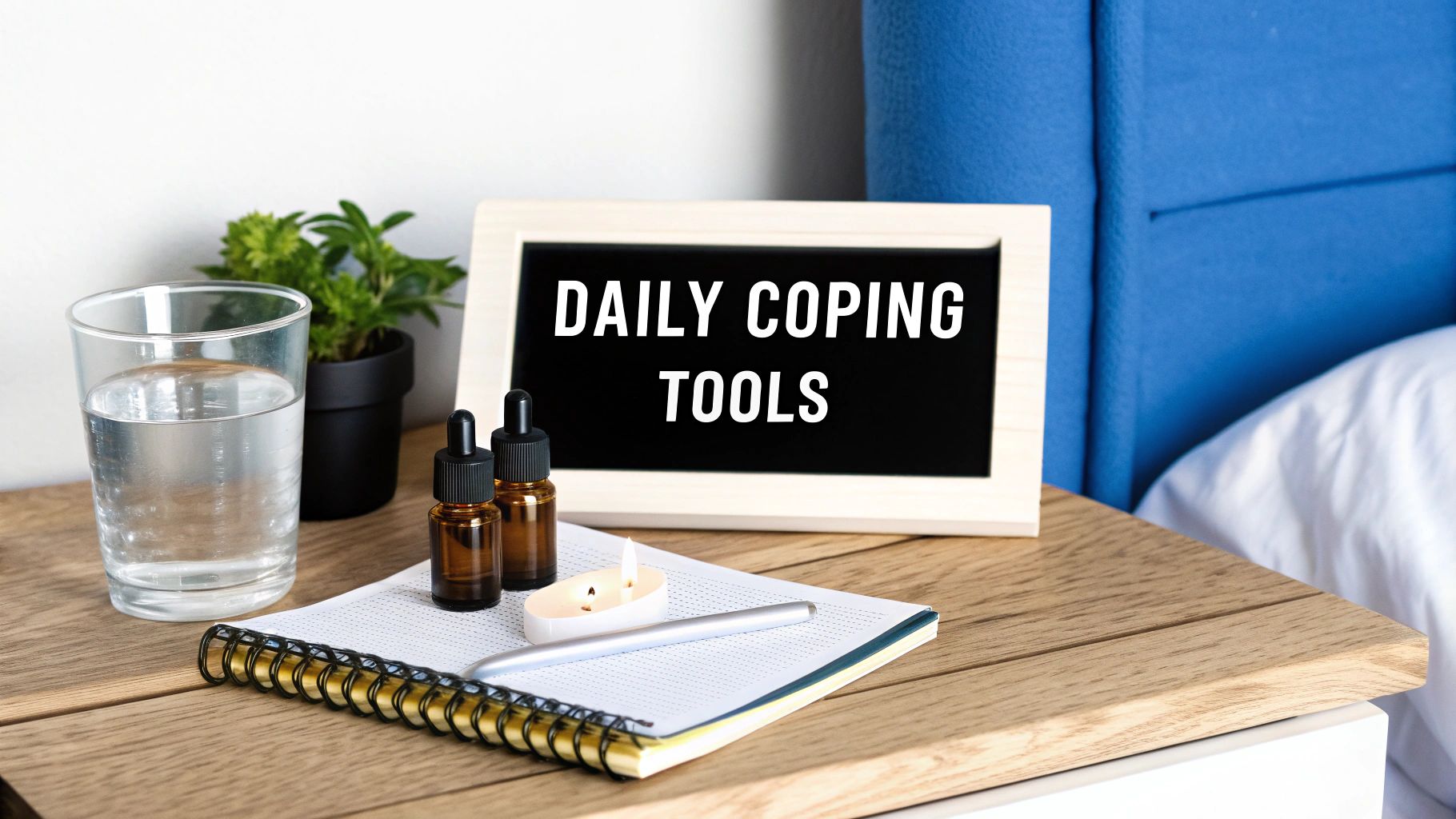
Living with cancer often means finding a new rhythm, one that carefully balances treatment with the simple need to feel like yourself. This part of the journey is about so much more than just medical appointments; it’s about learning to navigate the daily physical and emotional waves that come with the territory.
Putting together a personal toolkit of small, consistent actions can help you reclaim a sense of control and find moments of calm, even on the hardest days. It's about practical well-being. How do you handle the bone-deep fatigue that chemotherapy can bring? How do you quiet the anxiety that might creep in during a sleepless night? The answer often lies in gentle, manageable adjustments to your daily routine that honor what your body and mind need in that moment.
Addressing Physical Side Effects with Gentle Care
Treatment side effects can be a major source of stress, but you have more power over them than you might think. A few simple, intentional choices can make a significant difference in how you feel from one day to the next.
Fatigue, for example, is one of the most common complaints. While it seems counterintuitive, gentle movement can actually work wonders. A short, slow walk around the block or a few simple stretches in the morning can boost your energy levels more than staying in bed.
Nausea is another frequent hurdle. Instead of three large meals, try eating smaller, more frequent snacks throughout the day. Keep bland foods like crackers or toast nearby, and stay hydrated with sips of water, ginger tea, or clear broth. It’s all about working with your body, not against it. For a deeper dive, check out our guide on essential strategies for managing side effects and improving quality of life during cancer treatment.
Nurturing Your Emotional Well-Being
The emotional toll of a cancer diagnosis is just as real as the physical one. It's completely normal to feel fear, anxiety, and sadness. Finding healthy outlets to process these feelings isn't an indulgence—it's a critical part of your overall health.
Your emotional state directly impacts your physical resilience. Carving out time for mental self-care is as important as any medical treatment you receive.
Creative expression can be a powerful release, and you don't need to be an artist to benefit from it.
- Journaling: Try writing just one sentence about how you feel each day. This simple act of putting feelings on paper can make them feel far less overwhelming.
- Mindfulness: A five-minute guided meditation using a free app on your phone can make a huge difference. Focusing on your breath anchors you in the present and can calm a racing mind.
- Connecting with Nature: If you're able, just sit outside for ten minutes. Feeling the sun on your skin or listening to the birds can offer a profound sense of peace and perspective.
These practices aren't about erasing difficult emotions, but about creating space to breathe alongside them.
Taking Control Through Lifestyle Choices
Finding ways to take action, no matter how small, is incredibly empowering. Focusing on things you can change, like certain lifestyle habits, can be a positive way to participate in your long-term health and restore a tangible sense of control.
Research shows that at least 40% of newly diagnosed cancers in U.S. adults are potentially avoidable through lifestyle modifications. By addressing factors like diet and exercise, you are actively contributing to your own well-being. This isn't about blame; it's about empowerment moving forward.
The goal isn't perfection. It’s about making small, sustainable choices that honor your health. Each positive step, no matter how minor, reinforces that you are more than your diagnosis—you are an active participant in your own life and healing.
Building Your Personal Support System

After a cancer diagnosis, it's a common instinct to pull back and try to carry the weight of it all by yourself. But if there’s one truth I've seen over and over, it’s this: you don’t have to go it alone. In fact, a strong, reliable support system is one of the most powerful tools you have. Think of it as a safety net woven from the people and resources that can lift you up when you need it most.
Putting this system together is an active process. It’s about more than just having people around; it's about figuring out what you actually need and then learning how to ask for and accept that help. Support shows up in all sorts of ways, from the quiet presence of a loved one during a tough chemo session to the practical advice you get from someone who’s already walked this path.
Identifying Different Kinds of Support
Your needs are going to change constantly—from day to day, and sometimes even hour to hour. It helps to recognize the different kinds of support available so you can seek out the right person for the right task. It’s important to remember that not everyone in your life can fill every role, and that's perfectly okay.
- Emotional Support: This is the person you call when you’re scared, furious, or just need to have a good cry without being judged. It might be your partner, your best friend, or that one family member who is a truly phenomenal listener.
- Practical Support: I call this the "get it done" crew. These are the people who help ease the daily grind. It could be the neighbor who offers to walk your dog, the friend who organizes a meal train, or a coworker who volunteers to cover your shift.
- Informational Support: This comes from the people who can help you make sense of the medical world. Think of the nurse navigator at your hospital, a trusted friend with a medical background, or even someone from a support group who can share their firsthand experience with a specific treatment.
Take a moment to think about the people in your life. Who naturally fits into each of these categories? Knowing this ahead of time makes it so much easier to direct your requests to the right person, which in turn makes it easier for them to say yes.
Finding Strength in Shared Experiences
While your friends and family are your anchors, there's a unique and powerful comfort that comes from connecting with people who truly get it. Support groups, whether they meet in person or online, create a space where you don't have to explain the medical jargon or the middle-of-the-night fears.
These groups offer a mix of emotional validation and practical tips you just won’t find anywhere else. Hearing how someone else managed a tricky side effect or navigated a difficult conversation with their boss can be incredibly empowering. For those in New York City, organizations like Gilda's Club NYC and CancerCare are fantastic resources, offering free support groups that build vital local communities for both patients and their families.
"Your friends and family love you, but they can't truly know what it's like. In a support group, you find your people. You can take off the brave face and just be a person living with cancer, and that is a profound relief."
Learning to Ask for—and Accept—Help
For so many of us, asking for help feels like admitting weakness or being a burden. It’s time to completely reframe that thought. Accepting help is an act of strength and a crucial part of self-care. It also gives your loved ones a tangible way to show they care, which helps them feel a little less helpless.
When you do ask, be specific. Instead of a vague, "I could use some help," try, "Would you be able to pick up my prescription on Tuesday afternoon?" People are far more likely to jump in when they have a concrete task.
A simple tool like a Google Doc or a dedicated website like CaringBridge can be a game-changer. You can create a shared list of needs—from rides to appointments to groceries—and let your support circle sign up for what they can handle. This takes the pressure of coordinating off your shoulders and lets people contribute in ways that feel genuinely meaningful.
Navigating Your New Normal: Common Questions Answered
As you move forward, you'll find that living with and beyond cancer brings its own set of questions. It's completely normal for new worries to crop up, sometimes when you least expect them. Think of this section as a quick reference guide—a place for clear, compassionate answers to some of the most common concerns that come up on this journey.
"Will I Ever Stop Worrying About It Coming Back?"
The fear of recurrence is real, and it’s probably one of the most common emotional hurdles survivors face. It’s that little voice in the back of your mind during follow-up scans or the thought that keeps you up at 3 a.m. The first step, and honestly the most important one, is to acknowledge it. Pushing it away only gives it more power.
So, what can you actually do? Grounding techniques can be a huge help. Things like simple breathing exercises or a mindfulness practice can pull your focus back to the present moment instead of letting it spiral into "what ifs." There’s also a real sense of control that comes from sticking to your follow-up care plan—making it to every single appointment and scan is an action you can take for your health.
Above all, you don't have to carry this weight by yourself. It’s a game-changer to talk about this fear with a therapist who gets it (especially one who specializes in oncology) or in a support group with people who truly understand what you’re feeling. Many people find that as more time passes, the sharp edges of that fear do begin to soften.
"I Feel So Angry Sometimes. Is That Normal?"
Yes, absolutely. Feeling angry, resentful, or just plain mad at the universe is a completely normal—and often necessary—part of processing a cancer diagnosis. You might be angry at the disease, at your own body, or just at the profound unfairness of it all. Please know these feelings are valid.
The trick is to find a healthy outlet for that anger. For some, it’s physical. A brisk walk, hitting a punching bag, or even just screaming into a pillow can offer an incredible release. For others, it’s about channeling that intensity into something creative, like journaling, painting, or playing music.
The moment you give yourself permission to feel angry without judgment is the moment you start to process it. It's an emotion that needs to be acknowledged before it can move on.
"How Do I Take Care of My Family When I'm the One Who's Sick?"
It says so much about you that while you're going through this, one of your main concerns is your family. The single most powerful thing you can do is keep the lines of communication wide open. Try to create a safe space where your loved ones can share their own worries without feeling like they’re adding to your burden.
It can also help to involve them in small, concrete ways so they feel useful instead of helpless. This could be as simple as asking them to pick up a prescription, or just to sit with you during an infusion. It’s also okay—and incredibly healthy—to gently encourage them to find their own support, whether that’s leaning on friends or looking into a caregiver support group.
And sometimes, the best support you can give them is a simple "thank you." Acknowledging everything they're doing reinforces that you're all in this together, a team navigating a tough situation.
"What Is 'Chemo Brain' and How Do I Deal With It?"
"Chemo brain" is a very real thing. It’s that frustrating mental fog that can make you feel like you're not as sharp as you used to be—you might struggle with memory, find it hard to concentrate, or get overwhelmed by multitasking.
Your best friends in managing it are organizational tools. Get comfortable using your phone’s calendar, setting reminders for meds, and keeping a running to-do list in a notebook. Breaking big projects down into smaller, bite-sized steps is another great way to keep from feeling swamped.
Most importantly, be kind and patient with yourself. Gentle exercise and making good sleep a priority have been shown to make a real difference in mental clarity. And definitely bring it up with your doctor—they can help rule out any other causes and give you advice that’s specific to your situation.
At Hirschfeld Oncology, we know that coping with cancer is a journey filled with questions. Dr. Hirschfeld and our team are here to provide not only advanced medical care but also the steady guidance and support you need. If you're looking for a second opinion or exploring new treatment paths in the New York City area, we invite you to learn more on our blog.
.png)
.png)