.png)


You may have heard the phrase “low-dose chemotherapy” after standard treatment stopped working, or after side effects began to interfere with eating, walking, sleeping, or spending time with family. It can sound reassuring, but the phrase alone doesn't tell you whether the treatment is appropriate, effective, or easier to tolerate.
Low-dose chemotherapy isn't one universal regimen. It can describe a reduced amount of a drug, a frequent schedule, a maintenance plan, or a carefully selected combination intended to control cancer while preserving daily function. The evidence is meaningful, but it's also uneven. Some settings are promising, especially maintenance and selected advanced cancers, while broad claims of better survival or lower toxicity don't hold consistently.
When Standard Treatment Stops Working and Options Feel Thin
A 64-year-old patient with metastatic colorectal cancer has already received two standard chemotherapy regimens. Scans now show progression. The patient remains interested in treatment, but fatigue has made ordinary activities difficult, and the prospect of another maximum-tolerated-dose regimen feels less like an opportunity and more like a threat to the remaining quality of life.
This is a common clinical crossroads. The oncologist has to weigh several competing realities: the cancer is active, the previous treatments have lost effectiveness, the patient may have fewer physical reserves, and the benefit of another aggressive regimen is uncertain. Continuing treatment just because another drug exists isn't automatically the right decision.
Patients and families often find useful context in discussions of what happens when chemotherapy stops working, particularly when the next choice involves treatment, a clinical trial, symptom-focused care, or a combination of these approaches.
A deliberate change in treatment pressure
Low-dose and metronomic chemotherapy were developed as distinct treatment strategies, not merely as accidental reductions made after a patient becomes too weak for standard therapy. Metronomic chemotherapy generally uses cytotoxic drugs at reduced doses, administered frequently and with minimal or no prolonged drug-free intervals. The intention may be to maintain disease control, affect tumor blood-vessel formation, influence the immune environment, or allow treatment to continue for longer.
That doesn't mean the approach is a guaranteed fallback. A 2020 systematic review identified 91 clinical reports from randomized phase II and phase III studies published between 2012 and 2018, showing that the strategy has a substantial clinical evidence base. Yet only 4 phase III studies and 4 randomized phase II studies reported positive results, which also demonstrates how mixed the efficacy can be across cancers (systematic review of metronomic chemotherapy).
Clinical perspective: The relevant question isn't “Is lower dose better?” It's “Can this specific schedule provide a worthwhile benefit for this cancer, in this patient, with an acceptable burden?”
For someone with advanced disease, the goal may be stabilization rather than shrinkage. For another patient, low-dose treatment may be used after a response to more intensive therapy, as maintenance. In still another case, it may be an investigational strategy offered through a protocol. Those distinctions matter because a treatment can be reasonable for symptom relief or disease control without being proven to extend life in every situation.
What Low Dose and Metronomic Chemotherapy Actually Mean
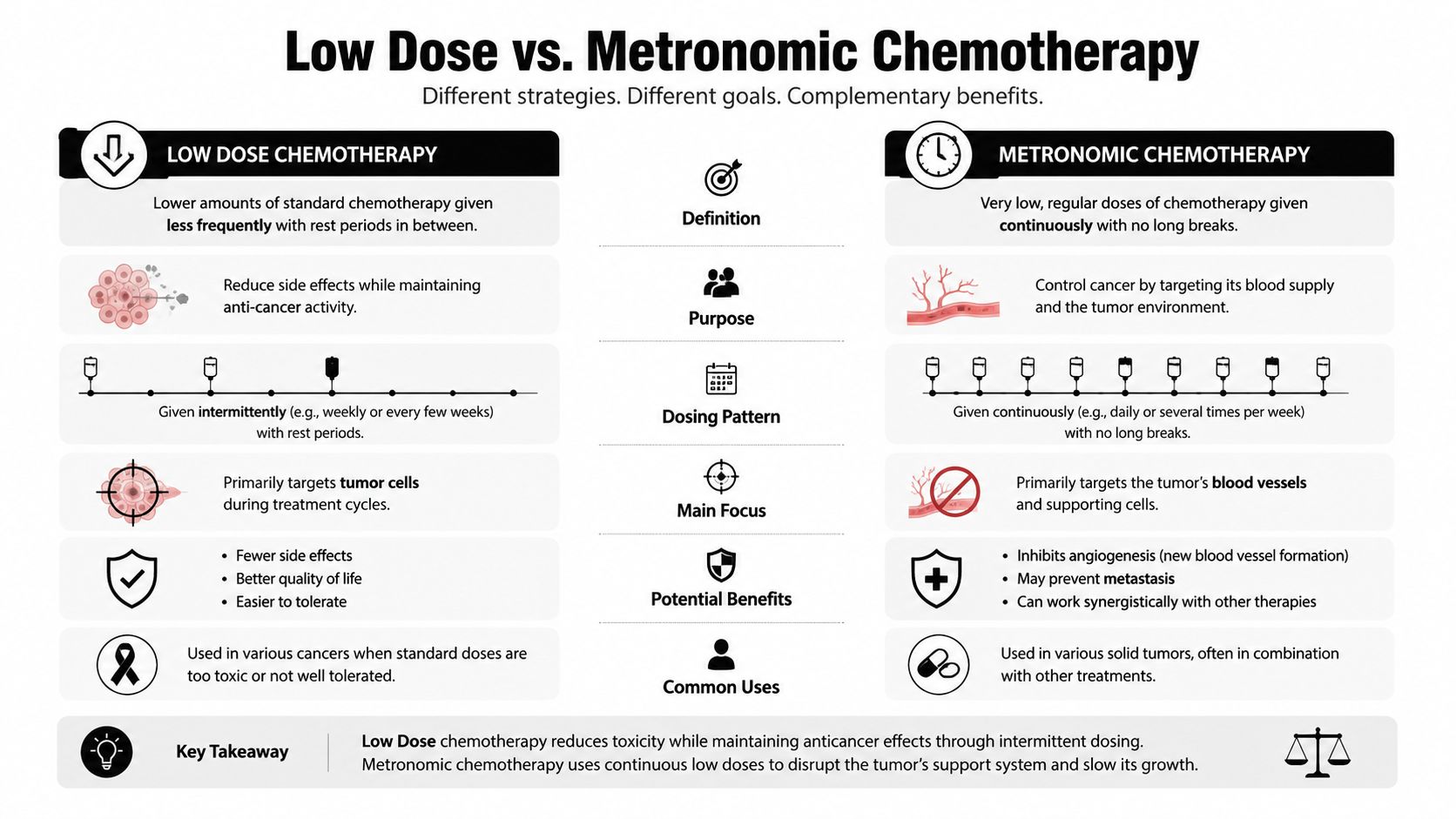
The terms low dose and metronomic overlap, but they aren't identical. Low-dose chemotherapy usually means that the amount given at each administration is lower than the maximum-tolerated dose. Metronomic chemotherapy describes the pattern of administration, typically frequent or continuous dosing with short or absent breaks.
A simple analogy is the difference between a fire hose and a steady drip. Standard maximum-tolerated-dose chemotherapy aims to deliver a powerful pulse, then allows the body to recover before the next cycle. Metronomic treatment applies lower pressure more consistently. It can still damage cancer cells directly, but it may also affect the tumor's supporting blood vessels and parts of the immune environment.
For a plain-language explanation of chemotherapy's direct effects, drug distribution, and treatment cycles, patients can review how chemotherapy works. The important point is that changing the schedule changes the biological intention, not just the number on the prescription.
Three distinctions patients should understand
Dose level refers to how much drug is delivered at one time. A lower dose may reduce peak exposure, but it doesn't eliminate toxicity, especially when treatment continues for a long period.
Schedule describes how often the medication is given. A metronomic regimen may use daily or weekly administration, depending on the drug, cancer type, treatment goal, and whether the medication is taken orally or given by infusion.
Intent is the most important distinction. Standard chemotherapy may be given with curative intent or to produce a strong tumor response. Low-dose treatment may instead aim for disease control, symptom relief, maintenance, or compatibility with another therapy.
Definitions also vary between clinical protocols. A reduced-dose regimen given every few weeks isn't automatically metronomic, and a frequent schedule isn't automatically appropriate for every patient. The oncologist must match the drug, timing, organ function, prior treatment, and cancer biology.
How Low Dose Chemotherapy Compares to Standard Dosing
Standard maximum-tolerated-dose chemotherapy and low-dose or metronomic chemotherapy differ in timing, biological objectives, recovery periods, and patient selection. The comparison is not merely stronger versus gentler treatment. Standard dosing often prioritizes a substantial tumor response, while lower-dose approaches may prioritize ongoing disease control, tolerability, or compatibility with another treatment.
| Feature | Standard MTD Chemotherapy | Low Dose / Metronomic Chemotherapy |
|---|---|---|
| Dose approach | Higher dose selected near the limit of tolerability | Reduced dose selected for sustained exposure or improved tolerability |
| Frequency | Often administered in cycles with recovery breaks | Often administered frequently, with minimal or no prolonged breaks |
| Primary mechanism | Emphasizes direct cancer-cell killing | May combine direct cytotoxic effects with effects on tumor vessels and immune regulation |
| Recovery time | Planned breaks allow blood counts and other tissues to recover | Less interruption may mean lower peak toxicity but more continuous exposure |
| Typical clinical setting | Curative treatment, tumor shrinkage, or established systemic regimens | Maintenance, palliative disease control, selected frail patients, or investigational protocols |
The available figures support a measured interpretation. A 2020 systematic review of controlled trials reported a mean response rate of 26.03% and a median progression-free survival of 4.6 months (reviewed clinical outcomes). That evidence shows antitumor activity, but it does not establish broad superiority over standard chemotherapy.
A separate meta-analysis reported a pooled objective response rate of 34.1%, clinical benefit rate of 55.6%, estimated 6-month progression-free survival of 56.8%, 12-month overall survival of 70.3%, and 24-month overall survival of 40.0% (metronomic chemotherapy meta-analysis). Because these pooled results combine different cancers and regimens, they cannot predict an individual patient's outcome. They are more useful for judging whether a treatment strategy merits consideration than for promising a specific result.
Toxicity isn't determined by dose alone
Lower dosing can reduce peak toxicity, but frequent administration may create cumulative problems. The same meta-analysis found grade 3 or 4 adverse events in 29.5% of patients (toxicity findings in the meta-analysis). I therefore describe low-dose chemotherapy as a possible lower-toxicity option, not as a weak or side-effect-free version of standard treatment.
A systematic literature analysis reported a disease control rate of 56.3%, with grade 3 or 4 anemia at 7.78% and fatigue at 13.4% (systematic analysis of low-dose metronomic chemotherapy). These findings support sustained activity with fewer severe toxicities in some settings. The actual balance still depends on the drug, treatment schedule, cancer, organ function, and patient's goals.
What the Evidence Shows Across Cancers
The evidence for low-dose chemotherapy isn't uniform across tumor types. Some cancers and treatment situations have generated encouraging signals, while others have produced modest responses or no consistent survival advantage.
Head and neck squamous cell carcinoma is one area of current interest. A 2025 systematic review of 24 studies reported higher survival and response rates with oral metronomic chemotherapy than with standard regimens (systematic review in head and neck cancer). That result is promising, but it doesn't mean every patient with head and neck cancer should replace established treatment with an oral metronomic regimen. Drug selection, disease extent, prior treatment, and patient fitness remain decisive.
Colorectal cancer can present a different use case. Low-dose oral drugs such as capecitabine or tegafur-uracil may be considered in maintenance or palliative strategies after more intensive treatment, with the aim of extending disease control while limiting treatment burden. The benefit is usually evaluated through scans, symptoms, blood tests, and the patient's ability to remain active, rather than through a presumption of cure.
Evidence varies by indication
| Cancer type | Common regimen | Outcome signal | Evidence strength | Key limitation |
|---|---|---|---|---|
| Head and neck squamous cell carcinoma | Oral metronomic chemotherapy in selected settings | A 2025 review reported higher survival and response rates than standard regimens | Promising, but heterogeneous | The review included varied studies and doesn't establish one universal protocol |
| Colorectal cancer | Oral capecitabine or tegafur-uracil in maintenance or palliative settings | Disease control and progression-free survival may improve in selected maintenance strategies | Relevant in specific treatment contexts | Results depend on prior therapy, cancer biology, and treatment goal |
| Breast cancer | Metronomic combinations such as cyclophosphamide and methotrexate | Modest responses and potential disease control | Mixed | Head-to-head trials haven't consistently shown a safety advantage |
| Multiple advanced cancers | Various low-dose or metronomic regimens | Pooled activity across studies | Meaningful but uneven | Most studies don't prove a consistent overall survival or progression-free survival advantage |
Breast cancer deserves particular caution. Recent reviews report that head-to-head trials often failed to show a clear safety advantage, and adverse-effect burden could be similar to standard schedules (review of metronomic therapy limitations). In other words, a lower dose can trade one toxicity pattern for another without improving every aspect of quality of life.
Patients and caregivers also encounter broader concerns around cancer risk, inherited predisposition, and personal health monitoring. A resource on vulvar health for high-risk women may be useful for that separate preventive and supportive-care discussion, but it shouldn't be treated as evidence that a low-dose chemotherapy regimen is appropriate.
Where Low Dose Chemotherapy Is Used in Practice
Low-dose or metronomic treatment generally makes the most clinical sense when the oncologist can define a specific purpose. The same regimen may be reasonable for one patient and inappropriate for another because the expected benefit, disease tempo, and tolerance are different.
Palliative treatment for advanced disease
For metastatic cancer, the aim may be to slow growth, reduce symptoms, or preserve function. A patient who can't tolerate a standard regimen may prefer a lower-intensity approach if the likely benefit is disease stabilization rather than a major tumor response.
The trade-off is that less intensive treatment may not control rapidly progressive disease. Symptom-directed palliative care remains important whether chemotherapy is given or not.
Maintenance after initial disease control
Maintenance treatment follows an initial response or period of stability. The intent is to continue pressure on the cancer without repeating the full intensity of induction treatment. This approach is most defensible when the cancer has already demonstrated sensitivity to the drug or combination and the patient can manage ongoing monitoring.
Combination with immunotherapy
Researchers are studying whether metronomic dosing can alter the tumor environment in ways that make immune checkpoint treatment more effective. This remains an active area of investigation, not a universal standard. Patients should ask whether the proposed combination is part of a clinical trial, an established protocol, or an off-label plan.
Frailty, age, and prior treatment
A person with reduced marrow reserve, organ dysfunction, neuropathy, or substantial fatigue may not tolerate a maximum-tolerated-dose regimen. Yet “frail” doesn't automatically mean “safe for continuous treatment.” The clinician must consider whether frequent visits, oral medication adherence, laboratory testing, and cumulative exposure are realistic.
Supportive medications also matter. For example, patients receiving anti-nausea treatment should understand medication-specific risks, including the ondansetron QT prolongation risk, particularly when other heart-risk factors or interacting medicines are present.
Practical rule: If a clinician can't state the treatment goal and the decision point for stopping or changing therapy, the dose is not the only issue that needs clarification.
Use outside maintenance, palliative care, selected patients, and research protocols should be described as investigational or individualized. Low-dose treatment shouldn't be presented as an automatic replacement for standard therapy.
The Safety Picture Beyond the Gentler Label
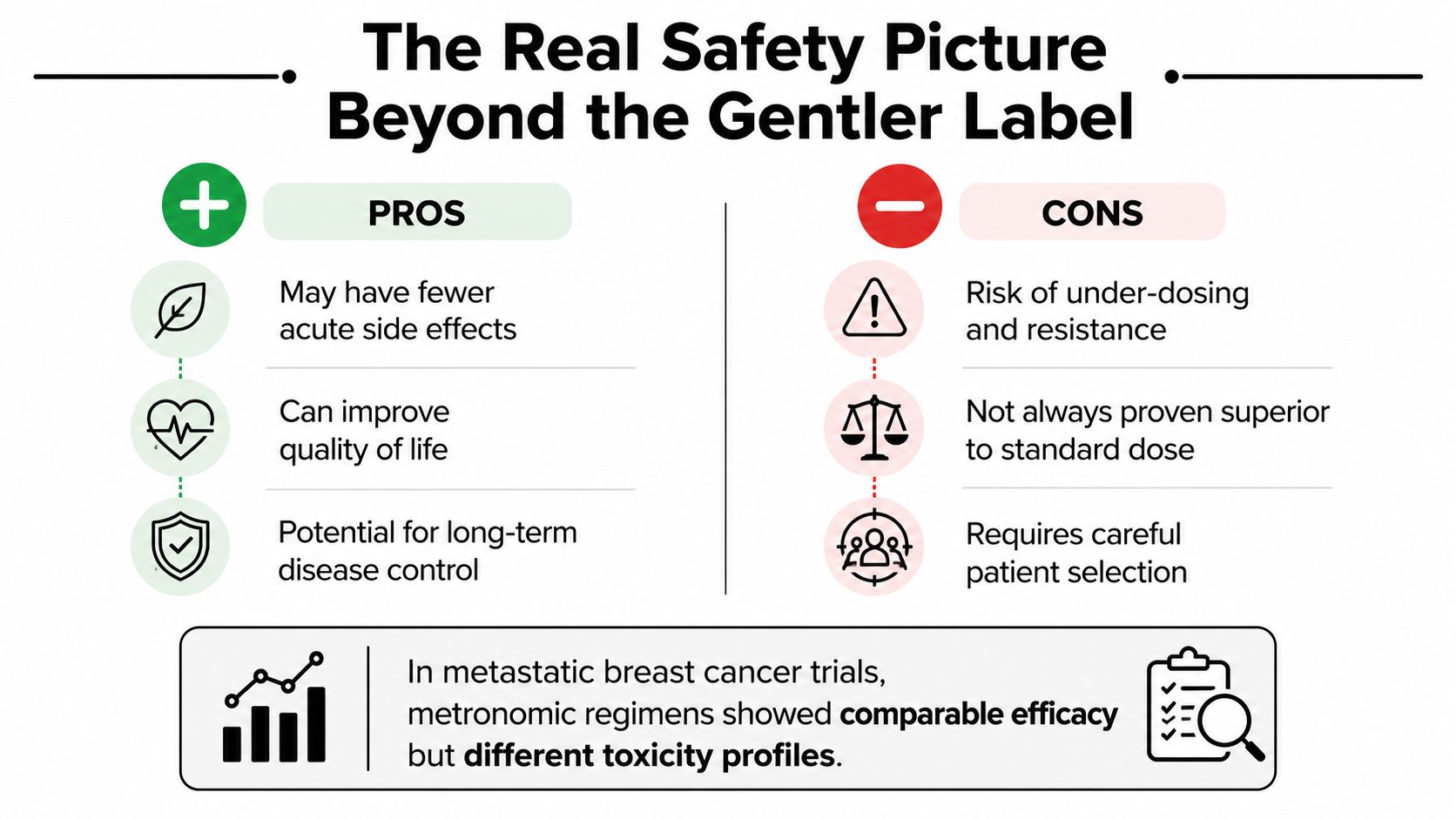
A lower dose may reduce peak toxicity, yet the treatment can still be difficult. Continuous exposure creates a different burden, especially when therapy continues for a long period and the body has little time to recover between doses.
Possible effects include fatigue, reduced blood-cell production, hand-foot syndrome, neuropathy, nausea, and immune suppression. The pattern depends on the drug and schedule. Oral treatment adds adherence concerns because toxicity may build gradually while the patient is taking medication at home.
Peak toxicity versus cumulative toxicity
Standard chemotherapy often follows a recognizable cycle of treatment, side effects, recovery, and reassessment. Metronomic treatment may produce less dramatic peaks but more persistent symptoms. An older or medically vulnerable patient can tolerate that ongoing burden poorly, even when each dose appears modest.
Evidence supports caution rather than a blanket claim of safety. Published analyses have reported severe anemia and severe fatigue among patients receiving metronomic chemotherapy, while another pooled analysis found that serious adverse events also occurred. These findings come from different patient groups and regimens, so they cannot predict an individual's risk or be combined into a personal estimate.
The treatment goal matters as much as the dose. Maintenance or palliative use may justify accepting ongoing, lower-grade toxicity when the aim is disease control or symptom relief. That trade-off is different from claiming that low-dose therapy improves survival broadly, particularly in cancers where evidence remains mixed.
Blood tests and symptom reporting are required. Your oncology team may monitor blood counts, kidney and liver function, hydration, skin changes, bowel symptoms, and neurologic complaints. Report unusual bleeding, fever, worsening shortness of breath, severe diarrhea, sudden weakness, or rapidly increasing fatigue promptly. A broader review of chemotherapy effects and treatment-related symptoms can help you prepare for a regimen-specific discussion.
Questions that make safety concrete
- What toxicity is most likely with this exact drug and schedule? “Low dose” does not answer that.
- How often will blood tests be checked? Frequent dosing may require regular laboratory review.
- Which symptoms require a same-day call? Ask for written instructions and an after-hours number.
- What happens after a dose hold? The plan may involve restarting, reducing the dose, changing the interval, or stopping.
- How will response be measured? Scans are only one part of assessment. Function and symptoms also matter.
Talking With Your Oncologist About Whether It Fits
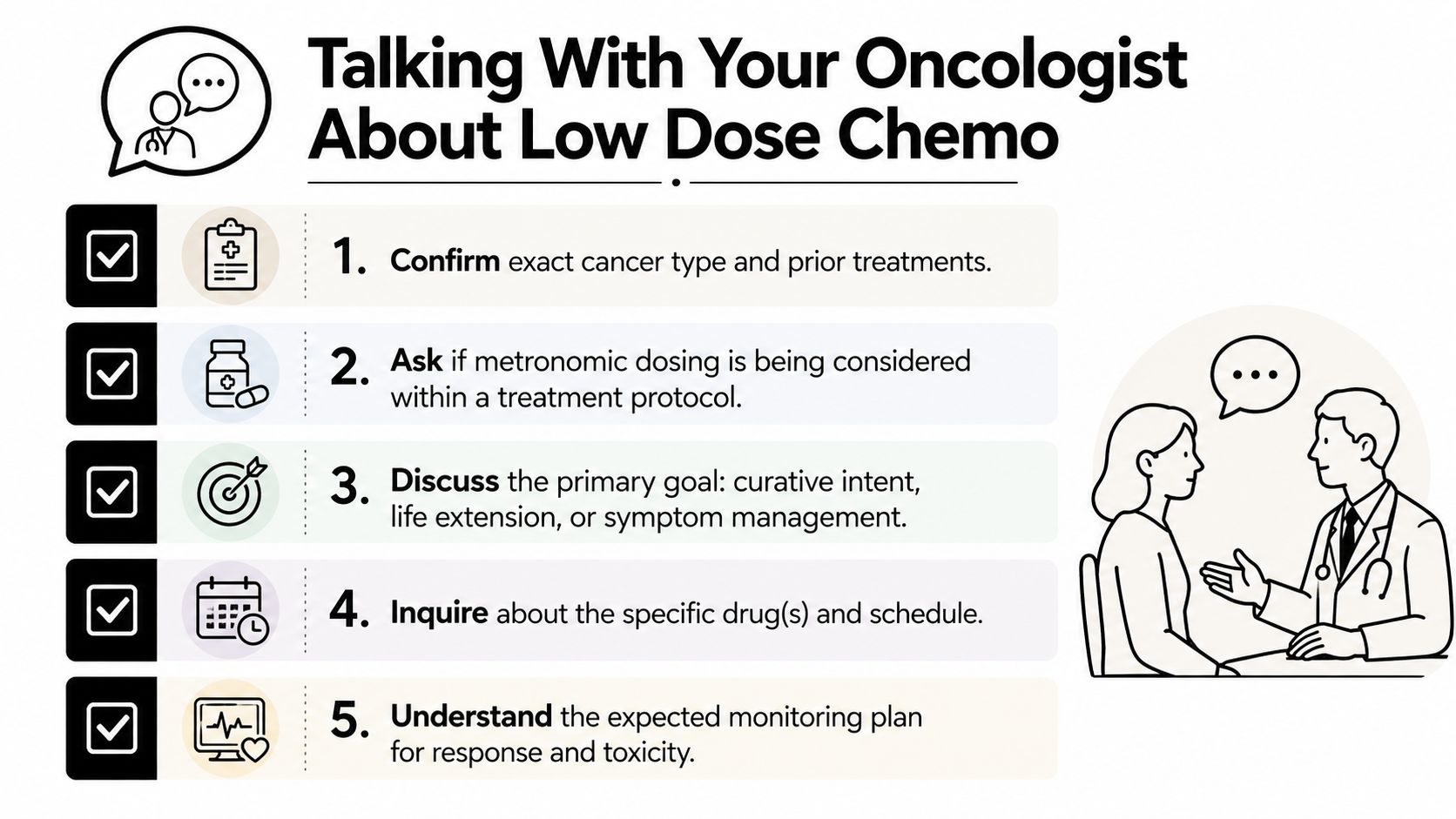
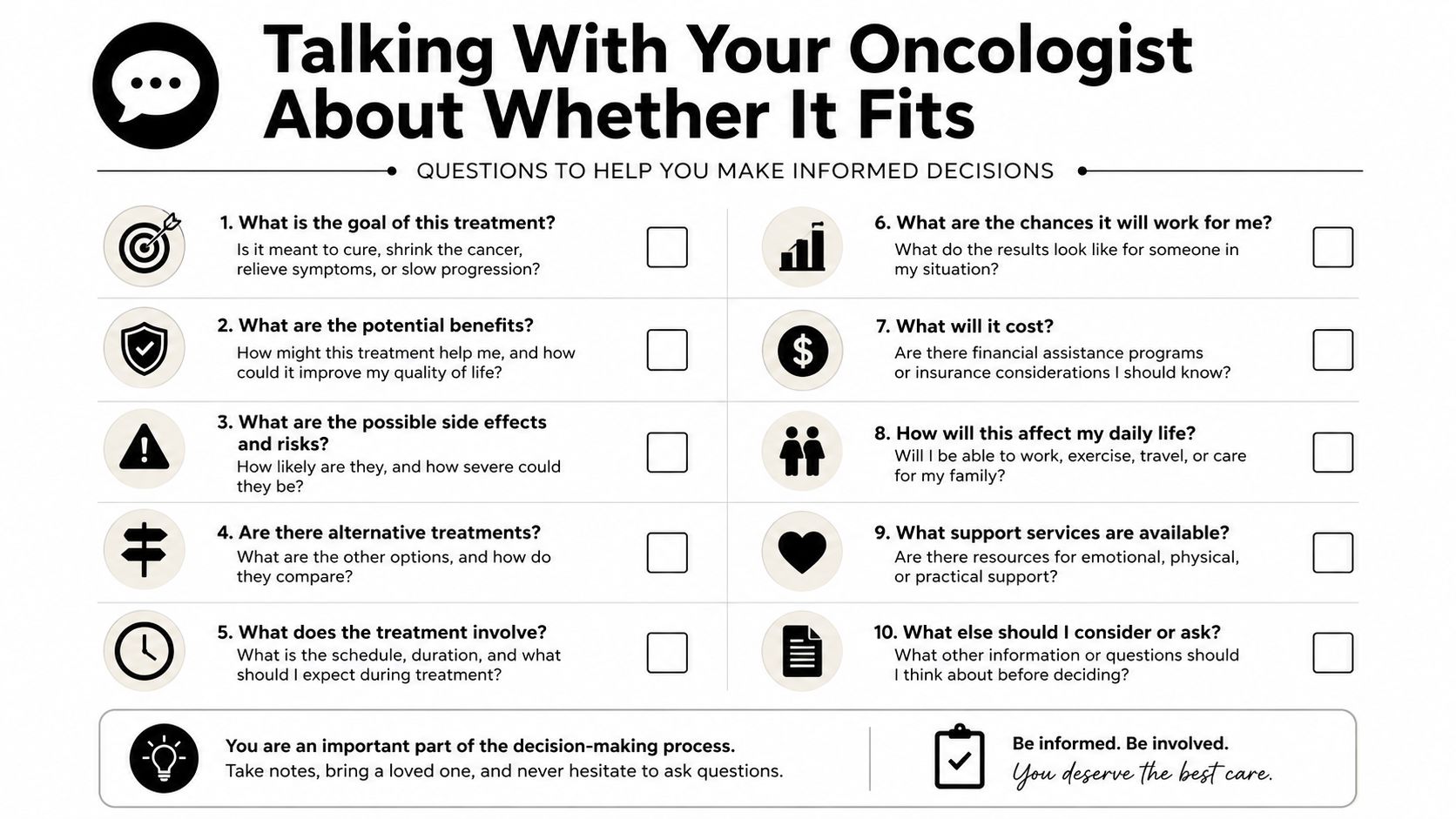
A useful consultation begins with your diagnosis and priorities, not the phrase “low dose.” Bring your pathology report, treatment history, scan results, medication list, and a short record of the symptoms affecting daily life. A companion can take notes and help recall questions after a stressful visit.
Establish the clinical context
Ask which cancer subtype is being treated and how it responded to previous therapies. Evidence from one tumor type may not apply to another. If your oncologist suggests a metronomic schedule, clarify whether it is supported for your cancer, being offered through a clinical trial, or used off label.
Define the treatment goal. The purpose might be symptom relief, maintaining a response, postponing more intensive therapy, extending life, or evaluating an investigational approach. The right measure of success depends on that goal. In selected settings, including maintenance or palliative care, a lower-intensity schedule may be reasonable. Evidence is more mixed for broad survival claims and for cancers where this approach has not been well established.
Ask for regimen-specific expectations
Request the exact drugs, route, schedule, expected duration, and monitoring plan. Ask what benefit is realistic for your diagnosis and when the team will decide whether treatment is helping. Results pooled across several cancers cannot replace evidence that applies to your disease.
Discuss practical factors that may determine whether the plan is workable:
- Fitness and comorbidities: How might kidney, liver, heart, bone marrow, neuropathy, or other conditions affect eligibility?
- Daily logistics: Can you attend visits, obtain oral medication, and follow the schedule at home?
- Support: Who can help if fatigue, fever, bleeding, or confusion develops?
- Costs and access: What insurance requirements, pharmacy steps, expenses, or travel needs should you expect?
- Decision points: When will imaging or symptom review occur, and what is the plan if the cancer progresses?
- Alternatives: How does this compare with standard treatment, a clinical trial, targeted therapy, immunotherapy, radiation, or symptom-focused care?
Build a shared decision
Your priorities belong in the treatment plan. If maintaining independence matters more than pursuing a small chance of tumor shrinkage, say that clearly. If you would accept substantial toxicity for a realistic possibility of longer survival, state that as well.
Low-dose chemotherapy is a legitimate option in selected circumstances, not a universally gentler or interchangeable version of standard treatment. Ask your oncologist to explain the expected benefit, likely toxicities, monitoring schedule, and next decision point in plain language. Confirm what would make the team continue, adjust, or stop treatment.
Hirschfeld Oncology offers individualized cancer care that may include metronomic low-dose chemotherapy, immunotherapy, targeted therapy, and close symptom monitoring. Visit Hirschfeld Oncology for practical oncology guidance and to request a consultation about whether a lower-intensity strategy fits your cancer, previous treatments, and goals.
.png)
.png)