.png)


An ovarian cancer diagnosis changes everything. It’s not just the medical appointments and treatment plans; it’s the quiet, personal journey that follows—a path that can often feel lonely, even when you're surrounded by people who love you. An ovarian cancer support group is a powerful resource that provides a unique kind of healing, connecting you with others who truly understand.
You Are Not Alone in Your Ovarian Cancer Journey
When you’re diagnosed, your world can suddenly shrink to a whirlwind of tests, decisions, and new vocabulary. Friends and family offer their love and support, which is invaluable. Yet, there’s a gap—they haven’t walked in your shoes. They don't know the specific anxiety of waiting for scan results or the bone-deep fatigue that chemo can leave behind.
This is precisely where the magic of an ovarian cancer support group comes into play. These groups are intentionally created to break down the walls of isolation that a serious illness can build, providing a safe harbor where you can be completely yourself.
Building a Community of Peers
Imagine walking into a space—whether it’s a physical room or a video call—and not having to explain anything. You don't have to translate medical terms, justify your fears, or put on a brave face. The people there just get it. That is the simple, profound gift of a support group.
Think of a support group as your emotional home base throughout this journey. It’s a place where your experiences are validated, where you can ask questions you might feel hesitant to ask elsewhere, and where you can find genuine strength in the resilience of others.
This shared understanding creates a powerful buffer against the stress of treatment. It’s a judgment-free zone where you can talk openly about your worries without feeling like you're burdening your family.
To give you a clearer picture, here’s a quick summary of what these groups bring to the table.
Quick Guide to Support Group Benefits
| Benefit | Impact on Your Journey |
|---|---|
| Reduced Isolation | Connects you with peers who share your specific diagnosis, reminding you that you are not alone. |
| Emotional Validation | Provides a safe space to express fear, anger, and hope without judgment. Your feelings are understood and normalized. |
| Practical Wisdom | Offers a place to exchange real-world tips on managing side effects, navigating insurance, and improving daily comfort. |
| Sense of Empowerment | Hearing others' stories and sharing your own helps you feel more in control and better equipped to advocate for yourself. |
| Hope and Resilience | Witnessing the strength and coping strategies of others can inspire hope and build your own emotional resilience. |
These benefits work together, creating a holistic support system that nurtures your well-being far beyond the clinic walls.
More Than Just Emotional Support
While the emotional connection is huge, these groups are also incredible sources of practical, lived-in knowledge. You'll hear firsthand tips on everything from managing nausea to finding the most comfortable headscarves. This collective wisdom empowers you to become a more confident and informed advocate for your own health.
It’s completely normal to have feelings of being overwhelmed and alone, and recognizing that is the first step. Finding a community that understands is one of the most powerful things you can do for yourself.
At Hirschfeld Oncology, we know that excellent cancer care goes beyond medicine. Your mental and emotional health are just as critical. That’s why we’re so committed to helping our patients connect with these vital community resources. Finding an ovarian cancer support group is a hopeful, proactive step you can take to care for your whole self.
Understanding What a Support Group Really Offers
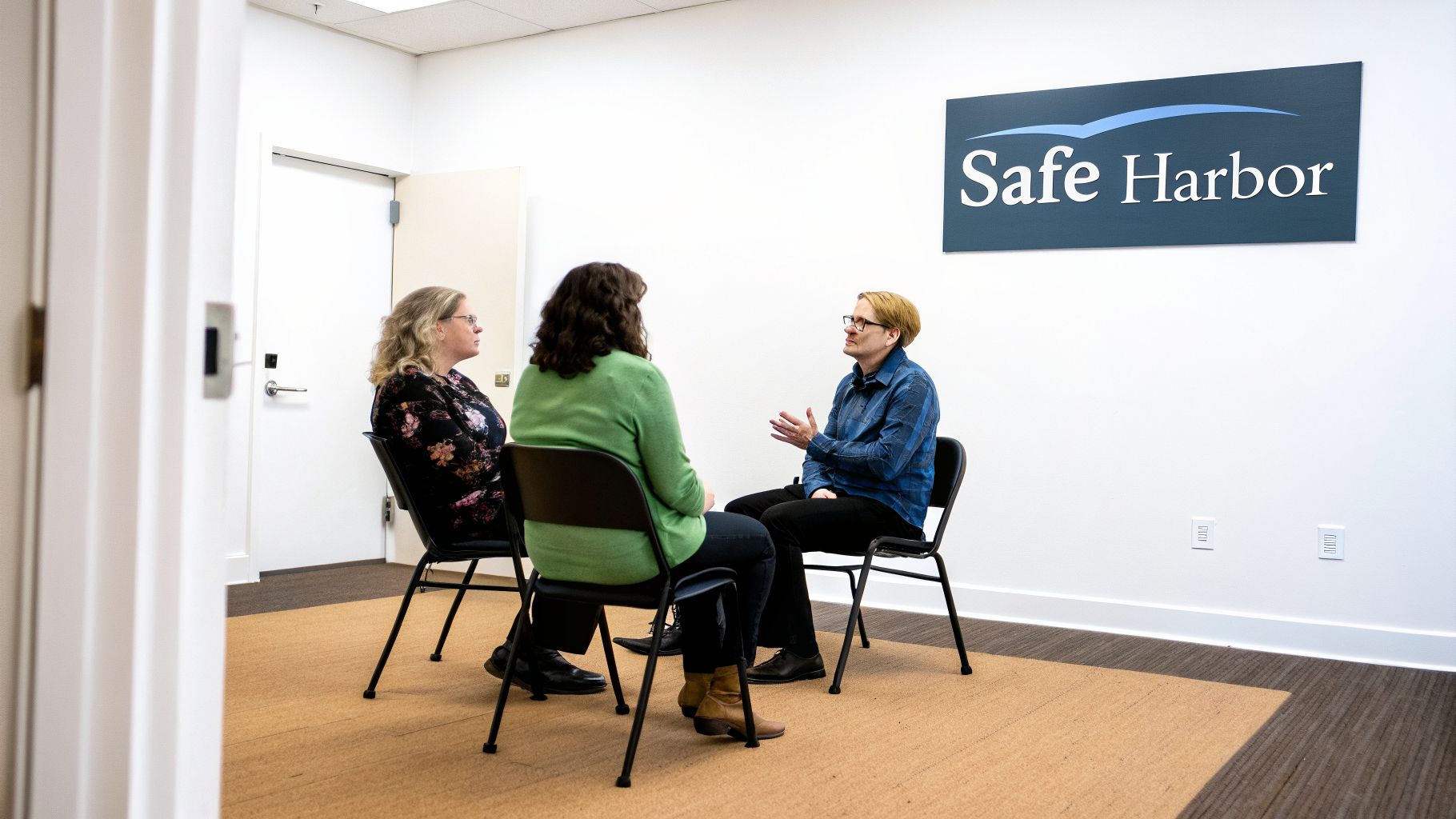
When you first hear the term ovarian cancer support group, it's easy to have misconceptions. But it’s so much more than just a room where people talk about being sick. Think of it as a "safe harbor"—a confidential space where you can finally drop anchor and catch your breath in the middle of the emotional storm that a cancer diagnosis brings.
These groups are powerful because they’re built on shared, lived experience. While your amazing medical team is focused on treating the cancer itself, a support group offers something different. It provides a kind of emotional and practical support that even the most loving family members, friends, or doctors can't quite give.
It's a place specifically designed to break down the profound isolation that so many feel after a diagnosis. You're suddenly with people who get it. They speak your language, and no translation is ever needed.
More Than Just a Conversation
A good support group isn't just an aimless chat. It’s a community, often guided, with a real purpose: to make you feel seen, share practical wisdom, and create a powerful sense of belonging. The conversations are raw, real, and incredibly helpful.
For instance, you’ll hear people talking about things like:
- Real-world tips for managing treatment side effects, like which specific lotions actually soothe irritated skin or the best snacks to combat chemo-induced nausea.
- Navigating tricky conversations with loved ones who mean well but don't always understand the day-to-day reality of living with cancer.
- "Scanxiety"—that overwhelming dread that creeps in before a follow-up scan. It’s a feeling only someone who has been there can truly understand.
Sharing this kind of firsthand knowledge is incredibly empowering. It helps you shift from feeling like a patient to feeling like an active, knowledgeable participant in your own care.
A Place for Unfiltered Emotions and Quiet Victories
Out in the world, you might feel the need to put on a brave face for your family and friends. In a support group, that mask comes off. It’s the one place you can be completely honest about your fear, your anger, and your grief without anyone judging you.
An ovarian cancer support group gives you permission to be completely authentic. It's a community where celebrating a day with good energy is a monumental victory and where admitting you’re having a bad day is met with understanding, not pity.
This validation is a powerful antidote to the loneliness that cancer can cause. Simply knowing you aren't the only one feeling a certain way can lift a huge weight. With a recurrence rate of up to 70% for ovarian cancer, having that long-term peer connection becomes even more vital.
Complementing Your Emotional Health Journey
This kind of peer-to-peer connection is invaluable, and it doesn't exist in a vacuum. Many people find that these groups work beautifully alongside one-on-one professional counselling services, which can help you process your journey in a different, but equally important, way. Together, they create a strong, multi-layered support system.
Ultimately, the core mission of an ovarian cancer support group is to remind you of one simple truth: you are not alone. It’s a space to share your burdens, celebrate the small wins, and draw strength from others walking a similar path.
Navigating the Different Types of Support Groups
Trying to find the right ovarian cancer support group can feel a bit like finding a comfortable pair of shoes. There's no single "best" style that works for everyone. The perfect fit for you will come down to your personality, what feels most comfortable right now, and what you’re hoping to gain from the experience.
The good news is, there are so many different kinds of groups out there. That variety means you can almost certainly find a format that works with your schedule, your energy levels, and your emotional needs. Taking a moment to understand the main differences is the first step toward finding a community where you can truly feel seen and heard.
In-Person vs. Online Support Groups
The first big decision is often whether to meet with people face-to-face or connect virtually from home. Each has its own distinct feeling and benefits, and what you need might even change as you move through your cancer journey.
In-person groups offer something truly special: the power of physical presence. There’s a warmth you can only get from sharing a room with people who just get it. A knowing glance across the table, a shared laugh, or even just sitting in comfortable silence together can say more than words ever could. These meetings build a real sense of local community.
On the other hand, online support groups offer incredible flexibility and access. If you’re not feeling well enough to leave the house, dealing with mobility issues, or simply live far from a meeting place, virtual groups tear down those barriers. They can also provide a layer of privacy that sometimes makes it easier to talk about the really tough stuff.
Think about what fills your cup versus what empties it. Do you draw energy from being around people, or does the thought of leaving the house feel overwhelming right now? Be honest with yourself—the best choice is the one that supports you, right where you are.
This table breaks down the main points to help you think it through.
| Group Type | Key Advantages | Best For Individuals Who... |
|---|---|---|
| In-Person | Tangible human connection, non-verbal support cues (hugs, nods), fosters a strong local community. | Prefer face-to-face interaction, live near a meeting location, and feel comfortable sharing in a physical group setting. |
| Online | High accessibility, flexible scheduling, anonymity, connects you with people globally. | Are managing treatment side effects, have transportation issues, live in a remote area, or prefer sharing from home. |
Peer-Led vs. Professionally-Facilitated Groups
Another key difference is who is guiding the conversation. Some ovarian cancer support groups are run by fellow patients or survivors who have been there themselves (peer-led). Others are guided by a licensed professional, like a social worker, therapist, or oncology nurse (professionally-facilitated).
Peer-led groups have a wonderful, "we're all in this together" vibe. The person leading the group is walking a similar path, which creates an environment of incredible authenticity. The conversations are often very grounded and focused on the real-world, day-to-day challenges of living with ovarian cancer.
Professionally-facilitated groups offer a different kind of reassurance. The facilitator is trained to manage group dynamics, keep conversations productive, and offer expert guidance if more complex emotional issues come up. For some, this structure provides a feeling of safety and a container strong enough to hold difficult feelings.
Specialized Ovarian Cancer Support Groups
Beyond these broader categories, many organizations now host groups that are even more specific. This is a recognition that the experience of ovarian cancer isn't one-size-fits-all; it's deeply personal and shaped by everything from genetics to your role in the journey.
These targeted groups allow for a much deeper level of connection and understanding. Some common examples include:
- Groups for Caregivers: A vital space for spouses, partners, adult children, and friends to talk about the unique stresses and emotions that come with supporting a loved one.
- BRCA+ Groups: Created for those with a BRCA1 or BRCA2 gene mutation, these groups focus on the specific surveillance plans, treatment options, and family concerns tied to this genetic link.
- Advanced or Recurrent Cancer Groups: These meetings provide a safe place to discuss the distinct emotional weight and medical realities of living with later-stage or recurrent disease.
Organizations are realizing just how important this kind of tailored support is. For instance, the Ovarian Cancer Research Alliance (OCRA) has recently expanded its free online programs to include sessions for different gynecologic cancers, grief support for caregivers, and even Spanish-language groups. You can learn more about OCRA's diverse support offerings directly on their site. This move toward specialization is fantastic, because it means that no matter what your specific circumstances are, a community is out there waiting for you.
How to Find and Choose the Right Group for You
Taking that first step toward joining an ovarian cancer support group is a significant one, and it's totally normal to feel a bit overwhelmed by the options. But finding the right fit doesn't have to be a complicated process. Think of it less as a search and more as finding your tribe. With a little guidance, you can find a community that feels safe, supportive, and truly understands.
The best place to start is often right in your doctor's office. Your oncology team—the doctors, nurses, and patient navigators like us at Hirschfeld Oncology—are on the front lines. They have direct experience with reputable local and national support systems and can point you toward groups they know and trust.
Start with Trusted National Organizations
Beyond your immediate care team, several outstanding national organizations can serve as your compass. These institutions carefully vet the groups they partner with, so you can feel confident you're being connected to well-moderated and genuinely helpful resources.
Here are a couple of excellent places to begin your search:
- Ovarian Cancer Research Alliance (OCRA): As a leading force in research and advocacy, OCRA hosts a variety of professionally-led online support groups for both patients and their caregivers.
- National Ovarian Cancer Coalition (NOCC): The NOCC is fantastic for connecting patients to local chapters and community events, helping you find support right in your own backyard.
Think of these organizations as reliable clearinghouses. They’ve done the hard work of vetting resources, so you don’t have to wade through endless, unverified search results on your own.
This simple decision tree can help you visualize which type of group might be the best match for your needs right now.
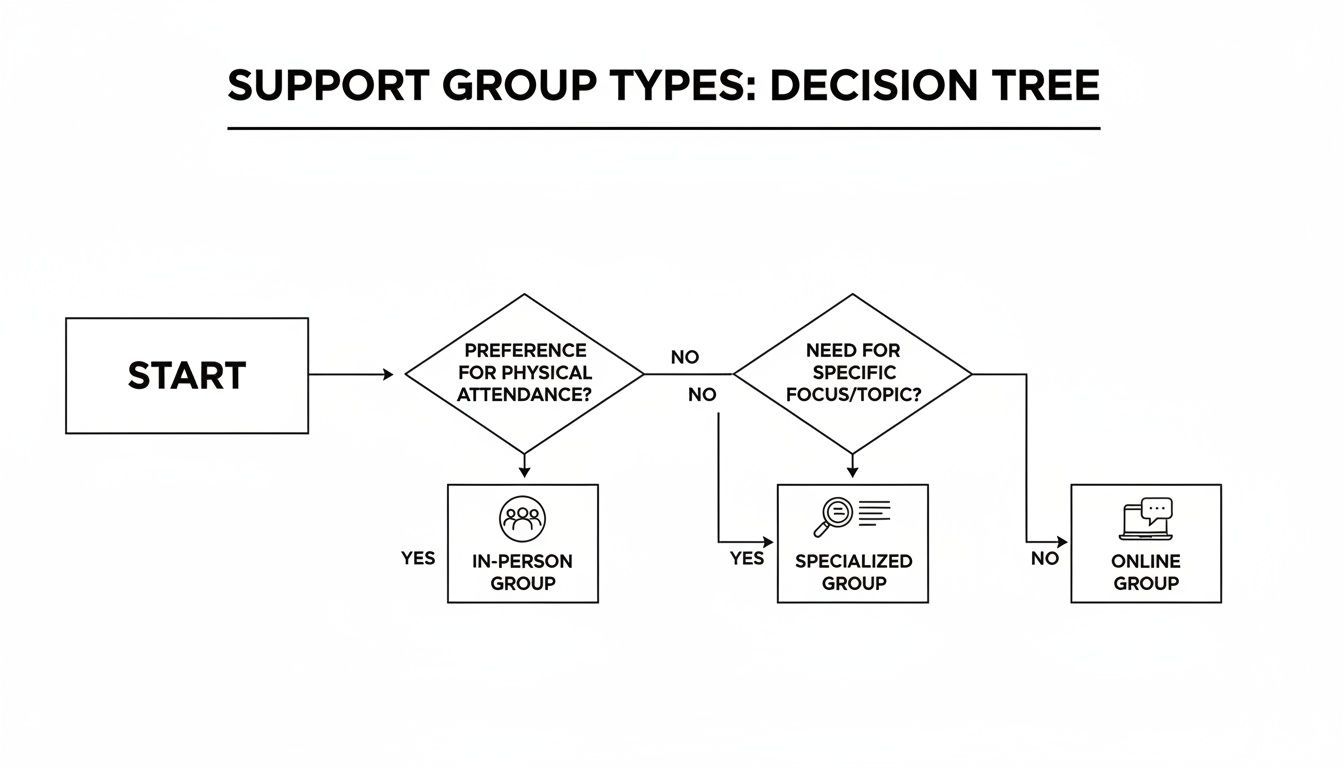
As the flowchart shows, simply deciding between in-person or online, and general or specialized support, can narrow down your options significantly.
Questions to Ask Before You Join
Once you have a few potential groups in mind, it's smart to do a little homework before diving in. Most groups have a facilitator you can reach out to. Asking the right questions upfront can save you time and help you find your perfect fit faster.
Here’s a quick checklist of things to ask:
- Who leads the group? Is it run by a peer—another patient or survivor—or is it facilitated by a licensed professional, like a social worker?
- What are the ground rules? You're looking for clear guidelines on confidentiality, respectful communication, and making sure everyone gets a chance to share.
- How big is the group? Some people prefer the intimacy of a small group, while others find energy in a larger gathering. There's no wrong answer, only what's right for you.
- Is there a specific focus? Is it for general support, or does it zero in on topics like recurrence, a particular genetic mutation (like BRCA), or caregiver challenges?
Getting answers to these questions will give you a real feel for the group’s atmosphere and purpose. Of course, emotional support is just one piece of the puzzle. The financial side of a diagnosis can be incredibly stressful, and our guide on cancer financial assistance programs provides practical resources to help ease that burden.
Red Flags to Watch For
Just as there are signs of a wonderful, life-affirming group, there are also red flags that should give you pause. A support group should always be a safe harbor—never a place of judgment, pressure, or commercial interests.
A support group should be a sanctuary, not a marketplace. If you ever feel pressured to buy products, adopt unproven treatments, or are told to ignore your doctor's advice, that's your cue to walk away. Your health and safety come first, always.
A diagnosis can feel isolating, but informed communities provide powerful protection against misinformation. Research from the World Ovarian Cancer Coalition highlights a global need for greater awareness, which makes reputable support networks more vital than ever. You can read more about their findings and global initiatives aimed at improving patient outcomes.
Ultimately, choosing an ovarian cancer support group is a deeply personal decision. Don't be afraid to "shop around" a bit. It is perfectly okay to attend a meeting and decide it’s not for you. The goal is to find a community where you feel seen, heard, and strong enough to share your story.
Finding Local Ovarian Cancer Support in NYC
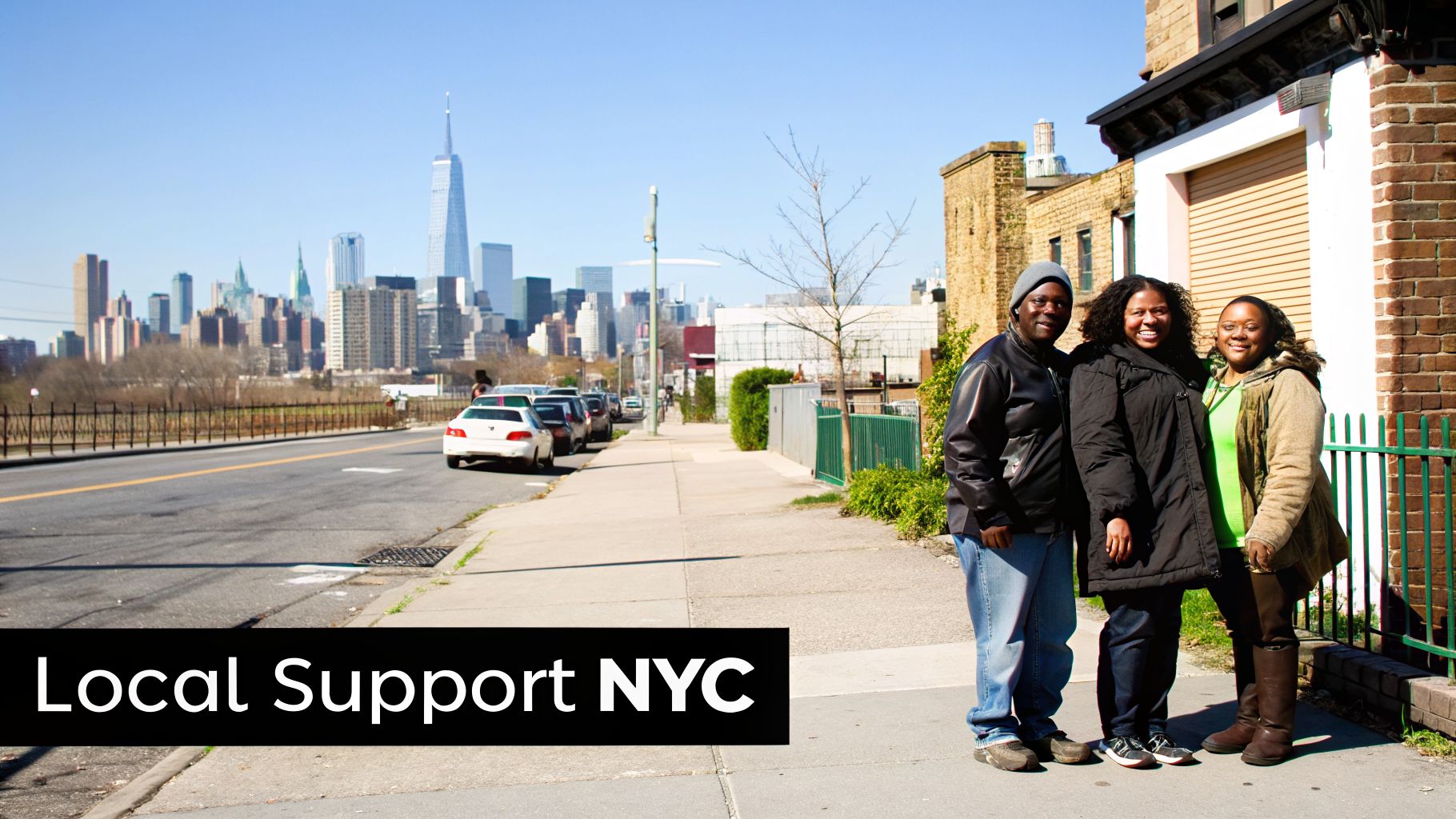
When you're dealing with an ovarian cancer diagnosis in a place as enormous as New York City, it can feel isolating. The idea of finding a genuine community might seem impossible. But the truth is, the five boroughs are packed with amazing resources designed to bring the comfort of an ovarian cancer support group much closer to home.
Having support nearby eliminates the stress of long trips and helps you build a network of people who truly get it—the pace, the energy, and the unique challenges of living in NYC. It transforms the idea of "support" into real people, people you might even bump into at a local coffee shop or park. For our patients in Brooklyn, Williamsburg, and Bushwick, these hyper-local connections can make all the difference.
Brooklyn Based Cancer Support Resources
Brooklyn itself has an incredible ecosystem of support, from programs based in hospitals to independent wellness centers. These groups are tuned into the specific needs of the community and offer services specifically for people going through cancer treatment.
If you're looking for support in or around Brooklyn, here are a few great places to start your search:
- Your Hospital's Network: The major medical centers throughout Brooklyn almost always have dedicated oncology social workers. These professionals are your best first stop, as they run their own support groups or can refer you to trusted local ones.
- Local Arms of National Groups: Organizations like the National Ovarian Cancer Coalition (NOCC) have local chapters. They’re fantastic because they bring the power of a national organization right down to the community level with local meetings and events.
- Dedicated Cancer Support Centers: While their main offices might be in Manhattan, places like Gilda's Club NYC and SHARE Cancer Support are for all New Yorkers. They offer a huge variety of virtual and in-person groups, many of which are specifically for gynecologic cancers.
A local support group grounds your experience in your own community. It’s a powerful reminder that you are not just a patient in a big city, but a neighbor with a strong network of support right outside your door.
How Hirschfeld Oncology Connects You to Local Support
Here at Hirschfeld Oncology, we're deeply rooted in the Brooklyn community. We've seen firsthand how vital it is to connect our patients with these local resources. Our commitment goes beyond clinical treatment—we care about your whole well-being. Because we're part of this community, we know which ovarian cancer support groups are not only effective but also compassionate and welcoming.
Making these introductions is a fundamental part of how we care for our patients. We take the time to learn about your specific situation. If you live in Williamsburg, we can point you to a group that’s just a quick subway ride away. If you're in Bushwick and prefer something virtual, we know which online forums are the most active and supportive.
Getting the right guidance is everything. Your cancer journey will involve a team of specialists, and it’s important they’re the right fit for you. On that note, we put together a guide with tips on what to look for in a provider, which you can find here: best ovarian cancer doctors near me.
Think of us as the bridge between the advanced medical care you receive in our infusion center and the emotional and psychological support that will help you thrive. We’re not just your oncologists; we’re your partners in navigating every part of this journey, right here in New York City.
How Your Care Team Can Help You Find Community
Cancer care is so much more than what happens in the infusion chair. Here at Hirschfeld Oncology, we’ve always believed that your emotional health is just as important as your physical treatment. Finding a community of people who truly understand what you're going through is a powerful part of that healing, which is why we make it a priority to help our patients connect with ovarian cancer support groups.
You should never have to feel like you're navigating this journey by yourself. Think of your care team as your first and most trusted resource. We don't wait for you to ask for help—we start the conversation about finding support right from the beginning because we’ve seen its incredible value time and time again.
A Personal Approach to Finding Your People
Our job is to be your personal guide. We take the time to listen and understand your unique situation, your personality, and your preferences so we can point you toward a group that feels right for you. Your comfort is everything.
This isn't a one-size-fits-all process. We might:
- Connect you with a local Brooklyn group if you thrive on face-to-face connection.
- Find a trusted online community if your schedule is packed or getting around is difficult.
- Refer you to a specialized group for caregivers or for patients dealing with specific genetic factors.
We think of connecting you with an ovarian cancer support group as a vital prescription—every bit as important as your medical treatment. It’s part of our deep commitment to caring for the whole person, not just the cancer.
This philosophy is woven into everything we do. Our team is deeply connected to the NYC support network, which lets us make warm introductions to groups we know and trust. It takes the guesswork out of the process for you. You can read more about how we build this support into our care models in our article on patient navigation programs to improve oncology care.
An Investment in Healing
Thankfully, this focus on the whole patient is becoming more common across oncology. As the ovarian cancer market continues to grow—it's projected to hit $10.02 billion by 2030—we're seeing more resources dedicated to building strong patient support systems. You can explore more about this market growth on ResearchAndMarkets.com. This progress means that support networks are becoming better funded, more accessible, and more organized, reinforcing our belief that great medical care and great emotional support go hand-in-hand.
Let's Start the Conversation
While your experience with ovarian cancer is entirely your own, the need for human connection is something we all share. The right group can offer strength on tough days, practical advice you won't find anywhere else, and the simple comfort of being understood.
The first step is an easy one: just talk to us. Let your care team at Hirschfeld Oncology know you’re curious about finding an ovarian cancer support group. We’re here to listen and ready to help you find your community.
A Few Common Questions About Support Groups
Thinking about joining an ovarian cancer support group is a big step, and it’s completely normal to have questions or even feel a little hesitant. This is new territory. To help you feel more comfortable and confident, we've put together answers to some of the most common concerns we hear from patients and their families.
What if I’m Too Private to Share My Story?
This is probably the number one worry we hear, and it makes perfect sense. The idea of opening up to a room full of strangers can feel overwhelming. The most important thing to know is that a good support group is a judgment-free zone built on mutual respect.
You are always in the driver's seat. There’s never any pressure to speak up or share anything you’re not ready to. In fact, many people find they get a lot out of simply listening, especially for the first few meetings. A skilled group leader will make sure no one is ever put on the spot.
A support group isn’t a stage; it's a sanctuary. Just being there is a form of participation. You get to decide what feels right, and listening can be just as powerful as sharing.
Are Online Support Groups as Good as In-Person Ones?
Yes, they absolutely can be. While the experience is different, both research and countless stories from patients confirm that online support groups are incredibly effective. For many people, they’re actually a better fit.
Online groups offer a level of flexibility that’s hard to beat, which is a game-changer if you’re not feeling up to traveling, live far away from a meeting spot, or are juggling a packed schedule. For some, the bit of anonymity that comes with a screen name makes it easier to talk about sensitive topics. You might miss the hugs, but the depth of the emotional connection and the practical advice shared in a well-run online group are just as real and powerful.
My Family Is Supportive, So Do I Still Need a Group?
Having a loving family in your corner is priceless. But an ovarian cancer support group offers something that even the most well-meaning loved ones can’t: the power of shared experience.
Your family is there for you, but they can't know what it’s like to be in your shoes. They don't understand the unique anxiety of waiting for scan results, or the specific kind of exhaustion that comes with treatment. In a support group, you find people who just get it.
- You can talk about the nitty-gritty of side effects without feeling like you're scaring your loved ones.
- You can vent your deepest frustrations to people who will nod and say, "I've been there."
- You don't have to translate the medical terms or explain the emotional rollercoaster you're on.
Think of it like this: your family is your home team, cheering you on from the sidelines. Your support group is the coaching staff—they’ve seen this exact game before and know the playbook inside and out.
How Do I Know if a Support Group Is Safe and Reputable?
This is such an important question. The safest bet is to find groups recommended by sources you already trust. A great place to start is by looking for groups connected with:
- Major hospitals and established cancer centers.
- Your own oncology practice (a direct referral from a team like ours at Hirschfeld Oncology is a great start).
- National cancer organizations like the Ovarian Cancer Research Alliance (OCRA) or the National Ovarian Cancer Coalition (NOCC).
A trustworthy group will always have a trained facilitator, clear ground rules about confidentiality and respect, and a mission that’s purely focused on support—not on selling products or pushing unproven treatments.
At Hirschfeld Oncology, we believe that finding your community is a vital part of your overall care. We're here to help you sort through these resources and find a group that feels like the right fit for you. Start the conversation with us today, and let us help you find your people. Explore more of our patient resources at https://honcology.com/blog.
.png)
.png)