.png)


You've finished platinum-based chemotherapy for ovarian cancer, and your oncologist has raised a new question: should you take a daily PARP inhibitor to delay the cancer's return? Or perhaps genomic testing for metastatic breast, prostate, or pancreatic cancer has identified a BRCA alteration, and you're trying to understand whether a targeted pill could help. These conversations can sound molecular and abstract, but the practical questions are straightforward: Will it help my cancer, how will we know, what side effects should I expect, and what happens if it stops working?
PARP inhibitor therapy has changed cancer treatment by turning weaknesses in tumor DNA repair into treatment opportunities. It has also created important limits. Benefit depends heavily on tumor type, BRCA or HRD status, prior treatment, and the way resistance develops. A careful plan therefore requires more than knowing a drug's name. It requires matching the drug to the biology and monitoring the patient closely.
When PARP Inhibitor Therapy Enters the Conversation
A patient may hear about a PARP inhibitor during a follow-up visit after ovarian cancer surgery and platinum chemotherapy. The scans may show no visible disease, yet the oncologist recommends maintenance treatment. That can feel confusing. If chemotherapy worked, why add another treatment?
The answer is that chemotherapy and maintenance therapy play different roles. Platinum chemotherapy attacks cancer cells directly, while a PARP inhibitor may help keep vulnerable residual cancer cells from repairing DNA damage. In this setting, the goal is usually to extend the time before progression, not to replace the chemotherapy that came first.
PARP inhibitors can enter care at several decision points:
- After initial treatment: Maintenance therapy may be discussed after surgery and platinum-based chemotherapy for advanced ovarian cancer, particularly when testing identifies BRCA mutation or HRD.
- After recurrence: A patient whose ovarian cancer responds to another platinum regimen may be considered for maintenance, depending on prior PARP exposure, biomarker findings, treatment history, and current approvals.
- In metastatic disease: Genomic testing may identify a treatment option in breast, prostate, pancreatic, or ovarian cancer.
- After progression: The team may need to choose another drug class, consider a combination, or discuss a clinical trial. The best next treatment depends on how the cancer progressed and what therapies it has already received.
The first clinical milestone for the class came when olaparib received U.S. FDA approval on December 19, 2014, for germline BRCA-mutated advanced ovarian cancer after at least three prior lines of chemotherapy. Rucaparib followed in December 2016, and niraparib followed in March 2017 in ovarian-cancer maintenance settings, as described in this review of PARP inhibitor development.
Practical rule: A PARP inhibitor isn't automatically appropriate because a cancer has a BRCA result. Your oncologist also needs to confirm the cancer type, treatment line, prior response, current approval, and safety requirements.
Before prescribing, the team typically reviews pathology, germline and tumor testing, blood counts, kidney and liver function, current medications, and prior treatment response. That preparation helps distinguish a thoughtful maintenance plan from a medication choice based on a single laboratory result.
How PARP Inhibitors Work and Why Biomarkers Matter
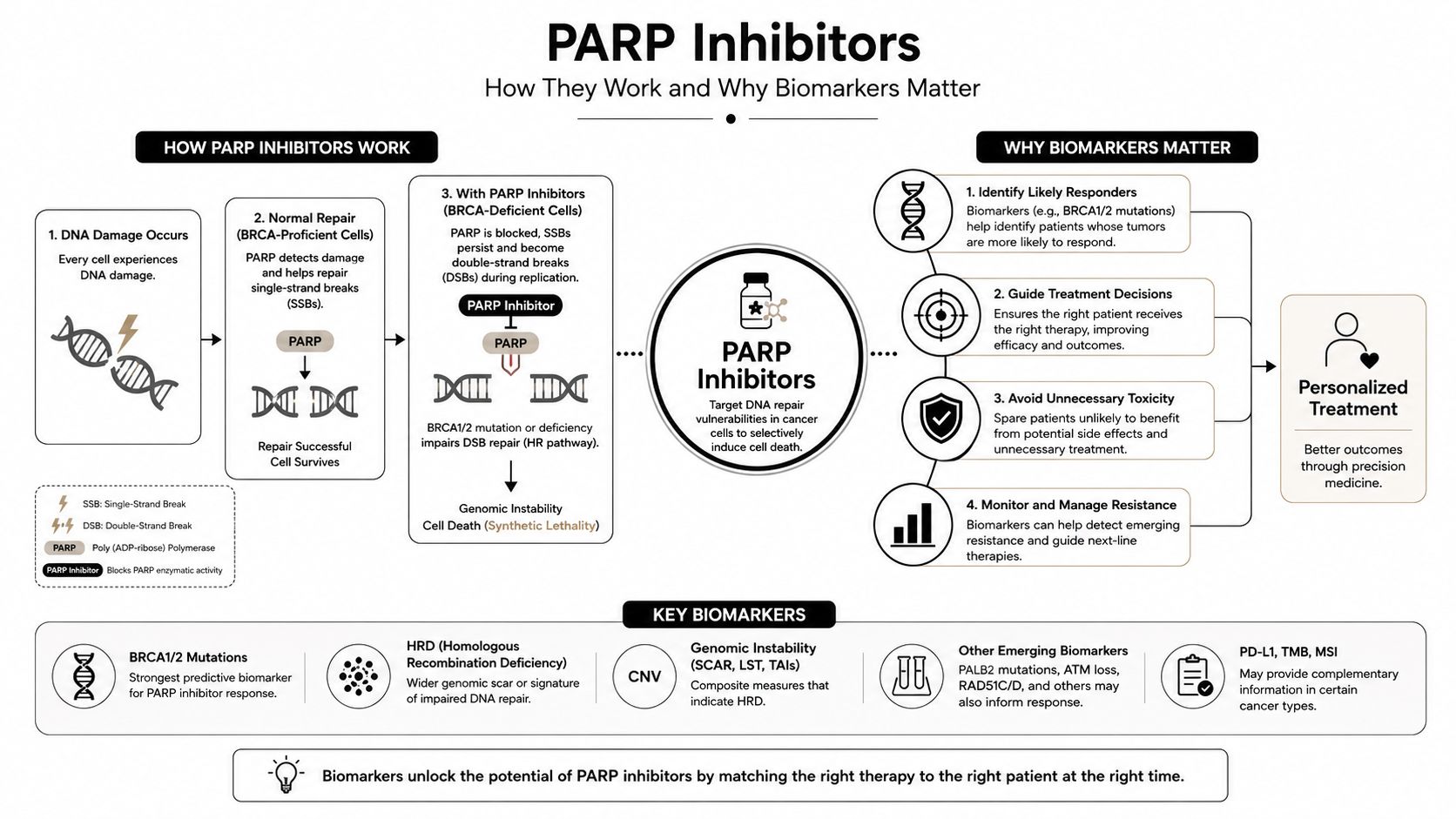
The easiest way to understand synthetic lethality is to think about two repair crews working on the same building.
One crew handles small cracks. PARP enzymes help repair single-strand DNA breaks. A second crew handles major structural damage, including double-strand breaks. Homologous recombination, often shortened to HR, is one of the major systems involved in that more complex repair.
A healthy cancer cell may survive when one repair route is blocked because another route remains available. But a tumor cell with a damaged homologous-recombination system, often because of a BRCA1 or BRCA2 alteration, may already be operating with only one dependable repair crew. Blocking PARP removes another support. The cell accumulates damage it can't repair and eventually dies. That interaction, in which disabling either pathway alone may be tolerated but disabling both becomes lethal, is called synthetic lethality.
PARP inhibitors also interfere with PARP's ability to move away from damaged DNA. This “PARP trapping” can increase the stress placed on a cancer cell's replication machinery. The result is especially difficult for tumors with homologous recombination deficiency, or HRD, because those tumors can't efficiently restore the resulting double-strand breaks. The molecular review of PARP inhibition and resistance describes this relationship between PARP-mediated repair, HRD, BRCA alterations, and later restoration of homologous recombination.
The biomarkers patients hear about
BRCA status can refer to an inherited mutation, called a germline alteration, or a change found only in the tumor, called a somatic alteration. Both can affect DNA repair, but they have different implications for family risk and treatment selection.
HRD is broader. It can reflect a BRCA alteration or other changes that leave a characteristic pattern of genomic damage. HRD testing may therefore identify tumors that don't carry a BRCA mutation but still show evidence of impaired homologous recombination.
These biomarkers predict probability, not certainty. A positive result doesn't guarantee a response, and a negative result doesn't make every treatment decision obvious. Biology explains both the opportunity and the limit of PARP inhibitor therapy. If a tumor restores homologous recombination later, the synthetic-lethal vulnerability may weaken.
Approved Drugs and the Cancers They Treat
The main PARP inhibitors used in biomarker-selected oncology are olaparib, niraparib, rucaparib, and talazoparib. Their roles overlap in some cancers but not in every setting. Drug selection depends on the tumor's origin, whether treatment is being used after initial therapy or recurrence, biomarker findings, prior PARP exposure, and the monitoring profile.
The class has become a standard option in selected ovarian, breast, prostate, and pancreatic cancers. NCCN-linked guidance describes these drugs in biomarker-selected treatment and maintenance strategies, as summarized in this NCCN-linked genetics and treatment guidance.
| Drug | Approved Cancer Types | Biomarker Requirement | Typical Setting |
|---|---|---|---|
| Olaparib | Ovarian, breast, pancreatic, and prostate cancers | Depends on cancer type and indication. BRCA or broader HRD selection is important in several settings | Maintenance, adjuvant therapy, or treatment of advanced disease |
| Niraparib | Ovarian and prostate cancers | Ovarian use can include biomarker-selected and broader maintenance settings, depending on the indication | Ovarian maintenance and selected prostate treatment |
| Rucaparib | Ovarian and prostate cancers | Biomarker requirements vary by indication, with BRCA and other molecular considerations | Recurrent or advanced disease and selected maintenance strategies |
| Talazoparib | Breast cancer | Commonly linked to germline BRCA status in approved breast cancer use | Advanced or metastatic breast cancer |
These medicines are oral therapies, but “a pill” doesn't mean “no monitoring.” Dosing frequency, dose adjustments, drug interactions, blood-count requirements, and fatigue or gastrointestinal effects can differ. A person who struggles with anemia may have a different practical experience from someone whose main concern is nausea or blood pressure.
For a broader explanation of how targeted treatments are selected in breast cancer, see this guide to breast cancer targeted therapy. The key point is simple: the correct PARP inhibitor is determined less by the drug list alone than by the intersection of cancer type, treatment line, biomarker status, and tolerability.
Biomarker Testing for BRCA and HRD Status
Testing usually begins with two separate questions. Did the patient inherit a BRCA alteration that may affect relatives? And does the tumor itself carry a DNA-repair abnormality that could influence treatment?
Germline testing uses blood, saliva, or another normal tissue sample to look for inherited changes. A positive result can have implications beyond the current cancer, including genetic counseling and testing for family members. Somatic testing examines tumor tissue or tumor DNA and looks for changes acquired by the cancer. A tumor may carry a BRCA alteration even when the patient doesn't have an inherited BRCA mutation.
HRD testing adds another layer. Some assays calculate a genomic scar or HRD score by looking for patterns of chromosomal loss and instability. Others use a broader homologous recombination repair gene panel, which examines genes involved in the repair pathway. These are related but not interchangeable results. A gene panel may identify a specific alteration, while an HRD score attempts to capture the tumor's functional history of repair failure.
How a result changes the discussion
A patient with BRCA-mutated ovarian cancer may be considered for olaparib maintenance after a response to platinum treatment. A patient with BRCA wild-type, HRD-positive disease may still have a maintenance option such as niraparib, depending on the specific indication and clinical context. A negative or less informative result may lead the team to discuss surveillance, bevacizumab-containing treatment, another maintenance strategy, or a clinical trial.
| Test | Sample Type | What It Detects | When It Is Used |
|---|---|---|---|
| Germline BRCA test | Blood or saliva | Inherited BRCA1 or BRCA2 alteration | Treatment planning and inherited-risk assessment |
| Somatic tumor test | Tumor tissue or circulating tumor DNA | Acquired tumor alterations, including BRCA changes | Advanced disease profiling and treatment selection |
| HRD score assay | Tumor tissue | Genomic patterns associated with homologous recombination deficiency | Enriching for likely benefit in selected cancers |
| HRR gene panel | Tumor tissue or blood-based tumor assay | Alterations across homologous-recombination repair genes | Broader molecular profiling |
Insurance authorization and laboratory processing can affect when results return. Ask whether testing has been ordered, which specimen the laboratory will use, whether the sample is adequate, and how the result will change treatment. The advantages of genetic testing include clarifying inherited risk and identifying treatment-relevant alterations, but the report still needs clinical interpretation.
Retesting at recurrence isn't always necessary, yet it can be useful when the original specimen was small, old, technically limited, or no longer reflects the current tumor. A new biopsy or circulating tumor DNA test may also reveal an acquired resistance alteration, although those tests have important limitations.
What the Trial Evidence Shows
The strongest evidence for PARP inhibitor therapy comes from randomized trials involving defined patient groups. These studies often measure progression-free survival, or PFS, meaning the time until scans or clinical assessment show that cancer has grown or returned. PFS is different from cure and cannot predict how long treatment will work for every patient. That distinction matters when a maintenance plan is discussed.
The PRIMA trial evaluated first-line niraparib maintenance in advanced ovarian cancer. It reported a median PFS of 13.8 months versus 8.2 months with placebo. Among patients with HRD tumors, the difference was 21.9 months versus 10.4 months, according to this review of PARP inhibitor trials in ovarian cancer. The results show why HRD status can influence treatment planning. They also show that benefit is not limited to tumors with a known BRCA mutation.
Across the reviewed ovarian-cancer evidence, PARP inhibitor groups had median PFS of 15.1 months versus 5.5 months in recurrent disease and 36 months versus 13.5 months in newly diagnosed advanced disease, as reported in the same review. These findings helped establish maintenance therapy as an important use of PARP inhibitors, while leaving room for individualized decisions about biomarker results, prior treatment, and tolerability.
| Trial | Drug | Population | Median PFS |
|---|---|---|---|
| PRIMA | Niraparib | Advanced ovarian cancer after first-line therapy | 13.8 months versus 8.2 months overall; 21.9 months versus 10.4 months in HRD disease |
| Recurrent ovarian cancer trials | PARP inhibitors | Recurrent ovarian cancer | 15.1 months versus 5.5 months in the reviewed evidence |
| Newly diagnosed advanced ovarian cancer trials | PARP inhibitors | Newly diagnosed advanced ovarian cancer | 36 months versus 13.5 months in the reviewed evidence |
Other landmark studies, including SOLO-1, PAOLA-1, SOLO-2, and ARIEL3, examined maintenance use in different ovarian-cancer populations. Breast-cancer trials such as OlympiA and EMBRACA supported treatment for selected patients with BRCA-associated disease. Trial participants did not represent every patient seen in clinic. Their biomarker profiles, disease stages, treatment responses, and previous therapies may differ, so applying results to a new situation requires clinical judgment.
Overall survival answers a different question from PFS. Real-world registries can add information about older adults, comorbidities, dose reductions, and patients who would not have qualified for a trial, but they cannot replace randomized comparisons. Resistance, changing tumor biology, and the treatments available after progression also affect how long the initial benefit remains useful.
Side Effects and Daily Management
Blood-count suppression is the most important side effect to monitor, followed by fatigue, nausea, and blood-pressure changes. Hematologic suppression can include anemia, neutropenia, and thrombocytopenia. These problems may develop gradually or occur with other treatment effects. Fatigue can also reflect the cancer, poor sleep, nausea, or several causes at once.
Your oncology team checks blood counts before treatment and during therapy. The schedule depends on the drug, starting counts, previous chemotherapy, and your clinical condition. If counts fall, the team may pause treatment, lower the dose, look for other causes, or provide additional support.
Symptoms patients can act on
Nausea, reduced appetite, constipation, diarrhea, headache, and fatigue are common concerns. Take the medication exactly as prescribed, use anti-nausea medicine when directed, maintain hydration, and report symptoms early. Acting before eating, drinking, or normal activity becomes difficult gives the team more options.
Niraparib can be associated with hypertension, so regular blood-pressure checks matter. Some patients may begin with a lower dose based on body weight and baseline platelet count. The prescribing oncologist must choose the dose. Drug interactions also need review. Share all prescriptions, over-the-counter medicines, vitamins, supplements, and herbal products before starting treatment or changing another medication.
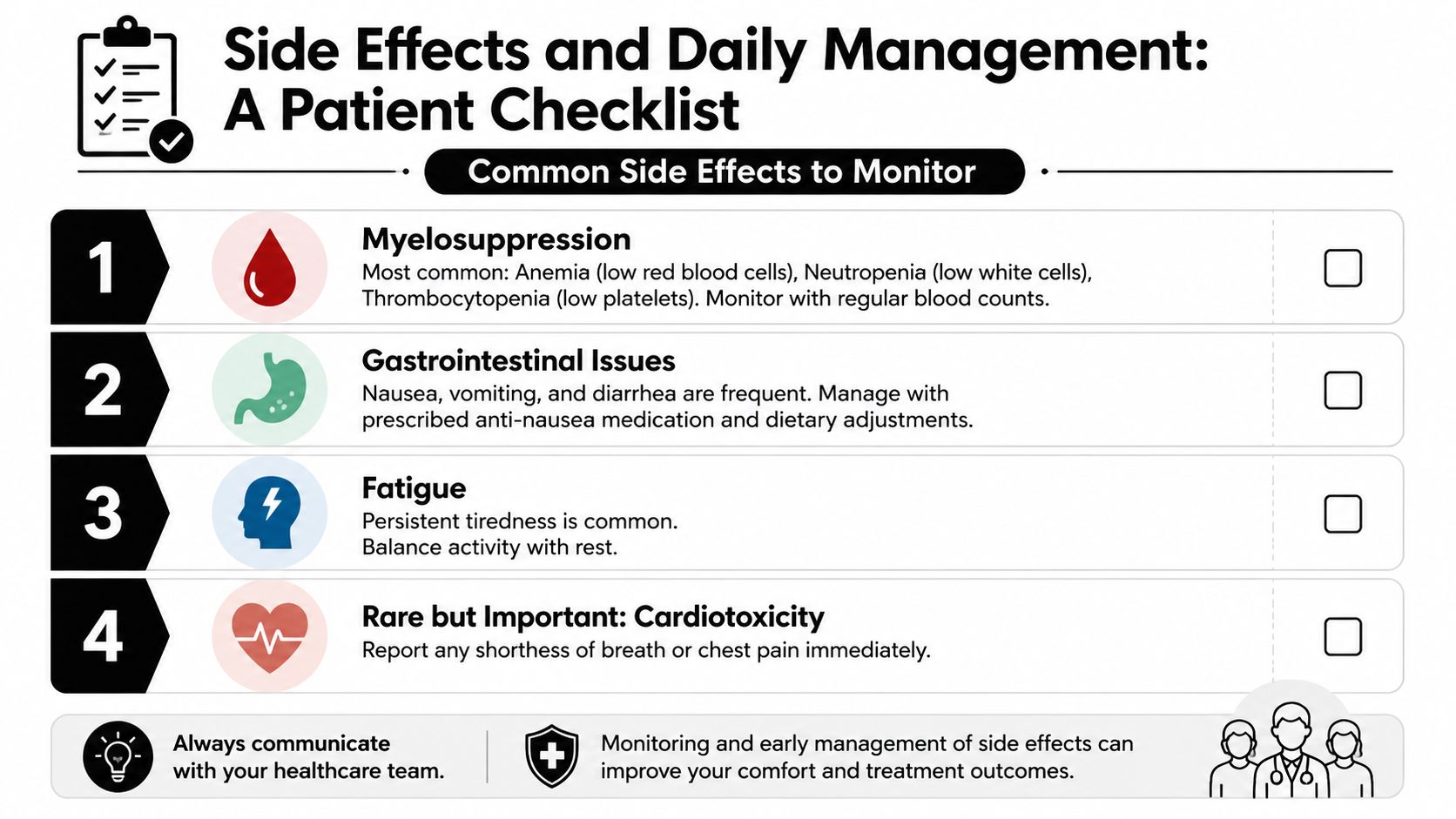
Contact the oncology team urgently for fever, new shortness of breath, chest pain, unusual bleeding or bruising, severe weakness, persistent vomiting, or rapidly worsening fatigue. Persistent cytopenias also need attention. Prolonged PARP exposure has been associated with secondary myelodysplastic syndrome or acute myeloid leukemia, so continued blood-count surveillance is needed. The Springer resistance-monitoring review discusses this risk and the importance of monitoring.
Resistance and the Limits of Current Evidence
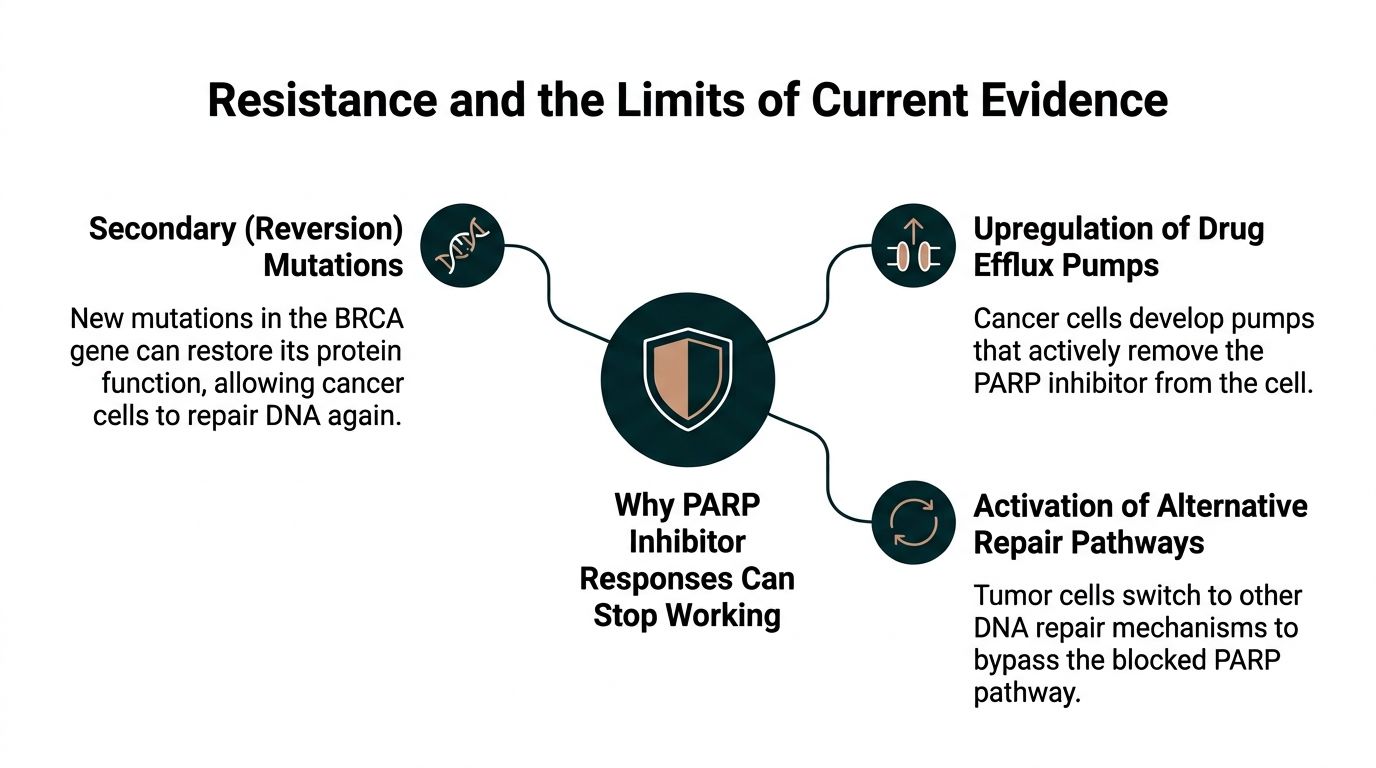
A response can end even when the patient has taken every dose correctly. Cancer cells evolve under treatment pressure, and several changes can reduce the effect of a PARP inhibitor.
The clearest example is a BRCA reversion mutation. The original tumor may have carried a BRCA change that disrupted repair. A later mutation can partially restore the BRCA protein's function, allowing the cancer cell to repair DNA more effectively. Other tumors alter proteins in the 53BP1 or shieldin systems, stabilize the replication fork, increase RAD51 activity, or use drug-efflux pumps that lower the amount of medication inside the cell.
These mechanisms create two clinically different situations:
- Primary resistance: The tumor doesn't respond meaningfully from the outset. This is more likely when the biomarker evidence for HRD is weak or absent, although no single test predicts every outcome.
- Acquired resistance: The tumor initially responds or remains controlled, then progresses after treatment selects for resistant cell populations.
BRCA wild-type and HRD-positive disease sits in a particularly difficult middle ground. Some patients benefit, but the duration and depth of benefit can be less predictable than in tumors with a clear BRCA alteration. A 2025 analysis found that PFS improved overall with first-line PARP maintenance in advanced epithelial ovarian cancer, while benefit was less consistent in BRCA wild-type or HRP tumors and no molecular subgroup showed a statistically significant overall survival benefit in that analysis, as summarized by The ASCO Post.
Can resistance be detected early?
Circulating tumor DNA, or ctDNA, may detect emerging resistance mutations before a scan shows clear progression. Functional assays such as RAD51 testing may also provide information about whether homologous recombination has been restored. These approaches remain promising rather than routine. Assay differences, specimen quality, turnaround time, reimbursement, and uncertainty about what action to take after a positive result all limit widespread adoption, as discussed in this recent review of PARP resistance monitoring.
The evidence also hasn't settled the ideal treatment sequence after progression or whether switching to another PARP inhibitor reliably restores benefit. Those decisions should be individualized and may favor a different treatment class or a clinical trial.
Planning Your Next Steps With Your Oncology Team
The useful question isn't, “Do I have a BRCA mutation?” The useful question is, “Given my cancer type, treatment response, biomarker report, and health history, what benefit is realistic and how will we monitor it?”
Bring these questions to your next visit:
- Drug selection: Which PARP inhibitor is approved for my cancer and treatment setting?
- Biomarker meaning: Does my result show germline BRCA, somatic BRCA, HRD, an HRR-gene alteration, or none of these?
- Expected benefit: How does my prior platinum response affect the maintenance recommendation?
- Monitoring: How often will I have blood counts, blood-pressure checks, scans, and symptom reviews?
- Dose decisions: Which laboratory changes or symptoms should trigger a dose hold or reduction?
- Resistance planning: If the cancer progresses, will you consider a biopsy, ctDNA testing, a clinical trial, or a different treatment class?
For ovarian cancer, a multidisciplinary team may weigh maintenance against observation after first-line chemotherapy. The decision can incorporate biomarker status, response depth, side-effect concerns, other maintenance options, and the patient's preferences. At recurrence, the platinum-free interval and previous PARP exposure become especially important. Re-treatment isn't automatic, and the team must consider whether the tumor may have developed a resistance mechanism.
Combinations can also matter. Selected patients may receive a PARP inhibitor with an anti-angiogenic therapy or another systemic treatment, depending on histology, regulatory status, prior therapy, and clinical evidence. Combination treatment can increase monitoring needs, so the potential benefit should be weighed against added toxicity rather than assumed to be better.
A productive consultation starts with complete records. Bring pathology reports, genomic testing results, germline testing reports, prior imaging, chemotherapy dates, medication lists, and a written record of side effects. Patients seeking a second opinion or individualized sequencing discussion can also review these questions to ask an oncologist before the appointment.
Hirschfeld Oncology evaluates molecular results, prior treatment response, tolerability, and available targeted or investigational options when discussing complex cancers, including ovarian, breast, and pancreatic disease. Visit Hirschfeld Oncology to review educational resources and request a consultation about whether PARP inhibitor therapy fits your treatment history and goals.
.png)
.png)