.png)


The call often comes after a moment of relief. Treatment is finished. Scans or blood work are being watched. You're trying to get back to ordinary life, at least a little. Then your doctor says the cancer has come back sooner than anyone hoped, or it didn't respond the way platinum chemotherapy usually does.
That news can feel disorienting. Many patients hear the phrase platinum resistant ovarian cancer and immediately assume it means there are no good options left. Families often get stuck on one question: “If platinum helped before, why can't we just use it again?”
Those are understandable reactions. This diagnosis is medically complex and emotionally heavy. But it isn't a simple dead end. It's a classification that helps your oncology team decide what may work better next, and it's also an area where treatment decisions are becoming more personalized than they used to be.
An Unexpected Turn on the Treatment Path
A woman finishes carboplatin-based chemotherapy, rings the bell, and starts planning around follow-up visits instead of infusion days. A few months later, she notices bloating again. Her CA-125 rises. The scan shows cancer activity sooner than expected.
What she often hears next is a phrase that sounds final: platinum resistant.
For many patients, the hardest part at first isn't the science. It's the whiplash. You did the treatment. You went through the fatigue, the nausea, the waiting, the recovery. Then suddenly the roadmap changes.
Family members often react in different ways. One person wants every trial option immediately. Another wants to know prognosis right away. Someone else keeps asking whether the first treatment failed. These responses are normal, but they can make an already complicated situation feel even harder to understand.
Platinum resistance doesn't mean your doctors have run out of ideas. It means the next treatment choice needs a different strategy.
That distinction matters. The term describes how the cancer behaved around platinum chemotherapy. It doesn't describe your value, your effort, or a single fixed future.
A lot of people also assume everyone with this diagnosis has the same outlook. That's no longer how many oncologists think about it. Tumor biology, prior treatment history, symptoms, pathology, and specific biomarkers can all change the conversation.
If you're reading this soon after hearing the diagnosis, start with one practical goal: slow the rush to worst-case thinking. You need a clear explanation of what the label means, what it doesn't mean, and what questions should guide your next decisions.
What Platinum Resistant Ovarian Cancer Means
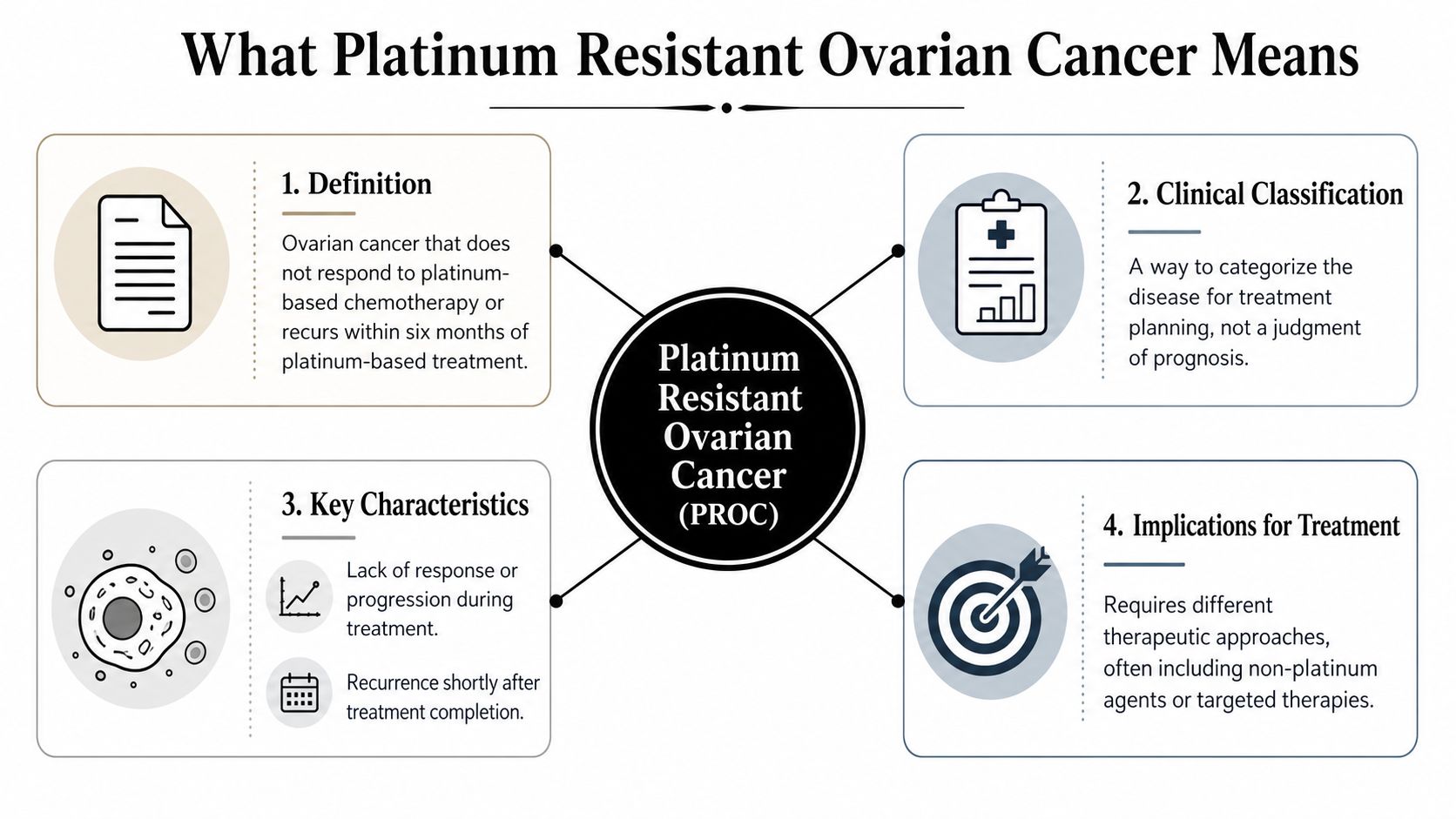
The phrase platinum resistant ovarian cancer is a clinical classification. It helps doctors sort out which treatments may still be useful and which are less likely to help.
In simple terms, platinum drugs such as carboplatin or cisplatin damage cancer-cell DNA. Many ovarian cancers respond to them at first. But some cancers learn how to survive that damage, or they return quickly after treatment ends.
The six month rule
A key idea is the platinum-free interval, which is the time between the last platinum dose and when the cancer grows again. If the disease recurs or progresses within 6 months, clinicians define that as platinum-resistant ovarian cancer, as described in The ASCO Post summary of prognostic factors.
That definition can sound rigid, and in some ways it is. Medicine uses categories because treatment planning needs a shared language. But categories are still only tools. They don't tell the whole story of an individual patient.
A useful analogy is antibiotic resistance. When bacteria stop responding to an antibiotic, doctors usually don't keep using the same drug and hoping for a different result. They look for another option, often one that works through a different pathway. Ovarian cancer is more complex than an infection, but the basic idea is similar.
Why resistance happens
Scientists don't think resistance has one single cause. In platinum-resistant ovarian cancer, the biology is multifactorial. A review in PubMed notes that approximately 70% of patients eventually relapse despite initial responsiveness to platinum-based chemotherapy, and describes several resistance mechanisms, including genomic and epigenetic alterations, stronger DNA repair, and pharmacologic changes such as reduced drug uptake or increased drug efflux through copper exporters ATP7A and ATP7B.
Here's a plain-language way to think about those mechanisms:
- Better repair crew: Platinum drugs injure cancer-cell DNA. Some tumors become better at patching that damage.
- Less drug gets inside: The cancer cell may reduce how much platinum enters.
- More drug gets pushed out: The cell may actively shuttle the drug away from where it can do harm.
- Biology keeps changing: Tumors evolve over time, especially after multiple treatments.
Practical rule: Platinum resistance is about how the cancer behaves around a treatment. It isn't proof that every future treatment will fail.
That's why your doctor may pivot toward non-platinum chemotherapy, targeted therapy, or a clinical trial instead of repeating the same backbone right away.
Understanding Your Prognosis and Key Biomarkers
A common and painful moment happens after this diagnosis. Someone asks, “So what does this mean for how long I have?” It is a fair question, but ovarian cancer rarely follows a single script, and the label platinum resistant does not erase the details that make one person's outlook different from another's.
Large studies show that outcomes in recurrent ovarian cancer vary widely based on tumor biology, prior treatment history, and a patient's overall condition. The NCCN Patient Guidelines for Ovarian Cancer explain why biomarker testing matters in recurrent disease, including testing for BRCA changes and other features that may influence treatment choices and clinical trial options. That is the practical takeaway. Prognosis is not one number handed down at diagnosis. It is a picture built from several pieces.

Why biomarkers matter
Biomarkers are clues in the tumor's instruction manual. They help your oncologist estimate behavior, sort through treatment options, and see whether a study may fit your cancer especially well.
Two of the most discussed biomarkers are BRCA1/2 mutations and homologous recombination deficiency, or HRD. The American Cancer Society's overview of targeted therapy for ovarian cancer explains that cancers with BRCA mutations or related DNA repair problems may be more likely to respond to certain targeted treatments. That does not guarantee a response, and it does not mean every HRD-negative cancer will behave aggressively. It means the tumor's wiring can change what treatments deserve the closest look.
Other markers may matter too, depending on your pathology and prior treatments. Your doctor may also review folate receptor alpha expression, mismatch repair status, tumor subtype, and whether repeat molecular testing makes sense if the cancer has changed over time.
If you do not know your BRCA or HRD status, ask for the actual results, not just a summary. Ask whether testing was done on the tumor, through blood or saliva, or both. Families are often surprised to learn that inherited testing and tumor testing answer different questions.
Prognosis is personal
Doctors weigh biomarkers alongside several clinical details. They look at how much cancer is present, where it has returned, how you felt on prior treatment, whether symptoms are growing quickly or slowly, and how much time has passed since earlier therapies. Histology matters too. High-grade serous cancer, clear cell cancer, and low-grade tumors can behave differently, which is one reason your pathology report deserves a careful review.
A useful analogy is a weather forecast. The diagnosis gives the season. Biomarkers, pathology, scans, symptoms, and treatment history give the local forecast for your specific day.
That is also why some patients are offered another platinum-containing regimen later, while others are better served by a different strategy right away. The six-month label helps organize treatment decisions, but experienced gynecologic oncologists also look at the whole pattern, including how durable the earlier response was, what side effects occurred, and whether the current disease behavior suggests any reason to revisit platinum or avoid it.
For many families, CA-125 becomes part of the emotional story. It can be useful, but only in context. A rising value may prompt closer follow-up, while a stable or falling value can be reassuring, yet neither should be read in isolation from symptoms and imaging. If you want a clearer explanation of how this marker is used, this guide to the CA-125 blood test in ovarian cancer care is a good place to start. Some patients also choose tools that help them monitor CA125 levels from home between appointments.
A question that often opens a better conversation is this: “What features of my cancer make my prognosis better, worse, or otherwise different from the average patient?” That wording helps shift the discussion away from a single discouraging statistic and toward the information that can effectively guide next steps.
Standard Treatment Pathways Beyond Platinum
After hearing that platinum is no longer the best next step, many families ask a practical question: “So what do we do now?”
The answer is usually a treatment plan built around non-platinum drugs, chosen one at a time rather than all at once. Current guidance supports single-agent non-platinum chemotherapy until the cancer grows again or side effects become too burdensome, as described in this review of platinum-resistant epithelial ovarian cancer. That approach can sound less aggressive than earlier treatment, but the goal is specific. Keep the cancer under as much control as possible, reduce symptoms, protect energy and function, and preserve options for the next decision point.
A helpful way to picture it is long-range disease control rather than a single rescue attempt. Your oncologist is often choosing the treatment that gives the best balance of benefit and tolerability for this phase of care.
Common chemotherapy options
The medicines used most often include:
- Weekly paclitaxel, which can be useful when a steady schedule and a known side effect profile make sense
- Pegylated liposomal doxorubicin, or PLD, which may be a better fit for some patients depending on prior nerve symptoms and other treatment history
- Gemcitabine, a familiar non-platinum option in recurrent ovarian cancer
- Topotecan, which may be considered if other drugs are less suitable
These choices are not interchangeable. Doctors weigh prior neuropathy, blood count recovery, bowel function, kidney function, infusion reactions, work and travel demands, and your own priorities. For one patient, the best option is the drug most likely to shrink visible disease quickly. For another, it is the one most likely to control cancer with fewer clinic visits or fewer side effects.
What results with standard therapy usually look like
Expected results are often more modest than they were earlier in treatment. A review in the Journal of Clinical Oncology notes that single-agent chemotherapy remains a standard option in platinum-resistant ovarian cancer, with response rates and duration of benefit that are generally limited, which is why clinical trials and individualized treatment selection matter so much in this setting (JCO review on treatment approaches in platinum-resistant ovarian cancer).
That can feel discouraging at first glance. It should also make the treatment goal clearer. Success is not measured only by a dramatic scan change. Success can mean less pain, less bloating, more stable breathing or appetite, slower growth on imaging, or enough disease control to reach a better next option.
Pathology still matters here. The same guideline-focused review notes that ovarian clear cell carcinoma tends to behave differently from serous carcinoma, so the subtype should shape treatment planning from the start. This is one reason prognosis is not one-size-fits-all, and why a gynecologic oncologist may recommend a plan that looks different from what another patient received.
Another point patients often miss is that “beyond platinum” does not always mean “platinum never again.” Sometimes a team may revisit platinum later if the pattern of response changes, side effects are manageable, and the cancer biology suggests it could help. In other cases, returning to platinum adds toxicity without much chance of benefit. That is exactly why the next step should be framed around your cancer's behavior, not just a label.
For families trying to make sense of a treatment change, this guide to what happens when chemotherapy stops working can help you prepare for the next appointment with clearer questions and a better sense of what decisions usually come next.
Standard therapy in this phase often works like blood pressure treatment or diabetes treatment. The aim is steady control over time, with side effects kept manageable enough that life can still be lived between appointments.
Emerging Therapies and Promising Clinical Trials
A common moment in clinic goes like this. A patient hears that standard options after platinum can control the cancer for a time, then asks the next question right away: “Is there anything newer, or are we just repeating the same playbook?”
There is more happening than many families realize.
Research in platinum resistant ovarian cancer is shifting toward a more individualized approach. Instead of treating every tumor as if it behaves the same way, newer studies ask a more precise question: which weakness does this specific cancer still depend on, and can a treatment target it? That is why molecular testing and trial matching matter so much here. They can point to options that are different from the older pattern of choosing one chemotherapy after another.
Why combination trials matter
Some newer studies pair a standard drug with a second medicine designed to interfere with how cancer cells repair damage, divide, or deliver survival signals. The goal is practical. If one treatment alone only slows the cancer modestly, a carefully chosen partner may make those cells easier to injure or less able to recover.
As noted earlier, some combination approaches have performed better than older single-agent benchmarks in selected groups of patients. The message is not that every new combination works for everyone. The message is that platinum resistant disease is no longer a single treatment box. For the right patient, biology can open another door.
The same lesson applies to PARP-directed strategies. In this setting, activity can be limited when these drugs are used alone, especially outside clearly biomarker-selected groups. That is one reason researchers have spent so much effort studying combinations rather than relying on a single targeted drug by itself.
Comparing Treatment Outcomes in Platinum-Resistant Ovarian Cancer
| Therapy Type | Example Agents | Typical Median PFS |
|---|---|---|
| Standard non-platinum chemotherapy | Weekly paclitaxel, PLD, gemcitabine, topotecan | 3 to 4 months |
| Targeted combination | Gemcitabine plus berzosertib | Reported to outperform older single-agent benchmarks in selected studies |
| Biomarker-linked combination | PLD plus olaparib in BRCA-mutated patients | Activity reported in selected BRCA-mutated patients |
Beyond the better-known names
Patient education often trails behind research. A patient-focused review from The Patient Story discusses mirvetuximab soravtansine as an important advance and also highlights newer areas of interest such as CDK2 inhibitors and next-generation antibody-drug conjugates.
You do not need to memorize those names. It helps more to understand the pattern. Some of these treatments work like guided delivery systems. Instead of exposing the whole body to the same kind of chemotherapy effect, they are designed to home in on tumors with a particular marker, such as folate receptor alpha, and carry a cancer-killing payload to those cells. That does not remove side effects, but it reflects a different strategy from older broad-treatment approaches.
Clinical trials fit into this picture earlier than many people expect. A trial can be a reasonable next step when standard treatment is still available, especially if your tumor has a biomarker that matches the study design or if your team wants access to a drug class that is not yet widely available. That matters in a disease where prognosis varies so much from one person to another. Two patients with the same broad label may have very different trial options based on pathology, prior treatment, folate receptor expression, BRCA status, HRD findings, and overall health.
For people in New York City, that may mean care through an academic center, a community oncology practice with trial access, or a second-opinion visit focused on molecular results and treatment sequencing. Hirschfeld Oncology is one community-based option in Brooklyn that offers individualized cancer treatment planning and infusion-based care for complex cases.
What to Ask Your Oncologist About Your Next Steps
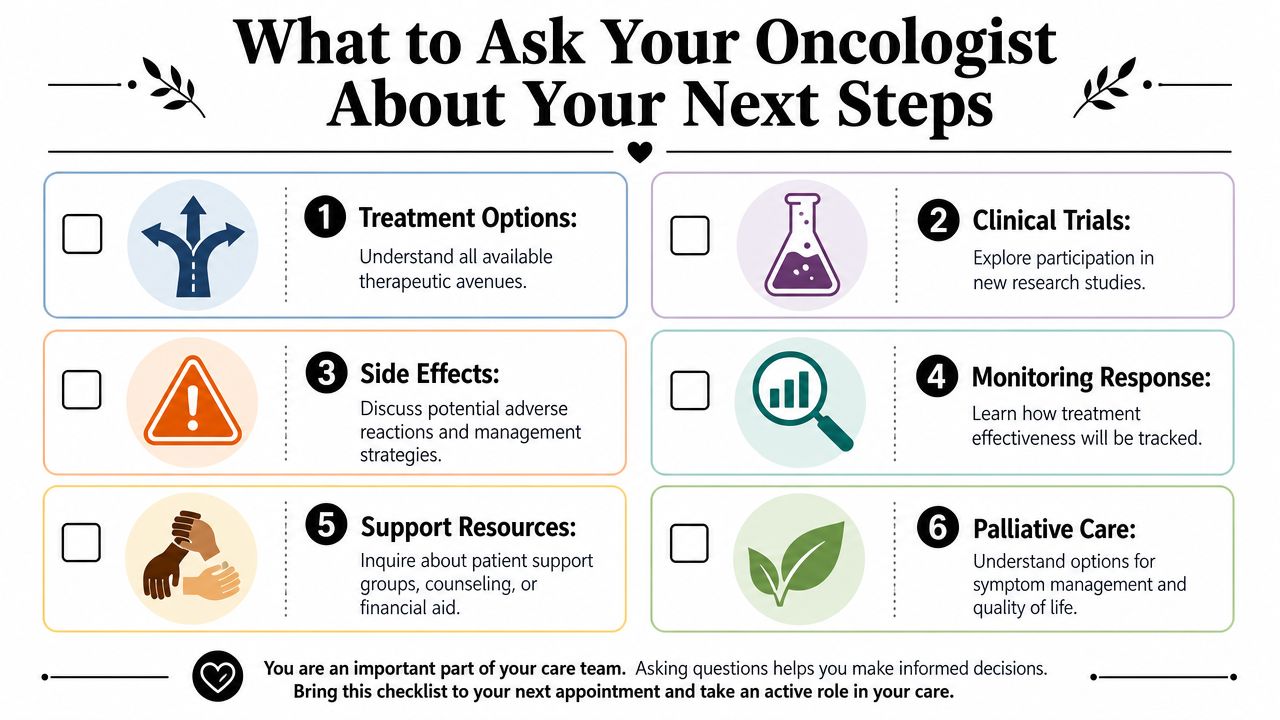
When families feel overwhelmed, they sometimes try to ask everything at once. A better approach is to bring a short list of questions that helps your doctor explain the reasoning behind the next move.
That's especially important with the confusing topic of platinum rechallenge. Patients often hear mixed messages. Some are told platinum should be avoided. Others hear that it might still be considered in select cases. The confusion is real, and a patient education review from MyOvarianCancerTeam notes that the definition of resistance has shifted as more lines of platinum are used upfront, leaving patients without a clear data-driven framework for weighing re-exposure against the slim odds of benefit.
Questions that clarify the decision
Bring these to your next visit and write the answers down.
- About my tumor biology: “What are my BRCA, HRD, folate receptor, and pathology results, and how do they affect treatment choices?”
- About the current goal: “Are we trying to shrink the cancer quickly, keep it stable, reduce symptoms, or preserve quality of life with the least toxicity?”
- About standard treatment: “Which single-agent chemotherapy would you choose for me first, and why that one rather than paclitaxel, PLD, gemcitabine, or topotecan?”
- About side effects: “Which side effect is most likely to disrupt my daily life, and what's your plan if it happens?”
- About monitoring: “How will we know if this treatment is helping? Symptoms, imaging, CA-125, or a combination?”
Questions about platinum rechallenge
This topic deserves its own part of the conversation.
- Timing: “Does my platinum-free interval still strongly argue against retreatment with platinum?”
- Past benefit: “How much did my cancer respond before, and does that history matter now?”
- Risk: “What are the downsides of trying carboplatin again in my case?”
- Alternatives: “Is there a non-platinum or targeted option with a better rationale based on my biomarkers?”
- Evidence limits: “If you're considering platinum again, what makes my case different from the usual platinum-resistant pattern?”
If your oncologist recommends or rejects platinum rechallenge, ask them to explain the reasoning in one or two plain sentences. You deserve a clear answer, not just a label.
Questions that open doors
A few more can change the trajectory of care:
- “Am I eligible for a clinical trial now, not later?”
- “Would a second opinion add anything useful at this decision point?”
- “Should palliative care be involved for symptom support even while I'm receiving active treatment?”
- “What would make you change course quickly?”
These questions don't challenge your doctor. They help you and your team make decisions together.
Finding Expert Care and Hope in NYC and Brooklyn
In New York City, one challenge is that there are many cancer care options, but not all of them approach recurrent ovarian cancer the same way. Some centers are heavily trial-focused. Some emphasize standard sequencing. Some community practices can move faster with day-to-day symptom support and outpatient treatment access.
For patients in Brooklyn, Williamsburg, Bushwick, and nearby neighborhoods, the practical next steps usually include a few basics.
A focused plan for the next week
- Gather records: Ask for pathology, operative reports, prior chemotherapy history, biomarker testing, and the most recent imaging.
- Request clarity on biomarkers: If BRCA, HRD, or other relevant markers haven't been reviewed recently, ask whether new or updated testing is appropriate.
- Seek a second opinion when the plan feels uncertain: A fresh review can help with sequencing, trial eligibility, and whether a non-platinum strategy makes the most sense.
- Choose care that fits real life: Travel burden, infusion scheduling, symptom monitoring, and communication style matter more than many patients expect.
Local care should be both expert and usable
The best plan on paper isn't enough if it doesn't work in the context of your life. Many patients need an oncologist who can discuss advanced options while also helping with fatigue, pain, appetite changes, neuropathy, and the strain of repeated treatment decisions.
If you're comparing local options, this guide on finding ovarian cancer doctors near you can help you think through what to ask and what to look for in a practice.
A diagnosis of platinum resistant ovarian cancer changes the path. It doesn't erase the path. There are still treatment choices, still biologic differences that matter, and still reasons to ask whether your current plan reflects the newest thinking rather than outdated assumptions.
If you're in NYC or Brooklyn and need help sorting through treatment options after a platinum-resistant ovarian cancer diagnosis, Hirschfeld Oncology offers consultations focused on individualized treatment planning, outpatient infusion care, symptom management, and second opinions for complex cases. A careful review of your pathology, biomarkers, prior response, and goals can make the next step clearer.
.png)
.png)