.png)


The first time someone hears, “You'll need a radiation face mask,” the reaction is often the same, a mix of relief that there's a plan and a spike of fear about what that plan will feel like. If that's where you are right now, you're not overreacting. A mask over your face sounds personal and overwhelming, especially when you're already trying to process a new cancer diagnosis and a long list of unfamiliar appointments.
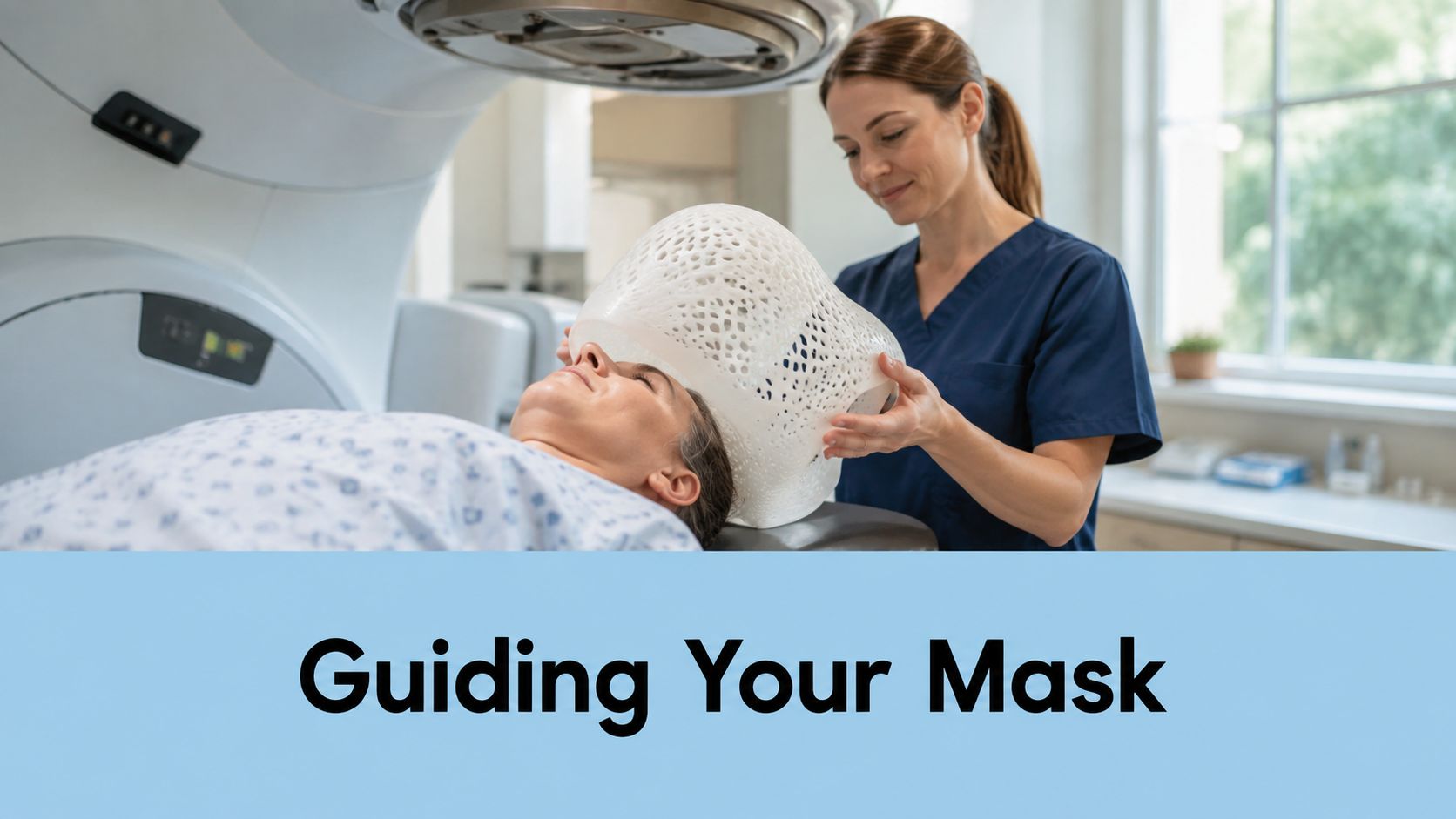
In reality, this device has one job, to help the radiation team place treatment in the exact same position each day. It's a custom thermoplastic immobilization mask, shaped to your face and neck so your head stays still while the treatment beam is aimed at the right area. Modern patient education describes it as a positioning device for the head and neck, often used in cancers of the larynx and nearby structures, and not as a shield that blocks radiation itself. That distinction matters, because people often hear the word “mask” and assume it protects the skin or the whole body, when its real purpose is to improve geometric reproducibility and precision.
Historically, radiotherapy moved from rough targeting toward much more standardized positioning. Before masks became common, some patients were marked with tattoos so the beam could be aimed accurately again, and early radiation-safety guidance was still in its infancy, with the German Roentgen Society issuing a warning about cumulative X-ray effects in 1913 and later formal worker-protection limits appearing in 1941. The arc of that history is simple, medicine kept learning how to make treatment safer and more exact, and the mask is part of that progress. It's a tool that helps your team deliver treatment with less guesswork and more consistency. BBC history of the radiation face mask
What a Radiation Face Mask Actually Is
A lot of people hear “mask” and immediately picture something like a surgical mask or a respirator. That's not what this is. A radiation face mask is usually a molded thermoplastic shell that fits your head and neck closely, so the team can keep you in the same position during simulation and every treatment visit.
What it does and doesn't do
Its purpose is immobilization, not filtration and not shielding. In head-and-neck radiotherapy, the mask is heated until it becomes pliable, shaped to your face and neck, then allowed to harden so it holds you still while the beam is delivered consistently. That steady setup matters because radiation works best when the target stays exactly where the plan expects it to be.
The mask is there to keep treatment accurate. It is not a sign that something is being “covered up” or hidden from you.
The word “mask” can also be misleading emotionally. Patients sometimes worry it means they'll be sealed in, unable to breathe, or cut off from the room around them. In practice, the mask has openings, and it's used to secure position, not to trap air or block your ability to communicate with the team.
Why it became standard
The reason this device exists is tied to the long history of radiotherapy becoming more precise. Before rigid immobilization, staff relied more heavily on skin marks and tattoos to repeat treatment placement. The mask shifted that responsibility from skin markings alone to a device that could hold your head and neck in the same alignment day after day, which is why it's now so closely associated with accurate local control.
The key idea is simple. You're not being fitted for protection from the beam. You're being fitted for repeatable positioning so your care team can treat the intended area with confidence. That's what makes the mask such a central part of head-and-neck radiation planning. Oncolink on thermoplastic radiation masks
The emotional part people don't say out loud
For many patients, the hardest part isn't the technology, it's the feeling of being measured, molded, and held still while you're already scared. That feeling is real, and it deserves plain acknowledgment. If you felt uneasy the moment you heard the word “mask,” that reaction makes sense.
The Simulation and Molding Process Explained
The day the mask is made usually starts with CT simulation, the planning visit where the team studies your anatomy and gets everything ready for treatment. You'll lie on a treatment table in the position you'll return to each day, and the staff will make sure your shoulders, head, and neck are aligned the same way they need to be for radiation.
What the material feels like
The thermoplastic material is heated until it becomes soft and flexible. When it's placed over your face and neck, it may feel warm at first, then gradually firmer as it cools and hardens into shape. The sensation is often described as unusual rather than painful, but if you're already anxious, the pressure and stillness can feel intense.
The mask is then used again for each daily treatment session. That consistency is the point, because the treatment team wants the setup to match the plan as closely as possible every day. Small reference marks may be placed on the mask itself, which helps the staff line you up without having to rely only on skin marks.
Practical rule: if a movement, pressure point, or edge feels wrong during fitting, speak up right away. Small adjustments are much easier to make before the mask is finalized.
You'll usually be asked to stay still while the mask is molded, and the team may step in and out of the room while checking the fit. The room itself often looks plain and efficient, with the CT scanner, the table, and positioning tools ready to go. That can feel sterile, but it's also a sign that the environment is designed for accuracy.
What to wear and how to prepare
Wear comfortable clothing without tight collars if you can, since the neck and shoulder area often needs to stay accessible. It's also reasonable to ask in advance whether you can eat before the appointment, because the answer can depend on your specific treatment plan and any medicine you've been told to take. Bring a family member or friend if your team says it's okay, especially if having support nearby helps you stay steady.
For a patient who feels nervous about the unknown, the most helpful thing is usually knowing the sequence. You arrive, you're positioned, the material is warmed, the mask is molded, and then the fit is checked. Nothing about that process should be rushed past you without explanation.
If skin sensitivity or throat symptoms are already part of your treatment picture, it can help to review what to expect from head-and-neck radiation side effects before your first appointment, especially if your team has asked you to prepare for treatment-related skin care. Head and neck radiation side effects
Types of Masks and Materials Used in Radiotherapy
People often use the phrase “radiation mask” as if there's only one kind, but there are different configurations for different treatment goals. The main question isn't which version sounds most comfortable in general, it's which one gives your team the best access and the most reliable positioning for your exact treatment area.
Immobilization masks and lead-equivalency shields are not the same
A thermoplastic immobilization mask is designed to hold you in place. A lead-equivalency face shield is designed to attenuate X-rays for protection in other settings, and it's measured by lead equivalency, not by how snugly it fits. Commercial lead-face shields are commonly specified at 0.12 mm Pb equivalency, and product listings may also show practical details such as about 125 mm mask height, 450 mm circumference, 3 mm thickness, and 315 g weight to balance coverage and wearability. Lead-equivalency face shield specifications
That difference matters because patients sometimes assume any face mask near radiation must be blocking the beam. It doesn't work that way. Positioning and shielding are separate jobs, and your care team chooses the device based on the goal of the treatment.
| Feature | Thermoplastic Immobilization Mask | Lead-Equivalency Shield |
|---|---|---|
| Main purpose | Holds the head and neck still for treatment | Attenuates X-rays for protection |
| Typical use | Head-and-neck radiotherapy planning and daily setup | Radiation protection contexts where shielding is needed |
| What it does | Improves reproducibility and alignment | Reduces exposure according to lead equivalency |
| What it does not do | It does not shield you from the treatment beam | It is not a positioning shell for daily immobilization |
Why one design may feel different from another
Some patients are offered a full head-and-neck mask, while others may hear about open-face designs that leave more of the face exposed. Lower-neck targets can sometimes require extended coverage into the shoulders to keep the setup stable. The right choice depends on where the cancer is being treated and how much movement would interfere with accuracy.
The important thing is to ask your team why a particular design was selected. A good answer should connect the mask to your anatomy, your target area, and the need for consistent alignment, not just to “what we usually use.”
Skin Care and Managing Treatment Side Effects
Head-and-neck radiation can make the skin in the treatment area more sensitive as treatment goes on. People often notice redness, dryness, peeling, and tenderness in the areas covered by the mask or directly exposed to treatment, and that can make fitting day feel more uncomfortable if the skin is already irritated.
Gentle care starts early
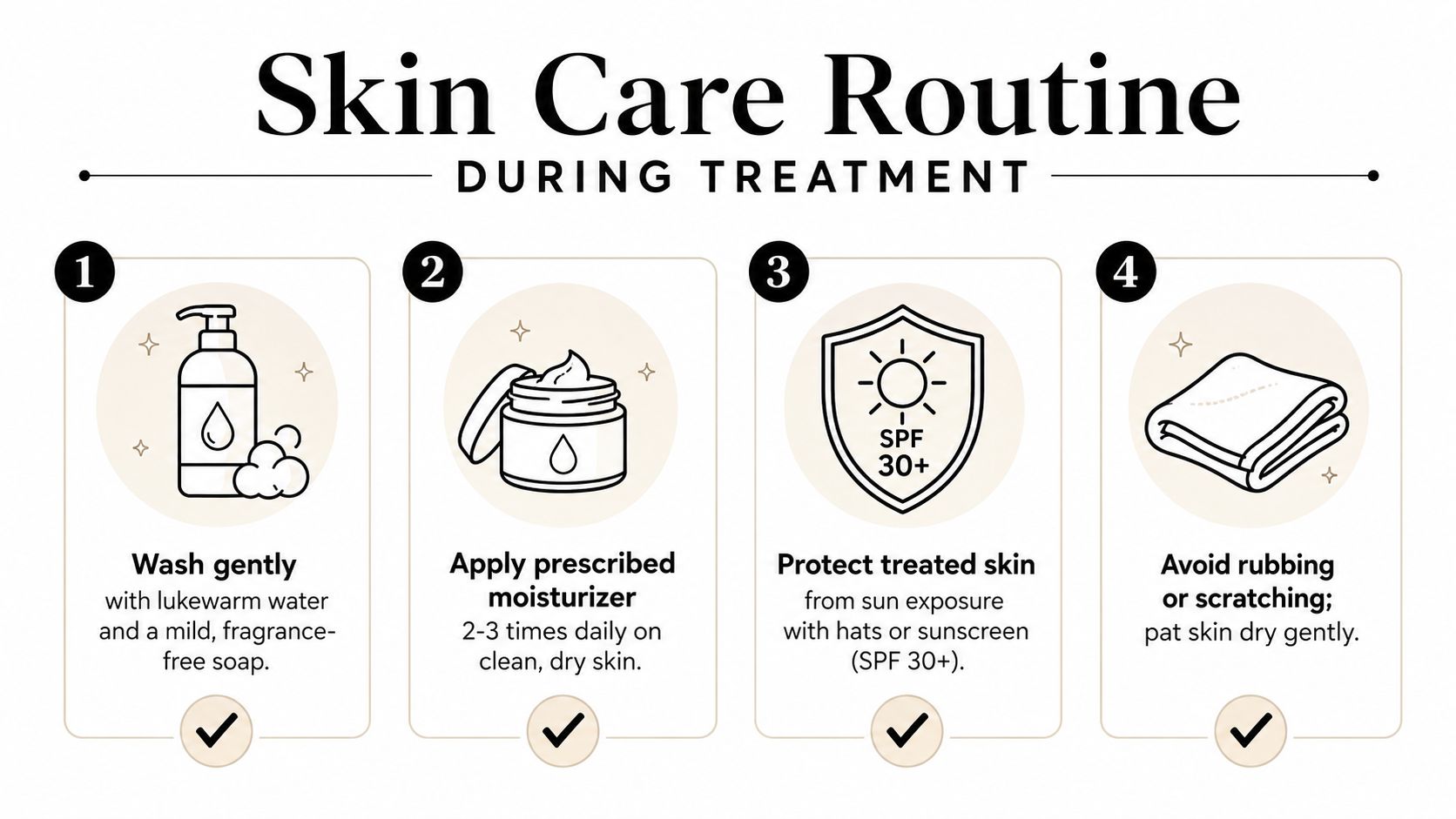
A simple routine usually works best. Use a mild, fragrance-free cleanser, wash with lukewarm water, and pat the skin dry instead of rubbing it. Many teams also recommend a moisturizer that's appropriate for treated skin, but the exact product and timing should match your oncology instructions, since some products fit certain treatment plans better than others.
The goal is to keep the skin calm, not to layer on a lot of products. Harsh scrubs, strongly scented lotions, adhesive bandages on treated skin, and tight collars can all add irritation when the area is already under stress.
Practical rule: tell your team as soon as you notice rubbing under the mask edge, because a small fit issue can turn into a bigger skin problem if nobody knows about it.
Sun and friction matter
Treated skin needs extra protection from sun exposure because radiation can make it more reactive. A hat, shade, or sunscreen recommendation from your care team can help, but the priority is to follow the instructions your radiation department gives for your exact situation. Even washing and drying the area should feel gentle, almost cautious.
You may also find that the mask itself makes the skin feel warmer or more sensitive after a few sessions. That does not mean the treatment is wrong, but it does mean your team should hear about it. Small adjustments, or a different skin-care plan, can make a meaningful difference in day-to-day comfort. For a more detailed reference, see a guide to managing head-and-neck radiation skin side effects.
Coping with Claustrophobia and Mask Anxiety
The hardest truth for many patients is that mask anxiety isn't rare, and it isn't a character flaw. A recent review of patient education materials found that 85% explained the mask's purpose, but only 35% addressed anxiety or claustrophobia, which means the emotional side is often under-taught even when the device itself is explained well. Review of patient education materials on mask anxiety
Make the experience more manageable
Some people do well with breathing exercises before the appointment. Others need guided imagery, a quiet playlist, or an audiobook through earbuds. If you know you get tense in enclosed spaces, tell your team early, not after you're already on the table.
A therapist who is used to treating head-and-neck patients can often work with a signal system so you know how to ask for a pause. That kind of plan turns fear into something practical. It also gives you a sense of control, which can be the difference between dreading each session and getting through it.
If you're dealing with broader worry around diagnosis and treatment, mental health support can help with the anticipatory stress that tends to build around appointments. Resources like Uptown Psychology CBT guide can be useful when you want structured tools for anxiety outside the treatment room.
Open-face options and medication discussions
Some centers use open-face masks when the treatment setup allows it, especially if a patient needs less facial enclosure and the medical team decides the design is safe and precise enough for the target area. That option isn't right for every case, but it's worth asking about rather than assuming you have to endure the tightest possible setup.
If anxiety feels severe, ask your oncologist whether a pre-appointment anti-anxiety medicine is appropriate and whether you'll need someone to drive you. That conversation is normal. It's part of planning care, not a detour from it.
Caregivers can help by keeping their tone steady, avoiding overly reassuring phrases that dismiss the fear, and focusing on concrete support. “You'll be okay” is less useful than “Let's tell the therapist what helps you calm down.” For many families, reading about the connection between cancer and anxiety makes it easier to talk about what's happening without minimizing it. Anxiety and cancer support guidance
How Hirschfeld Oncology Supports Patients Through Treatment
At Hirschfeld Oncology in Brooklyn, the approach to radiation positioning fits into a broader philosophy of individualized cancer care. Dr. Azriel Hirschfeld and his team focus on treatment plans that are shaped around the person in front of them, not just the diagnosis on paper, with close monitoring and symptom management built into the way care is delivered.
That matters for patients who are already carrying a lot into the room, especially those facing complex or advanced-stage disease. A mask can feel small compared with the rest of the cancer journey, but it becomes much easier to tolerate when the team treats comfort as part of treatment quality rather than as an afterthought. Collaboration, clear explanation, and practical symptom support all help reduce the feeling that you're just being moved through a machine.
What supportive care looks like in practice
A patient-centered clinic pays attention to how the person is doing, not just to whether the scan looks aligned. That means checking symptoms, listening when something feels off, and making room for concerns about fit, pressure, skin sensitivity, or anxiety. The right team won't treat those issues as minor complaints.
Good cancer care includes technical precision and human steadiness at the same time.
Hirschfeld Oncology shares practical guidance and patient stories through its blog, including broader context on what it's like to seek care in New York City at a dedicated cancer center. If you want to learn more about that setting, the practice's Brooklyn cancer center overview gives a sense of the environment patients are walking into.
For patients in Williamsburg, Bushwick, and across New York City, that kind of support can make a stressful treatment phase feel more navigable. It doesn't remove the challenge of wearing a mask each day, but it does mean you're less likely to feel like you have to manage the fear alone.
Frequently Asked Questions About Radiation Face Masks
Does the mask hurt?
It shouldn't be painful, though it can feel tight, strange, or emotionally intense at first. If you have pressure points, skin irritation, or trouble settling into the fit, tell the therapist right away.
Will it make breathing harder?
A thermoplastic immobilization mask is designed for positioning, not to block airflow. If you feel short of breath or panicky, speak up immediately so the team can help you reset and check the fit.
How long am I in the mask each day?
That depends on your treatment plan and setup, but many patients are on the table for a relatively short period once everything is aligned. The staff's job is to get you positioned efficiently and consistently.
Can I see and hear during treatment?
You'll usually be able to hear the team, and you can typically communicate with them during the session. Vision depends on the mask style and your eye position, but you should not feel abandoned in the room.
What if I panic or need to move?
Tell the therapist before treatment starts if you're worried about panic, and agree on a signal in advance. If you need a pause, the team can stop and help you reset.
Do I take the mask home?
Usually, no. It generally stays with the treatment team so it can be used for your daily sessions and kept with your treatment records.
If you're trying to decide what your next step should be, Hirschfeld Oncology can help you think through treatment details with the kind of calm, individualized attention this moment calls for. Visit Hirschfeld Oncology to learn more about care options, practical support, and what to expect when treatment planning needs to balance precision with comfort.
.png)
.png)