.png)


When you're caring for a loved one with cancer, your world shrinks. It becomes a cycle of appointments, medications, and emotional ups and downs. Stepping into that role is an incredible act of love, but it’s also a marathon with no finish line in sight. This is where respite care comes in—not as a luxury, but as an absolute necessity.
Think of it as a strategic pause. It’s a planned, temporary break from your caregiving responsibilities, designed specifically to give you time to rest, recharge, and take care of your own needs. It's the support system that supports you, the caregiver.
The Unseen Marathon of Family Caregiving

Being a family caregiver is a role filled with immense love and dedication, but it's also a demanding, often invisible, job. You’re juggling medical tasks, providing constant emotional support, and handling countless daily chores—all while putting your own life on hold.
For many, this 'unseen marathon' has to be balanced with a career, which makes understanding workplace policies like dependants leave so important for managing work and home life. The sheer scale of this commitment is staggering.
The True Weight of Caregiving
The numbers really put the caregiver experience into perspective. In 2023, caregivers for people with dementia alone provided an estimated 18.4 billion hours of unpaid care. While a different diagnosis, the intensity is often the same for those managing cancer care.
It gets even more personal when you look at spousal caregivers, who often dedicate an average of 44.6 hours per week to care tasks. That's more than a full-time job, and it often comes at the expense of their own health, finances, and well-being.
That’s why respite care is so critical. It’s not about abandoning your loved one; it’s about making sure you have the strength to keep going.
Imagine a marathon runner. They can't possibly finish the race without stopping at water stations to rehydrate. Respite care is your water station. It’s a planned pause to catch your breath, tend to your own needs, and get back in the race with renewed focus and energy.
A Core Part of the Care Plan
It's time to shift our thinking. Respite care isn't a backup plan; it's a core part of your loved one's overall care strategy. When a caregiver is rested and supported, they are simply better at navigating the complexities of a serious illness. You can find more strategies for building this kind of support network in our guide on supporting families of stage 4 cancer patients.
By making these breaks a priority, you’re not just protecting your own health—you’re directly improving the quality of care you can provide. In this guide, we’ll walk you through everything you need to know about respite care for family caregivers, covering:
- The different types of respite care available.
- How to handle the costs and find financial help.
- Practical tips for arranging a smooth and successful break.
- Local resources for families right here in Brooklyn, Williamsburg, and Bushwick.
Getting to know your options is the first step toward creating a caregiving plan that truly supports everyone involved.
Why Respite Care Is Non-Negotiable for Your Health
It's easy to fall into the trap of thinking respite care is an optional luxury, something you’ll get to "later." But that’s one of the biggest mistakes a family caregiver can make. It’s not an indulgence; it's a critical tool for your survival. The around-the-clock physical and emotional demands of caring for a loved one with cancer can take a serious toll on your own health if you don't take steps to manage it.
Think of your own well-being like a bank account. Every single caregiving task—a late-night trip to the ER, juggling medication schedules, offering a shoulder to cry on—is a withdrawal. If you never make any deposits in the form of rest and self-care, that account will eventually be overdrawn.
Preventing Compassion Fatigue and Burnout
Being constantly exposed to a loved one's pain and struggle can lead to a state of deep emotional and physical exhaustion known as compassion fatigue. This isn't just about feeling tired. It's a profound depletion of your ability to empathize and feel for others, including yourself.
When you're running on empty like this, your patience wears thin, your decision-making gets cloudy, and you might even start to feel resentful or disconnected from the very person you’re trying to help. This isn’t a personal failing; it's a completely normal response to prolonged, high-stakes stress. To really understand why a break is so vital, it's worth recognizing the very real and often missed signs of caregiver burnout.
Getting regular, scheduled breaks gives you the space to process these heavy emotions and physically recover. Even just a few hours to go to your own doctor's appointment without worrying or to simply sit in a coffee shop alone can make a world of difference.
The Proven Health Benefits of Taking a Break
Stepping away isn’t just about feeling better mentally; the physical health benefits are undeniable. Chronic stress floods your body with hormones like cortisol, which over time can lead to serious health problems like high blood pressure, a weakened immune system, and a higher risk of chronic disease.
The research on this is compelling. The Administration for Community Living found that caregivers who received four or more hours of respite care per week reported a significant drop in their feelings of burden. The health impacts were even more striking: about 40% of caregivers who initially rated their health as "fair" or "poor" upgraded it to "good" after getting support.
When you are rested, you are a more effective caregiver. You are more patient, more clear-headed, and more present for your loved one. Prioritizing your health isn't selfish—it's a fundamental part of providing the best possible support during their cancer treatment journey.
Reconnecting with Your Own Identity
One of the toughest parts of being a caregiver is how your own identity can slowly fade into the background. Hobbies, friendships, and personal goals get pushed aside. Before you know it, your entire identity can feel wrapped up in your role as "caregiver," and that's a heavy weight to carry.
Respite care gives you the time and mental space to remember and reconnect with the parts of yourself that exist outside of this all-consuming role. This is absolutely essential for your long-term emotional resilience.
- Attend a social gathering with friends without constantly checking your phone.
- Go to that yoga class you used to love.
- Work on a personal project that brings you joy.
- Simply be alone with your own thoughts, free from anyone else's immediate needs.
These moments aren't frivolous escapes. They are necessary acts of self-preservation that allow you to return to your duties with a renewed sense of self and purpose, making you a stronger, more capable partner in your loved one’s care.
Exploring the Four Main Types of Respite Care
When you’ve hit that point where you know you need a break, the next question is: what kind of break? Respite care for family caregivers isn't a single service but a whole range of options. It's flexible, designed to fit the unique realities of different families and their needs. Finding the right one is all about understanding what's available for you and your loved one.
Think of it like planning a trip. Sometimes, all you need is a short taxi ride across town to run an errand—that’s like a few hours of in-home care. Other times, you need a week away, requiring a long-haul flight and a hotel, which is more like a short-term residential stay. The best choice depends entirely on your destination and what you need to accomplish.
The flowchart below offers a simple way to think about when it's time to explore these options.
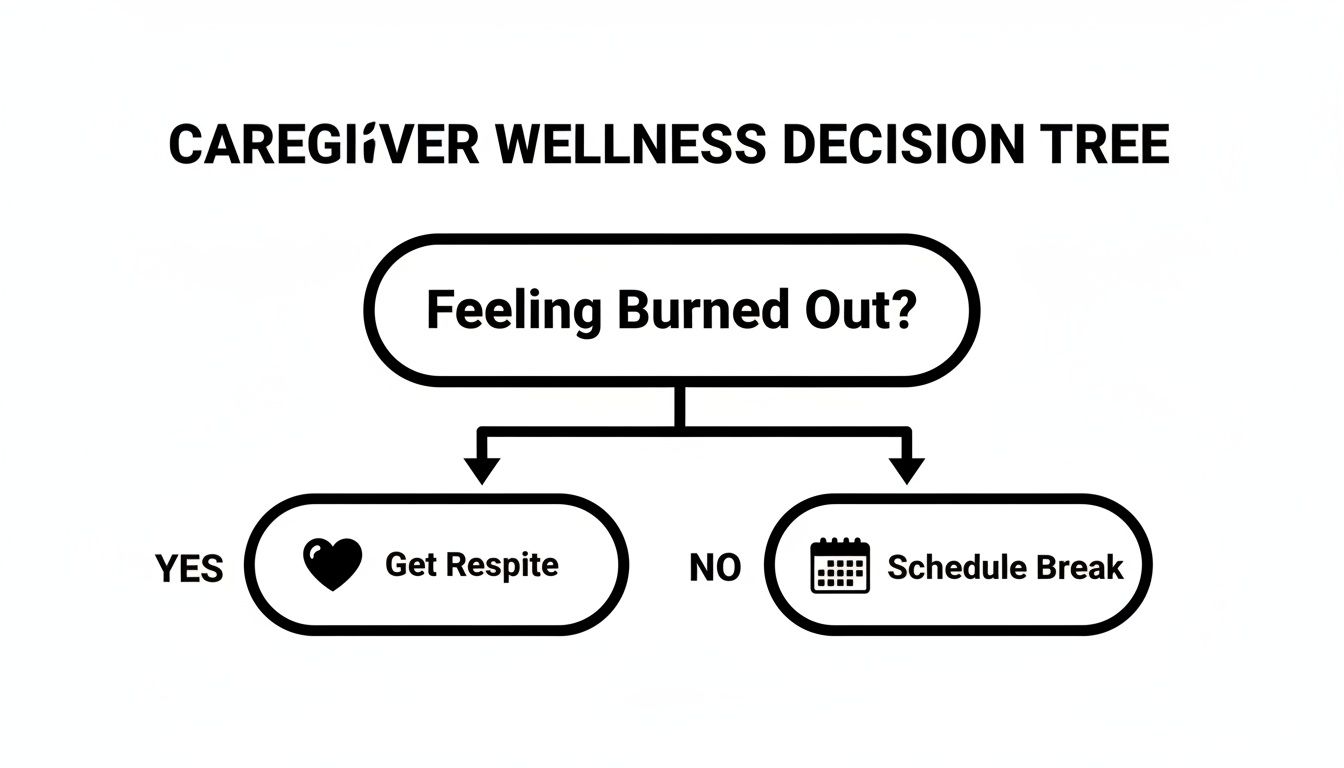
As you can see, whether you’re already feeling the weight of burnout or just trying to stay ahead of it, scheduling a break is the healthiest path forward.
In-Home Respite Care
This is probably the most familiar and popular form of respite care. A professional caregiver, nurse, or trained companion comes right into your home, allowing your loved one to stay in their own comfortable, familiar space. This can be for just a few hours, overnight, or even an entire weekend.
The biggest plus here is stability. For a cancer patient, being in their own environment can make a world of difference, reducing anxiety and confusion. For you, it means you can step out to go to the doctor, grab groceries, or just take a walk in the park with the peace of mind that comes from knowing they're safe at home.
Adult Day Centers
Think of these as structured, supportive communities. Adult day centers offer a safe place for your loved one to spend the day, usually during regular business hours. They’re not just sitting around—they're participating in social activities, enjoying light therapeutic exercise, and engaging with peers under professional supervision.
The social connection is a huge benefit. A serious illness can be incredibly isolating, and these centers give your loved one a chance to connect with others who understand. It gives you a predictable, solid block of time each day to work, manage household duties, or simply recharge.
Short-Term Residential Stays
Sometimes, a few hours isn’t enough. If you need to travel, have a medical procedure yourself, or just need a real vacation to reset, a short-term residential stay is a fantastic solution. Your loved one temporarily moves into an assisted living facility, a nursing home, or a dedicated respite house that provides 24/7 care.
This is the most complete break you can get, as it allows you to fully step away from your caregiving role for an extended period. It takes a bit more planning, but it’s an absolute lifesaver for preventing deep, lasting burnout. It's important to know how this differs from other long-term solutions, and you can learn more about palliative care vs. hospice care in our article to get a clearer picture.
Volunteer and Peer Programs
Never underestimate the power of your local community. Many non-profits, faith-based groups, and other organizations have volunteer respite programs where they match trained volunteers with families like yours.
These volunteers typically don't handle complex medical tasks. Instead, they provide priceless companionship—reading a book aloud, playing a game of cards, or just being a friendly presence so you can have a couple of hours to yourself. These programs are often free or very low-cost, making them an incredible resource, especially if you're on a tight budget.
Comparing Respite Care Options
With several options on the table, it can be tough to decide which one fits best. This table breaks down the four main types to give you a quick at-a-glance comparison.
Ultimately, the best choice is the one that meets your immediate need. You might even find that you use different types of respite at different points in your caregiving journey—and that's perfectly okay.
How to Find Financial Support for Respite Care
Deciding you need a break is a huge step. But for most caregivers, the relief is immediately followed by a wave of anxiety about one thing: the cost. It’s a real and significant hurdle, but paying for respite care is often more possible than you might think. You just have to know where to look.
Figuring out how to pay for care can feel like trying to solve a puzzle with a thousand tiny pieces. The key is knowing that support comes from all different places—government programs, insurance, and even grants from nonprofits. With a little guidance, you can build a financial plan that makes these essential breaks a reality.
Starting with Government and Insurance Programs
Many families are surprised to discover just how much structured financial aid is available through established programs. These are often the first, and most significant, sources of funding for respite care, though you’ll need to check the specific eligibility rules.
Your best bet is to start by exploring these main avenues:
Medicaid Waivers: Many states offer Home and Community-Based Services (HCBS) waivers through Medicaid. These programs are specifically designed to help people get the care they need at home instead of in a facility. Respite care is often a covered service, which can be a lifeline for eligible low-income families.
Veterans Affairs (VA) Benefits: If the person you're caring for is a veteran, the VA offers incredible support for caregivers. The VA's Standard Medical Benefits Package includes respite care services to give family caregivers a break. This can cover up to 30 days of respite care per year, whether it’s in your home, at a VA community living center, or an adult day health center.
Long-Term Care Insurance: Does your loved one have a long-term care insurance policy? If so, it's time to pull it out and read the fine print. Many of these policies now explicitly list respite care as a covered benefit. Call the insurance provider to get the specifics on coverage, daily limits, and what kind of documentation they need from you.
These programs are the foundation of financial support for so many families. Looking into each one is a critical first step.
Finding Help from Non-Profits and Community Grants
Beyond the big government and insurance programs, there's a huge network of non-profit organizations and community groups dedicated to helping caregivers. These groups often provide flexible grants and direct financial help specifically for respite care for family caregivers.
They understand the immense pressure families face when dealing with a cancer diagnosis and they work to fill the financial gaps that other programs leave behind.
"For caregivers, financial stress is often as draining as the emotional and physical demands of the role. Non-profit grants act as a crucial bridge, providing the funds that allow a caregiver to take a breath without worrying about the bill. This support is not a handout; it's an investment in the entire family's well-being."
You can often find these resources through organizations focused on a specific illness. For example, many national cancer support networks offer grants that can be used for respite. Don't forget to look locally, too—community foundations and faith-based organizations are excellent places to check for assistance. The grants might be smaller, but they can be combined to cover the cost of regular breaks.
Taking a Proactive Approach to Finding Funds
Securing financial aid takes a bit of organization and persistence. Don't get discouraged if the first door you knock on doesn't open. The most successful strategy is often to patch together a few different funding sources to create a plan that works for you.
Here’s how to get started:
- Get a Folder Ready: Start by gathering all the important documents you'll need, like your loved one's diagnosis, income information, and proof of veteran status if that applies.
- Call Your Local Area Agency on Aging: This might be the most valuable call you make. They offer free, expert advice on all the local, state, and federal programs you might be eligible for.
- Talk to Your Oncology Social Worker: The social workers at hospitals and clinics are absolute pros at navigating these systems. They can point you directly to relevant grant applications and financial aid programs.
The bottom line is that funding for respite care is rarely found in just one place. By exploring all these different avenues, you can piece together the support you need to make this essential care a regular part of your routine.
6. Planning For A Successful Respite Break
Bringing a respite caregiver into your home can feel like a huge step. On one hand, you’re desperate for a break. On the other, the thought of handing over the reins, even for a few hours, can be nerve-wracking. That’s completely normal.
The secret to making it a positive experience for everyone is all in the preparation. A little upfront planning doesn't just make things easier for the respite provider; it gives you the peace of mind to actually relax and recharge.

Creating A Caregiver's "How-To" Guide
Think of yourself as creating the ultimate user manual for your loved one. The more information you can provide, the more confident and capable the respite worker will feel, and the smoother the day will go. You can use a simple binder, a notebook, or even a shared digital document.
The key is to make it scannable and easy to understand in a hurry. Use clear headings, bullet points for lists, and bold text for anything that’s non-negotiable, like medication times. Your goal is to eliminate any guesswork.
The Handoff: Setting The Stage For Success
Once your guide is ready, the next step is the actual handoff. This is so much more than just handing over a binder. If you can, try to have the respite provider arrive 15-20 minutes before you need to leave.
Use this time to walk them through the house, pointing out where to find essentials like medications, extra linens, or their favorite snacks. More importantly, this gives them a chance to meet your loved one while you're still there, which can ease a lot of anxiety. Seeing you interact warmly with the new person sends a powerful signal that they are safe and can be trusted.
To make sure you cover all your bases, use this checklist as a starting point. It's a simple tool to gather all the crucial information in one place.
Respite Care Preparation Checklist
This isn't just a list; it’s a roadmap to your loved one's well-being. Having it all written down means you won't forget anything in the rush to get out the door.
Communication Is Everything
Clear, open communication sets the foundation for a stress-free break.
- Establish a Communication Plan: Before you leave, decide how you'll stay in touch. Do you want a text update every couple of hours? Or would you prefer a "no news is good news" approach unless there's an emergency? Agreeing on this beforehand manages expectations.
- Encourage Questions: Let the provider know that you welcome their questions. Phrases like, "Please don't hesitate to text me if you're unsure about anything," create an environment where they feel comfortable asking for help instead of guessing.
- Prep Your Loved One: Talk to your family member about the plan. You can frame it positively: "A very nice person named Sarah is coming to spend the afternoon with you while I go to a doctor's appointment."
Investing a little time in thoughtful preparation can transform respite care for family caregivers from a source of anxiety into the genuinely restorative break you deserve. For more insights on building a strong support system, check out our article on how to support someone with cancer.
Finding Local Respite Care in Brooklyn
Knowing you need a break is one thing, but finding reliable, local help is a whole other challenge. For families in Brooklyn navigating a cancer diagnosis, the search for quality respite care for family caregivers can feel like one more overwhelming task on a very long list.
The good news is that our community has a strong network of agencies and centers ready to step in. The trick is finding the right fit—not just someone to fill a chair, but a compassionate professional who understands what your family is going through. This is about finding someone who allows you to take a real, worry-free break.
Vetted Respite Services in Brooklyn
We've done some of the legwork for you. Here are a few trusted local organizations that serve Brooklyn, including neighborhoods like Williamsburg and Bushwick, that have a solid track record of supporting families through serious illness.
Sunnyside Community Services: A fantastic resource for comprehensive home care. Their respite services are provided by trained home health aides who know how to manage complex medical situations and can work with you to create a schedule that fits your life.
Cooperative Home Care Associates (CHCA): As a worker-owned cooperative, CHCA is known for its incredibly dedicated and well-trained caregivers. They offer flexible in-home respite, whether you need someone for just a few hours a week or more consistent support.
The New York Memory Center: While their main focus is on dementia care, this Brooklyn-based adult day center is a wonderful respite option if your loved one is also dealing with cognitive changes. Their programs provide a safe, engaging, and social environment.
How Hirschfeld Oncology Connects You to Care
Trying to sort through all these options can feel like a full-time job. At Hirschfeld Oncology, we truly believe that supporting you—the caregiver—is a critical part of your loved one’s treatment plan. Our patient navigation team is here to act as your personal guide, connecting the dots between needing help and actually getting it.
We won’t just hand you a list of phone numbers and wish you luck. Our team takes the time to really listen and understand your family's unique circumstances—your loved one's specific needs, your schedule, and your budget.
Think of our patient navigators as your personal caregiving strategists. We already have relationships with these local Brooklyn agencies. We can make a direct, warm introduction to providers we know and trust, cutting through the red tape for you.
This means you spend less time vetting agencies and more time focusing on what’s most important. We can help you:
- Pinpoint the right type of respite care, whether that’s in-home help or an adult day program.
- Connect directly with vetted local agencies in Williamsburg, Bushwick, and nearby areas that have experience with oncology patients.
- Figure out the right questions to ask when you talk to potential providers, so you can feel confident you’ve found a great match.
You don’t have to do this alone. Asking for help through respite care for family caregivers is a sign of incredible strength. Let our team at Hirschfeld Oncology help you find the trusted local support you deserve.
Answering Your Questions About Respite Care
Even when you know you need a break, taking that first step can feel like a huge leap. It’s completely normal to have a lot of questions and maybe even a little bit of guilt. Let's tackle some of the most common concerns caregivers have.
So many caregivers I’ve spoken with worry that asking for help is a sign they’re failing or that it's selfish to want time for themselves. Nothing could be further from the truth.
Think of it this way: taking a break isn’t selfish, it’s responsible. It’s how you recharge your own battery so you can continue being the amazing, compassionate caregiver your loved one needs for the long haul. Burnout is the real enemy here, and respite care is your best defense.
When you start seeing respite as a critical part of the overall care plan, it stops feeling like an indulgence and starts looking like the smart, sustainable strategy it is.
"What If My Loved One Refuses Outside Help?"
This is probably the most common hurdle, and it’s a sensitive one. Your loved one might feel like they’re a burden, or they may simply be uncomfortable with a stranger in their space. The key is a gentle approach.
Frame it as something that helps you so you can be a better caregiver for them. Start small—maybe just an hour for you to go to the grocery store alone. If you can, involve them in the decision-making process. Let them meet a potential caregiver beforehand or tour an adult day center with you. A short "test drive" can make a world of difference in easing everyone's anxiety.
"How Can I Possibly Trust a Stranger?"
This is a big one. You've been the primary person ensuring their safety and comfort, and letting go of that control is tough. Building that trust starts with doing your homework.
When you’re looking at agencies or individuals, don't be shy about asking direct questions, especially about their experience with cancer patients.
- How much experience do your caregivers have with managing medications for oncology patients?
- Are they trained to spot the side effects of chemotherapy or radiation?
- Can I speak with other families you’ve worked with?
A good provider will welcome these questions and be completely transparent about their staff’s training, background checks, and credentials. Your peace of mind is the whole point, so take the time you need to feel confident your loved one is in capable, compassionate hands.
At Hirschfeld Oncology, we know that caring for the caregiver is just as important as caring for the patient. We're here to help you navigate these questions and connect you with trusted local respite options. To learn more about our approach, feel free to explore our blog at https://honcology.com/blog.
.png)
.png)