.png)


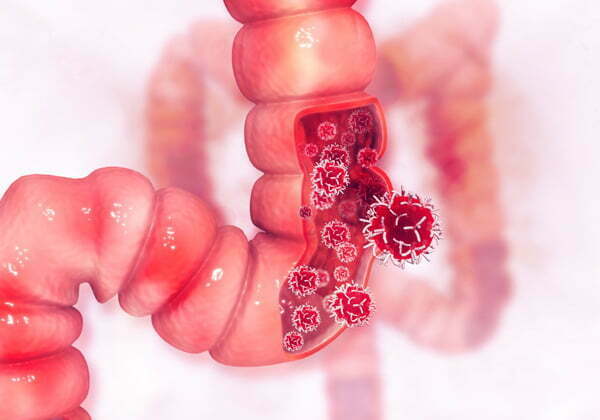
If your care team has mentioned a 5 FU injection, you’re likely wondering what it is and how it works. At its core, this chemotherapy drug, also known as 5-fluorouracil, is a clever imposter designed to stop cancer cells in their tracks. It works by acting as a faulty building block.
What Is a 5 FU Injection and How Does It Stop Cancer?

Think of cancer cells as construction sites that are out of control, constantly and rapidly building copies of themselves. To do this, they need a steady supply of very specific building materials. One of these essential materials is a substance called uracil, which they use to create new DNA.
This is where 5-fluorouracil (5-FU) comes in. We’ve designed this drug to look almost exactly like the real uracil that cancer cells need. When we introduce it into your system, the fast-growing cancer cells can't tell the difference and eagerly take it in, thinking they've got the right material for the job.
But they’ve been tricked. Once this faulty building block gets inside, it effectively sabotages the whole operation. The cancer cell tries to use the fake uracil to copy its DNA blueprint, but the piece doesn't fit. The process grinds to a halt, the cell can no longer divide, and it eventually dies. Because it interferes with the cell's basic metabolism, 5-FU is part of a class of drugs called antimetabolites.
For a quick overview of what to expect, here's a summary of the key points about 5-FU treatment.
5-FU Treatment at a Glance
| Aspect | Description |
|---|---|
| Drug Name | 5-fluorouracil (commonly called 5-FU) |
| Drug Class | Antimetabolite Chemotherapy |
| How It Works | Blocks cancer cells from making new DNA, which stops them from multiplying. |
| Common Uses | Colorectal, Pancreatic, Breast, Stomach, and Head & Neck Cancers. |
| Administration | Given as a quick IV "push" (bolus) or over many hours via a pump (infusion). |
| Key Principle | Exploits the rapid growth of cancer cells by feeding them a defective "building block." |
This table provides a high-level look, but let's dive into where this therapy fits into a broader treatment plan.
The Role of 5 FU in Cancer Treatment
Because of its proven ability to shut down cell replication, 5-FU has become a cornerstone of modern oncology, especially for treating aggressive, fast-growing tumors.
Your oncology team at Hirschfeld Oncology may recommend a 5 FU injection as a central part of your treatment for several cancers, including:
- Colorectal Cancer
- Pancreatic Cancer
- Breast Cancer
- Stomach (Gastric) Cancer
- Esophageal Cancer
- Head and Neck Cancers
It’s important to know that 5-FU is rarely given by itself. We almost always use it in combination with other chemotherapy drugs to launch a more powerful, multi-directional attack on the cancer.
At its core, 5-FU exploits a key weakness of cancer: its relentless drive to grow. By introducing a counterfeit building block, we turn that very strength against it, bringing the cancer’s expansion to a halt.
Two Main Ways 5 FU Is Given
Understanding how you will receive your chemotherapy is a crucial step in preparing for treatment. There are two primary ways we administer 5-FU, and the choice depends on your specific diagnosis, treatment plan, and goals.
- Bolus Injection: This is a fast "push" of the medication given directly into your vein over just a few minutes in the clinic. Think of it as a single, concentrated dose.
- Continuous Infusion: This method delivers the drug slowly and continuously over a longer period—often 24 to 48 hours—using a small, portable pump that you can wear at home.
The decision between a quick bolus and a slow infusion isn't arbitrary. Each method has a different impact on the cancer cells and can lead to different side effects. This is one of the first ways your care is personalized, as we work to find the right balance between effectiveness and your quality of life during treatment.
Why We Switched from a Quick Push to a Slow Drip
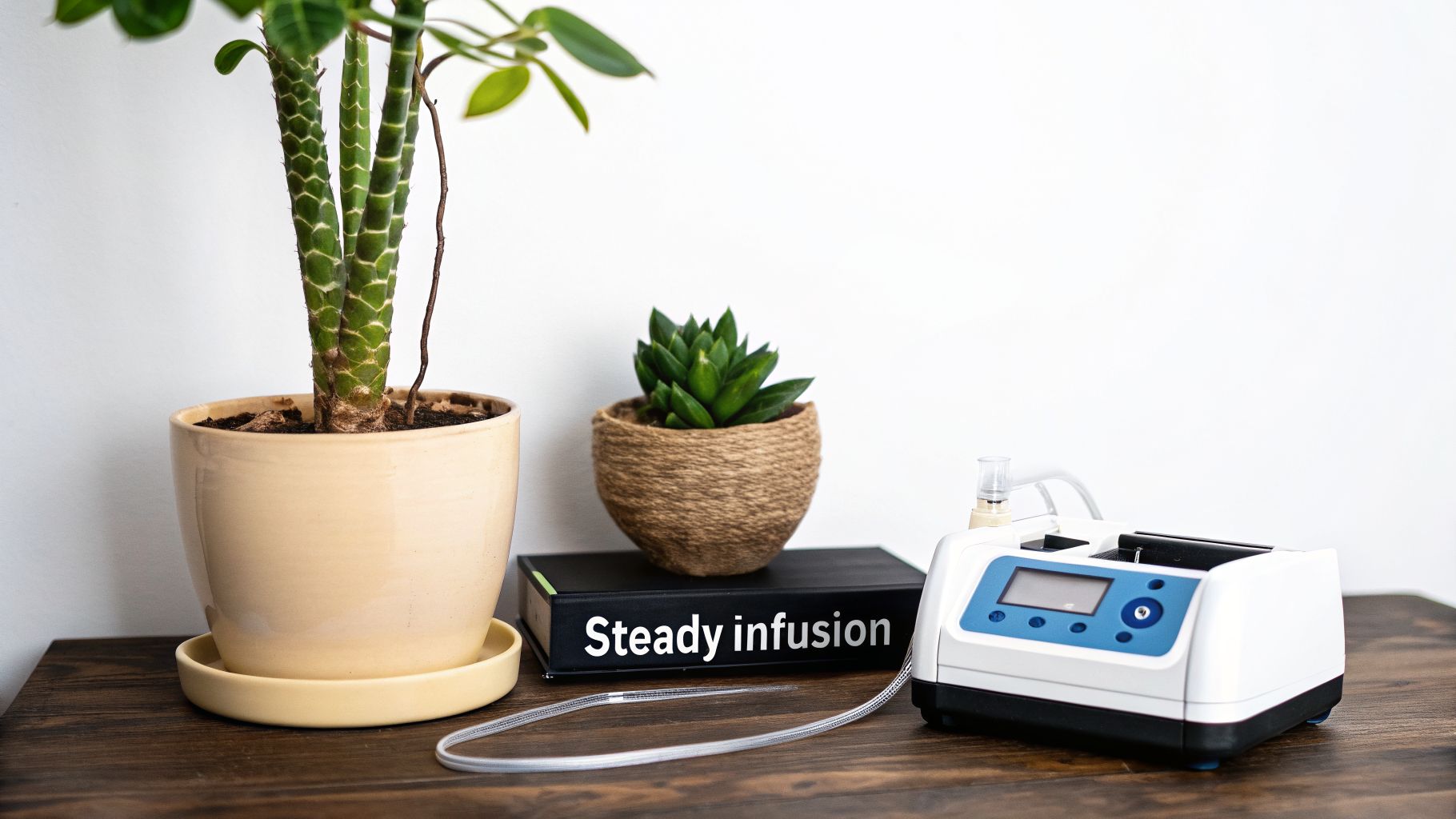
When we talk about a 5 FU injection, how we give the drug is just as critical as the drug itself. For a long time, the standard was a "bolus" injection—a quick, high-dose push of the medicine. But over the years, we've learned there's a much smarter, more effective way to outwit cancer cells.
I often explain it to my patients like this: a bolus injection is like trying to water a garden with a firehose. You get a huge blast of water all at once, but most of it runs off before the soil can absorb it. A continuous infusion, on the other hand, is like a steady, gentle drip irrigation system. It gives the soil exactly what it needs, consistently, over a long period.
This is precisely the issue with 5-FU. The drug has an incredibly short half-life, meaning your body clears it out in a flash. After a quick push, drug levels spike and then plummet, often before the medicine has had enough time to do its job.
Catching Cancer Cells in the Act
The real trick to 5-FU is timing. Cancer cells aren't all dividing at once; they cycle through different phases. 5-FU is only effective during one very specific window called the "S-phase," when a cell is actively copying its DNA to prepare for division.
A continuous infusion, typically delivered over 24 or 48 hours, solves this timing puzzle beautifully. By maintaining a constant, low level of 5-FU in the bloodstream, we lay a trap.
This steady approach accomplishes two key things:
- It creates constant pressure. The drug is always there, waiting to strike the moment a cancer cell enters that vulnerable S-phase.
- It boosts effectiveness. By extending the exposure time, we dramatically increase the odds of catching more cancer cells in the act of dividing, which ultimately means we can destroy more of the tumor.
It’s a strategic shift from a quick ambush to a prolonged siege, making sure those faulty building blocks are always around for cancer cells to grab.
A Look Back: How We Got Here
This move toward infusions wasn't just a hunch; it was born from decades of clinical research. Early studies back in the 60s and 70s hinted that prolonged exposure to 5-FU was giving patients better results. A landmark moment was a trial for anal cancer using a five-day continuous infusion, which produced stunning tumor responses and proved we were onto something big.
We now know that after a bolus injection, 5-FU’s half-life is a mere 10 minutes—most of it is gone before it can make a real impact. This historical journey, from quick shots to the steady drip of a portable pump, is what makes modern, effective low-dose chemotherapy possible. For those interested, CancerNetwork provides an excellent overview of the historical tweaks that have saved lives.
The Technology That Makes It Possible
Of course, this superior approach wouldn't be practical for patients without a couple of key innovations:
- Central Lines (Ports): A small port placed under the skin gives us stable, long-term access to your bloodstream. This means no more repeated needle sticks for every treatment.
- Portable Infusion Pumps: These small, quiet devices are the real game-changers. They allow you to go home and live your life while the pump delivers a slow, steady infusion of 5-FU.
These tools allow us to use 5-FU to its full potential. By keeping the drug at a consistent therapeutic level, we often get better results with side effects that are much more manageable for the patient.
At Hirschfeld Oncology, our preference for continuous infusion comes down to a simple principle: we want the most effective treatment with the best possible quality of life for you. Delivering the 5 FU injection this way creates a much tougher environment for cancer, and a much more tolerable one for you.
Understanding Common Treatment Regimens Like FOLFOX
When your oncologist starts talking about your treatment, you might hear a string of acronyms like FOLFOX or FOLFIRI. It can feel like you’re suddenly trying to learn a new, complex language.
Don't worry. These aren't just random letters—they're recipes for a powerful, coordinated attack against cancer cells.
Think of it like assembling a team of specialists for a difficult mission. While one expert might be good, a team with different skills is far more effective. In chemotherapy, a single drug can certainly help, but combining drugs that fight cancer in different ways creates a much stronger and more thorough treatment. We call this strategy combination chemotherapy.
Decoding the FOLFOX Recipe
Let’s break down one of the most common recipes, FOLFOX, to see how this team approach really works. Each part of the name stands for a specific drug with a unique job to do.
FOL is for folinic acid, which you might also hear called leucovorin. This isn't actually a chemo drug itself. Think of it as a booster—its job is to make the 5-FU work harder and more effectively once it gets inside the cancer cells.
F stands for fluorouracil (the 5-FU we've been discussing). This is the core of the regimen, the faulty building block that stops cancer cells from copying their DNA and making more of themselves.
OX represents oxaliplatin, another powerful chemotherapy drug. Oxaliplatin works differently from 5-FU. It directly damages the cancer cell’s DNA, creating so much chaos in its genetic blueprint that the cell can no longer function or repair itself.
By bringing these three together, we attack the cancer from multiple angles at the same time. While 5-FU sabotages the DNA production line, oxaliplatin directly dismantles the existing DNA. This one-two punch makes it much, much harder for cancer cells to survive and develop resistance. To see how these fit into the bigger picture, you can learn more about the different chemotherapy drugs for colon cancer and how they work together.
The Rhythm of a Treatment Cycle
Chemotherapy isn't something you take every single day. Instead, we give it in cycles—a period of treatment followed by a period of rest. This rhythm is absolutely crucial. It gives your healthy cells time to bounce back from the drugs' effects before the next round begins.
A typical FOLFOX cycle, for instance, lasts two weeks. Here’s what that schedule usually looks like:
Day 1 (Infusion Day): You’ll come to our infusion center at Hirschfeld Oncology. Here, you'll receive the folinic acid and oxaliplatin through an IV, which usually takes a couple of hours. You'll also get the first part of your 5-FU as a quick "bolus" injection.
At-Home Infusion: Before you head home, we’ll connect you to a small, portable pump. This device will continue to deliver a slow, steady infusion of 5-FU over the next 46-48 hours. You can go about your life while the pump quietly does its work.
Rest and Recovery: After the pump is disconnected, you’ll have about 12 days of rest. This is the critical recovery phase where your body rebuilds healthy cells, allowing you to regain strength before the next cycle starts.
A treatment "cycle" is a strategic balance of attack and recovery. It’s designed to hit the cancer hard and then give your body the time it needs to heal, maximizing the treatment’s impact while managing side effects.
A Regimen Tailored to You
While regimens like FOLFOX and FOLFIRI (which uses a drug called irinotecan instead of oxaliplatin) are standard, they are never one-size-fits-all. Your oncologist at Hirschfeld Oncology will personalize your treatment protocol based on a whole host of factors.
This could mean adjusting the dose based on your blood work, actively managing side effects, or even modifying the schedule. The goal is always to find the perfect balance for you—the most effective treatment to fight the cancer, with side effects that you can manage, so we can preserve your quality of life throughout your entire treatment journey.
How to Manage the Most Common Side Effects of 5-FU

Thinking about side effects can be one of the most stressful parts of starting chemotherapy. The good news is that with 5-FU, most side effects are well-understood, predictable, and very manageable. The key is knowing what to look for and what to do when you see it.
The 5-FU injection works by targeting cells that divide quickly—a hallmark of cancer. But some of your healthy cells also grow fast, particularly those lining your mouth and digestive tract, and the cells in your skin and hair follicles. This is why you may experience certain side effects. Let’s walk through the most common ones and the simple, practical steps you can take to stay comfortable.
Soothing Strategies for Hand-Foot Syndrome
One of the most characteristic side effects of a continuous 5-FU infusion is Hand-Foot Syndrome (HFS). It happens when a small amount of the drug leaks from the tiny blood vessels in your palms and the soles of your feet.
You might notice redness, swelling, tingling, or tenderness. In more significant cases, it can become painful and make it tough to button a shirt or walk comfortably. Getting ahead of HFS is the best strategy. The goal is to reduce heat, friction, and pressure on your hands and feet, especially during the first week of your infusion.
Here are a few tips that our patients find incredibly helpful:
- Keep Them Cool: Avoid hot showers and baths. Applying cool packs (wrapped in a towel) to your hands and feet for 15-20 minutes at a time can provide immediate relief.
- Moisturize, Moisturize, Moisturize: Use a thick, potent, alcohol-free moisturizer multiple times a day. We often recommend creams containing urea, as they help keep the skin barrier strong and hydrated.
- Go for Comfort: Opt for loose-fitting, well-cushioned shoes. Try to avoid activities that cause a lot of friction, like jogging, or tasks that require a tight, prolonged grip.
Easing Digestive Discomfort
Because the cells lining your digestive tract turn over so rapidly, this area is often affected by 5-FU.
Mouth Sores (Mucositis)
These can feel like small, painful canker sores and usually appear about a week after treatment starts. The best approach is prevention. Start a gentle oral care routine right away—don’t wait for soreness to develop.
- Use an extra-soft-bristle toothbrush.
- Rinse your mouth four to five times a day with a mild solution. A simple homemade rinse of 1/4 teaspoon of baking soda and 1/8 teaspoon of salt mixed in one cup of warm water is perfect. Avoid store-bought rinses with alcohol.
- Steer clear of foods that can irritate your mouth, like anything too spicy, acidic, salty, or crunchy.
Diarrhea
This is a very common side effect, especially with continuous 5-FU infusions. If it happens, your number one job is to stay hydrated. Drink plenty of clear fluids like water, broth, or electrolyte beverages. The BRAT diet (bananas, rice, applesauce, toast) is a classic for a reason—it can help firm things up. If diarrhea is severe or doesn't stop, you must let your care team know right away.
Tackling Fatigue and Nausea
Nearly everyone on chemotherapy experiences some level of fatigue. It's not everyday tiredness; it’s a profound exhaustion that rest doesn't always seem to fix. This often happens because chemo can cause anemia (a drop in your red blood cell count).
Nausea is also possible, though it's typically much milder with 5-FU than with other chemotherapy drugs.
- For Fatigue: Listen to your body. Plan for short rest periods throughout the day. It sounds counterintuitive, but light exercise, like a gentle walk, can actually boost your energy.
- For Nausea: We will give you anti-nausea medication. The trick is to take it on a schedule, as prescribed, even if you’re feeling fine. Eating small, bland snacks throughout the day, rather than three big meals, also helps keep your stomach settled.
Knowing what to expect and having a plan can make you feel much more in control of your treatment. For a deeper look, please read our comprehensive guide on 5-fluorouracil side effects. By taking these small but important steps, you become an active partner in your own care, helping us keep you strong and on track.
What to Expect on Your Infusion Day
Let's be honest, walking into an infusion center for the first time can feel overwhelming. There are new sounds, new faces, and the simple reality of starting treatment can be a lot to process. Our goal here is to pull back the curtain on a typical infusion day, so you can trade that feeling of uncertainty for a sense of calm and control.
Knowing what’s coming makes a world of difference. Every step, from the moment you arrive to the moment you head home, is built around your safety and comfort.
Your Arrival and Initial Check-In
Your infusion day at a center like Hirschfeld Oncology will start much like any other doctor’s appointment: with a warm greeting at the front desk. After you check in, take a moment to just breathe and get settled.
A nurse will soon call you back to get you situated. First things first, they'll check your vital signs—that’s your blood pressure, pulse, temperature, and oxygen level. They’ll also get your weight, which is more important than you might think. Your dose of chemotherapy, including the 5 FU injection, is carefully calculated based on your current weight to make sure it’s just right for you.
This is also your time to connect with your nurse. They’ll ask how you’ve been feeling. Please be open and honest here—tell them about any side effects, new symptoms, or concerns you have, no matter how small they seem. This information is vital for your care team.
Getting Ready for the Infusion
Before we can start the treatment, we need a quick look at what’s going on inside. This involves a simple blood draw. That sample is checked right away in the lab to look at your blood counts, making sure your body is strong enough for chemotherapy on that particular day.
Once your blood work gets the green light, we'll get your IV ready. This usually happens in one of two ways:
- Starting a Peripheral IV: If you don't have a port, your nurse will place a tiny, flexible tube (a catheter) into a vein in your arm or hand. They are incredibly skilled at this and will make it as quick and comfortable as possible.
- Accessing a Port-a-Cath: For patients with an implanted port, the process is even easier. The nurse simply cleans the area and uses a special needle to access the port, which means no new pokes in your veins.
Think of these initial steps as a pre-flight check. Every safety check and careful procedure is designed to ensure your treatment is tailored perfectly and safely to you on this specific day.
Settling In for Your Treatment
With your IV access ready, it’s time to get comfortable in an infusion chair. These are usually cozy recliners, and we encourage you to make the space your own. Bring a warm blanket, a good book, your tablet, or headphones—whatever helps you relax and pass the time.
Your nurse will then start any pre-medications. These are given to head off potential side effects, like nausea or allergic reactions, before they can even start. After those have had a chance to work, the chemotherapy infusion will begin.
If you're on a regimen like FOLFOX, you’ll receive other drugs like oxaliplatin and folinic acid first, followed by the 5 FU injection given as a quick "bolus." All in all, you can expect to be at the center for a few hours.
For those on a continuous infusion, the last step is getting you connected to your take-home pump. The nurse will hook up the small, portable device that holds your 5-FU. They’ll give you a full tutorial: how it works, how to carry it (it comes with a discreet pouch), and what to do if it beeps or alarms. You’ll walk out of the center with the pump already running, quietly doing its job while you get back to your life.
How Your Team Monitors Your Safety and Progress
Starting treatment with a 5-FU injection is a collaborative effort between you and your oncology team. We're in this together. Think of us as your co-pilots; we don't just set a course and hope for the best. We are constantly checking the instruments to make sure your journey is as safe and effective as possible.
This careful oversight is what keeps your treatment on track. Before every single infusion, we run through a series of checks to ensure your body is ready for the next dose. This allows us to adjust your care in real time, making sure it’s always right for you.
Your day at the infusion center will have a clear, predictable rhythm, designed entirely around your safety.
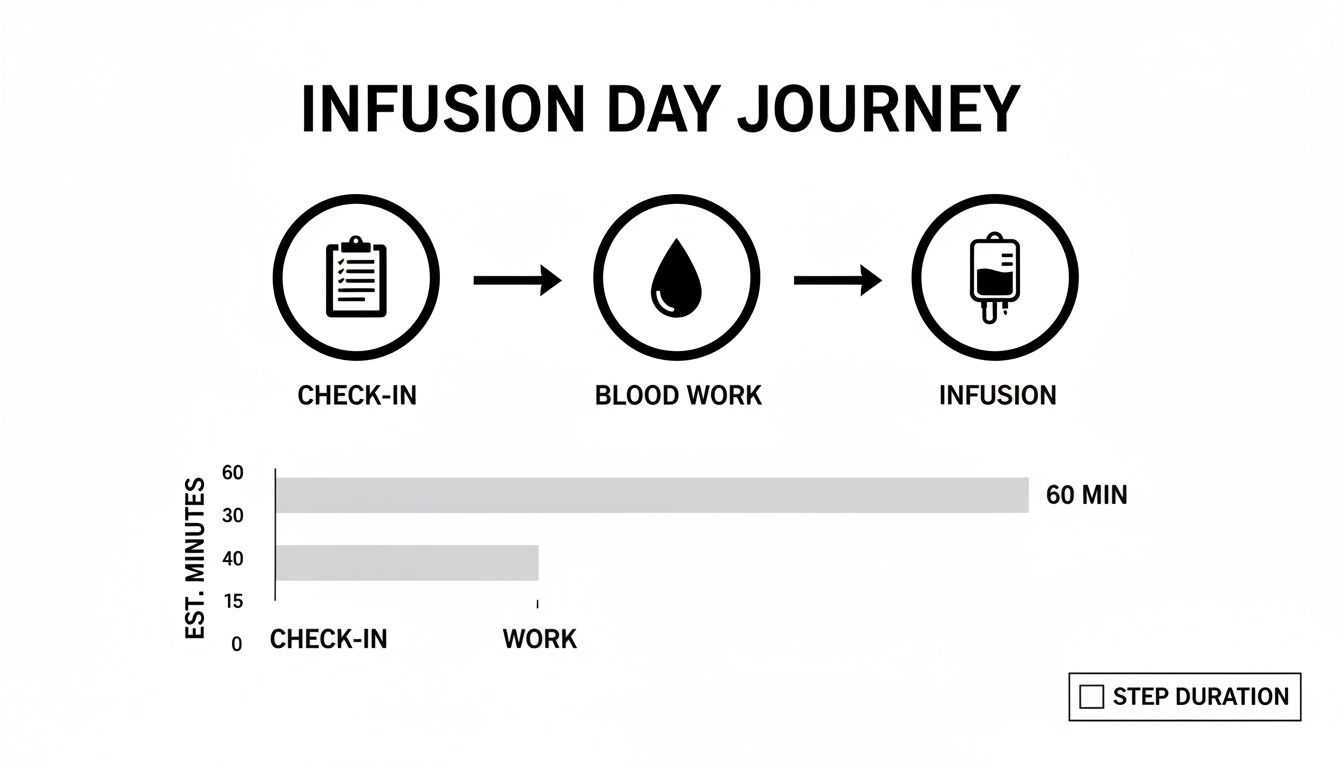
Each visit follows these simple but essential steps. From the moment you check in to when your infusion begins, every action we take is a checkpoint meant to protect you and fine-tune your treatment.
Your Blood Work Is the Compass
Our most important monitoring tool is a straightforward blood test called a Complete Blood Count (CBC). This test gives us a vital, real-time picture of what’s happening inside your bone marrow, the factory that produces all your blood cells.
We pay very close attention to three key results from this test:
- White Blood Cells (especially neutrophils): These are your body’s front-line soldiers against infection. If these counts get too low (a condition called neutropenia), your infection risk goes up, and we might need to pause treatment to let them recover.
- Red Blood Cells: These are responsible for carrying oxygen, which fuels your body. When red blood cell counts drop (anemia), it can cause that deep, persistent fatigue many patients experience during chemo.
- Platelets: These tiny cells are your body's first responders for injuries, helping your blood to clot. If platelet counts fall too low (thrombocytopenia), you might notice you bruise more easily or have minor bleeding.
It's completely normal for your blood counts to dip after each treatment. They typically reach their lowest point, which we call the nadir, about 7 to 14 days after your infusion. The CBC we do before your next scheduled cycle is simply to confirm your counts have bounced back enough to proceed safely.
This isn't just a routine check; it's our most critical safety step. Based on these numbers, your oncologist might adjust your treatment plan—a practice known as dose modification. This could mean slightly reducing your dose or delaying the next cycle by a week to give your body a bit more time to recover.
Finding Your Therapeutic Sweet Spot
Beyond just keeping you safe, ongoing monitoring helps us make sure the 5-FU is working as hard as it can. With a continuous 5-FU injection, the goal is to keep a steady, effective amount of the drug in your bloodstream—just enough to attack cancer cells without causing severe side effects. We call this the therapeutic level.
For a 5-FU infusion, research helps us zero in on this target. Studies have found that keeping the drug’s concentration below 3.0 mg/L dramatically cuts down on toxicity, which is a world away from the harsh peaks caused by rapid bolus injections. You can read more about the pharmacokinetic data that guides safer dosing strategies if you're interested in the science.
This careful, proactive approach lets us walk a fine line: hitting the cancer hard while helping you feel as well as possible. This is the foundation of modern, effective cancer care.
Your Questions Answered: 5-FU Injections
It's completely normal to have a lot of questions when starting a new treatment. We find that the more you know what to expect, the more in control you feel. Here, we've gathered answers to some of the things our patients and their families ask most often about 5-FU injections.
Can I Live a Normal Life with the 5-FU Infusion Pump?
This is one of the most common—and important—questions we hear. The answer is a resounding yes. We know the idea of being connected to a pump for two days can sound daunting, but modern infusion pumps are designed to let you get on with your life.
Think of it as a small, discreet companion. It's about the size of a smartphone, runs quietly, and fits into a little pouch you can wear under your clothes or clip to a belt. You'll be able to work, run errands, and even do light exercise. Your nurse will walk you through all the do's and don'ts, like how to shower and which activities to skip (usually swimming or rough contact sports) to keep everything secure.
What Should I Do If I Get Severe Side Effects?
Don't tough it out. If you're dealing with severe side effects—like diarrhea you can't control or mouth sores so painful you can't eat—we need to know right away. Please don't wait for your next scheduled appointment. Our clinic has a 24/7 phone number for urgent issues precisely for this reason.
Waiting to report a severe symptom can quickly lead to bigger problems, like dehydration or a serious infection. When you call us early, we can get you relief, manage the issue, and adjust your treatment plan to help prevent it from happening again.
How Do We Know If the 5-FU Treatment Is Working?
Tracking your progress is a team effort. Your oncologist will use a few different tools to see how well the 5-FU injection is working against the cancer.
This usually involves a combination of:
- Blood tests: We'll check for "tumor markers" (like CEA in colorectal cancer), which are substances that can go down as the cancer responds to treatment.
- Imaging scans: Every few months, you'll likely have a CT or PET scan. These scans give us a detailed picture of what’s happening inside your body, showing us if tumors are shrinking.
- How you feel: This is just as important as any scan or test. Having more energy, less pain, or an improvement in other cancer-related symptoms is often one of the best signs that the treatment is doing its job.
At Hirschfeld Oncology, we believe that clear information is a key part of great care. If you have more questions or want to explore other cancer topics, we share our insights regularly on our blog.
.png)
.png)