.png)


You may want a clean food plan because treatment has already taken enough out of your day, and a friend or relative keeps mentioning alkaline diet foods like they're the answer to fatigue, nausea, or even cancer support. In a Brooklyn clinic waiting room, that question comes up often, usually from someone who's trying to eat better but isn't sure which advice is science and which advice is marketing. The safest starting point is simple, plant-rich eating with enough calories and protein for recovery, plus practical guidance like foundation steps for gut health when digestion feels off. For cancer-specific nutrition support, many patients also look for a clinician-led overview such as nutrition for cancer patients, because the goal is steadier intake, not a promise that food will change blood chemistry.
Introduction to Alkaline Diet Foods
A lot of people first hear about the alkaline diet when they're trying to make sense of side effects after chemotherapy. The pitch sounds tidy. Eat more “alkalizing” foods, avoid “acid-forming” ones, and your body will somehow feel less inflamed or more balanced. The emotional appeal is real, because the plan gives a clear structure when treatment has made eating feel unpredictable.
The problem is that the structure and the science are not the same thing. Alkaline diet foods are mostly helpful because they're whole plant foods, not because they change blood pH in any meaningful way. That distinction matters for anyone in active treatment, since your body still needs enough protein, calories, and comfort to get through long days, rough appetites, and taste changes.
Understanding the Alkaline Diet Principles
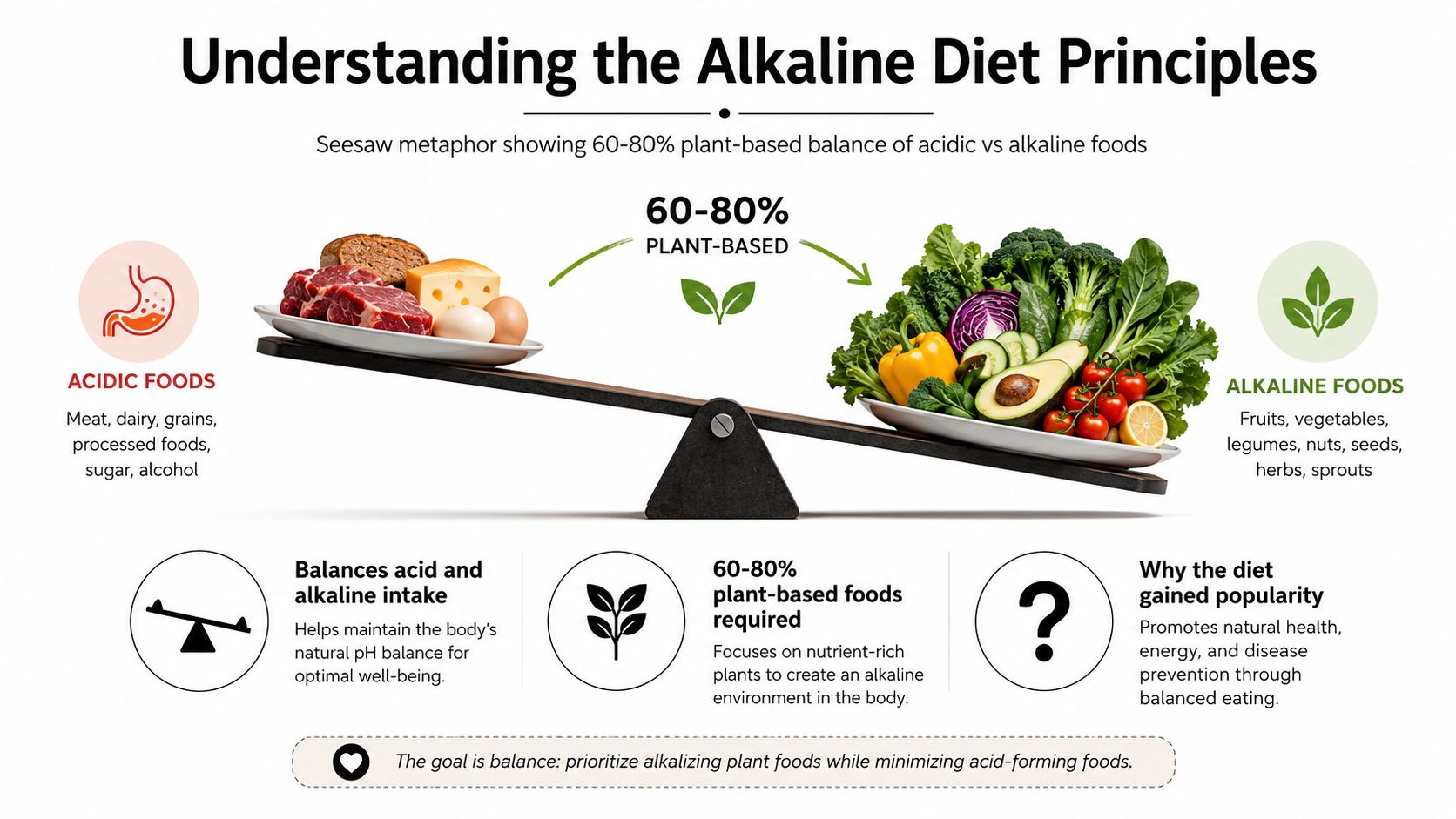
The alkaline diet framework recommends that 60% to 80% of calories come from alkalizing foods, with a common rule-of-thumb of 6 vegetables, 2 fruits, 1 protein, and 1 starchy alkaline-forming food out of every 10 foods eaten, according to the guide from WeightWatchers. That pattern gives the diet its structure, which is one reason people can follow it without weighing every bite or tracking every nutrient.
What the pattern actually emphasizes
In practical terms, the plan puts fruits, vegetables, nuts, seeds, legumes, and herbal teas at the center of the plate, while limiting meat, poultry, fish, dairy, eggs, most grains, processed foods, refined sugar, alcohol, and caffeine. For someone already dealing with treatment side effects, that can be easier to picture as a meal template than as a strict rulebook. It offers a clear direction, more plant foods in, more heavily processed foods out.
That is also where the confusion often starts. The framework is a way of organizing food choices, not a medical test of your body's pH. The benefit comes from a steadier, more plant-forward eating pattern, with more minimally processed foods and fewer items that crowd the plate without adding much nourishment. If you want a closer look at how that idea overlaps with other food patterns, anti-inflammatory diet principles can help show the similarities in plain language.
For oncology patients, the pattern can be most useful as a meal-planning shortcut. A lunch of lentil soup, steamed greens, berries, and whole-grain toast may fit the spirit of the diet better than a menu built around highly processed convenience foods. A dinner built from roasted vegetables, tofu, avocado, and fruit does the same work, while still leaving room for appetite changes, texture preferences, and fatigue.
Practical rule: If a meal starts with vegetables, includes fruit, and leaves room for a protein source on purpose, you are already close to the pattern's logic. For a more patient-centered example of how food choices can fit into recovery, see organic diet tips for cancer recovery.
Examining the Science and Cancer Relevance
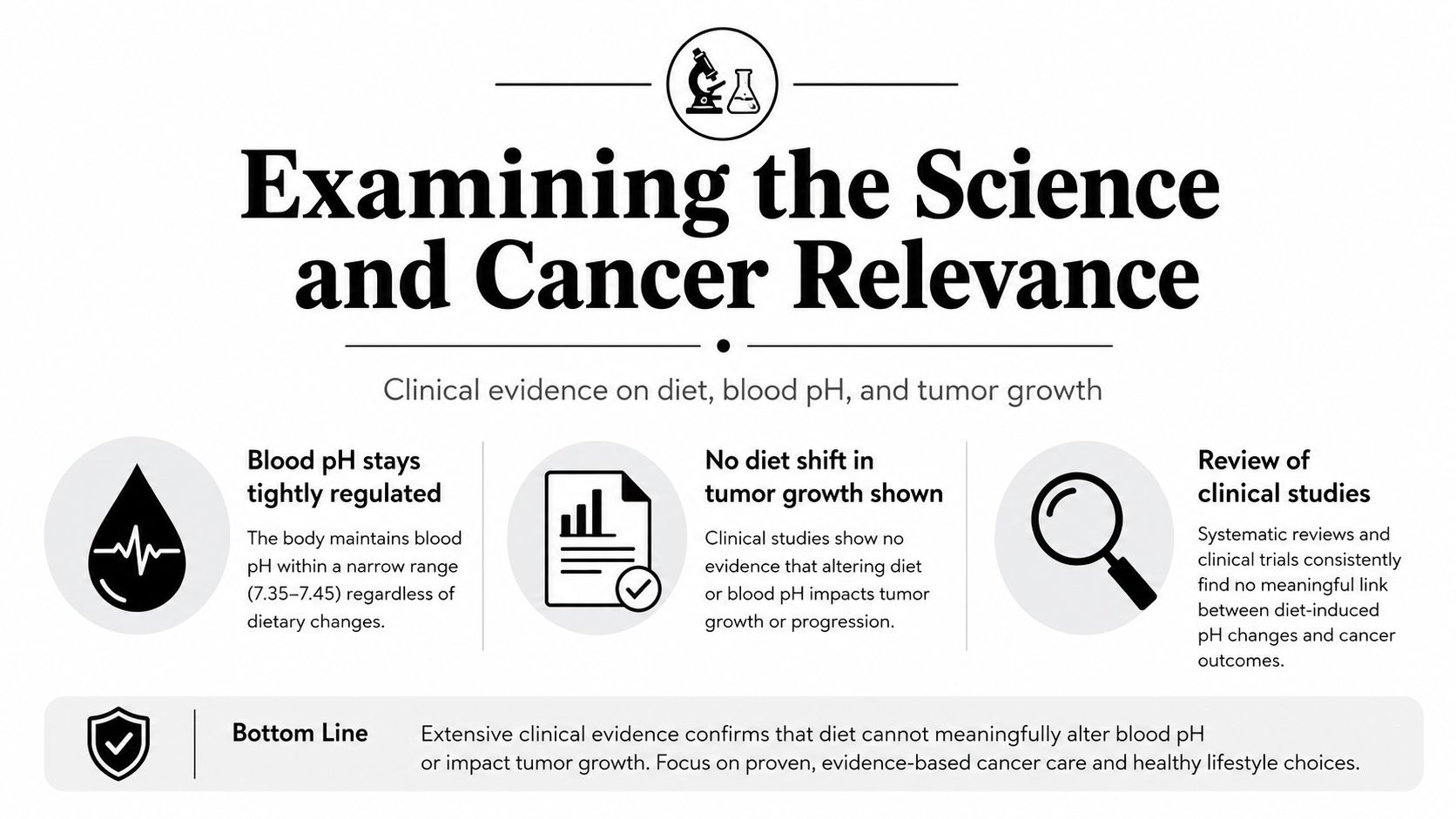
The biggest misunderstanding is the idea that food can substantially change blood pH. It can't in a meaningful way. Your body keeps blood pH tightly regulated, which is why the diet's central promise doesn't line up with clinical reality. That's also why a plant-heavy meal plan can feel better without being an “alkalizing treatment.”
A systematic review found no evidence linking dietary acid load or alkaline water to cancer risk and no studies showing alkaline treatment improves outcomes, according to BMJ Open. That matters because cancer is often the reason people search for alkaline food guidance in the first place. Tumor acidity is generally a consequence of cancer metabolism, not proof that changing your menu can reverse the process.
What this means during treatment
The science supports a more grounded takeaway. Eating more vegetables, fruits, legumes, and nuts can improve overall diet quality, but that benefit comes from the foods themselves, not from a proven pH shift. If you want practical, non-mystical guidance while sorting out cancer nutrition claims, a clinician-friendly overview such as organic diet tips for cancer recovery can help frame the broader conversation around food quality rather than food mythology.
The safest question is not “How alkaline is this?” It's “Does this food help me get enough nourishment today?”
For patients comparing diets, the earlier discussion about anti-inflammatory diets can be useful, because both topics often get bundled into the same promise of “eating cleaner.” The difference is that cancer treatment asks for a more specific standard, enough energy, enough protein, and enough flexibility to keep eating when appetite drops.
Categorizing Alkaline and Acid Forming Foods
Food lists online can get messy fast. One site may call lemon, tomato, and coffee “alkaline,” while another puts them on the opposite side, which is why strict labels can be more confusing than useful. As noted in the earlier science discussion, the better focus is overall diet quality, especially when you're choosing foods that are easier to tolerate during treatment.
A practical way to sort the grocery cart
Use the chart below as a quick planning tool, not a rulebook. It highlights the kinds of foods that usually show up in alkaline-style eating and the foods the diet tends to limit.
| Alkaline Foods | Acid-Forming Foods |
|---|---|
| Leafy greens, broccoli, cauliflower | Red meat, poultry |
| Legumes, tofu, nuts, seeds | Dairy products |
| Fruits, especially whole fruit | Most grains |
| Herbal teas, water-rich vegetables | Processed foods |
| Avocado, onions, garlic, ginger | Refined sugar, alcohol, caffeine |
How to use the list without getting stuck
For oncology patients, the most useful filter is usually tolerance. If a food is “allowed” on a list but makes nausea worse, it doesn't help. If another food is technically excluded but you can keep it down and it gives you energy, that matters more than a label.
That's why many patients do better when they build meals around a few repeatable anchors.
Use the list as a starting point, not a verdict. The foods that fit your symptoms, taste changes, and protein needs are the ones that count in real life.
Practical Meal Planning for Oncology Patients
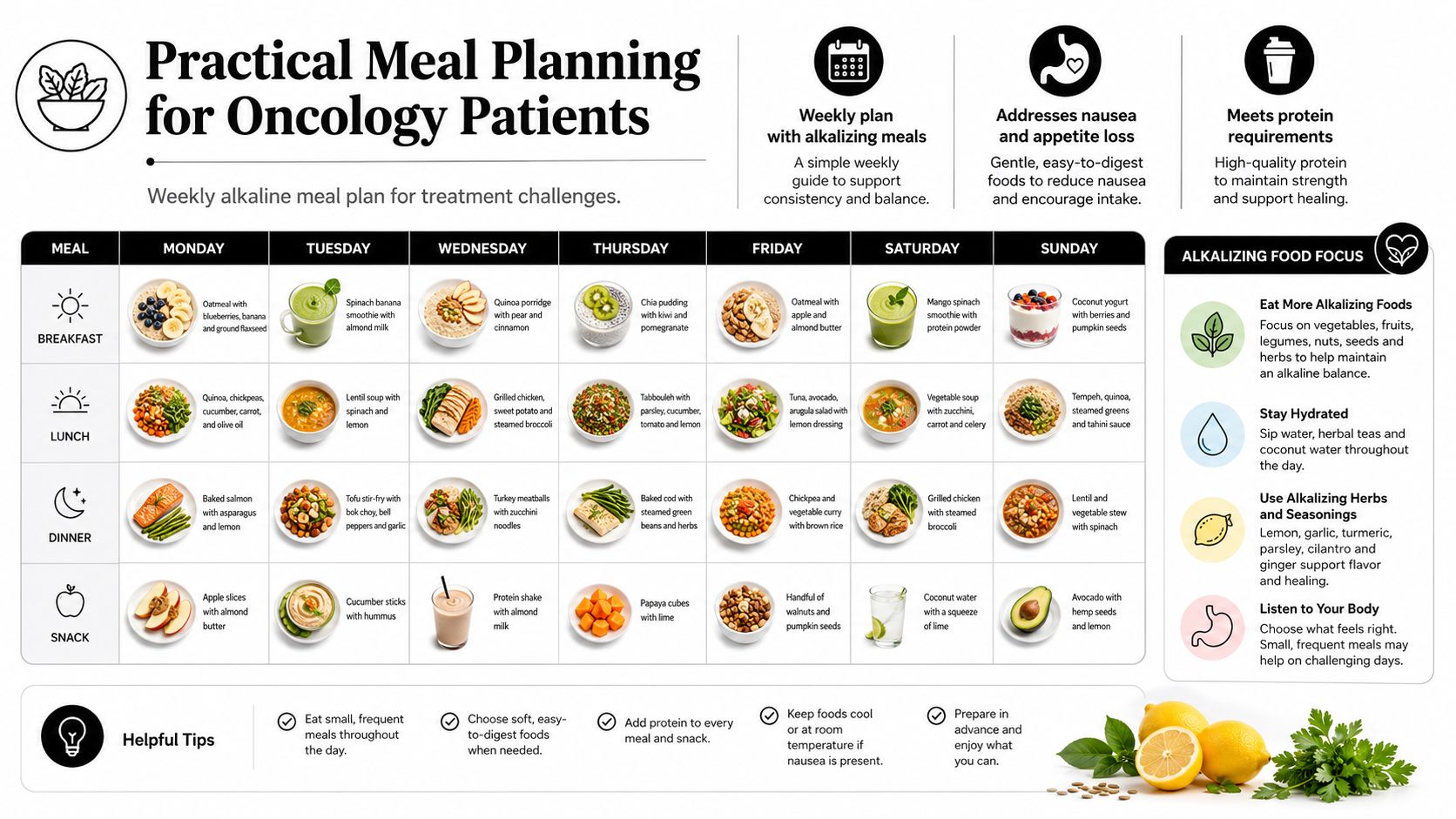
A weekly plan often works better than chasing a perfect day, because treatment side effects can change from one meal to the next. The common 6:2:1:1 guideline can be used as a loose template, with vegetables and fruits staying at the center while protein and energy foods stay on the plate too. For oncology patients, that makes the pattern plant-forward without turning it into a rigid rulebook.
A simple week built for side effects
Start with foods that are easy to eat, then add more texture only if your body is ready for it. That approach helps when nausea, mouth soreness, or taste changes make a normal meal feel too heavy.
- Monday: Soft oatmeal with banana and nut butter, lentil soup, roasted carrots with tofu, herbal tea.
- Tuesday: Smoothie with berries and silken tofu, rice bowl with sautéed greens, baked sweet potato with hummus, crackers if nausea is high.
- Wednesday: Avocado toast on tolerated bread, vegetable and bean stew, steamed broccoli with quinoa, applesauce if chewing feels hard.
- Thursday: Chia pudding with fruit, creamy cauliflower soup, chickpea salad, warm ginger tea.
- Friday: Scrambled tofu with spinach, tomato-free pasta with vegetables, mashed potatoes with beans, fruit cup.
- Saturday: Yogurt alternative if dairy bothers you, vegetable stir-fry with edamame, soup and toast, frozen fruit if taste is dull.
- Sunday: Smooth soup, legumes with herbs, roasted root vegetables, a small snack before bed if appetite is low.
A week like this works like a set of reusable building blocks. One day may rely more on soup, another on a smoothie, and another on soft grains, but the pattern stays familiar enough to reduce decision fatigue. If you want a broader meal framework that still keeps the focus on tolerable, nutrient-dense foods, reduce inflammation with diet can be a useful companion resource.
A few small choices make the plan easier to follow. Blend foods when chewing feels hard, add nut butter or tofu when protein is low, and keep a backup snack nearby for the days when appetite drops without warning. The menu does not have to look fancy, it just has to be doable.
For patients who want more clarity on food quality and treatment, a closer look at antioxidants and cancer can help separate practical food choices from claims that sound bigger than the evidence.
Safety Considerations and When to Consult Your Care Team
Strict versions of the alkaline diet can backfire for cancer patients because they may cut out key protein and dairy sources, with no clinical evidence that they change body pH or improve outcomes, as noted by BBC Good Food. That risk is most important when treatment already makes it hard to eat enough. A diet that sounds “clean” can still leave someone underfueled.
Watch for these situations
- Ongoing weight loss: If portions are shrinking and clothes are loosening, the meal plan needs more energy.
- Low appetite or early fullness: Small, frequent meals may work better than strict food rules.
- Mouth sores, nausea, or swallowing pain: Texture changes matter more than food labels.
- Protein gaps: Beans, tofu, nuts, and other tolerated protein sources may need to be added on purpose.
If you're unsure whether a food pattern is helping or hurting, bring it to your oncology team early. A dietitian can adjust the plan around lab results, symptoms, and treatment phase, instead of asking you to follow a rigid food list that ignores what your body is doing right now. For a related look at nutrient balance in treatment, the discussion of antioxidants and cancer can help separate helpful foods from overpromised claims.
Hirschfeld Oncology also works with patients across Brooklyn, Williamsburg, and Bushwick who need nutrition guidance alongside active cancer care, so food choices can be discussed in the same setting as treatment decisions when needed.
Conclusion and Next Steps
Alkaline diet foods are most useful when you treat them as a shortcut to more whole plant foods, not as a way to alter blood pH. The strongest takeaway is simple. Vegetables, fruits, legumes, nuts, and other minimally processed foods can support better eating patterns, but they don't turn the body into an alkaline system or serve as cancer therapy. The evidence is much stronger for nutrition quality than for pH-based claims.
For oncology patients, the key test is whether a meal helps you stay nourished, comfortable, and consistent. That means choosing foods you can tolerate, adding protein where it fits, and adjusting texture and timing around nausea, appetite loss, or mouth soreness. A clear grocery list and a flexible meal plan usually help more than strict food labels.
Use the food table as a shopping guide, borrow the sample meals when energy is low, and flag any weight loss or poor intake to your care team quickly. If you want individualized support that fits active treatment, Hirschfeld Oncology can help coordinate nutrition conversations with your oncology plan.
If you're trying to sort out what to eat during treatment, Hirschfeld Oncology can help you think through alkaline diet foods in the context of calories, protein, and symptom control, not just food labels. Visit Hirschfeld Oncology to explore patient-focused guidance and discuss a nutrition plan that fits your treatment, your appetite, and your day-to-day reality.
.png)
.png)