


.png)


You may be staring at a kitchen counter full of conflicting advice right now. One article says to cut sugar completely. Another says to go fully plant-based. A friend tells you to drink only juices. Meanwhile, food tastes wrong, your appetite is gone, and your body needs more from you than it did before cancer treatment started.
That confusion is normal. It's also one reason nutrition for cancer patients gets reduced to slogans when it should be treated like part of medical care.
For people with advanced cancer or treatment-resistant disease, nutrition isn't about chasing a perfect diet. It's about protecting strength, preserving muscle, easing symptoms, and helping you keep going through treatment with as much function and comfort as possible.
Nutrition as a Pillar of Your Cancer Care
When patients hear the phrase “eat healthy,” many assume they're being told to eat more salads, avoid favorite foods, and follow a prevention-style diet. That framing misses what cancer treatment does to the body.
The National Cancer Institute reports that malnutrition affects 30% to 85% of patients with cancer, and it can increase treatment toxicities, worsen quality of life, and account for 10% to 20% of mortality in people with cancer according to the National Cancer Institute's nutrition guidance for cancer care. That's not a side issue. That's a clinical issue.
For patients with metastatic disease, repeated treatment, poor appetite, swallowing trouble, nausea, bowel changes, or ongoing weight loss, nutrition becomes even more central. The body often isn't just under stress. It's working against inflammation, treatment side effects, and reduced intake at the same time.
What good nutrition support actually means
At Hirschfeld Oncology, the practical mindset is simple. Nutrition support should match the actual state of the disease and the treatment, not an idealized version of healthy eating.
That means the right question often isn't “What's the cleanest diet?” It's “What can you tolerate today that will help maintain your weight, muscle, hydration, and ability to continue treatment?”
Good oncology nutrition is rarely about perfection. It's about reducing damage from not eating enough.
Sometimes that means small, frequent meals. Sometimes it means soft foods because chewing hurts. Sometimes it means oral nutrition supplements, soups, eggs, yogurt, nut butters, or calorie-dense snacks that wouldn't appear on a wellness influencer's meal plan.
Absorption also matters. If you're eating but still struggling to maintain weight or strength, it can help to review practical strategies that may increase nutrient absorption, especially when treatment has affected digestion, appetite, or food tolerance.
The part patients often need to hear
Nutrition is not a cure for cancer. It is, however, one of the few daily tools you can actively use to support your body. It can help you stay stronger, recover better between treatments, and feel less helpless in a situation that often feels out of your control.
That matters. Patients deserve guidance that is honest, individualized, and grounded in what their bodies need right now.
Redefining Your Nutritional Goals During Treatment
Many patients come into treatment thinking the “best” diet must be the most restrictive one. In practice, that idea often backfires.
For some patients, the evidence-based priority is maintaining intake and preventing malnutrition, even if that means using calorie-dense foods, oral nutrition supplements, or medically supervised nutrition support, as explained in the National Cancer Institute's cancer nutrition overview. During treatment, the focus often shifts away from restriction and toward preservation.

Prevention eating and treatment eating are not the same
A prevention-focused diet usually emphasizes long-term health patterns. More fiber. More plants. Fewer heavily processed foods. That can be useful in the right setting.
But active cancer treatment changes the job nutrition needs to do.
If you're losing weight without trying, getting full quickly, dealing with mouth sores, or barely able to finish half a sandwich, the priority is no longer dietary purity. The priority is keeping enough nutrition coming in to support daily function and treatment tolerance.
A useful way to think about it is this:
| Situation | Main nutrition priority |
|---|---|
| Eating well, stable weight, minimal symptoms | Maintain balanced intake and variety |
| Poor appetite, nausea, taste changes | Find tolerable foods and reduce skipped intake |
| Weight loss or muscle loss | Increase calorie and protein density |
| Advanced disease with fatigue and low intake | Preserve strength, comfort, and quality of life |
The plant-based question
Patients often ask whether they should eat mostly plant-based foods or focus on protein and calories. The honest answer is that it depends.
If you're eating well and maintaining weight, a pattern built around plant foods can fit nicely into treatment. If you're struggling to eat enough, protein and calories often become the immediate priority. A bowl of lentil soup may be helpful. So may Greek yogurt, eggs, cottage cheese, a smoothie with protein powder, or mashed potatoes enriched with butter or olive oil.
Practical rule: If “healthy” eating causes weight loss, skipped meals, or lower protein intake, it's no longer helping.
The real goals worth protecting
For patients with advanced or treatment-resistant cancer, I look at nutrition through four practical goals:
- Preserve lean body mass: Muscle loss affects strength, stamina, and day-to-day independence.
- Support treatment tolerance: Better nourishment can make it easier to recover between cycles and handle side effects.
- Reduce symptom burden: Food choices can lessen nausea, bowel disruption, dry mouth, and painful swallowing.
- Protect quality of life: Eating should remain doable, not another source of stress or guilt.
That's the shift. Nutrition for cancer patients isn't a morality test. It's supportive care.
The Building Blocks Protein Calories and Hydration
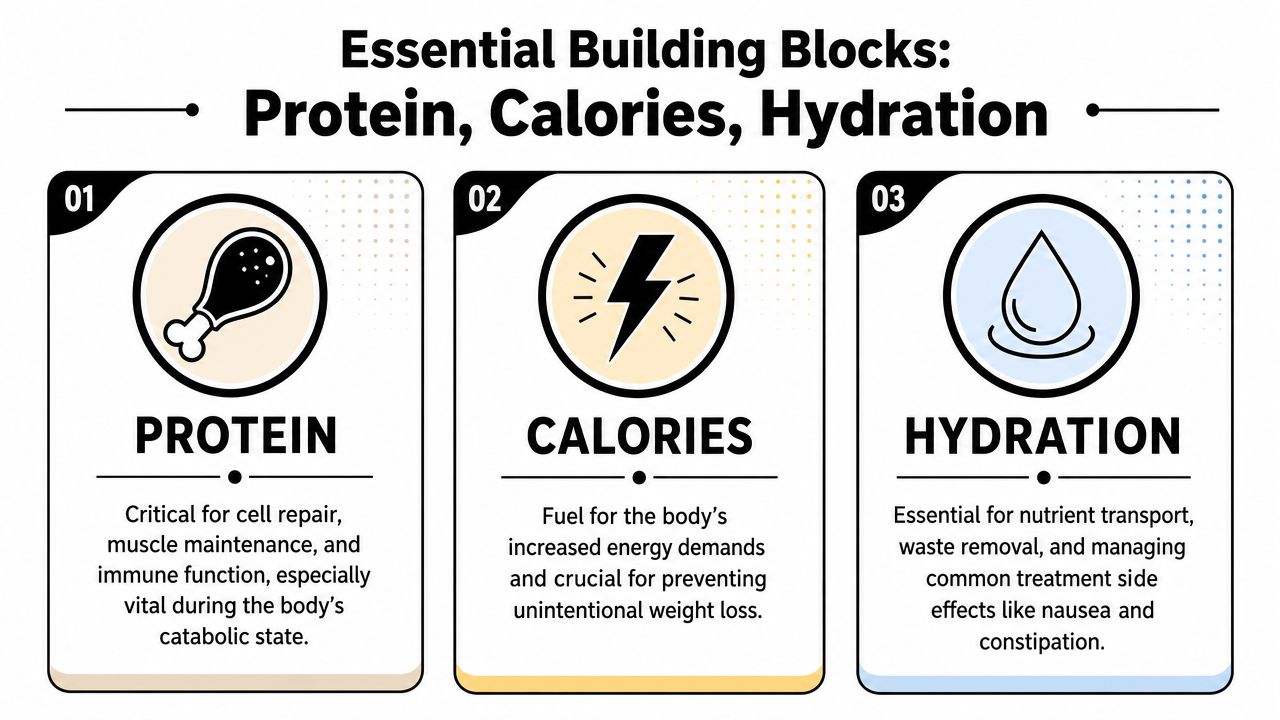
Cancer and its treatment can push the body into a catabolic state, which means it breaks down muscle and body protein faster than normal. This state is comparable to trying to repair a wall while someone keeps removing bricks. If intake doesn't keep up, the body pulls from its own reserves.
That's why protein needs in cancer care are higher than they are for healthy adults.
The guideline-based target summarized in a clinical review is 1.2 to 1.5 grams of protein per kilogram of body weight per day, compared with 0.8 g/kg/day for healthy adults, and some patients may need up to 2 g/kg/day in certain settings according to this PMC review on nutrition in cancer patients. For a 70 kg person, that usual oncology target works out to about 84 to 105 grams of protein per day in the same review.
Protein first
Patients often tell me, “I'm eating something, so I must be okay.” The problem is that toast, crackers, fruit, and tea may go down easily while protein drops too low.
Try building intake around protein anchors such as:
- Eggs and egg dishes: Scrambled eggs, egg salad, soft omelets.
- Dairy foods: Greek yogurt, cottage cheese, milk, pudding made with milk.
- Soft meats and fish: Chicken salad, tuna salad, flaky fish with sauce.
- Blended options: Smoothies with milk, yogurt, nut butter, or protein powder.
- Convenient additions: Protein powders mixed into oatmeal, soups, mashed potatoes, or smoothies. If you're comparing options, this guide to protein powder for cancer patients can help frame what to discuss with your team.
If chewing is tiring, look for “soft protein” rather than forcing large portions of meat.
Calories matter just as much
A common mistake is focusing on protein while accidentally cutting calories. If the body doesn't get enough energy overall, it may still use protein for fuel instead of repair and muscle maintenance.
Ways to raise calories without increasing meal volume:
- Enrich what you already eat: Add olive oil, butter, avocado, cheese, nut butter, or full-fat dairy.
- Make every bite count: Use cream soups instead of broth when tolerated. Add powdered milk to oatmeal or mashed potatoes.
- Choose dense snacks: Trail mix, yogurt, pudding, cheese and crackers, hummus, peanut butter toast.
- Use liquid nutrition strategically: Smoothies, milkshakes, and oral nutrition supplements can be easier than full meals on rough days.
Some patients also ask about commercial products aimed at weight gain. If you're exploring options, a practical overview of supplements for gaining weight can help you identify what to review with your oncology team before buying anything.
Hydration when water sounds awful
Hydration is often harder than eating. Water may taste metallic, feel heavy, or worsen nausea.
Try alternatives like:
- Cold or room-temperature fluids: Temperature changes can make drinks more tolerable.
- Broth, herbal tea, diluted juice, or electrolyte drinks: Use whatever goes down more easily.
- Hydrating foods: Popsicles, gelatin, watermelon, soup, smoothies.
- Small frequent sips: A few sips every few minutes can work better than a full glass.
If you can't manage full meals, focus on a rhythm. Protein every few hours, calories added wherever possible, and fluids taken in small predictable amounts.
Managing Treatment Side Effects With Your Fork
Food works best when it solves the problem in front of you. Patients don't need abstract advice when they're nauseated, exhausted, or unable to tolerate the smell of dinner cooking.
Nutrition for cancer patients becomes highly practical.

Nausea and vomiting
When nausea is active, your goal is usually to reduce sensory overload and avoid an empty stomach.
- Start with bland foods: Crackers, dry toast, plain rice, noodles, applesauce, bananas.
- Choose cold or room-temperature foods: They usually smell less intense than hot foods.
- Eat before hunger gets extreme: An empty stomach can make nausea worse.
- Keep portions small: A few bites every couple of hours is often more realistic than a full plate.
- Sip, don't chug: Small amounts of fluid between meals may sit better than large drinks with food.
Taste and smell changes
Taste changes can make familiar foods seem metallic, bitter, flat, or unpleasant. That doesn't mean you're failing. It means you need workarounds.
- Use plastic utensils: This can help when foods taste metallic.
- Try tart flavors if your mouth allows it: Lemon, vinegar, pickled flavors, or fruit can brighten bland foods.
- Marinate proteins: Acids and seasonings may improve flavor.
- Serve foods cool: Cooler foods often smell less strong.
- Rotate options often: A food that tastes terrible this week may be fine next week.
For a deeper look at this problem, Hirschfeld Oncology has a practical resource on chemotherapy-related taste changes.
Don't keep forcing a food that suddenly tastes wrong. Swap it out, then retry later.
A short visual guide can also be helpful when symptoms change day to day:
Appetite loss
Low appetite is one of the most disruptive issues in advanced cancer. Waiting to “feel hungry” usually doesn't work.
Try a schedule instead of relying on appetite:
- Eat by the clock: A few bites every few hours.
- Keep ready-to-eat foods visible: Yogurt, cheese sticks, pudding, shakes, hard-boiled eggs.
- Make breakfast count: Appetite is sometimes best earlier in the day.
- Drink nutrition when chewing feels like too much: Smoothies, supplement drinks, milk-based beverages.
- Use favorite foods without guilt: If one food sounds good, use it.
Mouth sores and painful swallowing
When the mouth or throat is inflamed, texture and temperature matter more than nutrition theory.
Foods that tend to go down better:
- Soft and moist choices: Oatmeal, yogurt, cottage cheese, scrambled eggs, mashed potatoes, pureed soups.
- Blended meals: Smoothies, milkshakes, pureed stews, creamy cereals.
- Cool or lukewarm foods: Very hot foods may sting.
- Mild foods: Avoid acidic, spicy, rough, or salty items if they burn.
What often makes things worse:
- Dry textures: Toast, chips, crackers unless softened.
- Sharp or acidic items: Citrus, tomato sauces, vinegar-heavy dressings.
- Alcohol-based mouth products: These can irritate sore tissues.
Diarrhea and constipation
Bowel symptoms require different food adjustments, and patients often get told generic fiber advice that doesn't fit the moment.
For diarrhea:
- Go simpler for a while: Bananas, rice, applesauce, toast, noodles, potatoes.
- Favor low-fat, mild foods: Rich or greasy meals may worsen symptoms.
- Replace fluids steadily: Broth, diluted drinks, oral rehydration options if needed.
- Pause foods that clearly trigger urgency: Sometimes dairy, very sweet foods, or heavy fried foods are the problem.
For constipation:
- Increase fluids first: Dry intake without enough fluid can backfire.
- Add easy fiber if tolerated: Oatmeal, fruit, cooked vegetables, beans when possible.
- Use warm beverages or soups: They can help stimulate movement.
- Keep some movement in the day: Even short walks can help when energy allows.
Fatigue
On exhausted days, the barrier often isn't nausea or pain. It's the effort of shopping, cooking, chewing, and cleaning up.
A few ways to lower the work:
| Problem | Easier food solution |
|---|---|
| Too tired to cook | Use ready-made soups, rotisserie chicken, yogurt, frozen meals you tolerate |
| Too tired to chew | Choose smoothies, puddings, oatmeal, cottage cheese, pureed soups |
| Too tired to shop | Use delivery, ask caregivers for restocking help, keep shelf-stable staples |
| Too tired for meals | Build intake from snacks every few hours |
When symptoms pile up, simplify. One tolerable food is more useful than ten ideal foods you can't eat.
Food Safety Supplements and Diet Myths
Patients with cancer get targeted by bad nutrition advice constantly. It usually comes wrapped in certainty. Eliminate this. Mega-dose that. Buy this powder. Avoid all carbs. Detox with juice. Most of it doesn't hold up under clinical reality.
Food safety matters more than food rules
Food safety should be strict, but it should also be practical. The goal is to reduce infection risk through careful handling, not to create fear around every ingredient.
Focus on habits that lower risk:
- Wash produce well: Especially items eaten raw.
- Cook animal foods thoroughly: Avoid undercooked meat, poultry, seafood, and eggs.
- Keep hot foods hot and cold foods cold: Time and temperature control matter at home too. This primer on food safety in homes and businesses gives a useful overview of why.
- Watch leftovers carefully: Refrigerate promptly and don't keep questionable food “just in case.”
- Avoid cross-contamination: Separate raw meats from ready-to-eat foods and clean cutting surfaces.
Supplements are not automatically safe
“Natural” doesn't mean harmless. In oncology, supplement use should be reviewed like a medication.
Oncology patients must avoid high-dose antioxidant supplements such as vitamins A, C, E, and selenium during radiation, because these can protect tumor cells from the oxidative damage intended by treatment, which may reduce effectiveness. That's one reason self-prescribing supplements can create real treatment conflicts.
If you're considering antioxidants, mushroom products, herbal blends, immune boosters, or high-dose vitamins, discuss them first. This overview on antioxidants and cancer is a useful starting point for those conversations.
Expensive supplements often promise control. What patients usually need more is coordination with the oncology team.
Diet myths that cause the most harm
A few myths show up repeatedly in clinic:
- “If I eat sugar, I'm feeding the cancer.” Real life is more complicated than that. For many patients, the urgent issue is eating enough overall.
- “I should only eat foods considered anti-cancer.” If those foods lower your intake because they're hard to tolerate, they may not fit your current needs.
- “More supplements mean better protection.” Sometimes they do nothing. Sometimes they interfere.
- “I need a perfect diet to help treatment work.” You need a diet you can realistically follow when symptoms are active.
Food first is usually the safer approach. If a supplement has a legitimate role, your care team can place it in context.
Practical Meal and Snack Ideas for Tough Days
On a difficult treatment week, a good food plan doesn't look impressive. It looks doable.
A realistic day might start with Greek yogurt or cottage cheese if the mouth feels tender, then shift to a smoothie with milk, nut butter, and fruit when chewing feels like work. Lunch might be a pureed soup with extra olive oil or cream stirred in. Later, a snack could be pudding, peanut butter toast, or cheese and crackers. Dinner might be soft pasta, eggs, or fish with mashed potatoes. Before bed, another small shake or bowl of cereal with milk can add one more chance to eat.

Mix and match meal templates
Instead of fixed menus, use flexible combinations:
- Smooth meal: Milk or dairy alternative, Greek yogurt, nut butter, fruit, protein powder, oats if tolerated.
- Soft savory meal: Creamy soup plus beans, lentils, shredded chicken, or blended tofu.
- Easy breakfast: Oatmeal made with milk, scrambled eggs, yogurt, or a breakfast sandwich if tolerated.
- Snack plate: Cheese, crackers, hummus, applesauce, pudding, banana, nut butter.
- Comfort dinner: Rice, noodles, potatoes, eggs, fish, chicken salad, or soft casseroles.
Keep backup foods in the house
When energy disappears, backup foods prevent missed intake.
A useful home list includes:
- Shelf-stable basics: Peanut butter, canned tuna or salmon, soups, instant oatmeal, crackers, dry cereal.
- Freezer items: Frozen waffles, frozen meals you tolerate, pre-cooked chicken, frozen fruit for smoothies.
- Fast protein options: Yogurt cups, cheese sticks, milk, eggs, cottage cheese, protein shakes.
Food access is part of cancer care
Many patient-facing nutrition guides ignore food insecurity, but oncology literature stresses that referral pathways to food assistance, grocery delivery, and other supports are a clinical issue, not just a social one, as discussed in this review on food insecurity in cancer care.
If cost, transportation, or caregiving demands are limiting what you can eat, say so directly. Ask about grocery delivery, social work support, meal assistance, food vouchers, or benefits enrollment. There is no value in receiving ideal nutrition advice if the food isn't accessible.
Building Your Nutrition Team and Getting Help
Patients often assume they're supposed to figure this out alone. They aren't.
An oncology dietitian helps translate symptoms, treatment plans, lab changes, weight trends, and real-world barriers into an eating plan that fits your current condition. That may include protein goals, meal structure, oral nutrition supplements, hydration tactics, texture changes, and practical solutions when shopping or cooking isn't manageable.
Ask for help early if you're losing weight, eating less, avoiding meals because of symptoms, or feeling overwhelmed by contradictory advice. A nutrition plan works best when it starts before the decline becomes severe.
At Hirschfeld Oncology, nutrition support can be part of coordinated care, including nutrition risk screening and access to oncology-focused diet guidance as one option within a broader treatment plan.
If you or a loved one needs a more individualized approach to nutrition during treatment, Hirschfeld Oncology offers practical cancer care guidance and a path to request consultation. For patients dealing with appetite loss, weight loss, treatment side effects, or advanced disease, getting nutrition support built into the care plan can make day-to-day treatment more manageable.
.png)
.png)






