


.png)


If you're reading this right after hearing the words “oral cancer,” your mind is probably moving fast. Most patients and families ask the same question first: Can oral cancer be cured?
The honest answer is yes, sometimes, and no, not always. That isn't a dodge. It's the reality of how oral cancer behaves and how oncologists think about outcomes. A small tumor found early can often be treated with curative intent. A cancer that has already spread, returned after treatment, or sits in a location that makes complete removal difficult is a different problem. It may still be treatable. It may still be controllable for meaningful periods of time. But the goal can shift.
That shift matters because “cure” in cancer care is not a simple on-or-off label. It's a milestone reached over time, through treatment, recovery, and careful follow-up. The good news is that treatment has improved over the decades, even as oral cavity and pharynx cancer incidence has been rising by 1.0% per year from 2013 to 2022 and the death rate by 0.8% per year from 2014 to 2023, according to NIDCR survival data.
There's also the practical side of a new diagnosis. Patients often need fast answers about appointments, imaging, work leave, transportation, and insurance. If coverage changed recently or you lost a plan, it helps to understand enrollment outside open enrollment so treatment delays don't happen for administrative reasons. And if you're preparing for your first oncology visit, this guide on what to expect at a first oncology appointment can make the process feel less opaque.
Your First Question After an Oral Cancer Diagnosis
An oral cancer diagnosis changes the tone of a household in a single day. One person is trying to listen to the doctor. Another is already searching survival rates. Someone else is worrying about speech, eating, work, or how treatment will affect appearance.
Those reactions are normal. They're also why a blunt yes-or-no answer often leaves people more frightened, not less informed.
What that first question is really asking
When people ask whether oral cancer can be cured, they usually mean several things at once:
- Will treatment remove all visible disease
- What are the chances it comes back
- How aggressive will treatment need to be
- Will I still be able to speak, eat, and live normally
- If cure isn't realistic, what can still be done
Those are better questions than “is it curable” by itself, because they reflect how cancer care works.
Practical rule: Ask your team to define the goal of treatment in plain language. Is the plan aimed at cure, long-term control, symptom relief, or some combination of these?
Why the answer has become more complex
Oral cancer care isn't frozen in the past. Surgery is still central for many patients. Radiation remains a major curative tool. Drug treatment has also evolved, especially for people with recurrent or metastatic disease. That means the conversation shouldn't stop at “early stage good, late stage bad.”
A patient with advanced disease may not hear the word cure, but may still have worthwhile options that reduce symptoms, slow progression, or create time with better function and less suffering. That's not giving up. It's choosing a goal that matches the biology of the cancer and the life of the person living with it.
Defining a Cure for Oral Cancer
In oncology, cure doesn't mean a physician can promise with certainty that cancer will never return. It means the chance of recurrence becomes low enough over time that long-term disease-free survival is a realistic outcome. That's why oncologists talk in terms of stage, remission, response, and years without recurrence.

Stage changes the meaning of “curable”
The clearest data point is stage at diagnosis. According to SEER survival information summarized by the American Cancer Society, the 5-year relative survival rate is 88.4% when oral cavity and pharynx cancer is diagnosed at a localized stage. It falls to 62% at the regional stage and 46% at the distant stage. The same source notes that only 26.2% of cases are diagnosed while still localized.
That's why the phrase “caught early” matters so much. A localized tumor is often more amenable to complete surgery, focused radiation, or both. Once disease has spread to lymph nodes or distant sites, treatment becomes more complicated and durable cure becomes less predictable.
What doctors mean by remission and long-term control
A patient may finish treatment and have no visible cancer on exam or imaging. That is often called complete remission or no evidence of disease. It's excellent news, but it isn't the same thing as a lifetime guarantee.
A more useful way to think about outcomes is this:
| Term | What it means in practice |
|---|---|
| Complete remission | No detectable cancer after treatment |
| Curative intent | Treatment is being given with the goal of eliminating the disease |
| Disease control | Treatment is reducing growth, stabilizing disease, or relieving symptoms |
| Long-term surveillance | Ongoing follow-up to watch for recurrence or late effects |
The right question isn't only “Can oral cancer be cured?” It's also “What outcome is realistic for my stage, and what has to happen to get there?”
Why statistics help, but don't answer everything
Population survival rates guide treatment discussions. They don't predict an individual life with precision. Two people with “oral cancer” may face very different realities depending on tumor location, resectability, lymph node involvement, pathology, baseline health, and response to treatment.
That's why a good oncology conversation never ends with a percentage. It turns that percentage into a plan.
Key Factors That Determine Your Prognosis
Staging matters most, but it's only one piece of the prognosis puzzle. In clinic, we build a fuller picture from several factors at once. Think of prognosis as a structure made from multiple blocks. One block rarely decides everything.
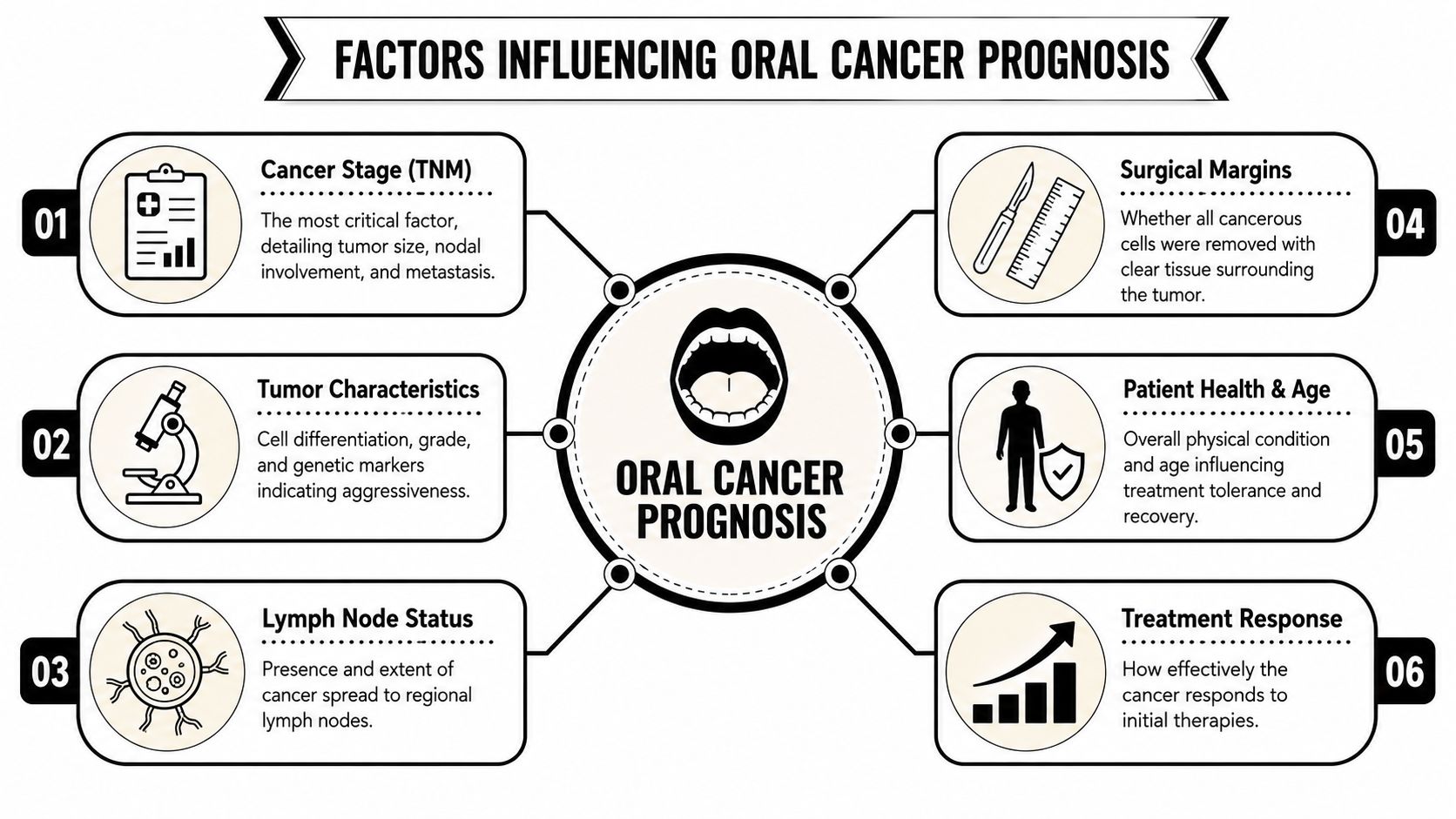
Tumor location and extent
Oral cancer isn't one identical disease. A lesion on the lip behaves differently from one on the tongue, floor of mouth, buccal mucosa, or nearby throat structures. Location affects:
- Ease of surgery
- Ability to obtain clear margins
- Impact on speech and swallowing
- Likelihood of involving nearby structures
Some tumors are technically removable but only at a major functional cost. Others sit in places where local control is more achievable.
Lymph nodes and spread pattern
Lymph node involvement changes both prognosis and treatment planning. If cancer has reached regional nodes, the risk profile is different from a cancer confined to its original site. The treatment plan often becomes broader, with closer attention to surgery, radiation fields, and systemic therapy.
This is one reason neck imaging and careful examination matter so much before treatment starts. The plan has to match where the disease exists, not where we hope it is.
Pathology and biologic behavior
Not all tumors grow with the same aggressiveness. Pathology helps us understand whether a cancer looks more indolent or more invasive under the microscope. Surgical margins also matter. If cancer is removed with clear surrounding tissue, the chance of durable local control is generally better than if residual microscopic disease is suspected.
For patients trying to understand why their doctors order extra testing, the answer is often that treatment has become more personalized. Tumor biology can influence how strongly we recommend surgery, radiation, drug treatment, or combinations of these. Hirschfeld Oncology's overview of the advantages of genetic testing gives a useful primer on why biologic details can shape cancer decisions more broadly.
Clinical perspective: Prognosis improves when the treatment team can match the therapy to the actual behavior of the tumor, not just its name.
Patient health and treatment tolerance
The same cancer can lead to different recommendations in different people. General health, nutrition, dental status, frailty, kidney function, and performance status all influence what a patient can safely undergo.
That doesn't mean older or medically complex patients have no good options. It means the best treatment is the one that gives a real chance of benefit without creating harm the patient cannot reasonably recover from.
A practical discussion with your team should include these questions:
- Can the tumor be removed completely
- Would surgery leave acceptable function
- Is radiation likely to add meaningful local control
- Would drug therapy improve the chance of cure or mainly support control
- What trade-offs are acceptable to the patient
That final question is not secondary. It's central.
Primary Treatments Used to Cure Oral Cancer
Curative treatment for oral cancer is often multimodal. In plain terms, that means one treatment usually isn't enough for many patients. The strongest plans often combine local treatment with additional therapy to reduce the risk of residual disease.
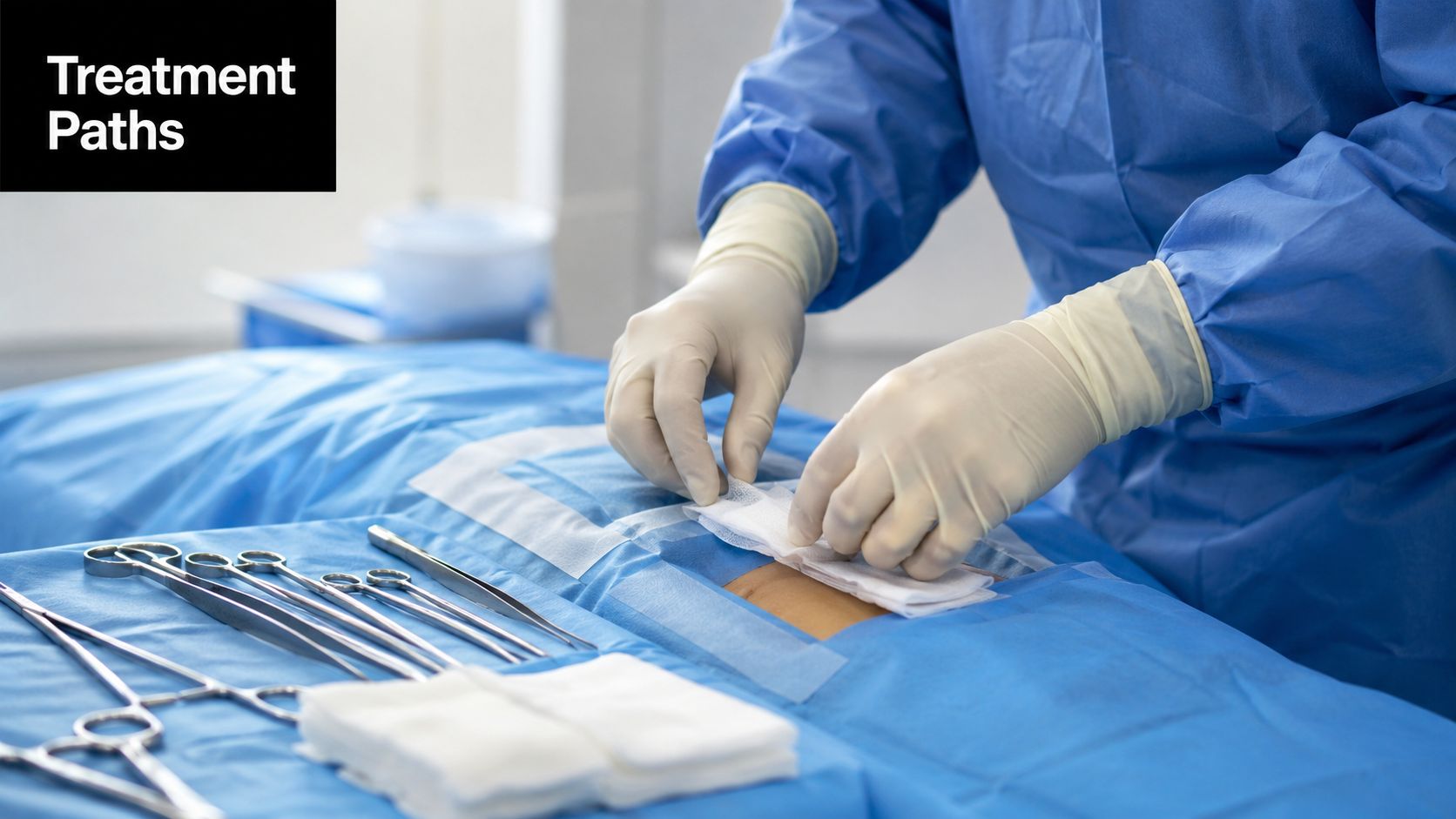
Surgery when the cancer can be removed effectively
Surgery is commonly the backbone of curative treatment, especially when the tumor is localized and resectable. The aim is straightforward: remove the visible tumor with adequate margins and address lymph nodes when needed.
But surgery is never just about taking cancer out. It's also about what remains afterward. Can the patient swallow safely? Speak understandably? Heal without major complications? A good head and neck surgical plan weighs cancer control against function from the beginning, not after the fact.
Radiation as a curative partner
Radiation may be used instead of surgery in selected situations, or after surgery when the pathology suggests a higher risk of recurrence. It helps address microscopic disease that can't be seen with the naked eye.
Confusion often arises for many families. They hear “the surgeon got it all” and assume treatment is finished. Sometimes it is. Sometimes it isn't. If margins are close, lymph nodes are involved, or other high-risk features are present, postoperative radiation can be an important part of curative intent.
A brief overview of oral cancer treatment can help families understand how these tools fit together:
Why combinations often work better
In a hospital-based survival study from Tata Memorial Hospital published by ecancer, 5-year survival was 78% with surgery plus radiotherapy, compared with 74% with surgery alone and 58% with radiotherapy alone. That same study reported 7% with chemotherapy alone, which reflects an important finding: chemotherapy by itself is generally not the main curative strategy for oral cancer.
Here is the practical comparison:
| Treatment approach | Main role in care |
|---|---|
| Surgery alone | Often used when disease is resectable and risk features are limited |
| Radiotherapy alone | May be chosen in selected patients or tumor settings |
| Surgery plus radiotherapy | Common when cure is the goal and recurrence risk is higher |
| Chemotherapy alone | Usually not the strongest curative pathway by itself |
If the plan includes more than one treatment, that usually means the team is trying to improve the odds of durable control, not that treatment has failed.
What doesn't work well
One mistake is assuming the least invasive treatment is always the best treatment. It isn't. Avoiding surgery can preserve structure in some cases, but it can also reduce the chance of control if the tumor is best managed operatively. On the other hand, pushing a major operation that leaves devastating function without improving the overall outlook also isn't wise.
The right treatment is not the biggest treatment. It's the treatment that matches the stage, anatomy, pathology, and patient priorities.
When a Cure Is Unlikely The Shift to Disease Control
A family sits down expecting to hear the next curative step, and instead hears that the cancer has returned, spread, or cannot be removed safely. That moment is brutal. It also creates a new set of decisions, and those decisions still matter.

Disease control is still active cancer care
When cure is no longer a realistic goal, treatment does not become meaningless. The goal changes. In advanced or recurrent oral cancer, success may mean easing pain, reducing bleeding, helping someone swallow more safely, slowing growth, preserving speech, or buying meaningful time with acceptable energy and independence.
I often tell patients that "can this be cured?" is only one question. Another is, "what can treatment still do for me now, and at what cost?" That is the question that guides good decisions in this phase.
What "success" looks like over time
Cancer care is not merely cure versus no cure. There is a middle ground where treatment can control disease for a period of time, sometimes for longer than families expect, even if the cancer is not eradicated.
That time matters.
A few extra months with better symptom control can allow a patient to eat more comfortably, attend an important family event, or stay at home instead of in the hospital. For some people, disease control also creates room for another line of therapy later, including palliative radiation, systemic treatment, or a clinical trial.
Where immunotherapy and targeted treatment fit
For recurrent or metastatic oral cancer, systemic treatment may still offer benefit after surgery or radiation are no longer likely to cure the disease. As noted by NIDCR guidance on oral cancer treatment, targeted therapy and immunotherapy are part of current treatment options.
These drugs do not help every patient, and they are not a substitute for curative treatment when cure is still possible. But in the right setting, they can slow progression, relieve symptoms, and extend life with a different side effect profile than traditional chemotherapy. That trade-off matters, especially for patients who want treatment but also want to protect day-to-day function as much as possible.
How to decide whether treatment is worth it
This conversation should be specific. Broad promises are not helpful. A better discussion sounds like this:
- What symptom are we trying to improve? Pain, bleeding, swallowing, breathing, and mouth opening are common priorities.
- How likely is this treatment to help that problem? The goal should be concrete.
- What is the burden? Clinic visits, infusion time, feeding support, fatigue, rash, immune side effects, and hospital risk all count.
- What matters most to the patient? More time, better comfort, staying home, preserving speech, or attending a life event can each change the plan.
The best treatment is the one that gives a genuine chance of benefit and matches the patient's goals.
Families also need practical support during this period. Reliable cancer patient support resources can help with transportation, counseling, financial strain, and home needs. If weakness or recovery limitations make home care harder, some patients also look into home hospital bed rentals St. Pete to make rest, transfers, and caregiving safer.
Why specialized input matters even more in advanced disease
Advanced oral cancer is where nuance matters most. One team may recommend standard chemotherapy alone. Another may see a role for immunotherapy, symptom-directed radiation, a less intensive regimen, or a clinical trial based on prior treatment, tumor behavior, and the patient's condition.
That is why second opinions are often useful here, not because the first team failed, but because advanced disease leaves less room for assumptions. Hirschfeld Oncology may be part of that broader discussion alongside head and neck surgeons, radiation oncologists, palliative care specialists, and larger cancer centers.
The goal is not to chase every possible treatment. The goal is to choose the treatments that still serve the patient's life.
Life After Treatment Survivorship and Follow-Up
Finishing treatment is a milestone. It's also the start of a new phase that can feel unexpectedly vulnerable. Patients often expect relief and instead find themselves worrying before every exam, scan, or sore spot in the mouth.
That reaction makes sense because oncology doesn't declare cure on the last day of radiation or after stitches come out.
Why follow-up matters so much
According to Mayo Clinic's overview of mouth cancer diagnosis and treatment, recurrence is most common in the first 2 years after treatment and becomes very unlikely after 5 years. That's why oncologists think of cure as a probabilistic milestone, not an absolute guarantee.
So follow-up isn't busywork. It is part of treatment.
A survivorship plan usually includes:
- Regular exams to look for local recurrence or new suspicious changes.
- Imaging when appropriate based on symptoms, prior stage, and treatment history.
- Dental and oral care because dry mouth, tissue changes, and healing problems can persist.
- Rehabilitation for speech, swallowing, jaw mobility, and nutrition.
Recovery is not only about scans
Some patients recover quickly. Others need months of therapy and adaptation. Eating may be slower. Taste may change. Mouth opening can become limited. Fatigue can linger longer than friends and relatives expect.
That's why survivorship often involves a broader team:
- Speech and swallowing therapists for function and safety
- Dietitians when calorie intake and weight maintenance become difficult
- Physical therapists if neck stiffness or shoulder dysfunction follows treatment
- Counselors or support services for anxiety, body image, and adjustment
If you're building a home setup during recovery, practical tools matter more than people realize. Families sometimes need mobility or sleep-support equipment for a limited period, and resources such as home hospital bed rentals St. Pete show the type of support services that can ease care at home. Broader support planning can also start with curated guides like these cancer patient resources.
One important reminder: The end of treatment is not the end of care. The best outcomes usually come from treatment plus surveillance plus rehabilitation.
What patients can do after treatment
A strong survivorship approach is usually simple and consistent:
| Focus area | What helps |
|---|---|
| Oral changes | Report new sores, patches, bleeding, or pain promptly |
| Nutrition | Don't wait until weight loss becomes severe to ask for help |
| Function | Keep up with prescribed swallowing or jaw exercises |
| Follow-up | Attend visits even when you feel well |
The patients who do best long term usually stay engaged with follow-up instead of trying to “move on” by avoiding it.
Finding the Right Care and Seeking a Second Opinion
A family often hears the treatment plan first and only later realizes there were several reasonable ways to approach the same cancer. One plan may push hardest for cure, even if speech or swallowing are likely to change. Another may accept a lower chance of long-term control to protect function. In advanced or recurrent oral cancer, that difference matters.
Where you are treated affects those choices. Oral cancer care is not a single-doctor decision. The strongest plans usually come from a team that includes head and neck surgery, radiation oncology, medical oncology, dental specialists, speech and swallowing experts, nutrition support, and reconstructive surgery when needed.
Look for a team that can explain the trade-offs
A multidisciplinary review matters because each specialist sees a different part of the problem. A surgeon may focus on removing all visible disease. A radiation oncologist may see a way to treat high-risk areas while trying to preserve function. A medical oncologist may help clarify whether chemotherapy or immunotherapy is being used to increase the chance of cure, reduce the risk of recurrence, or control cancer that is unlikely to be cured.
Those goals are not interchangeable.
Ask the team direct questions:
- What is the main goal of this treatment plan: cure, longer control, or symptom relief
- Has my case been reviewed by surgery, radiation oncology, and medical oncology
- What changes in speech, swallowing, appearance, or pain should I realistically expect
- If this treatment does not work, what would the next step be
- Are there clinical trials or newer systemic options that fit my situation
A good team should be able to answer in plain language. If the answers are vague, rushed, or inconsistent, that is useful information.
Why a second opinion often helps
Patients sometimes worry that asking for a second opinion will damage the relationship with their doctor. In oncology, it usually does the opposite. It clarifies the plan, confirms the goal, and helps patients commit to treatment with fewer doubts.
Second opinions are especially helpful when:
- Surgery could significantly affect appearance or function
- The cancer has come back after prior surgery, radiation, or chemotherapy
- You have been told the disease is no longer curable
- You are deciding between aggressive treatment and a plan focused more on time, comfort, and function
- Immunotherapy, re-irradiation, or a clinical trial is being considered
Sometimes the second team agrees with the first recommendation. That still has value. It tells you the plan has been pressure-tested. Other times, the difference is not a completely new treatment, but a different sequence, a better explanation of the expected benefit, or a clearer discussion of what success should mean in your case.
What to bring to the consultation
The best second opinions are built on the full record, not memory alone. Bring or send:
- Biopsy and pathology reports
- Imaging reports and the actual scan discs or files
- Operative notes if you already had surgery
- Prior radiation treatment records
- A current medication list
- A short timeline of what has happened so far
- A written list of your priorities and limits
That last item is easy to overlook, but it often changes the conversation. Some patients want every reasonable attempt at cure, even if treatment will be hard. Others want treatment that gives them more time with the best possible ability to eat, speak, and stay at home. Neither approach is wrong. The plan should fit the person, not just the tumor.
This is also where the meaning of cure needs to stay honest. For some patients, success means no evidence of disease years after treatment. For others, especially with recurrent or metastatic cancer, success may mean controlling disease for as long as possible, reducing symptoms, and using treatments such as immunotherapy when they offer more time with an acceptable burden of side effects.
The right cancer team does more than list options. They help you choose the option that best matches your goals, your tolerance for risk, and the life you want to protect.
If you're facing oral cancer, recurrent disease, or a situation where standard options feel limited, Hirschfeld Oncology offers information and consultation support focused on practical treatment decision-making, including advanced therapies, symptom management, and individualized care planning.
.png)
.png)






