


.png)


Yes, you can eat before a colonoscopy—but it's all about eating the right things at the right time. The key is to switch to a specific diet that helps clear out your colon completely. This ensures your doctor gets the best possible view during the procedure, which is crucial for spotting polyps or tracking existing health conditions.
What to Eat Before a Colonoscopy: A Practical Guide
Let's clear up a common misconception: you don't have to starve for days on end. The goal of colonoscopy prep isn't to make you miserable; it's to systematically clear the colon so your doctor can perform an accurate screening. A successful procedure hinges on having a completely clean "runway," and getting there is more straightforward than you might think.
This guide will walk you through the entire process, step-by-step, turning what can feel like a daunting task into a manageable plan.
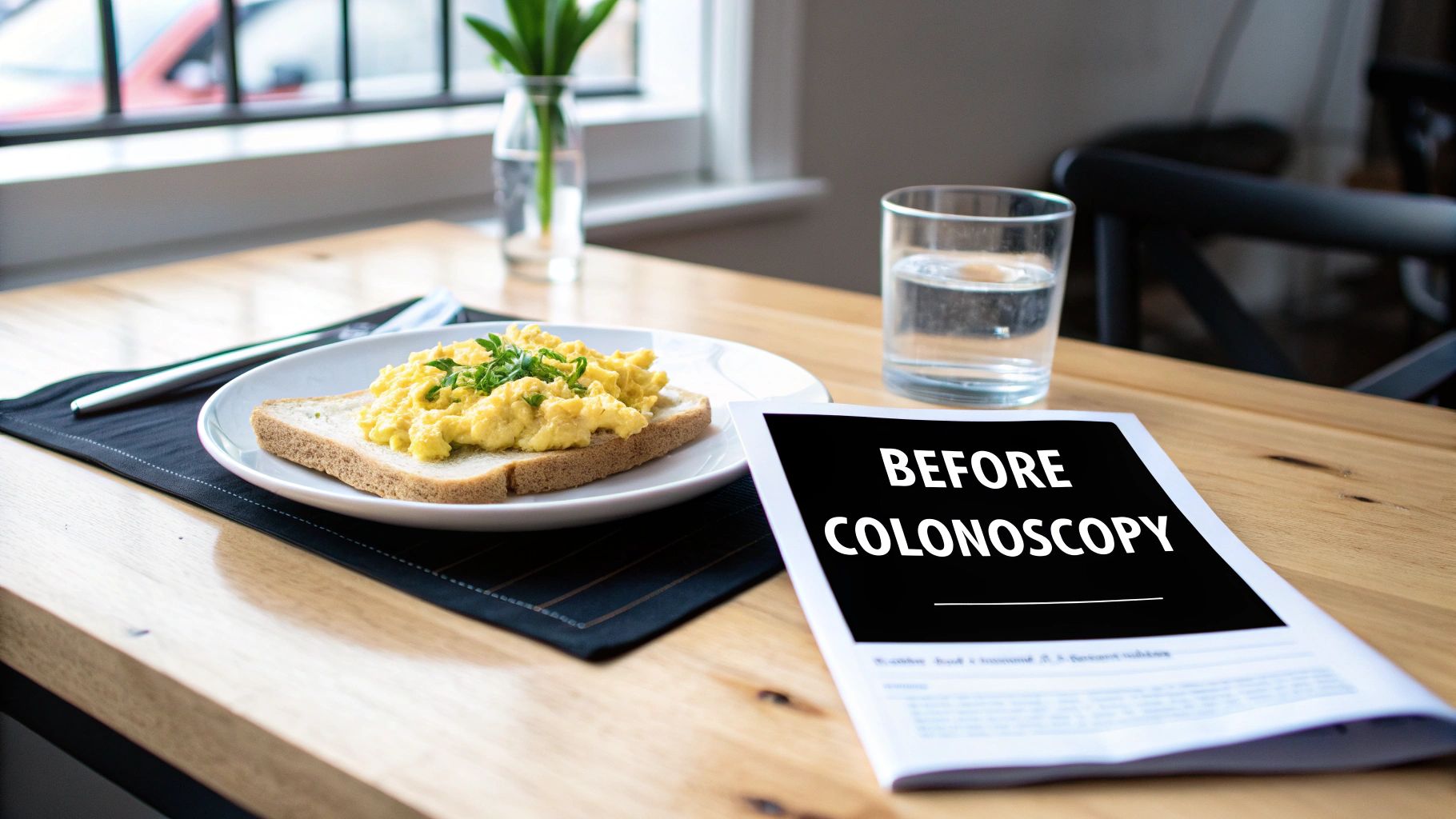
Thankfully, modern prep protocols are much more patient-friendly than they used to be, all without sacrificing effectiveness. When you know what to eat and when, you're in the driver's seat. It makes the whole experience feel less like an ordeal and more like a proactive step for your health. This approach not only makes the prep easier to get through but also boosts the chances of a successful, clear examination.
The most important part of a colonoscopy is the work you do beforehand. A clean colon allows for the most accurate examination, which is critical for early detection and prevention of serious conditions.
Your Prep Timeline: What to Expect
Think of your pre-colonoscopy diet as a multi-day journey. You'll gradually shift from your regular meals down to a clear liquid diet right before your appointment. This phased approach is much easier on your system and helps guarantee the best results.
Here’s a quick look at the stages:
- Several Days Before: You'll start by cutting out foods that are high in fiber or difficult to digest. This is like a "pre-cleanse" to get the process started.
- The Day Before: This is a big transition day. You'll likely eat a light, low-residue breakfast and lunch before switching exclusively to clear liquids for the rest of the day.
- The Morning Of: For the final stretch, you’ll be instructed not to eat or drink anything for a few hours leading up to your procedure.
Knowing this timeline ahead of time helps you prepare both mentally and practically. One skill that comes in handy is knowing how to read nutrition labels effectively. It will give you the confidence to pick the right foods and steer clear of anything that could disrupt your prep.
A colonoscopy is one of our best preventative health tools, especially for finding the https://honcology.com/blog/early-signs-of-colon-cancer when it's most treatable. Following these dietary rules to the letter is your part in making the screening a success.
Before we get into the nitty-gritty details, this quick-glance table summarizes what your eating plan will look like.
Your Colonoscopy Prep Eating Timeline At a Glance
This table provides a quick summary of the recommended dietary changes in the days leading up to your colonoscopy, including which foods to enjoy and which to avoid.
This table is just a starting point. Always refer to the specific instructions provided by your gastroenterologist's office, as they will be tailored to your health needs and the type of prep solution you're using.
The Secret to a Smoother Prep: The Low-Residue Diet
To get your head around what you can and can't eat before a colonoscopy, it helps to understand the "why" behind it all. The goal is simple: make the prep as easy as possible for you and give your doctor a completely clear view of your colon. This is where the low-residue diet comes into play.
Think of "residue" as the leftover stuff from food that your body doesn't digest, like fiber. A low-residue diet is all about eating foods that are super easy to digest, leaving very little behind to clean out later.
This isn't just about making your life easier, though that's a huge plus. By starting to clear things out a few days early, you're giving the laxative prep a major head start. That often means less time in the bathroom, less discomfort, and a much better result.
A Kinder, Gentler Approach to Prep
For a long time, doctors had patients on a strict clear-liquid-only diet for the entire day before the procedure. It worked, but let's be honest, it was miserable. People were hungry, tired, and often struggled to finish the prep correctly because they felt so weak.
Thankfully, things have changed. Newer research has shown that a low-residue diet is just as effective for cleaning out the colon, but it's way more comfortable for patients.
When you're not battling intense hunger pangs, you’re much more likely to follow all the steps to the letter. This means a better clean-out, which allows for a more accurate exam and makes it far less likely you'll have to come back and do it all over again.
In fact, a game-changing 2013 study put this to the test. One group of patients followed the old clear-liquid diet, while another group ate low-residue solid foods like a turkey sandwich or mac and cheese. The results? The colon prep quality was equally good in both groups. The big difference was that the group who ate solid food felt much better and were 20-30% less likely to cancel their appointments. You can read more about the evolving science of colonoscopy prep if you're curious.
So, What Can You Actually Eat?
A low-residue diet doesn't mean eating tasteless, boring food. It's really just about avoiding high-fiber items that can hang around and stick to the colon wall.
Here are a few simple swaps and go-to options:
- Go for White Grains: This is your chance to enjoy white bread, plain white rice, and simple pasta. Skip the whole-grain, whole-wheat, and brown rice for now.
- Stick to Lean Protein: Well-cooked, tender chicken, fish, or tofu are perfect. Eggs are another great choice.
- Cook Your Veggies Well: You can have vegetables, but they need to be cooked until soft and have the skins removed. Think peeled potatoes or well-boiled carrots. No raw salads or steamed broccoli.
A great low-residue lunch might be a simple chicken sandwich on white bread with a side of applesauce. For breakfast, you could have scrambled eggs and a slice of white toast. It's about eating smart, not starving yourself.
Making these simple changes a few days before your procedure truly sets you up for success. It puts you in the driver's seat and makes the whole process feel a lot less daunting.
Your Day-by-Day Colonoscopy Diet Plan
Figuring out what you can and can't eat is often the most stressful part of colonoscopy prep. Let’s break it down into a simple, day-by-day timeline. Following this guide will take the guesswork out of the process, ensuring your colon is perfectly clean for an effective and accurate procedure.
Getting a Head Start: 3 to 5 Days Before
Believe it or not, your prep really starts a few days before you even touch the laxative solution. This is when you'll switch over to what’s called a low-residue diet.
Think of it this way: you're trying to reduce the amount of "stuff" in your intestines that the final prep has to work on. It’s like tidying up a room before you do a deep clean. By eating easily digestible foods, you give your system a serious head start.
- What to Eat: Stick to the simple stuff. White bread, white rice, plain pasta, and lean proteins like baked chicken or fish are perfect. Eggs and well-cooked, skinless vegetables (like a peeled baked potato) are also good choices.
- What to Avoid: Now's the time to say goodbye to high-fiber foods. That means no nuts, seeds, whole grains, raw veggies, corn, or beans. You’ll also want to skip fruits that have skins or seeds.
Making these small changes early on makes a world of difference. For a super-detailed list of approved foods, you can check out our comprehensive colonoscopy diet guide for the week before.
The Final 24 Hours: The Day Before Your Procedure
This is go-time. Today, you'll have a very light breakfast and lunch from the low-residue list and then switch over to a clear-liquid-only diet for the rest of the day. From lunch onward, solid food is officially off-limits until after your procedure is done.
Your last solid meal should be small and bland—think scrambled eggs with a slice of white toast. After that, it’s all clear liquids and starting your prescribed bowel prep medication as directed.
A Crucial Tip: The clear liquid diet is more than just water! You can have clear broth (chicken, beef, or vegetable), black coffee or tea (no milk or creamer), apple or white grape juice, and even gelatin. The golden rule is to avoid anything with red, blue, or purple dye. These colors can stain the lining of your colon, which a doctor might mistake for blood during the exam.
This visual timeline shows just how much the prep process has improved, comparing the old, restrictive clear-liquid-only prep with the modern approach that allows for a low-residue meal. The difference in patient satisfaction is huge.
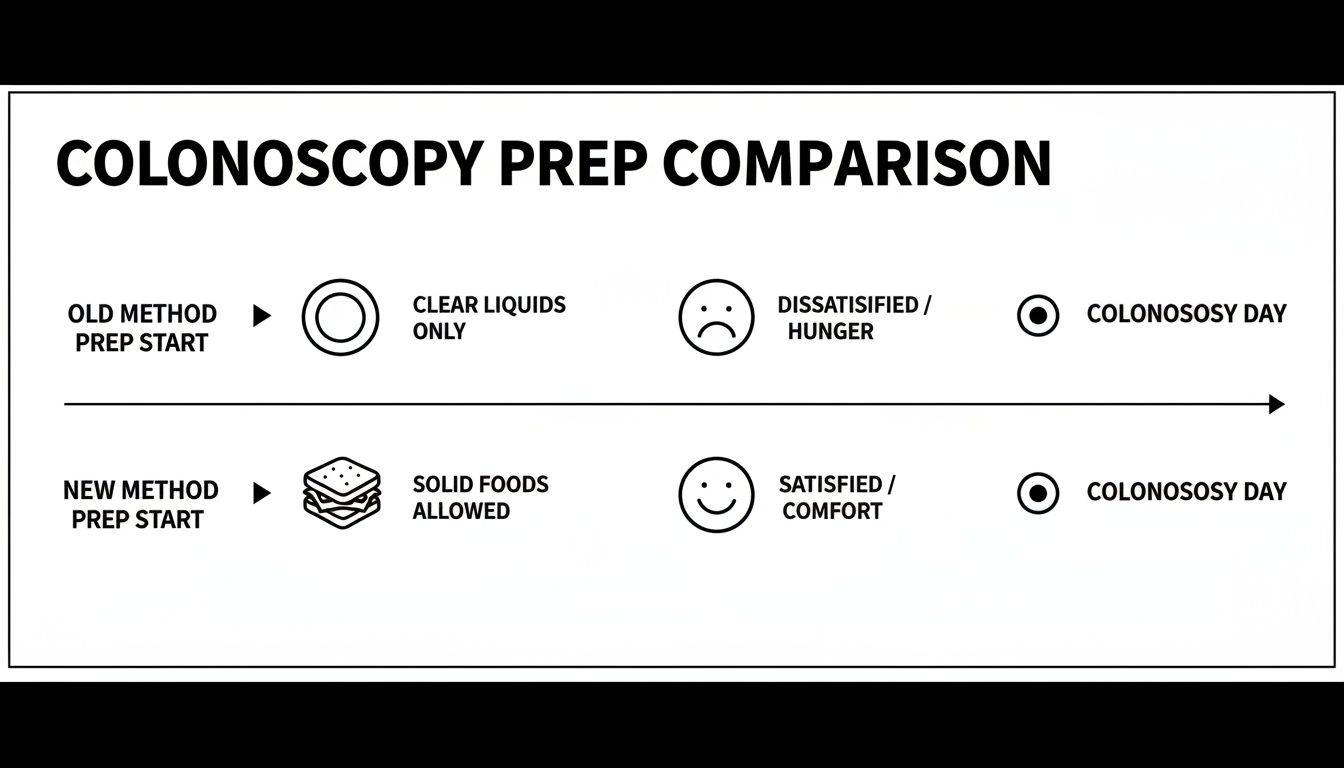
As you can see, allowing a solid low-residue meal makes the entire experience much more manageable for people without hurting the quality of the colon cleanse.
To make it even easier to visualize, here’s what a typical "day before" meal plan might look like.
Sample Meal Plan for the Day Before Your Colonoscopy
Remember, this is just an example. The key is to stop all solid food after your light lunch and stick strictly to clear liquids until your provider's cutoff time before the procedure.
Staying Comfortable on Clear Liquids
Let's be honest—this part can be tough. The main goals are to manage hunger and stay hydrated. Having a few different approved options ready can make a big difference in how you feel.
- Warmth and Flavor: Sipping on warm chicken or beef broth often feels more filling and comforting than cold drinks.
- A Sweet Treat: Spooning some lemon or lime gelatin can trick your brain into feeling like you're eating something more substantial. It also gives you a little sugar for energy.
- Hydration Boost: Sports drinks or clear electrolyte beverages (in approved colors like yellow or green) are great for replenishing what you lose during the prep.
On the morning of your colonoscopy, you'll need to stop all liquids, including water. This is typically two to four hours before your scheduled arrival time, but follow your doctor's specific instructions. This "nothing by mouth" rule is a critical safety step for when you receive anesthesia. Sticking to this plan gets you to your appointment fully prepped and ready for a successful screening.
Managing Your Prep with Other Health Conditions
Juggling a colonoscopy prep on top of a chronic health condition can feel like a lot. It’s not just about what you can eat; it’s about making sure the whole process is safe and effective given your unique health needs. This is where clear, open communication with your medical team isn't just helpful—it's absolutely essential.
Think about it: if you have diabetes, your entire routine is built around stable blood sugar. The restricted diet for colonoscopy prep completely upends that. Your usual insulin or oral medication dosage will almost certainly need to be adjusted to prevent your blood sugar from dropping to a dangerous low (hypoglycemia). Your gastroenterologist or endocrinologist will give you a specific game plan for this.
The same goes for anyone on blood thinners or anticoagulants, like warfarin or apixaban. You'll need to have a detailed conversation with your doctor about pausing these medications, usually for several days before the procedure.
This temporary halt is a critical safety measure. If your doctor finds a polyp and needs to remove it, stopping anticoagulants significantly reduces the risk of serious bleeding during or after the procedure. Never stop these medications without direct medical guidance.
Navigating Prep with Specific Conditions
For some people, the dietary rules present unique hurdles. If you're undergoing chemotherapy or managing a condition that already causes nausea, the thought of drinking a massive volume of prep solution can be downright intimidating.
Here are a few practical strategies to bring up with your doctor:
- Ask about anti-nausea medication: Your provider can prescribe something to take before you even start the prep solution. This can be a game-changer for preventing nausea and vomiting.
- Request a split-dose prep: This is becoming the standard for a reason. You drink half the solution the evening before and the rest the morning of your procedure. It’s much easier to handle.
- Focus on hydration: For anyone with kidney disease or heart conditions, keeping your electrolytes in balance is crucial. Talk with your doctor about the best clear fluids for your specific situation to stay safely hydrated.
Rethinking Traditional Prep Diets
The old-school approach of practically starving yourself before a colonoscopy is, thankfully, being re-examined. The focus is shifting to making the experience more tolerable without compromising the quality of the prep.
In fact, a key 2018 study from Boston University found no association between dietary fiber consumed the day before and the quality of the bowel prep. This suggests that some of the most rigid rules might not be necessary for everyone. Patients in the study who simply avoided red meat, poultry, and veggies the day before had results just as good as those on stricter plans. You can discover more about these dietary findings and see how they are changing patient prep protocols.
At the end of the day, your personal health profile is what dictates your prep plan. Make sure your doctor has a complete list of your medical conditions and all the medications you take. This is the only way they can create a personalized strategy that works for you. No matter what you read online, your doctor's instructions always come first.
You might be wondering if all these diet rules are really necessary. The short answer is yes—absolutely. The success of your entire colonoscopy rests almost entirely on how well you've prepared in the days leading up to it.
Think of it this way: your gastroenterologist is on a mission to find any tiny, subtle abnormalities in your colon. If there’s any leftover food or residue, it's like trying to inspect a path covered in leaves and debris. Polyps and other important clues can easily hide, which defeats the whole purpose of the procedure.
A Clean Prep Means No Do-Overs
When the prep isn't done right, a couple of things can happen, and neither is ideal.
First, your doctor might not get the clear view needed to see the entire colon lining. A small polyp that’s missed could continue to grow, which is the very thing a screening is meant to prevent.
Second, if the view is too obstructed, the procedure might have to be stopped altogether. This means you'll have to go through the entire prep process and the procedure all over again on another day. Nobody wants that.
Sticking to the diet plan is the single best thing you can do to make sure the procedure is a one-and-done success. It’s a key step in proactive health, especially when it comes to https://honcology.com/cancers/colon-cancer.
Think of the prep as your contribution to the team effort. A meticulous prep empowers your doctor to conduct the most thorough, effective screening possible, ensuring no stone is left unturned.
The good news? The prep has gotten a lot more manageable over the years. Not long ago, the standard was a full 24-hour clear liquid fast. It was tough, and as a result, 15-20% of people couldn't complete it properly.
Thankfully, newer guidelines are much more patient-friendly. Research has shown that eating a low-residue diet the day before is just as effective and much easier to tolerate. Patients actually reported 40% higher satisfaction with this approach. That's why your doctor's instructions might now include easy-to-digest foods like white toast, eggs, or even plain yogurt.
Answering Your Top Colonoscopy Prep Questions
Even with the most detailed instructions, questions always seem to come up when you're in the middle of your colonoscopy prep. Let's tackle some of the most common ones so you can feel confident and prepared.
Can I Still Have My Morning Coffee?
Yes, you can absolutely have coffee! Just make sure it's black, with no milk, cream, or sweeteners of any kind. The same goes for plain tea.
The critical thing to remember, however, is the hard stop. Your doctor will give you a specific time, usually two to four hours before your appointment, when you must stop drinking everything—including coffee and water. This is non-negotiable and is for your safety during anesthesia.
What Happens If I Accidentally Ate Something?
First, don't panic. But you do need to act quickly. Honesty is the best policy here, so call your doctor's office immediately.
Let them know exactly what you ate and when you ate it. Depending on how close it is to your procedure and what the food was, they might have to reschedule.
It’s much better to postpone the colonoscopy for a safe and effective exam than to go through with it and have the doctor miss something important. A poor prep often means you'll just have to do it all over again anyway.
Why Are Red and Purple Drinks Off-Limits?
This is a rule you really want to follow. Any drinks, Jell-O, or even popsicles with red, purple, or dark blue dye can stain the inside of your colon.
To your gastroenterologist, these colorful stains can look alarmingly like blood or other abnormalities. By avoiding them, you ensure your doctor gets a crystal-clear view and can make an accurate assessment of your colon's health. Stick with clear or light-colored options like white grape juice or lime Jell-O.
How Can I Handle Nausea from the Prep Solution?
Feeling queasy is one of the most common complaints about the prep, but there are a few tricks that can make a big difference. For many people, simply chilling the solution in the fridge for a few hours makes it much more palatable.
Another great tip is to drink it through a straw. If you place the straw toward the back of your tongue, you can bypass a lot of your taste buds. If you start to feel sick, take a break for 15 to 30 minutes before trying again. If you actually start vomiting, you need to call your doctor’s office for guidance.
At Hirschfeld Oncology, we know that clear communication is the foundation of great care. If you have questions about cancer screenings or need to explore advanced treatment options, we encourage you to learn more about our patient-centered approach and request a consultation on our website.
.png)
.png)






