.png)


A chemo port placement is a minor surgical procedure where a small device is placed just under the skin. Its purpose is to create a reliable, long-term access point to one of your large veins, usually in the chest. This device, often called a port-a-cath, makes getting chemotherapy, fluids, and blood draws safer and much less painful than getting stuck with an IV needle over and over again.
What Is a Chemo Port and Why Do We Recommend It?
Think of your veins like small, local roads. Sending powerful chemotherapy drugs through them is like running heavy construction trucks down a quiet neighborhood street day after day. It doesn't take long for those delicate roads to get worn out, damaged, or even collapse.
A chemotherapy port is like building a major highway on-ramp. It creates a durable, direct, and secure route for treatment to enter a large central vein—a "superhighway" that can handle the traffic—bypassing those smaller, more fragile "streets" in your arm entirely.
This small device, about the size of a quarter, is made of two parts:
- The Portal: A small reservoir made of titanium and silicone that sits just under your skin.
- The Catheter: A thin, flexible tube that runs from the portal directly into a large vein near your heart.
When it's time for treatment, your nurse will access the portal through your skin using a special kind of needle. Because the port is so easy to find and access, this process is much more comfortable than searching for a new vein for an IV each time.
Comparing a Chemo Port to a Standard IV Line
To really understand the difference, it helps to see how a port stacks up against a traditional IV you might get in the emergency room.
The table makes it clear: for a long treatment journey, a port is designed for durability and your comfort.
Key Reasons We Recommend a Port
Here at Hirschfeld Oncology, when we suggest a port, it’s for a few very important reasons centered on your safety and well-being. Our goal is always to make your treatment journey as smooth and stress-free as possible.
A port isn't just another piece of medical equipment; it's a tool to improve your quality of life during treatment. By taking away the daily anxiety of needle sticks and protecting your veins, it lets you focus your energy on what matters most—healing.
The most common reasons for recommending a port are:
- Protecting Your Veins: Some chemotherapy drugs are what we call "vesicants," which means they can cause serious tissue damage if they happen to leak outside of a vein. A port delivers these drugs safely into a large vein with high blood flow, which rapidly dilutes the medication and drastically reduces this risk.
- Reducing Discomfort and Anxiety: The constant need to find a good vein for an IV can cause a lot of pain and stress, leading to collapsed or scarred veins. A port completely bypasses this issue.
- Making Treatment Simpler: With a port, infusions and blood draws become simple and predictable. This reliability is a huge relief, especially for patients who need frequent or long-term therapy. Knowing what to expect is crucial, and we believe in providing information on how to educate patients effectively so you always feel in control of your care.
Who Benefits Most from a Port?
A port is especially helpful for patients with specific types of treatment plans. For example, one study of patients with solid tumors found that breast cancer was the most common reason for needing a port. In that same study, patient satisfaction was incredibly high—averaging 4.3 out of 5—because the port took away the constant worry about IV access, which in turn helped them stick with their treatment plan. Discover more insights about these patient experiences.
A Step-by-Step Guide to Your Port Placement Procedure
Knowing what to expect is often the best way to feel more at ease about any medical procedure. When you understand the steps involved, the whole experience feels less intimidating and more like a planned part of your journey. So, let's walk through what happens when you get a chemo port—before, during, and after.
The entire process is surprisingly quick and designed for your comfort. It’s best to think of it as a well-choreographed pit stop that makes the road ahead much smoother. This is almost always an outpatient procedure, which means you’ll be heading home the very same day.
Getting Ready for Your Procedure
Your preparation really starts a day or two before your scheduled appointment. Our team will give you a specific checklist, but a few key steps are standard for nearly everyone. These are all about ensuring your safety and a smooth procedure.
- Medication Check-In: We'll need to review everything you're taking, including vitamins, supplements, and especially any blood thinners. We may ask you to pause certain medications for a short time to minimize any risk of bleeding.
- Fasting: You’ll likely be asked to stop eating or drinking for several hours beforehand, usually starting at midnight the night before. This is a crucial safety step when sedation is involved.
- A Ride Home: The sedation will leave you groggy, so you won't be able to drive. Please make sure you have a friend or family member who can take you home and ideally stay with you for a bit.
What to Expect During the Procedure
The port placement itself is a minimally invasive procedure that’s typically over in less than an hour. From the moment you enter the room, our team's entire focus is on keeping you safe and comfortable.
First, you’ll be given medication to help you relax and to numb the area completely. Most of our patients receive a combination of a local anesthetic right on the skin and conscious sedation, which makes you feel very sleepy and calm but doesn't put you all the way under.
Once you’re comfortable, the surgeon or interventional radiologist will make two tiny incisions.
- One small incision is made in your upper chest. This is where a little pocket is created right under the skin to hold the port.
- A second, even smaller incision is made near your collarbone to get access to the large vein we need.
Using imaging like ultrasound and a type of live X-ray called fluoroscopy, the doctor carefully threads the thin catheter from the vein down to just the right spot near your heart. This technology is a game-changer, giving us a real-time map to ensure perfect and safe placement.
Think of the imaging as a GPS for your doctor. It lets them see exactly where the catheter is going every step of the way, which minimizes risks and makes sure your port works perfectly from the moment it's placed.
After we confirm the catheter is in its ideal position, it's connected to the port, which is then tucked into the skin pocket. We close the incisions with dissolvable stitches or surgical glue and then cover the area with a sterile dressing. That’s it. The whole thing is very precise and methodical.
This diagram shows how simple the flow of medicine will be once your port is ready.
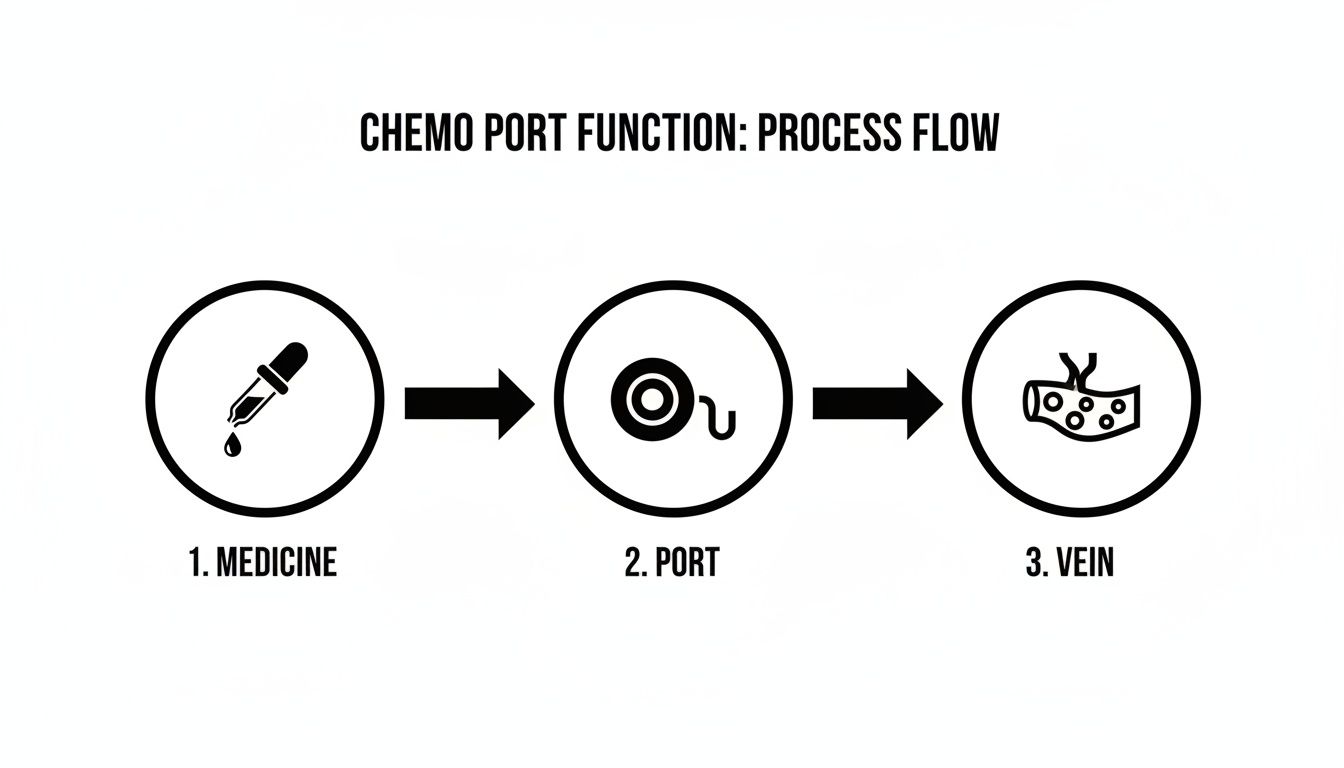
It’s this direct path—from medicine to port to vein—that spares your smaller veins from the powerful drugs used in treatment.
Immediately After the Procedure
Once your new port is in place, you’ll spend some time in a recovery area. Our nursing team will keep a close eye on you as the sedation wears off, which usually takes an hour or two.
It's completely normal to feel some mild soreness at the incision sites for a few days. This is easily managed with standard over-the-counter pain relievers. You'll also be able to feel a small bump under your skin where the port sits.
Before you leave, your nurse will go over everything you need to know about caring for your port, including:
- How to keep the site clean and dry while it heals.
- Signs of infection to watch out for (like increased redness, swelling, or a fever).
- Activity limits, such as avoiding heavy lifting for a week or so.
Procedures like this and others, such as a bone marrow biopsy, are common and vital parts of a cancer treatment plan. If you're interested, you can learn more about what that involves in our guide to the bone marrow biopsy procedure. We'll make sure you have all the information and feel confident before you head home.
Keeping You Comfortable: Your Anesthesia and Sedation Options
When it's time to place your chemo port, our number one job is to make sure you're safe and comfortable. We know the idea of any procedure can be stressful, which is why we have a solid plan for managing pain and anxiety. Let's walk through the two main ways we make the experience as smooth and stress-free as possible.
The go-to method for most port placements is a combination of local anesthesia and conscious sedation. This isn't the same as being fully "put under." Instead, we start by injecting a numbing medicine right where the port will be placed. This makes the skin and deeper tissue completely insensitive to pain.
At the same time, we'll give you medication through an IV that helps you feel incredibly relaxed, calm, and sleepy. Many patients say it feels like a dream-like "twilight" state. You might be vaguely aware that something is happening, but you won't feel any discomfort. This approach also helps you recover much faster, so you can get home and rest sooner.
Local Anesthesia vs. General Anesthesia
While local anesthesia with sedation works perfectly for the vast majority of our patients, there are times when general anesthesia is the better choice. This is when you are completely asleep and unaware for the entire procedure. An anesthesiologist will be dedicated to you, monitoring your breathing and vital signs from start to finish.
So, how do we decide? The team at Hirschfeld Oncology looks at the whole picture to recommend what’s best for you.
- Your Overall Health: Any existing medical conditions you have can play a role in determining the safest option.
- Your Anxiety Levels: If you're feeling extremely anxious about being awake, we'll listen. General anesthesia can offer peace of mind.
- Your Unique Anatomy: In very rare cases, a person's veins or chest structure might make the placement a bit more complex, and being completely still under general anesthesia can help.
This is always a conversation, not a command. We'll sit down with you to talk through the pros and cons, making sure you feel confident and secure in the plan we create together.
You can feel confident knowing that local anesthesia is overwhelmingly safe and effective for this procedure. A major study of 263 cancer patients showed that nearly 90% had their ports placed successfully with local anesthesia alone. This really speaks to how minimally invasive the procedure is.
Better yet, the study reported an overall complication rate of just 5.32%, which is well below the typical 5-19% range. That’s a testament to how reliable this method is when handled by a skilled team. You can read the full research about these safety findings if you'd like to dive deeper into the data.
Understanding the Risks and Potential Complications
Being well-informed is a huge part of feeling in control of your treatment journey. So, let’s have a frank discussion about the potential risks of having a port placed. I want to be completely open about what could happen, even though serious complications are not common. Knowing what to look for helps you and your care team stay on top of things.
The reality is that for the vast majority of patients, the benefits of a port—less discomfort, no more difficult needle sticks, and preserving your veins—are well worth the very small risks. Port placement is an incredibly common and routine procedure, and we’ve gotten very, very good at making it safe.
Risks Right After the Procedure
Any time we make an incision, there are a few immediate risks to keep in mind. Your care team will be watching closely for these and can manage them right away.
- Bleeding or Bruising: It’s perfectly normal to have some minor bruising or a little bleeding where the incisions were made. Significant bleeding is rare, and we take precautions, like having you pause blood thinners, to prevent it.
- Infection: We are meticulous about sterile technique. Everything is done in a sterile environment to keep the risk of infection incredibly low. You'll also get clear, simple instructions on how to care for your incision at home to keep it clean while it heals.
- Incorrect Placement: This is extremely unlikely today. We use advanced imaging like ultrasound and fluoroscopy (a sort of real-time X-ray) that acts like a GPS, guiding the catheter to the exact right spot.
Long-Term Complications to Watch For
Once your port is healed, it can work perfectly for months or even years. Still, it’s smart to know what to look out for down the road.
Here are the most common long-term issues that can pop up:
- Blood Clots (Thrombosis): On rare occasions, a blood clot can form around the catheter inside the vein. The tell-tale signs are usually swelling, pain, or redness in the arm, neck, or chest on the same side as your port. Regular flushing and proper care help keep this risk to a minimum. You can learn more about this in our guide to chemo and blood clots.
- Catheter Blockage: If a port isn't flushed regularly, it can get clogged with tiny bits of blood or medication. That’s why we schedule routine flushing appointments, typically every 4-6 weeks when you’re not actively using it, to keep it clear and ready to go.
- Port Site Infection: Even long after placement, an infection can develop under the skin around the port. Call us right away if you see any redness, feel warmth or pain, or notice any drainage from the site.
Reading a list of potential problems can feel a bit overwhelming. But it's crucial to put these risks into perspective—the actual rates are very low, thanks to modern medicine and careful follow-up.
Research backs this up. A recent study looked at 375 port placements and found that serious issues were exceptionally rare. Catheter-related problems happened in less than 1.2% of cases, and port site infections occurred in only about 3% of patients.
These numbers confirm what we see every day: port placement is a consistently safe and reliable procedure. This evidence-based, safety-first approach is central to how we do things at Hirschfeld Oncology, so you can feel confident and secure in your care. You can read the full research about these safety outcomes if you'd like to dig into the data yourself.
Living Comfortably with Your Chemo Port
Getting used to a new medical device can feel a little strange at first, but a chemo port is really designed to fade into the background of your daily life. The initial healing is quick, and once the site has settled down, you’ll probably forget it’s even there most of the time.
Let's walk through what you can expect in the first few weeks and how to look after your port for the long haul. The goal is simple: get you back to your normal routine as quickly and safely as possible. Just think of the first week or so as a brief adjustment period while your body heals.
The First Few Weeks After Placement
Right after your port is placed, it's completely normal to feel some mild soreness or see a bit of bruising around the incision. This is usually very manageable with over-the-counter pain relievers like acetaminophen (Tylenol), and we'll give you specific instructions on what to use.
During this initial healing phase, your main job is simply to protect the area.
- Keep it Dry: It’s critical to keep the dressing over your incision clean and dry for the first 24–48 hours. This means sticking to sponge baths until your doctor says it's okay to shower.
- Avoid Heavy Lifting: For about one to two weeks, try not to lift anything heavier than 5–10 pounds with the arm on the same side as your port. This simple step prevents strain on the healing incision and helps the port settle in properly.
- Watch for Irritation: A seatbelt can sometimes rub against the new port site. You can make driving a lot more comfortable by tucking a small, soft pad or a folded washcloth between the strap and your chest.
Long-Term Care and Using Your Port
Once the incision is fully healed—usually in about two weeks—your port requires very little attention day-to-day. It’s just there, ready to make your treatments easier. You can shower, swim, and get back to most of your favorite activities without any issues, as long as the port isn't currently accessed with a needle.
When you're between treatments, we'll need to flush the port every so often to keep it from clotting. This is a quick and painless maintenance task that keeps the line clear and ready for use.
We typically schedule a simple "flush" appointment every 4-12 weeks. A nurse will access your port, inject a small amount of saline and a heparin solution, and you’ll be on your way in minutes.
When it's time for chemotherapy or a blood draw, a nurse trained in port access will use a special non-coring needle to connect to it. This is always done under strict sterile conditions to prevent any risk of infection. They'll do a quick check to make sure it's working perfectly before starting your infusion. For anyone who needs more consistent support, arranging for a private nurse at home can provide an extra layer of comfort and professional care.
When to Call Your Care Team
Knowing the difference between normal healing and a potential problem will give you tremendous peace of mind. While complications are rare, it's important to know what to look for so you can call us right away if something seems off.
This table gives you a clear guide on what's normal during recovery versus what warrants a call to your oncology team.
Recovery Signs to Monitor After Port Placement
By keeping an eye out for these signs, you become an active partner in your own care. Preparing for treatment is about more than just the medical side of things; it's about feeling ready for the entire journey ahead. For more tips, our guide on how to prepare for chemotherapy can help you feel more confident and in control.
Your Path Forward with Hirschfeld Oncology
Going through a cancer diagnosis is a lot to handle, and our goal is to give you the strength, support, and tools you need for the road ahead. We've walked through the details of chemotherapy port placement to help turn any uncertainty you might have into clear, practical knowledge.
Think of a chemo port as more than just a medical device. It’s a key part of a plan we create together, one designed to make your treatment journey a little bit easier and a lot more comfortable.
By giving your care team a reliable way to administer medications, a port protects your veins from the wear and tear of repeated needle sticks. This simple step lets everyone focus their energy where it matters most: on your health and well-being. At Hirschfeld Oncology, we consider this small device a cornerstone of our patient-first philosophy.
Expertise in Complex Cancer Care
Dr. Azriel Hirschfeld has spent over two decades managing the kind of complex, long-term cancer care where tools like ports become absolutely essential. They make it possible to deliver the sustained, effective therapy you need.
Our entire approach is built on providing not just advanced medical treatments, but also the comprehensive support required to navigate them. We truly believe that protecting your quality of life is just as critical as fighting the disease itself.
At Hirschfeld Oncology, we’re committed to walking alongside you on this journey. We combine expert medical care with genuine compassion, focusing on a treatment path that respects your personal goals. Our priority is making sure you feel heard, supported, and hopeful every step of the way.
Your Consultation with Our Team
We know that no two patients are the same. Whether you’re trying to decide if a chemotherapy port is right for you or you're exploring options for a complex diagnosis, our team is here to offer clarity and guidance. We invite you and your family in Brooklyn, Williamsburg, Bushwick, and the greater NYC area to schedule a consultation with us.
When we sit down together, we'll go over every aspect of your care in detail. You can expect to discuss:
- Personalized treatment options that make sense for you.
- A straightforward explanation of any recommended procedures, like port placement.
- A clear plan for managing symptoms and keeping you as comfortable as possible.
Your journey is our journey. Contact Hirschfeld Oncology today to request an appointment and see how our dedicated team can help you chart a path forward with confidence.
Here is the rewritten section, designed to sound completely human-written and natural.
Your Questions Answered: Living With a Chemo Port
It’s completely normal to have questions before any medical procedure. Let's walk through some of the most common things patients ask us about getting and living with a chemotherapy port.
How long does the placement procedure actually take?
The procedure itself is surprisingly quick, usually lasting less than an hour. However, you should plan for a longer day. Between pre-op preparations and a couple of hours in recovery, most patients are at the hospital for a total of 3 to 4 hours. It’s best to clear your schedule for the day and arrange for a ride home.
Will my port set off metal detectors at the airport?
This is a very common concern, but you can relax. Ports are small and typically made from materials like titanium and silicone that are highly unlikely to trigger airport security alarms. For peace of mind, we can provide you with a medical device card to carry when you travel.
How long will I have the port?
Think of the port as your dedicated partner for as long as you need it. It can safely stay in place for your entire treatment course, whether that’s a few months or several years. Once your treatment is complete and your oncology team gives the okay, removing it is another straightforward outpatient procedure.
Will people be able to see it?
Once the small incision has healed, the port just looks like a slight, smooth bump under your skin, about the size of a quarter. You'll be able to feel it, but it’s rarely noticeable to others through clothing and shouldn't cause any discomfort.
One of our patients described it perfectly: “Having a port felt like gaining a backstage pass—easy access without the constant needle anxiety.”
What do I need to do on the day of the procedure?
To make your day go as smoothly as possible, a little preparation helps.
- Bring your essentials: Don't forget your photo ID, insurance card, and an up-to-date list of all your medications, including dosages.
- Dress for comfort: A button-down shirt or a loose, wide-neck top is a great choice. It makes it easier for the medical team to access the area without you having to fully undress.
- Arrive early: Plan to get to the hospital at least 30 minutes before your scheduled time to handle registration without feeling rushed.
Who is a good candidate for a port?
A port isn't for everyone, but it’s a game-changer for many. It's especially beneficial for patients who:
- Need frequent infusions and want to avoid constant needle sticks.
- Are receiving medications known as vesicants, which can cause serious damage if they leak outside of a small vein.
- Have a long-term treatment plan stretching over many months or years.
Ultimately, a port is about making treatment safer and more comfortable by protecting your peripheral veins from wear and tear.
Can I still shower and swim?
Yes, you can get back to most of your normal routine fairly quickly. You can shower 48 hours after the procedure, once the initial surgical dressing is removed. The key is to avoid fully submerging the port in a bath or pool until the incision is completely healed, which usually takes about two weeks. Once your care team confirms the site is fully healed, you’ll be cleared to go swimming.
We hope these answers help you feel more prepared and confident. Knowing what to expect with timing, daily life, and care can clear away a lot of the unknowns, letting you focus on what matters most: your treatment and recovery.
If you have more questions or want to discuss if a port is right for you, our team at Hirschfeld Oncology is always here to talk.
.png)
.png)