.png)


You've finished the standard treatments for advanced cancer, and the next appointment comes with an unfamiliar request: molecular testing. Your oncologist wants to examine the tumor before recommending another therapy. That can feel like a delay when you're waiting for a treatment decision, but the test may answer an important question: does your cancer carry a feature that makes a specific drug more appropriate, less useful, or worth studying in a clinical trial?
Companion diagnostic testing can help narrow those choices. It can also produce results that are negative, uncertain, or difficult to interpret. A negative report doesn't always mean that every targeted option has disappeared. It may mean that the approved test didn't detect a relevant alteration, that the sample wasn't adequate, or that the evidence connecting a finding to treatment hasn't yet reached the regulatory label.
What Companion Diagnostic Testing Actually Does
Consider a patient with stage IV lung adenocarcinoma whose disease has progressed after two chemotherapy regimens. Before discussing another line of treatment, the oncologist orders molecular profiling. The purpose isn't just to collect more information. The purpose is to identify whether the tumor contains a biomarker that could change the treatment plan.
A companion diagnostic, often shortened to CDx, is a laboratory test developed and evaluated alongside a specific therapy. The FDA defines a companion diagnostic as information that is essential for the safe and effective use of the corresponding treatment. In practical terms, the test can act as a gatekeeper. A drug label may require or recommend testing for a particular biomarker before treatment is prescribed.
That differs from a broad genomic profile, hereditary cancer screening, or a general pathology test. A detailed panel may report many alterations, but not every finding is an FDA-recognized companion diagnostic result. A CDx result has a defined relationship to a therapy, a specimen type, a testing method, and an interpretation threshold.
What the result may connect
Examples help make the relationship clearer:
- HER2-positive breast cancer: Trastuzumab was approved with the HercepTest immunohistochemistry assay for HER2-positive metastatic breast cancer, establishing an early model for matching a drug to a tumor marker.
- EGFR-mutated lung cancer: Testing can identify EGFR alterations, including exon 19 deletions, that may support use of an EGFR-directed therapy such as osimertinib when the result and clinical situation fit the drug label.
- Immunotherapy selection: PD-L1 expression or high microsatellite instability may affect eligibility for pembrolizumab in specific cancer settings, although the exact requirement depends on the tumor type and prescribing information.
The broader topic of what cancer biomarkers mean can help if terms such as mutation, amplification, expression, or instability are new to you.
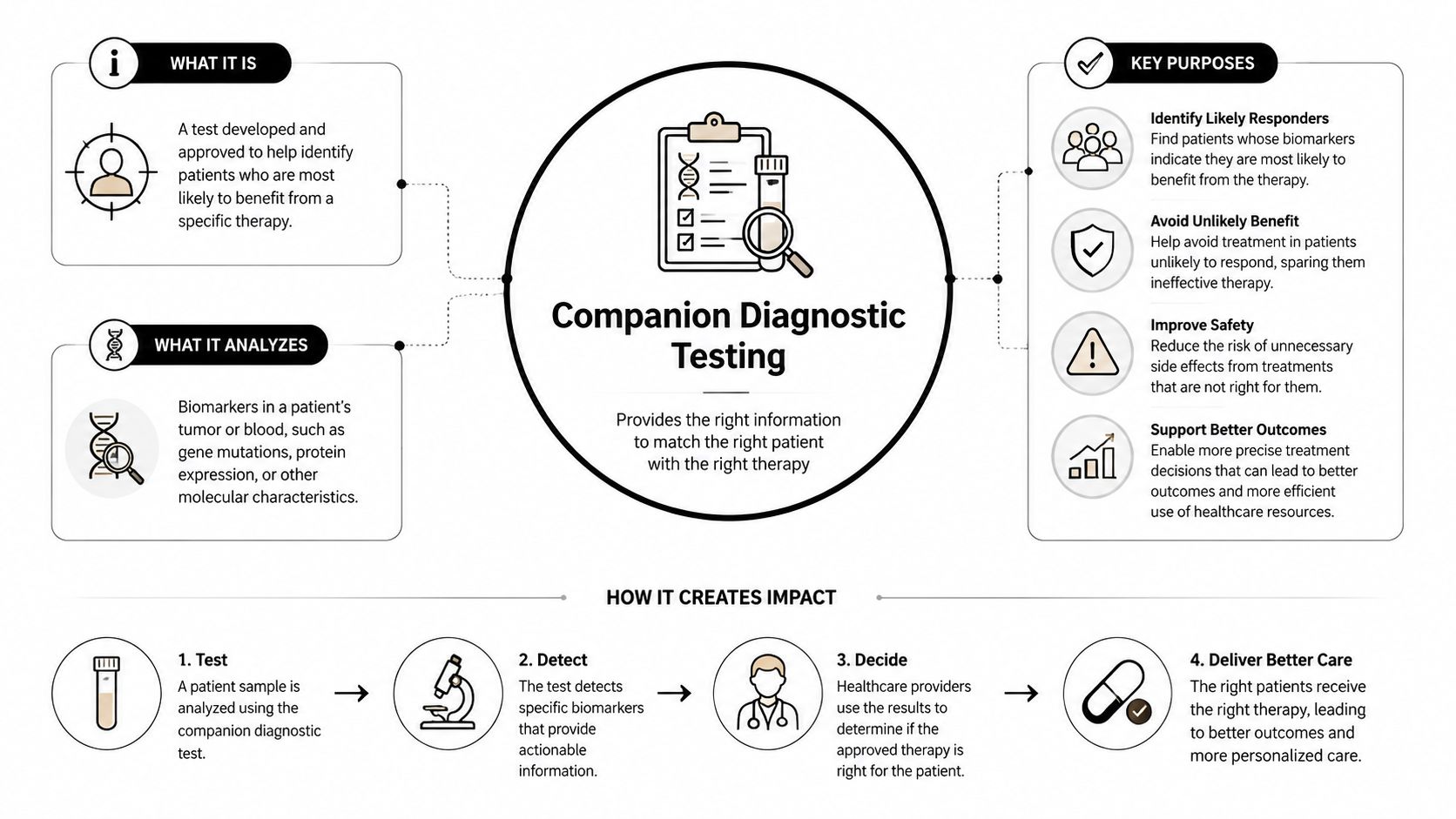
The key point is that companion diagnostic testing is a decision aid, not a cancer screening tool and not a promise that treatment will work. A positive finding may open a treatment door, but your oncologist still has to consider prior therapies, organ function, symptoms, other illnesses, potential toxicity, and your goals.
How Companion Diagnostics Became Standard of Care
The modern CDx story began with a treatment decision in breast cancer. In 1998, the FDA approved trastuzumab for HER2-positive metastatic breast cancer alongside the HercepTest immunohistochemistry assay, making companion diagnostic testing a formal part of oncology practice. The test helped identify tumors with the HER2 feature that the therapy was designed to target. (FDA companion diagnostic history review)
The field expanded as oncologists gained access to targeted treatments for lung, breast, colorectal, melanoma, and other cancers. A review of FDA companion diagnostics found 9 approvals by 2010 and 44 by the end of 2020, with 35 approvals added during the following decade. (Historical review of FDA companion diagnostics) The increase reflected a shift away from treating every tumor of the same organ as biologically identical.
From one paired test to a broad framework
The FDA ecosystem grew further. By 2024, it included 185 approval actions, consisting of 64 new tests and 121 supplemental expansions, while annual approvals reached a peak of 20 in 2020. A separate historical review reported that by August 2023, the FDA had cleared or approved 56 companion diagnostic assays, with more than 60 drugs and drug combinations linked to companion diagnostics across 65 drug or drug-combination uses. (ISPOR review of the companion diagnostic ecosystem)
That regulatory growth paralleled the arrival of multi-gene testing. In non-small cell lung cancer, a single tissue sample may need evaluation for several alterations because different findings can lead to very different therapies. Broad next-generation sequencing platforms helped laboratories examine multiple biomarker classes within one workflow rather than ordering an entirely separate test for every gene.
Practical rule: A test becomes clinically useful when its result is connected to a real treatment decision, not simply because it produces a long report.
Today, companion diagnostics function as part of precision-oncology infrastructure. The result may be referenced in drug labeling, clinical guidelines, tumor board discussions, and insurance documentation. That doesn't make the test infallible, but it does mean the report has a defined role in selecting and ruling out treatment options.
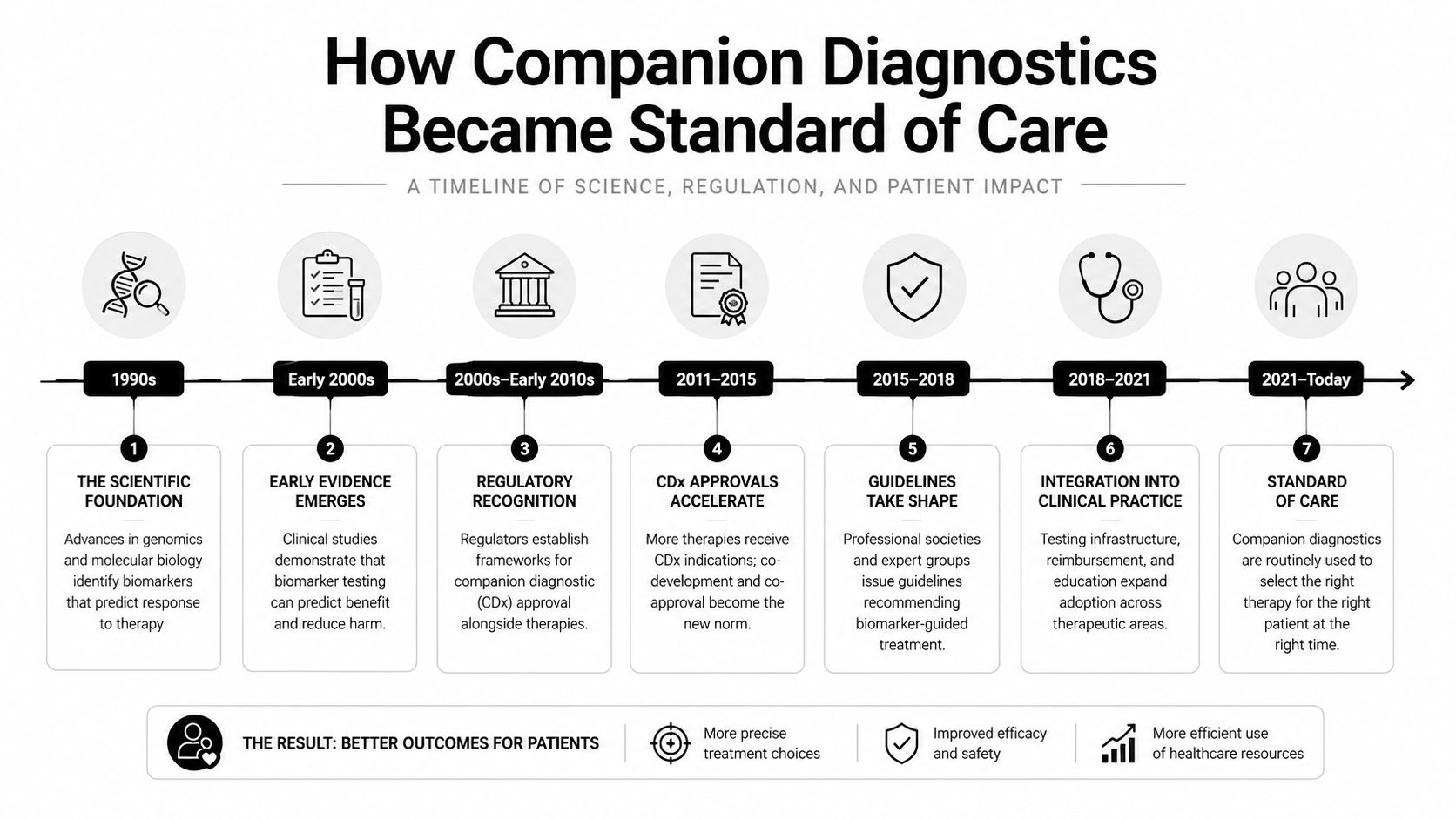
The relationship between a therapy and its diagnostic continues to evolve as researchers study new biomarkers, testing platforms, and drug combinations.
The Four Technologies Behind the Test
A companion diagnostic result depends partly on the technology used to detect the biomarker. Laboratories don't choose between immunohistochemistry, FISH, PCR, and NGS because one method is universally superior. They select a method based on the biological question, the available specimen, and the treatment decision the result must support.
Immunohistochemistry
Immunohistochemistry, or IHC, uses antibodies to stain proteins in tumor cells. A pathologist examines the staining pattern and assigns a score. HER2 testing in breast cancer is a familiar example. The report may describe HER2 expression as 0, 1+, 2+, or 3+, with additional testing often needed when the result is equivocal.
IHC can be relatively quick and works well when the clinical question involves protein expression. It's also dependent on tissue preparation, antibody performance, scoring rules, and the pathologist's interpretation. A number on the report only makes sense when the laboratory uses the validated assay and cutoff connected to the treatment decision.
FISH
Fluorescence in situ hybridization, or FISH, uses fluorescent probes to examine gene amplification or rearrangement. In a HER2 evaluation, FISH may help resolve an equivocal IHC result. In lung cancer, related probe-based testing can identify rearrangements such as ALK when that is the question being asked.
FISH can answer a structural question that IHC cannot. It may be ordered as a reflex test after an unclear protein-staining result, or as a focused assay when the suspected alteration is already known.
PCR
Polymerase chain reaction, or PCR, amplifies specific DNA sequences so the laboratory can detect a known alteration. Allele-specific PCR can identify a defined hotspot mutation, while digital droplet PCR can detect small amounts of a target sequence in tissue or blood. EGFR resistance testing, including evaluation for T790M in appropriate lung-cancer settings, illustrates why a focused, sensitive method can be useful.
The laboratory workflow matters at every stage, from extraction through amplification and detection. Readers who want a basic explanation of the physical materials used in PCR workflows can review this practical PCR tube guide from Cryonos GmbH.
Next-generation sequencing
Next-generation sequencing, or NGS, reads many genomic regions at the same time. It's particularly useful when several possible findings could affect treatment. In colorectal cancer, testing may examine RAS, BRAF, MSI, HER2, and NTRK-related findings because each can contribute different treatment information.
FoundationOne CDx is an example of an FDA-approved NGS companion diagnostic platform. It supports labeling for 28 drug therapies and has validation evidence based on more than 30,000 test results. (FoundationOne CDx performance publication) A broader panel can reduce the need for serial single-gene tests, but it also places greater demands on specimen quality, bioinformatics, interpretation, and control of false-positive and false-negative findings.
| Technology | What It Detects | Typical Turnaround | Representative Biomarker | Common Tumor Type |
|---|---|---|---|---|
| IHC | Protein expression | Laboratory-dependent | HER2 | Breast cancer |
| FISH | Amplification or rearrangement | Laboratory-dependent | HER2 or ALK | Breast or lung cancer |
| PCR | Known sequence alteration | Laboratory-dependent | EGFR hotspot alteration | Lung cancer |
| NGS | Multiple genomic alterations | Laboratory-dependent | RAS, BRAF, MSI, NTRK-related findings | Colorectal cancer |
These technologies complement one another. Your oncologist may use one method, several methods, or a reflex pathway depending on what the first result shows.
Why Three Layers of Evidence Matter for Your Result
A result can be technically impressive and still fail to answer the treatment question. FDA guidance evaluates companion diagnostics through analytical validity, clinical validity, and clinical utility, three related but separate forms of evidence. (FDA companion diagnostic guidance)
Analytical validity
Analytical validity asks whether the assay reliably detects what it claims to detect. The laboratory must understand performance under its specified protocol, including sensitivity, specificity, accuracy, and precision. That includes difficult situations such as a low-frequency variant, a small tumor sample, or a specimen that has degraded over time.
If the test misses a mutation that is present, the clinical team may never consider a relevant therapy. If it calls an alteration that isn't there, you could face an ineffective treatment, avoidable side effects, or a delay while the result is clarified.
Clinical validity
Clinical validity asks whether the biomarker predicts the clinical state or treatment response that the report implies. HER2 testing illustrates this distinction. It isn't enough to detect a protein signal. The scoring threshold must have a validated relationship to the therapy being considered.
Clinical utility
Clinical utility asks whether using the test to guide care improves patient management or outcomes compared with treating without that information. A biomarker can be biologically interesting but not yet useful for choosing a drug.
FoundationOne CDx demonstrates the scale required of a multi-analyte platform. Reported validation covered more than 300 genes, with analytical sensitivity above 99% for substitutions and indels. (FoundationOne CDx performance publication) The broader lesson is more important than the brand: a modern panel must show that it can detect alterations reliably, connect them to treatment evidence, and produce information that clinicians can use responsibly.
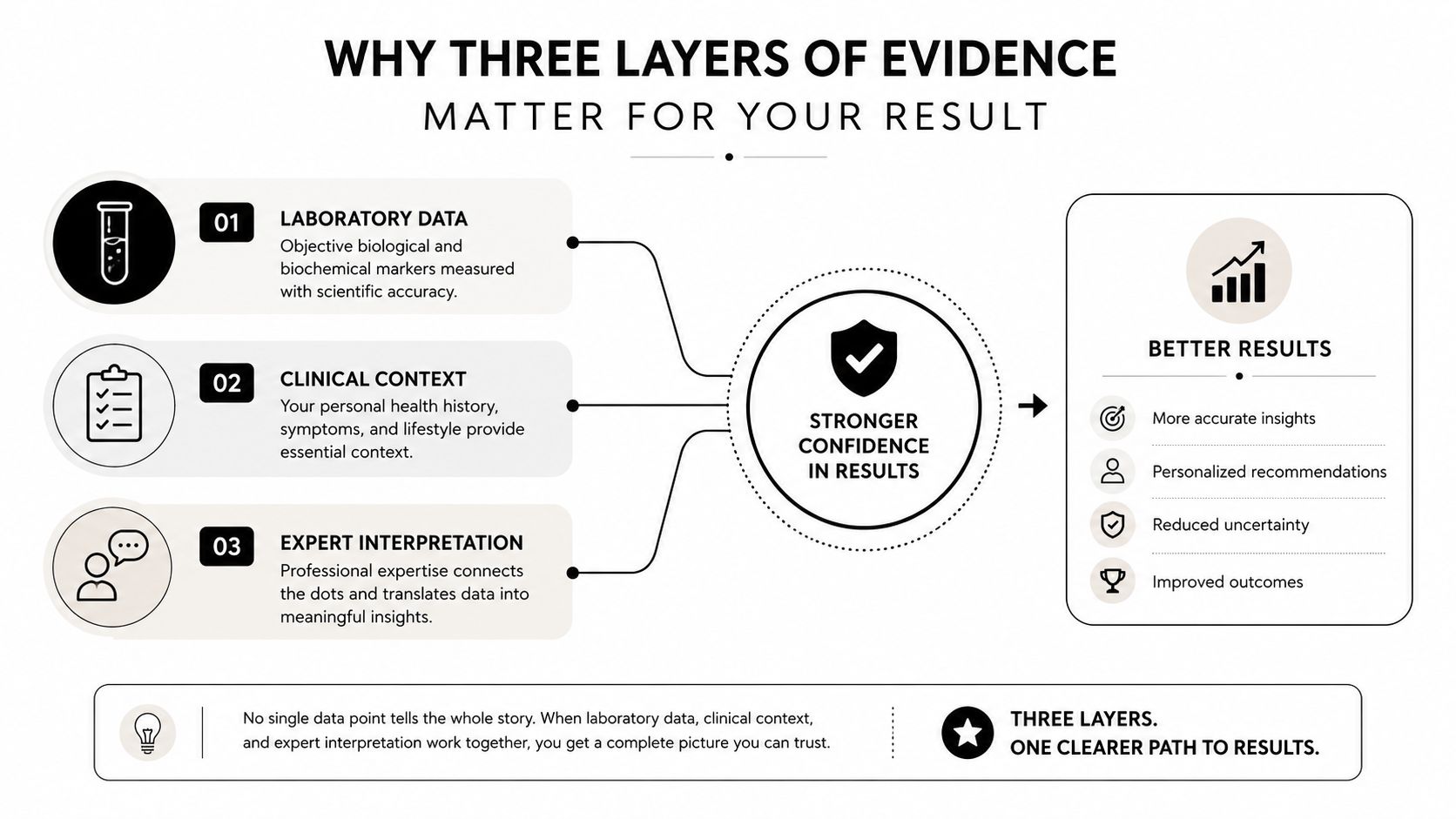
A positive result answers only one part of the question. The other parts are whether the assay is dependable, whether the biomarker predicts benefit in your cancer, and whether the treatment makes sense for you now.
From Biopsy to Report in the Real World
The testing process begins before the laboratory runs an assay. Your oncology team first identifies the decision that needs an answer, then asks the pathology department whether an archived tissue block contains enough usable tumor. If the available material is inadequate, the team may discuss a new biopsy or a blood-based test.
The tissue pathway
A pathologist reviews the specimen and estimates whether it contains enough tumor cells for the planned assay. The laboratory may use macrodissection to enrich the tumor portion and reduce the amount of normal tissue in the extracted sample. Tissue can then move through IHC, FISH, PCR, NGS, or a reflex sequence that uses more than one method.
Bone specimens can create special problems if they've been decalcified, because processing may damage the nucleic acids or proteins needed for testing. Small samples and low tumor content can also produce a report that says the result is insufficient rather than negative. If the specimen must travel to an outside laboratory, packaging, accessioning, and shipping can add another delay.
Tissue and blood don't answer every question identically
A liquid biopsy analyzes circulating tumor DNA from plasma. It avoids a tissue procedure and may detect an alteration that is shed into the bloodstream, but a negative blood result may require confirmation with tissue when feasible. A tissue sample can provide architecture and direct tumor context, while blood may be useful when tissue is unavailable or when the disease is changing.
The report may include the variant's standardized name, its classification or evidence tier, quality information, and any therapy associations recognized for the test's intended use. Ask your team to explain which findings are treatment-linked and which are exploratory.
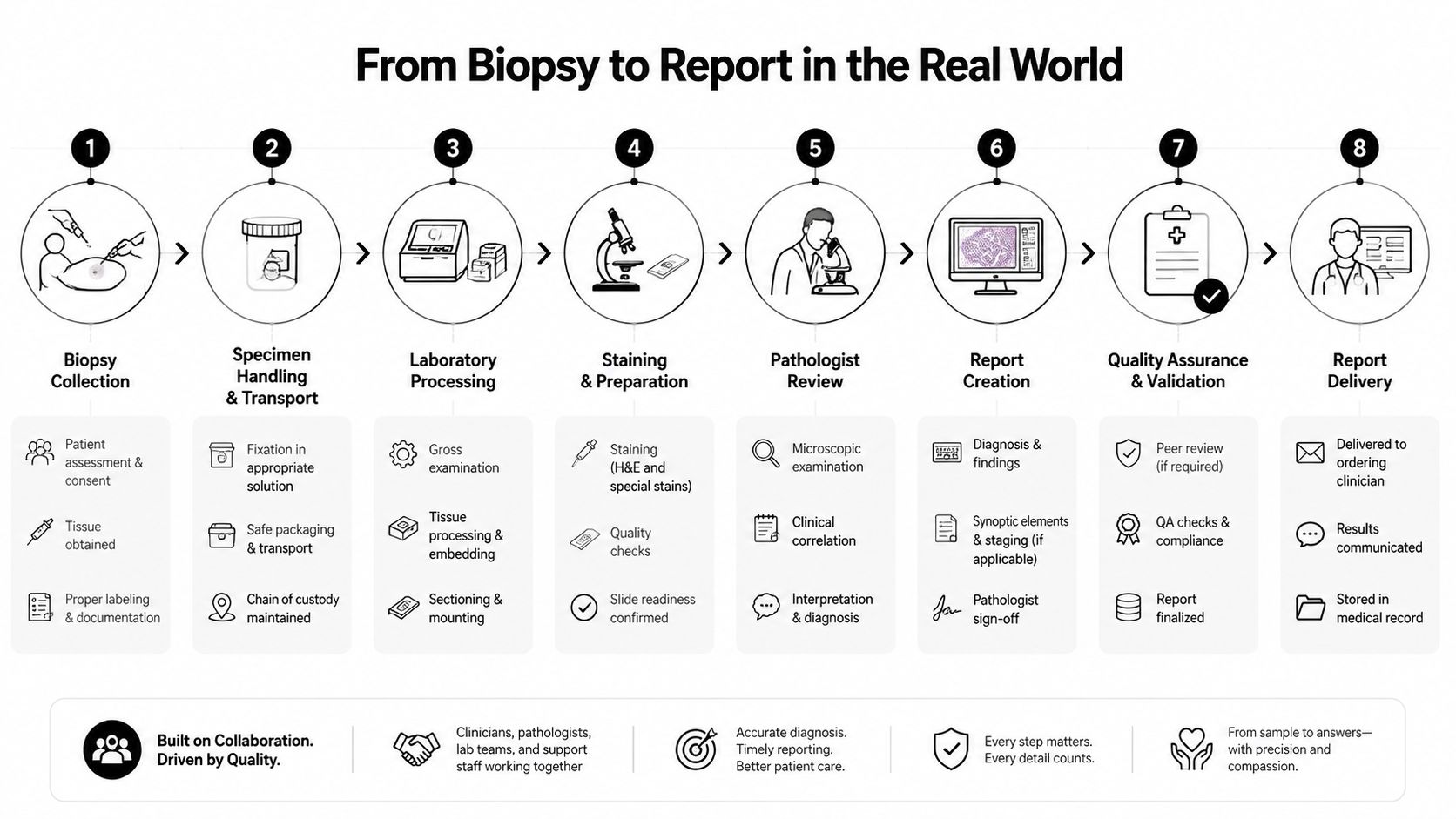
Patients with suspected blood or marrow involvement may encounter a different sampling process, so a guide to the bone marrow biopsy procedure can help clarify what that procedure is designed to examine.
Turnaround depends on the specimen, laboratory capacity, and assay complexity. Rather than relying on a generic promise, ask the ordering team when the result should arrive, what could delay it, and whether treatment decisions can safely wait.
When a Negative Result Still Leaves the Door Open
A negative companion diagnostic result usually means that the tested biomarker wasn't detected under the assay's validated conditions. It doesn't prove that every biologically relevant alteration is absent. The result may reflect a limited test menu, low tumor content, a resistant or changing tumor population, or a biomarker that has evidence but no approved drug-test label relationship.
NSCLC illustrates the problem. A recent review described a gap between the approved CDx menu and the broader set of potentially actionable alterations. In a real-world case report, existing CDx approaches were argued to miss a substantial share of patients with ERBB2 mutations and other driver alterations. (Review and case report on CDx gaps in NSCLC) That doesn't mean every ERBB2 finding supports an approved therapy. It means the word “negative” needs context.
Ask what the test did and didn't examine
A negative result can still help. It may rule out a therapy that would be unlikely to help, identify the absence of a known resistance alteration, or support eligibility screening for a clinical trial. It can also tell the oncologist that the next useful step may be a different assay, a new biopsy, liquid biopsy, or expert review.
Requesting molecular tumor board input can be reasonable when the report contains an unusual alteration, a potentially actionable finding without a labeled therapy, or a result that conflicts with the tumor's behavior. Repeating testing at progression may also be discussed because new resistant clones can emerge and the clinically relevant biomarker question can change.
| Biomarker | FDA CDx Status | Evidence Level | Example Therapy |
|---|---|---|---|
| EGFR driver alterations | May be linked to specific labeled therapies | Established when the result matches the assay and label | EGFR-directed therapy |
| ALK rearrangement | May be linked to specific labeled therapies | Established in the relevant lung-cancer setting | ALK inhibitor |
| ERBB2 mutation in NSCLC | May appear without a corresponding CDx label | Emerging or context-dependent | Investigational or off-label discussion |
| PD-L1 expression | Depends on tumor type, assay, cutoff, and drug label | Context-specific | Checkpoint inhibitor |
The right response to a negative report is not to dismiss it or treat it as an absolute verdict. Ask, “Negative for which biomarkers, using which specimen and method, and what options remain outside this test's approved menu?”
How to Get Tested, Covered, and Heard
Start with the treatment decision. Ask your oncologist what the test is intended to determine, whether an established companion diagnostic exists, whether the available tissue is adequate, and whether tissue or blood testing is more appropriate.
Bring practical questions to the appointment:
- Treatment link: Which drug or clinical trial is this test evaluating?
- Specimen choice: Will the laboratory use an archived block, a new biopsy, or plasma?
- Report timing: When should the result arrive, and what happens if the sample is insufficient?
- Interpretation: Which findings are FDA-linked, which are investigational, and which are incidental?
- Next step: What will the team do if the result is negative, inconclusive, or not covered?
Before the sample is collected, request written information about the laboratory, prior authorization, billing responsibility, and possible out-of-pocket costs. Insurance coverage varies by health plan, cancer type, biomarker, test, and clinical indication. Medicare coverage may apply when an FDA-approved companion diagnostic is reasonable and necessary to guide a covered cancer treatment, but documentation and local coverage rules still matter.
Protect the meaning of the report
Ask whether the laboratory is performing a clinical diagnostic test or supplying a product labeled for research use only. A resource explaining non-clinical research product rules can clarify why research-use-only materials aren't interchangeable with an FDA-cleared or approved clinical assay.
Archived tissue may be sufficient, but older blocks, tiny biopsies, or heavily processed specimens can require another collection. If a new biopsy is proposed, ask what specific information it is expected to add and whether the result could change the treatment plan.
Insurance questions deserve their own preparation. This guide to insurance coverage for cancer patients can help you organize documentation and identify issues to raise with the billing office.
Hirschfeld Oncology can coordinate specimen review, test selection, prior authorization, result interpretation, and follow-up testing as part of an individualized oncology evaluation. Bring pathology reports, treatment records, insurance information, and a current medication list, then ask who will communicate the result and how the team will respond if the report is negative or inconclusive.
What Companion Diagnostics Mean for Your Decisions
Companion diagnostic testing is best understood as a navigation tool, not a verdict. A positive result may identify a treatment with a stronger rationale, but it can't guarantee benefit. A negative result may close one treatment pathway while leaving chemotherapy, immunotherapy, a different biomarker-directed approach, or a clinical trial on the table.
An inconclusive result may reflect limited tissue, low tumor content, technical limitations, or a biomarker that hasn't yet been validated for a particular drug. Ask your oncology team to connect the report to your cancer type, previous treatments, current symptoms, goals, and tolerance for risk. You can also ask what evidence supports the proposed therapy, what alternatives exist, what benefits are realistic, and how treatment will be monitored.
A second interpretation can be useful when the molecular findings seem inconsistent with the clinical picture. The final decision should combine the laboratory result with tumor behavior, medical history, access, and your priorities.
Hirschfeld Oncology offers molecular profiling coordination, companion diagnostic interpretation, and treatment planning for patients whose cancers have progressed after standard options. Visit Hirschfeld Oncology to learn about consultation options and prepare your questions before the next treatment discussion.
.png)
.png)