.png)


You're sitting in a clinic room after the usual options have stopped working, and the conversation turns to something that sounds both futuristic and frustratingly out of reach. CRISPR cancer treatment can feel like that, a tool with real scientific force, but not yet a routine option most patients can walk into tomorrow. The hard part is knowing what it is, where it helps today, and whether it's even something worth asking about.
At its simplest, CRISPR is a way to edit DNA with precision, using a guide to find a target sequence and a cutting tool to change it. In cancer, that matters because the disease begins with DNA mistakes and survives by teaching cells to ignore normal stop signals. A cancer therapy built on CRISPR tries to fix, remove, or redirect those instructions, but the path from lab success to patient care has been slow and carefully staged.
What CRISPR Cancer Treatment Actually Means in 2026
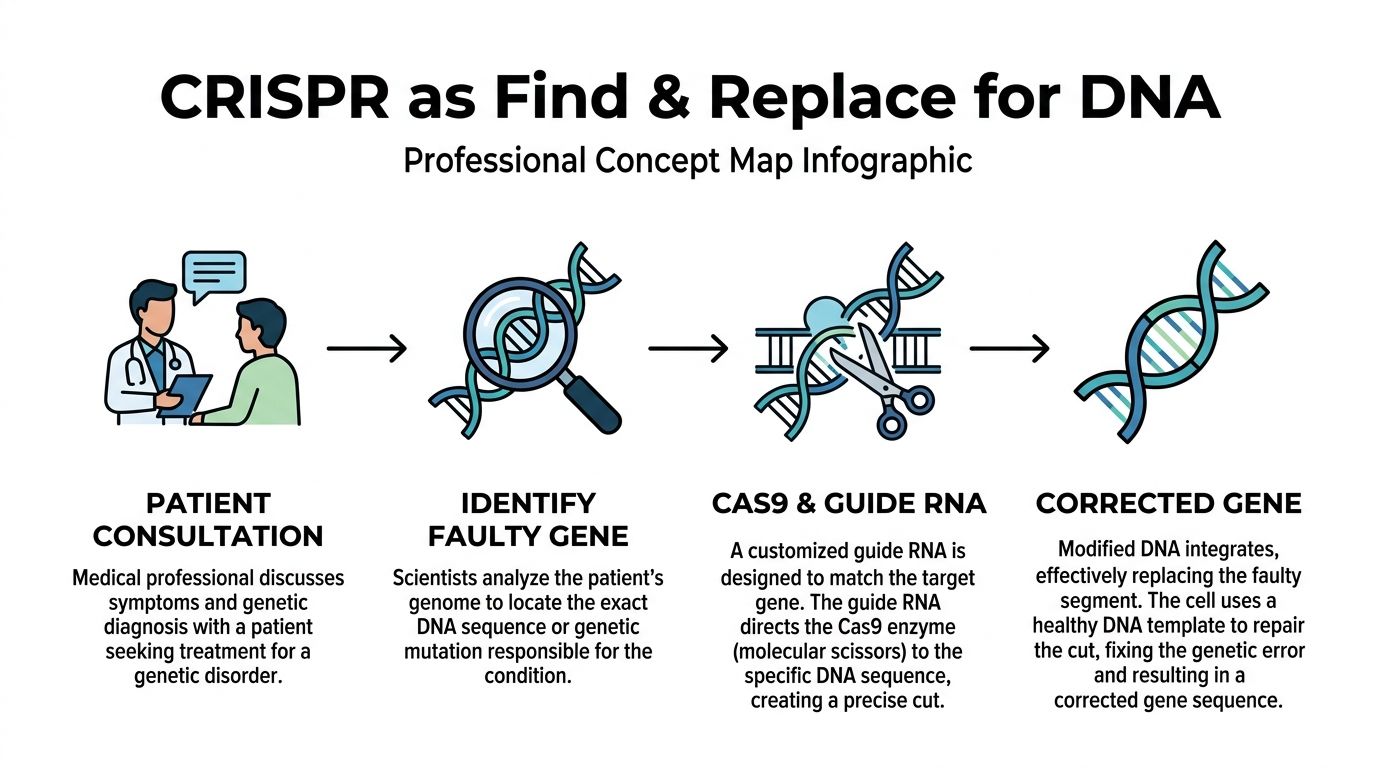
A patient hearing about gene editing often wants a simple answer: does this mean doctors can now rewrite cancer away? The honest answer is not yet in routine care, even though the underlying idea is easy to grasp. Think of DNA like a sentence in a very long instruction manual, and CRISPR like a find and replace tool that can locate one word, cut it, and sometimes swap in a better version.
The basic parts in plain language
CRISPR usually works with two main pieces. Guide RNA acts like the address label, telling the system where to go in the genome, while Cas9 acts like the molecular scissors that make the cut. That cut can be used to disable a harmful gene, help insert a new sequence, or make a cell behave differently.
That matters in cancer because tumors aren't random lumps, they're living cell populations with broken DNA programs. Some mutations tell cells to grow when they shouldn't, and others help the cancer hide from the immune system. CRISPR gives researchers a way to target those faulty instructions directly instead of only treating the downstream effects.
Practical rule: if a treatment can't be delivered safely to the right cells, it isn't ready to be called a standard cancer therapy, no matter how exciting the biology looks in the lab.
Why the gap between concept and clinic matters
The first U.S. clinical trial of a CRISPR-made cancer therapy began in 2019 at the University of Pennsylvania, and it showed both promise and the technical limits of early gene editing. In that study, only about 10% of the T cells achieved all four desired genetic edits, and off-target edits were found in cells from all three patients. None of those edited cells showed evidence of becoming cancerous during the study period, which helped establish an early safety signal, but it also made clear that CRISPR oncology needs careful engineering and monitoring, not hype-driven shortcuts, as reported by the National Cancer Institute.
That early trial still matters because it marked the move from laboratory editing to human cancer treatment in the United States. For patients, the takeaway is straightforward, CRISPR can do remarkable things in a controlled setting, but the field is still solving the hard problems of precision, safety, and delivery before it becomes everyday care.
How Researchers Are Using CRISPR Against Cancer
A patient can hear “CRISPR cancer treatment” and picture one simple therapy, but researchers are using it in two very different ways. One route edits immune cells outside the body, then returns them to the patient. The other tries to send CRISPR straight into the body, which immediately raises a practical question, how do you reach the right tissue without editing the wrong one?
Outside the body, then back to the patient
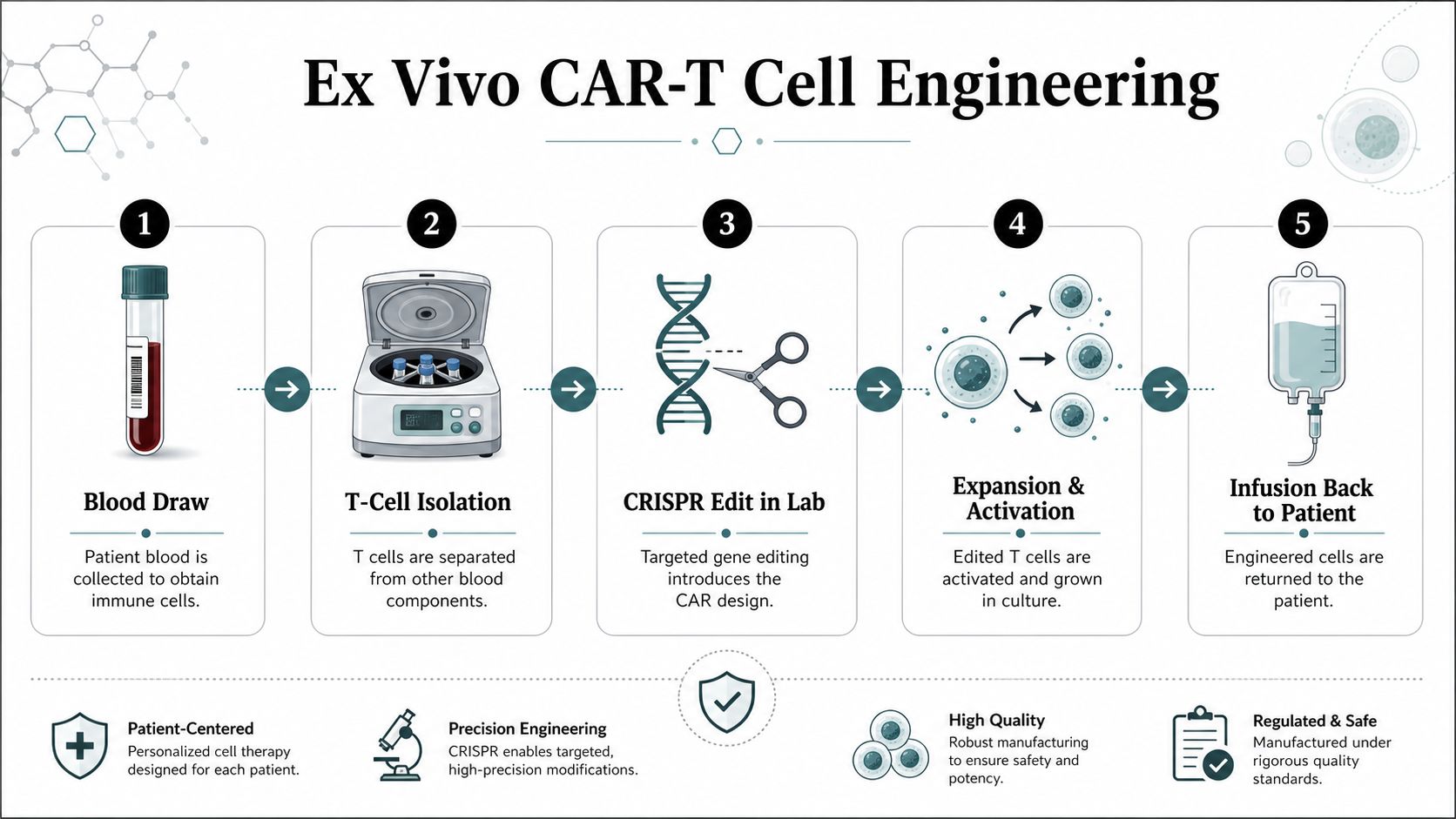
The most advanced work is ex vivo. Clinicians collect a patient's T cells, edit them in the lab, grow them under controlled conditions, and infuse them back so they can attack cancer more effectively. The process follows the same broad logic as CAR-T treatment, but CRISPR gives researchers a cleaner way to make targeted changes in those cells instead of relying on older, less precise editing methods.
Ex vivo editing works more like sending ingredients to a professional test kitchen for careful recipe changes before bringing the finished dish back home. The tradeoff is time and complexity, but the benefit is control. Researchers can inspect the cells, confirm the edits, and check how the modified cells behave before they ever go back into the patient. That helps explain why blood-cancer research has moved faster here than direct tumor editing.
Inside the body, still the harder road
In vivo CRISPR means delivering the editor directly into the body with tools such as lipid nanoparticles or viral vectors. The aim may be to shut down an oncogene, repair a mutation, or alter the tumor environment so immune cells can do their job better. The idea is appealing because it avoids removing cells first, but delivery is still the main obstacle, especially for solid tumors, where reaching every relevant cell is much harder than editing circulating immune cells.
The near-term value of CRISPR may be bigger as an engineering platform than as a standalone cancer drug, especially while direct delivery to solid tumors remains unresolved.
For readers who want to see how gene-editing strategies are being discussed in pancreas-focused research, Hirschfeld Oncology's overview of gene-editing technologies in developing novel pancreatic cancer treatments is a useful companion read.
What the Clinical Trials Are Showing So Far
The clearest clinical signal in 2026 is that CRISPR oncology is no longer just theory. The evidence base has expanded to 32 clinical trials, and reviews describe encouraging safety profiles plus early antitumor activity, especially in ex vivo engineered immune-cell therapies. That doesn't mean CRISPR is broadly available, but it does mean the field has crossed into human testing in a meaningful way, as summarized in the Frontiers in Oncology review.
What the numbers mean in plain English
A pooled meta-analysis of 30 studies found a standardized mean difference of 0.82 with a 95% CI of 0.75 to 0.88 and P < .001, which indicates a large effect size in favor of CRISPR/Cas9-based cancer interventions in preclinical and early translational research. The same analysis reported stronger effects in hematological malignancies than in solid tumors, with effect sizes of 0.85 versus 0.78 and P = .02. For patients, that pattern matters because it helps explain why blood cancers have led the field clinically.
The most concrete example is a phase 1 study of a CRISPR-edited allogeneic CAR T-cell therapy for recurrent B-cell lymphoma. It produced a 94% overall response rate, including 69% complete remissions. A response rate means the cancer shrank or improved after treatment, while complete remission means doctors couldn't detect evidence of active disease at that time. Those are meaningful signals, but they're still early-phase results, not proof that the therapy works for every cancer type.
Why blood cancers are ahead
Blood cancers are easier to target because the malignant cells circulate and are often more accessible to immune-cell therapies. Solid tumors are much harder, partly because the tumor environment blocks immune attack and partly because delivery to the right cells is still a major unsolved problem. That's why CRISPR has been most convincing so far in hematologic malignancies, even while researchers keep pushing into solid tumors.
The practical read on the trial data is cautious optimism. CRISPR is producing real responses in selected settings, but the strongest evidence is still in early trials, and the field hasn't yet reached broad clinical deployment.
How CRISPR Compares With Immunotherapy and Targeted Therapy
A patient who's already been through chemotherapy or immunotherapy usually doesn't want another abstract science lecture. They want to know where CRISPR fits on the treatment menu they already understand. The short answer is that CRISPR isn't a substitute for standard oncology today, but it may eventually support or refine some of the same goals, especially in cell therapy.
| Approach | How It Works | Current Availability | Best-Fit Cancers |
|---|---|---|---|
| CRISPR-based cancer therapy | Edits genes in immune cells or, in some studies, directly in tumor-related pathways | Mostly early-phase trials, not routine care | Blood cancers first, solid tumors still harder |
| Immunotherapy | Helps the immune system recognize or attack cancer | Available in many approved settings | Several advanced cancers, depending on biomarkers and disease type |
| Targeted therapy | Blocks a specific mutation or pathway driving growth | Widely used when the tumor has a matching target | Cancers with an actionable mutation profile |
| Standard chemotherapy | Damages rapidly dividing cells | Broadly available and still foundational | Many cancers, often as part of combination care |
CRISPR and immunotherapy overlap most obviously in cell engineering. Immunotherapy can work well when the immune system can already recognize the cancer, while CRISPR may help researchers build stronger immune cells or redesign them to resist exhaustion. For many patients, that means CRISPR is more likely to appear as an enhancement to immune-based treatment than as a standalone replacement.
Targeted therapy is different. It usually depends on a known mutation already present in the tumor, while CRISPR is a platform for changing genes or cellular programs themselves. That distinction matters because a person can be eligible for targeted therapy now based on tumor testing, while CRISPR usually remains a trial discussion rather than a pharmacy option. The practical comparison with familiar treatments is also laid out in Hirschfeld Oncology's immunotherapy and targeted therapy overview.
Real Risks, Off-Target Effects, and Equity Concerns
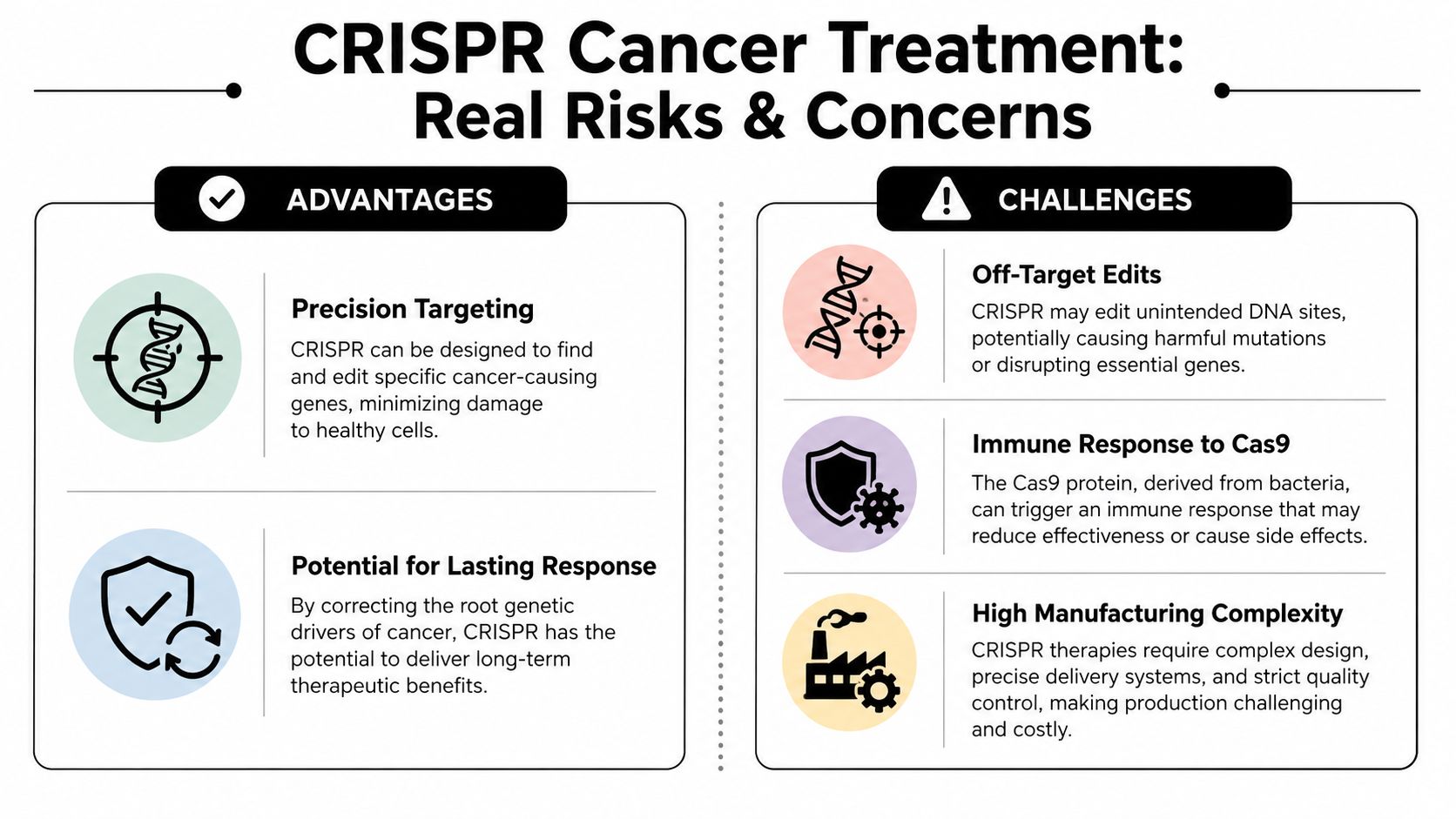
The most misleading thing about CRISPR headlines is how clean they make the process sound. In real patients, editing genes is messy, and the worries are not academic. Off-target edits, immune reactions to the editing machinery, and manufacturing complexity all affect whether a therapy can be used safely and fairly.
What can go wrong
The first U.S. CRISPR cancer trial already showed that off-target edits can appear in modified cells, which is exactly why these therapies are monitored so closely. A more practical concern for patients is that current CRISPR oncology still struggles with delivery to solid tumors, and one recent review describes that as possibly the biggest challenge ahead. If the editor can't reach the right cells, the therapy may never help the patient in a reliable way.
There's also the issue of immunogenicity, meaning the body may react to the Cas9 protein as something foreign. Add the complexity of making personalized cell products, and you get a treatment that can be scientifically elegant but logistically demanding. That's one reason these therapies remain early-phase rather than broadly deployed.
Patient-first question: if a trial sounds promising, ask not only whether it works in theory, but also how the team monitors for off-target changes, immune reactions, and manufacturing failure.
Who gets left out if development isn't deliberate
A less visible problem is equity. The AMA has warned that CRISPR raises justice concerns because historically disenfranchised racial and ethnic minorities are often underrepresented in genomic databases, which can limit how well therapies are designed for them and can widen access gaps when treatments arrive. The AMA Journal of Ethics discussion on CRISPR justice is blunt about this point, and it should be.
That matters because genomic reference data still skew toward better-represented populations. If a therapy is designed around incomplete population data, the result can be less accurate variant interpretation for some patients and a narrower path to eligibility later on. The question for families isn't only whether CRISPR can work, it's who gets first access, for which cancer, and under what inclusion rules.
How to Find a CRISPR Cancer Trial and What to Ask
A person who has already gone through surgery, chemotherapy, radiation, targeted therapy, or immunotherapy often reaches this point with a practical question, where do I look next? The most useful starting point is clinical trial registries, because they let you sort studies by cancer type, phase, location, and study status without guessing which studies are still open. For a clear place to start, use ClinicalTrials.gov trial searching.
What to look for in a listing
CRISPR trials usually have strict inclusion criteria, and the details matter. Those criteria often include the tumor type, the number of prior treatment lines, overall performance status, and sometimes markers such as HLA typing or specific mutation profiles. If the trial uses engineered immune cells, the team may also need enough healthy blood cells to collect, process, and expand.
Reading the listing carefully can save time and disappointment. A trial aimed at a blood cancer may not accept a solid tumor, and a study focused on relapsed disease may not enroll someone earlier in treatment. The same is true in the other direction, a person can be a good scientific fit and still miss the eligibility rules because of recent treatments, organ function, or travel limits.
Questions worth bringing to the visit
- Who sponsors the trial? Academic center, biotech company, or collaborative network.
- What side effects have already been seen? Ask about both common and serious events.
- What happens if I withdraw? Clarify whether you can stop, and what care continues.
- Where would treatment happen? Some trials require repeated travel to the study site.
- Is travel reimbursement available? If not, ask who can help with logistics.
- Can I keep my local oncologist involved? Coordination matters more than people expect.
Before you sign anything, ask how the trial team will communicate with your regular oncologist. Shared decision-making is safer when everyone knows who is tracking scans, labs, and symptom changes.
A written summary helps in the screening visit. Bring prior treatments, scan reports, and pathology if you have them, because trial teams often need to compare the study plan against your recent care. If you want a broader primer on how cancer studies are structured, this clinical trials guide can help you read listings with more confidence.
For readers who want a quick way to translate complex oncology topics into patient-facing language or even build educational video materials, the ShortGenius AI ad generator can be a helpful content tool, especially for clinics or advocates producing explainers.

When a Research-Oriented Oncology Consult Makes Sense
A research-oriented consult makes the most sense when standard protocols have been exhausted and the next step is no longer obvious. That often applies to people with stage 4 or treatment-resistant pancreatic, bile duct, colorectal, gastric, breast, ovarian, or esophageal cancer, where the key question becomes whether a trial, a less toxic regimen, or an individually designed plan can still move the disease in a better direction. In those situations, the value of the visit lies in sorting through what is realistic, what is available, and what fits the patient's goals.
A practical consultation can also help families compare options without pretending every experimental idea is ready for direct use. Hirschfeld Oncology, for example, is a Brooklyn infusion and oncology practice that focuses on immunotherapy, low-dose chemotherapy, targeted therapy, and customized regimens for complex cases, which can be useful when someone needs a second opinion before pursuing an academic trial. For readers who want a quick way to translate complex oncology topics into patient-facing language or even build educational video materials, the ShortGenius AI ad generator can be a helpful content tool, especially for clinics or advocates producing explainers.
A good consult should leave you with a clearer map, not more noise.
A few common questions come up here. Does trial participation cost money? Sometimes the study covers the investigational treatment, while routine care and travel can still be your responsibility. Can CRISPR be combined with immunotherapy? In some research settings, yes, but that depends on the protocol and the cancer type. Do I need to travel? Often, yes, which is why coordination with the study site matters from the start.
If CRISPR has raised more questions than answers, that's normal. The right next step is a conversation with an oncologist who understands both standard care and research pathways, and Hirschfeld Oncology's practical guidance can help you decide whether a trial consult makes sense.
.png)
.png)