.png)


Getting a stage 4 esophageal cancer prognosis is a profound, life-changing moment. The initial focus often lands on the tough statistics, but it's important to know that these numbers are just part of a much bigger picture.
This diagnosis isn't an end point. Instead, it marks a shift in approach—moving from a goal of a complete cure to one focused on managing the disease, extending life, and making that life as full and comfortable as possible.
Understanding a Stage 4 Prognosis
When doctors say esophageal cancer is at stage 4, it means the cancer has metastasized. Think of the original tumor in the esophagus as a home base. In stage 4, cancerous cells have traveled from that base, typically through the bloodstream or lymph system, and set up new tumors in distant parts of the body like the liver, lungs, or bones.
This spread changes everything about how we approach treatment. Because the cancer is no longer confined to one spot, the primary goal of care pivots. The focus becomes palliative, which is a word that is often misunderstood.
Palliative care isn't about giving up. Far from it. It’s an active, forward-looking strategy designed to:
- Slow down the cancer's growth and spread.
- Manage symptoms to keep you comfortable and feeling your best.
- Extend your life for as long as possible while prioritizing your quality of life.
You can learn more about the basics of this disease in our main overview of esophageal cancer.
The Reality Behind Survival Statistics
As you research an esophageal cancer stage 4 prognosis, you'll inevitably come across the "5-year survival rate." This number simply tells us what percentage of people with the same diagnosis are still alive five years after they were first diagnosed.
For distant-stage esophageal cancer (the statistical term for stage 4), this number can be hard to see.
To give you a clear picture, here's a look at the data from leading sources.
Stage 4 Esophageal Cancer Prognosis at a Glance
It's absolutely critical to put these numbers in the right context.
The American Cancer Society reports that for patients diagnosed between 2015 and 2021, the 5-year relative survival rate for distant-stage esophageal cancer is 5%. You can explore more about these statistics on cancer.org.
A statistic like this is essentially a look in the rearview mirror. It’s based on data from patients who were diagnosed years ago, before many of today's more advanced treatments—like immunotherapy and targeted therapies—were widely available.
Most importantly, an average can't predict an individual's outcome. Your personal journey will be shaped by your overall health, the unique genetic makeup of the cancer, and how well you respond to treatment. Those factors are what truly matter.
Key Factors That Influence Your Personal Prognosis
While survival statistics give us a big-picture view, they don’t tell your story. The actual esophageal cancer stage 4 prognosis for any one person is far more personal and complex, shaped by a unique mix of factors that go way beyond a single number.
Think of it less like a fixed deadline and more like a dynamic situation. Your oncology team looks closely at all these variables to build a clearer, more personalized picture of what to expect. Each piece of information offers clues about how the cancer might behave and which treatments stand the best chance of working, moving the conversation from general numbers to you.
Your Overall Health and Wellness
One of the most important factors in this whole equation is your performance status. This is simply a way for doctors to gauge your overall health and strength—how well you can handle daily activities before and during treatment. It makes sense: a stronger person can often tolerate more effective therapies, which can lead to better outcomes.
A few key aspects of your health really matter:
- Age: While cancer doesn't discriminate by age, older individuals might have other health conditions that can make treatment more complicated.
- Comorbidities: Pre-existing issues like heart, lung, or kidney disease can affect which treatments are safe for you.
- Nutritional Status: Keeping your weight up and getting good nutrition is absolutely vital for maintaining strength and resilience during therapy.
Someone who is generally fit and well-nourished simply has more in the tank to fight the disease and manage the side effects of treatment. This foundation of health is a critical piece of your personal prognosis puzzle.
The Biology of the Cancer Itself
Not all esophageal cancers are created equal. The specific, microscopic details of the tumor cells play a huge role in how the disease behaves and, ultimately, your prognosis. Digging into these biological characteristics helps oncologists predict how the cancer will progress and respond to different therapies.
The journey from a stage 4 diagnosis to managing metastatic disease is a significant shift in focus, as this chart illustrates.
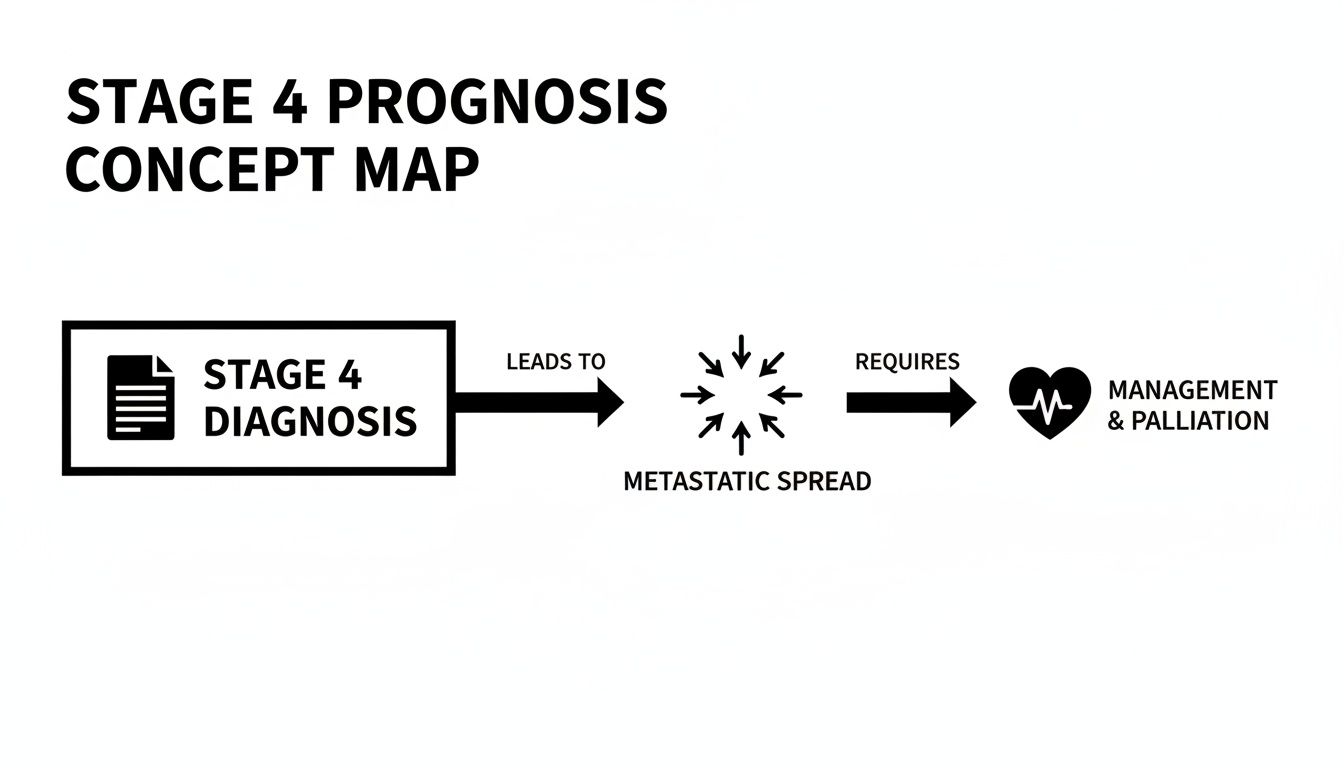
This visual really drives home how a stage 4 diagnosis means the cancer is now metastatic, and the goal becomes long-term management and quality of life.
Key biological distinctions include:
- Cancer Type (Histology): The two main types are adenocarcinoma (often in the lower esophagus) and squamous cell carcinoma (typically in the upper and middle esophagus). They can behave and respond to treatments quite differently.
- Location of Metastases: Where the cancer has spread also makes a difference. For instance, cancer that has only spread to distant lymph nodes might carry a different outlook than cancer that has spread to the liver or lungs.
- Tumor Biomarkers: These are specific molecules—like proteins or genes—found on or in the cancer cells that can be targeted by modern drugs.
A prognosis isn't just about the stage. It's about the unique biology of your tumor and your body's ability to fight it. Identifying specific biomarkers can open the door to precision medicines, creating new possibilities and fresh hope.
Unlocking Treatment with Tumor Biomarkers
This is where things get really interesting. In recent years, one of the biggest advances has been using tumor biomarkers to guide treatment. By testing a small sample of the tumor tissue, we can look for specific genetic "flags" that act like targets on the cancer cells.
Two of the most important biomarkers in esophageal cancer right now are:
- HER2 (Human Epidermal Growth Factor Receptor 2): When a cancer is HER2-positive, it means the cells are making too much of a protein that fuels their growth. We now have targeted drugs that can specifically block this protein, putting the brakes on the cancer.
- PD-L1 (Programmed Death-Ligand 1): This is a protein that cancer cells use to hide from your immune system. If your tumor has a high PD-L1 score, it’s a strong signal that immunotherapies—drugs that help your own immune system find and attack cancer—are likely to be effective.
Finding one of these biomarkers can completely change your treatment plan and, in turn, your personal esophageal cancer stage 4 prognosis. It allows us to move beyond one-size-fits-all chemotherapy toward a much more precise approach, one that can often provide better control of the disease with fewer side effects.
When a cure is no longer the primary goal, the focus of your treatment shifts. It becomes a two-part strategy aimed at extending your life while ensuring that life is lived with comfort and dignity. For stage 4 esophageal cancer, this philosophy is called palliative care. It's an active, forward-thinking approach to help you live as well as you can, for as long as you can.
This isn’t about giving up; it's about gaining control. We work together to create a personalized plan that might blend several powerful therapies to slow the cancer's spread, all while keeping you comfortable and feeling your best.
Systemic Therapies: The Foundation of Control
Systemic therapies are the cornerstone of managing cancer that has spread. These are treatments that travel through your bloodstream, hunting down cancer cells wherever they might be hiding in your body.
Chemotherapy is still a fundamental tool in our arsenal. Think of it as a broad attack on any cells that divide quickly—a key characteristic of cancer. While this means it can affect some healthy cells and cause side effects, today’s regimens are much more refined and better tolerated. The main objectives are to shrink tumors, slow the disease down, and relieve symptoms like pain or trouble swallowing.
In fact, a major analysis from the American Society of Clinical Oncology (ASCO) found that, for thousands of stage IV esophageal cancer patients, chemotherapy was linked to the longest mean survival time of 13.9 months. This really underscores its critical role in a palliative treatment plan.
Precision Medicine: Immunotherapy and Targeted Therapy
Fortunately, we've moved far beyond a one-size-fits-all approach. We now have more sophisticated ways to fight cancer by zeroing in on its specific weaknesses, often leading to better outcomes with fewer side effects because they leave healthy cells alone.
Immunotherapy is a fascinating approach that essentially releases the brakes on your own immune system. Cancer cells are clever and can use proteins like PD-L1 to cloak themselves from your body's defenders. Immunotherapy drugs block that cloaking signal, allowing your immune cells to finally see and attack the cancer.
Targeted therapy is even more precise. If we find a specific biomarker on your cancer cells—like being HER2-positive—we can use drugs designed to hit that exact target. It's like having a special key that only fits the lock on cancer cells, shutting down the very engine they use to grow.
Your treatment plan isn't a generic prescription. It’s a strategy tailored to the unique biology of your tumor, your overall health, and what matters most to you. We often get the best results by thoughtfully combining these different approaches.
Palliative Radiation for Targeted Symptom Relief
While systemic therapies fight the big-picture battle, sometimes a single tumor causes a very specific, localized problem. That's when palliative radiation becomes an incredibly valuable tool.
Imagine a tumor in the esophagus is making it hard to eat, or one that has spread to a bone is causing a lot of pain. Radiation can be aimed with pinpoint accuracy at that one spot. The goal isn't to wipe out every cancer cell in your body, but to shrink that one troublesome tumor just enough to bring you immediate relief.
Palliative radiation is usually given over a shorter period than radiation aimed at a cure, with a focus on maximizing your comfort and minimizing side effects. Its main benefits include:
- Easing pain from bone metastases.
- Improving swallowing by shrinking tumors in the esophagus.
- Stopping bleeding from a tumor.
- Relieving pressure a tumor might be putting on nerves or other organs.
The Central Role of Palliative Care
It’s so important to understand that all of these treatments—chemo, immunotherapy, and radiation—are delivered within a palliative care framework for stage 4 cancer. This is a specialized field of medicine that should start on day one, working alongside your cancer treatment.
A palliative care team provides an extra layer of support, working hand-in-hand with your oncologist. They are the experts in managing symptoms like pain, nausea, fatigue, and the nutritional struggles that can come with esophageal cancer. Their entire focus is on your well-being. This integrated approach helps you stay strong enough to tolerate your cancer treatments and, most importantly, maintain the best quality of life possible.
Many people mistakenly confuse this supportive care with end-of-life care. To help clear up this common misconception, our guide explains the important differences between palliative care vs. hospice care. Embracing palliative support is a proactive step toward living better with your diagnosis.
Comparing Treatment Goals in Stage 4 Esophageal Cancer
To help you see how these different treatment options fit together in a palliative setting, the table below breaks down their primary goals, how they're used, and their potential benefits.
Each of these tools plays a distinct and valuable role. By combining them thoughtfully, we can create a comprehensive plan that addresses the cancer on a molecular level while also focusing on your immediate comfort and quality of life.
Prioritizing Symptom Management and Quality of Life
When you're living with stage 4 esophageal cancer, your day-to-day comfort and well-being are every bit as important as the treatments aimed at the cancer itself. The real goal isn't just about adding time to your life, but adding life to your time. This means we have to get proactive and even aggressive about managing symptoms—it's the cornerstone of a truly effective care plan.
Controlling symptoms is what allows you to maintain your strength, hold onto your independence, and keep doing the things that bring you joy. It's simple, really: when you feel better, you're in a much better position to handle treatment and engage with your life. This isn't a side issue; it’s central to your entire strategy.

Addressing Difficulty Swallowing
One of the most common and upsetting symptoms is dysphagia, which is the medical term for difficulty swallowing. When the tumor grows, it can block the esophagus, making it a struggle to eat or even drink. This directly impacts your nutrition and, understandably, your quality of life.
Thankfully, we have several very effective ways to tackle this head-on:
- Palliative Radiation: As we touched on earlier, a targeted course of radiation can shrink the tumor, creating more space in the esophagus and making it much easier for food and liquids to pass.
- Esophageal Stent Placement: Think of a stent as a tiny, expandable mesh tube. A gastroenterologist places it inside the esophagus, where it acts like scaffolding to hold the passage open. This often brings immediate and profound relief.
- Dietary Modifications: Working with a nutritionist can be a game-changer. Shifting to a soft, liquid, or pureed diet helps make mealtimes less of a challenge. Soups, smoothies, and puddings become your best friends.
The purpose of these interventions is to ensure you can continue to eat and drink with comfort, which is absolutely fundamental to both your physical and emotional strength.
Managing Pain and Fatigue
Persistent pain and a deep, overwhelming fatigue are two other major hurdles that can really diminish your quality of life. A better esophageal cancer stage 4 prognosis is often linked to how well we can get these symptoms under control. That's why it is so important to be open with your care team about exactly what you're feeling.
Pain is not something you should ever have to just "tough out." Modern pain management is incredibly sophisticated, offering everything from long-acting oral medications to highly specialized nerve blocks. Our goal is always to find the right combination that controls your pain with the fewest possible side effects.
Likewise, cancer-related fatigue isn't just being tired; it's a profound exhaustion that sleep doesn't seem to fix. Managing it requires a multi-pronged approach:
- Pacing Activities: It’s about learning to budget your energy for the things that matter most to you.
- Light Exercise: It sounds counterintuitive, but gentle movement like a short walk can actually boost your energy.
- Addressing Anemia: Sometimes, fatigue is a direct result of a low red blood cell count, which is a treatable condition.
Proactive symptom management is not a sign of giving up; it's a strategic move to preserve your strength and build your resilience. Your comfort is a clinical priority, and there are always tools and techniques we can use to help you feel better.
Ensuring Proper Nutrition
When swallowing is a chore and your appetite is low, getting enough nutrition becomes a primary focus. Malnutrition can weaken your body, intensify treatment side effects, and have a real impact on your prognosis.
To stay ahead of this, your oncology team will likely recommend a few key strategies:
- High-Calorie, High-Protein Foods: We'll focus on nutrient-dense options like protein shakes, full-fat dairy, and avocados. Eating small, frequent meals is often far more manageable than trying to get through three large ones.
- Nutritional Supplements: There are many prescription and over-the-counter drinks designed to pack essential calories and protein into an easy-to-consume form.
- Feeding Tube Placement: If eating by mouth becomes nearly impossible or too stressful, placing a feeding tube (like a PEG tube) directly into the stomach can be a huge relief. It guarantees your body gets all the nutrition it needs to stay strong, taking the pressure off of you to swallow.
This kind of specialized support, often coordinated by a palliative care team working hand-in-hand with your oncologist, adds a crucial layer of care. Their expertise is focused entirely on you as a person—not just the disease—helping you navigate the journey with dignity and comfort.
Exploring Clinical Trials and Emerging Therapies
Hearing the words "stage 4 esophageal cancer" is incredibly tough, but it's important to know that the world of cancer treatment is constantly moving forward. For some people, clinical trials can be a direct line to the future of medicine, offering a chance to receive groundbreaking new therapies before they’re widely available.
Think of these carefully designed research studies as the driving force behind every medical breakthrough. Their goal is to answer critical questions about new treatments—whether it’s a new drug, a different combination of existing ones, or a new way to use radiation—to see if they’re safer and work better than what we have today.
Joining a trial means you could get access to the very latest science in oncology. It’s a chance to play a role in the research that is pushing to improve the outlook for every single person facing this disease.
The Promise of New Research Avenues
The research world for esophageal cancer is buzzing with activity. Scientists are finding exciting new ways to attack cancer cells, and these new approaches are bringing fresh hope and slowly beginning to shift the landscape for people with advanced disease.
Some of the most promising areas of investigation include:
- Novel Immunotherapy Combinations: Researchers are looking at pairing different immunotherapy drugs or combining them with chemotherapy and radiation. The idea is to trigger a much stronger and longer-lasting immune attack against the cancer.
- Next-Generation Targeted Drugs: As we learn more about the genetic drivers of cancer, scientists are creating smarter drugs that go after new, very specific targets on cancer cells. This precision helps stop cancer growth with fewer side effects.
- Antibody-Drug Conjugates (ADCs): You can think of these as “smart bombs.” An ADC connects a targeted antibody directly to a potent chemotherapy drug. The antibody acts like a GPS, guiding the chemo right to the cancer cells to deliver its payload while leaving most healthy cells alone.
This research is absolutely vital. Despite recent progress, the long-term survival for stage 4 esophageal cancer has been a tough nut to crack. For instance, data from NHS England shows that just 5 out of 100 people with stage 4 disease live for four years or more. (Five-year statistics aren't available because the prognosis is so challenging.) You can see more details on esophageal cancer survival statistics from Cancer Research UK.
Is a Clinical Trial Right for You?
Deciding to join a clinical trial is a big, personal decision you’ll make with your oncology team. It’s not the right fit for everyone, but for some, it’s a powerful and hopeful path to take.
Whether you can join a specific trial depends on a lot of things, like the exact type of cancer you have, its molecular makeup, what treatments you've had before, and your general health. To get a clearer picture of what's involved, you may want to read our guide on what clinical trials for cancer are and how the process works.
Talking about clinical trials with your oncologist is a proactive step. It opens up a conversation about options that go beyond the standard of care, making sure you know about every single avenue that might impact your personal esophageal cancer stage 4 prognosis.
At the end of the day, looking into clinical trials is about taking control. It’s about arming yourself with knowledge, understanding all your potential options, and finding hope in the tireless work of researchers who are pushing every day to change what’s possible in cancer care.
Essential Questions to Ask Your Oncology Team
When you’re dealing with a stage 4 esophageal cancer diagnosis, it can feel like everything is moving a million miles a minute. Your relationship with your medical team is your anchor in this storm, and open, honest communication is the single most important tool you have.
Coming to your appointments prepared with questions doesn't just make you feel more in control; it makes you an active participant in your own care. This ensures the treatment path you choose truly aligns with what matters most to you.
Getting a Handle on Your Diagnosis and Prognosis
First things first: you need to understand the specifics of your cancer. Every tumor has its own biological signature, and figuring that out is the key to understanding your individual outlook.
Here are some questions to start with:
- Which type of esophageal cancer do I have—adenocarcinoma or squamous cell carcinoma?
- Has my tumor been tested for biomarkers like HER2 or PD-L1? What did those tests show?
- Given my specific results and my overall health, what does my personal prognosis look like?
- How will the location of the cancer that has spread affect my symptoms or treatment choices?
Pushing for those biomarker results is really important. A positive result for something like HER2 or high PD-L1 levels can unlock targeted therapies or immunotherapies that can dramatically change your esophageal cancer stage 4 prognosis.
Talking Through Treatment Goals and Options
It's critical to understand the "why" behind any treatment your oncologist suggests. With stage 4 cancer, the goal isn't a cure; it's about controlling the cancer and preserving your quality of life. Every decision should be made through that lens.
A frank conversation about the goals of treatment makes sure you and your oncologist are working toward the same thing. It’s all about aligning the medical reality with what you want for your life.
Use these questions to guide that discussion:
- What is the main goal of this treatment? Is it to slow the cancer's growth, manage my symptoms, or both?
- What are the realistic benefits we can hope for, and what are the potential downsides or risks?
- Are there any clinical trials that might be a good fit for me? How would participating in a trial compare to the standard treatment?
- If this treatment eventually stops working, what’s our plan B?
Staying on Top of Symptoms and Side Effects
Getting ahead of symptoms and side effects is how you maintain your strength and well-being through treatment. Knowing what to watch for and who to call can make all the difference in your day-to-day life.
- What are the most common side effects I should expect from this treatment, and when are they likely to show up?
- Who is the right person to call if I have new or worsening symptoms? Is there a number I can use after hours or on weekends?
- What can we do to manage specific problems I might face, like trouble swallowing, pain, or fatigue?
- Would it be helpful for me to meet with a palliative care specialist to focus on my symptoms and quality of life?
Your Questions About Stage 4 Prognosis, Answered
When you're first diagnosed with advanced cancer, a million questions probably start racing through your mind. It's completely normal. Let's walk through some of the most common ones we hear from patients and their families to help bring some clarity to the road ahead.
Can Stage 4 Esophageal Cancer Be Cured?
Right now, stage 4 esophageal cancer isn't considered curable in the traditional sense. That's because the cancer has already traveled to other parts of the body.
So, the focus of our treatment shifts. We move toward a goal that’s often called palliative—a word that simply means our primary aim is to manage the disease, not eliminate it completely. The goal becomes controlling the cancer's growth, easing your symptoms, helping you live longer, and—most importantly—making sure your quality of life is the best it can be. While a cure might not be on the table, many of today's treatments can keep the disease in check for a meaningful amount of time.
How Long Can Someone Live with Stage 4 Esophageal Cancer?
This is the one question everyone has, and the honest answer is: it's different for everyone. You'll see statistics like the 5-year survival rate, but those are just averages based on thousands of people. They don't predict what will happen for you.
Your personal outlook is a much more complex picture. It depends on your overall health, the specific biology of the cancer (like its HER2 or PD-L1 status), and how it responds to different treatments. Some people live for several months; others live for years. Your oncologist is the only person who can really give you a personalized perspective based on your unique health and cancer profile.
What Is the Difference Between Palliative Care and Hospice?
This is a really important distinction, and one that causes a lot of confusion.
Palliative care is an extra layer of support focused on your comfort and quality of life. You can start it at any point after your diagnosis, even while you're actively receiving treatments meant to fight the cancer. Think of it as symptom management—it runs alongside everything else.
Hospice care is a specific type of care for when treatments are no longer working or a person decides to stop them, and life expectancy is generally around six months or less. You can receive palliative support for years, but hospice is specifically for comfort and dignity during the final phase of life.
Is It Possible to Work During Treatment?
For many people, yes. It's often possible to continue working and doing many of the things you normally do. A lot depends on your general health, how significant your symptoms are, and the side effects of your particular treatment plan.
Maintaining a sense of normalcy can be incredibly important for your mental and emotional well-being. Effective symptom management is key to making this possible.
It really comes down to open communication. Talking with your employer about needing a more flexible schedule and keeping your medical team in the loop will help you strike a balance that feels right for you.
At Hirschfeld Oncology, we specialize in creating personalized treatment plans for advanced cancers that prioritize both effectiveness and quality of life. We are here to help you explore every available option and find hope. Learn more and request a consultation on our blog.
.png)
.png)