.png)


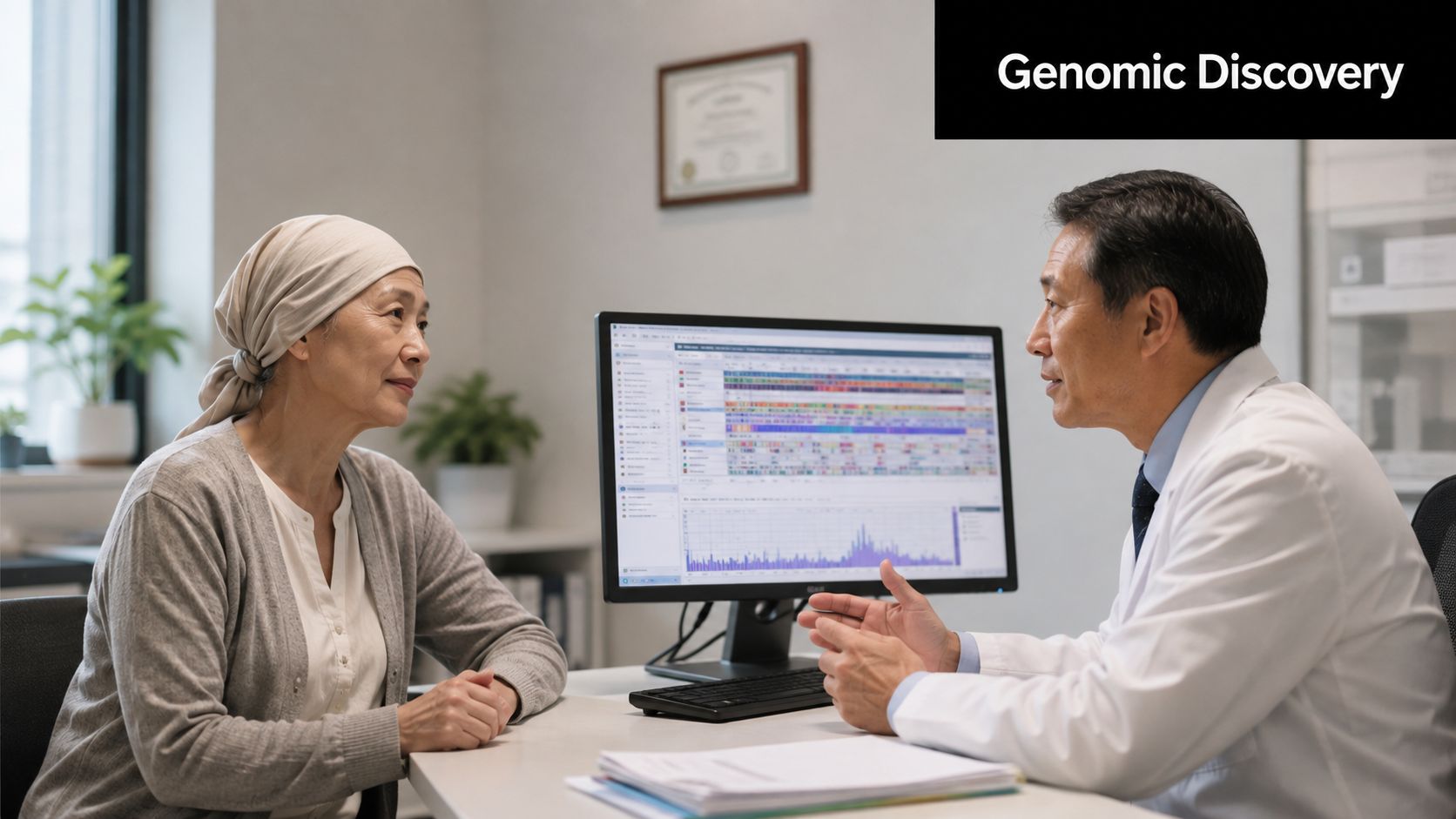
You've spent days waiting for biopsy and genomic test results. Then, during an oncology visit, your doctor says, “Your cholangiocarcinoma has an FGFR2 fusion.” The phrase may sound technical, but it can change the treatment map by identifying a molecular feature that may be addressed with targeted therapy, clinical trials, and specialist review.
An FGFR2 result can bring relief because the tumor has a recognizable target. It also starts a new set of decisions. You'll need to understand what the fusion means, whether the test identified it reliably, which treatments fit your situation, and what options may remain if the first targeted drug eventually stops controlling the cancer.
A Diagnosis That Changes the Treatment Map
For a person recently diagnosed with intrahepatic cholangiocarcinoma, the conversation often changes once molecular results arrive. The diagnosis is still serious, and an FGFR2 fusion isn't a guarantee that treatment will work. But the result gives the oncology team information that ordinary pathology alone can't provide.
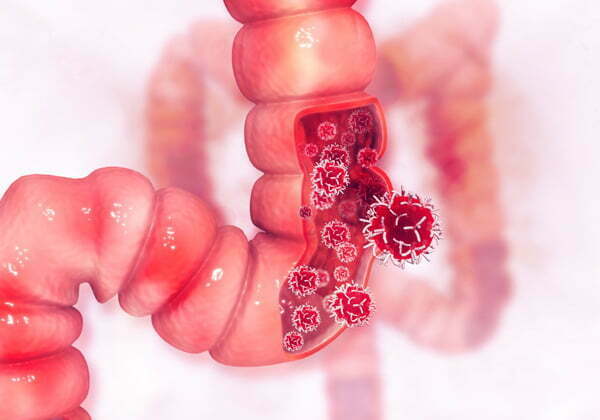
Cholangiocarcinoma begins in the bile ducts, which are part of the system that carries bile through the liver and digestive tract. If your tumor began inside the liver, your doctor may describe it as intrahepatic cholangiocarcinoma, or iCCA. You can review the anatomy and disease basics in this guide to what intrahepatic cholangiocarcinoma means.
A useful target, not a promise
Think of the fusion as a faulty connection in the tumor's growth-control wiring. A normal cell uses growth signals when needed, then reduces activity. An FGFR2 fusion can keep a growth pathway active, encouraging cancer cells to continue multiplying.
That distinction matters because a targeted drug is chosen based on the tumor's biology, not just its location or appearance under a microscope. It can also affect whether a second opinion or a clinical trial is relevant. A center that sees many molecularly selected cancers may review the exact fusion partner, the testing method, previous treatments, and the pattern of disease on scans before recommending a sequence.
The practical meaning: an FGFR2 fusion gives your team a treatment direction, but it doesn't predict your individual outcome by itself.
The rest of the treatment discussion usually follows four questions. What exactly has changed inside the cancer cell? Did the laboratory use a test capable of finding the full range of FGFR2 fusions? Which FGFR inhibitor is appropriate now? If the cancer grows later, can new testing reveal a resistance mechanism that changes the next choice?
Those questions turn a frightening molecular label into a set of actions you can discuss with your oncology team.
What an FGFR2 Fusion Actually Means
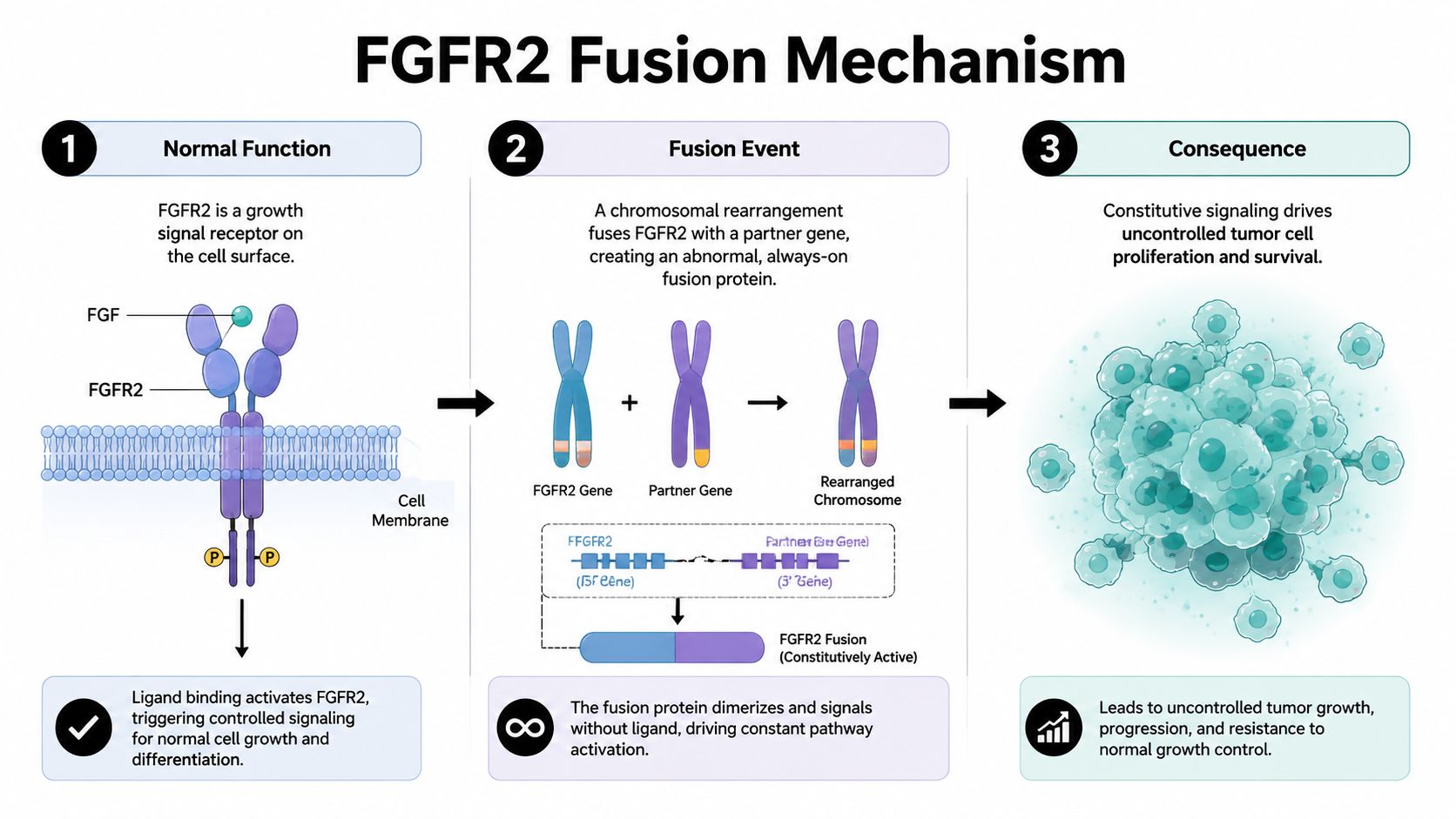
FGFR2 is a gene that helps make a receptor, a protein on the cell surface that receives growth instructions. Under normal conditions, the receptor helps a cell respond to signals in its environment. The signal should be regulated, meaning the cell grows or repairs itself when appropriate rather than remaining permanently stimulated.
A fusion occurs when pieces of genetic material become rearranged and join together in an abnormal way. Part of the FGFR2 gene becomes attached to a partner gene. The resulting protein may send growth signals continuously, even when the cell hasn't received the usual outside instruction.
A simple analogy is a car with a stuck accelerator connected to an engine that never idles. The problem isn't that the car received one unusually strong instruction. The problem is that the growth signal can stay active.
Why the tumor location matters
FGFR2 fusions are a defining molecular subtype of cholangiocarcinoma. Major studies estimate them in about 5% to 7% of all cholangiocarcinomas and roughly 10% to 20% of intrahepatic cholangiocarcinomas, according to this molecular review of FGFR2 fusions in cholangiocarcinoma. A foundational screening study detected fusions in 9 of 102 cholangiocarcinoma cases overall, with all positive cases occurring in the intrahepatic group, where the rate was 13.6%, or 9 of 66.
That concentration explains why doctors pay particular attention to genomic testing in iCCA. FGFR2 fusions are much less common in extrahepatic disease, so the type and location of cholangiocarcinoma help determine how strongly clinicians should pursue a fusion-capable assay.
Why the partner gene appears on the report
The FGFR2 partner can vary from tumor to tumor. BICC1 is a commonly recognized partner, but it isn't the only one. This variety is one reason a test designed to find only a specific partner can miss a fusion that a broader assay would detect.
You may also see terms such as rearrangement, kinase domain, or breakpoint. The kinase domain is the portion of the protein that helps transmit growth signals. A report may use “fusion” and “rearrangement” in closely related ways, but your oncologist or molecular pathologist should confirm whether the alteration preserves the part of FGFR2 that makes it biologically actionable.
For readers who learn best visually, resources that animate medical device concepts illustrate how complex biological and technical systems can be translated into clear visual sequences. The same principle applies here: first understand the normal signal, then the abnormal connection, and finally the reason a targeted drug may interrupt it.
How Molecular Testing Finds the Fusion
The first question isn't whether genomic testing was ordered. It's which test was used and whether it can detect diverse FGFR2 partners.
A tissue sample is usually the starting point. In next-generation sequencing, the laboratory examines tumor DNA and, when available, RNA. DNA testing can identify many mutations and structural changes, while RNA-based fusion testing can show whether two genes are actively joined in the tumor's expressed message. Because FGFR2 partners are heterogeneous, an RNA-capable, partner-agnostic fusion panel can be particularly useful.
Liquid biopsy analyzes circulating tumor DNA, often called ctDNA, from a blood sample. It can help when there isn't enough tissue for another test or when the team wants to look for new alterations after treatment. A negative liquid biopsy doesn't always exclude an FGFR2 fusion or a resistance mutation, because tumors release different amounts of DNA into the bloodstream.
Why common tests can disagree
Several methods may appear in a medical record, but they don't answer identical questions.
| Assay type | What it detects | Key limitation |
|---|---|---|
| Tissue DNA and RNA NGS | Broad genomic changes and expressed gene fusions | Requires adequate, well-preserved tumor material |
| Liquid biopsy, or ctDNA | Tumor DNA shed into the bloodstream, including some fusions and resistance changes | A low-shedding tumor can produce a negative result even when an alteration is present |
| Immunohistochemistry | FGFR2 protein expression or overexpression | Expression alone doesn't confirm an actionable fusion |
| FISH | Selected chromosomal rearrangements involving a target region | Can miss cryptic or complex rearrangements and usually gives less partner information |
| Partner-specific assay | A known FGFR2 fusion partner | May miss a different partner gene |
A result that says “FGFR2 positive” should therefore be unpacked. Ask whether the laboratory found a fusion, amplification, or protein expression. Ask whether the report names the partner gene and whether an RNA-based method was used.
Test early, not only after chemotherapy
For iCCA, molecular testing is most useful when it happens early enough to influence the treatment plan. Waiting until the first treatment fails can delay a targeted option or a clinical trial. Your oncology team may also order tissue and blood testing at different points, because the first test identifies the original driver while later testing can reveal how the cancer has changed.
For more information about the role of biomarker testing in treatment decisions, review this explanation of companion diagnostic testing. Bring the full laboratory report to every second opinion rather than relying on a summary line in the chart.
Targeted FGFR Inhibitors and the Evidence Behind Them
Patients often want to know what the treatment achieved in clinical studies before hearing a detailed explanation of drug chemistry. The results vary by drug and trial, and each study enrolled a particular group of previously treated patients.
Pemigatinib produced an objective response rate of 37% in the final FIGHT-202 analysis for previously treated advanced or metastatic cholangiocarcinoma with an FGFR2 fusion or rearrangement. The median duration of response was 9.1 months, median progression-free survival was 7.0 months, and median overall survival was 17.5 months. Responses were restricted to the FGFR2 fusion or rearrangement cohort, supporting the alteration as a predictive biomarker. These data are summarized in the final FIGHT-202 analysis.
Infigratinib showed an objective response rate of 23.1%, or 25 of 108 patients, in a phase II study of previously treated advanced cholangiocarcinoma with FGFR2 fusions or rearrangements. Median progression-free survival was 7.3 months, and median duration of response was 5.0 months, as reported in the phase II infigratinib study.
| Drug | Trial or evidence context | Overall response rate | Median duration of response | Notable mechanism feature |
|---|---|---|---|---|
| Pemigatinib | FIGHT-202, FGFR2 fusion or rearrangement cohort | 37% | 9.1 months | Selective, reversible FGFR inhibition |
| Infigratinib | Phase II study, previously treated disease | 23.1% | 5.0 months | Selective, reversible FGFR inhibition |
| Futibatinib | FOENIX-CCA2, FGFR2-rearranged iCCA | Not stated in the verified data provided | Not stated in the verified data provided | Irreversible covalent binding |
| Erdafitinib | Notable emerging FGFR evidence | Not stated in the verified data provided | Not stated in the verified data provided | Broader FGFR-directed activity |
Futibatinib is important because it binds FGFR more permanently through a covalent mechanism. The verified evidence notes that FGFR2 fusions or rearrangements can occur in up to 14% of patients with iCCA, helping establish the potential target population. That mechanism may matter later if a tumor develops a mutation that interferes with reversible inhibitors, although treatment selection still depends on the specific mutation, prior drug, organ function, and clinical evidence.
Side effects need active management
FGFR inhibitors can cause hyperphosphatemia, nail changes, eye problems, dry mouth, and stomatitis. These effects aren't merely inconveniences. Your team may monitor blood phosphorus, adjust diet or medication, arrange eye evaluations, change the dose, or pause treatment before a manageable toxicity becomes severe.
No single inhibitor is automatically right for every patient. A thoughtful plan considers the trial evidence, regulatory availability, previous therapy, resistance risk, drug interactions, monitoring burden, and your preferences. The broader treatment overview is outlined in this guide to targeted therapies for bile duct cancer.
When the Drug Stops Working and Resistance Appears
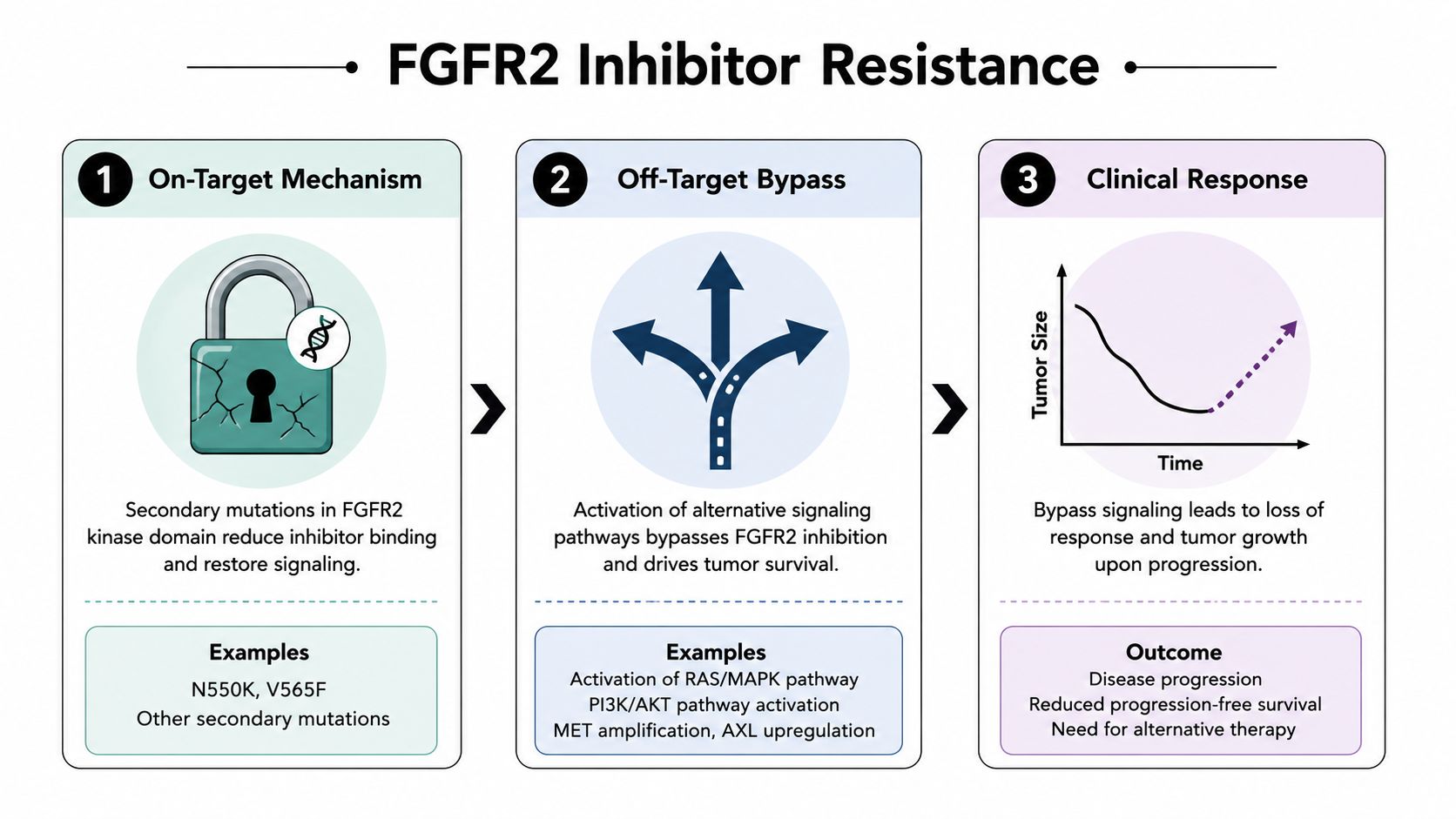
Progression after an FGFR inhibitor doesn't mean the original diagnosis was wrong. Cancer cells can evolve under treatment pressure. Some acquire secondary changes in the FGFR2 kinase domain, while others activate a separate growth route that allows them to bypass FGFR2 altogether.
On-target resistance can involve changes such as N550K or V565F, including alterations around the gatekeeper region of the kinase. These changes can make it harder for a reversible inhibitor to fit into the drug-binding site. Futibatinib's irreversible covalent approach may retain activity against some resistance patterns, but it isn't a universal solution.
Two broad resistance paths
- FGFR2 changes: The target itself changes, potentially preventing one inhibitor from binding effectively.
- Bypass signaling: The cancer activates alternate pathways, including PI3K, AKT, mTOR, MAPK, or EGFR, so blocking FGFR2 no longer controls the entire growth program.
- Cell-state changes: Processes such as epithelial-mesenchymal transition can alter how tumor cells behave and respond to treatment.
A new biopsy can identify a resistant clone in the tumor tissue. A liquid biopsy may provide another view, especially when a tissue biopsy is difficult, but a negative blood result may not settle the question. The best approach depends on where the cancer is growing, whether a safe biopsy site exists, and whether the result would change treatment.
Recent discussion has begun to examine resistance beyond a simple switch from one drug to another. A 2025 case report described resistance involving PIK3CA and MAPK alterations, while a 2022 mechanistic study examined EGFR feedback as a factor that can blunt FGFR inhibitor activity. A 2026 review identified resistance mechanisms and emerging strategies as an important knowledge gap in patient-facing education. The evidence is still developing, so decisions should be made through a specialist team or clinical trial when possible.
Sequencing Therapy Across a Patient Journey
Treatment sequencing is better understood as a series of decision points than as a fixed recipe. The plan may begin with a biopsy and molecular testing, followed by review of the FGFR2 result alongside stage, symptoms, liver function, prior therapy, and whether the disease can be treated locally.
A patient with advanced disease may start an FGFR inhibitor after the team confirms an actionable fusion. Imaging then shows whether the tumors are shrinking, stable, or growing. The timing of scans is individualized, but many oncology teams assess response at regular intervals rather than waiting for symptoms to become the first sign of progression.
What changes when scans show growth
If progression appears, the oncologist asks several questions:
- Is the growth real? Imaging findings are reviewed with attention to the overall disease pattern, symptoms, and treatment timing.
- Is progression limited? A small number of growing sites may prompt discussion of radiation, ablation, surgery, or another liver-directed treatment while systemic therapy continues or changes.
- What has the tumor learned? Re-biopsy or ctDNA testing may identify an FGFR2 kinase mutation or bypass alteration.
- What remains available? Options can include another FGFR inhibitor, a clinical trial, chemotherapy-based treatment, immunotherapy when appropriate, or a combination strategy under specialist guidance.
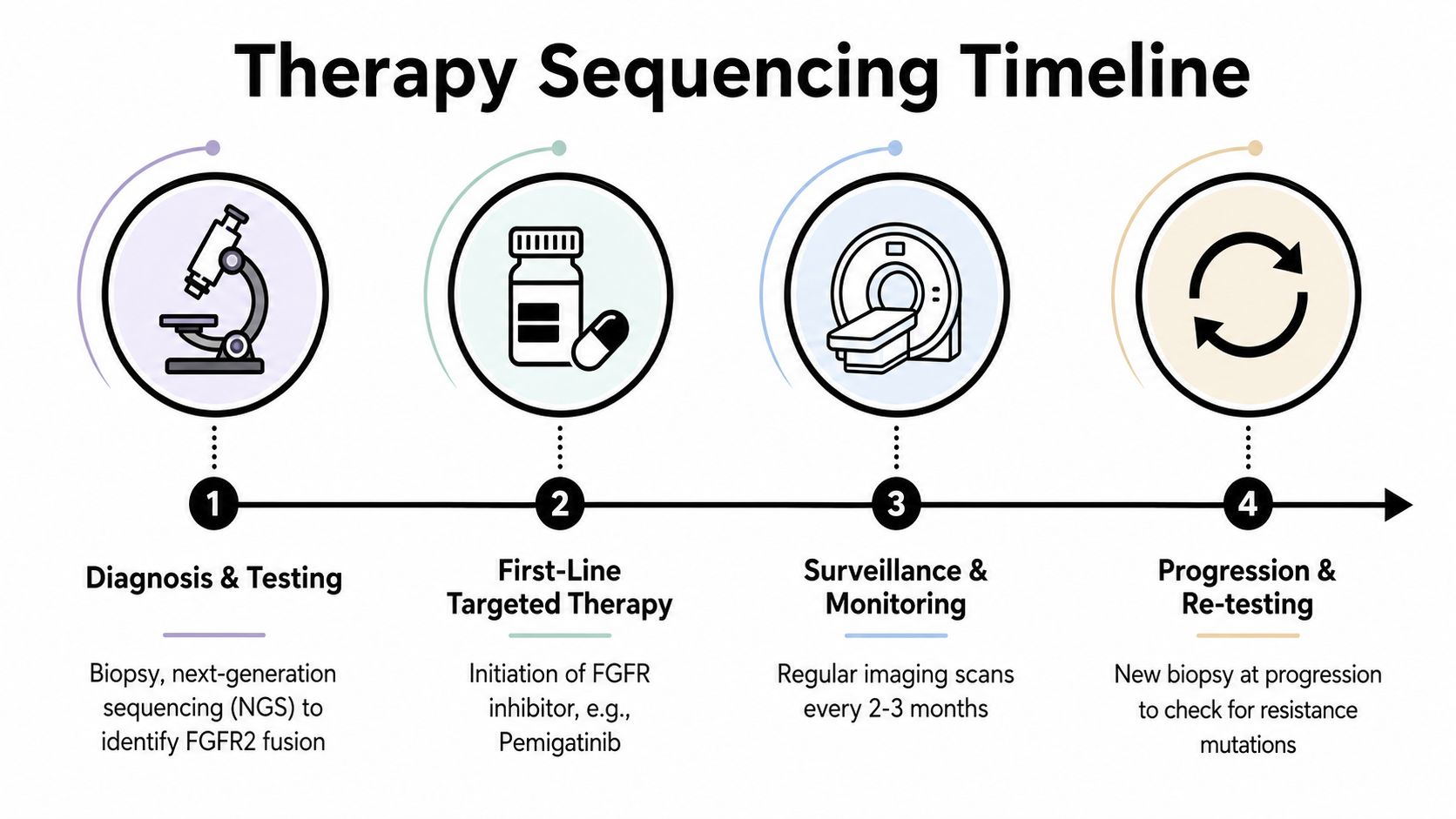
Preserving liver function remains central throughout this journey. The liver processes many medicines, and declining hepatic reserve can narrow treatment choices even when the cancer's molecular target remains present. Ask the team how scans, blood tests, symptom review, and medication adjustments fit together before treatment begins.
Why a Specialty Center Referral Matters
FGFR2 fusion cholangiocarcinoma is uncommon enough that treatment decisions can depend on experience with a narrow set of laboratory and clinical problems. A specialty center may have a molecular tumor board that brings together medical oncology, pathology, radiology, interventional specialists, pharmacists, and clinical trial staff.
That review can answer questions a routine report may leave unresolved. A pathologist may recommend RNA-level confirmation when DNA testing doesn't fully characterize the rearrangement. A pharmacist can anticipate phosphate, eye, nail, and mouth toxicities. A radiologist can distinguish widespread progression from a limited site that might be treated locally.
What specialist review can add
- Molecular confirmation: The team can examine whether the reported alteration is a true FGFR2 fusion and whether the assay was broad enough to identify uncommon partners.
- Resistance testing: At progression, the team can decide whether tissue biopsy, ctDNA, or both are most likely to reveal a useful change.
- Trial matching: A center with active research may know about studies for acquired FGFR2 mutations, bypass signaling, or newer inhibitors.
- Multidisciplinary planning: Liver-directed therapy, systemic treatment, symptom control, and preservation of liver function can be considered together.
A referral doesn't require abandoning your current oncologist. Many patients seek a second opinion, receive a molecular review, and return to their local team with a clearer plan. A coordinated relationship can be especially valuable when the next decision depends on a complex resistance result rather than a standard treatment pathway.
Questions Patients Most Often Ask Next
Does an FGFR2 fusion mean my prognosis is better?
It means your tumor may have a biomarker that can guide targeted treatment. Clinical trial data show meaningful activity, but the result doesn't determine an individual prognosis because stage, tumor burden, liver function, prior therapy, treatment response, and resistance all matter.
Ask your oncologist: “How does my fusion result change my treatment options, and which factors most affect my outlook?”
How do I find a relevant clinical trial?
Start with a molecular tumor board or a second-opinion center that can search by the exact FGFR2 fusion and any later resistance mutation. A trial navigator can also review eligibility, location, prior treatment requirements, and whether a remote consultation is possible.
Ask your oncologist: “Can you refer me to a center that matches trials using my full genomic report?”
Do family members need screening?
Most FGFR2 fusions in cholangiocarcinoma are somatic, meaning they developed in the tumor rather than being inherited through the family. A genetic counselor can review your personal and family history if there are other reasons to consider inherited-risk testing, but the tumor result alone usually isn't a reason for relatives to undergo FGFR2 screening.
Ask your oncologist: “Is this a tumor-only finding, and do I need genetic counseling for any separate family-risk concern?”
When should I have another biopsy or liquid biopsy?
Testing at progression can help identify a secondary FGFR2 mutation or a bypass alteration and may influence whether another targeted treatment or a trial is reasonable. Some teams test before switching inhibitors, particularly when the result could distinguish on-target resistance from a completely different growth pathway.
Ask your oncologist: “If my scans show progression, would a new tissue sample, ctDNA test, or both change the next treatment?”
Hirschfeld Oncology provides consultations for complex and advanced cancers, including cholangiocarcinoma, with treatment planning that may include targeted therapy, immunotherapy, chemotherapy, symptom monitoring, and review of emerging options. Visit Hirschfeld Oncology to learn more and request a consultation about your FGFR2 fusion result, testing strategy, or next treatment decision.
.png)
.png)