.png)


You've just heard that ipilimumab may be part of your cancer treatment plan. Alongside hope, you may be wondering whether every headache, loose stool, or patch of itchy skin means something serious. That uncertainty is understandable, especially when the treatment works by activating your own immune system rather than attacking cancer cells directly.
The most useful approach is to know what ipilimumab side effects can look like, why they happen, when they may appear, and whom to call. Early communication gives your oncology team more options. This guide is educational and shouldn't replace the instructions from the clinicians managing your treatment.
Starting Ipilimumab Your Guide to What Comes Next
When Maria left her oncology appointment, she remembered the treatment name but little else. Her doctor had explained that ipilimumab could help her immune system recognize cancer, yet the phrase “immune-related side effects” felt vague. At home, she began worrying about whether a mild rash would be harmless or a warning sign.
A better plan is to treat symptoms as information, not as a test you have to pass alone. Before your first infusion, ask your team how to reach the clinic after hours, which symptoms require a same-day call, and which medicines you should avoid without approval. Keep a written list of your medications, supplements, allergies, and existing conditions.
Your role: You don't need to diagnose an immune reaction. You need to notice a change, record it, and tell the care team promptly.
Ipilimumab can affect several organs because it changes immune regulation throughout the body. That doesn't mean you'll experience every possible reaction. It means your team will watch more broadly than they would for a single predictable infusion reaction.
You may find it helpful to read a plain-language overview of what immunotherapy for cancer means before treatment. Bring a family member or caregiver to appointments if possible. A second listener can remember instructions, notice changes in your energy or behavior, and help communicate when you're feeling unwell.
The goal isn't to make you fearful. It's to make you prepared. Don't wait for a scheduled visit if a new symptom is persistent, worsening, or affecting daily activities.
Why Ipilimumab Causes Unique Side Effects
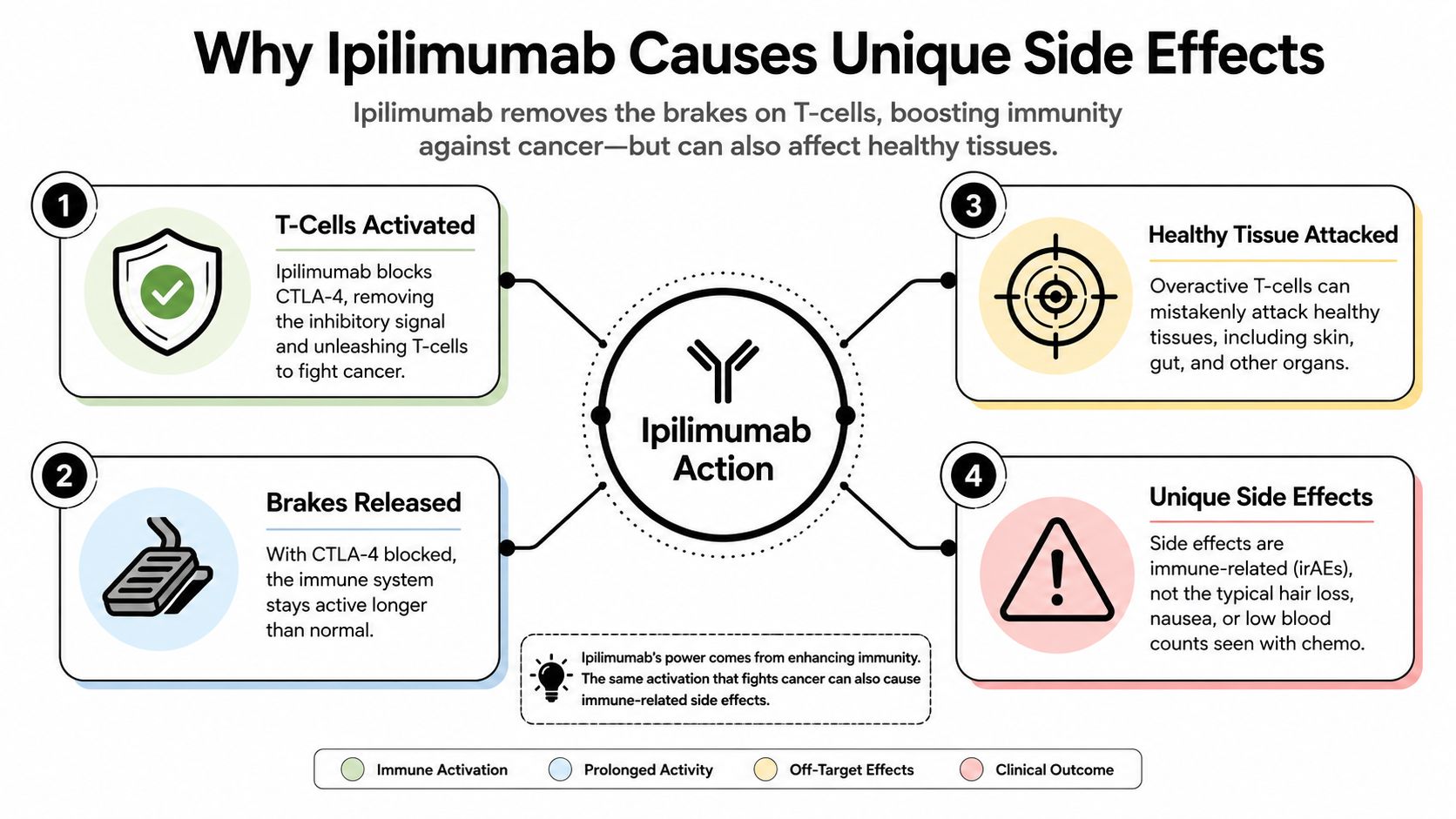
Ipilimumab blocks CTLA-4, a checkpoint protein that helps restrain T-cell activity. T-cells are immune cells that can recognize and attack abnormal cells. In simple terms, ipilimumab helps release an immune “brake,” allowing those cells to respond more forcefully against cancer.
That stronger response can sometimes affect healthy tissue. The resulting inflammation resembles an autoimmune reaction, because the immune system begins targeting normal organs or tissues along with the tumor.
The difference from chemotherapy
Traditional chemotherapy often harms rapidly dividing cells, which helps explain effects such as hair changes, mouth irritation, and low blood counts with certain regimens. Ipilimumab side effects follow a different logic. They may involve the skin, bowel, liver, hormone-producing glands, lungs, eyes, nerves, heart, pancreas, or blood cells.
This distinction matters when you report symptoms. New diarrhea isn't automatically a routine stomach upset, and unusual fatigue isn't always just a consequence of cancer. Your clinicians may need blood tests, stool testing, imaging, hormone studies, or an examination to identify the cause.
Early clinical data that helped establish ipilimumab showed adverse events in approximately 70% to 88% of patients, while grade 3 or higher immune-related adverse events occurred in about 5% to 25%, with higher risk at higher doses. Skin and bowel problems were prominent, with rash or itching reported in roughly 40% to 49% and diarrhea in about 30% to 35% of patients. These figures come from the FDA's ipilimumab prescribing information.
Why timing can feel unpredictable
Immune activation doesn't always behave like an immediate infusion reaction. A symptom may appear during treatment, after an infusion, or after treatment has been paused. That's why your team will ask about changes between visits, not only how you felt in the infusion chair.
Practical rule: If a symptom is new and doesn't fit your usual pattern, mention ipilimumab when you call another healthcare professional.
Common Side Effects and Their Timeline
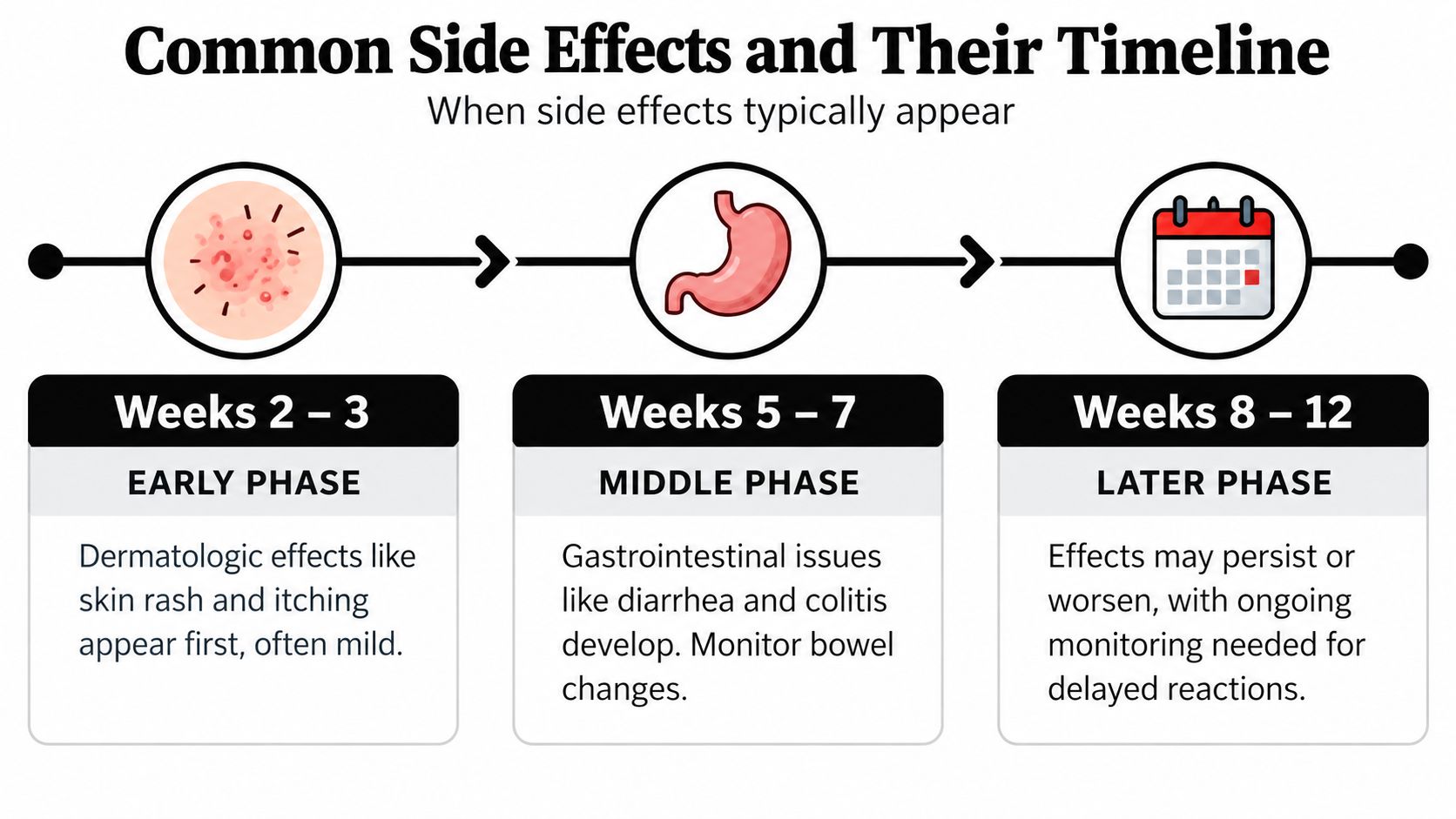
A new itchy patch, loose stool, or sudden change in appetite can raise questions after ipilimumab. These symptoms often reflect immune activation, as the treatment can make immune cells more alert and sometimes direct them toward healthy tissue. The skin and digestive tract are common areas of concern, but the intensity and timing vary.
Earlier clinical data identified rash, itching, and diarrhea as frequent reactions. A compiled safety analysis reported diarrhea in 37.0% of treated patients and colitis in 8.0%, as described in this clinical review of ipilimumab gastrointestinal toxicity.
Skin changes deserve a description
Tell your team where a rash appears, whether it itches or hurts, and whether it is spreading. Limited dryness may need simple skin care, while facial swelling, blisters, peeling, mouth sores, or eye discomfort require prompt assessment.
For mild dryness, choose gentle, fragrance-free products. Avoid new cosmetics, harsh soaps, hot showers, and prolonged sun exposure. Do not start prescription creams or oral medicines without asking your oncology team, because the rash's appearance can help identify its cause.
Track bowel changes early
Diarrhea can mean looser stools, more frequent bowel movements, urgency, cramping, or mucus. Colitis may progress to abdominal pain, dehydration, fever, or blood in the stool. The cited review describes prompt corticosteroid-based management as a way to reduce the chance of high-grade colitis and related complications, including surgical complications.
Record your usual bowel pattern and any change after treatment. Contact the clinic instead of taking an anti-diarrheal medicine and waiting, unless your team has already provided a specific plan. If nausea or vomiting makes you afraid to eat, drink, or take medicines, support for fear of vomiting may help alongside medical advice.
Symptoms can begin at different points during treatment, and some may appear after an infusion or after treatment is paused. Review this immunotherapy side effects timeline for broader context. The timeline is a guide, not a rule. Your treatment combination, health conditions, and other medicines can change what your team considers concerning.
This video may provide another way to understand symptom monitoring:
Recognizing Serious Immune Related Events
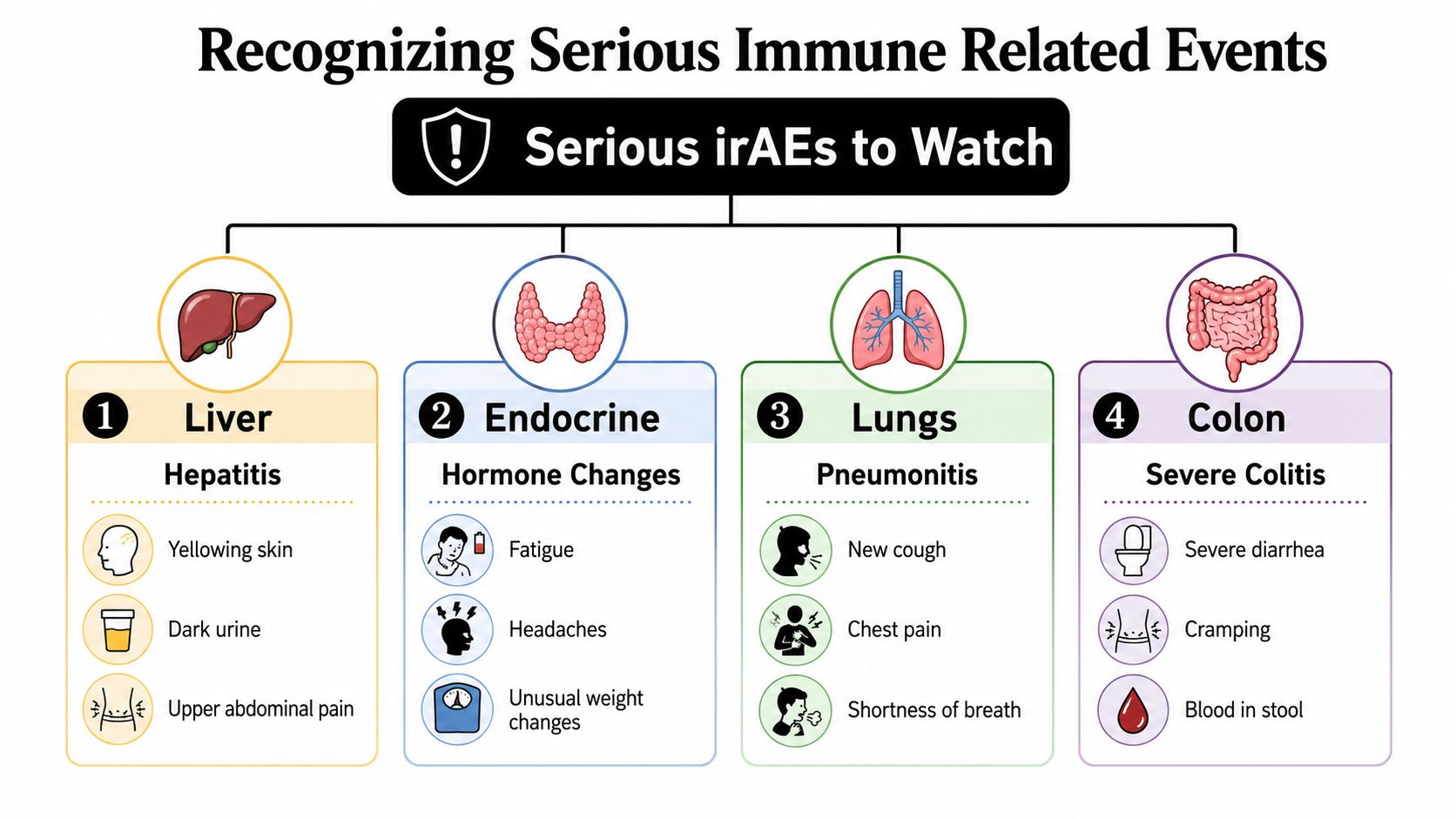
Serious immune-related adverse events can affect organs that don't produce obvious symptoms at first. A patient may feel tired before liver inflammation becomes visible, or develop headaches before recognizing a hormone problem. The safest habit is to report a meaningful change early rather than trying to match yourself to a textbook description.
Liver inflammation
Hepatitis may have few symptoms while liver tests are changing. Possible warning signs include unusual or worsening fatigue, loss of appetite, nausea, pain beneath the ribs, dark urine, pale stools, or yellowing of the eyes or skin. Avoid assuming these symptoms are from cancer or another medicine. Call your oncology team so they can decide how quickly you need testing.
Expert guidance reports hepatitis in about 5% to 10% of patients receiving single-agent immune checkpoint therapy, with 1% to 2% reaching grade 3 severity. Combination treatment containing ipilimumab can raise hepatitis to roughly 25% to 30%, with grade 3 hepatitis at about 15%, according to expert guidance on immune-related adverse events.
Hormone and gland problems
Ipilimumab-associated hypophysitis is inflammation of the pituitary gland. It can cause headaches, marked fatigue, dizziness, nausea, weakness, low blood pressure, confusion, or unusual sensitivity to cold or heat. Thyroid and adrenal changes may also affect energy, appetite, heart rate, bowel habits, mood, and weight.
These problems may require hormone replacement, not just a medication for discomfort. Keep laboratory appointments even when you feel well, because blood tests can identify changes before symptoms become severe.
Lung, heart, eye, and nerve symptoms
A new cough, shortness of breath, chest discomfort, or reduced ability to breathe comfortably may indicate lung inflammation, including pneumonitis. Seek urgent guidance for breathing symptoms, especially if they appear quickly or interfere with speaking or walking.
Less common toxicities can involve the eyes, nervous system, heart, pancreas, blood counts, and lungs. The ipilimumab intravenous monograph emphasizes that these reactions can be organ-specific, so symptoms such as vision changes, severe weakness, fainting, palpitations, new numbness, facial drooping, severe muscle weakness, unusual bruising, or intense upper abdominal pain deserve prompt attention.
A useful communication method is to state four facts: what changed, when it started, whether it's worsening, and what it prevents you from doing. Your team can then triage the problem more accurately.
Managing Side Effects and When to Seek Urgent Care
If a new symptom appears after ipilimumab, contact your oncology team rather than trying to judge its cause alone. Immune inflammation can resemble an ordinary infection, medication reaction, or cancer symptom. Management depends on the affected organ and the severity. Your team may arrange tests, delay an infusion, prescribe treatment, continue therapy with monitoring, or stop ipilimumab. Do not make that decision independently.

A practical response plan
For mild changes, write down what you notice and call the clinic for personalized advice. Gentle moisturizer may help uncomplicated dryness, but describe any rash before treating it. If bowel movements change, drink fluids if you can and ask before taking loperamide or another anti-diarrheal medicine, especially with pain, fever, or blood in the stool.
For symptoms that continue or disrupt daily activities, call before your next appointment. Your clinician may order blood counts, electrolytes, liver tests, thyroid studies, cortisol, or other checks. They may also review medicines and stop a nonessential drug that could be contributing.
For immune inflammation, corticosteroids such as prednisone may calm the immune response. The dose and duration depend on the suspected organ and severity. Learn more about immune-related adverse events and their management. Follow any steroid taper exactly. Stopping suddenly or changing the schedule without medical direction can cause additional problems.
Do not conceal symptoms because you're worried treatment will be stopped. A pause or dose decision belongs to your oncology team, and early treatment can protect your ability to recover.
Call urgently for these warning signs
- Breathing problems: New or worsening shortness of breath, chest pain, or a persistent cough.
- Severe bowel symptoms: Frequent diarrhea, severe cramping, dehydration, fever, or blood in the stool.
- Possible liver injury: Yellow skin or eyes, dark urine, severe fatigue, or significant upper abdominal pain.
- Hormone-related danger signs: Confusion, fainting, severe weakness, intense headache, or inability to keep fluids down.
- Severe skin reactions: Blistering, peeling, painful widespread rash, mouth sores, or eye involvement.
- Neurologic or cardiac changes: New weakness, trouble speaking, sudden vision changes, fainting, or a racing or irregular heartbeat.
Go to an emergency department for severe breathing difficulty, fainting, confusion, major bleeding, or rapidly worsening symptoms. Tell emergency clinicians that you receive ipilimumab, since this history can affect their evaluation.
Hirschfeld Oncology is one example of a cancer practice combining infusion care with symptom monitoring and individualized treatment decisions. Ask your oncology team how after-hours triage works, which laboratory checks are routine, and how quickly they want to hear about new symptoms.
Partnering with Your Oncology Team for Best Outcomes
The safest way to receive ipilimumab is as an active participant in the care plan. Bring a symptom diary, medication list, home blood pressure or temperature readings if your clinicians recommend them, and a written list of questions. Ask whether a symptom could be immune-related before assuming it's an expected treatment effect.
Side effects don't reliably tell you whether ipilimumab is working. A 2025 systematic review examined the relationship between immune-related adverse events and survival during ipilimumab monotherapy, while earlier real-world observations found that patients who needed second-line immunosuppression for severe immune reactions had worse progression-free and overall survival outcomes in some melanoma patients. The findings, summarized in this PubMed review record, make the message clear: more toxicity doesn't automatically mean a better cancer response.
That doesn't mean treatment-related inflammation is useless or that every side effect predicts a poor outcome. It means your team must balance cancer control with organ safety. A severe reaction deserves treatment because protecting your health is part of effective cancer care, not a failure of the therapy.
Before each infusion, tell your clinicians about changes in bowel habits, skin, breathing, vision, strength, mood, appetite, urination, and energy. With prompt reporting and coordinated decisions, you and your care team can respond to problems before they become harder to control.
Hirschfeld Oncology provides patient-centered oncology consultations, infusion care, symptom monitoring, and individualized treatment planning for complex and advanced cancers. Visit Hirschfeld Oncology to explore practical cancer guidance and request a consultation focused on treatment options, side-effect management, and your personal goals.
.png)
.png)