.png)


Lynch syndrome affects about 1 in 279 people, yet many families don't find out until a cancer diagnosis forces the question. That's why lynch syndrome screening matters so much, it can turn a shocking diagnosis into a clear plan for treatment, surveillance, and family testing. When the process is done well, it doesn't just look for inherited risk, it also helps doctors choose the right next treatment step for the tumor already in front of them.
This guide walks through that journey in plain language. You'll see how a routine tumor test can uncover a hidden mismatch repair problem, how that result can lead to germline testing, and why the outcome affects both your own care and your relatives' health. You'll also see how screening connects to immunotherapy decisions, because some tumor results do more than raise a genetic question, they can change the treatment conversation right away.
Your Guide to Lynch Syndrome Screening
A Lynch syndrome diagnosis can feel like a family mystery suddenly pulled into the light. The good news is that the path from suspicion to clarity is much more organized than it used to be, and today's screening approach gives patients a practical roadmap instead of a guessing game.
Lynch syndrome is one of the most important inherited cancer syndromes to understand because it affects how doctors think about both cancer risk and cancer treatment. The key idea is simple, screening starts with the tumor, not just with blood or saliva. That matters because the first clue often comes from the cancer tissue itself, which can show whether the DNA repair system is working properly.
Practical rule: a tumor test is a clue, not the final answer. It tells the care team whether inherited testing should come next.
For patients and families, that distinction is reassuring. A test result doesn't automatically mean a person inherited Lynch syndrome, and it doesn't automatically mean relatives are at risk. It means the care team has enough information to ask the right next question.
If you're trying to understand whether cancer can run in families in general, the overview at can cancer be genetic is a useful companion read. Some people also find it helpful to compare cancer genetics with other inherited conditions in the family, including the broader discussion in hereditary connections to bipolar, because both topics show how family history can point toward inherited patterns without determining everything on its own.
What Is Lynch Syndrome and Who Should Be Screened
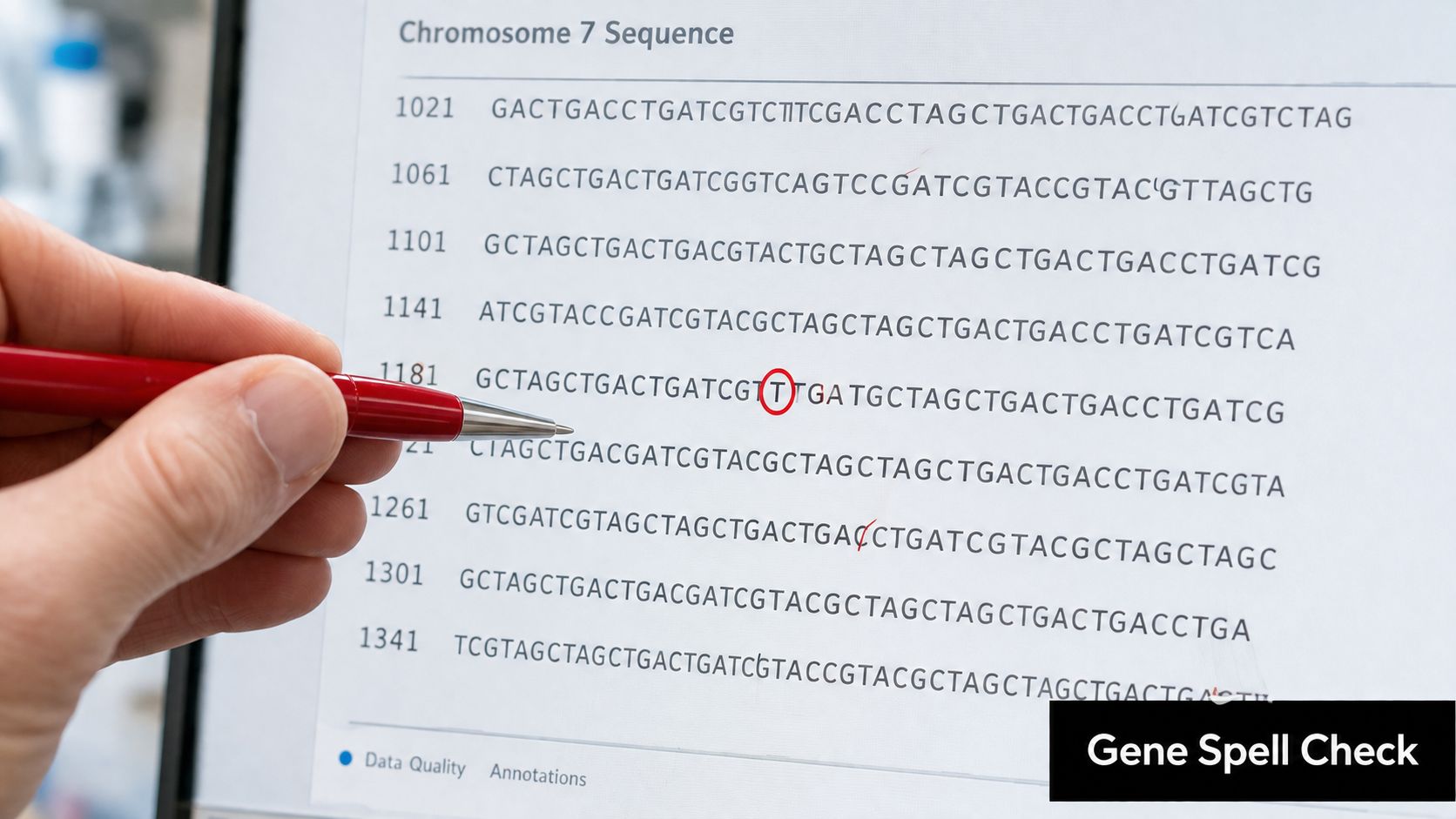
Lynch syndrome is best understood as a problem with the body's DNA spell-checker. In healthy cells, mismatch repair genes help catch and fix copying errors when cells divide. When that repair system does not work well, mistakes can build up, and that can raise the risk of certain cancers.
Who should raise the question
Doctors do not screen only because someone is worried. They look for specific risk signals, especially when there is a personal or family pattern that suggests inherited cancer risk. The American College of Gastroenterology consensus says people should be evaluated if they have an MMR-deficient tumor, a known family MMR mutation, Amsterdam or revised Bethesda criteria, or a model-based estimated ≥5% chance of Lynch syndrome. GeneReviews notes that all colorectal and endometrial cancers should be screened with MSI or IHC testing (NCBI Bookshelf).
A patient may also be screened if:
- They were just diagnosed with colorectal cancer, because current guidance supports tumor testing up front.
- They have a strong family history of colorectal or endometrial cancer, especially when cancers appear on the same side of the family.
- They had cancer at a younger age than expected, which can be a sign the tumor biology matters.
- They already know a relative has a mismatch repair gene mutation, which changes their own risk discussion.
The point is not to make families anxious. It is to avoid missing someone who would benefit from earlier surveillance and clearer counseling. If you have ever wondered why a doctor wants to talk about genetics after a cancer diagnosis, this is one of the main reasons. A tumor can carry the first clue, but the family history often helps explain the pattern. For a broader overview of how inherited risk can show up across cancer types, can cancer be genetic is a useful companion read, and the related discussion of hereditary connections to bipolar shows how family history can point toward inherited patterns without telling the whole story on its own.
The Two Main Types of Lynch Syndrome Screening
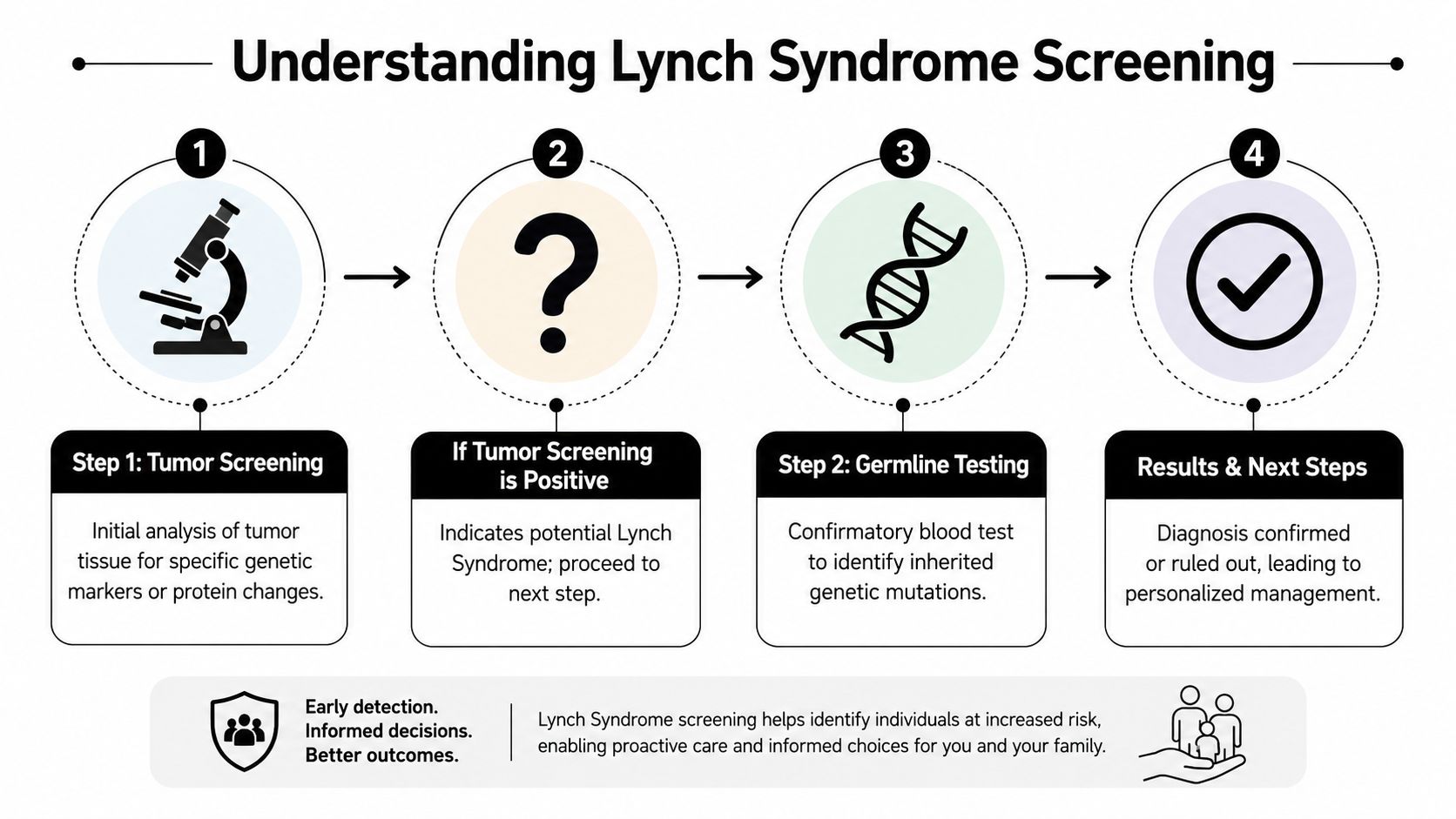
The part that confuses many families is simple once you separate the steps. There are two different tests, and they answer two different questions. One asks what the tumor is doing. The other asks whether the person's inherited DNA carries a mismatch repair change that can run in the family.
Tumor testing comes first
Tumor screening uses IHC or MSI testing. IHC checks the mismatch repair proteins, MLH1, MSH2, MSH6, and PMS2, while MSI looks for the pattern that appears when the repair system has failed. In a newly diagnosed colorectal cancer, this is often the first step because it can show whether the tumor has mismatch repair deficiency at all (AJG guideline).
If IHC shows loss of MLH1, often along with PMS2, doctors may order BRAF V600E testing and/or MLH1 promoter hypermethylation testing first. That extra step matters because sporadic tumors can silence MLH1 without any inherited Lynch mutation, and you do not want to send someone into unnecessary germline testing if the tumor pattern is explained another way (AJG guideline).
Germline testing answers the inheritance question
Germline testing uses blood or saliva to look for an inherited mutation in a mismatch repair gene. This is the test that can confirm Lynch syndrome itself. The tumor test is the clue, the germline test is the answer.
If you want a clearer picture of how these results fit into cancer care, what is molecular testing for cancer explains the difference between testing the cancer and testing the person. Tumor testing shows what the cancer is doing. Germline testing shows whether the family may share the same inherited risk.
Why Universal Screening Is the New Standard of Care
A family history can point the way, but it can also miss the diagnosis. Some families have few relatives, limited records, or cancers that appear in different generations and different forms, so the pattern never looks obvious.
Today, major guidance recommends universal tumor testing for newly diagnosed colorectal cancers, and GeneReviews notes that colorectal and endometrial cancers should be screened with MSI or IHC testing. The reason is simple, families without a classic red-flag pattern can still carry Lynch syndrome. Testing occurs only after someone “fits” a classic pattern leaves too many people out.
What universal screening changes
Universal screening starts with the tumor, before germline testing is even considered. That first step works like checking the smoke alarm before you inspect the wiring, it tells the care team whether the cancer itself is showing signs of a DNA repair problem. From there, doctors can sort out whether the result points to inherited Lynch syndrome or a tumor that developed that pattern on its own.
The ACG consensus also says people with a personal history of an MMR-deficient tumor, a known family MMR mutation, Amsterdam or revised Bethesda criteria, or a model-based estimated ≥5% chance of Lynch syndrome should undergo genetic evaluation. That broader approach is deliberate. It catches patients whose tumor testing, family history, or predicted risk all point toward the same next step, genetic counseling and follow-up testing.
Screening this way is not over-testing. It helps prevent missed hereditary cancer syndromes that change both treatment planning and family counseling.
For patients, this is current best practice. It means your care team is looking for an inherited explanation early, while the tumor testing result can still guide the rest of the workup and help you understand what it means for you and your family. If you want a clearer picture of how to read those results, how to interpret genetic test results explains the difference between a tumor clue and a hereditary answer.
Interpreting Results and Planning Your Next Steps
A mismatch repair deficient or MSI-high tumor result can feel alarming, but it does not by itself prove Lynch syndrome. It means the tumor has a repair problem, and that result opens two important doors at once.

The treatment question
CDC guidance explains that universal tumor screening can identify Lynch syndrome patients and also help guide treatment because MSI-high colorectal tumors may respond well to PD-1 blockade immunotherapy (CDC genomics blog). That's a big reason tumor testing matters even before the genetics are sorted out. The result may influence what treatment your oncology team discusses next.
The inheritance question
The same tumor result also triggers germline testing, because a tumor's mismatch repair deficiency can be sporadic or hereditary. That distinction matters for your relatives as much as it matters for you. If germline testing confirms a mutation, then siblings, children, and other close relatives may need cascade testing, which is just the process of offering genetic testing to family members one branch at a time.
If you want a clearer sense of how a genetic report is read in clinic, the guide on genetic test results is a helpful companion. Patients often expect a single yes-or-no answer, but the process is more layered. A result can point to treatment, family risk, or both.
Plain-language takeaway: tumor screening says, “This cancer may have a repair problem.” Germline testing says, “Is that repair problem inherited?”
That's why the next step should always be explained carefully. A patient needs to know whether the result changes their treatment plan now, their surveillance later, or their family's testing needs.
Long-Term Surveillance for Lynch Syndrome Patients
A confirmed Lynch syndrome diagnosis usually means a prevention plan, not just a label. The core surveillance benchmark is colonoscopy every 1 to 2 years, beginning at age 20 to 25 years, or 2 to 5 years earlier than the youngest colorectal cancer diagnosis in the family if that happened before age 25 (ACG consensus summary). That schedule exists because Lynch-associated cancers can develop faster than sporadic ones, and outcome data show that colonoscopy every 1 to 2 years beginning at age 25 can reduce colorectal cancer incidence and mortality by more than 50% (ACG consensus summary).

Surveillance beyond the colon
For selected patients, major clinical resources also recommend upper endoscopy (EGD) at age 30 to 40 years every 2 to 4 years, and annual endometrial sampling beginning at age 30 to 35 years can be considered for women at risk or affected (Mayo Clinic). These recommendations reflect the fact that Lynch syndrome can affect more than one organ system, so care has to stay broad and steady over time.
A practical issue patients often overlook is preparation. A colonoscopy that is poorly prepped is harder for the doctor and more stressful for the patient, so it helps to review best colonoscopy prep methods before the appointment. Good prep improves the chance that the exam gives a clear answer.
The long-term plan is not only about cancer detection. It is about staying ahead of disease in a way that fits the known biology of Lynch syndrome. Families do better when surveillance is organized, repeated, and taken seriously rather than left to chance.
Accessing Expert Testing and Care in NYC
In New York City, the hardest part is often not finding a test, it's finding someone who can coordinate the whole process without dropping the details. A patient in Brooklyn, Williamsburg, Bushwick, or anywhere else in the city may need tumor screening interpretation, genetic referral, treatment planning, and family counseling all tied together.
That's where experience matters. An oncologist who understands Lynch syndrome can help make sense of whether the tumor result suggests inherited risk, whether germline testing is the right next step, and whether immunotherapy belongs in the conversation. For patients and caregivers who are also trying to understand insurance and testing logistics, the guide on does Medicare cover genetic testing can be a useful background resource before the appointment.
Hirschfeld Oncology works with patients who need careful interpretation of complex cancer results and a plan that fits real life, not just a textbook algorithm. If you're facing a new colorectal cancer diagnosis, a suspicious tumor test, or a family history that needs expert sorting, scheduling a consultation can help you move from uncertainty to action.
If you're ready to talk through Lynch syndrome screening, tumor testing, or what a genetic result could mean for you and your family, visit Hirschfeld Oncology to request a consultation. Their team can help you understand the next step, coordinate care, and build a plan that fits your diagnosis, your family history, and your goals.
.png)
.png)