.png)


A diagnosis of triple negative breast cancer can feel like the conversation changed language midstream. One minute you're hearing about breast cancer, the next you're being told the usual hormone pills and HER2-targeted drugs won't help, and the first question becomes simple and urgent, what works for me?
That's where triple negative breast cancer immunotherapy comes in. The challenge isn't just whether these drugs work in general, it's whether they fit your stage of disease, your biomarker results, your treatment goals, and the practical access issues that determine who gets them.
What Makes Triple Negative Breast Cancer Different
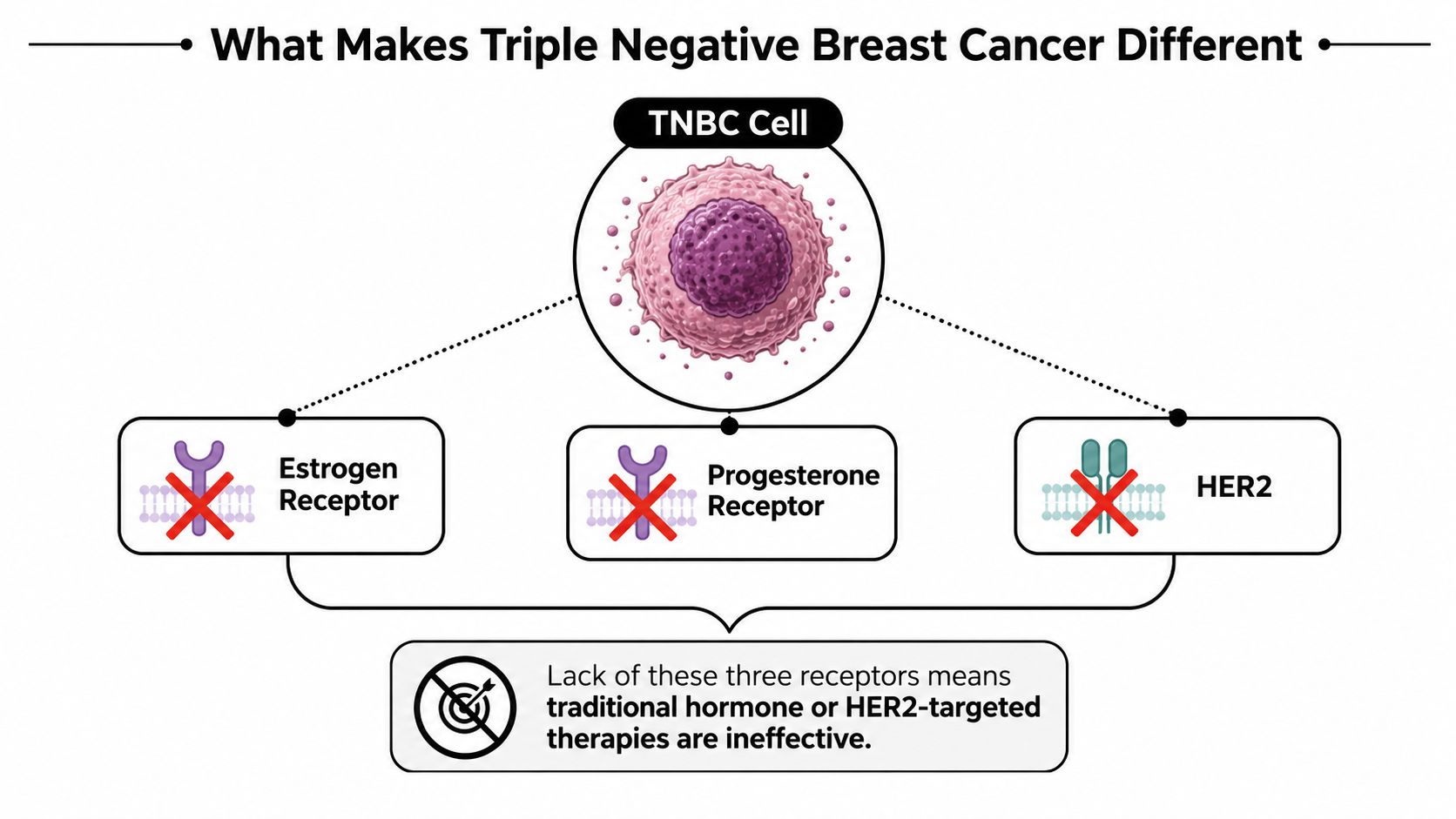
Triple negative breast cancer, or TNBC, is defined by what it doesn't have. It lacks estrogen receptors, progesterone receptors, and HER2, which means the standard hormone-based and HER2-targeted therapies used for many other breast cancers lack a target to grab onto. The American Cancer Society notes that TNBC accounts for about 10% to 15% of all breast cancers (American Cancer Society).
A simple analogy helps. Think of many breast cancers as houses with a few standard locks on the door, then imagine the usual keys fit those locks. TNBC is the house with those locks missing, so the usual keys don't open anything. That's why treatment has historically leaned so heavily on chemotherapy, and why the subtype earned a reputation for being harder to manage.
Why the biology matters
TNBC is not one single disease with one behavior pattern. It's a clinical subtype, which means doctors group it by receptor status, even though the tumors inside that group can still behave differently. That's why two people can both hear “triple negative” and still need different treatment plans.
A useful way to think about it is that TNBC often asks for a different strategy rather than a stronger version of the old one. The immune system becomes especially interesting here because TNBC tends to be more immunologically active than hormone-driven breast cancers, which helped create the opening for immunotherapy. The section on immunotherapy mechanism explains why that matters, but the core point is straightforward, TNBC created a problem that immune-based treatment could finally answer.
For a broader patient-friendly overview of the subtype itself, this guide on breast cancer triple negative is a helpful companion.
How Immunotherapy Actually Works
Your immune system already patrols for abnormal cells every day. T cells are part of that patrol, and their job is to recognize danger, move in, and destroy it before it spreads. Cancer cells survive when they learn how to look boring enough to escape that response.
The brake and the release
One of the main immune checkpoints is PD-1/PD-L1. Under normal conditions, this checkpoint acts like a brake so the immune system doesn't attack healthy tissue by mistake. Tumors can exploit that brake and use it as camouflage, which is why a tumor may keep growing even when immune cells are nearby.
Checkpoint inhibitors such as pembrolizumab release that brake. If you want a plain-language version, the drug doesn't directly poison the cancer cell, it helps the immune system notice the cancer again and keep attacking it. For a deeper explanation of antibody-based therapies in general, this primer on how monoclonal antibody treatments work is a good background read.
Practical rule: immunotherapy is not a replacement for the immune system, it's a way to let the immune system do the job it was already trying to do.
Why TNBC is a better fit than other breast cancers
TNBC has been a better immunotherapy candidate than hormone-driven breast cancer for a few biologic reasons. It often carries more immune activity inside the tumor, including more tumor-infiltrating lymphocytes, and it can express PD-L1 more often than some other subtypes. That doesn't mean every TNBC will respond, but it does explain why this subtype became the breakthrough area for checkpoint blockade.
The important caution is that immunotherapy isn't magic, and it isn't uniform. Some tumors still slip past immune attack, some patients don't respond, and some benefit only when the drug is paired with chemotherapy. That's why the question at the bedside isn't “Is immunotherapy good?” It's “Is this tumor likely to be one of the tumors it can reach?”
Approved Immunotherapy Regimens and the Trials Behind Them
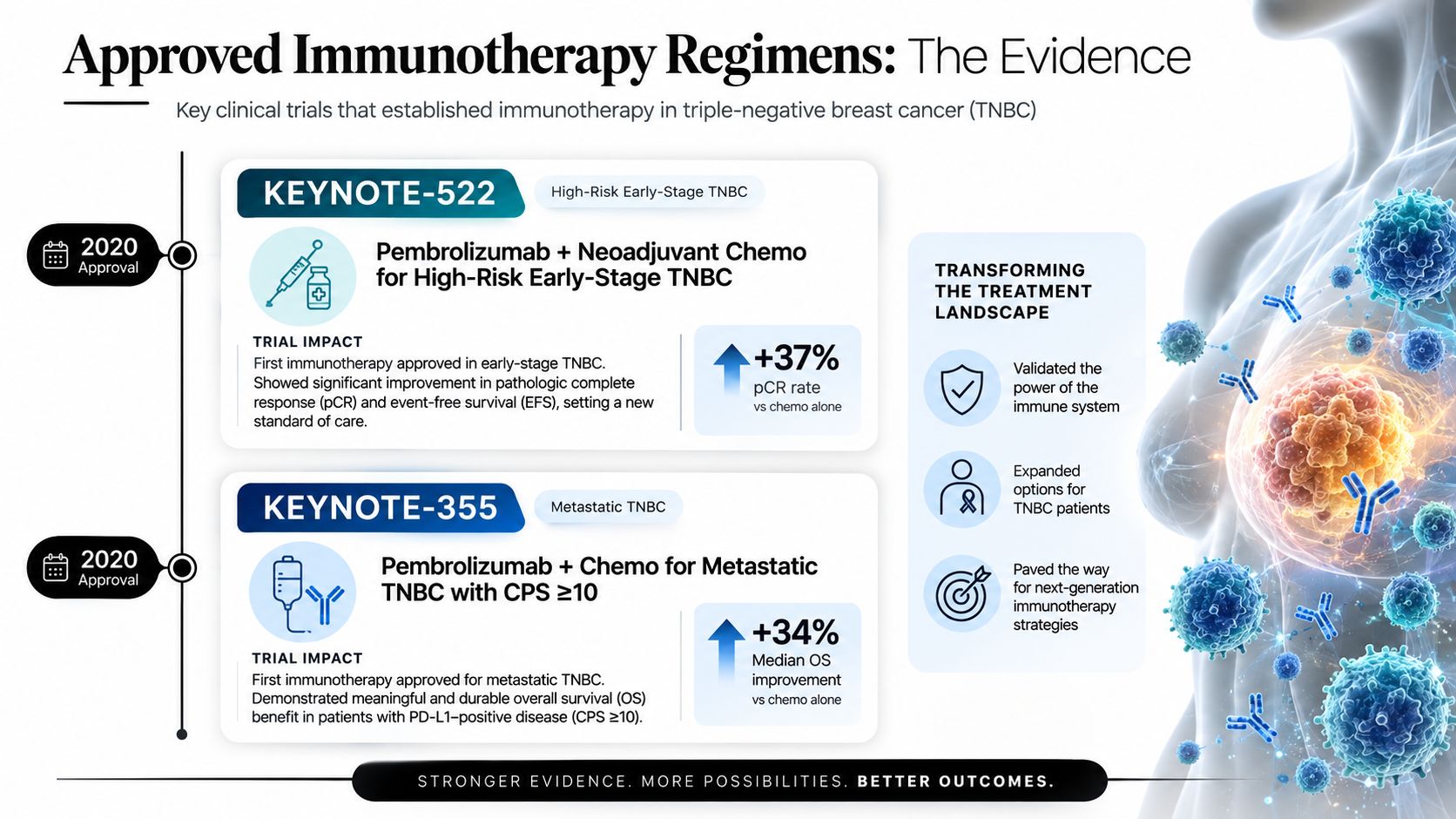
A patient sitting at the consultation desk often wants one direct answer, which drug is used for triple negative breast cancer immunotherapy, and in which situation does it help. The modern TNBC immunotherapy story starts with pembrolizumab. In high-risk, early-stage TNBC, the U.S. FDA approved pembrolizumab for use with chemotherapy before surgery and then continued after surgery, based on KEYNOTE-522. That trial showed a pathological complete response (pCR) rate of 64.8% with pembrolizumab plus chemotherapy versus 51.2% with chemotherapy alone, and 3-year event-free survival (EFS) of 84.5% versus 76.8% (American Cancer Society).
What those numbers mean in real life
A higher pCR means the chance is greater that no invasive cancer is found at surgery after preoperative treatment. In plain English, the tumor is more likely to shrink enough that the surgeon and pathologist see no invasive disease left behind. EFS is the other piece of the picture, the chance the cancer does not come back or progress during follow-up.
That is why this regimen changed practice. It moved immunotherapy into a curative-intent backbone for the right early-stage patients, where the goal is not just to shrink disease but to reduce the chance of residual cancer after surgery. The benefit applies regardless of PD-L1 expression in this setting, which makes early-stage TNBC very different from metastatic disease (PMC review). For patients trying to understand how a treatment plan is built from pathology and molecular results, this guide to molecular testing for cancer gives useful background.
Metastatic TNBC is more selective
In metastatic TNBC, checkpoint inhibitors have been most useful when added to chemotherapy and limited to PD-L1-positive disease. In KEYNOTE-355, pembrolizumab plus chemotherapy improved progression-free survival by about 4 months in PD-L1-positive patients (NCBI review). In the biomarker-defined group with PD-L1 CPS ≥10, median overall survival was 23.0 months with pembrolizumab plus chemotherapy versus 16.1 months with chemotherapy alone, while benefit was not seen at CPS >1 overall (NCI Cancer Currents).
The practical message is blunt. In metastatic disease, pembrolizumab is not a universal add-on. It is a biomarker-gated treatment, and the gate matters.
A newer frontier is the combination of sacituzumab govitecan plus pembrolizumab in PD-L1-positive metastatic TNBC, highlighted in recent review literature as a phase III advance. That points to where the field is heading, toward smarter combinations rather than a single one-size-fits-all immune drug.
Biomarker Testing and Who Is Likely to Benefit
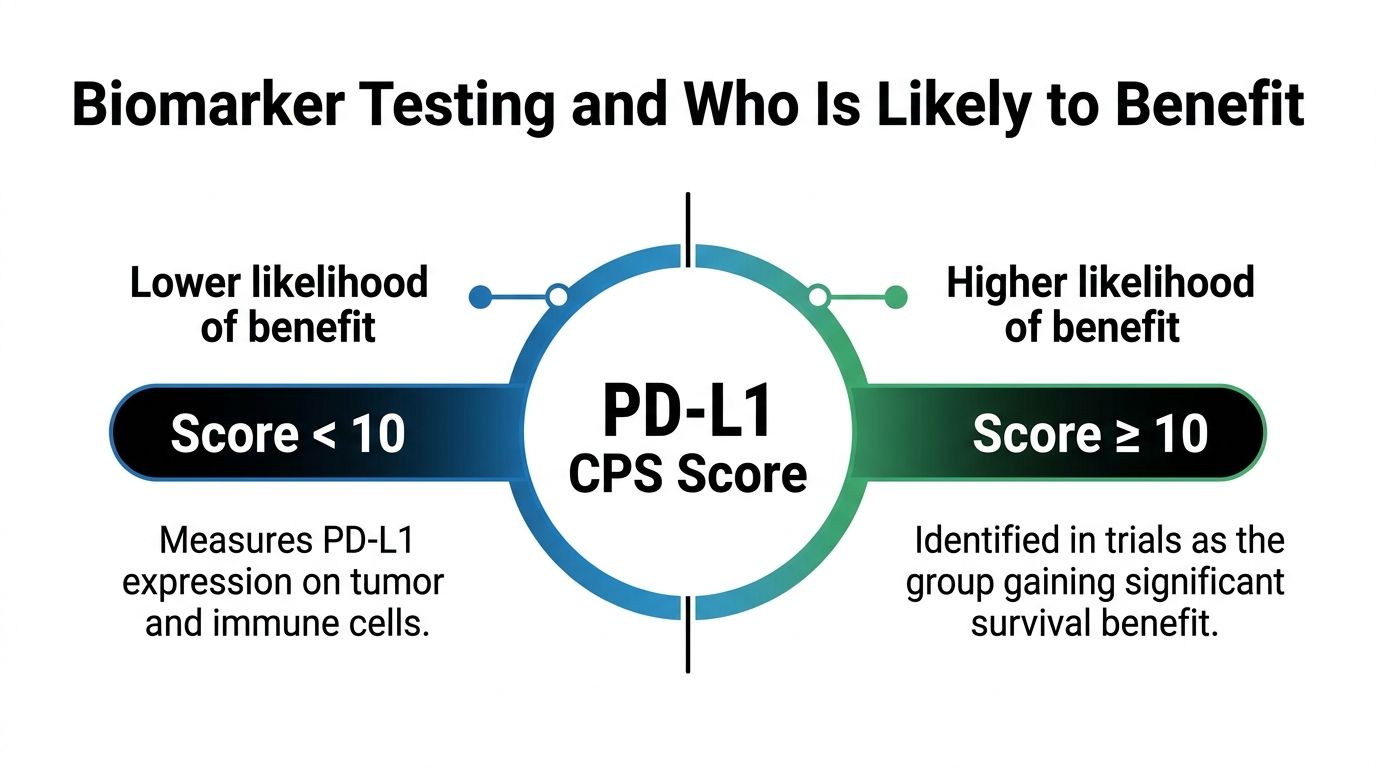
A pathology report can look dense, but one question usually matters most first, which biomarker is guiding treatment? In metastatic TNBC, the main marker is PD-L1, usually reported as a combined positive score, or CPS. That score reflects PD-L1 staining on tumor cells and immune cells together, and in this setting CPS ≥10 is the practical threshold that opens the door to pembrolizumab, as shown in the trial summary discussed by the NCI Cancer Currents report.
In early-stage disease, the logic changes. Pembrolizumab is used with chemotherapy for high-risk early-stage TNBC regardless of PD-L1 status, so the biomarker does not decide candidacy there, as described in a PMC review.
Reading the report without getting lost
A CPS result is not a yes-or-no crystal ball. It works more like a screening gate. If your score is below the threshold, that does not prove immunotherapy can never help, but it does mean the evidence for benefit is weaker in metastatic TNBC. If your score is at or above the threshold, the trial data support bringing pembrolizumab into the conversation.
Other biomarkers come up too. Tumor mutational burden, BRCA1/2 status, and PALB2 changes can matter in broader oncology decision-making, but none of them replaces the need to look at stage, prior treatment, and the exact drug combination being considered. That is the part patients often wish were simpler, yet no single test predicts response perfectly.
A useful question to bring to the visit is, “What is my PD-L1 CPS, and how much is it changing my plan?” If the answer is not clear, ask for the report to be read line by line. For a wider look at molecular testing in cancer care, this overview of what molecular testing means for cancer treatment gives helpful context.
Practical rule: biomarker testing does not decide whether you deserve treatment, it helps decide which treatment has the strongest evidence for your exact situation.
Combination Strategies and What Comes Next
TNBC immunotherapy is moving toward combinations, not isolation. The current backbone in many settings is chemotherapy plus checkpoint inhibition, because chemo can create more antigen release and immune visibility while the PD-1 blocker keeps T cells engaged. That logic is strongest in early-stage curative-intent care and in PD-L1-positive metastatic disease.
Three treatment ideas being tested
One strategy is already standard, chemotherapy with pembrolizumab. A second is the combination of antibody-drug conjugates with immunotherapy, including the emerging sacituzumab govitecan plus pembrolizumab approach noted in recent review literature on ASCENT-04/KEYNOTE-D19. A third is sequencing, which asks whether immunotherapy should come first, later, or alongside another targeted drug.
These aren't just academic differences. In the clinic, sequence changes side effects, visit frequency, and what happens if one treatment stops working. The newer antibody-drug conjugates matter because they may give patients who are not ideal immunotherapy candidates another biologically precise option.
Where surgery still changes the meaning of treatment
Neoadjuvant treatment means therapy before surgery. Adjuvant treatment means therapy after surgery. In early-stage TNBC, pembrolizumab is used across both phases, which is why the regimen is described as a backbone rather than a one-time boost (American Cancer Society).
That distinction matters because curative-intent treatment is trying to do something very different from metastatic treatment. The goal isn't just to shrink visible disease. It's to prevent recurrence after the visible tumor is removed.
The next real breakthrough probably won't be “immunotherapy yes or no.” It'll be figuring out which pairing, for which patient, in which order.
Side Effects and How They Are Managed
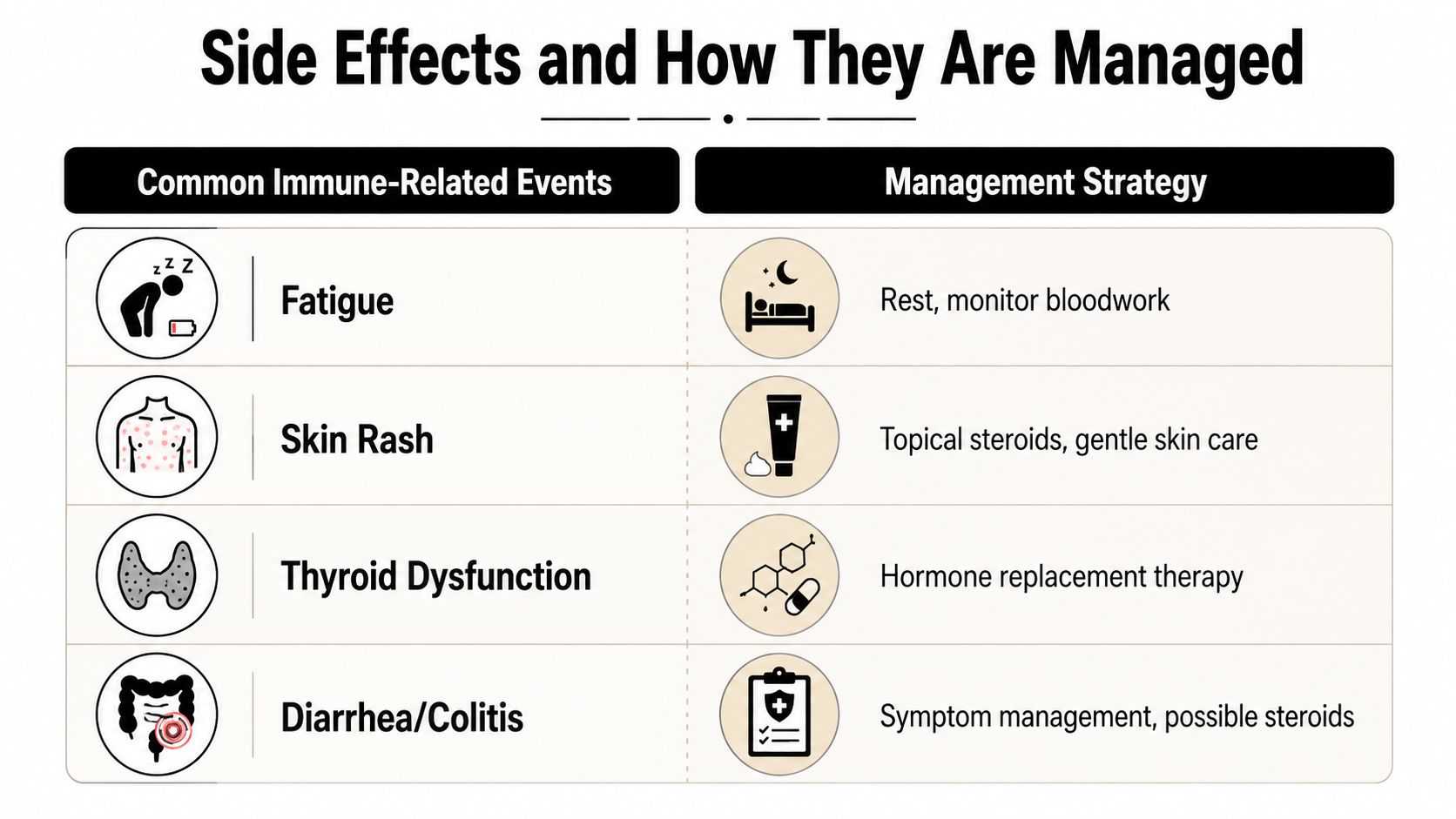
Immunotherapy side effects feel different from chemotherapy side effects because they come from an over-activated immune system, not direct cell-killing. That's why the warning signs can involve several organs at once. Fatigue, skin rash, thyroid problems, diarrhea or colitis, pneumonitis, and hepatitis are all on the list of immune-related adverse events.
What patients should watch for
A rash that spreads, bowel changes that keep worsening, unexplained shortness of breath, or new jaundice deserve a call, not a wait-and-see approach. Thyroid dysfunction can look like sudden fatigue, feeling cold, feeling hot, or heart-rate changes. These symptoms can seem ordinary at first, which is exactly why patients are taught to mention them early.
How teams usually manage them
The standard response is to catch immune toxicity early and treat it quickly, often with corticosteroids such as prednisone when the situation calls for it. Many immune-related effects improve when they're recognized in time. The key is communication, because a symptom that feels minor to a patient can be the first sign of a bigger immune reaction.
- Fatigue: Rest, check labs, and tell the team if it's new or suddenly worse.
- Skin rash: Use gentle skin care, and ask early about topical steroids.
- Thyroid dysfunction: Bloodwork helps catch it, and hormone replacement may be needed.
- Diarrhea or colitis: Report ongoing symptoms promptly, since treatment may need symptom control or steroids.
The goal isn't to scare people away from treatment. It's to make side effects part of the treatment plan instead of a surprise.
Who Actually Gets Immunotherapy and the Access Gap
The biology doesn't treat people differently, but the healthcare system often does. A 2024 AACR-presented analysis found that among patients with early-stage TNBC who received neoadjuvant chemotherapy in 2021, 45.9% of Black patients and 48.2% of white patients received immunotherapy, and Black patients remained 37% less likely to receive it after adjustment (Yale review).
Why the gap exists
The common reasons are familiar, and none of them are biologic. Trial underrepresentation leaves fewer data for Black, Hispanic, and rural patients. Biomarker testing isn't always done consistently. Insurance approval, travel distance, and access to specialized cancer centers can all slow or block care.
This is why “does immunotherapy work?” isn't the whole question. A more honest question is, “Who gets it in time, and with the right tests in hand?” The Yale review also notes that marginalized patients who do receive immune checkpoint inhibitors appear to have similar outcomes to more privileged groups, which suggests the main problem is access and implementation, not worse biology.
What that means at the bedside
A patient who is technically eligible can still miss the best treatment window if the testing, referral, or scheduling chain breaks. That's why high-quality oncology care includes more than prescribing drugs. It means ordering the right biomarkers, reviewing the trial evidence in plain language, and keeping treatment logistics realistic for the patient's life.
For people trying to find care closer to home, this guide to immunotherapy for cancer near me can help frame the right questions before a consultation.
Practical Next Steps for Patients in NYC
A recent TNBC diagnosis can feel like a traffic light that keeps changing. The fastest way to sort out whether immunotherapy belongs in your plan is to ask three direct questions. Is the cancer high-risk early-stage or metastatic? What is the PD-L1 CPS? Are there clinical trials worth screening for? Those answers usually tell the oncologist whether pembrolizumab belongs in the discussion, whether biomarker testing changes the plan, and whether another combination should be considered.
What to bring to the next visit
Bring the pathology report, any biomarker results, and a list of prior treatments or surgeries. If the disease is metastatic, ask whether the PD-L1 test used the right scoring system for TNBC. If the disease is early-stage, ask whether the regimen is being used in the neoadjuvant setting, the adjuvant setting, or both. A patient who brings those details gets a clearer answer faster, because the visit can focus on fit rather than guesswork.
That conversation gets easier when the practice is comfortable with complex regimens and toxicity management. Hirschfeld Oncology in Brooklyn, led by Dr. Azriel Hirschfeld, offers immunotherapy, low-dose chemotherapy, targeted therapy, and individualized regimens, with attention to minimizing toxicity and monitoring symptoms closely. The practice serves patients from Williamsburg, Bushwick, and across NYC, which can matter when treatment requires repeated visits and careful follow-up.
Helpful question to ask yourself before the appointment: Do I want a plan that only names the drug, or one that also explains why I'm likely, or unlikely, to benefit?
If you're sorting through a recent TNBC diagnosis, bring your pathology and biomarker results to a consultation and ask how immunotherapy fits your stage, your PD-L1 status, and your goals. The team at Hirschfeld Oncology can help you review options, weigh toxicity against benefit, and decide whether a standard regimen or a more individualized approach makes the most sense for you. If you are comparing care settings, this guide to finding immunotherapy for cancer near you can help you prepare better questions before the visit.
.png)
.png)