


.png)


You've finished the standard treatment plan, but the scans show that the cancer has spread or returned. Your oncologist begins discussing biomarker testing, immunotherapy, targeted drugs, clinical trials, and combinations you may not have heard of before. It's understandable to feel overwhelmed. “What comes next?” is a medical question, but it's also a personal one involving energy, time, travel, side effects, family responsibilities, and the kind of life you want to protect.
Advanced cancer treatment options are no longer limited to choosing between another chemotherapy drug and comfort care. Modern oncology can use the tumor's biology, prior treatment history, current symptoms, and personal priorities to build a sequence that may control disease while preserving daily function. The right plan might involve an immune-based treatment, a mutation-directed agent, a lower-intensity regimen, a clinical trial, or a carefully monitored combination.
Introduction to Advanced Cancer Treatment Options
A patient learns that scans show progression after several standard treatments. At the next appointment, the discussion should examine more than another drug. The oncology team considers why the cancer grew, whether testing found an actionable biomarker, how quickly it is changing, which side effects are manageable, and whether the plan supports the patient's priorities.
Advanced cancer care has several possible goals. Some patients prioritize the strongest available disease-control strategy. Others want to stay out of the hospital, continue working, remain independent, or limit fatigue and neuropathy. Many seek both longer survival and better daily function. These aims can conflict, so treatment choices involve trade-offs that deserve clear discussion.
Treatment options have changed substantially. The five-year relative survival rate for all cancers reached 70% during 2015–2021, compared with 49% in the mid-1970s, according to Cancer Research Institute's review of cancer statistics. These figures combine all cancers and cannot predict one person's outcome. They do show why treatment resistance does not automatically close the door on meaningful options.
The practical question is not only “What drug is available?” It is “Which treatment sequence best fits this tumor and this person?”
The pages ahead compare newer therapies by their place in a personalized sequence, including expected benefits, limits, side effects, clinical-trial roles, and quality-of-life priorities. That framework helps patients weigh disease control against the daily life they want to preserve.
Understanding Key Concepts of Advanced Cancer Care
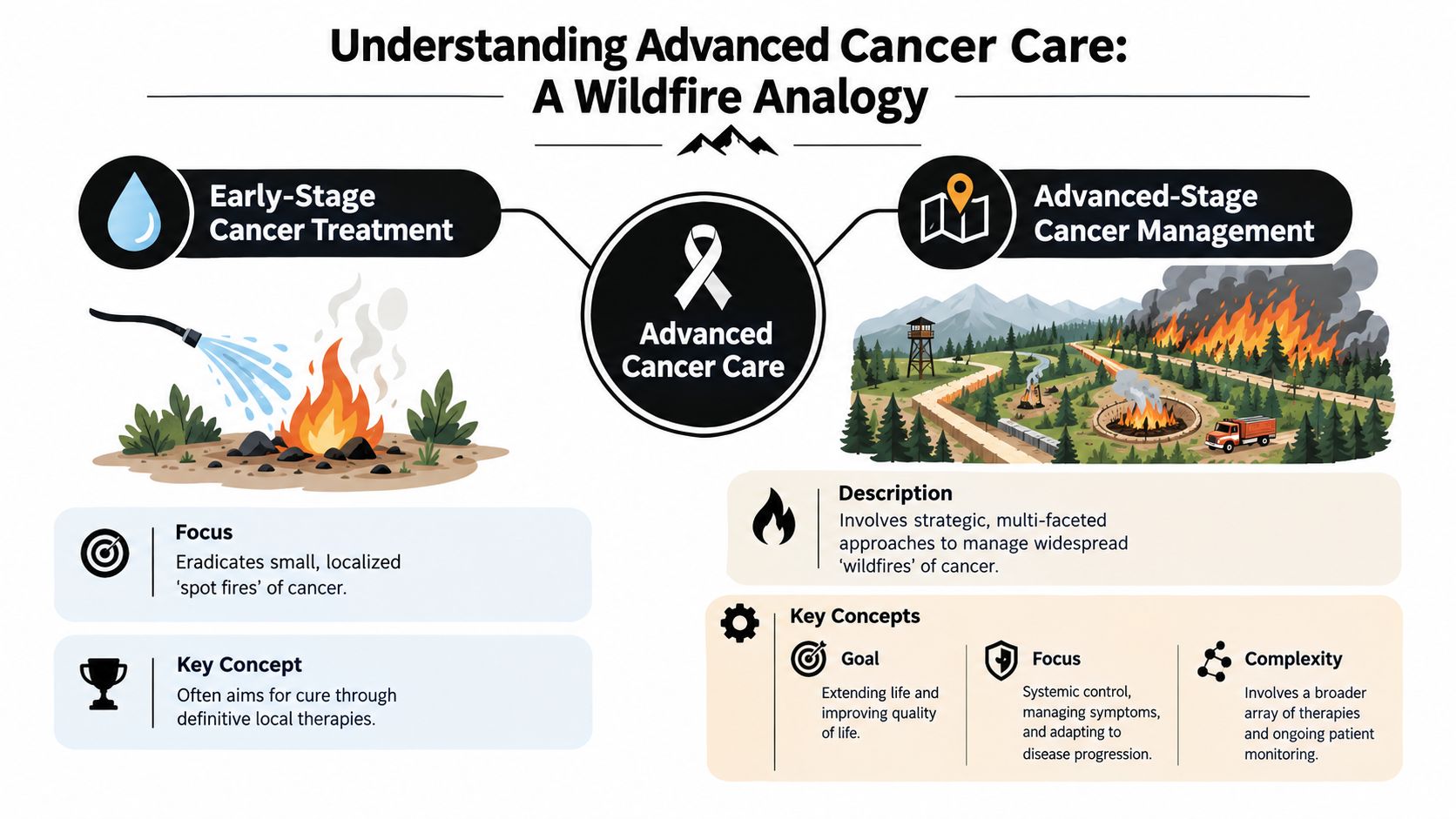
Early-stage and advanced cancer call for different treatment strategies. A small, localized tumor may be treated with surgery, radiation, or another definitive local therapy intended to remove or destroy all visible cancer. Advanced cancer has generally spread beyond one site, so care must address disease throughout the body.
The difference resembles fire management. A few spot fires may respond to direct water drops. A widespread wildfire requires fire breaks, coordinated teams, ongoing monitoring, and changes as wind and terrain shift. Advanced cancer care often follows that model. Surgery or radiation can still control a painful, obstructive, or otherwise dangerous site, while systemic treatment usually manages cancer cells in several locations.
The language clinicians use
- Metastatic means cancer has spread from its original site to distant parts of the body.
- Refractory describes cancer that does not respond adequately to a treatment.
- Progression means the cancer is growing, spreading, or otherwise worsening during or after therapy.
- Line of therapy identifies a treatment's place in the sequence, such as first-line or later-line treatment.
- Biomarker is a measurable feature of the tumor or immune environment that may help predict treatment response.
Tumors contain different groups of cells. One group may respond to a drug while another survives and expands. This tumor heterogeneity helps explain why a treatment can work for a time and then lose effect. A new biopsy, liquid biopsy, or genomic test may identify another treatment opportunity, although testing cannot guarantee an actionable result.
Treatment goals can include remission, durable control, symptom relief, or preserved function. In advanced non-small-cell lung cancer, a cited real-world analysis found median overall survival ranging from 3.1 months with best supportive care to approximately 20.7 months with immunotherapy, with chemotherapy and targeted therapy between those outcomes (Cancer Research Institute). These population-level results cannot predict one person's outcome.
The practical question is which sequence of treatments fits both the tumor and the person. Comparing therapies by expected benefit, limits, side effects, trial access, and quality-of-life priorities can make those trade-offs clearer.
Modern Therapies with Immunotherapy and Targeted Agents
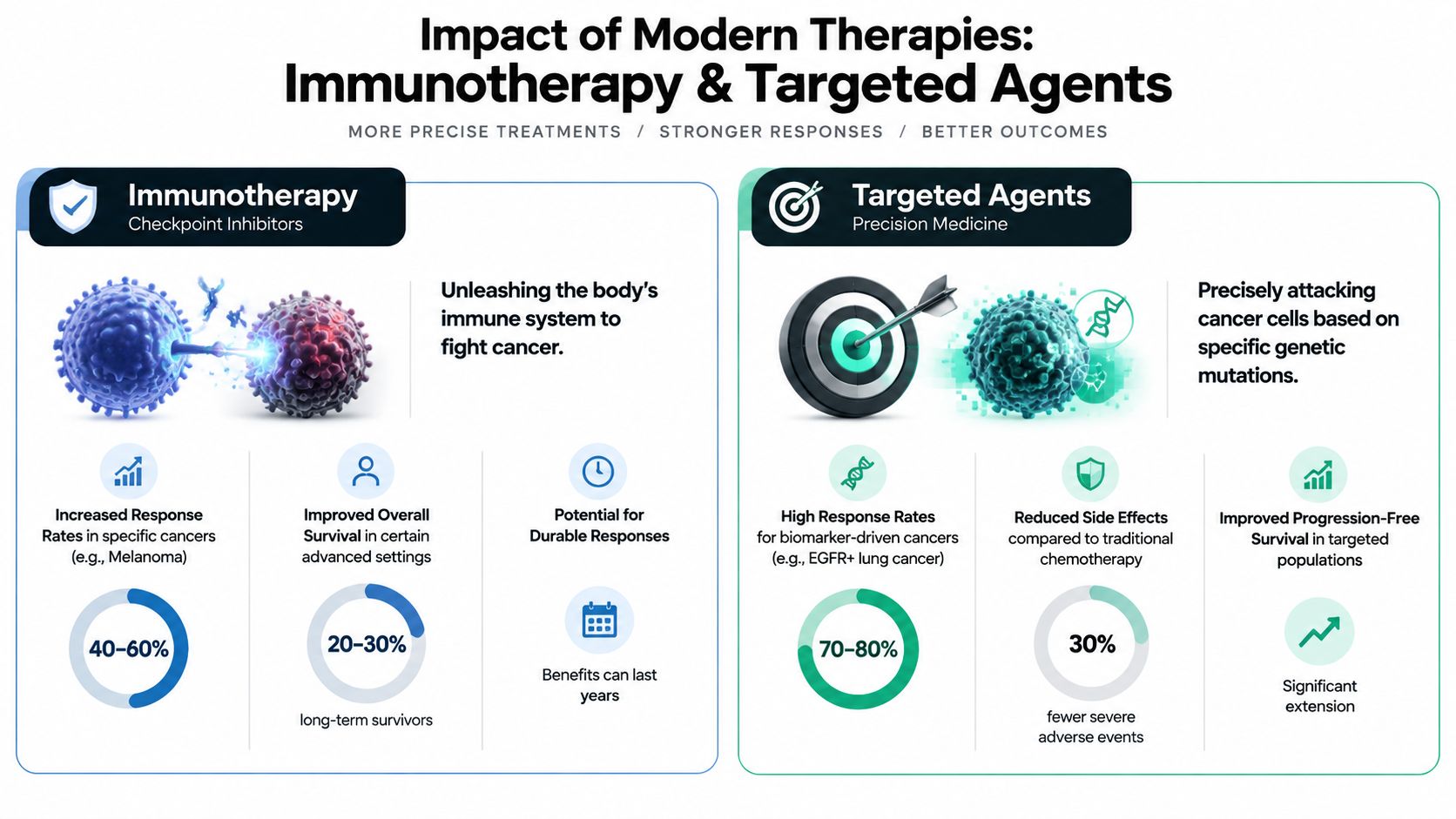
Immunotherapy helps the immune system recognize and attack cancer. Checkpoint inhibitors work somewhat like releasing a brake. Cancer can use immune checkpoint signals to avoid destruction, and these medicines interrupt that suppression so T cells can respond more effectively.
Targeted therapy takes a different route. It seeks a particular molecular alteration that helps cancer grow, then blocks that driver. A mutation-directed drug is closer to a guided missile than a carpet bomb, but the analogy has limits. Targeted agents can still affect healthy tissues, resistance can develop, and the treatment only makes sense when the relevant biomarker is present.
Immunotherapy has become a major part of advanced cancer treatment. Since 2011, there have been more than 150 FDA approvals involving immunotherapies, which are available across over 20 solid-tumor indications and five blood cancers, according to the Cancer Research Institute's 2025 immunotherapy report. A tissue-agnostic approval for pembrolizumab in certain advanced cancers with tumor mutational burden-high status also demonstrated that a tumor's biological feature can matter more than its organ of origin in selected circumstances.
What testing should clarify
Ask whether your care team has reviewed:
- Tumor sequencing, which may identify mutations or fusions linked to targeted drugs.
- Immune biomarkers, which can help determine whether checkpoint inhibition is appropriate.
- Mismatch repair or microsatellite status, relevant to selected immunotherapy decisions.
- Tumor mutational burden, which may influence tissue-agnostic treatment eligibility in specific settings.
- Inherited genetic testing, when family history or tumor findings suggest a hereditary cancer risk.
Side effects differ. Immunotherapy can trigger inflammation in organs such as the skin, bowel, lungs, liver, thyroid, or other tissues. Targeted drugs may cause effects such as rash, diarrhea, blood pressure changes, liver abnormalities, or fatigue, depending on the agent. Neither category should be described as universally mild.
The timing of immunotherapy can matter. A pooled analysis associated earlier checkpoint-inhibitor use with better outcomes than later use, including an overall-survival hazard ratio of 0.60 and a progression-free-survival hazard ratio of 0.62, as reported by The ASCO Post. Your oncologist still has to match that evidence to the cancer type, biomarker profile, prior therapies, and medical condition. For a broader explanation of how these categories may be combined, see immunotherapy and targeted therapy.
Emerging Modalities with ADCs and Metronomic Chemotherapy
Some newer therapies don't replace older treatment principles. They refine how those principles are delivered.
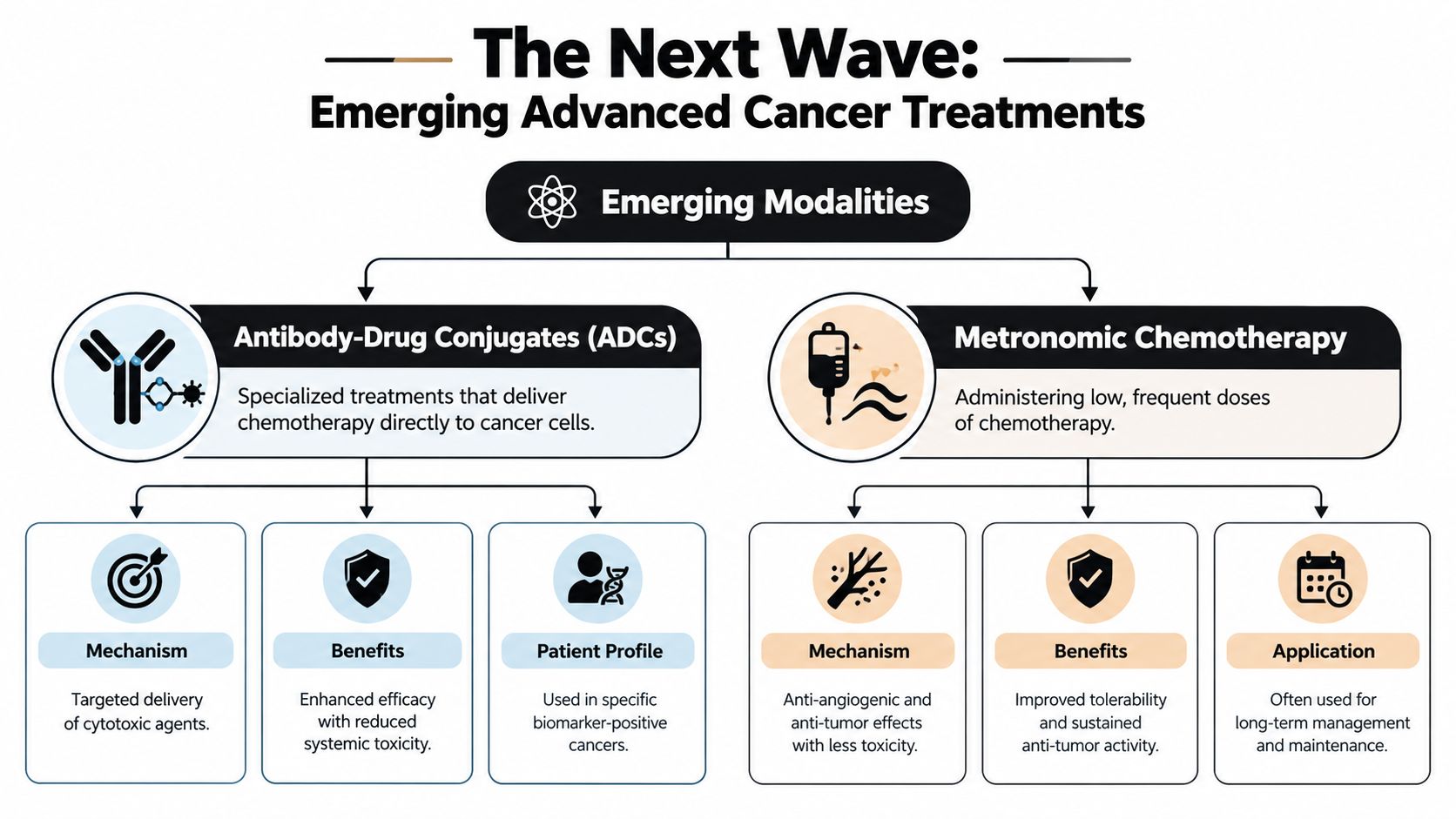
An antibody-drug conjugate, or ADC, links an antibody to a cancer-killing drug payload. The antibody seeks a target on the cancer cell, and the attached medicine is released after the conjugate enters or reaches that cell. This approach can concentrate treatment around a biological target, but it doesn't make toxicity impossible. Blood-count changes, nausea, fatigue, neuropathy, lung inflammation, liver problems, and other serious effects can occur depending on the specific ADC.
Metronomic chemotherapy uses lower, more frequent dosing rather than relying only on intermittent high doses. The intent may include sustained pressure on tumor growth, effects on tumor blood-vessel formation, and a treatment schedule that some patients tolerate more easily. Lower dose doesn't mean no dose, and “gentler” doesn't mean risk-free.
Choosing the role in a sequence
An ADC may fit when a tumor expresses the relevant target and standard treatments have stopped working or are no longer suitable. Metronomic chemotherapy may be considered for ongoing disease management, maintenance, combination treatment, or situations in which preserving stamina is especially important. The sequence depends on disease tempo, previous exposure, organ function, biomarker results, and the patient's goals.
A combination can sometimes attack different weaknesses at once. In one reported triplet strategy for advanced refractory malignancies, chemotherapy, immunotherapy, and targeted therapy produced an overall remission rate of 87.6%, including complete remissions in 47.9% of patients (The ASCO Post). That result shouldn't be generalized to every cancer or regimen. It illustrates why a rational multi-mechanism plan may be discussed when standard options have been exhausted.
Before choosing an ADC or metronomic approach, ask:
- What target or biological rationale supports this treatment?
- Is the evidence specific to my tumor type and treatment history?
- Which side effects require immediate reporting?
- How often will blood tests, scans, or clinic visits occur?
- Could this approach preserve function better than the alternatives?
For a plain-language explanation of the technology, review what an antibody-drug conjugate is.
Case Studies Showing Treatment Journeys
Consider two illustrative treatment journeys. These are educational examples, not individual medical case reports or promises of outcome.
A patient with metastatic colorectal cancer undergoes tumor profiling after progression on standard therapy. Testing identifies a mutation associated with a treatment pathway, so the team chooses a targeted agent rather than immediately repeating a prior chemotherapy pattern. The patient develops a manageable skin reaction and fatigue. The care team adjusts supportive medicines, reviews adherence, and continues scans at planned intervals. The lesson is that a biomarker can change the treatment conversation, but monitoring remains essential because resistance or new toxicity can alter the next step.
A second patient with treatment-resistant breast cancer has a tumor target that supports an ADC. The team discusses the drug's potential for disease control alongside risks involving blood counts, fatigue, and organ function. Immunotherapy is considered only if the tumor biology and clinical evidence support it. Treatment continues while scans show control, but the schedule changes when toxicity affects daily activity. The practical lesson is that a personalized plan isn't static. It can be intensified, paused, changed, or de-escalated as the disease and the patient's tolerance evolve.
What these journeys teach
- Testing should be timely: A new biopsy or molecular review may be useful after progression.
- Response is only one measure: Function, symptoms, independence, and treatment burden matter too.
- Toxicity needs a plan: Patients should know which symptoms require a same-day call.
- Sequencing is individual: A therapy that makes sense after one prior treatment may be less useful after another.
A stable scan can be a meaningful result when the aim is to prevent worsening and preserve quality of life. Conversely, a shrinking tumor may not justify continuing a treatment that causes severe, irreversible harm. Those decisions belong in an ongoing conversation with the oncology team.
Personalizing Care through Clinical Trials
Clinical trials can provide access to treatments that aren't yet broadly available, but enrollment is a medical decision, not a last-minute search after every approved option has failed. A trial may test a new drug, a combination, a new dosing strategy, a biomarker-guided sequence, or a response-adapted approach.
The oncology field is expanding rapidly. From July 2024 through June 2025, the United States approved 20 new anticancer therapeutics, along with eight expanded uses and one treatment device. More than 70% of approval announcements during that period involved immunotherapy or targeted therapy domains, according to Binaytara's oncology year-in-review. Clinical research helps determine which therapies should become part of future standard care.
A practical trial search
Start with the clinical facts. Gather the exact cancer type, stage, pathology report, molecular results, prior drugs, dates of progression, current medicines, organ-function results, and performance status. Trial eligibility can depend on details that aren't obvious from a general diagnosis.
Ask about timing. Some trials require enrollment before the next treatment begins. Others accept patients after a defined number of prior regimens. Waiting until the current therapy ends may close an option, so ask about trials while the present treatment is still working.
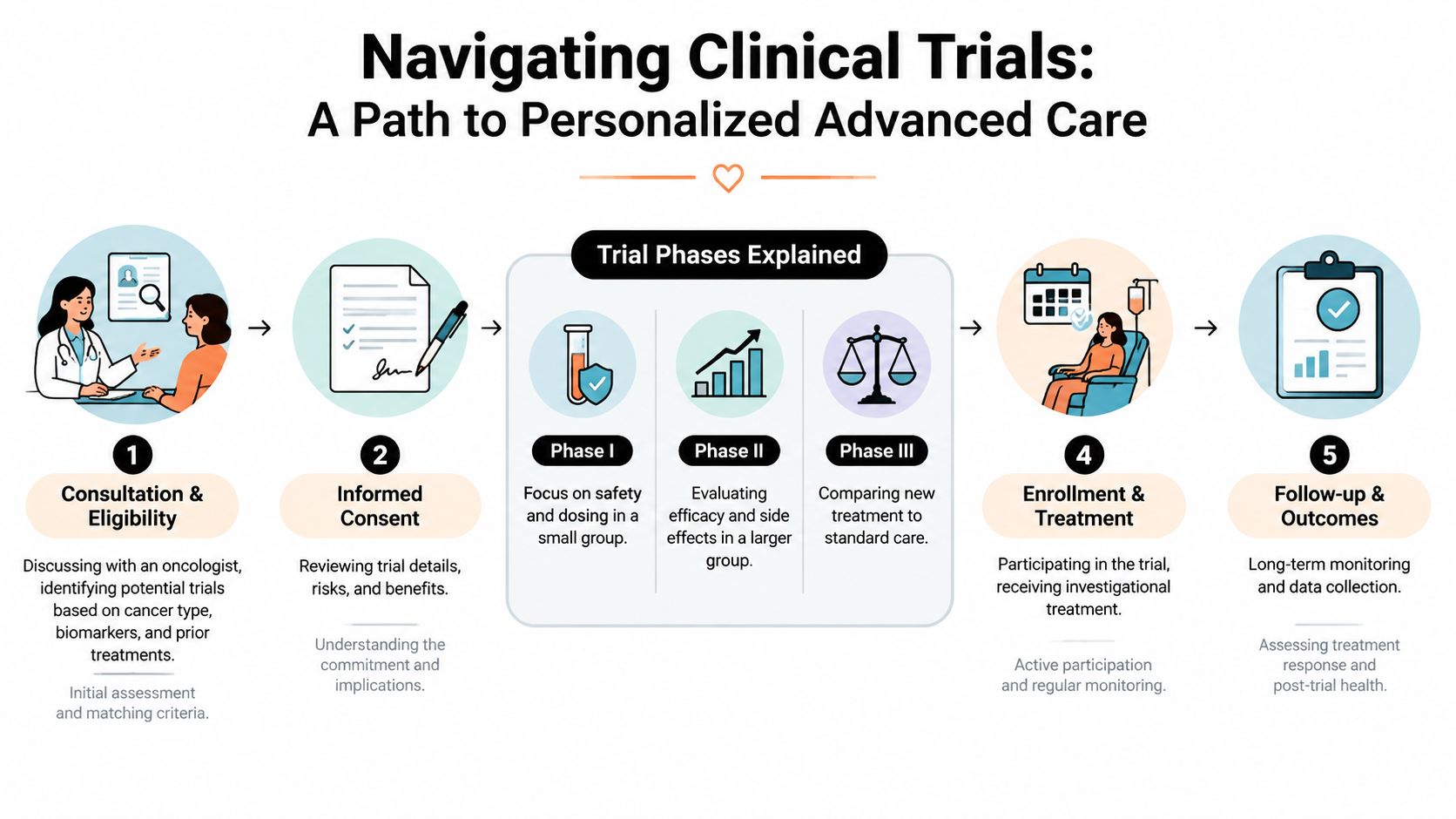
Understand the phase. Early-phase studies focus heavily on safety and dosing. Later studies may evaluate activity, side effects, or comparisons with standard treatment. A trial doesn't guarantee benefit, and participation may involve extra visits, scans, blood tests, or travel.
Ask the coordinator to explain not only the treatment, but also the schedule, alternatives, stopping rules, emergency contact process, and costs that you may need to manage.
For patients in New York City, a trial may be available locally, nationally, or through a referral. Travel demands can affect whether a treatment is realistic. Before signing consent, ask how often you must attend in person, whether a caregiver needs to accompany you, what happens if you become ill, and how treatment interruptions are handled.
Bring a support person to the consent discussion if possible. Write down the trial's purpose, known and unknown risks, required tests, possible benefits, and standard-care alternatives. A trial should fit both the medical situation and the patient's practical life. The cancer clinical trials guide can help organize those questions before a consultation.
Managing Symptoms and Quality of Life
Quality of life isn't separate from advanced cancer treatment. Pain, nausea, constipation, breathlessness, poor appetite, insomnia, anxiety, and fatigue can make any treatment harder to continue. A palliative-care team can help manage these problems alongside anticancer therapy. Palliative care doesn't mean treatment has stopped. It means symptom relief and support receive clinical attention at the same time.
Keep a daily record that takes little effort. Note pain intensity, location, bowel changes, appetite, sleep, temperature when relevant, medication use, and what activities you could or couldn't complete. This gives the care team a clearer picture than “I'm feeling worse.”
Build support into the regimen
- Pain: Ask whether pain comes from the tumor, treatment, nerve irritation, inflammation, or another cause. Different causes may require different medicines or procedures.
- Nutrition: A dietitian can help adapt meals to nausea, swallowing difficulty, taste changes, diarrhea, constipation, or weight loss.
- Fatigue: Report a sudden or worsening change because anemia, infection, dehydration, medication effects, and thyroid problems can contribute.
- Emotional health: Counseling, support groups, social work, and psychiatric care can help patients and caregivers manage fear, grief, and decision fatigue.
- Urgent symptoms: Ask in advance which fever, breathing changes, confusion, uncontrolled vomiting, bleeding, or severe diarrhea require immediate contact.
The field is also moving toward response-adapted and treatment-de-escalation strategies, including ctDNA-guided decisions and chemotherapy-minimizing regimens. Cell and gene therapies account for 35% of oncology trials, according to the American Association for Cancer Research. These approaches remain selective and clinically evolving, so a test result shouldn't automatically determine treatment without context.
Administrative friction can also affect care. Appointment reminders, symptom reporting, transportation coordination, and clear communication may reduce avoidable stress. Health systems exploring workflow automation for better patient journeys are addressing these practical parts of the treatment experience, which can matter when care involves frequent monitoring.
Decision Making Framework and Next Steps
A treatment choice works best when it fits both the cancer and the person living with it. Use these questions to compare options:
- Does the biology fit? Identify the biomarker, target, immune feature, or clinical rationale behind the treatment.
- What does the evidence show? Ask whether the results apply to your cancer type, previous treatments, health status, and current setting.
- What burden comes with it? Review infusion time, oral medication schedules, laboratory tests, scans, travel, caregiver needs, and possible hospital care.
- Which risks matter most to you? Someone hoping to avoid neuropathy may choose differently from someone prioritizing the fastest possible tumor reduction.
- What is the backup plan? Discuss the next option if the cancer progresses, side effects become unacceptable, or a trial is unavailable.
A simple worksheet can make the discussion easier. List each treatment, expected benefit, major risks, monitoring, travel demands, and personal fit. Use ratings such as low, moderate, or high rather than treating a complex decision like a precise score. Ask which new information would change the recommendation. This helps connect therapy selection with the larger sequence of care and your quality-of-life priorities.
A second opinion may help when the diagnosis is complex, the cancer has progressed through several therapies, a rare biomarker is present, a major combination is being considered, or you are uncertain about a clinical trial. Bring pathology reports or slides, imaging, molecular results, medication lists, treatment dates, and a brief symptom history.
For individualized consultation, Hirschfeld Oncology describes outpatient care involving immunotherapy, targeted therapy, chemotherapy, lower-dose approaches when clinically appropriate, genomic profiling, symptom monitoring, and collaborative treatment planning. The practice serves New York City communities, including Brooklyn, Williamsburg, and Bushwick. It may be one option to discuss after standard protocols have been exhausted.
Communication between visits also affects how safely a plan can be followed. Tools such as conversational AI for patient communication may help organize questions and updates, but they should not replace a clinician's assessment of new or worsening symptoms.
Bring these questions to your next visit:
- What is the treatment goal for me?
- What biomarker or clinical evidence supports this option?
- How will we know whether it is working?
- Which side effects require an urgent call?
- How could treatment affect my daily activities?
- Is a second opinion or clinical trial appropriate now?
- What happens if we choose observation or supportive care?
If you are considering advanced cancer treatment, contact Hirschfeld Oncology to discuss outpatient infusion care and possible approaches, including immunotherapy, targeted therapy, chemotherapy, or lower-dose treatment when appropriate. Request an individualized consultation through Hirschfeld Oncology's cancer treatment consultation page and bring your tumor information, symptoms, previous treatments, and quality-of-life priorities to the conversation.
.png)
.png)






