.png)


A diagnosis of advanced stage pancreatic cancer often arrives in fragments. A scan is discussed, then a biopsy, then words such as “advanced,” “unresectable,” or “metastatic.” The room may go quiet while you and your family try to absorb several questions at once: How much time is left? Will there be pain? Is treatment worth the burden? How will work, money, meals, and conversations with relatives fit around cancer care?
I've sat across from many families in that room. I won't promise a cure where current evidence doesn't support one, and I won't suggest that a difficult prognosis means there's nothing useful to do. Staging, molecular testing, treatment adjustment, symptom control, and care at an experienced infusion center can change the practical path for some patients. The important task is to identify which options fit your biology, your health, and your goals.
When the Diagnosis Lands
The first referral often feels less like an appointment than an interruption of ordinary life. A patient brings a partner, adult child, or close friend, expecting explanations about jaundice, weight loss, back pain, or an abnormal scan. Instead, the oncologist opens the images and explains that the tumor can't be removed safely, or that it has reached another organ.
Families commonly hear the treatment plan before they've had time to process the diagnosis. They may nod while privately wondering whether chemotherapy will extend life, preserve daily function, or create more suffering. Those concerns aren't signs of pessimism. They're reasonable questions, and they deserve direct answers.
A useful starting point: treatment isn't one decision made on one day. It's a sequence of decisions that can be revised as the disease, symptoms, test results, and priorities become clearer.
“Advanced” also doesn't describe every patient in the same way. Locally advanced disease may be confined to the region around the pancreas but involve major blood vessels, making surgery unsafe. Metastatic disease has traveled to distant sites and is classified as stage IV. Those situations can require different treatment goals and different discussions about clinical trials, local procedures, and symptom support.
The honest framework is simple. Treatment may slow the cancer, relieve complications, and protect time with family, but the response varies greatly. Your medical team should explain what is known, what is uncertain, and what can be done now to reduce the chance that fear or exhaustion makes the decisions for you.
What Advanced Stage Really Means
Doctors use staging to map where the cancer is and whether surgery can remove it. Think of a leak inside a house. If it's limited to one room, a repair may be possible. If it has reached the walls, wiring, or foundation, repair becomes more complicated. If water has spread to distant rooms, the plan must address the whole house rather than one damaged area.
Local disease, regional disease, and distant spread
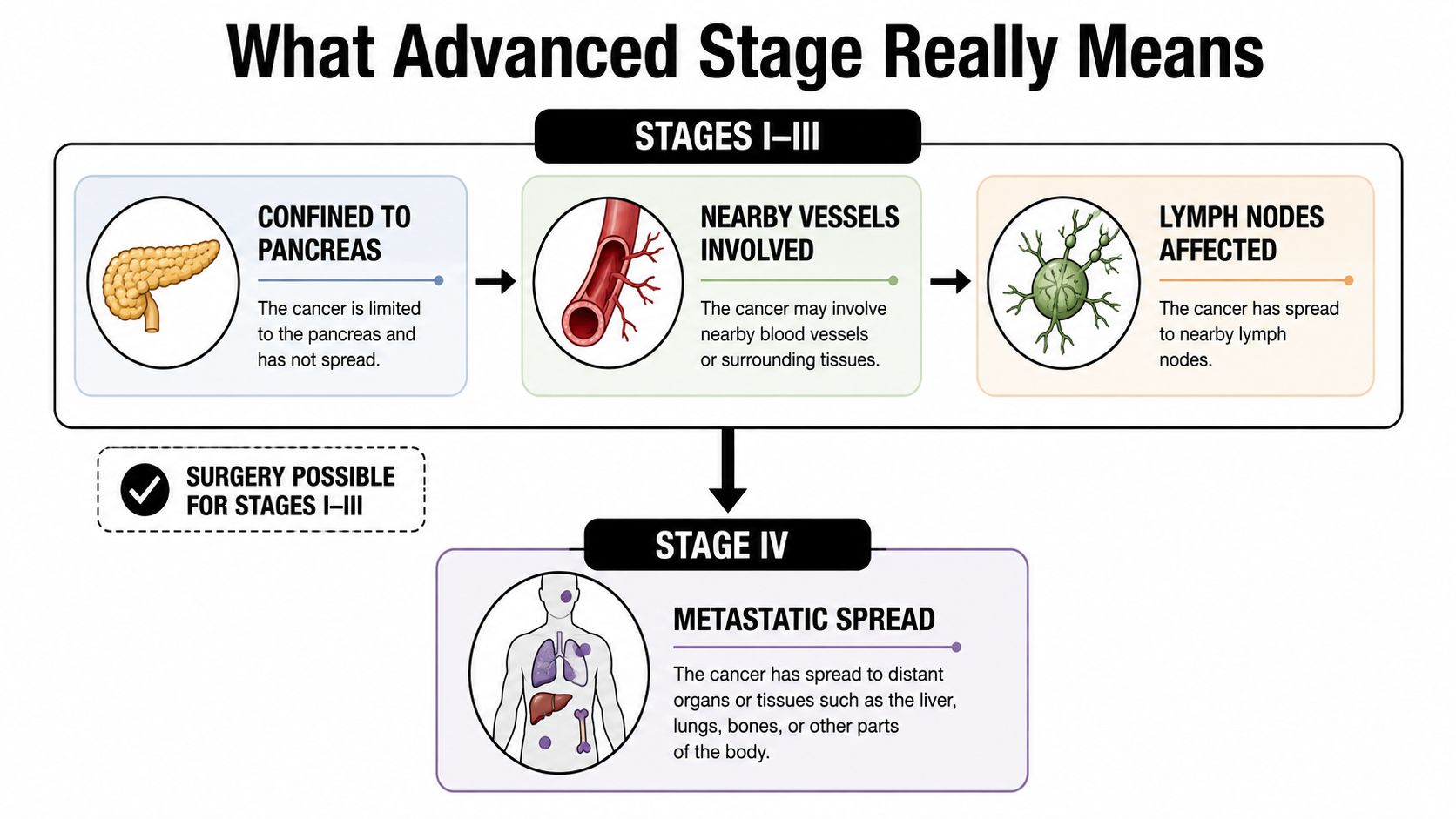
Stages I through III generally describe cancer that remains in the pancreas or nearby structures. The tumor may be confined to the pancreas, involve nearby vessels, or affect regional lymph nodes. Stage III often means the tumor is locally advanced and unresectable, usually because it surrounds or touches critical blood vessels. “Unresectable” doesn't mean untreatable. It means surgery isn't currently a safe or complete way to remove the disease.
Stage IV means metastatic spread. Pancreatic adenocarcinoma may spread to the liver, peritoneum, lungs, or distant lymph nodes. Systemic treatment becomes central because cancer cells are no longer limited to one surgical field.
Why the numbers matter
Population data show why doctors speak carefully about prognosis. U.S. SEER data report 43.6% five-year relative survival for localized disease, 16.7% for regional disease, and 3.2% for distant disease. Across all stages, the American Cancer Society reports 13% five-year relative survival, with 44% for localized, 17% for regional, and 3% for distant disease, based on diagnoses from 2015 through 2021. These figures are available through the National Cancer Institute's pancreatic cancer statistics.
Those numbers describe groups, not a personal countdown. Age, strength, organ function, tumor biology, treatment response, complications, and access to specialized care all influence an individual course. Still, the gap between localized and distant disease explains why metastatic pancreatic cancer requires individualized planning rather than a routine surgical pathway.
A 2025 PubMed-indexed study notes that stage IV disease still has an approximate 3% five-year survival, while Johns Hopkins describes a 1% five-year survival rate and an average survival of about one year after a late-stage diagnosis. The same severity is reflected in Canadian and SEER population estimates, as summarized in the PubMed-indexed review. These estimates are sobering, but they don't tell you whether a particular regimen, biomarker, or trial is appropriate for you.
Treatment Options That Exist Today
Advanced pancreatic cancer treatment has four broad lanes. They overlap, but they aren't interchangeable: systemic chemotherapy treats cancer throughout the body, targeted therapy depends on a molecular alteration, immunotherapy fits a narrow biological subgroup, and clinical trials provide access to treatments still being tested.
Systemic chemotherapy
For a patient strong enough to tolerate combination therapy, modified FOLFIRINOX is an important first-line option. In a phase III trial, FOLFIRINOX improved median overall survival to 11.1 months, compared with 6.8 months for gemcitabine, an absolute difference of about 4.3 months, as reported by the National Cancer Institute. The regimen combines several drugs, so the potential benefit must be weighed against fatigue, neuropathy, diarrhea, low blood counts, and other toxicities.
Gemcitabine plus nab-paclitaxel is another established approach. It may be preferable when the clinical team believes a different toxicity pattern is more manageable, or when the patient's health makes a highly intensive regimen unsuitable. A practical discussion of this combination appears in gemcitabine and Abraxane treatment.
Contemporary modified FOLFIRINOX data show why dose adjustment isn't automatically a failure. One cohort reported median progression-free survival of 6.7 months, median overall survival of 12.5 months, an objective response rate of 30.6%, and a disease control rate of 66.7%. Those figures come from the contemporary cohort analysis, and they reinforce a central principle: the best regimen is one that can be delivered safely enough to preserve treatment exposure and daily life.
Targeted treatment and immunotherapy
Targeted treatment only makes sense when testing identifies a relevant alteration. Examples include PARP-inhibitor strategies for selected inherited or tumor BRCA-related changes, and KRAS-directed drugs for particular KRAS variants. These treatments aren't general substitutes for chemotherapy, and availability may depend on approval status, prior treatment, and trial eligibility.
Immunotherapy also has a narrow role in pancreatic cancer. Tumors with mismatch-repair deficiency, microsatellite instability, or other qualifying features may respond to checkpoint inhibition, while most pancreatic tumors don't show the same sensitivity. Testing is therefore more useful than assuming that an immunotherapy label applies to everyone.
Clinical trials
A clinical trial isn't only a final option after every standard treatment fails. It can be a rational choice at diagnosis, during a response, or when the cancer progresses, particularly when a trial is testing a treatment matched to the tumor's biology. Current research includes KRAS-directed approaches, stromal strategies, vaccines, cellular therapies, and other combinations. The team should explain the trial's purpose, known risks, travel requirements, testing schedule, and what happens if the treatment doesn't control the cancer.
| Treatment Category | Typical Candidates | Realistic Median Benefit | Key Limitation |
|---|---|---|---|
| Combination chemotherapy | Patients who can tolerate systemic treatment | FOLFIRINOX reached 11.1 months versus 6.8 months with gemcitabine in a phase III trial | Toxicity can limit dose intensity |
| Modified combination chemotherapy | Patients needing a balance between activity and tolerability | Contemporary data reported 6.7 months progression-free survival and 12.5 months overall survival | Cohort results don't predict every patient's outcome |
| Targeted therapy | Patients with an actionable molecular alteration | Benefit depends on the alteration and treatment setting | Only a minority qualify |
| Immunotherapy | Patients with qualifying immune-related biomarkers | Responses can be meaningful in selected tumors | Most pancreatic cancers don't have the required biology |
| Clinical trials | Patients meeting a study's medical and molecular criteria | May provide access to emerging approaches | Availability, eligibility, and uncertainty vary |
Biomarker Testing and Who Qualifies
Molecular testing asks whether the cancer carries a feature that changes treatment selection. It's not a promise that a targeted drug exists. It's a way to determine whether one of the smaller, more specialized treatment paths is relevant.
The main categories clinicians compare
| Biomarker | Approximate Prevalence | Potential Targeted Option |
|---|---|---|
| KRAS G12C or other actionable KRAS alteration | A minority of pancreatic cancers | Variant-specific KRAS inhibitor or clinical trial |
| BRCA1, BRCA2, or PALB2 pathogenic variant | A minority of patients | Platinum-sensitive strategy, PARP-inhibitor approach, or trial |
| Mismatch-repair deficiency or microsatellite instability | Uncommon in pancreatic cancer | Checkpoint immunotherapy in an appropriate setting |
| MTAP deletion | A molecularly defined subgroup | PRMT5-directed clinical trial |
| Claudin18.2 expression | A biomarker-defined subgroup | Claudin18.2-directed clinical trial |
These categories aren't equally established. KRAS inhibitors, PRMT5 inhibitors for MTAP-deleted tumors, and Claudin18.2 or CXCR4-directed therapies remain largely in early-phase development and aren't broadly available, as described in a recent review of emerging pancreatic cancer therapies. Some newer options may be accessible through expanded access or approval for a rare genetic change, but the exact eligibility rules matter.
How testing happens
The laboratory may analyze tumor tissue from the diagnostic biopsy using next-generation sequencing. If tissue is insufficient, a blood-based liquid biopsy can sometimes look for circulating tumor DNA. Germline testing, usually performed from blood or saliva, looks for inherited variants and can matter for relatives as well as treatment.
Ask whether testing has been ordered before treatment begins, whether the sample is adequate, and when results are expected. A negative result isn't useless. It may rule out certain targeted approaches and help the team focus on chemotherapy, supportive treatment, or a trial that doesn't require a specific mutation. The patient-friendly explanation of molecular testing for cancer can help families prepare for that conversation.
Managing Symptoms and Treatment Side Effects
Symptom control should begin with the first oncology visit, not after the disease or treatment becomes unbearable. The goal is to protect eating, sleeping, walking, thinking, and time with other people.
Symptoms caused by the cancer
Pancreatic tumors can cause abdominal or back pain. Your team may use non-opioid medicines, carefully monitored opioids, and, when appropriate, a celiac plexus block or neurolytic procedure. Ask for a written plan that explains what to take routinely, what to use for breakthrough pain, and when to call.
Jaundice may reflect blockage of the bile duct. An endoscopic biliary stent can sometimes restore drainage, but fever, worsening yellow skin, confusion, or sudden abdominal pain requires urgent medical attention. A tumor near the duodenum can also interfere with food passage, prompting discussion of endoscopic or other supportive procedures.
Weight loss deserves active attention. Pancreatic enzyme replacement may help when poor digestion causes greasy stools, bloating, or food-related discomfort. A dietitian can adjust enzyme timing, calories, protein, and meal size without turning every meal into a conflict.
Side effects from treatment
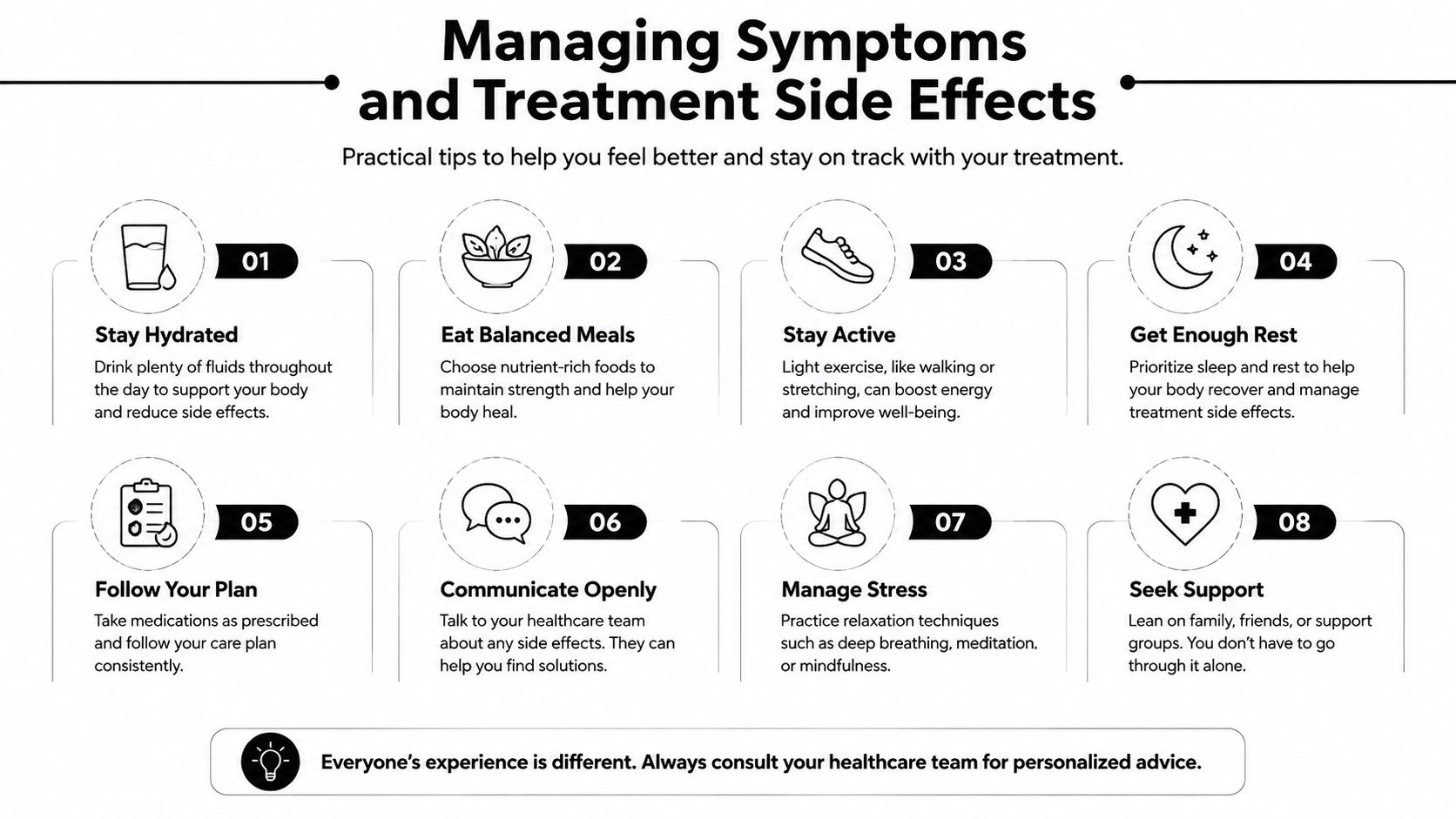
Oxaliplatin can cause cold sensitivity and neuropathy. Patients often need to protect their hands and mouth from cold exposure and report tingling early, before it interferes with buttons, walking, or writing. Irinotecan can cause diarrhea, and the oncology team should provide a clear loperamide protocol rather than leaving caregivers to guess.
FOLFIRINOX-related fatigue responds better to pacing than to pushing through. Schedule essential tasks during the strongest part of the day, sit for activities that don't require standing, accept help with meals and transportation, and report fatigue that suddenly worsens. Blood clots are also a concern in pancreatic cancer, so ask whether your personal risk supports preventive anticoagulation. Never start it without the treating clinician's direction.
A specialized infusion team can adjust doses, fluids, anti-nausea medicines, and monitoring without treating every side effect as a reason to abandon therapy.
Palliative and Supportive Care as Active Treatment
Palliative care is medical treatment for the burdens of cancer and its therapy. It doesn't mean that anticancer treatment has stopped. An outpatient palliative team can work alongside chemotherapy, infusion visits, radiation, procedures, and clinical trials.
The distinction matters because families often hear “palliative” and assume “hospice.” Hospice is a separate model, generally focused on comfort when a person is no longer pursuing disease-directed treatment. Palliative care can begin much earlier and can continue while the oncologist is actively treating the cancer. A clear comparison is available in palliative care versus hospice care.
What the team actually does
A palliative clinician may help with:
- Pain: Adjusting medicines, considering nerve procedures, and reducing sedation where possible.
- Nausea and bowel symptoms: Choosing anti-nausea combinations, treating constipation from opioids, and responding to diarrhea.
- Neuropathy and fatigue: Reviewing whether treatment intensity, sleep, nutrition, or other medicines are contributing.
- Emotional strain: Supporting the patient, caregiver, and family when fear, sadness, or conflict complicate decisions.
- Planning ahead: Clarifying priorities before a crisis forces rushed decisions.
The strongest version of supportive care is practical. It helps a patient stay hydrated enough for treatment, walk safely, eat more comfortably, and spend less time in emergency departments. It also gives families a place to discuss prognosis and future decisions without making every chemotherapy appointment carry the entire emotional burden.
Ask for palliative care at the beginning, not only at the end. Symptom relief and cancer-directed treatment can be part of the same plan.
When to Seek a Second Opinion or Specialized Center
An advanced diagnosis isn't proof that every reasonable option has already been reviewed. A second opinion is especially sensible when molecular testing hasn't been ordered, the proposed regimen is unclear, symptoms remain uncontrolled, weight loss is accelerating, or the team hasn't discussed a clinical trial.
A high-volume gastrointestinal oncology center may add more than another physician's interpretation. It may offer a molecular tumor board, trial screening, radiology review, genetic counseling, specialized infusion nursing, and palliative care in the same network. In a complex case, these connections can affect whether a biopsy is sufficient, whether a dose can be modified, and whether a symptom needs a procedure rather than another prescription.
What to bring
Request copies of the pathology report, biopsy slides or tissue block instructions, imaging reports, imaging discs or electronic access, medication list, laboratory results, genetic testing, and a timeline of prior treatments. Bring a written list of symptoms, including when they occur and what makes them better or worse.
Ask the new team:
- Does the imaging confirm locally advanced or metastatic disease?
- Has a gastrointestinal oncology specialist reviewed the case?
- Has tumor and germline testing been completed?
- Is the current regimen appropriate for strength, liver function, nutrition, and personal goals?
- Which trials could be considered now, rather than only after progression?
- What would trigger a dose reduction, treatment pause, or a different regimen?
Timing matters because the first treatment decision and the molecular workup often happen together. You don't need to abandon your current oncologist to seek additional expertise. A referral to an outpatient infusion center such as Hirschfeld Oncology can function alongside the primary oncology team, with attention to individualized regimens, monitoring, and symptom management. Ask both teams to define who orders treatment, who reviews scans, and who handles urgent problems so care doesn't become fragmented.
Questions to Ask at Your Next Appointment
Take this list on paper or in your phone. Ask the clinician to answer in plain language, and write down the response.
At the diagnostic visit
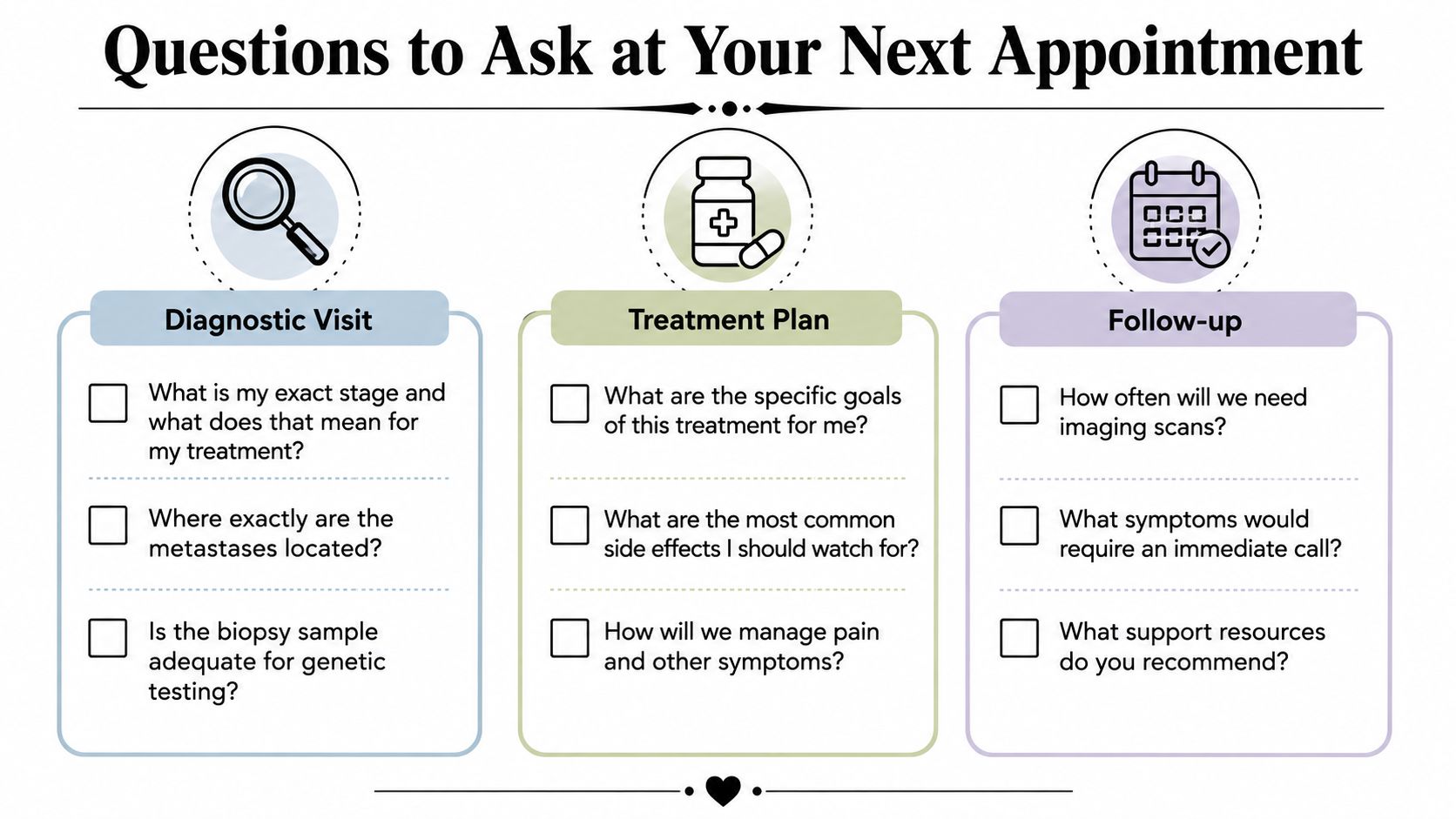
- What is the exact stage, and is the disease locally advanced or metastatic?
- Where are the suspected metastases?
- Is the biopsy definitely pancreatic adenocarcinoma, or is another tumor type possible?
- Is the tissue adequate for molecular and germline testing?
- What symptoms require an immediate call?
At treatment planning
- What is the goal of the first regimen for me, such as shrinking the cancer, controlling it, relieving symptoms, or preserving function?
- Why are you recommending this regimen over the alternatives?
- What side effects are most likely, including neuropathy, diarrhea, nausea, fatigue, and hair loss?
- How will dose reductions or schedule changes protect my quality of life?
- Has next-generation sequencing been sent, and who will review the result?
- Could a molecular tumor board or clinical trial review my case?
At follow-up
- When will imaging assess whether treatment is working?
- How will you interpret changes in CA 19-9 alongside scans and symptoms?
- What findings would lead to a dose adjustment or a different treatment?
- Should I see palliative care, a dietitian, pain specialist, or genetic counselor now?
You can ask about trials without challenging your doctor. Try: “Could you check whether I qualify for a trial now, and if not, what would make me eligible later?” Finally, ask the question that often reveals the clearest clinical judgment: “What would you do if this were your family member?”
Hirschfeld Oncology provides individualized cancer consultations and outpatient infusion care, including treatment planning, symptom monitoring, and consideration of lower-toxicity or emerging approaches for complex pancreatic cancer cases. Visit Hirschfeld Oncology to review practical treatment information and request a consultation about the next step in your care.
.png)
.png)