.png)


Navigating what comes next after breast surgery can feel like a big question mark, but knowing what to expect can make all the difference. The first few weeks are all about healing, and while it’s a unique journey for everyone, most people find themselves getting back to light activity over a 2-4 week period.
Think of this early recovery phase like tending a new garden—it needs patience, gentle care, and close attention to lay a strong foundation for healing. This isn't a race back to your old routine; it's about giving your body the time and support it needs to recover well.
Your First Weeks After Breast Surgery: A Practical Timeline
This timeline is your general roadmap. Your surgeon and care team at Hirschfeld Oncology will always give you the most precise instructions for your specific situation, but this guide will help you understand the major milestones along the way.
Week One: The Foundation of Healing
The first seven days are all about rest and managing the initial effects of your surgery. It's completely normal to feel tired and sore, with some noticeable limits on your arm movement. Your body is hard at work healing, and that takes a lot of energy.
- Managing Discomfort: You’ll have prescription medication to keep you comfortable. The key is to take it on schedule, especially for the first few days, to stay ahead of the pain.
- Surgical Drains: Many patients head home with one or more surgical drains. These little tubes are essential for preventing fluid from building up where the surgery was done. Think of them as a temporary release valve. We have a detailed guide on how to manage them at Drains After Mastectomy: What to Expect.
- Activity Level: Rest is your primary job. But, it's just as important to get up and walk around the house for a few minutes several times a day. This helps prevent stiffness and blood clots. Just remember, no lifting anything heavier than a glass of water.
This visual timeline gives you a quick look at what to expect as you heal.
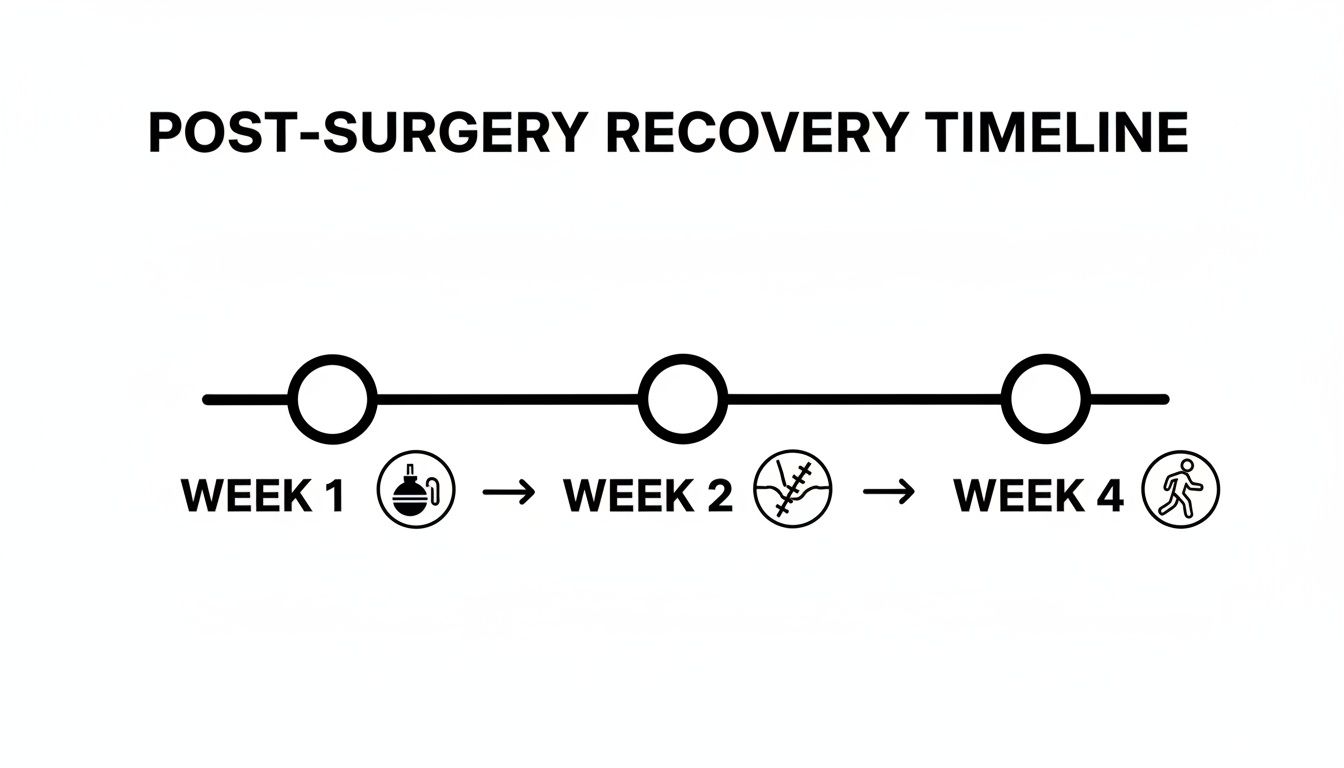
As you can see, each week builds on the last, bringing you closer to feeling like yourself again.
To help you visualize your journey, here's a quick summary of what the first month typically looks like.
Post-Surgery Recovery Timeline At a Glance
This table breaks down the key milestones, sensations, and activity levels you can generally expect during the first four weeks after your procedure.
Remember, this is a general guide. Your personal recovery may be faster or slower, and that's perfectly okay. Listening to your body and your care team is the most important thing.
Weeks Two and Three: Turning a Corner
As you move into the second week, you’ll likely start to feel a real shift. The discomfort should be easing up, and your energy will slowly start to return. Swelling and bruising are still hanging around, but you’re on the upswing.
This is usually when you’ll have your first follow-up visit with your surgeon. It's a really important appointment where they'll check on your healing, possibly remove your drains or stitches, and answer all your questions.
You’ll probably find you can switch from prescription pain medication to over-the-counter options when you need them. Your main job now is taking care of your incisions—keeping them clean and dry. Getting the green light to shower is often a huge morale booster! For a comprehensive look at this phase, the Tampa Breast Augmentation Recovery Timeline Week By Week offers some great insights into the day-by-day healing process.
Week Four and Beyond: Reclaiming Movement
By the one-month mark, most people are feeling significantly better. The major soreness has faded, your energy is on the rise, and your surgeon will likely clear you to start adding more normal activities back into your life.
This is often when you can get back behind the wheel, as long as you’re no longer taking narcotic pain medication and feel you can react quickly and safely.
Most importantly, this is the time when physical therapy usually begins. Your physical therapist will become a key partner, guiding you through specific stretches and exercises. These are designed to gently restore your arm and shoulder’s range of motion—a crucial step for preventing long-term stiffness and helping you get back to doing everything you love.
Managing Pain and Discomfort After Your Procedure

Let’s talk about one of the most important parts of your recovery: staying comfortable. You’ve just been through a major procedure, and feeling some pain and discomfort afterward is completely normal. Our goal is to manage it well so you can rest, move around safely, and focus on healing.
Think of it this way: pain management has two main components. First, there's the medication your team prescribes to lay a solid foundation for relief. Then, we add simple, non-medical comfort measures that can make a huge difference in how you feel day-to-day.
Your Personalized Pain Medication Plan
Here at Hirschfeld Oncology, we don't use a one-size-fits-all approach. Your surgical team will tailor a pain management plan specifically for you. For the first few days, you'll likely have prescription medications. The single most important thing you can do is take them on the schedule we give you.
It's so much easier to stay ahead of the pain than to chase it down once it gets intense. Set an alarm if you need to, but stick to the schedule, even if you’re feeling pretty good at the moment. As you heal, you’ll probably find that you can switch over to over-the-counter options like Tylenol or ibuprofen. Just be sure to follow our team’s specific instructions on what to take and when.
A simple notebook or a reminder app on your phone can be a lifesaver for tracking what you took and when. This little bit of organization helps you stay on track and comfortable, especially during that first critical week.
Beyond the Prescription: Simple Comfort Strategies
Medication is a powerful tool, but it’s not the only one in our toolbox. These other strategies can significantly ease swelling, stiffness, and general discomfort.
- Pillows Are Your New Best Friend: Seriously. A small, soft pillow tucked under your arm on the side of your surgery can feel heavenly, taking the pressure off when you’re sitting or resting. Many patients also find a wedge pillow helpful for sleeping, as it keeps you comfortably propped up.
- The Power of Cold: A cold pack wrapped in a thin towel (or even a bag of frozen peas!) can do wonders for swelling. Apply it to the sore areas for 15-20 minutes at a time. It’s a simple, natural way to numb the area and bring down inflammation.
- Just Breathe: When you feel a wave of soreness or tension, take a moment for a few deep, slow breaths. Breathe in through your nose, letting your belly rise, and then exhale slowly through your mouth. This can calm your nervous system and help your muscles relax.
Managing post-operative symptoms isn't just about getting rid of pain. It’s about creating the best possible environment for your body to heal. When you combine medication with these supportive techniques, you’re actively participating in your own recovery and improving your overall sense of well-being.
What to Do About Those Strange Sensations
As you heal, you might notice some sensations that feel a bit odd—things like numbness, tingling, or even a “phantom” feeling where breast tissue used to be. This is incredibly common and a normal sign that the nerves in your chest wall are beginning to wake up and repair themselves.
Think of it as your body’s electrical system rerouting its circuits. While the feelings can be surprising, they usually aren’t a sign of a problem. That said, keeping a quick note of what you’re feeling and when can be really useful. For a deeper dive into this, check out our article on understanding breast cancer pain.
Bringing this log to your follow-up appointments helps you describe exactly what’s going on. The more we know, the better we can support you and make sure your healing journey is as smooth and comfortable as possible.
2. Lymphedema Prevention and Scar Care: Your Guide to Long-Term Wellness
Taking care of yourself long after surgery really comes down to two big things: preventing a condition called lymphedema and helping your scars heal as nicely as possible. Think of this as the next active phase of your recovery—it’s where you can really take the reins and support your body’s healing process.
Your body has an amazing internal "drainage system" called the lymphatic system, which works behind the scenes to clear out excess fluid. Surgery and radiation can sometimes disrupt this network, kind of like closing a few lanes on a busy highway. When that happens, fluid can back up, causing lymphedema—a chronic swelling that typically shows up in the arm or hand on the same side as your surgery.
Understanding and Preventing Lymphedema
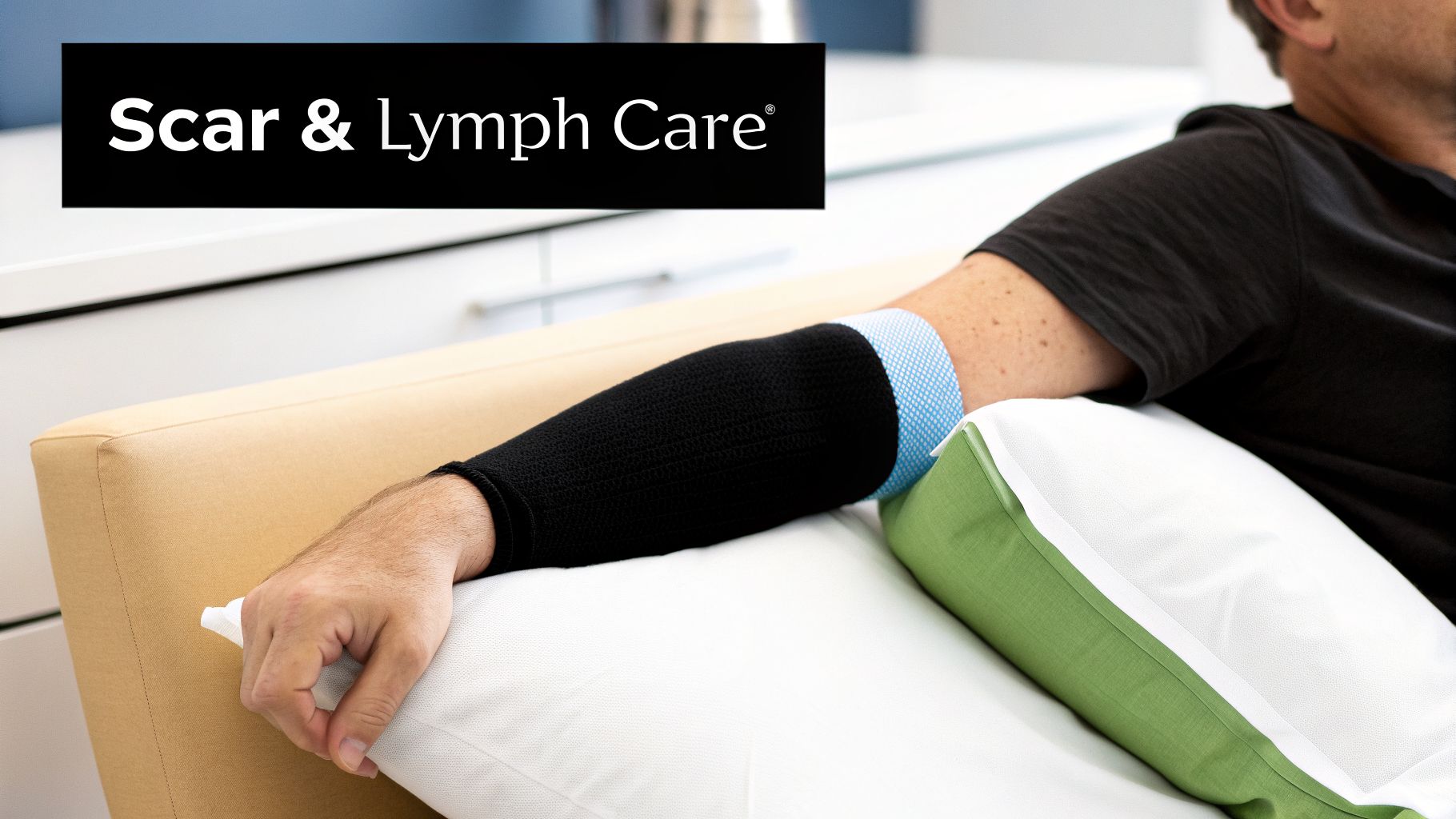
The best approach to lymphedema is prevention, and it all starts with building a few new, gentle habits. The whole idea is to avoid putting extra stress on the lymphatic system on your affected side. By protecting that arm, you lower the risk of injury or infection that could trigger a "traffic jam" of fluid.
A few simple, daily adjustments can make a world of difference:
- Go for a Looser Fit: Avoid tight sleeves, clothing, or jewelry on your affected arm.
- Redirect Medical Pokes: When you can, ask for blood pressure checks, IVs, and shots to be done on your other arm.
- Be Your Skin's Bodyguard: Slather on sunscreen and insect repellent. Wear gloves when you're gardening or working with anything sharp. Preventing even small cuts or burns is key, as they can be a gateway for infection.
Your lymphatic system has a lot of natural resilience, but it can use your help. Every little thing you do to protect your arm is a powerful step toward preventing lymphedema. Keep an eye out for early signs like a heavy feeling, achiness, or even slight puffiness in your arm, and please let your Hirschfeld Oncology team know right away if you notice anything new.
We're fortunate to be able to focus so much on proactive, long-term care. Access to this kind of follow-up varies dramatically around the world. In 2022, Africa had the highest mortality-to-incidence ratio for breast cancer, a statistic driven partly by a lack of post-surgical support. In contrast, North America is projected to have one of the lowest ratios by 2050. This really underscores why we're so committed to robust follow-up care here at Hirschfeld Oncology. You can learn more about these global care disparities and their impact.
Helping Your Scars Heal Beautifully
Your scars are a map of your journey, and with a little care, you can help them become softer, flatter, and less noticeable over time. This is a marathon, not a sprint—scar tissue takes a full year, sometimes more, to completely mature.
For the first few weeks, your only job is to follow our instructions for keeping your incisions clean and dry. Once your surgeon gives you the thumbs-up, you can start being more hands-on with your scar care.
Here’s a general idea of what to expect:
- First Few Weeks: Stick to the plan. This usually just means keeping the area protected and avoiding any lotions or potions.
- After the Green Light (around 2-4 weeks post-op): This is often when you can begin gentle massage. Using a simple, unscented moisturizer, apply firm but comfortable pressure with your fingertips. Move the skin around the scar in small circles to help break down stiffness and prevent the scar from sticking to the tissue underneath.
- Ongoing TLC: Many patients find success with silicone sheets or gels. These products are proven to help hydrate the scar tissue, which is a key factor in helping it flatten out and fade.
Above all else, you must protect your scars from the sun. Healing skin is incredibly vulnerable to UV rays, which can cause scars to darken permanently. For at least the first year after your surgery, make it a non-negotiable rule to apply a broad-spectrum sunscreen of SPF 30 or higher anytime the area might see the sun.
What Comes Next? Timing Your Follow-Up Treatments
For most of our patients, surgery is the first major milestone in their treatment, but it's rarely the last. It’s helpful to think of your cancer care as a carefully planned journey—surgery gets you on the road, but other therapies ensure you reach your destination safely.
After your operation, your body needs time to rest and recover before we can begin the next phase, which might involve chemotherapy, radiation, or other specialized treatments. This healing period is non-negotiable. It allows inflammation to settle, your strength to return, and gives us the window we need to get the single most important piece of information for your future care: your final pathology report.
This report tells the complete story of the cancer removed during your surgery. It's the blueprint your Hirschfeld Oncology team will use to map out a treatment plan that is 100% personalized to you.
Creating Your Post-Surgery Game Plan
That pathology report is what truly guides everything that comes next. It gives your oncology team the critical details about the cancer's personality—its size, type, and whether it has certain characteristics like hormone receptors or specific proteins.
Think of your oncologist as a detective. The pathology results are the clues, and they use those clues to build a powerful and precise case against the cancer.
Based on these findings, we'll lay out the ideal timing and sequence for any additional therapies you might need. We call these adjuvant treatments. Their entire purpose is to track down and eliminate any microscopic cancer cells that could be lingering after surgery, which dramatically lowers the chance of the cancer ever coming back. You can dive deeper into this concept in our guide explaining the fundamentals of adjuvant chemotherapy.
Your Treatment Options, Explained
Your personalized plan will likely draw from a few different approaches, with each one playing a unique role. We'll always take the time to explain exactly why a certain therapy is being recommended for your specific situation.
- Chemotherapy: Uses powerful drugs to destroy fast-growing cancer cells anywhere in the body.
- Radiation Therapy: Directs high-energy beams to target any potential cancer cells left behind in the breast, chest wall, or nearby lymph nodes.
- Hormone Therapy: A crucial tool for hormone receptor-positive cancers, this therapy works by cutting off the hormonal fuel that helps these cancer cells grow.
- Targeted Therapy: These are "smart drugs" designed to attack a specific vulnerability found on your cancer cells, often leaving healthy cells alone.
- Immunotherapy: This exciting approach doesn't attack the cancer directly—it supercharges your own immune system, teaching it to recognize and destroy cancer cells more effectively.
Deciding which therapies to use and in what order is a highly strategic process. Your team weighs everything—your overall health, the unique details from your pathology report, and your personal goals—to create a roadmap that gives you the best possible shot at a healthy future.
This kind of methodical, evidence-based planning is so important. Research shows that as of January 1, 2025, there may be nearly 170,000 breast cancer survivors in the U.S. living with metastatic disease. This statistic underscores why a thorough, forward-thinking care strategy is essential for managing the disease long-term.
Here at Hirschfeld Oncology, we are committed to providing these advanced, personalized strategies after breast surgery. We'll walk with you through every recommendation, making sure you understand the "why" behind your plan. Our goal is for you to move into this next phase feeling clear, confident, and in control.
Regaining Mobility and Strength Through Physical Therapy
Feeling tight, weak, and a bit guarded in your chest, shoulder, and arm is completely normal after breast surgery. Your body has a natural instinct to curl inward and protect the area that’s healing. Physical therapy is our way of gently coaxing those muscles out of that protective mode.
This isn’t about pushing through pain. Think of it as a guided, step-by-step process to help you rebuild your strength, restore your flexibility, and regain confidence in what your body can do. It's about working with your body as it heals.
Why Physical Therapy Is So Important
We typically give you the green light to start physical therapy around four weeks after your surgery. This timing is intentional—it gives your incisions plenty of time to heal before you begin more structured movements.
Starting a guided exercise program at the right time is one of the best things you can do to prevent long-term issues. We're especially trying to avoid a condition called "frozen shoulder," where stiffness can seriously limit your ability to move your arm. Research consistently shows that patients who engage in physical therapy get back to their daily activities faster and simply feel better overall.
Physical therapy is your personalized roadmap back to full function. It empowers you to take an active role in your recovery, turning that feeling of stiffness and limitation into strength and freedom of movement.
Each session will build on the last, letting you progress safely at a pace that works for you. Your physical therapist will be your coach and partner every step of the way.
Gentle Exercises to Start Your Journey
In the beginning, it's all about simple, safe movements. The goal is to encourage flexibility without putting any stress on your healing tissues. Your therapist will show you exactly how to do everything, but here are a couple of examples of what those first few sessions might look like.
Pendulum Swings: You'll start by bending over slightly at the waist, using a table or chair to support yourself with your unaffected arm. Let the arm on your surgery side hang down toward the floor. Then, use your body to create a gentle, passive swing—forward and back, then side to side, and finally in small circles. Gravity does all the work here, gently stretching the shoulder joint.
Wall Crawls: Stand facing a wall and place the fingertips of your affected arm on it, about waist-high. Very slowly, "crawl" your fingers up the wall as high as you comfortably can. You'll feel a light stretch. Hold it for just a moment, then slowly walk your fingers back down.
These movements might seem small, but they are incredibly powerful first steps. They start re-establishing the communication between your brain and your muscles, reminding them how to work together again.
As you heal and get stronger, your therapist will introduce new exercises to build back your strength. Starting with low impact exercises for beginners is a fantastic way to safely improve your stamina without overdoing it. The key is consistent, gentle effort.
Here at Hirschfeld Oncology, we will personally connect you with a physical therapist who specializes in post-operative breast surgery care. This ensures you get the expert, one-on-one guidance you deserve.
Making Choices About Your Body: Reconstruction, Prosthetics, and Going Flat
The path you take after breast surgery is entirely your own. There’s no right or wrong answer here—only what feels right for you. Whether you’re thinking about reconstruction, considering prosthetics, or want to embrace a flat closure, our job at Hirschfeld Oncology is to walk you through the options. We’re here to give you clear, honest information so you can make a choice that fits your life and helps you feel like yourself again.

It’s a big decision, but it's one you can make with confidence. Thanks to incredible medical progress, we can now focus on long-term well-being and survivorship. When breast cancer is caught at a localized stage (which accounts for about 66% of cases), the five-year relative survival rate is a remarkable 99%. These 2025 breast cancer statistics show just how far we've come, allowing you to not just plan for recovery, but for feeling whole and comfortable in your body for years to come.
What is Breast Reconstruction?
If you want to rebuild the shape of your breast, you have a few different avenues to consider. It helps to think of it like choosing your building materials: you can use either medical implants or your body’s own tissue.
Implant-Based Reconstruction: This is the most common route. It’s usually a two-step process. During your mastectomy, a surgeon places a temporary "tissue expander." Over the next few weeks or months, we gradually fill it with saline to gently stretch the skin, creating a pocket for a permanent implant made of silicone or saline.
Autologous (Flap) Reconstruction: This approach uses your own tissue—a "flap" of skin, fat, and sometimes muscle—from another area of your body, like your belly, back, or thighs, to create a new breast. Because it’s your own living tissue, it tends to look and feel very natural, and it will even change with you if you gain or lose weight.
The timing is flexible, too. Reconstruction can often happen at the same time as your mastectomy or be delayed until after you’ve finished other treatments like radiation.
Prosthetics: A Non-Surgical Alternative
For anyone who prefers to avoid more surgery, breast prosthetics are an amazing and versatile option. They’ve come a long way from what you might imagine and are expertly designed to look natural under clothes while being comfortable enough for everyday life.
A breast form, or prosthesis, is an artificial breast that you can slip into a pocketed bra or wear directly against your skin using a special adhesive. They come in all sorts of shapes, sizes, skin tones, and materials.
- Post-Surgical Camisoles: Right after surgery, you’ll likely use a very soft, lightweight foam form for comfort and gentle shaping.
- Silicone Prosthetics: These are the most realistic option. They’re designed to match the weight and movement of a natural breast.
- Swim Forms: You can also get lighter, waterproof forms specifically designed for swimming and other activities.
There is no single path forward. The choice you make is about honoring your body and your personal journey. Whether you choose reconstruction, prosthetics, or neither, the goal is for you to feel whole, comfortable, and confident in your own skin.
Aesthetic Flat Closure: The Choice to "Go Flat"
Choosing to "go flat" is a powerful and valid decision. The medical term for this is an aesthetic flat closure, and it’s a specific surgical outcome—not just the absence of reconstruction. When you choose this path, your surgeon’s goal is to create a smooth, flat chest wall.
For many women, this is a liberating and beautiful choice. It celebrates the body as it is after surgery and allows you to move forward without the need for additional procedures or prosthetics.
Common Questions About Life After Breast Surgery
It's completely normal for questions to bubble up as you start to heal and settle in at home. In fact, we expect it! Getting clear answers can make all the difference in feeling confident and secure during your recovery. Let's walk through some of the most common questions we hear from our patients.
When Can I Get Back to Normal Activities Like Driving and Exercising?
We know you’re eager to get back to your routine, and that’s a great sign. But easing back in is the key to a smooth recovery. When it comes to driving, you'll need to wait until you're completely off prescription pain medication and feel you can brake or turn the wheel suddenly without pain or hesitation. For most people, this is around the 2-4 week mark.
As for exercise, gentle walking is fantastic right from the start—it helps with circulation and just makes you feel better. Anything more intense, however, needs to wait.
- Lifting: For the first four to six weeks, try not to lift anything heavier than a gallon of milk (about 10 pounds).
- Strenuous Exercise: Hold off on high-impact workouts like running, heavy lifting, or intense cardio until your surgeon gives you the green light, which is typically around six weeks after surgery.
The golden rule is to listen to your body. If an activity causes pain, that’s your signal to stop and give yourself a bit more time to heal.
What Kind of Emotional Ups and Downs Should I Expect?
Your emotional healing is every bit as real and important as your physical recovery. You might feel a whole mix of things after surgery—relief, sadness, anxiety about how you look and feel, or even frustration. These feelings can show up unexpectedly and change from one day to the next. That’s perfectly okay.
The first step is simply allowing yourself to feel whatever comes up without judgment. From there, finding the right support is huge. That might look like joining a support group with others who get it, talking to a therapist who specializes in helping people through cancer, or even just taking a few minutes for a mindfulness app. Your Hirschfeld Oncology team has a list of trusted professionals and resources, and we’re here to help you find the right fit.
What Are the Big Red Flags I Need to Watch For?
Knowing when to pick up the phone and call us is critical. Don't ever hesitate to reach out, but be sure to contact your care team right away if you notice any of these signs:
A fever higher than 101°F (38.3°C), spreading redness or heat around your incision, any drainage with a bad odor, a sudden, noticeable increase in swelling, or pain that your medication isn't helping.
You should also seek immediate medical attention for any shortness of breath or chest pain. These symptoms can be signs of an infection or other complication that needs to be addressed quickly. It's always, always better to be safe and let us know what's going on. Your health is our number one priority.
At Hirschfeld Oncology, we're with you for every step of your recovery, and that includes answering every question you have. For more personalized guidance or to book a follow-up appointment, you can find more information and contact our team through our website.
.png)
.png)