


.png)


You may be sitting in an infusion chair right now, listening to your oncologist discuss immunotherapy after surgery, chemotherapy, radiation, or other treatments haven't controlled the cancer as hoped. Words such as checkpoint inhibitor, PD-1 blockade, and immune-related side effects can sound technical at a moment when you need practical answers. Hope and uncertainty often arrive together.
Checkpoint inhibitor therapy has changed cancer care, but it isn't a universal solution and it isn't “gentler chemotherapy.” It works by helping immune cells recognize and attack cancer, so its benefits, timing, side effects, and long-term consequences differ from those of conventional cytotoxic drugs. This guide explains the biology in plain language, then focuses on the decisions patients and families face before, during, and after treatment.
What Checkpoint Inhibitor Therapy Means for Your Cancer Journey
A patient might hear, “We're considering pembrolizumab,” and assume that immunotherapy is one treatment with one predictable outcome. In reality, checkpoint inhibitor therapy is a category of medicines, not a single drug. These medicines interfere with inhibitory signals that cancer uses to avoid immune attack, allowing a patient's own T cells to participate more actively in controlling the tumor.
That distinction matters. Chemotherapy directly damages or kills rapidly dividing cells, while checkpoint inhibitors primarily change the communication between the immune system and the cancer. Some patients experience meaningful, durable control. Others have little benefit, and some may develop inflammation in healthy organs because the immune system has become more active. A treatment that helps one person can be ineffective or unsafe for another, even when the diagnosis appears similar.
The field developed rapidly. The first clinical trial of a CTLA-4 inhibitor took place in 2000, and the FDA's first approval of ipilimumab for metastatic melanoma followed in 2011. By 2026, drugs such as pembrolizumab had been approved for more than 40 treatment indications, illustrating how quickly checkpoint blockade expanded beyond its initial melanoma setting into many solid tumors and other cancers (review of checkpoint inhibitor development).

A useful starting point: approval means a treatment is considered appropriate for a defined cancer situation. It doesn't promise that the treatment will work for you.
Response also doesn't always follow the same pattern as chemotherapy. Tumors may shrink gradually, remain stable, or appear different on early scans because immune cells have entered the tumor. Your oncologist therefore weighs imaging alongside symptoms, examination findings, laboratory results, and the overall pace of disease.
How Immune Checkpoint Inhibitors Actually Work
Think of a T cell as a security officer. It patrols the body, examines cells, and can destroy cells displaying signs of danger. Because an unrestricted immune response could injure healthy organs, T cells carry molecular safety systems, often described as brakes.
The immune system's brakes
Two important checkpoint pathways are PD-1 and PD-L1 and CTLA-4. PD-1 is a receptor on activated T cells. PD-L1 can appear on tumor cells or other cells in the tumor environment. When PD-L1 engages PD-1, the T cell receives a suppressive signal, similar to a car's brake pedal being pressed.
CTLA-4 acts earlier, during the process that activates and expands T cells. The PD-1 pathway has a more prominent role once T cells are operating in tissues, including at the tumor site. These pathways are related, but they aren't interchangeable, which helps explain why different drugs can produce different effects.
How cancer exploits the signal
Cancer cells can use these built-in safeguards to create a misleading sense of safety. A T cell may reach the tumor, recognize something abnormal, and then become less effective after inhibitory signals dominate the local environment. Other tumors avoid immune attack by interfering with antigen presentation, disrupting interferon signaling, or creating an immunosuppressive setting that excludes or disables T cells (review of resistance mechanisms).
A checkpoint inhibitor acts like a device that releases the brake. Drugs may block PD-1, PD-L1, or CTLA-4, depending on the medicine. Once the inhibitory interaction is interrupted, T cells may regain the ability to recognize and attack cancer cells. The drug doesn't manufacture a new immune system, and it doesn't guarantee that the tumor contains enough recognizable targets for the immune response to succeed.
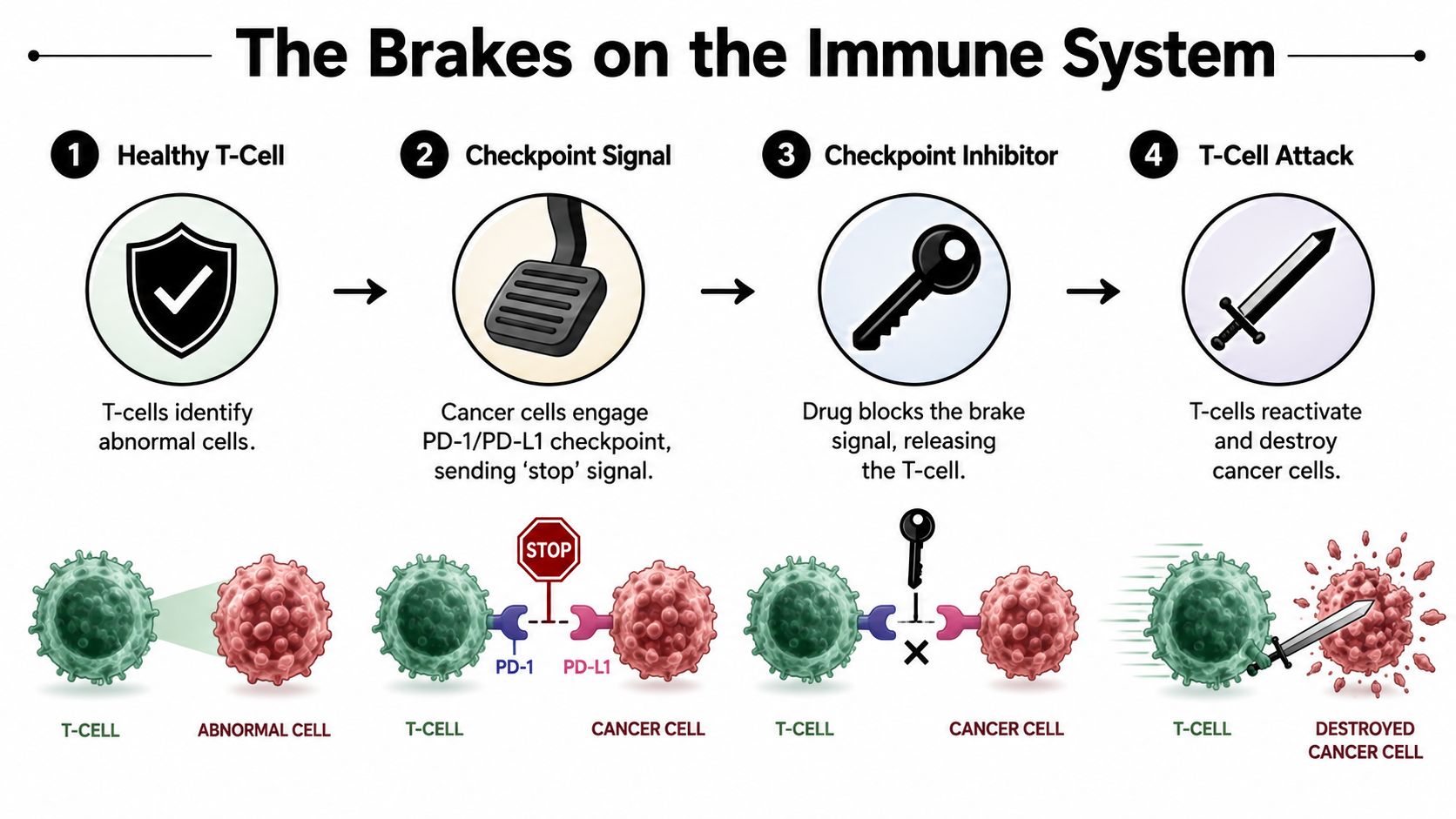
Some treatment plans block more than one checkpoint. Combining CTLA-4 and PD-1 inhibition can stimulate immune activity at different stages, but greater immune activation can also create greater toxicity. Researchers continue refining how these pathways interact, why some tumors remain invisible, and how to identify the patients most likely to benefit.
For a complementary patient-friendly explanation, see how immunotherapy works for cancer. The central idea is simple, even though the biology is not: checkpoint blockade removes an inhibitory signal, but the immune system still has to find, recognize, enter, and attack the tumor.
Approved Checkpoint Inhibitor Drugs and Cancer Types
The field of checkpoint inhibitor therapy now includes several established medicines, each with a target pathway, a brand name, and a set of approved uses. In the United States, 11 immune checkpoint inhibitor drugs had been approved for 88 advanced or metastatic indications across 20 tumor types by 2023. The estimated share of U.S. patients eligible for these therapies rose from 1.54% in 2011 to 56.55% in 2023, while the estimated proportion responding rose from 0.14% to 20.13% over that period (U.S. checkpoint inhibitor eligibility and response analysis).
| Drug, brand name | Target pathway | Key approved cancer types |
|---|---|---|
| Pembrolizumab, Keytruda | PD-1 | Melanoma, non-small cell lung cancer, renal cell carcinoma, urothelial carcinoma, head and neck cancer, triple-negative breast cancer, Hodgkin lymphoma, and selected MSI-H/dMMR solid tumors |
| Nivolumab, Opdivo | PD-1 | Melanoma, lung cancer, renal cell carcinoma, urothelial carcinoma, head and neck cancer, colorectal cancer with selected repair features, and other approved settings |
| Atezolizumab, Tecentriq | PD-L1 | Lung cancer, urothelial carcinoma, hepatocellular carcinoma, and other approved settings |
| Durvalumab, Imfinzi | PD-L1 | Lung cancer, biliary tract cancer, hepatocellular carcinoma, and other approved settings |
| Ipilimumab, Yervoy | CTLA-4 | Melanoma and combination regimens in selected cancers |
| Avelumab, Bavencio | PD-L1 | Urothelial carcinoma and other approved settings |
These categories include both organ-specific approvals and tumor-agnostic approvals. A tumor-agnostic approval is based on a molecular feature, such as microsatellite instability or mismatch repair deficiency, rather than only the organ where the cancer began. That approach shifts the question from “Where did the cancer start?” toward “What biological feature does the tumor carry?”
The list changes as regulators review new evidence. An approved indication still doesn't tell you whether your tumor is immune-visible, whether a combination is preferable, or how the risks fit your medical history. Those questions require pathology review, biomarker interpretation, disease-stage assessment, and a discussion of your goals.
What to Expect During Treatment and Monitoring
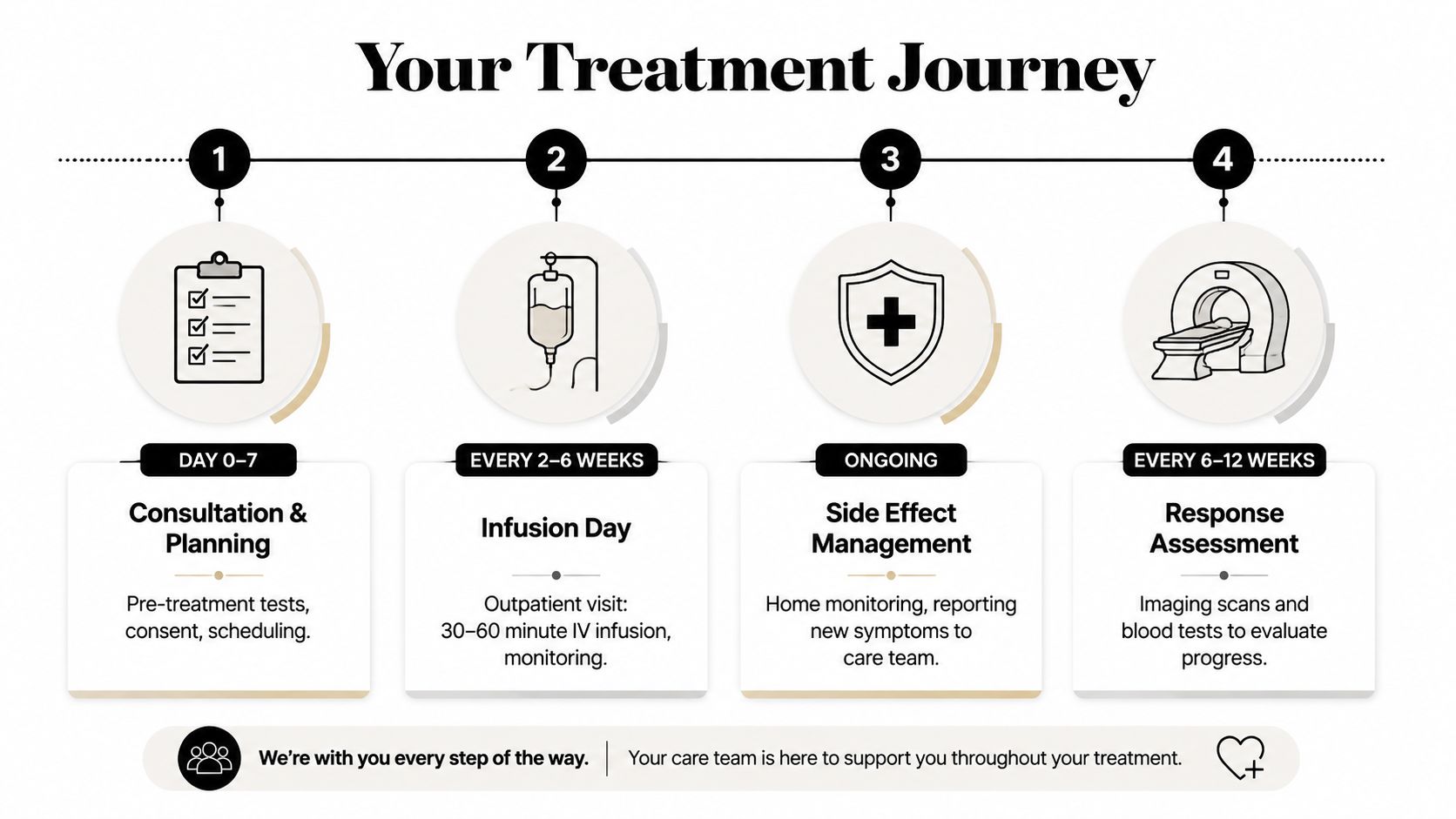
Checkpoint inhibitor treatment usually takes place in an outpatient infusion center. The medicine is delivered through an IV, and the visit may include a review of symptoms, vital signs, blood tests, a discussion with the oncology team, and observation during or after administration. The exact infusion time and schedule depend on the drug, dose, and indication, so ask your team to write down the plan rather than relying on memory.
Treatment may be scheduled every few weeks, with the interval determined by the specific medicine and cancer setting. Some protocols continue treatment for an extended period, sometimes up to two years, if the cancer hasn't progressed and side effects remain acceptable. Unlike a fixed chemotherapy course, checkpoint treatment may feel open-ended, although the team should still define the conditions for continuing, pausing, or stopping.
Monitoring between infusions
Your clinicians may check blood counts, liver enzymes, kidney function, glucose, and thyroid-related tests. The precise panel varies according to the drug and your medical history. Imaging is used to evaluate the cancer, but an early scan isn't interpreted in isolation.
A phenomenon called pseudoprogression can occur when immune activity makes a lesion look larger before the cancer later stabilizes or shrinks. It's uncommon enough that your oncologist shouldn't assume every increase is pseudoprogression, but in a clinically well patient, the team may repeat imaging or continue treatment while clarifying the pattern. The decision depends on symptoms, the speed and distribution of change, and the risks of waiting.
What you can do
Stay hydrated according to your care team's advice, bring an updated medication list, and tell staff about new prescriptions, supplements, infections, or changes in an autoimmune condition. Premedication isn't required for every checkpoint inhibitor, but your infusion center may use medications or observation procedures based on the drug and your previous reactions.
Report changes early: New diarrhea, cough, shortness of breath, rash, weakness, severe headache, yellowing of the skin, unusual thirst, or confusion shouldn't wait for the next appointment.
Understanding Side Effects and Immune-Related Reactions
Immunotherapy isn't automatically easier than chemotherapy. Its toxicity pattern is different because the treatment activates immune defenses that can mistakenly target healthy tissue. Immune-related adverse events, or irAEs, may involve the skin, bowel, lungs, liver, thyroid, pituitary gland, heart, nerves, or other organs.
Some reactions are mild and manageable. Fatigue, rash, diarrhea, and thyroid changes may occur, but the significance depends on severity, timing, baseline health, and whether more than one organ is involved. Serious toxicity can require treatment interruption, hospitalization, specialist input, and immunosuppression. Expert reviews emphasize early recognition, graded management, and timely treatment rather than relying on simple dose reduction (review of toxicity management).
| Organ system | Common irAEs | Approximate incidence | First-line management |
|---|---|---|---|
| Skin | Rash, itching, vitiligo | Varies by drug and setting | Clinical assessment, topical treatment, and holding therapy when clinically indicated |
| Gastrointestinal | Diarrhea, colitis | Varies by drug and setting | Stool evaluation when appropriate, treatment interruption, corticosteroids for significant inflammation |
| Endocrine | Thyroid dysfunction, hypophysitis, adrenal dysfunction | Varies by drug and setting | Hormone testing, replacement therapy, and specialist coordination |
| Liver | Hepatitis, elevated liver enzymes | Varies by drug and setting | Repeat laboratory testing, holding treatment, corticosteroids for clinically significant toxicity |
| Lung | Pneumonitis | Varies by drug and setting | Imaging and oxygen assessment, treatment interruption, corticosteroids when indicated |
| Heart | Myocarditis and rhythm disturbances | Rare but potentially severe | Urgent evaluation, cardiac testing, and specialist management |
Symptoms that need prompt attention
Don't wait for a scheduled visit if you develop persistent diarrhea, blood in the stool, new or worsening cough, chest pain, shortness of breath, severe abdominal pain, dark urine, yellow skin, marked weakness, fainting, confusion, severe headache, vision changes, or sudden changes in thirst or urination. These symptoms don't prove that an irAE is present, but they require timely assessment.
Clinicians may hold treatment, prescribe corticosteroids, or use additional immunosuppressive medicines when steroids don't control the inflammation. The decision to restart or permanently discontinue therapy depends on the organ involved, severity, recurrence risk, and the balance between cancer control and patient safety. Immune-related adverse events can appear during treatment or after an infusion has ended, so your medication history should remain visible to every clinician involved in your care.
Biomarkers, Resistance, and Advanced Cancer Applications
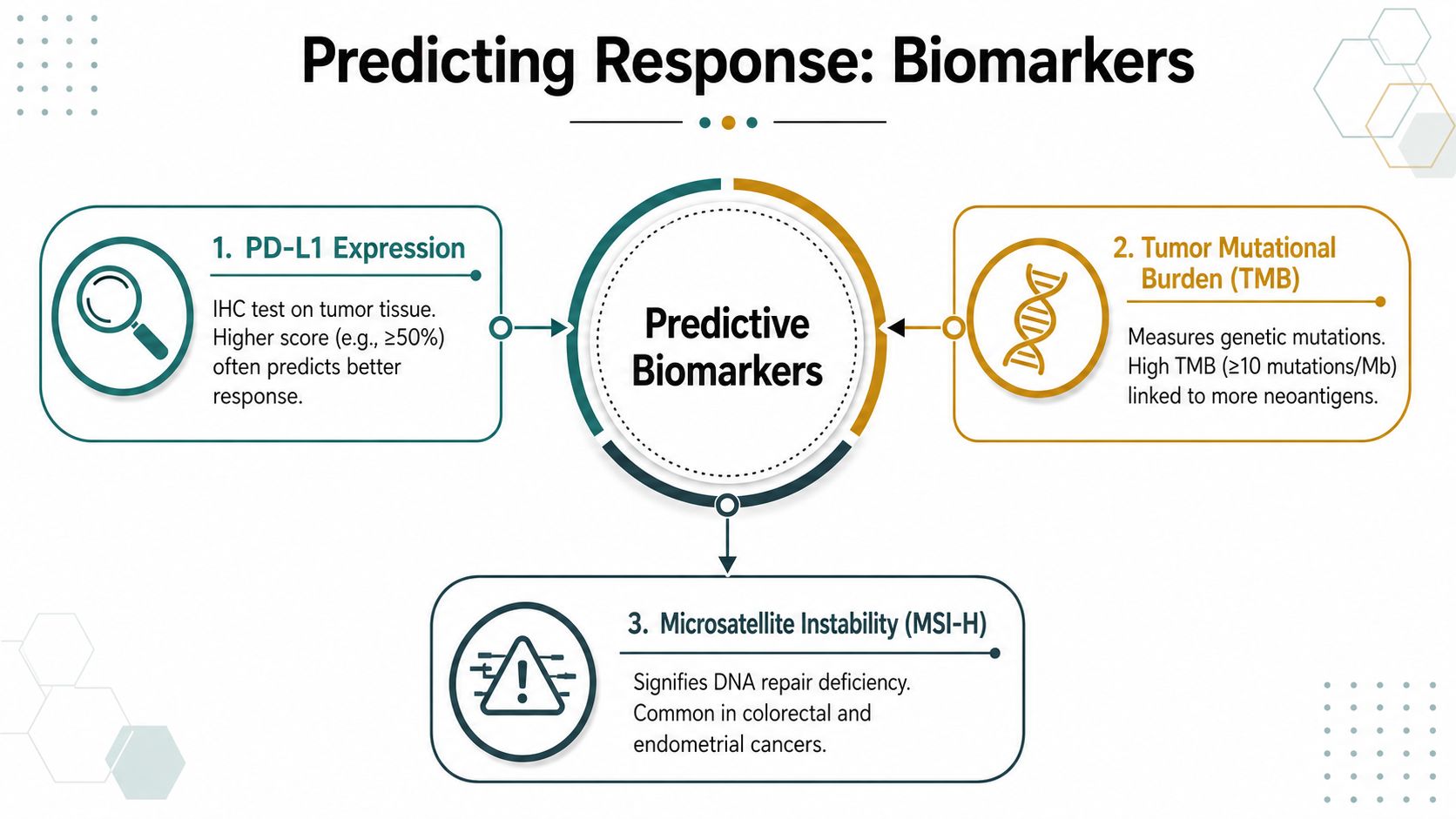
Patients commonly ask, “What test can tell me whether immunotherapy will work?” The honest answer is that current tests provide clues, not certainty. PD-L1 expression, measured by immunohistochemistry, estimates how much of a relevant ligand appears in the tumor sample. Tumor mutational burden, or TMB, estimates the number of mutations in tumor DNA. MSI-H or dMMR indicates a defect in DNA repair that can make abnormal tumor proteins more visible to immune cells.
These markers can influence eligibility or treatment selection in particular diseases, but none captures the entire immune conversation. A biopsy may not represent every tumor site, expression can vary over time, and a tumor can carry a favorable marker while still excluding or disabling T cells. Reviews continue to identify PD-L1, MSI/dMMR, and TMB as the main clinically used markers, while newer spatial, transcriptomic, T-cell, and gene-expression approaches remain under study (review of emerging immunotherapy biomarkers).
Why resistance develops
Some tumors never respond, which is called primary resistance. Others respond and later grow again, which is acquired resistance. The causes can include poor antigen presentation, altered interferon signaling, an immunosuppressive tumor microenvironment, inadequate T-cell entry, or loss of immune recognition. The drug may still be blocking its intended checkpoint, but the cancer has changed another part of the system.
This is why a PD-L1-negative tumor can sometimes respond and a PD-L1-positive tumor can fail to respond. A biomarker result should be discussed as one part of a decision, alongside cancer biology, prior treatment, symptoms, organ function, autoimmune history, and personal priorities. A structured biomarker monitoring workflow can help patients understand how testing fits into broader clinical follow-up, but it doesn't replace oncology interpretation.
Checkpoint inhibitors may be used alone, together, or with chemotherapy, anti-angiogenic treatment, or another immunotherapy approach. In some settings, clinicians also consider newer checkpoint targets, such as LAG-3, when supported by the disease context and available evidence. For a plain-language overview of what cancer biomarkers mean, focus on the question behind the result: how will this finding change the treatment decision?
Life After Treatment and Long-Term Quality of Life
Finishing checkpoint inhibitor therapy doesn't always mean finishing its effects. Some immune-related problems can persist, appear late, or require long-term care. Endocrine injury may lead to permanent hormone replacement, while joint symptoms, skin changes, fatigue, bowel problems, or other inflammatory conditions can interfere with daily life even when scans show cancer control.
A 2025 scoping review reported grade 3 or higher irAEs in 10–15% of survivors and late or long-term irAEs in 20–30% (survivorship review). The same evidence base highlights a difficult patient experience: persistent irAEs can reduce quality of life, but longer-term impairment may also be driven by depression, anxiety, sexual concerns, and metabolic syndrome. At least two years after starting treatment, about one-quarter of survivors had clinically relevant lower quality of life in the cited work.
A survivorship plan should be specific
Ask who will monitor thyroid, adrenal, glucose, liver, lung, bowel, and musculoskeletal concerns after treatment. Your primary care physician should know that you received checkpoint blockade, because a new symptom months later may be interpreted differently when immune activation is part of your medical history.
Scanxiety also deserves medical attention. The uncertainty of surveillance, fear of recurrence, and lack of a simple “final day” can weigh heavily on patients and caregivers. A practical plan can include the expected follow-up schedule, symptoms that warrant an earlier call, medication responsibility, mental health support, rehabilitation, and a clear record of previous immune toxicities.
Preparing for Your Oncology Consultation
A productive consultation isn't only about asking whether a drug is approved. It's about understanding the reasoning, alternatives, uncertainties, and plan for protecting your quality of life.
Bring a written list and ask a family member or trusted friend to take notes. Request a written treatment summary that includes the drug name, intended schedule, symptoms to report, after-hours contact information, and the circumstances under which treatment would be delayed or stopped.
Questions worth asking
- Treatment rationale: Why is this checkpoint inhibitor appropriate for my cancer, stage, and prior treatments?
- Expected benefit: What would success look like, and how will we distinguish cancer growth from an unusual inflammatory scan?
- Biomarkers: Which tests were performed, what do the results show, and how much uncertainty remains?
- Practical schedule: How often will I visit the infusion center, how long might treatment continue, and who coordinates appointments?
- Safety plan: Which symptoms require a same-day call, and which require emergency evaluation?
- Contingency planning: What are the next options if the cancer progresses or toxicity makes continuation unsafe?
- Personal health: Could my autoimmune history, transplant history, medications, or other conditions change the risk?
Clinical trials deserve a direct conversation, not a pressured decision. Ask whether a trial is testing a new checkpoint combination, a biomarker strategy, a treatment sequence, or a monitoring method. Clarify the study phase, required visits, known risks, alternative treatment, travel demands, and what happens if you withdraw. Your oncology team can help search appropriate registries and determine whether the eligibility criteria fit your diagnosis and treatment history.
A second opinion can be useful when the cancer is advanced, treatment-resistant, biomarker-defined, or associated with a difficult toxicity decision. Ask the first office to transfer pathology, imaging, operative notes, genomic reports, and treatment records electronically when possible. For families needing help with daily activities during treatment, Carevo for cancer patients offers information about home-care support that can complement, but not replace, oncology management.
Hirschfeld Oncology provides individualized consultations, outpatient infusion care, immune-related toxicity monitoring, and treatment planning for complex and advanced cancers. Visit Hirschfeld Oncology to review educational resources and request a consultation about checkpoint inhibitor therapy, biomarker uncertainty, treatment options, and long-term quality-of-life priorities.
.png)
.png)






