


.png)


Losing your hair during chemotherapy is often one of the most visible and emotionally tough side effects of treatment. The good news? For most people, it's temporary. Your journey toward chemo hair regrowth usually starts just a few weeks after your last infusion. It’s a real sign of renewal, but it helps to first understand why it happens at all.
Why Chemotherapy Affects Your Hair
I often explain chemotherapy to my patients as a powerful medicine that travels throughout your body to hunt down and attack cells that are dividing very quickly. Its main job, of course, is to go after cancer cells, which are notorious for their rapid growth.
The problem is, the treatment isn't always smart enough to tell the difference between a cancer cell and other healthy cells that also happen to grow fast.
This is where your hair comes in. The cells inside your hair follicles are some of the fastest-dividing healthy cells you have. As the chemo drugs do their work, they can't help but damage these follicles, which disrupts the hair's natural growth cycle. This causes the hair shaft to weaken, break, and eventually fall out.
Not All Chemo Causes Hair Loss
It’s a huge misconception that every person who has chemo will lose their hair. The truth is, whether you experience hair loss—and how much—depends on a few key things:
- The Specific Drug Used: Some chemotherapy agents are much harder on hair follicles than others. For example, drugs known as taxanes (like paclitaxel) are almost certain to cause significant hair loss.
- The Dosage: The higher the dose of chemo, the greater the likelihood of losing your hair.
- The Treatment Schedule: How often you get your infusions can also play a role in how your hair follicles are affected.
That’s why one person might only have some mild thinning while another loses their hair completely, including eyebrows and eyelashes. Getting a handle on these details is important, and you can learn more about how chemotherapy works in our dedicated guide.
This side effect, officially called chemotherapy-induced alopecia (CIA), is incredibly common. It impacts roughly 65% of patients and is often described as one of the most distressing parts of going through cancer treatment.
The Science Behind the Side Effect
Chemotherapy-induced alopecia happens because of how certain drugs are designed to work. For instance, antimicrotubule agents—a specific class of chemo—carry a hair loss risk for more than 80% of patients. Other types of drugs, like antimetabolites, have a much lower risk.
The emotional toll is significant. Studies have found that many patients consider hair loss the single most troubling side effect of their treatment. You can read more about these specific findings on PubMed.
While it's a difficult process, seeing your hair fall out is often a sign that the chemotherapy is doing its job and effectively targeting those fast-growing cells. Understanding the science can take some of the mystery out of the experience, helping you shift your focus from the loss to the recovery and eventual regrowth that lies ahead.
The Chemo Hair Regrowth Timeline
For many people, watching their hair return after chemotherapy is one of the most powerful signs that they’re moving forward. It’s a visible, tangible step toward feeling like yourself again. But what does that journey actually look like? While it’s a little different for everyone, there's a fairly predictable pattern to how and when hair comes back.
It’s a process that asks for a good deal of patience. Your body, especially your hair follicles, has been through an intense experience and needs time to reset and start producing hair again. The first new growth is often subtle, but it’s a milestone worth celebrating.
This timeline gives you a general idea of what to expect as your body recovers and your hair begins its return.
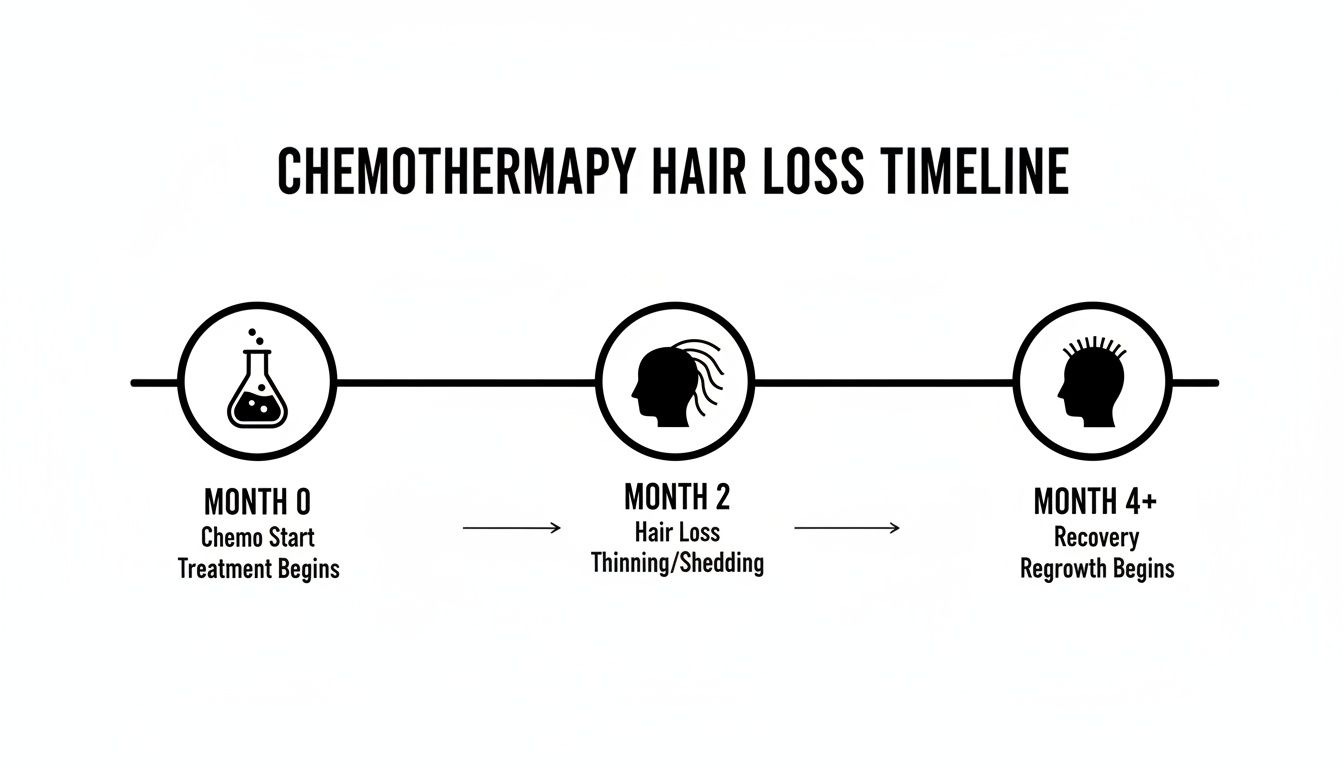
As you can see, the work of regrowth often starts surprisingly soon after your last treatment.
Typical Chemo Hair Regrowth Stages
The path to a full head of hair happens in phases. We've put together a simple table to help you visualize what's happening and when.
| Time After Final Chemo Session | What to Expect |
|---|---|
| 2–4 Weeks | The first signs of life! You might notice a soft, fine fuzz, often compared to "peach fuzz." It can be very light. |
| 1–2 Months | Hairs become more distinct and start to thicken. You'll likely see the beginnings of real, textured hair. |
| 2–3 Months | Growth becomes much more noticeable. You could have about an inch of hair to work with. |
| 3–6 Months | Hair is actively growing, reaching around 2-3 inches. You may now have enough hair for a short haircut or style. |
| 12+ Months | Most people have a full head of hair. The texture and color may start returning to what they were before treatment. |
Remember, this is a general guide. Your personal timeline will depend on many factors, including the specific treatments you received and your body's unique healing process.
What Happens in the First Three Months
The very first hint of new hair usually shows up within weeks of your final chemo infusion. It’s incredibly soft and fine at first, but it’s a clear signal that your hair follicles are waking up from their dormant state.
By the one-month mark, this "peach fuzz" starts to feel a bit more substantial. As you move toward the three-month mark, you’ll likely see about an inch of real, textured hair. It’s an exciting time when you can really start to see the progress.
Three to Six Months Post-Chemo
This is when things really pick up. Between three and six months, your hair growth can become quite significant, reaching 2-3 inches or more. For many, this is enough hair to start styling, which can be a huge boost to your confidence.
Your hair's thickness and texture will continue to evolve during this window. It’s a period where you really start to look and feel more like your pre-chemo self. If you're curious about the fundamentals of hair growth cycles, this guide explains how long it takes for hair to grow under normal circumstances.
It's also important to set realistic expectations. While most people have a full head of hair within a year, some may experience a much slower return. We know from research that for a small number of patients, especially those treated with certain taxane-based drugs, regrowth can be slow or incomplete. This condition, called persistent chemotherapy-induced alopecia (pCIA), may affect up to 15% of patients, with the risk going up with higher drug doses.
Why Your New Hair Might Be Different
One of the most frequent things we hear from patients is how surprised they are by the texture and color of their new hair. It’s very common for someone who had pin-straight hair to suddenly have waves or curls—a change many affectionately call "chemo curls."
So, what's going on? Chemotherapy drugs can temporarily affect the shape of the hair follicles themselves. As these follicles recover and restart production, they might create hair with a new identity.
- Texture Changes: Your hair could come back much curlier, wavier, finer, or even more coarse than before.
- Color Changes: It's also common for hair to grow in a different color. It might be darker than you remember or have more gray than you started with.
For most people, these changes are temporary. After a few growth cycles—which can take a year or two—your follicles usually reset, and your hair gradually returns to its original texture and color. This is just one more way your body heals, much like how other side effects fade over time. You can learn more about how long chemo side effects last on our blog.
How to Support Healthy Hair Regrowth After Chemo
As you start to see those first fuzzy signs of new hair, there's a lot you can do to create the best environment for it to thrive. I often tell my patients to think of their scalp like a garden that’s been through a harsh winter. Before new seeds can grow strong, the soil needs a little extra care and attention.
By adopting a few gentle practices and avoiding others, you can give your recovering hair follicles the support they need to produce healthy, strong hair as you move past treatment.
Start with Gentle Scalp Care
Your scalp has been through an ordeal, and the new hair coming in is incredibly delicate. The most important thing you can do right now is to treat it with the same kindness you’d use for a newborn's hair.
This means putting any harsh chemicals or heat-styling tools on the back burner for a while. Your new hair is fragile, and the high heat from flat irons, wands, or even hot blow-dryers can easily cause damage and breakage.
Instead, let’s focus on a simple, gentle routine:
- Switch to a Sulfate-Free Shampoo: Sulfates are powerful detergents that can strip natural oils, leaving your already sensitive scalp feeling dry and irritated. Look for a mild, moisturizing formula.
- Wash Less Often: You really don't need to wash your hair every day. Aim for every 2-3 days to give your scalp’s natural oils a chance to protect and nourish the new growth.
- Use Lukewarm Water: Hot water can feel good, but it’s harsh on a sensitive scalp. Stick with lukewarm or cool water for a much gentler wash.
- Pat, Don't Rub: When you get out of the shower, gently pat your hair dry with a soft towel. Vigorously rubbing your head can easily break those fragile new strands.
As your hair fills in, you might find that a routine tailored for thinning hair offers some great product suggestions and techniques for handling delicate new growth.
Consider Topical Treatments like Minoxidil
One of the most effective and well-researched tools we have for encouraging regrowth is topical minoxidil, which you probably know by the brand name Rogaine. It works by waking up dormant hair follicles, essentially giving them the nudge they need to get back into the growth phase.
It was first developed as a blood pressure medication, but doctors quickly noticed a very welcome side effect: it made hair grow. Now, it's a common over-the-counter treatment you apply right to your scalp.
Minoxidil isn’t a miracle cure, but it can be a really helpful part of your toolkit. We often recommend it for patients who are seeing very slow regrowth or persistent thinning after their chemo has ended. Of course, you should always talk with your oncology team before starting any new treatment.
Thankfully, hair loss is being taken more seriously as a quality-of-life issue, which is driving more research into effective treatments. In fact, one study found that 5% topical minoxidil led to significant improvement in 80% of breast cancer survivors struggling with post-treatment alopecia.
Boost Blood Flow with Scalp Massage
Here’s something simple, free, and incredibly beneficial you can start doing today: regular scalp massage. Just use your fingertips to gently massage your scalp for a few minutes every day. This simple action helps increase blood flow to the hair follicles.
Better circulation means more oxygen and nutrients are delivered right where they're needed most. Think of it like watering the roots of a plant—you're giving your hair the building blocks it needs to grow back strong. Plus, it’s a wonderfully relaxing ritual that can help ease a bit of stress.
What to Avoid During Early Regrowth
Just as important as what you do is what you don't do. For the first six to twelve months after chemo, protecting your new hair from any kind of stress is absolutely crucial.
Here are the main things to steer clear of:
- Chemical Treatments: Please hold off on hair dye, bleach, perms, and chemical straighteners. These processes are far too aggressive for new, fragile hair and can cause serious damage or even renewed hair loss. It’s best to wait until your hair is at least a few inches long and feels much stronger.
- Harsh Styling: Avoid tight hairstyles that pull on the hair follicles, like high ponytails, tight braids, or buns. That kind of tension can weaken the roots and lead to breakage, which is the last thing you want.
- Aggressive Brushing: Be gentle. Use a wide-tooth comb or a brush with very soft bristles, especially when your hair is wet and at its most vulnerable.
Some people also use scalp cooling systems during infusions to help reduce hair loss from the very beginning. If you want to learn more about those preventative options, you can check out our guide on cold cap therapy for chemo. By being proactive and gentle, you give your body the best possible chance to regrow beautiful, healthy hair.
Nourishing Your Hair Growth from the Inside Out
While scalp treatments and gentle hair care lay the groundwork on the outside, true and lasting chemo hair regrowth is an inside job. Think of your body as a construction site that’s just gone through a major overhaul. Now in recovery, it has to be smart about where it sends its resources.
Your body’s top priority will always be repairing vital organs and restoring essential functions. This means your hair follicles, which aren't critical for survival, often get pushed to the back of the line for nutrients. To give them a helping hand, you need to supply your body with plenty of the right building blocks.
This is where nutrition and wellness become your secret weapons. By focusing on what you eat, you can directly fuel the follicles working so hard to produce strong, healthy new hair.
The Building Blocks for Stronger Hair
Hair is made almost entirely of a protein called keratin. For your follicles to produce it, they need a steady supply of very specific vitamins and minerals. Shifting your focus to a nutrient-dense diet can make a real, visible difference in how quickly and how well your hair grows back.
Here are the key players your body is looking for:
- Protein: Since hair is literally made of protein, getting enough is non-negotiable. Good sources include lean meats, fish, eggs, beans, and lentils.
- Iron: This mineral is vital for making hemoglobin, the part of your red blood cells that carries oxygen everywhere—including your hair follicles. Low iron is often linked to hair thinning.
- Biotin: Famous for its role in hair health, this B-vitamin helps your body produce keratin. You can find it in foods like eggs, nuts, and sweet potatoes.
- Zinc: This mineral is a powerhouse for hair tissue growth and repair. It also helps keep the oil glands around your follicles functioning properly.
Think of these nutrients as the VIPs on your hair's guest list. When your body has more than enough to go around, it can afford to send them to "non-essential" but very important places like your scalp, encouraging stronger and healthier growth.
A Regrowth-Friendly Grocery List
You don't need a complicated diet to get these nutrients. It’s all about making simple, intentional choices. Next time you're at the store, consider adding these to your cart to support your chemo hair regrowth journey.
- Leafy Greens: Spinach and kale are loaded with iron and vitamin C, which is crucial for helping your body absorb that iron.
- Fatty Fish: Salmon and mackerel are fantastic sources of protein and omega-3 fatty acids, which promote great scalp health.
- Nuts and Seeds: Almonds, walnuts, and flaxseeds deliver a healthy dose of zinc and beneficial fats.
- Lean Protein: Chicken, turkey, and Greek yogurt provide the amino acids your body needs to build new hair.
Managing Stress for Better Growth
Nutrition is huge, but it's not the only internal factor at play. The link between stress and hair health is undeniable. When you're stressed, your body produces more of a hormone called cortisol, which can throw your hair growth cycle out of whack.
After the intense physical and emotional toll of cancer treatment, actively managing stress is an act of self-care that pays off for your hair. Simple, gentle activities like a short walk outside, mindfulness meditation, or even just some light stretching can help lower cortisol. This holistic approach supports your overall well-being and helps create the calm internal environment your hair needs to thrive.
Navigating Hair Loss with Confidence and Style
Losing your hair during chemotherapy is an incredibly personal experience, and there's no right or wrong way to handle it. The most important thing is to find what makes you feel comfortable and confident in your own skin. This isn't about hiding—it's about finding new ways to express yourself and reclaim a sense of control on your own terms.

Whether you decide to embrace a bare scalp, experiment with beautiful head coverings, or find the perfect wig, the choice that empowers you is the right one. These aren't just temporary fixes; think of them as accessories that allow you to own your look during a challenging chapter.
Exploring Your Options for Head Coverings
Today, there's a whole world of stylish and comfortable options out there. This can actually be a creative and even fun process of discovering a new side of your personal style.
- Wigs: Modern wigs have come a long way. Available in both high-quality synthetic fibers and natural human hair, they can look remarkably realistic and feel comfortable. This is a great way to maintain your signature look or even try out that haircut you've always wondered about.
- Scarves and Turbans: The versatility here is endless. You can find countless tutorials on different tying techniques to create looks that are elegant, casual, or bold, perfectly matching your outfit or your mood for the day.
- Hats and Beanies: Never underestimate the power of a simple, soft beanie for warmth and comfort, especially at night. For daytime, a stylish hat not only adds flair to an outfit but also provides crucial sun protection for your sensitive scalp.
Many wonderful organizations, like the American Cancer Society, have programs that help patients find free or subsidized wigs and head coverings. We absolutely recommend looking into these resources to find options that work for you without adding financial stress.
Remember, the choice is 100% yours. Framing these tools as accessories rather than necessities can completely shift your mindset—from feeling a sense of loss to embracing creative expression and confidence.
Caring for Your Scalp Before Regrowth
While you're waiting for your chemo hair regrowth to make its debut, your scalp deserves some extra love. Chemotherapy can often leave the skin on your head feeling dry, itchy, and sensitive. A little TLC here can make a huge difference in your day-to-day comfort.
Think of it just like your daily skincare routine for your face. A gentle approach will soothe any irritation and create a healthy, happy foundation for your new hair to grow into.
Here are a few simple but effective tips for scalp care:
- Moisturize Daily: Keep dryness and flaking at bay by applying a gentle, fragrance-free lotion or natural oil to your scalp every day.
- Protect from the Sun: Your scalp is now extremely exposed and vulnerable to sunburn. Before you head outside, always wear a hat or apply a broad-spectrum sunscreen of at least SPF 30.
- Choose Soft Fabrics: If you're wearing head coverings, stick with soft, breathable materials like cotton, bamboo, or silk. These fabrics are much less likely to irritate sensitive skin.
The Power of Connection and Support
Perhaps most importantly, you don't have to walk this path by yourself. The emotional impact of hair loss is just as real as the physical side, and connecting with people who truly get it can be a massive source of comfort.
Support groups, whether they meet in person or online, offer a safe space to share your feelings, swap practical tips, and just feel understood. Hearing from others who have already navigated chemo hair regrowth can provide tangible hope and advice that makes the whole journey feel far less isolating. You might also find that sharing your own story is incredibly powerful for someone else just starting theirs.
How We Support Your Hair Regrowth Journey
We know that for many of our patients, watching their hair begin to grow back is a powerful, visible sign that they’re healing. That’s why we consider your chemo hair regrowth journey an essential part of your recovery, and it's a conversation we start having with you from day one. We want you to know what to expect, and more importantly, to know that we’re here to help you through it.
Our goal is always to improve your quality of life during and after treatment. This means we're always looking for ways to minimize tough side effects like hair loss. Whenever it’s clinically appropriate, we can design lower-dose chemotherapy regimens that are tough on cancer but a little easier on your body, giving your hair a better chance to bounce back.
A Partnership in Recovery and Regrowth
Think of us as your partners through every single stage of your cancer care—and that absolutely includes watching for your hair’s return. Our team keeps a close eye on your progress after your treatments are finished, and we’re right there to celebrate every milestone with you.
If your hair regrowth is slower than you’d like, or if you're dealing with persistent thinning, we don’t take a "wait and see" approach. We get proactive. This often means connecting you with trusted dermatologists right here in the Brooklyn area who specialize in hair and scalp conditions and can offer more advanced support.
Our commitment extends beyond just medical treatment. We integrate symptom management and support for side effects like hair loss directly into your care plan, ensuring your physical and emotional well-being are always at the forefront of what we do.
Ongoing Support for Your Well-being
Our support for you doesn't stop when your last infusion is done. We provide continued guidance on everything from gentle scalp care and nutrition to navigating the emotional side of hair loss and regrowth. We’re here to give you the expert care and resources you need to feel like yourself again.
This is the core of how we practice. Serving our communities across Brooklyn, from Williamsburg to Bushwick, means offering more than just advanced oncology treatments. It means creating a supportive space where your quality of life is our ultimate measure of success. We're here to help you navigate every step, so you can feel confident and cared for as your hair—and you—begin to heal.
Common Questions About Hair Regrowth After Chemo
Watching your hair start to return is a milestone, but it naturally comes with a lot of questions. What will it look like? When can I color it? What if it’s taking too long? Let’s walk through some of the most common concerns we hear from patients as they navigate this next chapter.
Will My Hair Really Grow Back with a Different Texture or Color?
This is one of the first things many people notice, and yes, it’s incredibly common. You might have had stick-straight hair your whole life only to find soft waves or even tight "chemo curls" appearing. It can be quite a surprise!
The reason for this change lies in the hair follicles. Chemotherapy can temporarily change their shape, and as they recover, the hair they produce can look and feel completely different. It's also common for new hair to be finer and even a different shade, sometimes appearing a bit darker or with more grays than you remember.
The good news is these changes are almost always temporary. As your body heals and your hair goes through a few growth cycles, it typically reverts to its original state. Think of it as your hair's "memory" returning, though this process can take a year or two.
Is It Safe to Dye or Chemically Treat My New Hair?
We know how much you might want to get back to your signature style, but patience is key here. We strongly advise waiting until your new hair is well-established—at least 3 to 6 inches long—before even thinking about dyes, bleaches, or perms.
Your new hair is incredibly fragile, much like a newborn's. Your scalp can also stay sensitive for months after treatment. Using harsh chemicals too soon can easily cause breakage or damage, and the last thing you want is to risk losing the new hair you’ve waited so patiently for.
When you and your oncology team feel it's the right time, take these steps for the best results:
- Go Gentle: Ask your stylist for professional, ammonia-free color options.
- Always Patch Test: Have your stylist test a small, hidden area first to make sure your scalp doesn’t react.
- Find an Experienced Stylist: It’s best to work with a professional who understands the unique needs of post-chemo hair. They can properly assess its strength and guide you toward the safest choices.
What Should I Do If My Hair Isn't Growing Back After Six Months?
Most people see noticeable regrowth within a few months, but for a small number, the process is much slower or seems stalled. If you’re past the six-month mark with very little to show for it, it’s time to check in with your oncologist.
This condition is called persistent chemotherapy-induced alopecia (pCIA). It’s more often linked to specific high-dose chemotherapy drugs, like taxanes.
Your oncologist is your first and most important call. They can assess the situation and rule out other things that might be slowing down regrowth, such as a hormonal imbalance or a nutritional deficiency. From there, they might suggest a consultation with a dermatologist who specializes in hair loss to explore treatments that can help encourage regrowth.
At Hirschfeld Oncology, we're here to support every part of your recovery, including the journey of hair regrowth. To learn more about our patient-centered approach to cancer care or to request a consultation, please visit us at our blog and resource center.
.png)
.png)






