.png)


You may have received the diagnosis in a rushed consultation, with scans on a screen, unfamiliar medical terms, and a family member trying to remember every sentence. Stage 4 gastric cancer is serious, but the diagnosis doesn't mean treatment choices have disappeared. The most important early decision isn't a simple choice between chemotherapy and immunotherapy. It's whether your team has tested the tumor properly and matched the treatment to its biology.
Treatment usually begins with a careful review of the pathology, staging images, symptoms, nutrition, and overall fitness. This guide focuses on stage 4 gastric cancer treatment, including biomarker-directed therapy, symptom-relieving procedures, clinical trials, second opinions, and the questions that should be answered before your first infusion. Bring someone you trust to appointments, ask for copies of every report, and write down the plan before you leave.
What to Expect After a Stage 4 Gastric Cancer Diagnosis
The first days after diagnosis can feel disorganized. Your doctors may know that the cancer is metastatic before they know exactly which treatment is appropriate. Those are different questions. A diagnosis identifies the disease, while the next round of testing determines the safest and most useful plan.
The initial review
Your team will typically confirm the biopsy diagnosis and review the tumor's features. Staging usually includes imaging of the chest, abdomen, and pelvis, with additional scans or procedures when the first images leave uncertainty. In selected patients, laparoscopy with peritoneal washings helps identify cancer on the abdominal lining that scans may not fully show. A biopsy from a distant site may also be considered when it would clarify the diagnosis or treatment.
Baseline bloodwork gives the oncologist a starting point for assessing blood counts, kidney and liver function, and whether your body can tolerate systemic treatment. A nutrition assessment matters because stomach cancer can interfere with eating, digestion, weight maintenance, and hydration before treatment even starts.
Why the first meeting takes time
Stage 4 disease is generally treated with systemic therapy, meaning medication travels through the bloodstream to reach cancer throughout the body. That differs from earlier disease, where surgery may sometimes remove the tumor with curative intent. In metastatic disease, the usual aim is to slow or control cancer, relieve symptoms, preserve function, and support meaningful quality of life.
The interval between diagnosis and treatment is often around two to four weeks, depending on how quickly pathology, biomarker testing, imaging, and consultations are completed. A short period used to obtain the right information is usually more valuable than starting an ill-matched regimen immediately.
Practical rule: Don't agree to a treatment plan that ignores the tumor's biomarker results or the patient's ability to tolerate therapy.
Before treatment begins, ask whether your case will receive multidisciplinary review. A medical oncologist, pathologist, radiologist, surgeon, gastroenterologist, dietitian, and palliative care clinician can each identify issues that one consultation may miss. Palliative care isn't the same as giving up. It treats pain, nausea, appetite loss, fatigue, anxiety, and other burdens alongside cancer-directed therapy.
How Doctors Define Stage 4 Gastric Cancer
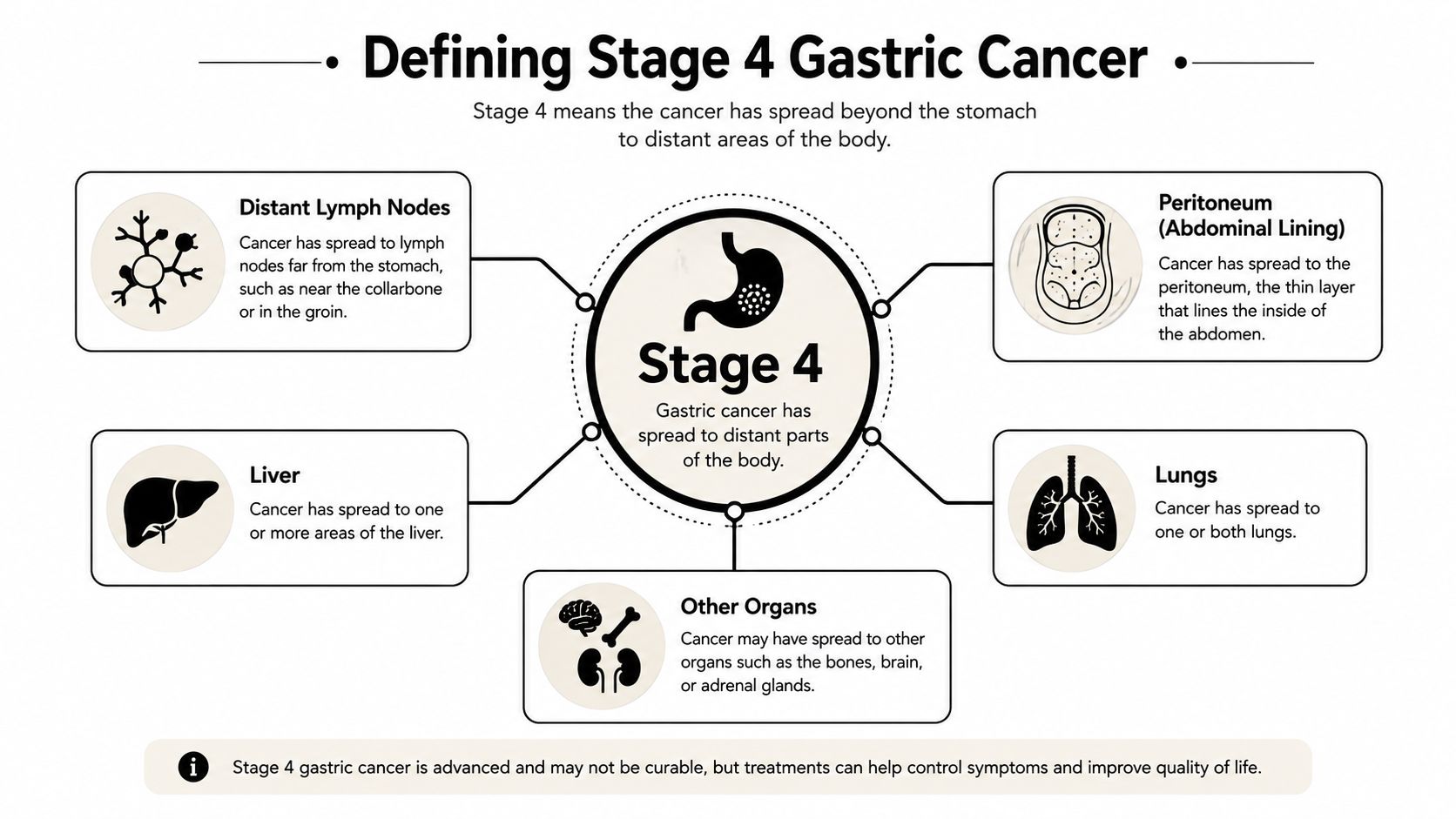
Doctors call gastric cancer stage 4 when it has spread beyond the stomach and regional area to distant locations. That can include distant lymph nodes, the peritoneum, liver, lungs, or other organs. In plain language, cells from the original stomach tumor have traveled, settled elsewhere, and begun growing there.
A useful analogy is seeding. The stomach is the original field, and malignant cells are seeds carried to other parts of the body. A seed that reaches the abdominal lining, liver, or lung can create a new tumor deposit. Those deposits remain gastric cancer, even though they're located in another organ.
How doctors confirm spread
A CT scan of the chest, abdomen, and pelvis is commonly central to staging. PET imaging may provide additional information in selected cases, while MRI can help answer specific questions about an organ or suspected metastasis. Laparoscopy gives the surgeon a direct view of the abdominal lining and may include peritoneal washings for laboratory examination. If a distant lesion is accessible and the result would alter care, a biopsy can confirm that it represents metastatic gastric cancer.
Why the treatment goal changes
Earlier gastric cancers may be treated with surgery, often alongside medication, with the intention of removing all detectable disease. Once distant spread is confirmed, removing the stomach alone can't eliminate cancer cells elsewhere. That's why medication, rather than surgery alone, becomes the foundation of care.
The outlook varies by region, dataset, tumor biology, treatment access, and response. The American Cancer Society's stomach cancer survival information reports a 5-year relative survival rate of 8% for distant-stage stomach cancer, while Cancer Research UK reports that around 20 out of 100 people with stage 4 stomach cancer survive at least one year after diagnosis. Older national datasets from Japan and Korea reported higher cumulative 5-year survival, 15.3% in Japan and 18% in Korea, illustrating why population-based figures shouldn't be treated as an individual forecast.
Biomarker Testing and What Each Result Changes
A stage 4 gastric cancer plan should not be finalized from the scan alone. Ask whether the tumor has been tested for HER2, PD-L1 CPS, dMMR or MSI, and CLDN18.2 before first-line treatment is chosen, provided your condition allows time for testing. These results can change whether chemotherapy is paired with a targeted drug, immunotherapy, or neither.
HER2
A HER2-positive tumor may qualify for trastuzumab with chemotherapy. Pathology testing determines HER2 status, and the result must be read alongside the testing method and the quality of the tumor sample. A negative result generally excludes the HER2-directed pathway, but chemotherapy, other biomarker-based treatments, and clinical trials may still be appropriate.
PD-L1 CPS
PD-L1 CPS helps assess whether a checkpoint inhibitor belongs in the initial regimen. A CPS at or above the relevant treatment threshold may support pembrolizumab or nivolumab with platinum-based chemotherapy, depending on the full clinical picture and local approvals. A low or negative CPS makes first-line immunotherapy less compelling, although it does not automatically rule out later use.
dMMR or MSI
Mismatch repair deficiency and microsatellite instability identify a smaller group of tumors with immune features that can substantially affect treatment selection. dMMR or MSI-high disease may support single-agent immunotherapy in selected patients, or immunotherapy combined with chemotherapy. If the tumor is mismatch repair proficient or microsatellite stable, the team usually gives greater weight to HER2, PD-L1, CLDN18.2, symptoms, disease burden, and overall fitness.
CLDN18.2
CLDN18.2 is a treatment marker measured by immunohistochemistry. A positive result can make zolbetuximab with chemotherapy an option where the drug is approved and clinically suitable. A negative result removes that specific option, not treatment as a whole.
Biomarker-negative disease deserves a direct discussion. If HER2, PD-L1, dMMR or MSI, and CLDN18.2 do not identify a useful treatment path, chemotherapy remains an important systemic treatment, and clinical trials may offer another route. A negative panel is not a reason to delay care or assume that treatment has little value.
The biopsy must contain enough viable tumor for reliable testing. If the original sample is small, ask whether another specimen is needed or whether the existing tissue can support all four tests. Turnaround is often one to three weeks, so the oncologist should balance test completion against symptoms and the need to start treatment. For a plain-language explanation, review this companion diagnostic testing guide.
| Biomarker | Approximate Positivity Rate | Therapy Option If Positive | If Negative |
|---|---|---|---|
| HER2 | A minority of tumors | Trastuzumab with chemotherapy | Use other biomarker pathways and systemic therapy |
| PD-L1 CPS | A clinically meaningful subset, depending on the threshold used | Pembrolizumab or nivolumab with chemotherapy in appropriate settings | Immunotherapy may be less compelling in the first line |
| dMMR or MSI-high | A smaller subset | Single-agent immunotherapy or an immunotherapy-containing regimen | Rely on HER2, PD-L1, CLDN18.2, and clinical factors |
| CLDN18.2 | Positivity varies by assay and population | Zolbetuximab with chemotherapy where appropriate | Zolbetuximab is not selected on that basis |
First-Line Treatment Options by Biomarker Profile
There isn't one universal first-line regimen for metastatic gastric cancer. The oncologist chooses a pathway based first on biomarkers, then on performance status, organ function, symptoms, prior treatment, and personal priorities.
For many patients, the chemotherapy backbone uses a fluoropyrimidine and a platinum drug. Examples include FOLFOX or CAPOX. FOLFIRI may be used in later treatment or in situations where a platinum drug isn't suitable. FLOT is more commonly associated with perioperative treatment, not a default metastatic regimen. In stage 4 disease, a doublet is often favored because it can provide systemic treatment with a more manageable toxicity burden than a triplet.
The main branches
A patient with HER2-positive disease may receive trastuzumab with chemotherapy. The FDA's nivolumab approval announcement described a major shift for HER2-negative advanced disease, with nivolumab combined with fluoropyrimidine and platinum chemotherapy. In PD-L1-positive patients, median overall survival was 14.4 months versus 11.1 months with chemotherapy alone, and in the overall trial population it was 13.8 months versus 11.6 months. These results support biomarker-guided combination treatment, not automatic immunotherapy for everyone.
Patients with dMMR or MSI-high tumors deserve a specific discussion about immunotherapy. Depending on symptoms, disease burden, and treatment goals, the oncologist may consider pembrolizumab alone or nivolumab with chemotherapy. CLDN18.2-positive disease may qualify for zolbetuximab with chemotherapy. HER2-positive disease also has newer combination possibilities. In 2025, the FDA approved pembrolizumab with trastuzumab and platinum-based chemotherapy for unresectable or metastatic HER2-positive gastric or GEJ carcinoma, with median overall survival of 20.0 months versus 16.8 months in the comparator arm, as summarized by this FDA-focused oncology report.
A biomarker-negative result doesn't mean “nothing can be done.” The patient may still receive combination chemotherapy, then be assessed for later-line therapy or a clinical trial. The oncologist should explain which options remain open rather than treating a negative panel as the end of personalized care.
Performance status changes the plan
Performance status is the second major branch point. A person who is active and independent may tolerate combination treatment that would be unsafe for someone spending most of the day in bed. ECOG 0 to 1 often permits standard combination therapy, while ECOG 2 calls for a more individualized discussion about dose intensity, single-agent treatment, symptom stabilization, or supportive care.
| Biomarker Profile | First-Line Regimen | Key Evidence | Typical Duration |
|---|---|---|---|
| HER2-positive | Chemotherapy plus trastuzumab, with immunotherapy considered when appropriate | HER2-directed treatment and newer approved combinations | Continued while effective and tolerable |
| HER2-negative, PD-L1-positive | Platinum and fluoropyrimidine chemotherapy plus nivolumab or pembrolizumab when indicated | First-line nivolumab evidence supports combination treatment in selected disease | Combination phase followed by ongoing treatment decisions |
| dMMR or MSI-high | Immunotherapy alone or with chemotherapy | Immune-sensitive tumor biology can change the balance between approaches | Individualized by response and tolerance |
| CLDN18.2-positive | Zolbetuximab plus chemotherapy where approved | CLDN18.2-directed treatment adds a targeted pathway | Continued according to response, toxicity, and protocol |
| Biomarker-negative | Combination chemotherapy, with later-line trials or immunotherapy considered | No single targeted pathway is identified | Reassessed after response and toxicity evaluation |
When Surgery, Radiation, or Endoscopic Procedures Still Help
Local treatment has a narrower role in stage 4 disease. The default is not to remove the stomach just because the primary tumor is present. The default is to use systemic therapy for cancer throughout the body and reserve procedures for symptoms or carefully selected exceptions.
Treating urgent symptoms
A gastrectomy may help when bleeding continues despite endoscopic treatment, an obstruction prevents eating, or perforation creates an immediate surgical problem. Endoscopy can sometimes control bleeding, ablate obstructing tumor, place a stent across a gastric outlet blockage, or provide access for nutritional support. A feeding tube, including a PEG or jejunostomy, may be appropriate when oral intake can't maintain hydration or nutrition.
Radiation can be valuable for bleeding, painful bulky lymph nodes, bone metastases, or brain metastases. The delivery method depends on the site, symptoms, prior treatment, and surrounding organs. The purpose is usually relief and local control, not cure.

The limited surgical exception
The REGATTA trial found that adding gastrectomy to chemotherapy didn't improve survival in metastatic disease. That result is why routine removal of the primary stomach tumor isn't recommended solely to extend life. Palliative resection is mainly considered for ongoing bleeding or obstruction, as described in the overview of gastric cancer treatment options.
A different situation arises when systemic treatment produces an exceptional response and all visible disease becomes technically removable. Expert consensus describes selected oligometastatic scenarios, such as up to three resectable liver metastases or limited peritoneal disease with PCI no higher than 6, where a high-volume team may discuss conversion surgery with the aim of complete visible tumor removal. This is not routine care. Ask for review at a specialist center before accepting or rejecting an aggressive local approach.
How to Find and Evaluate Clinical Trials
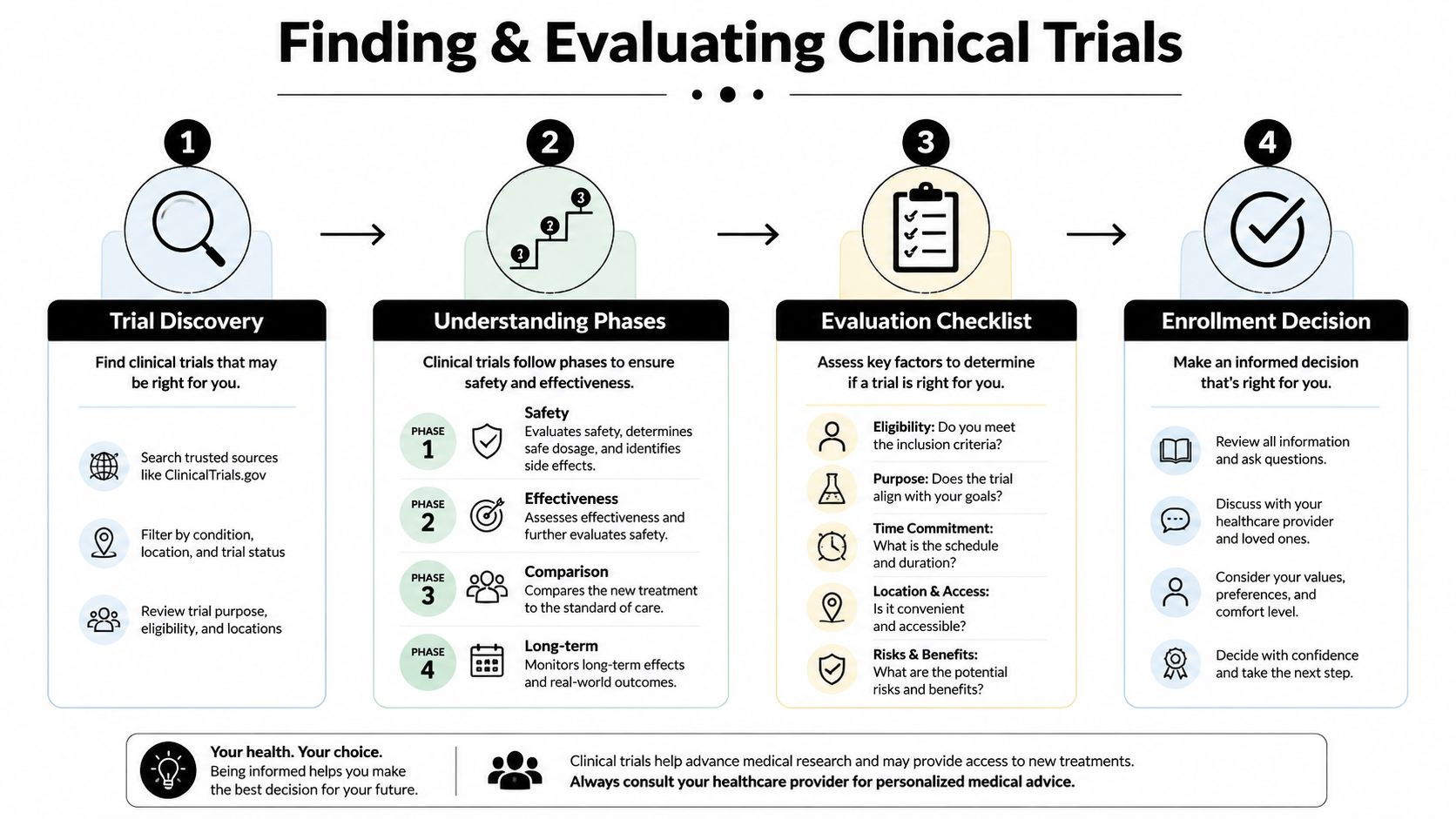
Clinical trials aren't only a last resort. For metastatic gastric cancer, a trial can provide access to a new targeted agent, an immunotherapy combination, or a CLDN18.2-directed strategy while the patient still has adequate strength to receive treatment.
Understand the phase
The phase tells you what researchers are trying to learn:
- Phase 1: Tests safety, dosing, and how the body handles the treatment.
- Phase 2: Looks more closely at whether the treatment appears to work against the cancer.
- Phase 3: Compares the new approach with the current standard.
- Phase 4: Follows longer-term effects after approval.
Phase 2 studies may be particularly relevant when a tumor carries a specific marker, but phase alone doesn't determine whether a trial is right. The eligibility criteria, treatment burden, location, and alternatives matter just as much.
Search with a specific question
Start with ClinicalTrials.gov and the NCI Cancer Information Service. Search terms should reflect the tumor, marker, and treatment stage, such as HER2 gastric cancer, CLDN18.2 gastric cancer, or immunotherapy gastric cancer. Major academic cancer centers and organizations including No Stomach for Cancer, Debbie's Dream Foundation, and Gastric Cancer Foundation may also maintain trial information.
Review each listing for:
- Biomarker eligibility: Does the trial require HER2, CLDN18.2, MSI, or another result?
- Prior treatment: Must you have received or avoided a particular drug?
- Performance status: Can your current activity level meet the protocol?
- Travel burden: How often are visits, scans, blood tests, or infusions required?
- Costs: Ask whether the investigational medication is supplied without charge and which routine-care expenses remain.
- Withdrawal rights: You can leave a trial, subject to discussion with the research team.
Placebos are uncommon when an established effective treatment exists, but ask exactly what the control arm receives. Insurance rules differ, so request a written explanation of routine-care coverage.
Use this cancer clinical trials resource to prepare, then ask the oncologist directly, “Is there a trial that fits my biomarkers and current condition before we conclude standard options?” That question should be asked early, not after every approved treatment has been exhausted.
Choosing Your Oncologist and When to Seek a Second Opinion
The right oncology team should be able to explain the plan in terms of your tumor, not just your stage. Ask how often the practice treats gastric cancer, whether pathology is reviewed in-house, and whether the team can coordinate HER2, PD-L1 CPS, dMMR or MSI, and CLDN18.2 testing without avoidable delays.
What a capable team should provide
Look for a practice or center with:
- Gastric cancer experience: The oncologist should be comfortable discussing metastatic regimens, toxicity management, and progression.
- Molecular review: A tumor board or molecular tumor board can connect pathology results to available treatments.
- Supportive services: A dietitian, palliative care clinician, infusion nurses, and symptom-management staff should be accessible.
- Trial access: The team should know how to search beyond its own clinic when a relevant study is elsewhere.
- Clear communication: You should leave knowing the treatment goal, likely side effects, and the next decision point.
A second opinion is especially valuable when the disease is borderline resectable, appears oligometastatic, carries a rare or especially important marker such as CLDN18.2 or MSI-high status, or progresses during first-line therapy. It also makes sense when your local team has limited experience with newer agents such as zolbetuximab or trastuzumab deruxtecan.
Make the review efficient
Request the original pathology report, pathology slides or tissue blocks, molecular results, imaging discs or digital files, and treatment records. Send them to an NCI-designated or high-volume cancer center for review. A second opinion doesn't require changing oncologists. Many consultations can be completed remotely, after which you can bring the recommendations back to your current team.
Ask whether the center has reviewed the actual images rather than relying only on a written scan summary. Small differences in the interpretation of peritoneal disease, liver lesions, or obstruction can change whether a local procedure is useful.
Putting It All Together for Your Next Appointment
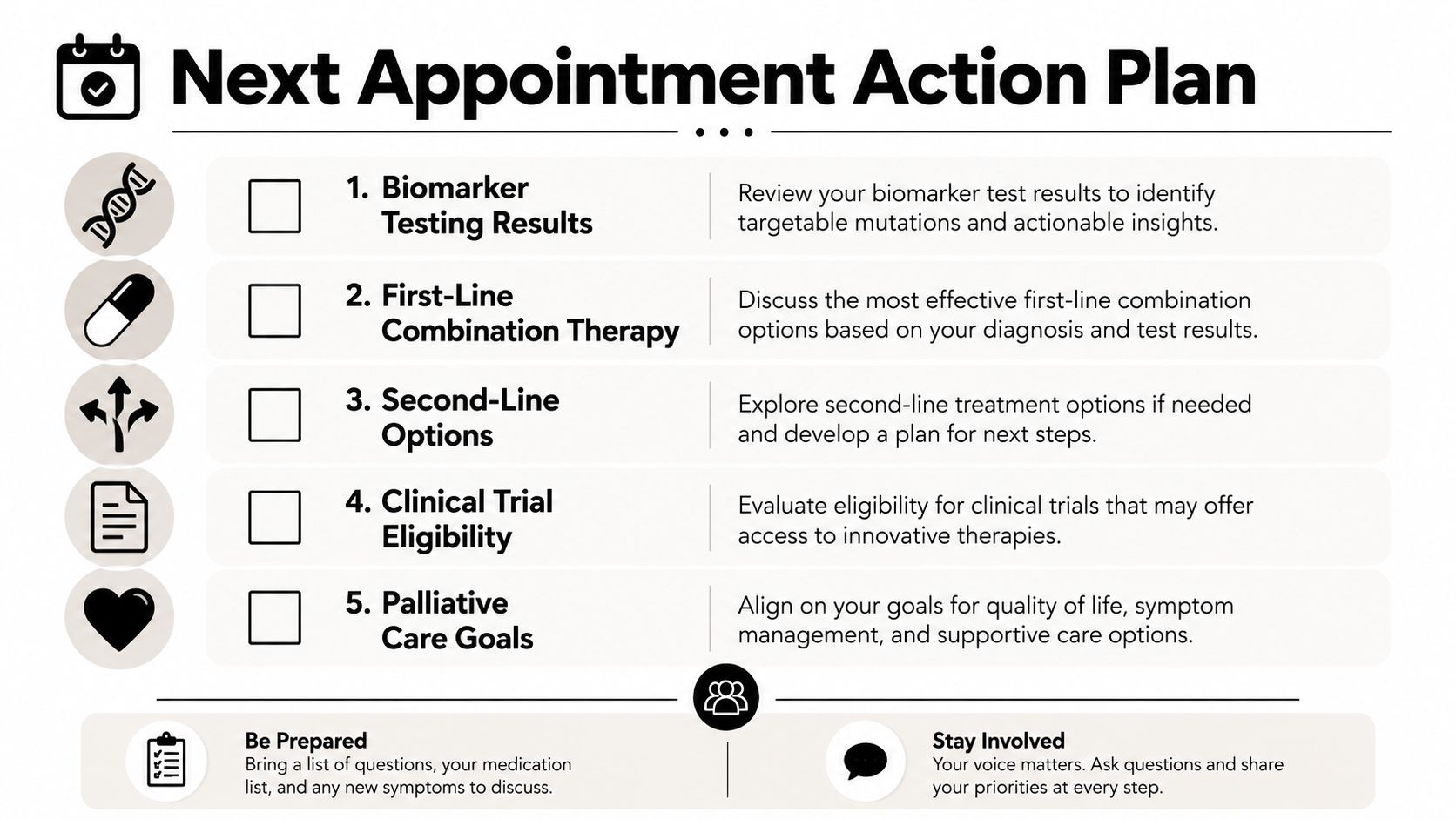
Before you leave the next consultation, ask for a written sequence rather than a list of drug names. The sequence should connect pathology, biomarkers, treatment, response assessment, symptom control, and backup options.
Your appointment checklist
- Confirm the biomarker panel: Ask whether HER2, PD-L1 CPS, dMMR or MSI, and CLDN18.2 testing has been ordered or completed, and whether the tissue sample is adequate.
- Review the staging images: Confirm that CT imaging of the chest, abdomen, and pelvis has been reviewed by the appropriate multidisciplinary team.
- Define the treatment goal: Ask whether the immediate aim is disease control, symptom relief, conversion to a local treatment approach, or a combination of these.
- Name the first regimen: Ask why the proposed chemotherapy backbone fits your biomarkers, organ function, symptoms, and ECOG performance status.
- Plan the next decision: Ask when response will be assessed, which symptoms require urgent contact, and what would trigger a dose change or regimen switch.
- Discuss trials early: Ask whether a search has been run using HER2, CLDN18.2, and immunotherapy gastric cancer, including studies available at other centers.
- Add supportive care: Request nutrition and palliative care referrals at the start, not only after symptoms become severe.
- Ask about later lines: If the tumor doesn't respond, ask which approved treatments, targeted options, or trials could follow.
Bring a family member or advocate, especially if the consultation includes several decisions. For help organizing records, questions, and follow-up visits, this medical appointment scheduling guide can help you build a practical system around care.
Hirschfeld Oncology evaluates complex gastric cancer cases with attention to biomarkers, tolerability, symptom control, and individualized treatment strategies, including immunotherapy, targeted therapy, and low-dose chemotherapy when appropriate. Visit Hirschfeld Oncology to request a consultation and discuss your pathology, current treatment, and next available options with an experienced oncology team.
.png)
.png)